Quotulatiousness

August 18, 2014

Another look at the Ross Rifle, initial Canadian infantry weapon of WW1

Filed under: Cancon, History, Military, Weapons, WW1 — Tags: , , , , , — Nicholas @ 12:11

Last year, I posted a video by Lickmuffin, showing his recently acquired Ross Mark III, a “sporterized” version of the model that equipped the First Canadian Division when it took the field in France in 1915. Yesterday, David Pugliese revisited the Ross controversy in the Ottawa Citizen:

When soldiers in the throes of battle discard their rifles and pluck a different weapon from the hands of dead allies, there’s clearly a serious problem, writes John Ward of the Canadian Press news service.

So it was with the Ross rifle, the weapon that Canadian soldiers took with them to the start of the First World War a century ago.

More from Ward’s article:

It was the brainchild of Sir Charles Ross, a wealthy Scottish-born engineer and inventor who offered it to the Canadian government as a military firearm well before the war began.

To Sir Sam Hughes, Canada’s minister of militia — defence minister in modern parlance — at the time, the Canadian-built Ross was highly accurate and the perfect tool for his soldiers, whom he saw as frontier marksmen.

But troops, some of whom sneered at the rifle as “the Canadian club,” soon discovered the Ross was not suited to dirty, rough-and-tumble trench warfare. They preferred the robust Lee-Enfield carried by their British comrades, picking them up from the battlefield when they could.

The .303-calibre, straight-pull Ross was longer than the Lee-Enfield, a problem in the cramped confines of the trenches. It was heavier, too, and in a day when infantrymen were over-burdened, any extra weight was unwelcome. When fired with its bayonet attached, it tended to shed the bayonet.

The Ross was also susceptible to jamming from dust and dirt and was very finicky about the quality of ammunition. The carefully machined cartridges made by the Dominion Arsenal worked fine, but not so the mass-produced British ammunition, which could vary in size beyond the Ross’s fine tolerances.

Further, it was easy to reassemble the Ross bolt incorrectly. Even when misassembled, the bolt would fit in the rifle and even chamber and fire a cartridge, only to slam back into the rifleman’s face — unheard of for most bolt-action rifles.

David Pugliese also linked to this Forgotten Weapons video, which investigates the best known failing of the Ross in combat:

Published on 16 Jun 2013

There is a long-standing urban legend about the Canadian Ross rifle, a straight-pull bolt action that was used in lieu of the SMLE by Canadian troops early in World War One. The story is that the Ross would sometimes malfunction and blow the bolt back into its shooter’s face, with pretty horrible results. Well, I wanted to learn “the rest of the story” – could this actually happen? What caused it? How could it be prevented? In short, what would a Ross shooter need to know to remain safe? And if I could get some cool footage of a bolt blowing out of a Ross in the process, all the better.

Well, reader Andy very generously provided a sporterized Ross for the experiments, and I started reading into what the issue really was. Turns out that the legend was quite true – you can put a Ross MkIII bolt together the wrong way, and it will allow you to fire without the locking lugs engaged, thus throwing the bolt back out of the gun at high velocity. However, the issue was recognized fairly quickly, and the vast majority of Ross rifles were modified with a safety rivet to prevent this from happening. It is also quite easy to determine if a Ross is assembled correctly, once you know what to look for.

August 3, 2014

The Princess Patricia’s Canadian Light Infantry at 100

Filed under: Cancon, History, Military, WW1 — Tags: , , , — Nicholas @ 09:47

The Ottawa Citizen notes the centennial of one of Canada’s three regular force infantry regiments, the PPCLI:

During four years of war, from August 1914 to November 1918, Canada contributed some 620,000 men to the fight against Germany. By war’s end, 61,000 — about 1o per cent — of those who served in the Canadian Overseas Expeditionary Force had been killed. Another 172,000 had been wounded, gassed, crippled or psychologically damaged by the war. For a country of not yet eight million, it was an enormous undertaking, and an enormous sacrifice. The proportional loss for Canada a war today, with a population of about 34 million, would be more than 250,000 killed and 550,00 wounded.

The Canadian Corps acquired a reputation for battlefield prowess. British prime minister David Lloyd George referred to the C.E.F. as “the shock army of the British Empire.” This reputation was in some ways the making of the country, historians say. Canada’s contribution to the war effort — men, munitions and food supplies — fostered a deeper sense of national identity and led to greater political sovereignty. Canada went from being a subordinate member of the British Empire to a nation in its own right on the world stage.

[…]

When Britain declared war on Germany on Aug. 4, 1914, Canada, as a Dominion within the Empire, was automatically at war, too. Canadians, by and large, responded with enthusiastic support. Within days of the declaration of war the country was mobilizing. One Montreal businessman, Andrew Hamilton Gault offered $100,000 of his own money — about $2 million in today’s currency — to finance and equip a regiment.

Prime minister Robert Borden’s government was only too happy to accept the offer, having committed itself to raising an army division of 25,000 men as Canada’s initial contribution to the war. The Patricias received their official charter on Aug. 10. Gault, joined by Lt-Col. Francis Farquhar, a British Army veteran and military secretary to the governor-general, the Duke of Connaught, launched a cross-country recruitment campaign.

PPCLI cap badgeMore than 3,000 men responded to the call to arms, and headed for Ottawa. “Prospectors, trappers, guides, cow-punchers, prize-fighters, farmers, professional and businessmen, above all old soldiers, poured into Ottawa by every train,” writes regimental historian, Ralph Hodder-Williams. By Aug. 19, 1,098 men were chosen — the Originals, as they became known —- and Farquhar was named regimental commander.

The PPCLI officially formed up on Aug. 23 at Ottawa’s Lansdowne Park. Gault had asked the governor-general’s daughter, Princess Patricia, if he could name the regiment after her. She agreed and offered to design a regimental Colour. “I have great pleasure in presenting you with these colours, which I have worked myself. I hope they will be associated with what I believe will be a distinguished corps,” the princess told the assembled soldiers. “I shall follow the fortunes of you all with the deepest interest, and I heartily wish every man good luck and a safe return.”

It was a naive hope, as it turned out. The Patricias boarded the R.M.S. Royal George for England in late September 1914. On Dec. 20, after a few months training in Britain, they arrived in Le Havre. Two weeks later, on Jan. 6 and 7, 1915, the Patricias moved into the Ypres Salient, the first Canadian regiment to go into the field.

[…]

The Camp Colour presented by Princess Patricia in August of 1914 was consecrated in a religious ceremony in Belgium in late January 1919. A month later, the princess, who had returned to England in 1916, attached a commemorative silver gilt laurel wreath to the Colour’s staff in a ceremony before the regiment’s return to Canada. “My thoughts have been continually with you during the years of suffering and trial through which you have passed,” she told the assembled regiment, “and I think with mingled sorrow and pride of your many and gallant comrades who so willingly laid down their lives in the greatest of all causes.”

Such sentiments may sound alien to contemporary ears, but to dismiss them as deluded or naive is to presume that those who lived through the Great War couldn’t possibly have understood what they were doing as well as we can with our historical hindsight and sophisticated post-modern worldview.

But that is an arrogant and condescending assumption, as Philip Child, a Canadian army officer who served with a howitzer battery in the trenches, suggests in his 1937 novel, God’s Sparrow. Child tells the story of Daniel Thatcher, a veteran of the trenches. At one point, reflecting on the dead, Thatcher reaches this conclusion: “The thousands went into battle not ignobly, not as driven sheep or hired murderers … but as free men with a corporate if vague feeling of brotherhood because of a tradition they shared and an honest belief that they were doing their duty in a necessary task.”

H/T to Steve Paikin for the link.

March 11, 2014

Stop That Tank!

Filed under: Cancon, History, Military, Weapons, WW2 — Tags: , , , — Nicholas @ 00:01

Published on 31 May 2013

During World War II, the Disney company joined in the Allied war effort by producing animated movie material at cost for the US government (they also created insignia mascots for hundreds of aircraft and warships by request). These films number well over one hundred – although most are only partially created by Disney – and cover topics from antenna tuning to Beechcraft airplane maintenance to anti-German and Japanese propaganda. However, one piece in particular is of interest to us here at Forgotten Weapons: Stop That Tank!

Produced in 1942 for the Canadian military, it is a training film on the operation and maintenance of the Boys anti-tank rifle. The Disney contribution is in animated x-ray views of the various parts of the gun, and about 3 minutes of introduction featuring a section of Nazi tanks (the lead one driven by none other than Adolf Hitler) being surprised and driven back by a bunch of plucky doughboys hiding Boys AT rifles in bushes, outhouses, and horses.

The intro is pretty hilarious, but the meat of the film is actually a very informative piece on how the Boys works and how to use it. There are a couple copies of this already on YouTube, but thanks to reader Frank, we have this nice high-quality version.

Just one thing: if it was a Canadian film, there wouldn’t be any “doughboys” involved…

H/T to Think Defence for the link. They’ve also got a video of a modern shooter firing the Boys ATR (not using the original ammunition, this has been refitted to fire .50 BMG).

February 5, 2014

Battlefield mobility for Canadian infantry in the Cold War

An interesting post by Frank Maas at the LCMSDS website looks at the story of the Canadian army’s attempts during the 1980s to get modern armoured vehicles for infantry support and battlefield mobility:

The Militia, the traditional mobilization base for the Canadian army, withered during the Cold War. Its ranks were flushed with Second World War veterans in the 1950s and there was money for new tanks and vehicles, but morale declined as the Militia’s role became civil defence in the late 1950s, and it languished in the 1960s and 1970s as defence budgets shrank. The Militia reached a nadir of 15,000 by the late 1970s, but ironically, there was a false dawn at the end of the Cold War. In the 1987 Defence White Paper, Challenge and Commitment, the Mulroney government announced that the strength of the Reserves would skyrocket to 90,000, and would complement Regular units and allow Canada to better meet commitments to NATO and continental defence. This increase in strength would be complemented by a package of improvements to bases and new equipment purchases. One of these was for a purchase of 200 armoured personnel carriers, and here the story begins.

Back then, Colonel Romeo Dallaire was head of the army’s department for assessing armoured vehicles. Dallaire was intent on purchasing the venerable and ubiquitous M113, which first entered service in the 1960s, and is one of the most numerous armoured vehicles in the world. (The Canadian army had purchased more than 900 in the 1960s, and fielded up-armoured M113s in Afghanistan). The original plan was to buy 200 M113s from the American manufacturer and have some components licence-built in Canada to fulfill requirements for Canadian content.

At the same time, however, Canada’s only manufacturer of armoured vehicles, Diesel Division General Motors (DDGM), in London Ontario, was nearly out of work. It was approaching completion of a United States Marine Corps order for 758 vehicles, and although some sales to Saudi Arabia were on the horizon for the early 1990s, the company was facing a year with empty production lines. Some salesmen and engineers at DDGM began to think they could scoop up the contract for two hundred APCs by substituting their vehicle, the Piranha Light Armoured Vehicle (LAV), and bridge the gap between the contracts.

Comparing the interiors of the LAV-25 (left) and M113 (right)

Comparing the interiors of the LAV-25 (left) and M113 (right)

There were some significant differences between the Piranha LAV and the M113 that would complicate DDGM’s plan. First, the LAV was wheeled, and the M113 was tracked. Wheeled vehicles were easier to maintain, but tracked vehicles had better off-road mobility. Second, the sides of the LAV’s troop compartment sloped sharply inward, which improved ballistic protection, but reduced internal space. Finally, the LAV had doors at the back for soldiers to deploy from, while the M113 had a ramp which made it much easier for soldiers to run out of the back of the vehicle. DDGM’s engineers could not do much about putting tracks on the LAV-25, although a wheeled vehicle would be better-suited for service with the Reserves because it would be cheaper to operate and soldiers could drive it on roads. (There are prohibitions against driving tracked vehicles on roads). DDGM could reconfigure its vehicle to look more like a M113 from the back to convince the army to accept the LAV-25 as a substitute, but this would require a significant reconfiguration of the vehicle.

Back in the late 1970s, my militia unit got some familiarization training with the then-new Grizzly AVGP, which was based on an earlier model than the LAV. While it was neat to be given the chance to try working with (and in) new equipment, we found that getting in and out of the back of the vehicle was awkward and much slower than we (well, actually our NCOs) had hoped. Practicing a dismount with a full infantry section on board was … less than tactically brilliant. The small doors tended to snag any of our equipment as we squeezed through, so you had to move more slowly to get through successfully.

Here’s a look at the rear of the Cougar AVGP from the same vehicle family as the Grizzly:

A right rear view of a Canadian army Cougar wheeled fire support vehicle that is being used as an observation post by soldiers standing watch during the combined U.S./Canadian NATO Exercise Rendezvous '83. Location: Camp Wainright, AB

A right rear view of a Canadian army Cougar wheeled fire support vehicle that is being used as an observation post by soldiers standing watch during the combined U.S./Canadian NATO Exercise Rendezvous ’83. Location: Camp Wainright, AB

December 21, 2013

The Ross Rifle

Filed under: Cancon, History, Military, Weapons, WW1 — Tags: , , , — Nicholas @ 10:46

When I was an army cadet, the weapon we trained on was the Lee Enfield, an old but highly reliable British rifle. Our cadet range used Lee Enfields with .22 adapters, but due to an odd quirk of timing, the very first weapon I ever fired was a Lee Enfield .303 … I think it weighed nearly as much as I did at 12. Interestingly, our cadet hall was adjacent to the site where the Long Branch Arsenal had manufactured Lee Enfield rifles during WW2, and the building may have been part of the factory complex.

Long Branch Arsenal site

Lee-Enfield No 4 Mk I (1943)

At the beginning of World War One, the Canadian army was supposed to be equipped as much as possible with Canadian-produced kit, including the infantry rifle. Canadian industrial development meant that we didn’t have factories that could immediately turn out bigger pieces of armament, but rifles were easily within reach. The government’s choice was the Ross rifle, which was already in production and was highly accurate but had a few disadvantages that were not discovered until the first Canadian troops were in Flanders. Wikipedia says:

The Ross rifle was a straight-pull bolt action .303 inch-calibre rifle produced in Canada from 1903 until 1918.

The Ross Mk.II or (“1905”) rifle was highly successful in target shooting before WWI, but the close chamber tolerances, lack of primary extraction and overall length made the Mk.III (or “1910”) Ross rifle unsuitable for the conditions of trench warfare and the often poor quality ammunition issued.

By 1916, the rifle had been withdrawn from front line service, but continued to be used by many snipers of the Canadian Expeditionary Force until the end of the war due to its exceptional accuracy.

The Ross Rifle Co. made sporting rifles from early in its production, most notably chambered in .280 Ross, introduced in 1907. This cartridge is recorded as the first to achieve over 3000 feet per second velocity, and the cartridge acquired a very considerable international reputation among target shooters and hunters.

Lickmuffin, who frequently posts comments here on the blog, recently acquired a “sporterized” version and produced a short video about the rifle:

September 20, 2012

Rewriting a crucial moment in WW2: 9th Canadian Infantry Brigade on D+1

Filed under: Cancon, France, Germany, History, Military, WW2 — Tags: , , , — Nicholas @ 09:30

If you’re interested in the Canadian part of the D-Day landings and the days that followed, you’ll probably want to visit the Canadian Military History site:

Marc Milner’s Chapter, “No Ambush, No Defeat: The Advance of the Vanguard of the 9th Canadian Infantry Brigade, 7 June 1944″ in Canada and the Second World War: Essays in Honour of Terry Copp rewrites the history of 9 Brigade on D-Day+1. The defeat of 9 Brigade has always been used a prime example of the flawed nature of Allied leadership and combat capability and proof of the superior fighting skill of German forces. Milner challenges this assessment, arguing “the vanguard of 9 Brigade fought an enemy at least three times its size to a standstill, and did so largely without the crucial component of Anglo-Canadian doctrine: artillery support … in the process 9 Brigade met and defeated a portion of the panzer forces that the 3rd Canadian Division had been tasked with destroying. So maybe 9 Brigade did all right on D+1 after all.”

The revised chapter to the book has been made available as a freely downloadable PDF.

January 9, 2012

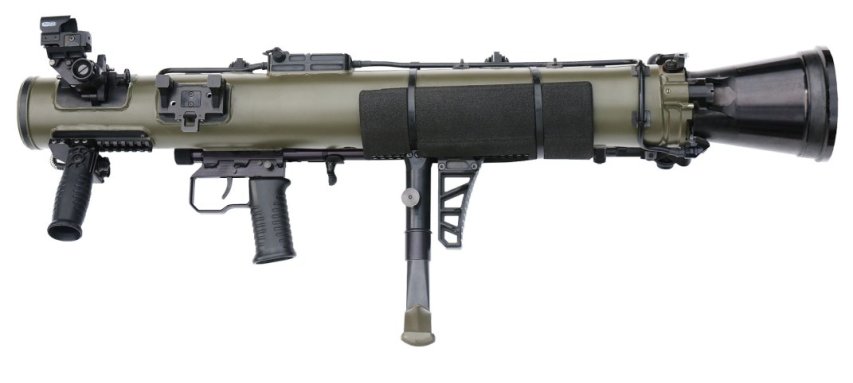
In praise of the Carl Gustav

Filed under: Military, Technology, USA, Weapons — Tags: , , , — Nicholas @ 09:42

Strategy Page discusses the recent decision by the US Army to adopt the Carl Gustav antitank weapon (which unlike most other “new” weapons is actually quite old):

The Carl Gustav is the first multiple-shot rocket launcher army infantry have used since the smooth bore 3.5 inch (88mm) bazooka was phased out in the 1960s. The Carl Gustav is basically a lightweight 8.5 kg (19 pound) recoilless rifle. It is 1.1 meters (3.6 feet) long. The barrel is rifled and good for about a hundred rounds.

The army also got rid of its recoilless rifles in the 1970s, replacing them with anti-tank guided missiles. What made the Carl Gustav unique was that it had the long range of a recoilless rifle (which used rifled barrels) but had a short barrel and was much more portable. The most popular American recoilless rifle was the 52 kg (114.5 pound) 75mm M20. With its long barrel (2.1 meters/6.9 feet), the M20 had a range of 6,400 meters. That was fine for use against tanks, but the army brass never appreciated the fact that the recoilless rifle was most frequently used against infantry in bunkers or buildings. The Carl Gustav took all this into account, and has been very popular with the infantry because of its portability and long range.

The 84mm projectiles weigh about 2 kg (4.4 pounds) each and come in several different types (anti-armor, combined anti-armor/high explosive, illumination and smoke.) The anti-armor round is very useful in urban areas and against bunkers. Range is 500-700 meters (depending on type of round fired), but an experienced gunner can hit a large target at up to 1,000 meters.

I trained on the Carl Gustav back in the 1970s … it was a good weapon then and still clearly has a role on the modern battlefield. The joy of hitting a tank right on the turret ring with an 84mm greeting card really cannot be adequately described.

November 8, 2011

Every infantryman a machine-gunner

Filed under: Military, Technology, USA, Weapons — Tags: , , , — Nicholas @ 12:07

Lewis Page on the new lightweight ammunition the US Army is considering introducing:

The US Army has announced successful tests of a new, lightweight portable machine-gun which fires special plastic ammunition. The gun and ammo are so much lighter than current weapons and their brass-cased cartridges that some soldiers are suggesting that every infantryman could in future pack the sort of firepower reserved today for heavy-weapons specialists.

[. . .]

[M]ost soldiers are armed with assault rifles not intended to deliver sustained automatic fire and holding less ammo. These lighter weapons are handier for close-in fighting and permit other kit to be carried.

But US military boffins at the famous Picatinny Arsenal have been working on this situation for some time. Since ammo weight and bulk is much of the problem, they have come up with a new kind of ammunition: Cased Telescoped cartridges.

In a cased telescoped round, the bullet is no longer attached to the tip of a brass case full of propellant powder. The new case is shorter, fatter and made of plastic, so weighing substantially less, and the bullet is sunk into the middle of the propellant which makes the whole round shorter — it has been “telescoped”. A shorter round weighs less itself, and also means that the gun’s action, feed equipment etc is smaller and thus lighter as well. It’s a trick originally developed for tanks, to make the turret smaller and easier to protect.

According to the Picatinny scientists, their new LMG and a thousand rounds of its plastic-cased-telescoped ammo weigh no less than 20.4 pounds less than the current M249 (a version of which is also used by British troops) and a thousand ordinary 5.56mm brass cartridges. The new LMG shaves no less than 8.3 pounds off the 15.7-lb M249, coming in at just 7.4lb — actually lighter than a standard British SA80 assault rifle! This, perhaps, explains Specialist Smith’s opinion that it would be reasonable for all soldiers to carry such weapons, rather than just heavy-weapons specialists.

July 23, 2010

The fully networked infantry comes a step closer

Filed under: Britain, Military, Technology — Tags: , , , — Nicholas @ 08:57

Strategy Page reports on the US Army’s Rifleman Radio project:

The U.S. Army recently conducted a successful field test of their new Rifleman Radio (RR), a 1.1 kg/2.5 pound voice/data radio for individual infantrymen. By itself, the two watt RR has a range of up to five kilometers. But it can also automatically form a mesh network, where all RRs within range of each other can pass on voice or data information. During the field tests, this was done to a range of up to 50 kilometers. The RR can also make use of an aerostat, UAV or aircraft overhead carrying a RR to act as a communications booster (to other RRs or other networks.) The mesh network enables troops to sometimes eliminate carrying a longer range (and heavier) platoon radio for the platoon leader.

The RR has just gone into production, for use as basic communications for individual troops. But in the next 5-10 years, the mesh and data (pictures, maps, at about ten times the speed of dial up Internet) capability will be phased in. During the recent field test, company commanders were able to take a video feed from a UAV, extract a single frame (basically showing where the enemy was), and transmitting this to troops using RRs.

Somewhat surprisingly, the British were pioneering this kind of kit for the troops in Afghanistan in 2002:

Six years ago, the marines bought a thousand Personal Role Radios (PRR) used by British troops since early 2002. These first saw combat use in Afghanistan later that year. The $670 radio set allows infantry to communicate with each other up to 500 meters (or three floors inside a building). The earpiece and microphone are built to fit comfortably into the combat helmet. The radio set itself, about the size and weight of a portable cassette player, hangs off the webbing gear on the chest. Two AA batteries power the radio for 24 hours. The users have 16 channels to choose from and a form of frequency hopping is used to make it very difficult to listen in on transmissions. A small, wireless, “talk” button is affixed to the soldiers weapon so that operation of the radio is hands free. The British have since adopted an improved, and more expensive, version.

Being able to communicate directly with fellow troops in combat is a huge advantage, but the weight and relative delicate nature of earlier radios meant that only platoon leaders and above were routinely provided with radios in the field (usually carried by someone else, not the commander himself).

January 24, 2010

Canadian infantry to get new personal equipment

Filed under: Cancon, Military, Technology — Tags: , , — Nicholas @ 13:25

Strategy Page reports that the Canadian Forces will be introducing new equipment for infantry soldiers next year:

Canada is joining its NATO allies in providing its infantry with new basic equipment, including electronic gear that, until quite recently, no one saw the troops getting for a decade or more. The Canadian gear set is called ISSP (Integrated Soldier System Project). The first components of ISSP will be issued next year. ISSP contains the usual elements of improved infantry gear. New uniforms, that incorporate improvements the troops have been demanding for years, plus new helmets and protective vests, that are lighter and provide improved shielding from bullets and fragments. New communications gear gives each soldier a link with everyone in his unit, while individual GPS is something troops have already provided for themselves. As other armies have discovered, the troops have already bought a lot of the new gear that is now proposed for the new standard issue.

A lot of this new stuff is commercial, with the military taking the best and most appropriate gear designed for outdoor living. This is particularly true of stuff marketed to the demanding mountain climbing and winter sports enthusiasts. Canada isn’t plunging into unknown territory here. The U.S., France, Germany and most other major NATO countries have already gone this route, and left a lot of practical experience in their wake. Thus the major goal is to get all the most useful gear, and reduce the weight of stuff the infantry have to carry into combat. It’s much easier to find new gear that works better, than it is to find stuff that’s lighter, and still gets the job done.

This is very good news, although there’s always a trade-off between “useful stuff to have” and “weight to be carried”. Modern computer gear is far lighter than it used to be, except for batteries, but there’s always the temptation on the part of the planners to add “just one more” neat bit of kit to the burden already being humped across the field by the infantry.

There’s also the challenge of making the technology both useful and as non-distracting as possible. As Robert Heinlein wrote back in the late 1950’s, “If you load a mudfoot down with a lot of gadgets he has to watch somebody a lot more simply equipped — say with a stone axe — will sneak up and bash his head in while he is trying to read a Vernier.”

October 20, 2009

The infantryman’s dilemma: trading carry weight for capability

Filed under: Military — Tags: , , — Nicholas @ 17:00

The US army belatedly listens to the complaints from the field about the excess weight infantry troops have to carry when dismounted from their vehicles:

In an effort to lessen the weight infantry have to carry in Afghanistan, several hundred commando style Mk 48 7.62mm machine-guns are being sent. These are nine pounds lighter that then standard, 27.6 pound, M240 machine-guns they will replace. SOCOM (Special Operations Command) has been using the Mk 48 for eight years now. SOCOM troops need the light weight for commando operations. But that light weight comes at the expense of durability. The lighter components don’t last as long. For example, the M240 bolt and receiver are both good for 100,000 rounds fired. But on the Mk 48, the bolt has to be replaced after 15,000 rounds and the receiver after 50,000. This was not a problem with the commandos, who made sure they had plenty of spares available, and kept track of the (approximate) number of rounds fired. Not so hard to do, you just have to pay attention.

The nine pound savings with the Mk 48 makes all the difference when it comes to carrying a 7.62mm machine-gun with you. The M240 is so heavy, that troops rarely take them away from the vehicles they are usually mounted on. But the Mk 48 is less heavy enough to justify hauling with you up those Afghan hills.

« Newer Posts

Powered by WordPress