
Another link I saved a while back and then didn’t get around to using until now:
A private Southern California women’s college now offers students eight different gender pronoun options from which to select, expecting professors and others on campus to use the choices.
The Claremont-based Scripps College, nicknamed “The Women’s College,” offers the gender pronoun options to students through its online student portal accounts. Students use a drop-down menu to select their preference from ten choices – eight of which are various gender pronoun sets such as “Hu, Hum, Hus,” “Per, Pers, Perself” and “Ze, Zir, Zir.” The other two are “none” and “just my name.”
Once students select their preference, a note of it appears on class rosters and other documents informing professors and others.
Though an all-female institution, the drop-down list does not default to the “She, Her, Hers, Herself” option, but instead, “Select Pronoun.” In fact, the choices are listed in alphabetical order, which places the traditional “she/hers” choice as the seventh possibility.
The list of options, along with phonetic pronunciations for the less frequently used choices, was provided to The College Fix by a campus official:
1. E/Ey, Em, Eir/Eirs, Eirself/Emself (A, M, ear, ears, earself)
2. He, Him, His, Himself
3. Hu, Hum, Hus, Humself (hue like HUman,/hue-m like HUMan, hue-s, hue-mself)
4. Just My Name Please
5. None
6. Per, Per, Per/Pers, Perself (per/purr, pers, perself)
7. She, Her, hers, Herself
8. They, Them, Their/Theirs, Themse
9. Ze, Hir, Hir/Hirs, Hirself (zee, hear, hears, hearself)
10. Ze, Zir, Zir/Zirs, Zirself (zee, zeer, zeers, zeerself)
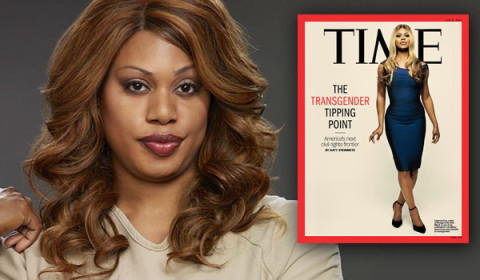 Yet, at the same time, the trans-rights movement is growing in power and cachet: a recent Time cover featuring the actress Laverne Cox was headlined “THE TRANSGENDER TIPPING POINT.” The very word “transgender,” which first came into wide use in the nineteen-nineties, encompasses far more people than the term “transsexual” did. It includes not just the small number of people who seek gender-reassignment surgery—according to frequently cited estimates, about one in thirty thousand men and one in a hundred thousand women—but also those who take hormones, or who simply identify with the opposite gender, or, in some cases, with both or with neither. (According to the National Center survey, most trans women have taken female hormones, but only about a quarter of them have had genital surgery.) The elasticity of the term “transgender” has forced a rethinking of what sex and gender mean; at least in progressive circles, what’s determinative isn’t people’s chromosomes or their genitals or the way that they were brought up but how they see themselves.

