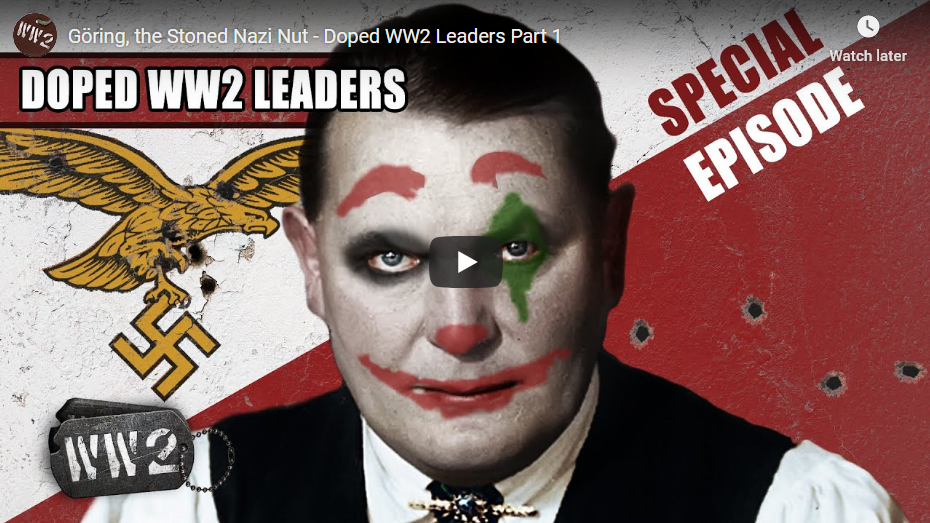
Historians have generally thought of the Type XXI [submarine] — along with other systems like the Me 262, V-1 and V-2 rockets, and the Tiger tank — as an example of Wunderwaffen, wonder weapons. Since 1945 many have fixated on the revolutionary military technologies that the Third Reich developed in the last two years of the war. The cultural impetus behind the concept, as implicitly or explicitly acknowledged by historians in the uneven and largely enthusiastic literature on the subject, was an irrational faith in technology to prevail in operationally or strategically complex and desperate situations — a conviction amounting to a disease, to which many in the Third Reich were prone in the latter years of the Second World War. To the extent that it shaped decision making, faith in the Wunderwaffen was a special, superficial kind of technological determinism, a confidence in the power of technology to prevail over the country’s strategic, operational, and doctrinal shortcomings. To the extent that leaders, officers, engineers, and scientists after 1943 believed innovation to be the answer to Germany’s strategic dilemmas, they displayed a naive ignorance of how technology interacts with cultural and other factors to influence the course of events. In particular, they reflected a willful ignorance of the extent to which even substantial technological superiority has proved indecisive in human conflict throughout history.
Marcus Jones, “Innovation For Its Own Sake: The Type XXI U-boat”, Naval War College Review, 2014-04.
August 19, 2019
QotD: Hitler’s “wonder weapons”
August 3, 2019
The Warsaw Uprising – The Unstoppable Spirit of the Polish Resistance – Extra History
Extra Credits
Published on 1 Aug 2019Thanks to the Polish National Foundation for sponsoring this video. https://www.pfn.org.pl/
The Polish are determined to make Poland matter on the world stage, and they will not wait for whatever mercies may come from the Russians. So the Home Army stages their own uprising to liberate Warsaw, and for some 60-odd days, their strongest members, the Grey Ranks, tragically held steadfast.
Join us on Patreon! http://bit.ly/EHPatreon
July 31, 2019
QotD: Foreshadowing Nuremberg
Mussolini, in “Cassius’s” book, after calling his witnesses, enters the box himself. He sticks to his Machiavellian creed: Might is Right, vae victis! He is guilty of the only crime that matters, the crime of failure, and he admits that his adversaries have a right to kill him — but not, he insists, a right to blame him. Their conduct has been similar to his own, and their moral condemnations are all hypocrisy. But thereafter come the other three witnesses, the Abyssinian, the Spaniard and the Italian, who are morally upon a different plane, since they have never temporized with Fascism nor had a chance to play at power politics; and all three of them demand the death penalty.
Would they demand it in real life? Will any such thing ever happen? It is not very likely, even if the people who have a real right to try Mussolini should somehow get him into their hands. The Tories, of course, though they would shrink from a real inquest into the origins of the war, are not sorry to have the chance of pushing the whole blame onto a few notorious individuals like Mussolini and Hitler. In this way the Darlan-Badoglio manoeuvre is made easier. Mussolini is a good scapegoat while he is at large, though he would be an awkward one in captivity. But how about the common people? Would they kill their tyrants, in cold blood and with the forms of law if they had the chance?
It is a fact that there have been very few such executions in history. At the end of the last war an election was won partly on the slogan “Hang the Kaiser”, and yet if any such thing had been attempted the conscience of the nation would probably have revolted. When tyrants are put to death, it should be by their own subjects; those who are punished by a foreign authority, like Napoleon, are simply made into martyrs and legends.
What is important is not that these political gangsters should be made to suffer, but that they should be made to discredit themselves. Fortunately they do do so in many cases, for to a surprising extent the war-lords in shining armour, the apostles of the martial virtues, tend not to die fighting when the time comes. History is full of ignominious getaways by the great and famous. Napoleon surrendered to the English in order to get protection from the Prussians, the Empress Eugénie fled in a hansom cab with an American dentist, Ludendorff resorted to blue spectacles, one of the more unprintable Roman emperors tried to escape assassination by locking himself in the lavatory, and during the early days of the Spanish Civil War one leading Fascist made his escape from Barcelona, with exquisite fitness, through a sewer.
It is some such exit that one would wish for Mussolini, and if he is left to himself perhaps he will achieve it. Possibly Hitler also. It used to be said of Hitler that when his time came he would never fly or surrender, but would perish in some operatic manner, by suicide at the very least. But that was when Hitler was successful; during the last year, since things began to go wrong, it is difficult to feel that he has behaved with dignity or courage. “Cassius” ends his book with the judge’s summing-up, and leaves the verdict open, seeming to invite a decision from his readers. Well, if it were left to me, my verdict on both Hitler and Mussolini would be: not death, unless in is inflicted in some hurried unspectacular way. If the Germans and Italians feel like giving them a summary court-martial and then a firing-squad, let them do it. Or better still, let the pair of them escape with a suitcaseful of bearer securities and settle down as the accredited bores of some Swiss pension. But no martyrizing, no St Helena business. And, above all, no solemn hypocritical “trial of war criminals”, with all the slow cruel pageantry of the law, which after a lapse of time has so strange a way of focusing a romantic light on the accused and turning a scoundrel into a hero.
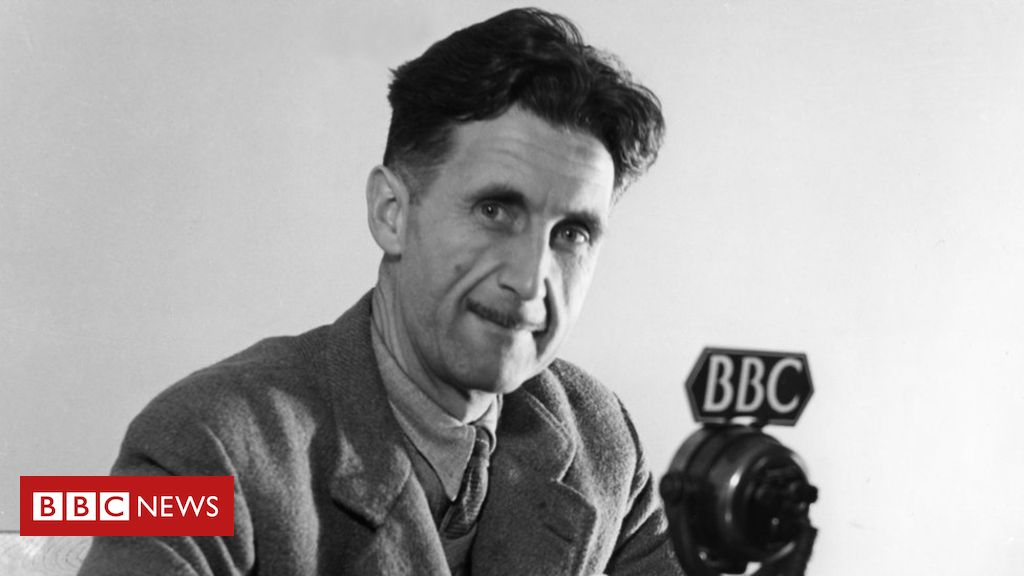
George Orwell, “Who are the War Criminals?”, Tribune, 1943-10-22.
July 28, 2019
QotD: Anglo-Italian relations, 1922-1940
The history of British relations with Mussolini illustrated the structural weakness of a capitalist state. Granting that power politics are not moral, to attempt to buy Italy out of the Axis — and clearly this idea underlay British policy from 1934 onwards — was a natural strategic move. But it was not a move which Baldwin, Chamberlain and the rest of them were capable of carrying out. It could only have been done by being so strong that Mussolini would not dare to side with Hitler. This was impossible, because an economy ruled by the profit motive is simply not equal to rearming on a modern scale. Britain only began to arm when the Germans were in Calais. Before that, fairly large sums had, indeed, been voted for armaments, but they slid peaceably into the pockets of the shareholders and the weapons did not appear. Since they had no real intention of curtailing their own privileges, it was inevitable that the British ruling class should carry out every policy half-heartedly and blind themselves to the coming danger. But the moral collapse which this entailed was something new in British politics. In the nineteenth and early twentieth centuries, British politicians might be hypocritical, but hypocrisy implies a moral code. It was something new when Tory M.P.s cheered the news that British ships had been bombed by Italian aeroplanes, or when members of the House of Lords lent themselves to organized libel campaigns against the Basque children who had been brought here as refugees.
When one thinks of the lies and betrayals of those years, the cynical abandonment of one ally after another, the imbecile optimism of the Tory press, the flat refusal to believe that the dictators meant war, even when they shouted it from the house-tops, the inability of the moneyed class to see anything wrong whatever in concentration camps, ghettos, massacres and undeclared wars, one is driven to feel that moral decadence played its part as well as mere stupidity. By 1937 or thereabouts it was not possible to be in doubt about the nature of the Fascist régimes. But the lords of property had decided that Fascism was on their side and they were willing to swallow the most stinking evils so long as their property remained secure. In their clumsy way they were playing the game of Machiavelli, of “political realism”, of “anything is right which advances the cause of the Party” — the Party in this case, of course, being the Conservative Party.
All this “Cassius” brings out, but he does shirk its corollary. Throughout his book it is implied that only Tories are immoral. “Yet there is still another England,” he says. “This other England detested Fascism from the day of its birth… this was the England of the Left, the England of Labour.” True, but only part of the truth. The actual behaviour of the Left has been more honourable than its theories. It has fought against Fascism, but its representative thinkers have entered just as deeply as their opponents into the evil world of “realism” and power politics.
“Realism” (it used to be called dishonesty) is part of the general political atmosphere of our time. It is a sign of the weakness of “Cassius”s position that one could compile a quite similar book entitled The Trial of Winston Churchill, or The Trial of Chiang Kai-shek, or even The Trial of Ramsay MacDonald. In each case you would find the leaders of the Left contradicting themselves almost as grossly as the Tory leader quoted by “Cassius”. For the Left has also been willing to shut its eyes to a great deal and to accept some very doubtful allies. We laugh now to hear the Tories abusing Mussolini when they were flattering him five years ago, but who would have foretold in 1927 that the Left would one day take Chiang Kai-shek to its bosom? Who would have foretold just after the General Strike that ten years later Winston Churchill would be the darling of the Daily Worker? In the years 1935-9, when almost any ally against Fascism seemed acceptable, left-wingers found themselves praising Mustapha Kemal and then developing tenderness for Carol of Rumania.
George Orwell, “Who are the War Criminals?”, Tribune, 1943-10-22.
July 24, 2019
QotD: The failure of the Republican cause in the Spanish Civil War
The backbone of the resistance against Franco was the Spanish working class, especially the urban trade union members. In the long run — it is important to remember that it is only in the long run — the working class remains the most reliable enemy of Fascism, simply because the working-class stands to gain most by a decent reconstruction of society. Unlike other classes or categories, it can’t be permanently bribed.
To say this is not to idealize the working class. In the long struggle that has followed the Russian Revolution it is the manual workers who have been defeated, and it is impossible not to feel that it was their own fault. Time after time, in country after country, the organized working-class movements have been crushed by open, illegal violence, and their comrades abroad, linked to them in theoretical solidarity, have simply looked on and done nothing; and underneath this, secret cause of many betrayals, has lain the fact that between white and coloured workers there is not even lip-service to solidarity. Who can believe in the class-conscious international proletariat after the events of the past ten years? To the British working class the massacre of their comrades in Vienna, Berlin, Madrid, or wherever it might be seemed less interesting and less important than yesterday’s football match. Yet this does not alter the fact that the working class will go on struggling against Fascism after the others have caved in. One feature of the Nazi conquest of France was the astonishing defections among the intelligentsia, including some of the left-wing political intelligentsia. The intelligentsia are the people who squeal loudest against Fascism, and yet a respectable proportion of them collapse into defeatism when the pinch comes. They are far-sighted enough to see the odds against them, and moreoever they can be bribed — for it is evident that the Nazis think it worth while to bribe intellectuals. With the working class it is the other way about. Too ignorant to see through the trick that is being played on them, they easily swallow the promises of Fascism, yet sooner or later they always take up the struggle again. They must do so, because in their own bodies they always discover that the promises of Fascism cannot be fulfilled. To win over the working class permanently, the Fascists would have to raise the general standard of living, which they are unable and probably unwilling to do. The struggle of the working class is like the growth of a plant. The plant is blind and stupid, but it knows enough to keep pushing upwards towards the light, and it will do this in the face of endless discouragements. What are the workers struggling for? Simply for the decent life which they are more and more aware is now technically possible. Their consciousness of this aim ebbs and flows. In Spain, for a while, people were acting consciously, moving towards a goal which they wanted to reach and believed they could reach. It accounted for the curiously buoyant feeling that life in Government Spain had during the early months of the war. The common people knew in their bones that the Republic was their friend and Franco was their enemy. They knew that they were in the right, because they were fighting for something which the world owed them and was able to give them.
One has to remember this to see the Spanish war in its true perspective. When one thinks of the cruelty, squalor, and futility of War — and in this particular case of the intrigues, the persecutions, the lies and the misunderstandings — there is always the temptation to say: “One side is as bad as the other. I am neutral”. In practice, however, one cannot be neutral, and there is hardly such a thing as a war in which it makes no difference who wins. Nearly always one stands more or less for progress, the other side more or less for reaction. The hatred which the Spanish Republic excited in millionaires, dukes, cardinals, play-boys, Blimps, and what-not would in itself be enough to show one how the land lay. In essence it was a class war. If it had been won, the cause of the common people everywhere would have been strengthened. It was lost, and the dividend-drawers all over the world rubbed their hands. That was the real issue; all else was froth on its surface.
George Orwell, “Looking back on the Spanish War”, New Road, 1943 (republished in England, Your England and Other Essays, 1953).
July 21, 2019
QotD: History in a totalitarian age
I know it is the fashion to say that most of recorded history is lies anyway. I am willing to believe that history is for the most part inaccurate and biased, but what is peculiar to our own age is the abandonment of the idea that history could be truthfully written. In the past people deliberately lied, or they unconsciously coloured what they wrote, or they struggled after the truth, well knowing that they must make many mistakes; but in each case they believed that “facts” existed and were more or less discoverable. And in practice there was always a considerable body of fact which would have been agreed to by almost everyone. If you look up the history of the last war in, for instance, the Encyclopaedia Britannica, you will find that a respectable amount of the material is drawn from German sources. A British and a German historian would disagree deeply on many things, even on fundamentals, but there would still be that body of, as it were, neutral fact on which neither would seriously challenge the other. It is just this common basis of agreement, with its implication that human beings are all one species of animal, that totalitarianism destroys. Nazi theory indeed specifically denies that such a thing as “the truth” exists. There is, for instance, no such thing as “Science”. There is only “German Science”, “Jewish Science”, etc. The implied objective of this line of thought is a nightmare world in which the Leader, or some ruling clique, controls not only the future but the past. If the Leader says of such and such an event, “It never happened” — well, it never happened. If he says that two and two are five — well, two and two are five. This prospect frightens me much more than bombs — and after our experiences of the last few years that is not a frivolous statement.
But is it perhaps childish or morbid to terrify oneself with visions of a totalitarian future? Before writing off the totalitarian world as a nightmare that can’t come true, just remember that in 1925 the world of today would have seemed a nightmare that couldn’t come true. Against that shifting phantasmagoric world in which black may be white tomorrow and yesterday’s weather can be changed by decree, there are in reality only two safeguards. One is that however much you deny the truth, the truth goes on existing, as it were, behind your back, and you consequently can’t violate it in ways that impair military efficiency. The other is that so long as some parts of the earth remain unconquered, the liberal tradition can be kept alive. Let Fascism, or possibly even a combination of several Fascisms, conquer the whole world, and those two conditions no longer exist. We in England underrate the danger of this kind of thing, because our traditions and our past security have given us a sentimental belief that it all comes right in the end and the thing you most fear never really happens. Nourished for hundreds of years on a literature in which Right invariably triumphs in the last chapter, we believe half-instinctively that evil always defeats itself in the long run. Pacifism, for instance, is founded largely on this belief. Don’t resist evil, and it will somehow destroy itself. But why should it? What evidence is there that it does? And what instance is there of a modern industrialized state collapsing unless conquered from the outside by military force?
Consider for instance the re-institution of slavery. Who could have imagined twenty years ago that slavery would return to Europe? Well, slavery has been restored under our noses. The forced-labour camps all over Europe and North Africa where Poles, Russians, Jews and political prisoners of every race toil at road-making or swamp-draining for their bare rations, are simple chattle slavery. The most one can say is that the buying and selling of slaves by individuals is not yet permitted. In other ways — the breaking-up of families, for instance — the conditions are probably worse than they were on the American cotton plantations. There is no reason for thinking that this state of affairs will change while any totalitarian domination endures. We don’t grasp its full implications, because in our mystical way we feel that a regime founded on slavery must collapse. But it is worth comparing the duration of the slave empires of antiquity with that of any modern state. Civilizations founded on slavery have lasted for such periods as four thousand years.
When I think of antiquity, the detail that frightens me is that those hundreds of millions of slaves on whose backs civilization rested generation after generation have left behind them no record whatever. We do not even know their names. In the whole of Greek and Roman history, how many slaves’ names are known to you? I can think of two, or possibly three. One is Spartacus and the other is Epictetus. Also, in the Roman room at the British Museum there is a glass jar with the maker’s name inscribed on the bottom, “Felix fecit“. I have a mental picture of poor Felix (a Gaul with red hair and a metal collar round his neck), but in fact he may not have been a slave; so there are only two slaves whose names I definitely know, and probably few people can remember more. The rest have gone down into utter silence.
George Orwell, “Looking back on the Spanish War”, New Road, 1943 (republished in England, Your England and Other Essays, 1953).
July 16, 2019
July 14, 2019
QotD: The legacy of the original hippies
In my younger days, when I myself wore my hair long and may have dabbled in the occasional Red Dragon, Purple Om and Roobarb ‘n’ Custard, I think I might have been quite surprised to learn that the hippies I idealised at the time — well, I liked Easy Rider, and used to play Jefferson Airplane’s “White Rabbit” more often than was good for me — in fact shared the same ideological roots as the Hitler Youth.
Not now I’m older and wiser, I don’t. Beneath the kaftan of every other hippie beats the heart of a fascist — the intolerance, the zeal, the control-freakery — and it all stems from that moment, pinpointed in the documentary, when a left-wing activist and Berkeley drop-out named Jerry Rubin had a sudden insight: that there were more hippies than there were radicals.
The unfortunate result of this was that Rubin and his ilk realised that they could prey like vampires on these fluffy-headed flower children and turn their innocent yearning for peace, love and drug-addled sex into something much more dangerous, whose effects we are ruing to this day.
All that long hair, those beads, the patchouli, the starry eyes, the psychedelic sounds of the Grateful Dead; they were really just a kandy-kolored, tangerine-flake Trojan Horse for the values — or rather the anti-values — that have gone on to make our culture so weak, decadent and vulnerable to destruction by more iron-willed invaders.
This was, of course, exactly what influential campus thinkers of the time such as German-born cultural Marxist philosopher Herbert Marcuse wanted. For them, free love, female emancipation, black empowerment, the groovy rejection of authority and pursuit of the self — all sugar-coated with a great soundtrack and lashings of lovely psychotropics — were really just a means to an end: the death of the family, the dismantling of the system, and, ultimately the destruction of western civilisation.
James Delingpole, “Hippies gave us wonderful things, but they left an evil legacy too”, The Spectator, 2017-06-10.
July 12, 2019
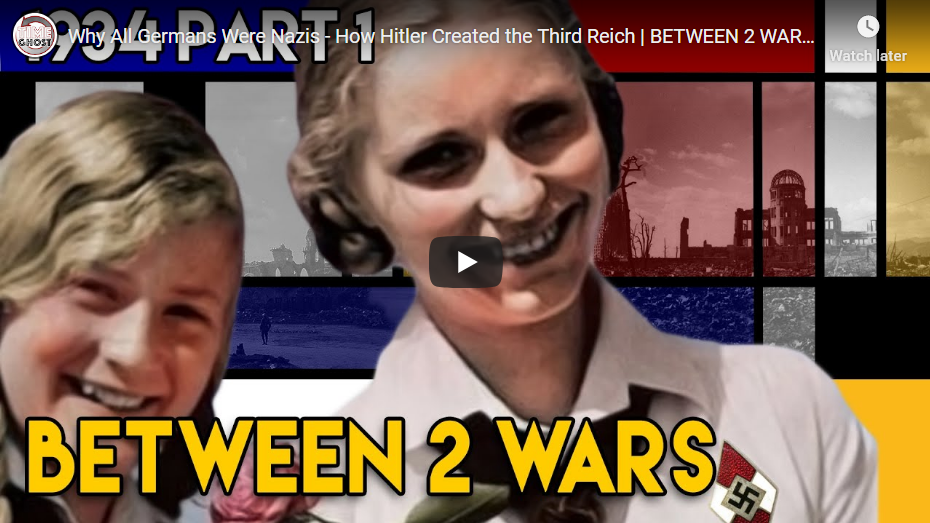
The European Migration Crisis – WW2 – WaH 004 – June 1940
World War Two
Published on 11 Jul 2019When the Nazi German Reich invades western and northern Europe this creates a massive refugee and forced migration crisis all across Europe. In eastern Europe, The Nazis and the Soviets have already been forcing families out of their homes to be relocated, incarcerated and murdered for nine months by now.
Join us on Patreon: https://www.patreon.com/TimeGhostHistory
Or join The TimeGhost Army directly at: https://timeghost.tvFollow WW2 day by day on Instagram @World_war_two_realtime https://www.instagram.com/world_war_t…
Join our Discord Server: https://discord.gg/D6D2aYN.
Between 2 Wars: https://www.youtube.com/playlist?list…
Source list: http://bit.ly/WW2sourcesWritten and Hosted by: Spartacus Olsson
Produced and Directed by: Spartacus Olsson and Astrid Deinhard
Executive Producers: Bodo Rittenauer, Astrid Deinhard, Indy Neidell, Spartacus Olsson
Creative Producer: Joram Appel
Post Production Director Wieke Kapteijns
Research by: Spartacus Olsson
Edited by:Spartacus Olsson
Map animations: EastoryEastory’s channel: https://www.youtube.com/channel/UCEly…
Archive by Screenocean/Reuters https://www.screenocean.com.A TimeGhost chronological documentary produced by OnLion Entertainment GmbH.
July 2, 2019
QotD: Italy and the Nazi Final Solution
Surprisingly given the bad associations I have with the word “fascist”, Mussolini’s Italy may win third prize in the Righteous Among The Nations stakes. [Hannah] Arendt describes it [in Eichmann in Jerusalem] as “sabotaging” the Final Solution within its borders despite nominal alliance with Germany:
Colorized portrait of Italian Fascist leader Benito Mussolini in 1940.
Colorization by Roger Viollet via Wikimedia Commons.
The gentlemen of the Foreign Office could not do much about it, because they always met the same subtly veiled resistance, the same promises and the same failures to fulfill them. The sabotage was all the more infuriating as it was carried out openly, in an almost mocking manner. The promises were given by Mussolini himself or other high-ranking officials, and if the generals simply failed to fulfill them, Mussolini would make excuses for them on the ground of their “different intellectual formation”. Only occasionally would the Nazis be met with a flat refusal, as when General Roatta declared that it was “incompatible with the honor of the Italian Army” to deliver the Jews from Italian-occupied territory in Yugoslavia to the appropriate German authorities.
An element of farce had never been lacking even in Italy’s most serious efforts to adjust to its powerful friend and ally. When Mussolini, under German pressure, introduced anti-Jewish legislation in the late thirties he stipulated the usual exemptions – war veterans, Jews with high decorations, and the like – but he added one more category, namely, former members of the Fascist Party, together with their parents and grandparents, their wives and children and grandchildren. I know of no statistics relating to this matter, but the result must have been that the great majority of Italian Jews were exempted. There can hardly have been a Jewish family without at least one member in the Fascist Party, for this happened at a time when Jews, like other Italians, had been flocking for almost twenty years into the Fascist movement, since positions in the Civil Service were open only to members. And the few Jews who had objected to Fascism on principle, Socialists and Communists chiefly, were no longer in the country. Even convinced Italian anti-Semites seemed unable to take the thing seriously, and Roberto Farinacci, head of the Italian anti-Semitic movement, had a Jewish secretary in his employ…
What in Denmark was the result of an authentically political sense, an inbred comprehension of the requirements and responsibilities of citizenship and independence – “for the Danes … the Jewish question was a political and not a humanitarian question” (Leni Yahil) – was in Italy the outcome of the almost automatic general humanity of an old and civilized people.
Scott Alexander, “Book review: Eichmann in Jerusalem”, Slate Star Codex, 2017-01-30.
June 21, 2019
“Rise of Evil” – Adolf Hitler and the Nazi Party – Sabaton History 020 [Official]
Sabaton History
Published on 20 Jun 2019After the Great War, many different movements and parties tried to replace the by many despised Weimar Republic. One of them was the NSDAP, the National Socialist German Workers Party. Headed by Adolf Hitler, the NSDAP transformed Germany into a country that would once again bring war and destruction to Europe. The Sabaton Song “Rise of Evil” (on the Attero Dominatus album) is about Hitlers rise to power, and in this video we dive into the historical context behind the song.
Support Sabaton History on Patreon: https://www.patreon.com/sabatonhistory
Check out the trailer for Sabaton’s new album The Great War right here: https://www.youtube.com/watch?v=HCZP1…
Watch more videos on the Sabaton YouTube channel: https://www.youtube.com/user/Sabaton?…
Listen to Sabaton on Spotify: http://smarturl.it/SabatonSpotify
Official Sabaton Merchandise Shop: http://bit.ly/SabatonOfficialShopHosted by: Indy Neidell
Written by: Markus Linke and Indy Neidell
Directed by: Astrid Deinhard and Wieke Kapteijns
Produced by: Pär Sundström, Astrid Deinhard and Spartacus Olsson
Creative Producer: Joram Appel
Executive Producers: Pär Sundström, Joakim Broden, Tomas Sunmo, Indy Neidell, Astrid Deinhard, and Spartacus Olsson
Maps by: Eastory
Edited by: Iryna Dulka
Sound Editing by: Marek KaminskiEastory YouTube Channel: https://www.youtube.com/channel/UCEly…
Archive by: Reuters/Screenocean https://www.screenocean.com
Music by Sabaton.Sources:
– Graphic: Liambaker98
– Jüdisches Museum Berlin
– United States Holocaust Memorial Museum
– Colorization of Goebbels: Marina AmaralAn OnLion Entertainment GmbH and Raging Beaver Publishing AB co-Production.
© Raging Beaver Publishing AB, 2019 – all rights reserved.
From the comments:
Sabaton History
1 day ago (edited)
In hindsight, we can clearly see the path to power and war that Germany and many of its people chose to walk in the 1930s. In practice, history is never as deterministic as it later seems. Nothing what happened was “meant” to happen. With that in mind, let us walk you through the process of the Nazi rise to power. From a revolutionary movement in the ’20s to a political party in a democratic system.We encourage debate and discussion about this in the comment section. However, we don’t allow for any extreme, racist, anti-semitic, revisionist or apologist theories down here. These comments will be moderated by historians and, while keeping your freedom of speech in mind, we will enforce our rules with a ban if necessary. Please keep it civil.
Thats it for today!
Cheers!
June 19, 2019
June 15, 2019
QotD: The early Bauhaus
The ideas of the modernists were generally expressed in the imperative mood and were frequently of a pseudo-mystical nature. Professor Curl’s description of some of the practices prevalent in the early Bauhaus make for hilarity; cranks are always a source of fun. In the early days, the modernists of the Bauhaus tended to a form of health mysticism involving vegetarianism, garlic paste, and regular enemas. Far more important, however, was their early and inherent attraction to totalitarianism. As the author points out, Gropius and Miës van der Rohe had no objection to Nazism other than that the Nazis failed to commission work from them. Gropius was an opportunistic anti-Semitic snob who espoused communism until it was no longer convenient for his career. Miës sucked up to the Nazis as much as he was able. The fact that both of them emigrated from Germany has done much to obscure their accommodation with the Nazis and even allowed the modernists to pose as anti-Nazi — though the most important proponent of modernism in America, Philip Johnson, had for some years been a rank Nazi in more than merely nominal terms. Moreover, as Professor Curl points out, the Nazi aesthetic, like the communist, had much in common with modernism.
Theodore Dalrymple, “Crimes in Concrete”, First Things, 2019-06.
June 3, 2019
May 15, 2019
1984 – Dystopias and Apocalypses – Extra Sci Fi
Extra Credits
Published on 14 May 2019What makes 1984 still relevant to modern readers is that it serves as a warning against fascism in all its possible forms. George Orwell’s service fighting in the Spanish Civil War led him to see that the heart of totalitarianism is about xenophobia and nationalism no matter which kind of government it came from.
The idea that Orwell presents us in 1984 is that people subtle enough and brutal enough can take the undirected dissatisfaction and anger of a society and point it at whatever they will, using us to damn ourselves.