Quotulatiousness

January 8, 2025

Canada – “Absurd people facing an absurd political crisis”

Filed under: Cancon, Media, Politics — Tags: , , , , — Nicholas @ 03:00

At Reason, Liz Wolfe shows her worldly sophistication and disdain for her inferiors as she takes on the emotional labour of thinking about Canada for a brief moment:

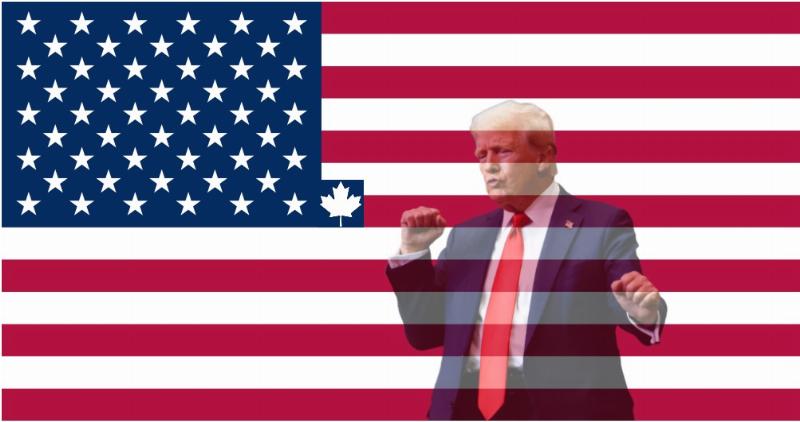
US President-elect Donald Trump successfully trolled Justin Trudeau about Canada becoming the 51st state of the union.

I cannot believe I am being forced to care about Canada right now. They call their cops Mounties you know. Absurd people facing an absurd political crisis. Let’s dig in.

Prime Minister Justin Trudeau has, over his nine-year reign, become terribly unpopular. He resigned yesterday. This was semiexpected because all relevant opposition parties had vowed to mount challenges to his leadership come late January/early February, and because Trudeau’s finance minister quit last month after the two clashed.

Canadians are pissed off, like so many others around the world, with the high cost of living, which they attribute to Trudeau. Earlier in his term, he prioritized climate change–related initiatives (like a costly carbon tax) and catering to Indigenous groups. He’s prioritized letting in lots of immigrants, which many Canadians have soured on. When the pandemic hit, provincial governments imposed economically ruinous lockdowns, and Trudeau himself imposed a vaccine mandate for all those entering the country, as well as the entire federal work force. The vaccine mandate for all border-crossers, which was in place from October 2021 to October 2022, spurred the Canadian trucker convoy, an occupation of Ottawa that attempted to protest the government to change this freedom-trampling policy. Trudeau’s response was to freeze the bank accounts of people involved, in an attempt to suppress the peaceful dissent.

When he first came to power in 2015, the nepo baby (son of another former prime minister) was widely admired due to his purported good looks and charm. When Donald Trump took office in the U.S. in January 2017, Trudeau quickly positioned himself as a foil to Trump, earning adoration from America’s #Resistance left. Now, those people’s opinions don’t really matter (if they ever did at all), and normal Canadians have seen first-hand the impacts of Trudeau’s policies. He sees the writing on the wall and is attempting to minimize the damage to his party.

“This country deserves a real choice in the next election and it has become clear to me that if I’m having to fight internal battles, I cannot be the best option in that election,” he said in a press conference yesterday. In order to do that, he’s prorogued Parliament — suspending it without dissolving it.

“To allow his party’s thousands of members to choose his successor, a lengthy process that will involve campaigning, Mr. Trudeau suspended Parliament until March 24. A general election is expected to follow,” reports The New York Times. “Holding a party leadership election before a general one is par for the course in countries with parliamentary systems like Canada’s. Suspending Parliament to hold such an election is far less common. By doing so, Mr. Trudeau wards off the likely collapse of his minority government and gives the Liberals time to choose a leader unburdened by his dismal poll numbers.” In other words: Suspending Parliament is a political ploy to stop the bleeding and help his allies stay in power.

This final act seems par for the course for a man who prefers playing politics to crafting sound policy. It’s possible someone more freedom-appreciating will replace him (though I’m pretty sure 90 percent of the population qualifies as more freedom-appreciating than Trudeau). But this comes at a difficult time for Canada, as Trump mulls slapping 25 percent tariffs on all Canadian goods, partially blaming our northern neighbors for an influx of migrants and fentanyl. It remains to be seen whether Trudeau will be replaced with someone better and whether Canadians can dig themselves out of this terrible economic hole that’s been wrought by seemingly endless government spending.

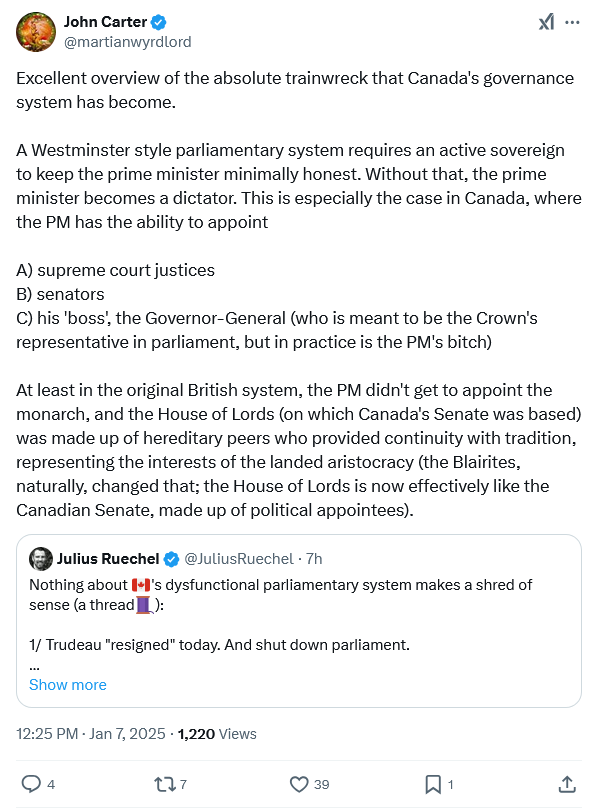
On the social media platform formerly known as Twitter, John Carter links to a thread by Julius Ruechel on the Canadian system of governance:

What Julius Ruechel said:

Nothing about [Canada’s] dysfunctional parliamentary system makes a shred of sense (a thread🧵):

1/ Trudeau “resigned” today. And shut down parliament.

So, now we effectively have a kind of custodial govt for the next few months. Run by Trudeau.

2/ Only now, with parliament shut down, Trudeau and his cabinet continues to run the govt, issue govt contracts, control the treasury, and negotiate on the world stage on Canada’s behalf … but without any parliamentary oversight.

How do you hold a govt to account without a parliament? The police won’t do it — they’ve more than proven that over 9 years of rampant govt corruption and abuse.

3/ The Governor General (who is supposed to ensure that Canada has a functioning government) gave Trudeau the green light to shut down (prorogue) parliament without triggering an election. Even as the country continues to unravel and as Canada’s finances continue to spiral towards an inflationary debt and currency crisis … “go ahead, get your party in order, Canada can wait (paraphrasing)”

4/ What a lovely gift from the Governor General … all so that the same party that could have ousted Trudeau for 9 disastrous years, but didn’t, has time to pick a new leader to continue to govern us.

Remember, Trudeau’s resignation does not automatically trigger an election, only a leadership race within the Liberal Party (lasting a minimum of 3 months during which Trudeau still remains as Prime Minister). The winner of that race emerges to govern the country without having to face a general election open to all Canadians.

Throughout all of this fiasco, there has not been a non-confidence vote to trigger the fall of the govt. The Liberal Party retains its mandate to govern Canada (despite their leadership race) because the other left-wing parties (NDP, Greens, and Bloc Quebecois) continue to prop up Trudeau’s Liberal govt.

And now, with parliament prorogued, the other parties couldn’t trigger a non-confidence vote even if they wanted to. Parliament would need to sit again before that can happen.

5/ In other words, the Governor General (the only one who currently has the power to trigger an election) is keeping Canada in crisis in order to accomodate a political party that has lost all its legitimacy to govern.

But guess who appointed the Governor General … yup, Trudeau.

It gets worse …

6/ Voting in the Liberal leadership race is open to children as young as 14. And to foreign nationals living in Canada that don’t even have citizenship or residency. How is that even legal? What could possibly go wrong?

7/ By shutting down parliament, Trudeau has also effectively shut down the ongoing parliamentary investigation into foreign interference. Based on a govt report, there are at least 11 MPs (plus multiple support staff) who have been compromised yet continue to work in our govt. But, the Liberals have refused to release their names. Or to fire them.

And now, thanks to Trudeau’s prorogation stunt, we won’t know their names ahead of the next election.

8/ The Conservative party is likely to challenge the proroguation of parliament to try to trigger an immediate election. But 7 of Canada’s 9 Supreme Court judges were appointed by … you guessed it again … Trudeau.

9/ And if the Conservatives come to power under Pierre Poilievre when we finally do get another election, the legislation they want to pass requires the Senate to sign off on it.

But 90 of Canada’s 105 senators are appointed by Trudeau, with another 8 open seats that will likely also be filled by Trudeau during this “transition” period. Yes, he still has the power to do that … without parliamentary oversight.

10/ At the 1:15:50 mark of his January 2nd YouTube interview with Jordan Peterson, Pierre Poilievre even openly admitted that (because of the Liberal bias in the Senate) the Conservatives need Canadians to help him pass legislation by becoming much more politically active — specifically he needs them to put pressure on their senators to “motivate” them to support his economic reforms.

That might work in the US where senators are elected. But how do Canadians “put pressure on senators” when Canadian senators are appointed by the Prime Minister and serve for life (until age 75)?

11/ Nonetheless, at the 24:35 mark of the same interview with Jordan Peterson (https://youtu.be/Dck8eZCpglc?si=y268pZaYSBG0gPKR&t=1475), the leader of Canada’s official opposition party, Pierre Poilievre, proudly proclaimed that :

we have … the best system of govt in the history of the world — the parliamentary system. Not the best govt, but the best system of govt.”

How reassuring … 🤦‍♂️

In the National Post, Carson Jerema argues for the abolition of the Liberal Party of Canada, the self-imagined “National Governing Party”:

The corrupting influence of the Liberal party has become all encompassing. When this or that cabinet minister gets uppity about being responsible with public money (Bill Morneau), or about interfering in criminal prosecutions (Jody Wilson-Raybould), they are simply replaced with someone more pliant, until that replacement is no longer useful, and is then kicked to the curb (David lametti, Chrystia Freeland). Ministers who had distinguished, or at least not humiliating, careers before politics, say a Bill Blair or a Marc Garneau, have been reduced to the role of yelping sycophant.

The illness radiates outward turning anything even remotely connected to government into a client or an arm of the Liberal party.

The explosion in the size of the federal bureaucracy, the vast expansion of corporate welfare into preferred Liberal businesses (read, green), Ottawa’s aggressive invasion into what’s left of provincial jurisdiction (dental care, pharmacare, energy and natural resources), has all been conducted for the benefit of the party.

Nothing happens in this country unless it benefits the Liberals. No one is hired, no cavity is filled, no money is invested and no child is educated, without partisan approval. And, it is only approved, if there is some electoral gain, however narrow. The rapid increase in immigration over the past decade could, as it has in the past, create a longterm base of Liberal voters. It is hard to believe the Liberals being as enthusiastic about immigration, if it didn’t have this prospect.

As government grows and grows and grows, it isn’t meeting any sort of public service need, or any ideological end, it is simply patronage on a grand scale. The entire state, and everyone in it has been turned into a beneficiary of the Liberals, all of us, part of the machine. Even Sir John A. Macdonald, fresh off the Pacific Scandal, would be embarrassed by this state of affairs.

All governments advance policies for electoral advantage, but there is something otherworldly about what the Liberals have done. Moreover, when what they do is plainly indefensible, such as dismissing Chinese election interference, or subordinating foreign policy to the preferences of Jew hating-pro-Hamas protesters, they can’t understand why anyone would ever question them. Large segments of the news media are always happy to comply and help the government gaslight the electorate.

January 7, 2025

Justin Trudeau announces his resignation … and a nation rejoices!

Rather than letting Canadians have an election, Justin Trudeau announced that he is resigning as Liberal party leader but that Parliament will be prorogued for long enough for the Liberals to run a full leadership campaign. This means that Trudeau’s replacement will likely be prime minister for roughly as long as it takes for Parliament to come to order after prorogation and not a minute longer. Nice work, Justin!

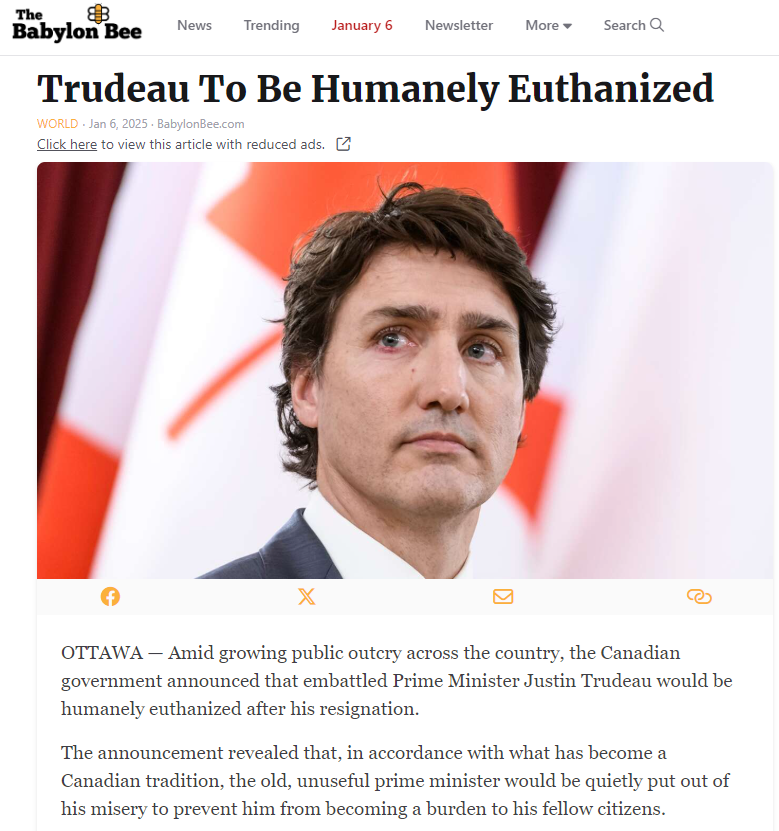
Full credit to the Babylon Bee for their coverage:

It’s impossible not to feel that Trudeau’s ego has been the biggest player in our national psychodrama over the last few months (years, actually), as it seems inevitable that Trudeau’s hapless successor is going to be the Liberal Party’s version of former PM Kim Campbell, although probably not being reduced to a caucus of two seats in a landslide, as Campbell endured.

The Line‘s immediate response quite properly describes Trudeau as “an absolute Muppet”, and I think that’s pretty unkind … to Muppets:

There was only one major thought that crossed your Line editors’ minds when watching Prime Minister Justin Trudeau’s resignation speech on the porch of Rideau Cottage on Monday morning: “Jesus Christ, the absolute self regard of this fucking Muppet.”

Yes, that’s harsh. We’re even almost sorry about it. And we’ll touch on the humanity of it all in a moment. But for now, like, gosh. This isn’t good.

We are well aware that much of the media will be replete with mopey paeans to the decade-long service of this prime minister, even as he announces his entirely hypocritical plan to prorogue Parliament until March 24 in order to enable his party to assemble a chaotic and hasty leadership race. You’ll get none of that from us here at The Line. Trudeau deserves no such consideration — at least not at the top. From where we sit today, the sheer arrogance of this man, and the party that has enabled him, has just locked the nation into months of parliamentary paralysis in the midst of what is likely to shortly become an economic trade war and a broader international geopolitical realignment.

While we fully expect news of Trudeau’s resignation to lead many of our readers to sound the bells, we share none of their relief. The decision he announced on Monday demonstrates a total lack of respect for voters, an utter disregard for the good of the nation, and a profound obliviousness to the realities of the international environment we are about to find ourselves in.

And while we’d like to give Trudeau some credit for demonstrating an ounce of genuine humility in his resignation speech, too much of it was crammed with statements of breathtaking, overweening egotism; he pegged his decision to leave squarely on internal divisions — a fantastic parting “fuck you” to his caucus that abrogates any attempt at accountability for his own policy or leadership failures.

Trudeau repeatedly justified his decision to ask for the house to be prorogued by noting that Parliament had become dysfunctional, the opposition parties had stalled business of the house on process questions, and the government was in need of a “reset”.

This blithely ignores a few points, including the fact that part of the reason Parliament has been stuck in a procedural quagmire is because Trudeau’s own government has refused to hand over a potentially incriminating dossier that may demonstrate thwacks of taxpayer cash being siphoned off to well-connected businesses and insiders via what the opposition has deemed a “green slush fund”.

This is a matter upon which the Commons’ Liberal speaker ruled against his own party. The Liberals could have stopped the pseudo-filibuster by turning over to Parliament the documents that they are required to turn over. They didn’t.

The very foundations of the Westminster parliamentary system are rooted in the concept of confidence: if you can’t maintain the confidence of the house, you cannot rule Parliament. Prorogation is a procedural tool intended to govern ordinary logistics. It should never be used to circumvent a matter of confidence — and while it was delicious to watch Trudeau squirm on this point during his resignation speech, defending Stephen Harper’s 2008 use of it in order to justify his own, the fact remains that both leaders have now set and affirmed a dangerous norm that undermines one of the foundational democratic concepts of our democracy and how it functions.

When a government finds itself this battered and unpopular, and when a long-serving leader has announced that he’ll step down, while prorogation may be legal, there’s only one politically and even morally right thing to do. There is only one way to “reset” parliament. Only one.

Call an election.

Paul Wells says “The Liberals give themselves three months to save the furniture”:

He was late as usual. He sounded sad. The wind blew his script away. He said more or less what you expected. When his time in office ends at the end of March, he’ll have been prime minister for a few months less than Stephen Harper was. His party has very little chance of recovering, but more than it had yesterday. It would have been so easy to pick his own time, maybe at the end of 2022, but apparently these decisions are hard to make.

Things happen fast. It’s been six weeks, Monday to Monday, since Donald Trump threatened 25-per-cent tariffs on everything Canadian. Three weeks since Chrystia Freeland resigned from cabinet. In two weeks Donald Trump will be sworn in as President of the United States. Justin Trudeau’s resignation is a pure product of this crisis.

I see a straight line from Trump’s Truth Social outburst of Nov. 25 to this week’s events. Trudeau’s circle once thought a second Trump victory would help them make the case against Pierre Poilievre. It’s fair to say the results are not up to their hopes. With Elon Musk continuing his hobby kibbitzing in the politics of countries around the world, Canada will now stand as a warning to governments elsewhere: Trump and his crew can take you down.

Having stalled until he ran out of options, Trudeau will now become incidental to events. There’s a lot going on. Wistful tribute speeches in the House of Commons will have to wait. The Trudeau succession will play out quickly, in four arenas at once: Parliament; the Liberal Party; the electorate; and Canada’s national security. Events in each venue will influence the others.

Some people accuse Trudeau of doubling the national debt during his time in office — from C$612B in 2015 to C$1.2 trillion currently — but as mathematically inclined commentators have noted, Trudeau also successfully engineered the decline of the value of the Canadian dollar so that the actual increase in national debt is less than 55%! Success!

At Spiked, Tom Slater bids farewell to “Canada’s first black prime minister”:

Yes, Justin Trudeau – the man who proved that in these topsy-turvy political times you can be a liberal and an authoritarian, and painfully woke while also having spent much of your youth in black face – has finally resigned.

The writing’s been on the wall for some time now. After historically low poll ratings, came the resignation before Christmas of his deputy, Chrystia Freeland, who clashed with Trudeau about how to tackle president-elect Donald Trump’s imperious threats of a 25 per cent tariff on Canadian goods. In the end, Justin jumped before he was pushed.

After almost a decade in power, he will step down as prime minister and Liberal leader as soon as a successor can be found. Polls suggest that, such is the hole he has left his party in, whoever replaces him will likely face a shellacking in the upcoming election.

Where did it all go wrong? When Trudeau took the reins of his nation back in 2015 – following in the footsteps of his father, Fide … sorry, Pierre – he rode on a wave of popular support and corporate-media swooning.

With the election of another pampered rich kid south of the border a year later, Trudeau was praised in the international media as the anti-Trump – progressive, pro-migration and drop-dead gorgeous, to boot!

Indeed, the next time an establishment scribe slurs Trump supporters as doe-eyed dolts dazzled by celebrity, point them in the direction of the gushing coverage of “hunky” Trudeau, who seemed to govern as if he was in a budget version of The West Wing.

Soon enough, he began carrying on like an unsubtle caricature of a cringe, establishment liberal, chiding women for saying “mankind”, instead of “peoplekind”, and declaring that he was insisting on a 50:50 male-to-female cabinet “because it’s 2015“.

Trudeau is the apotheosis of a hectoring style of politics that assumes voters are terrible bigots in need of lecturing, and women and minorities are perennial victims in need of his paternalistic assistance.

I’m frankly amazed it took the good people of Canada almost 10 years to wipe that smug look off his face.

December 29, 2024

In Louisiana, gerrymandering is illegal … or is it mandatory?

Filed under: Law, Politics, USA — Tags: , , , — Nicholas @ 03:00

Louisiana politicians created an electoral map that returned eight Republican congressmen to only one Democrat, despite the Republicans only getting about two-thirds of the popular vote. Clearly a partisan gerrymander that the courts will set aside … but perhaps not:

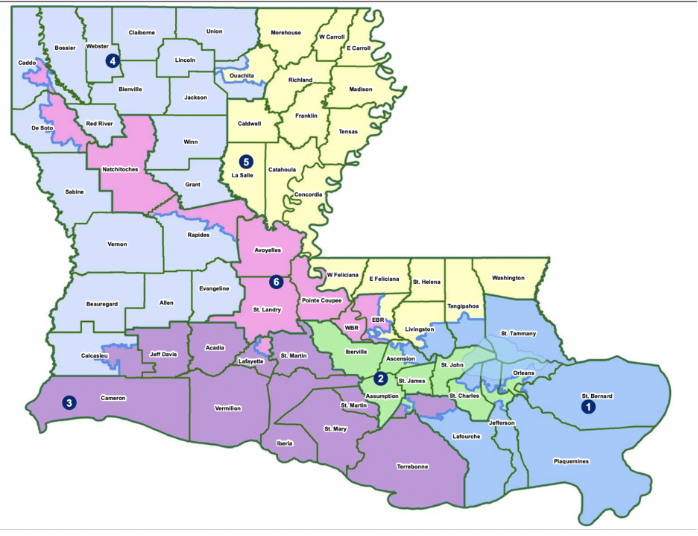
District 6, pink on the map, is the second black majority district, a long thin diagonal, stretching about two-thirds of the width and height of the state. It is an obvious gerrymander.

Two thirds of the voters getting eight congressional seats out of nine would be anomalous in a proportional representation system, but US congressional elections are first past the post. If the population of Tennessee were evenly distributed, with the same percentage of Republican and Democratic voters in each congressional district, the majority party would win all of them — even if the division of votes was 51/49. With a majority of almost two to one, the only way the Democrats get any seats is if their voters happen to be concentrated in one or a few districts.

I do not know whether Tennessee districts are actually drawn to favor the Republicans but the facts offered in the article are not evidence of it. Compare the outcome of the most recent UK elections, also under first past the post. Labor got 33.7% of the vote and ended up with 63% of the seats, 411 out of 650.

[…]

The difficulty in the claim that the failure of a group to elect a number of representatives proportional to their share of the vote is nicely illustrated by the litigation, still ongoing, over Louisiana redistricting.

    In June 2022, Chief Judge Shelly Dick, an Obama appointee to a federal court in Louisiana, determined that state’s congressional maps were an illegal racial gerrymander. Under the invalid maps, Black voters made up a majority in only one of the state’s six congressional districts, despite the fact that Black people comprise about a third of Louisiana’s population. (Vox)

As best I can tell, no evidence was offered by the court of actual gerrymandering beyond the fact that the percentage of districts with a black majority was less than the percentage of blacks in the population.

After some litigation, the Louisiana legislature drew a new map with two black majority districts — and a new set of plaintiffs sued on the grounds that the new map was a gerrymander drawn to create a black majority district, in violation of the Equal Protection guarantee of the Fourteenth Amendment. They sued in a different federal appeals court and won, a 2 to 1 majority verdict.

One court was insisting that Louisiana had to create a second black majority district to comply with the Civil Rights Act, the other that it could not create such a district, more precisely that it could not create it in the form the legislature had proposed, in order to comply with the Constitution. The case was appealed to the Supreme Court, which let the legislature’s map stand for the 2024 election, about to happen, but has not yet ruled beyond that.

    Louisiana, in other words, is now subject to two competing court orders. The first, from Judge Dick, forbids it from using the old maps. The second, from the two Trump judges in the Western District, forbids the state from using the new maps it enacted to comply with Dick’s order. (Vox)

November 24, 2024

Trump breaks the electoral pattern that had persisted for decades

In Quillette, Jason Garshfield outlines the “traditional” pattern of presidential elections and identifies the relatively few breaks in that pattern and how Donald Trump represents a major disruption compared to what outside observers might have expected to see:

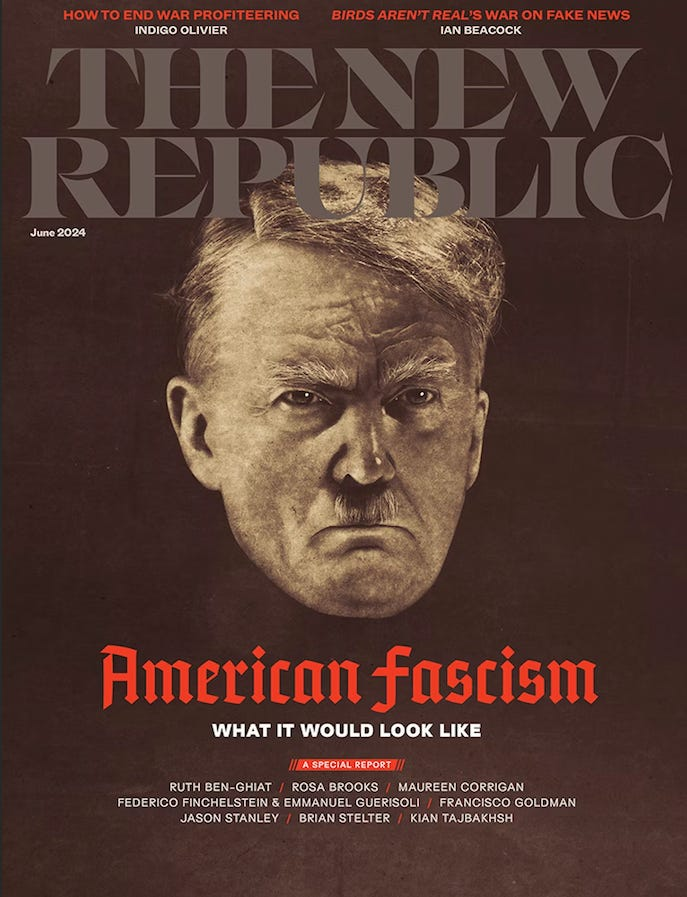
How The New Republic saw Donald Trump during the 2024 election campaign.

… Yet the symbolic power of the presidency is paramount. We speak of the 1980s as the Reagan Era and the 1990s as the Clinton Era, not the “Tip O’Neill Era” or the “Newt Gingrich Era”. The presidency represents control over the federal government, and ultimately over the spirit and the direction of the nation. It is the highest political prize, and a party consistently denied the presidency will not remain a satisfied player in the system, even if they achieve political success on other meaningful fronts. This is dangerous in a nation where mutual assent is a prerequisite for the smooth functioning of a free and fair electoral system.

Trump’s 2024 victory does not feel as shocking as his 2016 victory did. After all, we’ve seen this show before. But 2024 is a more remarkable coup than 2016. Back then, Trump’s victory did not buck the prevailing trend. This time, he won against that trend and shattered the pattern.

Some have argued that Trump’s indomitable force of personality, demonstrated in the way in which he has refashioned American politics in his image over the past decade, vindicates the Great Man Theory of History. For instance, Yair Rosenberg, writing for The Atlantic in 2022, commented that Trump’s “personal idiosyncrasies — and, I would argue, malignancies — altered the course of American history in directions it otherwise would not have gone”. To Rosenberg, this represented a turn for the worse, but many of Trump’s supporters would say the same, while casting it in a more positive light. As with Napoleon Bonaparte, one cannot confidently state that if Trump had never been born, someone like him would have done what he did.

Elsewhere in this magazine, I compare Donald Trump to the Mule, a character in Isaac Asimov’s Foundation stories who, with his unique superpower of mind control, manages to undo the entire Seldon Plan which had been designed to direct the future of the galaxy. In Asimov’s fictional social science of psychohistory, humans are compared to molecules within a gas: the path of each individual molecule is unpredictable, but the movement of the gas as a whole can be predicted. But the psychohistorians assume that no one molecule can ever have a significant effect on the whole — and they are mistaken.

Trump is a particle that defies measurement. It is as though Heisenberg’s Uncertainty Principle applies to him: you can know where he is, or how fast he is going, but never both at the same time. Once you think you have him pinned down to a fixed point in the cosmos, he throws your calculations into chaos. This drives his opponents crazy and imbues his most fervent supporters with a near-messianic belief that he will triumph against any odds.

Social scientists tend to hate the Great Man Theory of History because it renders their work entirely meaningless. No matter how strong certain social forces may be, they can ultimately be dispensed with at any time by unpredictable mighty figures. As a result, the future is frighteningly unknowable. But both Great Man Theory and historical determinism have dire implications. Either individuals are irrelevant, or else we live in an unknowable and irrational universe, which unfolds according to no fixed laws. Neither theory allows rationalism and individualism to coexist.

The durability of the eight-year pattern in American politics seems to provide strong evidence against the Great Man Theory. Many of the leaders and almost-leaders of the United States since 1952 have been outsized personalities, yet the sociological paradigm suggests that their personal charisma had little impact on their success or failure. In this view, neither Barack Obama’s charm nor John McCain and Mitt Romney’s lack of charm radically influenced the outcomes of the 2008 and 2012 elections. It was simply time for a Democrat to win, and McCain and Romney might as well not have run. For that matter, both parties might as well have saved their energy and agreed to simply exchange places every eight years — that is, if we accept historical determinism as the driving factor.

Before Trump, only two other figures in postwar America came close to being Great Men. They were the finalists of the 1980 election: Ronald Reagan, who managed to win against the pattern and usher in twelve straight years of Republican control, and Jimmy Carter, who lost the election he should have won. It is debatable as to whether the 1980 election was more a story of Carter’s weakness or Reagan’s strength, but both undoubtedly played a role. Now Trump has become both Carter and Reagan, the unexpected loser of one election and the unexpected winner of another.

November 20, 2024

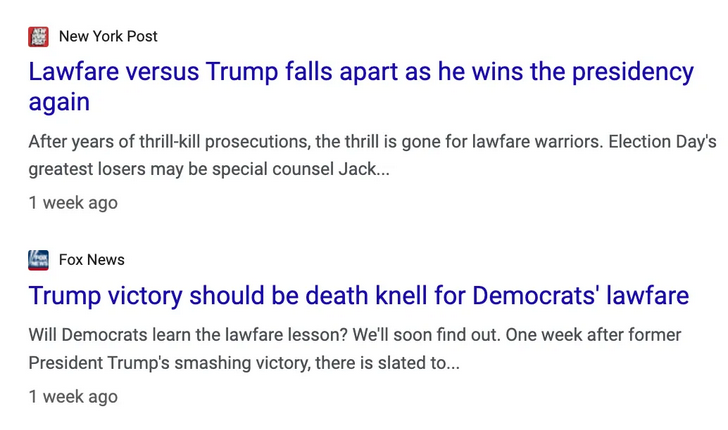
Trump’s electoral victory may help get rid of “lawfare” as a political tactic

Filed under: Law, Media, Politics, USA — Tags: , — Nicholas @ 03:00

Chris Bray thinks that one of the best things to come out of the last US federal election was that it may have totally discredited the notion of using the courts as a weapon to damage a political opponent:

A hundred years from now, Americans will benefit from a lesson learned in this election: When a political party prosecutes the leading figure of the opposing party in an attempt to influence an upcoming election, voters revolt against the politicization of criminal justice. Prosecuting the other side as a political maneuver makes a martyr — who probably wins the next election, the retribution election.

Shorter version: Donald Trump just buried lawfare. Maybe forever, certainly for a long time. And political lawfare, this profoundly authoritarian misuse of police and prosecutorial power, needed to be killed and buried. Conservative-ish media interprets the moment narrowly:

So lawfare against Trump, by Democrats, is over. I don’t think that’s the point. I think the point is that lawfare is discredited, full stop. Ninety years from now, when the Taylor Swift Party thinks about prosecuting the presumptive presidential nominee of the Drake Party, they’ll be all like, wait, didn’t that like not work and stuff? Donald Trump didn’t kill Democratic lawfare against Donald Trump; Donald Trump killed lawfare. Win elections with political arguments, the end.

Now, NBC News has published a story today that would win all the prizes for tone-deafness and missing the point, if we had journalism awards for that. I’m hinting about a new kind of journalism award, by the way, if anyone wants to design the trophies.

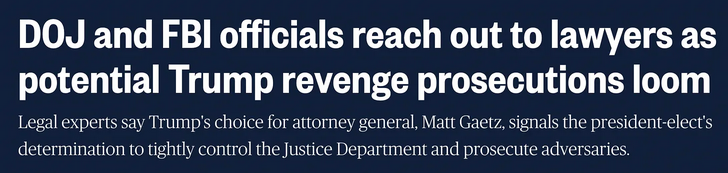
Oh no, Trump might “prosecute adversaries”.

November 10, 2024

Post-election thoughts from Andrew Sullivan

Filed under: Media, Politics, USA — Tags: , , , — Nicholas @ 05:00

Given how … anguishedAndrew Sullivan seemed to be during the run-up to voting day, he’s either calmed down dramatically or he’s renounced the over-the-top hysterics for the moment:

    You can always spot a fool, for he is the man who will tell you he knows who is going to win an election. But an election is a living thing — you might almost say, the most vigorously alive thing there is — with thousands upon thousands of brains and limbs and eyes and thoughts and desires, and it will wriggle and turn and run off in directions no one ever predicted, sometimes just for the joy of proving the wiseacres wrong
    Robert Harris in his novel Imperium (2006).

This last decade or so, we’ve heard an awful lot about the new fragility of American democracy. So it bears noting that, after much angst, we somehow pulled this election off. Kudos to the election workers. Kudos to the voters for providing a clear and decisive result. Kudos to Harris for the graceful concession (in stark contrast to Trump in 2020). We have not lurched into another crisis of democratic legitimacy. No windows are being smashed; no statues are being torn down.

And there is, yes, a mandate. When one party wins the presidency, Senate, and probably the House, that’s usually the case. But this year, the policy divides were particularly clear, and the shift so clear and in one direction everywhere. Americans have voted for much tighter control of immigration, fewer wars, more protectionism, lower taxes, and an emphatic repudiation of identity politics. In the immortal words of Mencken: “Democracy is the theory that the common people know what they want, and deserve to get it good and hard.” We’ll soon see how that pans out.

But the good news is that we have become less tribal. The president whom Ta-Nehisi Coates derided as whiteness personified just won more non-white votes than any Republican since Nixon. The allegedly xenophobic campaigner against illegal immigration gained massively among various Spanish-speaking constituencies and many legal immigrants, especially men. The champion of rural whites somehow also made his biggest electoral gains in the big, non-white cities, and among Hispanic voters in Texas border counties. A Republican whom the left and the legacy media called a “white supremacist” won about 24 percent of the black male vote and 47 percent of the Latino male vote.

What about the huge impact of enraged women we were told about, especially in the wake of the Selzer poll in Iowa? Again: a nothingburger. Biden won women by 12 points; Harris — a woman candidate after the end of Roe — won by only 7 points. Ruy Teixeira runs through the other demos here. Gen Z? Biden won women under 30 by 32 points, and Harris by a mere 18. Meanwhile, men under 30 went from +15 for Biden to +14 for Trump — a truly staggering swing! Trump gained among Jews and Muslims! Harris was the candidate of the Upper West Side. The Bronx moved massively to Trump.

How could an entire left-liberal worldview be more comprehensibly dismantled by reality? And yet, the primary response among my own liberal friends was rage at the electorate. They texted me to insist that Harris lost because of white people — white women, in particular, their favorite bêtes blanches. The NYT’s resident race-baiter, Nikole Hannah-Jones, made her usual point:

    Since this nation’s inception large swaths of white Americans — including white women — have claimed a belief in democracy while actually enforcing a white ethnocracy.

In fact, among the few demos where Harris did better than Biden were white people earning over $100,000 a year, white women, white men, and “LGBT” voters — most of whom are now young, bi, white women in straight relationships. Warming to her racism, NHJ went after “the anti-Blackness … in Latino cultures as well.” Here’s how Joan Walsh put it:

    [Biden]’s got a couple things that my girl Kamala didn’t have. A penis, and that nice white skin.

But more whites went for Kamala than Biden! If you want proof that critical race, gender and queer theory is unfalsifiable, you just got it. The Dems and most of the legacy media have literally no frame of reference outside “white-bad/black-and-brown-good” and “men-bad/women-good”.

And no, Harris did not run a “flawless campaign“. Please. She ran one with no coherent message. She picked a woke weirdo as veep. She embraced neocons like Liz Cheney while never breaking decisively with Biden or the left. She had no credible answers on immigration and inflation. She had nothing coherent to say on foreign policy. She thought Cardi B and Stephen Colbert were arguments.

On Trump as a potential dictator, Americans keep telling us they don’t really buy it. They may be wrong … and maybe they are. But if you are going to respect democracy, you also need to respect their judgment, and honor their choice. I suspect they think he will throw his weight around, but will be constrained as he was last time around by the ability of the American system to stymie most radical moves. But they want him to end mass illegal immigration, and I suspect they will give him some leeway to get there. The Dems had their chance to enforce the border and instead chose to open the floodgates. What Trump now does is therefore their responsibility too.

The 1896 US Presidential election

Filed under: History, Media, Politics, USA — Tags: , , , , , , — Nicholas @ 03:00

In the latest SHuSH newsletter, Ken Whyte looks back to the 1896 contest between William McKinley and William Jennings Bryan:

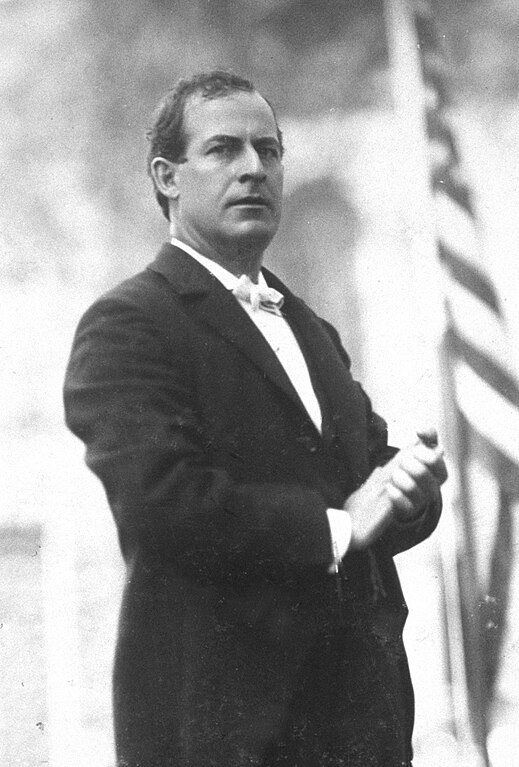
William Jennings Bryan, Democratic party presidential candidate, standing on stage next to American flag, 3 October 1896.
LOC photo LC-USZC2-6259 via Wikimedia Commons.

The 1880s and 1890s saw an enormous expansion in the number of newspapers in America. New printing technologies had drastically reduced barriers to entry in the newspaper field, while the emergence of consumer advertising was making the business more lucrative. By the election of 1896, there were forty-eight daily newspapers in New York (Brooklyn had several more), each vying for the attention of some portion of the city’s three million souls. The major papers routinely produced three or four editions a day, and as many as a dozen on a hot news day, making for a 24/7 news environment long before the term was coined. The individual newspapers were distinguished by their politics, ethnic, and class orientations. They advocated vigorously, often shamelessly, and occasionally dishonestly for the interests of their readers. Similar dynamics were afoot everywhere. America, in the 1890s, was noisy as hell.

Republican nominee William McKinley was the respectable candidate in 1896, heavily favoured. He had a state-of-the-art organization, buckets of money, and vast newspaper support, even among important Democratic publishers such as Joseph Pulitzer. The Democrats fielded William Jennings Bryan, who looked to be the weak link in his own campaign. He was a relatively unknown and untested ex-congressman from Nebraska, just thirty-six-years-old, a messianic populist with a mesmerizing voice and radical views. A last-minute candidate, he was selected on the convention floor over Richard P. Bland, against the protests of the party establishment.

Bryan broke all the norms of politics in 1896. At the time, it was believed that the dignified approach to campaigning was to sit on one’s porch and let party professionals speak on one’s behalf. Grover Cleveland had made eight speeches and journeyed 312 miles in his three presidential campaigns (1884, 1888, 1892). Bryan spent almost his entire campaign on the rails, holding rallies in town after town. He travelled 18,000 miles and talked to as many as five million Americans. He unabashedly championed the indigent and oppressed against Wall Street and Washington elites.

Inflation was the central issue of the 1896 campaign. The US was on the gold standard at the time, meaning that the amount of money in circulation was limited by the amount of gold held by the treasury. Gold happened to be scarce, resulting in an extended period of deflation, a central factor in the major economic depression of the early 1890s. The effects were felt disproportionately by the poor and working class. Bryan advocated the monetization of silver (in addition to gold) as a means of increasing the money supply and reflating the economy. This was viewed by the establishment as an economic heresy (not so much today). Bryan was viewed as a saviour by his followers, and that’s certainly how he saw himself.

The New York Sun heard among the Democrats “the murmur of the assailants of existing institutions, the shriek of the wild-eyed”. The New York Herald warned that Bryan’s supporters, disproportionately in the west and south, represented “populism and Communism” and “crimes against the nation” on par with secession. The New York Tribune warned that the Democrats’ “burn-down-your-cities platform” would lead to pillage and riot and “deform the human soul”. The New York Times asked, in all sincerity, “Is Mr. Bryan Crazy?” and spoke to a prominent alienist who was convinced that the election of the Democrat would put “a madman in the White House”. That Bryan’s support was especially strong among new Americans — the nation was amid an unprecedented wave of immigration — was especially disconcerting to the establishment. His followers were a “freaky”, “howling”, “aggregation of aliens”, according to the Times.

The only major New York newspaper to support the Democrats that season was Hearst’s New York Journal, a new, inexpensive, and wildly popular daily. I wrote about this in The Uncrowned King: The Sensational Rise of William Randolph Hearst. Loathed by the afore-mentioned respectable sheets, the Journal became the de facto publicity arm of the Bryan campaign and Hearst became the Elon Musk of his time.
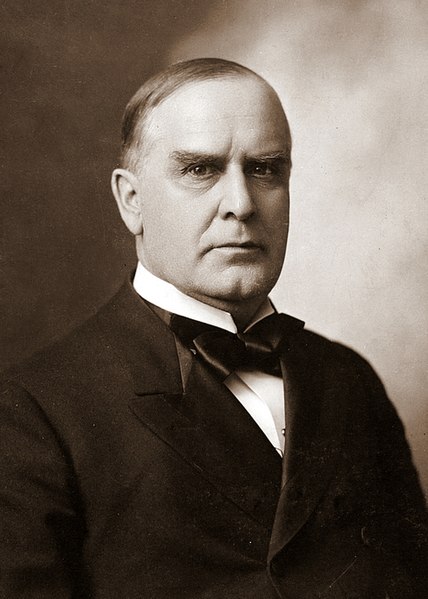
William McKinley, 1896.
Photo by the Courtney Art Studio via Wikimedia Commons.

The unobjectionable McKinley didn’t offer Democrats much of a target, but his campaign was being managed and funded by Ohio shipping and steel magnate Mark Hanna. The Journal had learned that Hanna and a syndicate of wealthy Republicans had previously bailed out McKinley from a failed business venture. Hearst’s cartoonists portrayed Hanna as a rapacious plutocratic brute (accessorized with bulging sacks of money or the white skulls of laborers) and McKinley as his trained monkey or puppet: “No one reaches the McKinley eye or speaks one word to the McKinley ear without the password of Hanna. He has McKinley in his clutch as ever did hawk have chicken … Hanna and his syndicate are breaking and buying and begging and bullying a road for McKinley to the White House. And when he’s there, Hanna and the others will shuffle him and deal him like a deck of cards.” The cartoons were criticized as cruel, distorted, and perverted. They were hugely effective.

Caught off guard by Bryan’s tactics, but unwilling to put McKinley on the road, Hanna instead arranged for 750,000 people from thirty states to visit Canton, Ohio and see McKinley speak from his front porch. He meanwhile made some of the most audacious fundraising pitches Wall Street had ever heard. Instead of asking for donations, he “levied” banks and insurers a percentage of their assets, demanding the Carnegies, Rockefellers, and Morgans pay to defend the American way from democratic monetary lunatics. Standard Oil alone coughed up $250,000 (the entire Bryan campaign spent about $350,000). Hanna printed and distributed a mind-boggling 250 million documents to a US population of about 70 million (the mails were the social media of the day), and fielded 1,400 speakers to spread the Republican gospel from town to town. All of this was unprecedented.

The Republicans generated their own conspiracy theories to counter the stories about Hanna’s controlling syndicate. Pulitzer’s New York World published a series of articles on The Great Silver Trust Conspiracy — “the richest, the most powerful and the most rapacious trust in the United States”. Bryan was said to be a puppet of this “secret silver society”, for which the World had no evidence beyond that the candidate was popular in silver mining states.

There were violent motifs throughout the campaign. The Republicans accused the Democrats of fostering division and rebellion, threatening national unity by pitting the south and the west against the east and the Mid-West. This was charged language with the Civil War still in living memory. Hanna funded a Patriotic Heroes’ Battalion comprising Union army generals who held 276 meetings in the last months of the campaign. They would ride out in full uniforms to a bugle call, advising the old soldiers who came out to see them to “vote as they shot”. Said one of their number: “The rebellion grew out of sectionalism … We cannot tolerate, will not tolerate, any man representing any party who attempts again to disregard the solemn admonitions of Washington to frown down upon any attempt to set one portion of the country against another.” Senior New York Republicans vowed that if the Democrats were elected, “we will not abide the decision”. These belligerent tactics were cheered by the majority of New York papers.
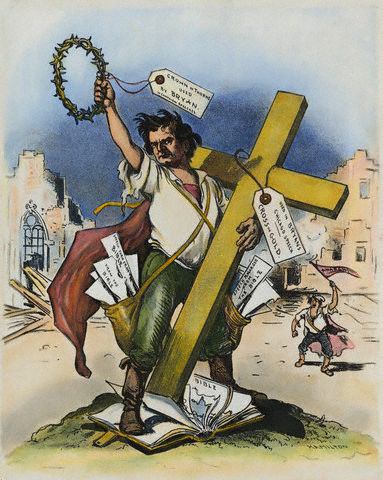
Democratic and populist leader William Jennings Bryan, climaxed his career when when he gave his famous “Cross of Gold” speech which won him the nomination at the age of 36.
Grant Hamilton cartoon for Judge magazine, 1896 via Wikimedia Commons.

Bryan did nothing to cool tempers by claiming, in his famous “cross of gold” speech, that he and working-class Americans were being crucified by financial and political elites.

On it went. There were many echoes of 1896 in 2024. The polarized electorate, the last-minute candidate, record spending, unprecedented campaign tactics, populism and personal charisma, relentless ad hominem attacks, class and culture and regional warfare, inflation, immigration, racism, misinformation and conspiracy theories, comedians and plutocrats, threats of authoritarianism and violence and revolution, all of it massively amplified, and sometimes generated, by messy new media.

Of course, some of the echoes are coincidental, and there are also many contrasts. It was a different electorate. The alignment of the parties bore little resemblance to what we see today. Bryan, aside from his megalomania and zealotry, was as personally decent as Trump isn’t. And Bryan lost the campaign.

My point is I don’t think it’s an accident that the likes of Bryan and Trump — mavericks who thoroughly dominate their parties (both thrice nominated) through a direct and unshakeable bond with their followers — surface when the public sphere is most chaotic. New media environments, by their nature, are amateurish, turbulent, unsettling. There are fewer guardrails, which is a major reason outsiders and their followers gravitate to them. They see a way to change the rules and end-run established media (establishment candidates are naturally more comfortable using established channels to reach voters). New forms of political communication develop, contributing to new political norms, tactics, and strategies, and long-lasting political realignments.

For better or worse.

November 7, 2024

Donald Trump II: The Trumpening

Filed under: Media, Politics, USA — Tags: , , , — Nicholas @ 03:00

I went to bed on Tuesday night with assurances from several sources that the election was still very close and that it might take many more hours to determine the winner — if any — of the 2024 US federal election. Roughly an hour later, it was apparently all over but the crying:

We’re sitting down to write this at 2 a.m., and by now it’s clear: Donald Trump is set to be the 47th president of the United States, and on track to win the electoral college and the popular vote. It is a stunning comeback.

The red wave that wasn’t in 2022 came crashing down tonight. Republicans have retaken control of the Senate. Control of Congress is still in the balance.

Going into tonight, Nate Silver ran 80,000 simulations of what could happen. In 40,012 of them, Kamala Harris won. Every pollster and pundit said the same: It was gonna be a squeaker. Too close to call. We wouldn’t know for days, maybe even weeks!

That’s not how it went down. Not at all.

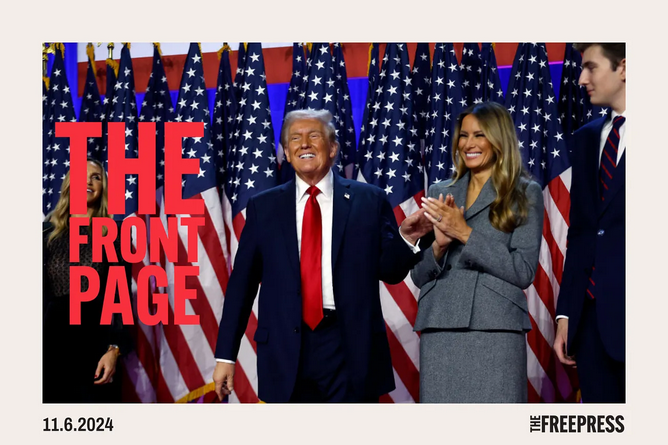
Trump had won Pennsylvania before the night was out. And by 2:30 in the morning, he was onstage, surrounded by his family and Dana White, delivering his victory speech in West Palm Beach.

Tonight at our election party, the British historian Simon Sebag Montefiore said he hadn’t seen a comeback like this since Charles de Gaulle. But perhaps the only American echo of tonight is Richard Nixon. As Commentary editor John Podhoretz wrote on Twitter: “This is the most staggering political comeback in American history. Period. Nixon has held the comeback trophy for nearly 60 years. No longer.”

Why Trump won so convincingly — and why Kamala lost so fully — are themes we’ll cover over the coming weeks. But for now, enough from us.

In the same Front Page summary:

This race was the Democrats’ to lose. And they blew it. Badly. As of 2 a.m., there wasn’t a single county in the country in which Harris outperformed Joe Biden. What went wrong? Peter Savodnik has some ideas.

“They didn’t lose because they didn’t spend enough money,” writes Peter. “They didn’t lose because they failed to trot out enough celebrity influencers. They lost because they were consumed by their own self-flattery, their own sense of self-importance.”

And above all else, they lost because they lied. “They seemed to think that Americans wouldn’t mind that they had pretended Joe Biden was ‘sharp as a tack’, that they actually orchestrated a behind-the-scenes switcheroo, that the party that portrayed itself as the nation’s answer to fascism nominated its standard-bearer without consulting a single voter.”

Last night, the truth caught up with them.

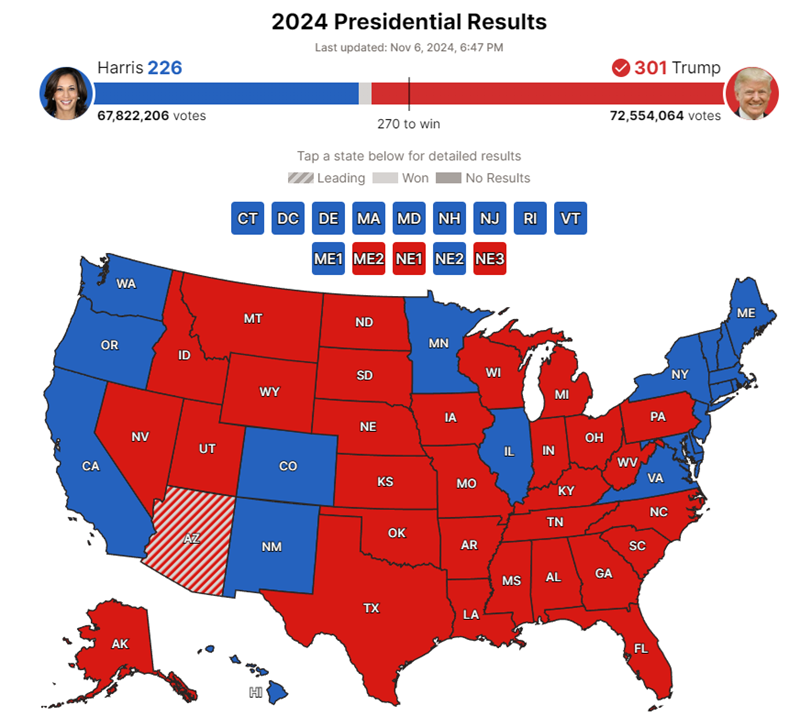
Kamala Harris failed to retain Joe Biden’s record 81 million Democratic voters, falling back to about the same level of support (67 million) as Hillary Clinton in 2016 and Barack Obama in 2012. Weird.

Freddie deBoer wonders what the Democrats will end up blaming this loss on:

You can’t blame losing the popular vote and all seven swing states on Jill Stein.

You can’t blame losing the popular vote and all seven swing states on Putin and the Russians.

You can’t blame losing the popular vote and all seven swing states on Bernie Sanders and his supporters.

You can’t blame losing the popular vote and all seven swing states on Joe Rogan.

You can’t blame losing the popular vote and all seven swing states on Glenn Greenwald and The Young Turks.

You can’t blame losing the popular vote and all seven swing states on the decision to run with Tim Walz.

You can’t blame losing the popular vote and all seven swing states on the New York Times and its occasional Democrat-skeptical opinion pieces.

You can’t blame losing the popular vote and all seven swing states on Joe Biden for getting out of the race too late.

You can’t pull all the usual Democrat tricks. You have to actually figure out what’s wrong with your party, root and branch. Because you called the guy a fascist, again, and he walked right through that insult to the Oval Office, again. And the eternal question presents itself: what are you going to do about it?

Of course, some Trump supporters can’t help but get a little triumphal:

Donald J Trump has been elevated to the purple by the prince-electors at Aachen, and coronated in Rome by the Pope, so that he is now Imperator of the Holy Roman Empire, and of the Empire of Man, Rex Quondam et Rexque Futurum.

All Glory to God and to his anointed!

The Tribune Assembly of the Commoners in America, who retain a quaint custom of confirming the Electoral determination by local ballot, have also granted His Imperial Majesty the Mandate of the Commons.

[…]

JD Vance will be Executive-for-Life, and Elon the first Transhuman Immortal of the Noosphere. So far, so good.

Purple haired girls will no longer be allowed to twirk and grind in public, as show in the first scene, and modest dress codes will be decreed by the National Census Office. No more tattoos nor face piercings.

Also, involuntary concubinage will ensure a reverse of the demographic decline, the return to the fertility levels needed to colonize Mars.

November 5, 2024

“… in an effort at harm reduction, I selected the proven authoritarian over the aspiring totalitarian”

Filed under: Media, Politics, USA — Tags: , , , , , — Nicholas @ 03:00

In the National Post, J.D. Tuccille explains why he voted for “literally Hitler” instead of “the historic first woman president” in today’s US election:

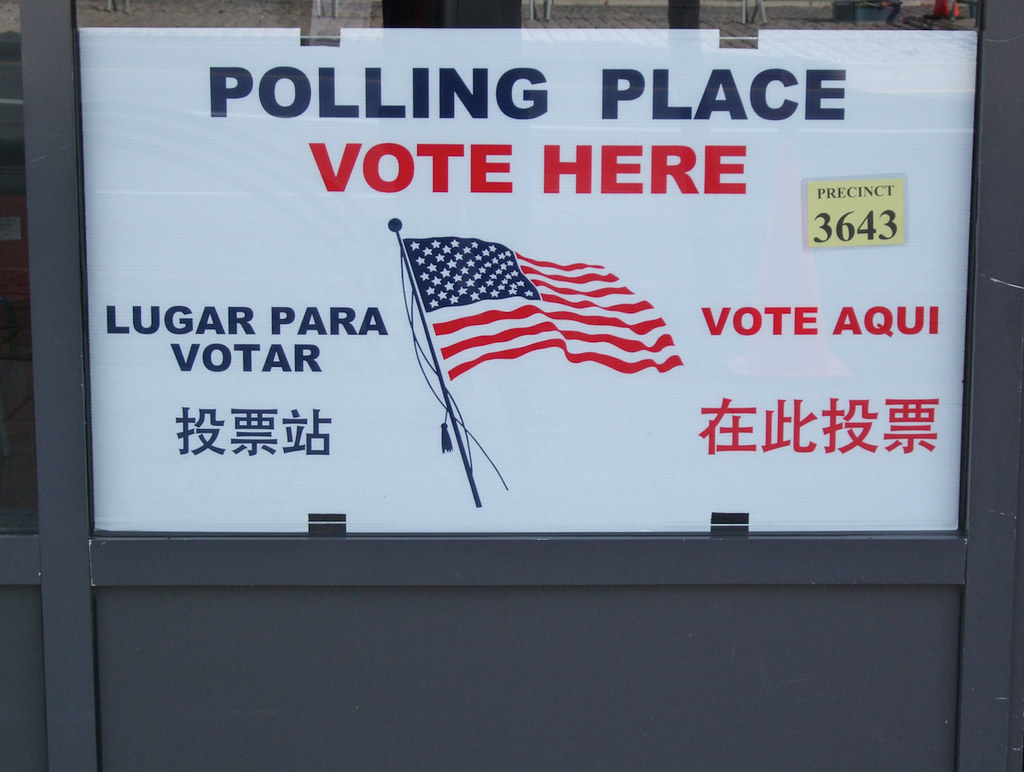
“Polling Place Vote Here” by Scott Beale is licensed under CC BY-NC-ND 2.0 .

For me and millions of other Americans, the 2024 U.S. election is already effectively over. Like most Arizonans, I mailed in my ballot and it awaits the count. Now, I suffer through the remaining days of hectoring political ads and finger-waggers nagging me about how I should have voted. This country doesn’t lack strong opinions about two of the worst candidates to ever grace a presidential race. Unfortunately, I felt obliged to vote for one of them, and in an effort at harm reduction, I selected the proven authoritarian over the aspiring totalitarian; I marked my ballot for Donald Trump.

There’s no doubt that Trump is a thin-skinned narcissist. Legendarily intolerant of criticism or even disagreement, he wants broadcast licenses pulled from news networks that he thinks have been mean to him and called for government to crack down on cable operations that aren’t actually subject to government regulation. The man needs perspective as much as he needs a social studies class.

This is, many Democrats and their media supporters will eagerly tell you, evidence of “fascism“. But, as John Bolton, Trump’s former national security adviser, told The New York Times, “Trump isn’t capable of philosophical thought”. Trump’s authoritarianism isn’t an ideology; it’s a personality disorder.

That should be enough to disqualify a candidate for president. You’d think that, in a nation of 330 million people, if one major party chooses to run a profoundly problematic and authoritarian nominee for president, the other could find somebody more qualified. But you’d be wrong. In Kamala Harris, Democrats picked a vacuous sociopath uninterested in policy, but willing to serve as a vehicle for those around her who have tried their hands at totalitarian speech controls, and who are increasingly hostile to Israel, the only majority-Jewish state on the planet, and to Jews as a people.

In 2021, The Washington Post reported that former staffers for Vice President Harris complained she “would refuse to wade into briefing materials prepared by staff members, then berate employees when she appeared unprepared”. That failure to prepare for responsibilities and public appearances feeds her propensity for word salads, leaving the impression she’s reciting the results of a dropped Scrabble board.

In a Biden-Harris administration already lacking for adult supervision — President Joe Biden’s failing mental faculties are now a matter of record, as is his inability to make decisions — that suggests a potential President Harris would have no firmer hand on the wheel. That would leave the relatively faceless minions around her free to continue to exercise their instincts. And their instincts are terrible.

November 1, 2024

End of typical US political discussion – “I can’t even talk to you about this stuff — you’re so irrational!”

Filed under: Media, Politics, USA — Tags: , , , , , — Nicholas @ 03:00

Chris Bray on the widespread phenomenon of progressives who “can’t even” their way out of political discussions that don’t confirm their priors:

In a long thread on his many discussions over the last year with Trump and Harris supporters, a Daily Wire editor drops this contrast down in the middle:

I live in a deep blue zone, and I have these vibes-and-racism conversations several times a week. I learned today, face-to-face, that Donald Trump hates everyone who isn’t white. I mean, he despises them. All of them. These conversations go like this:

    A: Trump is SUCH a fucking racist, man, he hates everyone who isn’t white, how can you even support someone like that?

    B: Why is he racist?

    A: Are you being serious right now? C’mon, man!

    B: No, but why is he racist?

    A: I can’t believe you’re defending him!

    B: Okay, look: Donald Trump has already been the president for four years. What would you say were the top three racist policies he implemented?

    A: You know what, I’m done with this discussion.

    B: I’d settle for one really good one. What big racist policy did he implement?

    A: I can’t even talk to you about this stuff — you’re so irrational!

Over and over and over and over again, these conversations hit the “I can’t even talk to you about this stuff” moment, the hard shutdown.

  1. What evidence can you offer for that view?
  2. [cognitive program shuts down]

Certain trigger terms warn you that the shutdown is moments away: conspiracy theory, disinformation, “what are you even talking about?” This personal observation about social interaction applies equally well to CNN panel discussions, by the way.

I’ve written before that I had a conversation just after the 2016 election in which I was asked how I could support someone who was going to put my own friends and family in the camps, man, he’s gonna put us in the fucking camps!

Eight years later, and after four years of a Trump presidency in which no one went to the camps, Trump can’t be allowed to return to the White House because, guess what, he’ll send us all to the camps:

October 31, 2024

The US federal election goes into garbage time

Filed under: Media, Politics, USA — Tags: , , , , , — Nicholas @ 04:00

Lauren Smith on the latest attempt by Joe Biden to suck the oxygen out of the room (Kamala Harris was also speaking while Biden’s “gaffe” grabbed the media’s full attention):

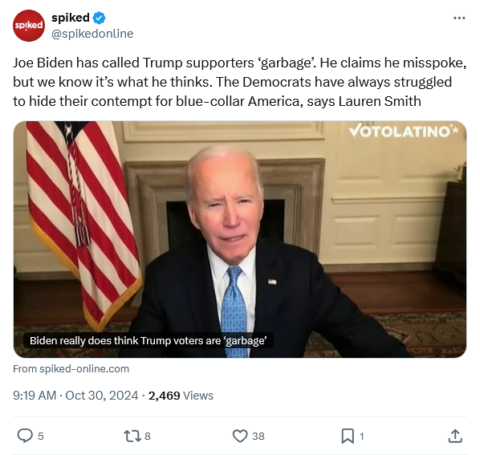
US president Joe Biden has re-emerged from wherever he was being hidden to hand Donald Trump an incredible, accidental boost. In a rare public appearance, he branded Trump’s supporters “garbage“.

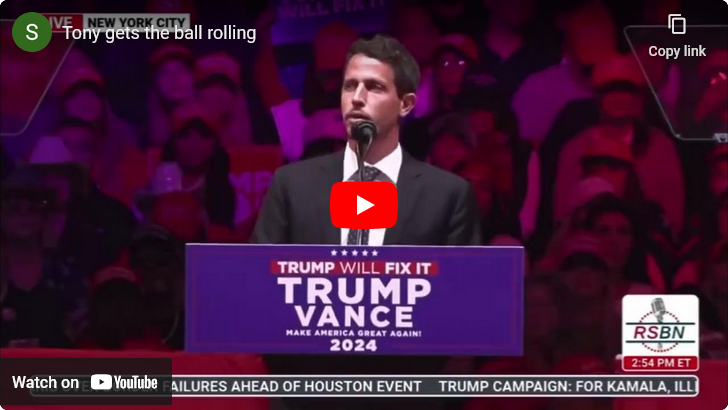
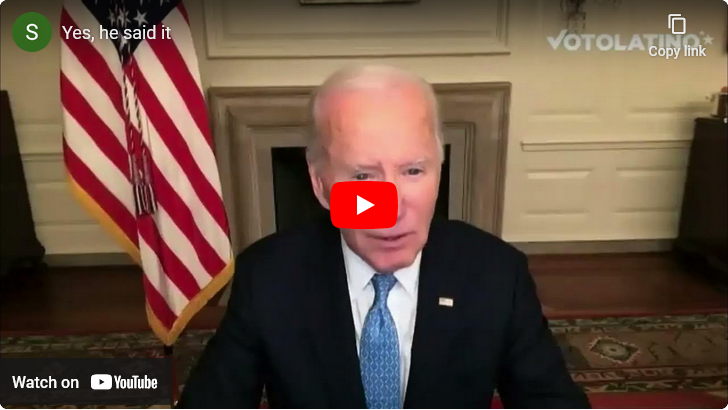
For some reason, the president decided to wade into the row over a joke made by comedian Tony Hinchcliffe at a Trump rally in Madison Square Garden last weekend. Hinchcliffe described Puerto Rico as a “floating island of garbage”, sparking some confected outrage among those pretending not to know he was joking. In response, while speaking to Hispanic advocacy group Voto Latino, Biden said: “The only garbage I see floating out here is [Trump’s] supporters”.

The Republicans have understandably seized on the remark. Trump’s running mate, JD Vance, slammed it as “disgusting”. Florida senator Marco Rubio repeated the smear to Trump supporters at a rally in Allentown, Pennsylvania last night, to furious boos from the crowd.

The White House then rushed to try to retract the comments. Today, in a statement on X, Biden claimed that he was actually talking about the “hateful rhetoric” being “spewed” at the rally, not about Trump’s supporters themselves. That, he says, is “all I meant to say”.

But that is plainly not what he said. And everyone can guess it’s probably not what he meant, either. As Trump pointed out at the Allentown rally yesterday, Biden’s “garbage” gaffe is highly reminiscent of Hillary Clinton’s infamous “deplorables” outburst. During her 2016 presidential campaign, she described “half” of Trump’s supporters as “racist, sexist, xenophobic, Islamophobic”, saying they all belonged in a “basket of deplorables”. It was a blunder that many, including Clinton herself, believe cost her the election.

Jim Treacher investigates what he calls “the Case of the Planted Apostrophe” as the bulk of the legacy media rallied to try to cover up, mitigate, or explain away Biden’s “garbage” comment:

I think I heard something about MSNBC intercutting footage from the ’39 rally with the Trump rally? I haven’t watched that network since they fired Olbermann, but it sounds like something they’d do.

Little did they all know what a gift they were about to be handed. One of the speakers at the rally was comedian and Kill Tony podcast host Tony Hinchcliffe, and everybody lost their minds about this joke:

Perfect. The headline wrote itself: TRUMP RALLY BASHES PUERTO RICANS!!!

If Trump wanted to convince everyone he’s not a bigot, Hinchcliffe certainly didn’t do him any favors. Even though, as a few lonesome bloggers shouted into the wilderness, it was a joke.1

The entire journalism industry then spent 48 solid hours pouncing and seizing on Hinchcliffe’s unfortunate wisecrack. “See? Do you see how racist they are? They’re just so … so … racist!!”

Oh, they were so happy.

But they forgot one thing: Grandpa Joe is still around.

And he wants to help.

Emphasis mine:

    The Puerto Rican that I know, or Puerto Rico where I’m, in my home state of Delaware, they’re good, decent, honorable people. The only garbage I see floating out there is his supporters. His, his demonization of Latinos is unconscionable.

Oops.

Yes, Joe Biden just called Trump supporters “garbage”. It’s the only clear sentence in that whole paragraph of gibberish.

There are maybe six million Puerto Ricans in America. In 2020, there were something like 75 million Trump voters. I’m no mathematician, but that’s a lot more. If alienating the first group is bad, then alienating the second group is much, much worse.

No matter how much Joe Scarborough hates them.

If a dumb joke by a podcast host matters, then so does the sitting president of the United States telling tens of millions of voters that they’re “garbage”.


    1. The journos are now digging into Hinchcliffe’s voting history. They’re investigating a comedian for telling a joke. And they wonder why we hate them.

October 30, 2024

Less than a week of increasingly desperate measures left to go …

Filed under: Media, Politics, USA — Tags: , , , , , , , — Nicholas @ 05:00

I’m referring to the antics of the major US political parties as the formal date of the US election heaves into sight. On the one hand, Theophilus Chilton characterizes the Democrats as “cornered animals”:

“Polling Place Vote Here” by Scott Beale is licensed under CC BY-NC-ND 2.0 .

With just about a week left before Election Day, things have definitely been heating up. At this point, it’s pretty apparent that all of the indicators are in Trump’s favour — and this is driving the Democrats absolutely nuts (even more than they usually are). A month ago, one could have definitely made the case that Kamala Harris had a good chance of winning. Now, that seems pretty far-fetched outside of the Democrats figuring out a way to fraud the vote so hard that they can overcome their ever-worsening situation in basically every swing state. As we enter this final week, Trump definitely has the momentum and is conducting an upbeat, optimistic campaign. Meanwhile, Kamala and her surrogates seem palpably despondent, screaming at their microphones and rolling out one ill-conceived “October surprise” after another at an increasingly frenetic pace.

That this is the case seems to find a lot of varying data points to support it. Public-facing polling is always subject to a healthy dose of skepticism (“… gonna need to see some internals there, bub”), but even that seems to have moved in the direction of a possible outright Trumpian popular vote victory. It’s obvious where both campaigns’ internal polling is trending, as Trump heads to states like New Mexico and Virginia to expand the slate of contested states while Kamala does damage control in bright Blue urban centres where her party’s early voting numbers have collapsed. Republicans have been overperforming bigly in every swing state’s early voting. Newspapers like the Washington Post and techbros like Jeff Bezos (with access to tons of relevant Big Data) are starting to make nice with Trump because their information is pointing them in that direction. At a demotic level, Trump supporters appear loud and energised in all sorts of places where Trump support has not been traditionally robust, while Kamala’s supporters seem dejected and subdued — when they’re not angrily screaming at small children. On and on, the “non-traditional” indicators keep pointing in the same direction.

At this point, it’s pretty obvious that there is a preference cascade that is moving in Trump’s direction.

Now, if we were dealing with normal people, getting the kind of feedback that an electoral loss like this represents would cause the Left to step back and reassess what they’re doing. They’d take a moment to “look in the mirror”, so to speak. But understand that we are not dealing with normal people. Losing elections (or at least losing the actual voting, the “election” is a different matter altogether) does not send them the same message it sends to everyone else. Instead of introspection, it merely generates anger. It tells them that they need to screech harder, steal harder, and smash harder. After all, these people are on the Right Side of History and anyone who opposes them is a “fascist” and a Nazi (their actual closing argument this week, by the way). And as we all know, heroes like Indiana Jones punch Nazis. If the election is lost, it’s not because the Democrats ran an absolutely clueless, tone-deaf campaign that basically only appealed to wine aunts, gay men, and twenty-something sluts. It’s because Trump is a Russian asset and his supporters accessed a secret reservoir of racism, sexism, and transphobia like it was some kind of evil superpower that allowed them to scurrilously subvert the Good People in America. In other words, the Left will only double down on their own intrinsic madness.

I mean, this isn’t just a theory — we’re already starting to see this pattern of behaviour take place even though Harris hasn’t even lost yet. Celebrities are already starting up with their bidecadal threats to leave the country if their candidate loses. Keith Olbermann wants Elon Musk to be arrested and lose all of his government contracts for the crime of not suppressing oppositional speech on X like it used to be censored back in the old days. The ever-amusing Will Stancil is gloompilling and appears to be on the verge of either suicide or a murder spree. These people are not well. Not at all.

On the other hand, Trump is not only Hitler, Mussolini and Stalin re-incarnated with his red-hatted brownshirts terrorizing the land … he’s literally the Devil:

My current prediction — based on the average of the Trump v Harris opinion polls at Real Clear Politics — is that President Trump will win both the popular vote and the Electoral College in the 2024 election. This prediction is not only based on President Trump now effectively tying with Vice-President Harris in the average of polls, but even more on that VP Harris has never polled as well as Secretary Clinton did at the relevant points in the 2016 campaign.

What reading this Substack Note brought out very clearly was how very different this US Presidential election seems to folk on the two sides of a deeply politically polarised polity.

On the VP Harris side, the salient view is some version of “how can you even consider voting for That Man!?” This is usually attached to a whole list of sins and other claims, of varying accuracy. This is the Trump-The-Devil view. The election is all about Trump and how appalling he is, both as a person and as a political figure. Sure there are other issues (e.g. climate change, abortion) but the lead and focus is how awful Trump is.

To deal with the reality that President Trump has already been President, there is regularly extra focus on his personal Devilness plus various claims about how a second Trump Presidency would be so much worse, for whatever reasons.

Back in the 2016 campaign, it was noted that Trump’s supporters treated what he said seriously but not literally, while his opponents treated his words literally but not seriously. That is, his opponents focused on Trump’s erratic connection to accuracy in his statements but did not take the political pressure points he mobilised anywhere near as seriously. Those were simply ignored and/or dropped into “the bigotry, so ignore” box. Conversely, his supporters were being mobilised by precisely those political pressure points.

The focus on President Trump’s willingness to say things for their rhetorical effect rather than their accuracy loses some of its moral high ground, given how willing President Trump’s opponents have been willing to make statements about him for rhetorical effect, rather than accuracy.

October 26, 2024

Thank goodness somebody finally had the courage to say that Trump is a fascist

Filed under: Cancon, Media, Politics, USA — Tags: , , , , , — Nicholas @ 05:00

I mean it’s been obvious since his supporters have been goose-stepping around the Reichstag the White House in their brown shirts, red armbands, and constant chanting of the “Horst Wessel Lied“. How have the mainstream media managed to avoid seeing the clear inspiration of Trump’s Kampf and reporting it to credulous flyover state cretins Americans?

This week Kamala Harris described Donald Trump as a “fascist” who seeks “unchecked power”. Conservative commentators have expressed outrage at this absurd strategy, one which will doubtless backfire. And yet they appear to have forgotten that Trump has repeatedly referred to Harris as a “fascist” and, one on occasion, called her a “Marxist, communist, fascist, socialist”.

We have grown accustomed to the tactics of social media, the online crèche where those who bawl the loudest are rewarded with treats. What has become known as “Godwin’s Law” states that the longer an online discussion continues, the higher the probability that a comparison with the Nazis or Hitler will take place. Even Godwin has succumb to Godwin’s Law, penning an article for the Washington Post last December with the headline: “Yes, it’s okay to compare Trump to Hitler. Don’t let me stop you.”

If this election is going to be reduced to each candidate shouting “fascist” at the other, we may as well give up hope. I have never been more convinced of the growing infantilism of political discourse than in the last few weeks, or that the US is now divided – perhaps irreparably – between two groups who see the world in entirely incommensurable ways. With sensible discussion now seemingly impossible, the election has descended into a battle of memes.

Harris’s campaign team, for instance, gleefully embraced the “Brat” identity bestowed upon their candidate by Charli XCX. I must confess that I have no idea who Charli XCX might be. Her surname in Roman numerals means 100 – 10 + 10, so I can only assume she’s a classical scholar making a sardonic point about the philosophical principle of eternal recurrence.

Likewise, Trump’s now infamous reference to the eating of cats and dogs in Springfield, Ohio, has been remixed multiple times and shared more widely than any campaign statement. All of which is very funny, but one might be forgiven for yearning that the election of the leader of the free world should be a generally humourless affair. International conflicts are not best resolved through a series of “yo momma” jokes.

This week I wrote a piece for the Washington Post about George Orwell’s essays, and the lessons that might still be gleaned from them. Specifically, I pointed out that Orwell continually cautioned against tribal thinking, and is still despised today in certain left-wing circles for reminding his readers that authoritarianism can occur on both sides of the political aisle. I quoted Orwell’s essay “Notes on Nationalism” (1945), in which he identified “the habit of identifying oneself with a single nation or unit, placing it beyond good and evil and recognizing no other duty than that of advancing its interests.” I also quoted his dismay that the word “fascist” is so commonly misused. The piece can be read here.

I don’t often read the comments under my articles (except for here on Substack, of course), but I was interested to see how the overwhelmingly Democrat-supporting readership of the Washington Post might react. The comments are extremely revealing, given that most of those wading in seem determined to prove my point. I have rarely seen such unthinking and flagrant tribalism on display. Apparently, Trump is a literal “fascist”, and Orwell would have been the first to identify him as such. Orwell, of course, took up arms against actual fascists in Spain and was shot in the throat for his troubles. Would these commentators argue that if Orwell were alive today he would have packed up his gun and headed for the US in the run-up to this election? If not, why not?

The coming Hundred Days (?)

Filed under: Government, Media, Politics, USA — Tags: , , , — Nicholas @ 03:00

In spite of everything, I still lean toward optimism, so I can’t say that I agree with Kulak’s take here:

January 6th, 2021 — A protest that got out of hand or the worst act of insurrection since 1861, depending on your political preference.

    There are decades when weeks happens, and weeks in which decades happen
    – Variously attributed to Marx, Lenin, Stalin, Robespierre, Napoleon, and Steve Bannon

As of writing it is 18 days to the election on Nov 5th, and 94 days to Inauguration Day on Jan 20th.

Maybe the most knowledgeable meta-historian/Commentator alive today, whatifalthist, has predicted a civil conflict in which over 1000 Americans die will begin in this period …

And I’d put the odds of “A Conflict” in which over 1 million die involving the US overlapping with this period at something like 70-80%. If it doesn’t happen then Biden will have somehow played the perfect drunken master and embodied the Trifecta of God favouring “fools, drunkards, and the United States of America”.

That is a major American conflict: beginning, continuing, or dramatically ending within this period.

Civil War or “Troubles” is still slightly below a 50% likelihood … But that’s because I think The Ukraine or Israel wars going nuclear, a hot war with Iran, A Chinese move towards Taiwan, or what’s increasingly looking like a possible foreign backed Cartel-War on US soil (see Aurora) … might suck the oxygen out of a final domestic reckoning between America’s two political factions (Trump and Swamp) … at least until 2028 or 2032.

However America’s domestic instability is what’s driving the risk of escalation, miscalculation and uncertainty everywhere else and that will be the focus of this piece …

I am unprepared for what I think is coming … I’ve maybe thought about such an outcome for a decade now, I lived through 2020 and the Canadian Lockdowns with outrage and totalitarian anxiety (remember Canada was the testing ground for what they wanted to everywhere else, we got what Alex Jones only prophesied), and I’ve been a amateur and semi-professional war and preparedness commentator for 2 and a half years now … and it’s hit me how unprepared I am.

I’m more prepared than most, but, setting aside the political implications, I would trade A LOT for another 4 year election cycle of 2023 conditions to make money, network, buy kit, develop skills, read books, write articles, prepare, plot …

I’m doubtful I’ll get it.


I’m also painfully aware that a very large percentage of people and institutions would not financially or morally survive a long Biden “normalcy” … and that that desperation is driving a lot of the instability.


But ya, I’m already starting to intuitively anticipate/feel that hard times — things moving too fast — reactive loss of initiative feeling that I’ve only really felt when a relationship was imploding, during that one very rough exam season in Uni, at the height of the 2020 election-2021 Canadian Lockdowns, or those months when the doctors discussed amputation as an possibility …

And depending on who you are and your personal situation, you’re either keenly feeling that as well or blissfully unaware.

October 25, 2024

The “party of youth” is led by decrepit, doddering wrecks and time-serving political hacks

Filed under: Media, Politics, USA — Tags: , , , — Nicholas @ 05:00

You can tell a lot about a political party by looking not at its current leadership but at its “bench” … the next couple of generations of potential leaders. In the United States, the Republicans actually don’t look too bad for future leaders, but the Democrats are facing a bench of already-too-old and never-will-be-ready-for-primetime hacks, as the “groovy fossils” have been clinging on to power right to the bitter end and drive away competent potential successors:

Thirty years ago, Democratic politicians were people you disagreed with, but they were from and of the body of the people. They were us, our brothers and sisters who saw things differently. I lived in California when Jerry Brown was the governor, twice, and I liked him. He was a brilliant crank, colorful and interesting. Whatever else he was, he was never dumb. If you remember the 1992 Democratic primaries — yes, this is a deep reach — the campaign season was full of distinctly likeable people, with the exception of the one who prevailed. Paul Tsongas used to say, often, that he was socially liberal but absolutely certain that federal transfer payments were on an unsustainable trajectory. His best line in the primaries was, “I’m not Santa Claus.” He was an unorthodox Democrat, when it was still possible to be one of those.

The current cultural model of the Democratic Party has produced a generation of politicians who are nakedly stupid and empty.

I’ve compared the Biden years to the Brezhnev years, with the army of handlers covering up the decline of the old party hack who’s been elevated beyond his ability. What we’re seeing now is the generation of dismal, time-serving party hacks that comes after the old decaying party hack. Democrats have credentialed their leaders on their ability to fit themselves tightly to the ritual grooves carved into the discourse. When asked about transgender issues, they say, “Trans women are women”. They have the whole list of correct slogans available for the moments when the machine is expected to push those slogans through the slot. Hate has no home here! (applause) They above all do not say things that are not the slogans. It’s time for the billionaires to pay their fair share!

And so we get Kamala Harris, and holy cow please help me. This may be the first person in the history of the world who has never answered a question. She seems programmed in her core functions to turn away from the actual substance of anything that anyone might ever ask, like she was brainwashed after that one combat patrol that ended vaguely.

[…]

This isn’t an accident. A generation of Democratic politicians have been culturally trained into a deflective and hollow discourse. It’s fascinating to watch them sort JD Vance, who talks like a person, into the category of “weird”.

« Newer PostsOlder Posts »

Powered by WordPress