Quotulatiousness

August 6, 2022

Britain’s woke Stasi | The spiked podcast

spiked
Published 5 Aug 2022

The spiked team discusses the rise of Britain’s thoughtpolice, Nancy Pelosi’s Taiwan trip and Beyoncé’s act of self-censorship.
(more…)

August 1, 2022

Hannah Arendt on Adolf Eichmann’s exemplification of the “banality of evil”

Filed under: Books, Germany, History, WW2 — Tags: , , , , , — Nicholas @ 05:00

Lawrence W. Reed on what Hannah Arendt observed during Eichmann’s trial:

Nine months after the Nazi war criminal Adolf Eichmann died at the end of a noose in Israel, a controversial but thoughtful commentary about his trial appeared in The New Yorker. The public reaction stunned its author, the famed political theorist and Holocaust survivor Hannah Arendt (1906-1975). It was February 1963.

Arendt’s eyewitness assessment of Eichmann as “terribly and terrifyingly normal” took the world by surprise. Her phrase, “the banality of evil”, entered the lexicon of social science, probably forever. It was taken for granted that Eichmann, despite his soft-spoken and avuncular demeanor, must be a monster of epic proportions to play such an important role in one of the greatest crimes of the 20th Century.

“I was only following orders,” he claimed in the colorless, matter-of-fact fashion of a typical bureaucrat. The world thought his performance a fiendishly deceptive show, but Hannah Arendt concluded that Eichmann was indeed a rather “ordinary” and “unthinking” functionary.

[…]

As Arendt explained, “Going along with the rest and wanting to say ‘we’ were quite enough to make the greatest of all crimes possible.”

Eichmann was a “shallow” and “clueless” joiner, someone whose thoughts never ventured any deeper than how to become a cog in the great, historic Nazi machine. In a sense, he was a tool of Evil more than evil himself.

Commenting on Arendt’s “banality of evil” thesis, philosopher Thomas White writes, “Eichmann reminds us of the protagonist in Albert Camus’s novel The Stranger (1942), who randomly and casually kills a man, but then afterwards feels no remorse. There was no particular intention or obvious evil motive: the deed just ‘happened’.”

Perhaps Hannah Arendt underestimated Eichmann. He did, after all, attempt to conceal evidence and cover his tracks long before the Israelis nabbed him in Argentina in 1960 — facts which suggest he did indeed comprehend the gravity of his offenses. It is undeniable, however, that “ordinary” people are capable of horrific crimes when possessed with power or a desire to obtain it, especially if it helps them “fit in” with the gang that already wields it.

The big lesson of her thesis, I think, is this: If Evil comes calling, do not expect it to be stupid enough to advertise itself as such. It’s far more likely that it will look like your favorite uncle or your sweet grandmother. It just might cloak itself in grandiloquent platitudes like “equality”, “social justice”, and the “common good”. It could even be a prominent member of Parliament or Congress.

June 30, 2022

2020’s spike in homicides in the United States

Filed under: Law, Politics, USA — Tags: , , , , — Nicholas @ 03:00

At Astral Codex Ten, Scott Alexander looks at the rapid rise in murders across the United States in early 2020, and considers the common explanation for the phenomenon:

In my review of San Fransicko, I mentioned that it was hard to separate the effect of San Francisco’s local policies from the general 2020 spike in homicides, which I attributed to the Black Lives Matter protests and subsequent police pullback.

Several people in the comments questioned my attribution, saying that they’d read news articles saying the homicide spike was because of the pandemic, or that nobody knew what was causing the spike. I agree there are many articles like that, but I disagree with them. Here’s why:

Timing

When exactly did the spike start? The nation shut down for the pandemic in mid-March 2020, but the BLM protests didn’t start until after George Floyd’s death in late May 2020. So did the homicide spike start in March, or May?

Let’s check in with the Council on Criminal Justice:

It very clearly started in late May, not mid-March. The months of March, April, and early May had the same number of homicides as usual.

[…]

Police Pullback

My specific claim is that the protests caused police to do less policing in predominantly black areas. This could be because of any of:

  • Police interpreted the protests as a demand for less policing, and complied.
  • Police felt angry and disrespected after the protests, and decided to police less in order to show everybody how much they needed them.
  • Police worried they would be punished so severely for any fatal mistake that they made during policing that they were less willing to take the risk.
  • The “Defund The Police” movement actually resulted in police being defunded, either of literal funds or political capital, and that made it harder for them to police.

I don’t want to speculate on which of these factors was most decisive, only to say that at least one of them must be true, and that police did in fact pull back.

[…]

Victims

Who is being targeted in these extra murders?

The 2020 homicide spike primarily targeted blacks.

(there also seems to be a much smaller spike for Native Americans, but there are so few Natives that I think this might be random, or unrelated).

Most violent crime is within a racial community, and there was no corresponding rise in hate crimes the way I would expect if this was whites targeting blacks, so I think the perpetrators were most likely also black. This was a rise in the level of violence within black communities.

A priori there’s no reason to expect lockdowns and “cabin fever” to hit blacks much harder than every other ethnic group. But there are lots of reasons to expect that the Black Lives Matter protests would cause police to pull back from black communities in particular. I think this is independent evidence that the homicide spike was because of the protests and not the pandemic.

June 20, 2022

Criminal justice reform

At Time Well Spent, an interview with Charles Fain Lehman that considers the divergence between “what everyone knows” (based on how or if the media reports on an issue) and reality in the criminal justice system:

“Tombstone Courthouse State Historic Park” by August Rode is licensed under CC BY-NC-SA 2.0

I want to really dive into your work at City Journal and elsewhere because you’ve produced some of the most informative and sensible material on crime and crime policy I’ve found online, but before that I’m wondering: where does your interest in crime reporting come from, and what inspires you to keep going in the wake of what seems like a pro-crime movement capturing our newsrooms, elite colleges, and preeminent government institutions? You were the first person to support my interest in converting to Judaism as a black dude (as I mentioned in our dms), and so I have to ask also if Jewish culture centralizes the importance of issues of public safety in some way? Let’s get into it.

In some senses, my interest in crime is just a product of my natural contrarianism — I am rarely satisfied with the popular explanation. When I first started out as a reporter (at the Washington Free Beacon), I focused on domestic policy broadly, which I still do to some extent. I have a fluency with numbers, and so my first intuition was to dig into publicly available data. What I regularly found was that data about the criminal justice system simply did not align with the account of reality pushed by the criminal justice reform movement. Books like The New Jim Crow and documentaries like Thirteen give the impression that most people are in prison for marijuana possession on trumped up mandatory minima, all at the behest of the private prison-industrial complex. In reality, the majority of offenders are in prison for murder, marijuana possession is barely an asterisk in prison populations, mandatory minima explain little of the growth in prison populations, and few prisoners are held in private prisons at all. So I began to develop the sense that perhaps the story popular with people, even conservatives, my age was not precisely up to snuff.

The other issue that I think started me down the road to my “tough on crime” stances today was learning about death penalty abolitionism. I wrote a long essay (unfortunately never published) about the death of Clayton Lockett, who was executed in Oklahoma with a drug called midazolam, which lead to a fairly horrible death. What became apparent to me in researching the piece is that Oklahoma only used midazolam because anti-death-penalty activists had lobbied pharmaceutical firms to stop selling more reliable drugs, namely pentobarbital and thiopental, to states, forcing them to switch to less reliable methods. This sort of unintended consequence is actually a common theme across abolitionist activism. For example, in 2019 the Supreme Court blocked the execution of Vernon Madison, a 68-year-old man whose lawyers argued that dementia rendered him incompetent for execution. But of course, Madison only developed dementia because he’d been awaiting execution for literal decades, since he murdered a police officer in 1985.

These may seem like fairly specific issues, but I think they can allow us to identify a common theme with the progressive current in criminal justice reform, namely a belief that “justice” is primarily a concern of the accused — protecting his rights, defending him against the state, etc. Values like due process are, of course, important. But our discourse obfuscates entirely the basic fact that most criminals have committed heinous acts, and that the first responsibility of justice is to redress those harms through punishment. I am motivated, in other words, by a basic belief that justice matters, and that many reformers, in their zeal for fairness or equity or whatever, actively undermine the pursuit thereof.

I don’t think this is consciously a Jewish attitude, which is to say I don’t think I came to this sentiment because I was taught at some point that this is what Jews believed. That said, I tend to think the view that one of the ways that Judaism is distinguished from Christianity is the primacy of justice in the former, compared to the primacy of mercy in the latter. To the Christian, everyone is a sinner, and so the differences between me and the death row prisoner are ontologically trivial. (A view like this I think motivates someone like the Atlantic‘s Liz Bruenig, whom I credit as one of the few honest death penalty opponents, even as I disagree with her.) Judaism, by contrast, is fundamentally a religion of law: God says that these things ought to be done, and to live well is to do them. Of course, Judaism thinks a great deal about the balance of justice and mercy — the Talmud blunts the Torah‘s death penalties, for example. But Judaism always proceeds from the view that there are laws which should be respected, and that violating those laws requires consequences. So in that regard, I suspect that my views are inflected by Judaism. And indeed, coming around to those views I think helped me to think more about Judaism, too.

June 11, 2022

As federal minister of public safety, it’s Marco Mendicino’s job to lie to Canadians

At least, the headline is my interpretation of Matt Gurney‘s somewhat more cautious and measured assessment of the minister’s recent performance:

To celebrate World Press Freedom Day last month, Prime Minister Justin Trudeau said some wonderful things about the importance of truth.

“In the age of disinformation and misinformation,” the statement read, “independent, fact-based reporting is vital. We must all come together to support the work of journalists and double down in the fight against disinformation.”

Stirring stuff. But does the prime minister, his government and the Liberals’ many supporters think any of that actually applies to them?

Marco Mendicino is the federal minister of public safety — a tough job in challenging times. But I’ve come to the unsettling conclusion that Minister Mendicino is not being honest with Canadians.

On the issue of gun control, I’m sorry to say he’s simply lying.

Last week here at The Line, I analyzed the Liberals’ proposed Bill C-21, a package of gun-control measures. My views on this file differ sharply from the government’s. But I’d have hoped that we could at least agree that honesty should be central to the government’s proposals and publicity.

No dice. Last weekend, on CTV’s Question Period, the minister said this: “Bill C-21 doesn’t target law-abiding gun owners, it targets handgun violence, it targets organized crime … I have enormous respect for law-abiding gun owners …”

Well, let’s just go have a gander at the minister’s own webpage, eh? The Public Safety Ministry summarized the proposed legal and regulatory changes. There are 13 specific proposed changes to the Firearms Act. Two are “internal” to the government itself and don’t directly bear on gun owners, law-abiding or otherwise. One targets firearms-related marketing, another is exemptions for “elite sports shooters”. The remaining nine are entirely aimed at the “law-abiding gun owners” the minister insists aren’t being targeted. The page also notes that the government will also be changing regulations (separately from the proposed bill) relating to the safe storage of firearms and ammunition magazine limits … again, aimed entirely and solely at law-abiding gun owners. Indeed, along with some entirely process-focused Criminal Code proposals, there’s only one — one — proposed change that actually focuses on gun smuggling, which is widely believed by law enforcement to be the primary driver of firearms homicides in Canada. (Other planned changes are too vague to be properly analyzed in this context, but could plausibly be aimed at smuggling or blackmarket sales.)

But do the math. One clear mention of smuggling, at least 11 that only affect licensed owners. Denying this is dishonest, full stop.

Let’s be clear: the minister is entirely within his rights to argue that the proposed measures targeting lawful owners are necessary, appropriate and reasonable. These are legitimate debates. What is not up for debate is that the majority of these proposals exclusively target and/or affect law-abiding gun owners. There’s no ambiguity here. The meaning and purpose of C-21 is clear.

June 5, 2022

Odessa Madre, the female Al Capone of Washington DC

Filed under: Books, History, USA — Tags: , , , , , — Nicholas @ 03:00

In his latest excerpt from the full Weekly Dish, Andrew Sullivan reviews a new book from James Kirchick, Secret City: The Hidden History of Gay Washington, including a fascinating character I’d never heard of until now, a woman who ranked with Al Capone as an underworld boss during Prohibition:

Odessa Madre
Queen of Washington’s Underworld

Odessa Madre grew up in a section of Washington DC called Cowtown, because farm animals would occasionally wander its streets. Born in 1907 in abject poverty, she nonetheless lived and thrived in a deeply segregated city as a dark-skinned African-American woman. “There was only three Blacks at Dunbar (High School) back then — I mean Black like me,” she later recalled. “I had good diction, I knew the gestures, but they still made fun of me.” Dess, as many called her, was also a lesbian, and not too shy about it. “I just couldn’t keep no watchamacallit — a man. I guess I was just born to give orders not take them. What kind of man wants a woman like that?”

She went on to become one of the wealthiest African Americans in an overwhelmingly black city — hauling in over $100,000 a year at her peak — by becoming “the female Al Capone”. She ran brothels, pimped women, owned speakeasies, as well as owning a legit and legendary institution on 14th Street, Club Madre. Jamie Kirchick conjures up a scene from the 1940s:

    The crowd roared its approval whenever Madre, covered in mink furs and diamonds and trailed by a multiracial retinue of women for sale, entered the premises and sauntered over to the central table, denoted as hers by an ever-present vase holding a dozen long-stemmed roses.

Among the performers at the club: Billie Holiday, Duke Ellington and Count Basie. Madre kept all her illicit businesses alive by the old-fashioned method of bribing the fathomlessly corrupt DC police — “You know I practically ran that damn police department,” she later quipped — and became a renowned mediator of mob disputes across the country.

She also reflects a pattern that occurs throughout Kirchick’s new book, Secret City: The Hidden History of Gay Washington. She is within a core group of lesbians and gay men somehow living their best lives in the mid-20th Century, simultaneously at the center and the periphery of power. They were capable, whip-smart and hard-working, resilient beyond measure, yet never free from the threat of being taken down by the criminal law, exposure, blackmail, violence, public shaming and utter ostracism. Madre was convicted in 1949 on various drug offenses, spent over 13 years in prison on one charge or other, and died in 1990, without a penny to her name. Her corpse stayed in the morgue for a week until someone claimed it.

The same terrible story could be told of countless others. They were powerful until they were powerless. They lived on probation their entire lives.

One of several wonderful things about Kirchick’s book is that it doesn’t condescend to these people, but seeks to understand them on their own terms. It shows the tenacity, nerve, and brilliance of a woman like Madre — as well as her immiseration. It brings to crackling life the many gay men and lesbians who were under persecution so brutal and terrifying it is hard for anyone today to appreciate — and yet they lived, worked, loved and often succeeded. Some details (from the magazine, Washington Confidential) leap out:

    Today one can only marvel at the courage demonstrated by the “1700 Negro men, all dressed as women, who held a party on a Potomac River cruise incongruously named the Robert E Lee until it was rudely interrupted ben one hundred police officers.

It’s a rare book about gay people that isn’t burdened by the constrictive dogma of “queer theory” and “intersectionality”, free of the nonsense that the gay rights movement began in 1969. The book treats gay people as complex human beings, not socially constructed victims; and it is unafraid to note how gay men were for long by far the principal targets of American persecution.

June 1, 2022

Trudeau’s new gun control plans will do nothing to reduce criminal use of firearms … and he doesn’t care

The proposed new rules will impose costs on legal gun owners and restrict their access to certain firearms, and almost certainly do nothing at all to reduce the headline-grabbing crimes that supposedly prompted the new rules in the first place:

A 2018 Toronto Police Services publicity photo of guns seized in a recent operation.

In my 15 years or so of writing about firearms policy, here’s been a constant problem: gun policy is complicated, the broader public doesn’t know much about it, and it’s hard (impossible?) to make any coherent arguments without laying out the context, both of the specific proposals and the broader background. Working through what was announced yesterday, and how this clarifies a worrying shift in how the Liberals approach gun control, is going to be a bit of a process.

Get comfy.

As of Tuesday morning, we are short a lot of details, because the Liberals chose to make their high-publicity announcement before they provided any technical briefings. (We’ll come back to that later.) At first glance, it seems that lot of what the Liberals announced is stuff they’d either already committed to do or, in fact, already exists. (The Liberals?! Re-announcing stuff? Well, I never!) There is currently confusion about the ammunition magazine capacity limit — most non-gunnies won’t know the difference between an internal magazine and a detachable one, but it’s a huge difference, and the proposed legislation is unhelpfully vague. So stay tuned. But the actual centrepiece of the proposal, I have to admit, made me burst out laughing. On Twitter, I called it “peak Liberal”. It really is a pretty perfect example of what’s wrong with how the Liberals govern, but why they’re great at politics.

One of the jokes about Justin Trudeau when he entered politics was that he’d be much better suited to playing the role of political leader on TV than he would in real life. Several years later, the joke is on the Canadian voter because that’s turned out to be exactly the case: Trudeau loves posturing and pontificating for the cameras, and early in his first term as prime minister he became notorious for “unplanned” photo ops (despite being constantly accompanied by at least one staff photographer/videographer everywhere he went). I think this is one of the reasons the Liberals have been justly mocked for constantly re-announcing policies and programs — it looks good on camera.

The big reveal was a “freeze” on handgun sales in Canada, and their importation. Existing owners can keep theirs. It’s not clear exactly when this will go in effect, so I imagine gun stores across the land are going to set sales records in the next few days. Once in place, the sale or transfer of a handgun — from either a store to an individual or between individuals — will be eliminated. Again, “frozen”, as the Liberals call it.

At the most basic level, new government policies are intended to solve a problem: you see something that’s wrong with the status quo, and you try to enact a policy to improve it. Parties tend to wrap their policies in lots of rhetorical flourishes, but if you tune out what the politicians are saying and look at what they’re doing, you can get a decent sense of what their actual goal is. And there’s been an interesting shift in what the Liberals have been doing with gun control these last few years. Monday’s announcement is perhaps the ultimate example of this yet, the purest form of the new normal we’ve yet seen.

The Liberals are making a series of announcements that won’t actually change, at all, how safe Canadians are from gun violence. The announcements do get a lot of attention, though. Because, clearly, getting the attention is itself the goal. The public-safety talking points are just the PR frosting on top of what is an entirely political exercise. Why else make the announcement before you give the press the technical briefings? The sequence tells you all you need to know.

Trudeau’s general governing style might best be described as “provocatively performative”. If you think of him just portraying what he thinks a Prime Minister should look like, much of his performance makes more sense. As I joked on social media the other day “It’s about time Trudeau took decisive steps to crush these MAGA-hatted, gun-toting, pickup-truck-driving rednecks who keep coming into Toronto and gunning down innocent drug dealers, pimps, and aspiring rap artists who were just turning their lives around! ” It’s a theatrical performance on the political stage … but unfortunately ordinary Canadians are going to be forced to put up with his playing up to the urban and suburban voting galleries.

Note that while the government is puffing its collective chest for this “tough on guns” announcement, they are also pushing a bill in Parliament that would reduce or eliminate many “mandatory minimum penalties” for things like smuggling firearms into the country. This is apparently intended to address the “overincarceration rate” of First Nations and other “marginalized Canadians”. So, on the one hand, they’re planning to penalize legal gun owners and on the other hand, they’ll reduce the penalties that can be imposed on criminals who smuggle illegal weapons into the country. That only makes sense if it’s all a theatrical performance.

May 19, 2022

QotD: “Rules of engagement” for home intruder drills

Filed under: Law, Liberty, Quotations, USA — Tags: , , — Nicholas @ 01:00

To very loosely paraphrase a big city major crimes detective of my acquaintance who has investigated more than a few of these sorts of incidents, most of the time someone is in your house, it’s because they think you aren’t. (I mean, unless you live the sort of life where you have targeted assassination squads after you, and I’m afraid that that sort of thing is way, way outside of my lane.)

Lying silently in wait in the dark for someone to shoot is practically a recipe for starring in a Claude Werner blog post. Your house is not a free-fire zone, and you are not laying ambushes for Charlie on the Ho Chi Minh trail.

Even if it is a bad guy and not a family member, pet, or drunk neighbor, ensconcing oneself in a safe position, dialing 911, and loudly announcing that you have a gun and have called the cops is likely to save money for carpet cleaning bills and legal fees.

A friend quipped “What, and no advice to drag the body inside?”, which was funny, but … y’know what? I got to thinking about that, and this is even worse advice than that.

Jes’ drag ’em inna house” is something that most non-dumb people who have watched some TV police procedurals can suss out for themselves as bad advice. It trips the BS detectors of all but the most inept.

But this? This sounds like plausible advice because it sounds like how “bad guy in the house” scenarios play out in Hollywood. The bad guy is never a tweaker who’s after a watch and some jewelry and who bolts when they realize the homeowner is there and armed. (It’s also never the homeowner’s husband home a day early from a business trip.) It’s always some elite killer team or serial murderer who’s there specifically to get the homeowner. And why wouldn’t you want to hide and ambush those guys?

Tamara Keel, “Rules of Engagement”, View From The Porch, 2019-03-27.

April 19, 2022

History of Rome in 15 Buildings 05. The Colosseum

toldinstone
Published 27 Sep 2018

Six lions fighting eight tigers! A troupe of performing elephants! Executions, accompanied by a full orchestra! Twelve gladiatorial combats, guaranteed to the death! So might a day of games at the Colosseum, the subject of our fifth episode, be advertised. No monument better encapsulates Roman imperialism – or its costs.

If you enjoyed this video, you might be interested in my forthcoming book Naked Statues, Fat Gladiators, and War Elephants: Frequently Asked Questions about the Ancient Greeks and Romans. You can find a preview of the book here:

https://toldinstone.com/naked-statues…

If you’re so inclined, you can follow me elsewhere on the web:

https://www.reddit.com/r/AskHistorian…
https://www.instagram.com/toldinstone/

To see the story and photo essay associated with this video, go to:
https://toldinstone.com/the-colosseum/

Thanks for watching!

March 14, 2022

QotD: Crime and (lenient) punishment

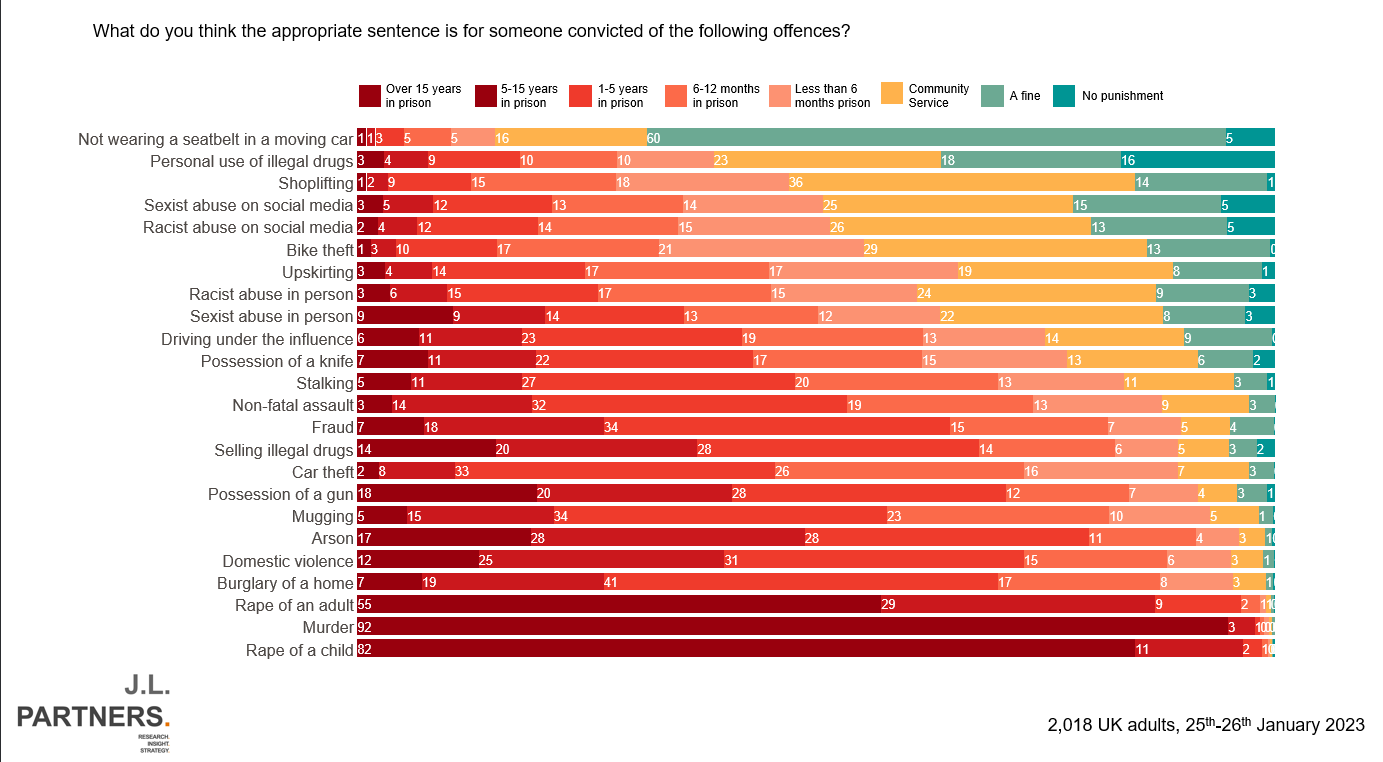
A few years ago, an eminent British criminologist said, or admitted, that criminology was a century-old conspiracy to deny that punishment had any effect whatever on criminal behavior.

And certainly, no intellectual ever earned kudos from his peers by arguing that punishment was necessary, let alone that current punishments were too lenient. In general, the more lenient he was in theory, and the more willing to forgive wrongs done to others, the better person he was thought by his peers to be.

In a way, this was understandable. The history of punishment is so sown with sadism and cruelty that it is hardly surprising that decent people don’t want to be associated with it.

Often, horrific punishments were carried out in public, half as deterrence and half as entertainment. Clearly, they failed to result in a law-abiding society, from which it was concluded that what counted in the deterrence of crime was not severity of punishment but the swiftness and certainty of detection.

While the latter are important, however, they are obviously not sufficient. It is not the prospect of detection that causes people to refrain from parking in prohibited places, but that of the fine after detection.

This is so obvious that it would not be worth mentioning, had not so much intellectual effort gone into the denial of the efficacy of punishment as such. Despite this effort, I doubt whether anyone, in his innermost being, has ever really doubted the efficacy of, or necessity for, punishment.

In Britain, leniency has co-existed with a very large prison population. This is not as contradictory as it sounds: for the fact is that something must eventually be done with repeat offenders, who do not take previous leniency as a sign of mercy and an invitation to reform but as a sign of weakness and an invitation to recidivism. Instead of nipping growth in the bud, the British system fertilises the plant.

Theodore Dalrymple, “Our Leniency, and the Necessity of Punishing Crime”, The Iconoclast, 2021-11-29.

January 26, 2022

“Last year, we’re told, was the ‘deadliest’ year for transgender people since records began”

Filed under: Britain, Health, Law — Tags: , , , — Nicholas @ 05:00

Tish Still, parent of a child who identifies as transgender, was worried about the “epidemic” of trans murder victims:

Facts always matter — but they take on a particular importance when they’re being used to claim that your child could be murdered. So I decided to delve into the research used to inform these claims. For me, it was personal.

The Government doesn’t publish data on the number of transgender people in the UK, though in 2018 it “tentatively” estimated that the figure stood between “approximately 200,000-500,000”. What proportion of that number must have been killed to warrant today’s warnings of trans murder epidemic? 10? 100? 1,000?

To find out, I analysed data collected by the trans-led organisation Transgender Europe, which has received more than a million dollars from the Arcus Foundation, who are based in the US and take a keen interest in transgender issues. As well as donating almost $150,000 to Stonewall, in 2015 the Arcus Foundation handed $312,000 to Transgender Europe specifically to supply reliable global data on transgender murders. The website it created provides an interactive map and links to documents naming the transgender victims.

Looking at Transgender Europe’s list of cases, it became clear — to my relief — that the total murders reported for the United Kingdom since 2008 amounted to 11. This translates as a murder rate of around 0.165%.

Now, that is still significantly higher than the murder rate for the UK as a whole: the ONS reports that the homicide rate in the UK for the year ending March 2020 was 11.7 per million people, rising to 17 per million among men. But look a bit closer at the list of trans murder victims, and that figure of 11 becomes increasingly suspect.

For instance, two of the listed victims, Vikki Thompson and Jacqueline Cowdry, appear to have been erroneously included. Thompson died by suicide while incarcerated in HMP Leeds, while Cowdry’s death was ultimately ruled as non-suspicious. This reduces the total to nine unlawful deaths, all of whom were born male. (By contrast, the number of homicides committed by transgender people between 2008 and 2017 was 12.) For context, the number of women killed by men during the same period was 1800. So much for our alleged “cis-privilege”.

Searching for more information led me to the work of Karen Ingala-Smith, who founded the Counting Dead Women project in 2012 after she realised that there was no central record of the extent of femicide here in the UK; thanks to her, a list of murdered women is read out in the House of Commons each year to imprint the rate of femicide on the minds our political class. Ingala-Smith’s tireless work focusses on female victims of, predominantly, male violence, though she made an exception to highlight the discrepancy between the mass hysteria about transgender victims of homicide compared to the treatment of woman-killing as mere background noise. (There is still no equivalent to the Trans Day of Remembrance for the much greater number of women killed by male violence.)

Crucially, her research sheds a vital spotlight on the nine remaining victims identified by the Trans Murder Monitoring report. Reading it, two things become clear. The first is that it is not entirely certain that all the victims themselves identified with the label “transgender”. The second is that the motives behind these crimes are more complex than straightforward “transphobia”.

January 15, 2022

Merely to be accused of transphobia is enough proof for condemnation

Filed under: Britain, Health, Media, Politics — Tags: , , , , — Nicholas @ 03:00

Jean Hatchet on the plight of Staffordshire University professor James Treadwell, who has been anonymously accused of “transphobia” … and therefore must be punished:

Yesterday evening Professor James Treadwell, a criminologist at Staffordshire University, announced his dismay on Twitter at being accused of “transphobia”. The details are vague, even to him. He has not been presented with evidence and he doesn’t and may never know who has accused him.

He wrote: “Ok to hell with it. I have been told by my employer @StaffsUni albeit only verbally that I am being investigated for Transphobia after formal and official complaints about my Twitter conduct. Read my tweets. Go figure.”

Go figure indeed. It is completely baffling. The issue is Professor Treadwell’s tweeting in favour of the right of female inmates to a single-sex prison estate. In a series of tweets on 27 December 2021, Professor Treadwell outlined his experience of the manipulative behaviour of violent sex offenders who will use loopholes to “game” the criminal justice system. He was clear that his tweets were not directed at the transgender community. He wrote:

“The idea that sex offenders are manipulative individuals who would exploit systems and laws could only be unreal to those who do not know how manipulative sexual offenders can be. All groom, seek to exploit and control.”

And he made very clear that his tweets weren’t attacking the transgender community:

“It isn’t about trans people, it’s about bad people who will exploit the law from self interest and work within a legal framework (that could protect women’s spaces) to do as they want and get what they want. You think that won’t happen, you don’t know how many sex offenders act.”

Who would be better placed to discuss this issue than a leading criminologist who has worked with some of the worst sex offenders in the country? The polite and well-informed tweets hit the nerve of public opinion on the topic of trans-identified men incarcerated in the female prison estate and were widely, mostly supportively, distributed.

Today, Professor Treadwell is in the awful position of fearing for his job; for a few tweets about a subject that he is specifically qualified to speak on. Meanwhile an effective message is simultaneously sent to his academic colleagues nationwide, that they could be targeted next. He is not the first and he won’t be the last. Many criminologists are choosing to look the other way. Professor Treadwell felt that he could no longer do so. His professional integrity appears to be exactly what he is being persecuted for.

QotD: “Jack Ketch as Eugenist”

Filed under: Britain, History, Law, Quotations, USA — Tags: , , , — Nicholas @ 01:00

Has any historian ever noticed the salubrious effect, on the English character, of the frenzy for hanging that went on in England during the Eighteenth Century? When I say salubrious, of course, I mean in the purely social sense. At the end of the Seventeenth Century the Englishman was still one of the most turbulent and lawless of civilized men; at the beginning of the Ninteenth he was the most law-abiding; i.e., the most docile. What worked the change in him? I believe that it was worked by the rope of Jack Ketch. During the Eighteenth Century the lawless strain was simply choked out of the race. Perhaps a third of those in whose veins it ran were actually hanged; the rest were chased out of the British Isles, never to return. Some fled to Ireland, and revivified the decaying Irish race: in practically all the Irish rebels of the past century there have been plain traces of English blood. Others went to the Dominions. Yet others came to the United States, and after helping to conquer the Western wilderness, begat the yeggman, Prohibition agents, footpads and hijackers of to-day.

The murder rate is very low in England, perhaps the lowest in the world. It is low because nearly all the potential ancestors of murderers were hanged or exiled in the Eighteenth Century. Why is it so high in the United States? Because most of the potential ancestors of murderers, in the late Eighteenth and early Nineteenth Centuries were not hanged. And why did they escape? For two plain reasons. First, the existing government was too weak to track them down and execute them, especially in the West. Second, the qualities of daring and enterprise that went with their murderousness were so valuable that it was socially profitable to overlook their homicides. In other words the job of occupying and organizing the vast domain of the new Republic was one that demanded the aid of men who, among other things, occasionally butchered their fellow men. The butchering had to be winked at in order to get their help. Thus the murder rate, on the frontier, rose to unprecedented heights, while the execution rate remained very low. Probably 100,000 men altogether were murdered in the territory west of the Ohio between 1776 and 1865; probably not 100 murderers were formally executed. When they were punished at all, it was by other murderers — and this left the strain unimpaired.

H.L. Mencken, “Miscellaneous Notes: Jack Ketch as Eugenist”, Prejudices: Fifth Series, 1926.

January 4, 2022

J.K. Rowling’s subversive tale of a government “controlled by and for the benefit of the self-interested bureaucrat”

No, it’s not a new work by Rowling … it’s a deeply embedded thread of her best-known books in the Harry Potter series (as related in a 2005 article by Benjamin H. Barton for the Michigan Law Review):

J.K. Rowling’s Harry Potter books include a very strong anti-authoritarian thread.

This Essay examines what the Harry Potter series (and particularly the most recent book, The Half-Blood Prince) tells us about government and bureaucracy. There are two short answers. The first is that Rowling presents a government (The Ministry of Magic) that is 100% bureaucracy. There is no discernable executive or legislative branch, and no elections. There is a modified judicial function, but it appears to be completely dominated by the bureaucracy, and certainly does not serve as an independent check on governmental excess.

Second, government is controlled by and for the benefit of the self-interested bureaucrat. The most cold-blooded public choice theorist could not present a bleaker portrait of a government captured by special interests and motivated solely by a desire to increase bureaucratic power and influence. Consider this partial list of government activities: a) torturing children for lying; b) utilizing a prison designed and staffed specifically to suck all life and hope out of the inmates; c) placing citizens in that prison without a hearing; d) allows the death penalty without a trial; e) allowing the powerful, rich or famous to control policy and practice; f) selective prosecution (the powerful go unpunished and the unpopular face trumped-up charges); g) conducting criminal trials without independent defense counsel; h) using truth serum to force confessions; i) maintaining constant surveillance over all citizens; j) allowing no elections whatsoever and no democratic lawmaking process; k) controlling the press.

This partial list of activities brings home just how bleak Rowling’s portrait of government is. The critique is even more devastating because the governmental actors and actions in the book look and feel so authentic and familiar. Cornelius Fudge, the original Minister of Magic, perfectly fits our notion of a bumbling politician just trying to hang onto his job. Delores Umbridge is the classic small-minded bureaucrat who only cares about rules, discipline, and her own power. Rufus Scrimgeour is a George Bush-like war leader, inspiring confidence through his steely resolve. The Ministry itself is made up of various sub-ministries with goofy names (e.g., The Goblin Liaison Office or the Ludicrous Patents Office) enforcing silly sounding regulations (e.g., The Decree for the Treatment of Non-Wizard Part-Humans or The Decree for the Reasonable Restriction of Underage Sorcery). These descriptions of government jibe with our own sarcastic views of bureaucracy and bureaucrats: bureaucrats tend to be amusing characters that propagate and enforce laws of limited utility with unwieldy names. When you combine the light-hearted satire with the above list of government activities, however, Rowling’s critique of government becomes substantially darker and more powerful. Furthermore, Rowling eliminates many of the progressive defenses of bureaucracy. The most obvious omission is the elimination of the democratic defense. The first line of attack against public choice theory is always that bureaucrats must answer to elected officials, who must in turn answer to the voters. Rowling eliminates this defense by presenting a wholly unelected government.

H/T to Glenn “Instapundit” Reynolds for the link.

December 19, 2021

Remember the megabucks Andrew Cuomo received for his (ghostwritten) book? It’s going to New York State instead

Filed under: Books, Business, Politics, USA — Tags: , , , , — Nicholas @ 05:00

Back in November, Kenneth Whyte reported on the unlikely pay-off for Andrew Cuomo and his American Crisis. In this week’s SHuSH newsletter he’s delighted to report that the state government — which effectively funded the research and writing of the book — will be the eventual recipient of the whole advance:

Sorry to keep harkening back to previous SHuSHs but I can’t overlook the latest on the Andrew Cuomo shambles.

You’ll remember that now-disgraced former governor of New York, Andrew Cuomo, played dirty with his publisher and the public while landing a lucrative book contract. More specifically, he suppressed bad news about pandemic deaths in his state while coaxing a $5.1 million advance out of Penguin Random House for a book about his heroic activities as a COVID-19 fighter.

I mentioned that it was astonishing that the governor of America’s hardest-hit pandemic state could produce a fat manuscript in just three months, and that media reports suggested his staff and a ghostwriter authored the book for him. The same reports said he was in danger of violating state ethics prohibitions against the use of state resources or personnel in producing his book.

I also noted that weeks after the grandly titled American Crisis: Leadership Lessons from the COVID-19 Pandemic was released in October 2020, Cuomo was hit with the first in a long series of sexual harassment allegations. He was forced to resign his office in August 2021. By then, it had also emerged that Cuomo’s office had covered up roughly half of the fatalities among state nursing home residents during the pandemic.

Penguin Random House took a bath on the project. American Crisis has sold only about 50,000 copies, about a tenth of what the publisher needed to cover the advance it paid the author.

This week it was Cuomo’s turn in the tub. An ethics panel ruled that he had broken his promises not to use state resources or government staff to write his self-congratulatory book, and gave him thirty days to hand over to the State of New York the $5.1 million he earned with the book.

‘Tis the season to be jolly

Fa-la-la-la-la, la-la-la-la

« Newer PostsOlder Posts »

Powered by WordPress