
TimeGhost History
Published 2 Mar 2025In 1946, Britain, France, and the Netherlands fight to regain control over shattered colonies — from Indonesia’s revolt to Vietnam’s war with France. Meanwhile, the U.S. and USSR maneuver to shape these emerging nations for their own global interests. Will independence spark true liberation, or will it simply swap one master for another?
(more…)
March 3, 2025
Europe’s Imperial Giants: On the Brink of Collapse? – W2W 09 Q4 1946
Comments Off on Europe’s Imperial Giants: On the Brink of Collapse? – W2W 09 Q4 1946
March 1, 2025
Spoils of War: French Occupation-Production Mauser K98k svwMB
Forgotten Weapons
Published 11 Nov 2024Allied troops occupied the Mauser factory complex in Oberndorf in April of 1945, right at the end of the war. The factory was put under French administration and by May that same year production lines were restarted to supply French forces (who needed as many arms as they could get). In total, just under 52,000 new K98k rifles were made for the French between May 1945 and June 1946, when the factory shut back down (and much of it was dynamited by the departing French forces).
The rifles made under French control were all marked with the receiver code svwMB. German production had switched to this code early in 1945 after producing an “a” block of svw45 rifles and about 5,500 guns in the svw45 “b” block. The factory shutdown came midway through svwMB “c” block, and the first French-property rifles had been assembled under German control and were waiting for final inspection when the factory was occupied. Mauser production was non-linear, and some “c” block receivers had been finished and shipped to German forces before the shutdown, while others remained at the factory. There is no specific transition point between French and German rifles because of this. Production of the “c” block ran into the 29,000 range, and was followed by three suffixes of entirely French-production guns; “d”, “h”, and “k”.
The K98k being produced by this point — and what was continued under the French — was the Kriegsmodell, the last-ditch simplified model of the K98k. It had many stamped and welded parts, no barrel band springs (screws were used instead) and no bayonet lug. The French produced the guns in exactly the same configuration as the Germans had, simply substituting a five-pointed star as a final inspection stamp in front of the receiver serial number. At some point later, the French rebuilt many of these rifles and added two distinctive features that are often thought to have been original factory production elements. These are the hexagonal stacking rod under the muzzle and the left-side sling bar on the stock. When these rebuilds were done, the bolts were also scrubbed and renumbered with just the last 3 digits of the receiver serial number.
(more…)
Comments Off on Spoils of War: French Occupation-Production Mauser K98k svwMB
February 26, 2025
Colonialism was so bad … that we have to make shit up about how evil it supposedly was
In the National Post, Nigel Biggar recounts some of the most egregious virtue signalling by western elites over the claimed evils of colonialism … even to the point of inventing sins to confess and obsess over:
Meanwhile, in Australia, there’s the extraordinary career of Bruce Pascoe’s 2014 book, Dark Emu. This argues that Aborigines, far from being primitive nomads, developed the first egalitarian society, invented democracy, and were sophisticated agriculturalists. Such was the morally superior civilization that white colonizers trashed in their racist greed. Named Book of the Year, Dark Emu has sold more than 360,000 copies and was made the subject of an Australian Broadcasting Company documentary.
Yet, it has been widely criticized for being factually untrue. Author Peter O’Brien has forensically dismantled it in Bitter Harvest: The Illusion of Aboriginal Agriculture in Bruce Pascoe’s Dark Emu (2020). And in Farmers or Hunter Gatherers: The Dark Emu Debate (2021) — described by reviewers as “rigorously researched”, “masterful”, and “measured” — eminent anthropologist Peter Sutton and archaeologist Keryn Walshe dismiss Pascoe’s claims.
Which bring us to Canada. The May 2021 claim by the Tk’emlúps te Secwépemc First Nation to have discovered the “remains of 215 children” of an Indian Residential School was quickly sexed up by the media into a story about a “mass grave”, with all its connotation of murderous atrocity. The Globe and Mail published an article under the title, “The discovery of a mass gravesite at a former residential school in Kamloops is just the tip of the iceberg,” in which a professor of law at UBC wrote: “It is horrific … a too-common unearthing of the legacy, and enduring reality, of colonialism in Canada”. Prime Minister Justin Trudeau ordered Canadian flags to be flown at half-mast on all federal buildings to honour the allegedly murdered children. Because the Kamloops school had been run by Roman Catholics, some zealous citizens took to burning and vandalizing churches, 112 of them to date. The dreadful tale was eagerly broadcast worldwide by Al Jazeera.
Yet, almost four years later, not a single set of remains of a murdered Indigenous child in an unmarked grave has been found anywhere in Canada. Judging by the evidence collected by Chris Champion and Tom Flanagan in their best-selling 2023 book, Grave Error: How the Media Misled us (and the Truth about the Residential Schools), it looks increasingly probable that the whole, incendiary story is a myth.
So, prime ministers, archbishops, academics, editors, and public broadcasters are all in the business of exaggerating the colonial sins of their own countries — from London to Sydney to Toronto. Why?
An obvious reason is the well-meaning desire to raise respect for indigenous cultures with a view to “healing” race relations. But that doesn’t explain the aggressive brushing aside of concerns about evidence and truth in the eager rush to irrational self-criticism.
Comments Off on Colonialism was so bad … that we have to make shit up about how evil it supposedly was
February 18, 2025
Canadian academic life now entails mandatory indoctrination about “settler colonialism”
In Quillette, Jon Kay talks about the pervasive indoctrination of Canadian university students in that invasive intellectual weed from Australia, “settler colonialism”:

Last month, I received a tip from a nursing student at University of Alberta who’d been required to take a course called Indigenous Health in Canada. It’s a “worthwhile subject”, my correspondent (correctly) noted, “but it won’t surprise you to learn [that the course consists of] four months of self-flagellation led by a white woman. One of our assignments, worth 30%, is a land acknowledgement, and instructions include to ‘commit to concrete actions to disrupt settler colonialism’ … This feels like a religious ritual to me.”
Canadian universities are now full of courses like this — which are supposed to teach students about Indigenous issues, but instead consist of little more than ideologically programmed call-and-response sessions. As I wrote on social media, this University of Alberta course offers a particularly appalling specimen of the genre, especially in regard to the instructor’s use of repetitive academic jargon, and the explicit blurring of boundaries between legitimate academic instruction and cultish struggle session.
Students are instructed, for instance, to “commit to concrete actions that disrupt the perpetuation of settler colonialism and articulate pathways that embrace decolonial futures”, and are asked to probe their consciences for actions that “perpetuate settler colonial futurity”. In the land-acknowledgement exercise, students pledge to engage in the act of “reclaiming history” through “nurturing … relationships within the living realities of Indigenous sovereignties”.
My source had no idea what any of this nonsense meant. It seems unlikely the professor knew either. And University of Alberta is not an outlier: For years now, whole legions of Canadian university students across the country have been required to robotically mumble similarly fatuous platitudes as a condition of graduation. It’s effectively become Canada’s national liturgy.
After my tweet went viral, I was contacted by a US-based publication called The College Fix, which covers post-secondary education from a (typically) conservative perspective. Like many observers from outside Canada, reporter Samantha Swenson couldn’t understand why Canadian students were being subjected to this kind of indoctrination session. “I hope you can answer,” she wrote: “Why do schools make mandatory classes like these?”
I sent Swenson a long 13-paragraph answer — which, at the time, felt like a waste of my time: I assumed the reporter would pluck a sentence or two from my lengthy ramble, and the rest of my words would fall down a memory hole.
So when her article did come out — under the title, Mandatory ‘Indigenous Health’ class for U. Alberta nursing students teaches ‘systemic racism’ — I was pleased to see that I’d been quoted at length. I especially appreciated the fact that Swenson had kept in my point that educating Canadians (especially students in the medical field) about Indigenous issues is important work; and that courses such as Indigenous Health in Canada would provide value if they actually served up useful facts and information, instead of self-parodic faculty-lounge gibberish about “decolonized futurities”.

Comments Off on Canadian academic life now entails mandatory indoctrination about “settler colonialism”
February 17, 2025
France Starts the Vietnam War – W2W 005
TimeGhost History
Published 16 Feb 2025In 1946, tensions in Indochina explode into full-scale war. As France struggles to reclaim its empire, Ho Chi Minh’s Viet Minh fight for independence, setting the stage for a brutal conflict that will shape the next three decades. With international powers pulling the strings, Vietnam becomes the first battleground of the post-war era’s colonial struggles.
(more…)
Comments Off on France Starts the Vietnam War – W2W 005
February 13, 2025
Australia’s most toxic export (so far) – “Settler-colonial ideology”
Helen Dale explains how a lunatic fringe Australian notion has grown to be a major ideology in most of the Anglosphere and even as far afield as Israel:

Despite a great efflorescence of literature and especially film about the mafia, it’s a truism to say that it isn’t very good for Sicily. It also hasn’t been very good when exported to other countries, either, spreading violence, corruption, and lawlessness. Well, Australia is to settler-colonial ideology as Sicily is to mafia, and our poisonous gift to the world is, like Sicily’s mafia, one of those things about us that really isn’t for export.
“Settler-colonial ideology” seems a mouthful, but if I describe bits of it to you, you’ll recognise it. Heard Australia Day called “Invasion Day”? You’ve encountered settler-colonial ideology. Been called racist for voting NO in the 2023 Voice Referendum? You’ve encountered settler-colonial ideology. Noticed Aboriginal academics get hired with obviously inadequate qualifications? You’ve encountered settler-colonial ideology.
Many Australians — including me — first encountered settler-colonial ideology at university. Back then, it was a theoretical and foreign concern, and largely in languages other than English (mainly French and Arabic). I do remember one of the “post-colonial literatures” (note the s, the s is important) obsessives trying to convince me that Alan Paton’s Cry the Beloved Country wasn’t a “legitimate book” because its author was white, but back then, this was still a niche view.
Like other Australians confronted with daft academic ideas, I blamed the US or France and ignored my own country’s contribution. Australians aren’t noted for their theoretical acumen, which made this easier. Critical race theory and affirmative action are all-American, while US academics have often executed hostile takeovers of French nonsense like postmodernism or queer theory early on in proceedings. It gets easy to blame America and France.
Easy, but unfair.
I realised how mistaken I’d been when, in October last year, I returned to Australia for a stint. While I was there, I read Adam Kirsch’s On Settler Colonialism: Ideology, Violence and Justice. I did so in part because October 2024 was the one-year anniversary of two important events. Both concerned what Kirsch calls “the ideology of settler-colonialism”.
Kirsch documents a process whereby the French- and Arabic-speaking theorists of post WWII decolonial conflicts — particularly Frantz Fanon — had their ideas grafted (very, very awkwardly) onto dissimilar Australian history and conditions by Australian intellectuals. These were then exported throughout the English-speaking world, likely through academic conferences. This explains how cringeworthy Australian nonsense like land acknowledgments managed to spread first to Canada and then the US in a reversal of the usual process whereby America sneezes and so gives its Hat a cold.
Fanon was a Marxist and a Freudian. His writing seethes with angry bloodthirstiness and pseudoscientific psychodrama, but he was responding to a vicious war of independence and incipient civil conflict. Kirsch notices a pattern where Australian scholars borrow bits of Fanon to give a sanguinary rhetorical garnish to their writing. “Fanon’s praise of violence is a large part of his appeal for Western intellectuals,” he notes. “Many of the sentiments expressed in The Wretched of the Earth, coming from a European or American writer, would immediately be identified as fascistic.”
Australia’s intervention changed the ideology, in some ways making it more destructive. Fanon is shorn of most of his Marxism, for example (can’t have that, won’t be able to recruit rich minorities to the boss class otherwise). The key Australian shift coalesces around an oft-quoted aphorism from historian Patrick Wolfe: “invasion is a structure, not an event”. That is, colonisation trauma is constantly renewed because “settler” is a heritable identity. “Every inhabitant of a settler colonial society who is not descended from the original indigenous population,” Kirsch points out, “is, and always will be, a settler”.
“Settler” here includes people transported to both America and Australia in chains — slaves and convicts. Once it became acceptable to construe one group of people conveyed against their will across thousands of miles of ocean in dreadful conditions as providentially lucky (and genocidal) settlers, it became possible to extend the reasoning to other, similar groups. After all, the only difference between a convict and a slave is the presence or absence of a criminal conviction.
Kirsch’s attempt to explain how Australia was analogised with Fanon’s Algeria and then how Israel was analogised with Wolfe’s Australia is heroic, in part because the casuistry he seeks to unpick is so convoluted. Filtering Fanon through Australian academia and its claim that “settler” is a heritable identity did have the effect of making Jewish Israelis look more like non-indigenous Australians or Americans, however, especially when attention was focussed on European Jewish immigrants to Israel.

Comments Off on Australia’s most toxic export (so far) – “Settler-colonial ideology”
February 11, 2025
The End of Empire? Colonialism in Crisis – W2W 003
TimeGhost History
Published 9 Feb 2025In 1946, the old colonial empires of Britain and France struggle to maintain control as nationalist movements rise and their economies crumble. Meanwhile, two new superpowers — the U.S. and the USSR — seek to reshape the world in their image, using decolonization as both an ideal and a tool for influence. As the colonial order fractures, global power shifts, and the battle for dominance begins.
(more…)
Comments Off on The End of Empire? Colonialism in Crisis – W2W 003
January 31, 2025
Canada – sovereign nation or “post-national state” with “no core identity”?
In The Line, Andrew Potter retraces Canada’s history from British colony to self-governing Dominion to proud mover-and-shaker in the postwar world to whatever the heck it is today:
There is a map that shows up on social media from time to time, and it looks like this.
Sometimes it is followed by this one:
And then maybe this one:
What’s the point of these maps? Apart from noting the obvious, which is that Canada is sparsely populated, and much of the population is gathered in cities very close to the border with the United States, they raise important questions about the exercise of political power and its legitimacy, forms of governance, and, ultimately, sovereignty. By what methods did Canada come to be, and by what right does a small and relatively concentrated group of people, most of whom live down by the Great Lakes or along the St. Lawrence River, lay claim to almost ten million square kilometres of the Earth’s landmass?
It is easy to draw lines on maps. Anyone can do it. If you want those lines to represent some sort of generally accepted reality, two things must be true. First, the people inside the lines need to see those lines as legitimate, and be willing to take the necessary steps, up to and including the use of force, to assert them against outsiders. And second, enough outsiders of sufficient global importance also need to recognize those lines.
Any student of Canadian history knows that the borders of Canada are highly contingent. Rewind the tape of the past, and there are any number of moments where things could have turned out differently. In some scenarios, Canada ends up smaller than it currently is; in others, Canada ends up larger, perhaps substantially so. And in some alternative histories, Canada does not exist at all — or if it does, we’re all speaking French.
There’s nothing that is either sinister or celebratory in pointing this out. History is a bunch of stuff that happened, and in some cases, things might have turned out differently. But again, if you know your Canadian history, you know that the process by which Canada went from a French fur trading outpost to a collection of British mercantile colonies to a continent-spanning multinational federation and parliamentary democracy was made possible only through a rough admixture of ambition, cunning, scheming, coercion, violence, strong foreign support, and, between 1812 and 1814, war.
To get to the point: Canada’s sovereignty wasn’t something we just stumbled upon, nor is it something we were happily given. It was a thing we did. We did not do it alone, though; for most of the 19th century, the main ongoing threat to Canada’s sovereignty was the United States, while the ultimate guarantor of that sovereignty was Great Britain.
That dynamic shifted over the first half of the 20th century, when the British Empire went into decline, and the United States became the dominant world power. There was a short period after 1931, while British influence was ebbing and that of the Americans was flowing, in which Canada stood more or less independent and autonomous. This largely ended in 1940; Britain was on the ropes against Nazi Germany, Canada was in Hitler’s sights, and an increasingly anxious Franklin Roosevelt invited Mackenzie King down to Ogdensburg, New York, for a friendly chat about continental security.


Comments Off on Canada – sovereign nation or “post-national state” with “no core identity”?
January 26, 2025
Imperial reparations to India are not economically or historically realistic
Apparently the idea of demanding financial reparations from Britain has once again become a talking point among India’s chattering classes. In The Critic, Tirthankar Roy explains why the basis for the demands do not meet economic or historic criteria necessary for the demands to be justified:

The State Entry into Delhi – Leading the 1903 Delhi durbar parade, on the first elephant, “Lakshman Prasad”, the Viceroy and Vicereine of India, Lord and Lady Curzon. Their elephant was lent by the Maharaja of Benares. On the second elephant, “Maula Bakhsh”, the Duke and Duchess of Connaught representing the British royal family. Their elephant lent by the Maharaja of Jaipur. There were 48 elephants of the Main Procession, shown winding its way past the north side of the Jama Masjid.
Painting by Roderick MacKenzie from the Bristol City Museum and Art Gallery via Wikimedia Commons.
Oxfam, in its report “Takers not Makers” claims that imperialist Britain “extracted” $85 trillion from India, “enough to carpet London with £50 notes” four times over. Oxfam took this number from calculations others have done before. The origin of the claim goes back to Dadabhai Naoroji writing 125 years ago, who called the outflow drain. Oxfam uses the number to support a modern movement: a case for reparations that Britain should pay India. With British public finances in a rut, the report’s timing is not ideal. But how good is the case?
[…]
Why did Chaudhuri say drain was “confused” economics? The figure of $85 trillion builds on three bases. First, in the 1760s, as the East India Company started sharing the governance of Bengal with the Nawab’s regime, a part of the taxes of Bengal was used to fund business investment (export of textiles). Second, in the nineteenth century, Indian taxes were used to fund an army that fought imperialist wars to no benefit of India. Third, India maintained an export surplus, which went to fund payments to Britain on mainly four heads: debt service, railway guarantees, pensions to expatriate officers, and repatriated profits on private investment. Naoroji said that these outflows were payment without benefit to India, a drain, and happened because India was a colony. Did he discount the benefits of these transactions?
The Company was a body of merchants who became kingmakers between 1757 and 1765, resulting in a government in Bengal where private and public interests often conflicted. No one knows how serious the conflict was since the Nawab was a partner in the rule. No matter, the case that tax was used for commerce is weak. Within a few years after the transition, the Parliament started taking control of Indian governance, which meant refusing to fund business with taxes. By 1805, the process was complete when Governor Cornwallis declared that “the duties of territorial government [would take] the place of buying and selling”. In between, public finance data are so patchy that it is impossible to find out how much of the Company’s commercial investment was funded by a budgetary grant, borrowings, and profits.
What is the big deal anyway? The Company’s investment of $60 million around 1800 was a tiny 0.06% of India’s GDP. Its textile business generated employment and externalities in India. And the real drain was not the export, but the profits upon exports. We are dealing with an almost invisible transaction, so small it was.
Consider the criticism of the army. British Indian budget, the argument went, paid for the Indian army, which fought wars beyond Indian borders, a subsidy Indian taxpayers paid to the Empire. This claim misreads what the land army really did. The reason it was very big and funded by India was that it was a deterrent to potential conflict amongst the 550 princely states. Interstate conflicts claimed enormous human and economic cost in the late-eighteenth century. The army ended that and effectively subsidised the defences of the princely states. Similarly, the British state subsidised Indian naval capability. Until World War I, the deployment of the army beyond India caused little controversy. The army protected the huge diaspora of Indian merchants and workers. Without the empire’s military might, we would not get Indians doing business in Hong Kong, Aden, Mombasa, or Natal. The War changed the benefit-cost estimates, and in the 1920s, the arrangement ended.
The third point, that export surplus was drain, is the most bizarre. India normally had a commodity export surplus, in effect payment for services purchased by India from Britain. Naoroji thought this was a waste of money. His followers insisted it was. But these claims follow no economic logic. No economics in the world will tell us that an outflow makes a country poor. That assessment depends on what value the payment creates at home. In activist history, there is no discussion of the value, because there is no acknowledgement there could be a value.
Comments Off on Imperial reparations to India are not economically or historically realistic
January 12, 2025
Quebec within the British Empire after 1760
Fortissax, in response to a question about the historical situation of Quebec within Canada, outlines the history from before the Seven Years’ War (aka the “French and Indian War” to Americans) through the American Revolution, the 1837-38 rebellions, the Durham Report, and Confederation:
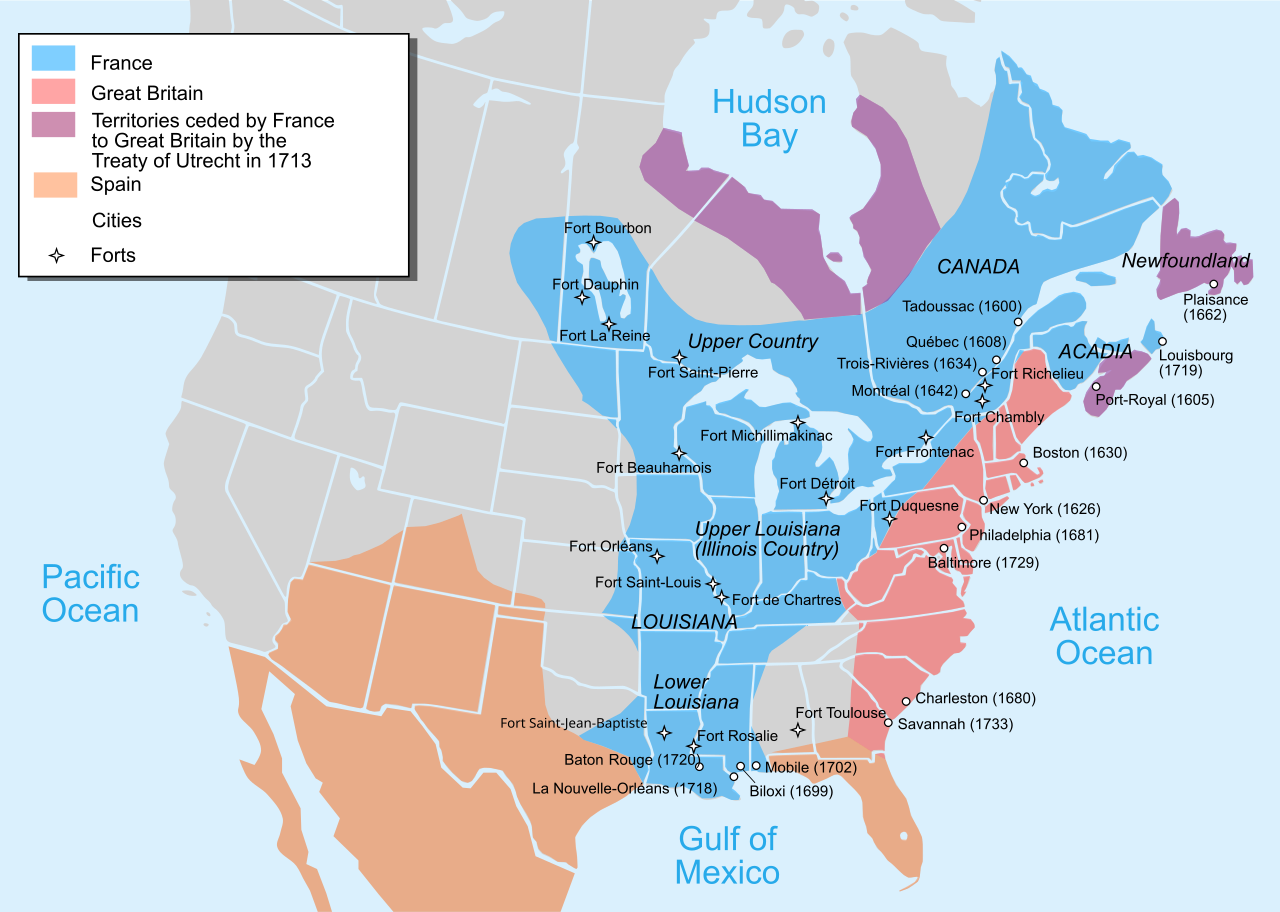
First and foremost, Canada itself, as a state — an administrative body, if you will — was originally founded by France. Jacques Cartier named the region in 1535, and Samuel de Champlain established the first permanent French settlement in North America in Quebec City in 1608. This settlement would become the largest and most populous administrative hub for the entire territory. Canada was a colony within the broader territory of New France, which stretched from as far north as Tadoussac all the way down to Louisiana. It included multiple hereditary land-owning noblemen of Norman extraction.
Much of the original territory of New France
During the Seven Years’ War, on 8 September 1760, General Lévis and Pierre de Vaudreuil surrendered the colony of Canada to the British after the capitulation of Montreal. Though the British had effectively won the war, the Conquest’s details still had to be negotiated between Great Britain and France. In the interim, the region was placed under a military regime. As per the Old World’s “rules of war”, Britain assured the 60,000 to 70,000 French inhabitants freedom from deportation and confiscation of property, freedom of religion, the right to migrate to France, and equal treatment in the fur trade. These assurances were formalized in the 55 Articles of the Capitulation of Montreal, which granted most of the French demands, including the rights to practice Roman Catholicism, protections for Seigneurs and clergymen, and amnesty for soldiers. Indigenous allies of the French were also assured that their rights and privileges would be respected.
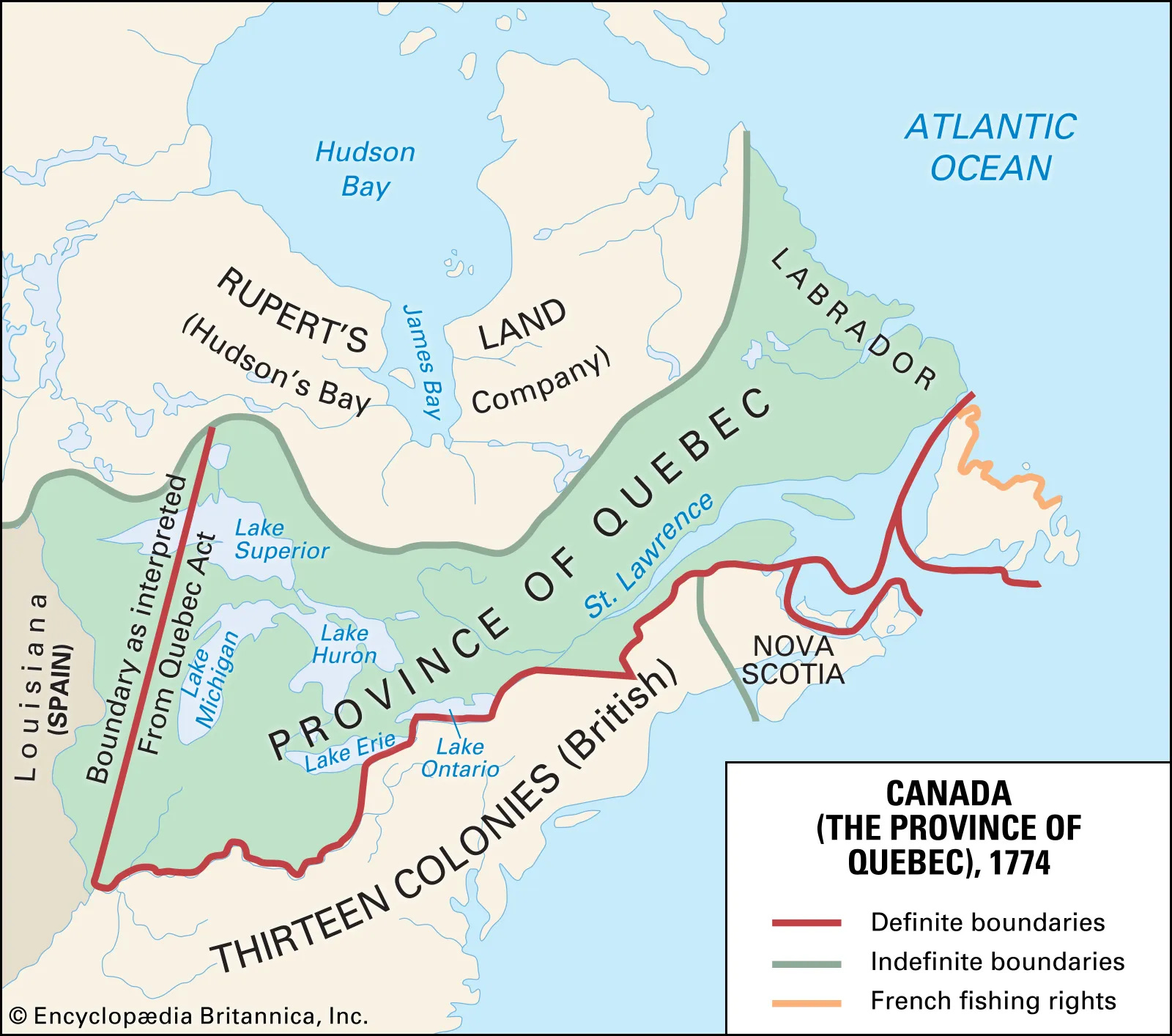
The Treaty of Paris in 1763 officially ended the war and renamed the French colony of “Canada” as “the Province of Quebec”. Initially, its borders included parts of present-day Ontario and Michigan. To address growing tensions between Britain and the Thirteen Colonies and to maintain peace in Quebec, the British Parliament passed the Quebec Act in 1774. This act solidified the French-speaking Catholic population’s rights, such as the free practice of Catholicism, restoration of French civil law, and exemption from oaths referencing Protestant Christianity. These provisions satisfied the Québécois Seigneurs (land-owning nobleman), and clergy by preserving their traditional rights and influence. However, some Anglo settlers in America resented the Act, viewing it as favoring the French Catholic majority. Despite this, the Act helped maintain stability in Quebec, ensuring it remained loyal to Britain during the American Revolutionary War and Quebec was fiercely opposed to liberal French revolutionaries.
British concessions, from the terms of the 1763 Treaty of Paris to the Quebec Act of 1774, safeguarded the cultural and religious identity of Quebec’s French-speaking Catholic population, fostering their loyalty during a period of significant upheaval in North America. Following this period, merchant families such as the Molsons began establishing themselves in Montreal, alongside early Loyalist settlers who trickled into areas now known as the Eastern Townships. These merchant families quickly ingratiated themselves with the local Norman lords and seigneurs.
The Lower Canada Rebellion arose in 1837-1838 due to the Château Clique oligarchy (an alliance of Anglo-Scottish industrialists and French noble landowners), in Quebec refusing to grant legislative power to the French Canadian majority. The rebellion was not solely a French Canadian effort; to the chagrin of both chauvinistic Anglo-Canadians and French Canadians, who in recent years believed it was either a brutal crackdown on French degeneracy, or a heroic class struggle of French peasants against an oppressive Anglo elite. It included figures like Wolfred Nelson, an Anglo-Quebecer who personally led troops into battle.
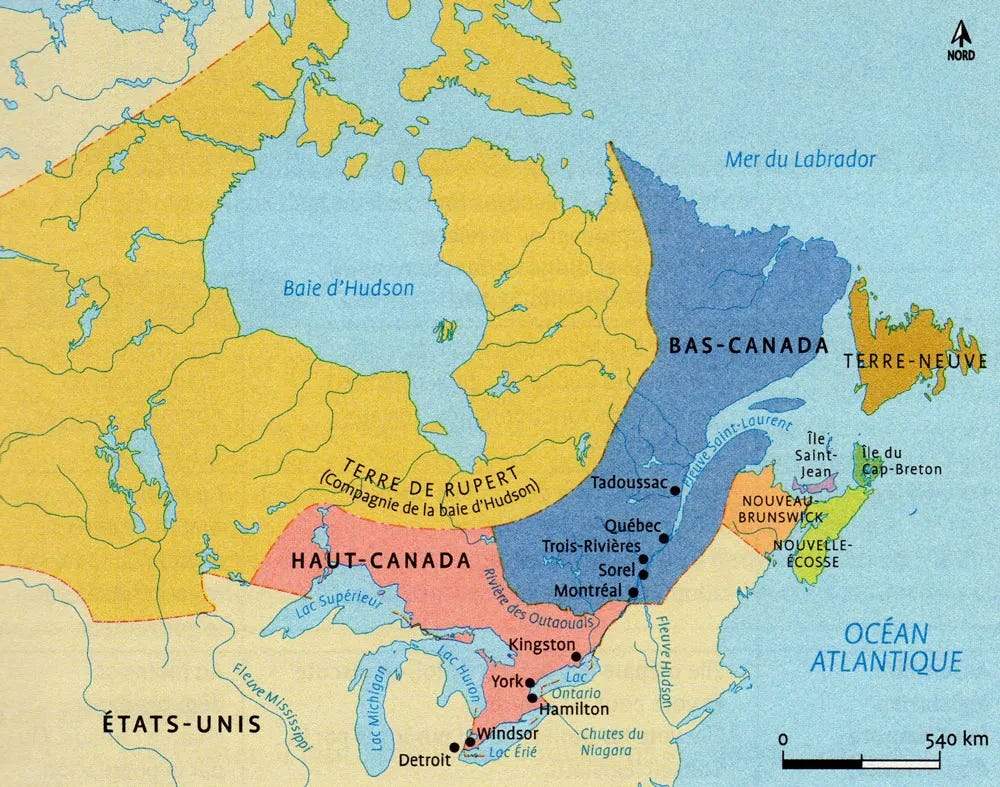
In response to the unrest following the rebellions of 1837-1838, Lord Durham, a British noble, was sent to Canada to investigate and propose solutions. His controversial recommendation, outlined in the Durham Report of 1839, was to abolish the separate legislatures of Upper Canada (Ontario) and Lower Canada (Quebec) and merge them into a single entity: the Province of Canada. This unification aimed to demographically and culturally assimilate the French Canadian population by creating an English-speaking majority.
However, the strategy failed for multiple reasons, and was given up shortly after. Lord Durham, having neither been born nor raised in the New World, underestimated the complexities of Canadian society, which was a unique fusion of Old World ideas in a New World setting. His assumption that French Canadians could be assimilated ignored their strong cultural identity, rooted in large families, which encouraged high birth rates as a means of survival. While Durham hoped unification would erode divisions, the old grievances between the British and French began to dissipate naturally.
The Province of Canada, whose unofficial capital was Montreal, where the two groups mixed
Despite Lord Durham’s intentions, French Canadians maintained their dominance in Quebec. Families averaged five children per household for over 230 years, a trend actively encouraged by the Catholic Church’s policy of La Revanche des Berceaux (the Revenge of the Cradles). This strategy aimed to preserve French Canadian culture and identity amidst the British short-lived attempts at assimilation. In Montreal, British industrialists expanded their influence by forging alliances with French landowning nobles through business partnerships and intermarriage. This blending of elites produced a bilingual Anglo-French upper class that became historically influential.
Such alliances drew on long-standing connections established as early as 1763 and later exemplified by the North West Company (NWC). The NWC in particular is interesting as a prominent fur trading enterprise of the late 18th and early 19th centuries, in that it embodied this fusion of cultures. Led primarily by Anglo-Scots, the company’s leaders frequently formed unions or marriages with French Canadian women, fostering vital ties with the French Canadian communities crucial to their trade. Simon McTavish, known as the “father” of the NWC, maintained alliances with French Canadian families, while his nephew, William McGillivray, and other leaders like Duncan McGillivray followed similar paths. Explorers such as Alexander MacKenzie and David Thompson married French women. These unions strengthened familial and cultural bonds, shaping the broader Anglo-French collaboration that defined this period.
This relative harmony between Anglo and French Canadians continued with the formation of the modern Canadian state in 1867 during Confederation. Sir John A. Macdonald deliberately chose George-Étienne Cartier as his second-in-command. This collaboration contributed to the emergence of Canada’s ethnically Anglo-French elite, who have historically been bilingual. This legacy is evident in the backgrounds of many Canadian politicians, such as the Trudeaus, Mulroneys, Martins, Cartiers, and countless others who have both Anglo-Canadian and French-Canadian roots.
In more recent history, this dynamic has been further solidified by the federal government, where higher-paid positions often require bilingual proficiency. Interestingly, about 20% of Canada’s population is bilingual, reflecting the ongoing influence of this historical coexistence.
The last cannon which is shot on this continent in defence of Great Britain will be fired by the hand of a French Canadian.
~ George Etienne Cartier
Comments Off on Quebec within the British Empire after 1760
December 21, 2024
QotD: Portugal’s early expansion in the Indian Ocean
At a cursory glance, the first arrival of Portuguese ships in India must not have appeared to be a particularly fateful development. Vasco da Gama’s 1497 expedition to India, which circumnavigated Africa and arrived on the Malabar Coast near Calicut consisted of a mere four ships and 170 men — hardly the sort of force that could obviously threaten to upset the balance of power among the vast and populous states rimming the Indian ocean. The rapid proliferation of Portuguese power in India must have therefore been all the more shocking for the region’s denizens.
The collision of the Iberian and Indian worlds, which possessed diplomatic and religious norms that were mutually unintelligible, was therefore bound to devolve quickly into frustration and eventually violence. The Portuguese, who harbored hopes that India might be home to Christian populations with whom they could link up, were greatly disappointed to discover only Muslims and Hindu “idolaters”. The broader problem, however, was that the market in the Malabar coast was already heavily saturated with Arab merchants who plied the trade routes from India to Egypt — indeed, these were precisely the middle men whom the Portuguese were hoping to outflank.
The particular flashpoint which led to conflict, therefore, were the mutual efforts of the Portuguese and the Arabs to exclude each other from the market, and the devolution to violence was rapid. A second Portuguese expedition, which arrived in 1500 with 13 ships, got the action started by seizing and looting an Arab cargo ship off Calicut; Arab merchants in the city responded by whipping up a mob which massacred some 70 Portuguese in the onshore trading post in full sight of the fleet. The Portuguese, incensed and out for revenge, retaliated in turn by bombarding Calicut from the sea; their powerful cannon killed hundreds and left much of the town (which was not fortified) in ruins. They then seized the cargo of some 10 Arab vessels along the coast and hauled out for home.
The 1500 expedition unveiled an emerging pattern and basis for Portugal’s emerging India project. The voyage was marked by significant frustration: in addition to the massacre of the shore party in Calicut, there were significant losses to shipwreck and scurvy, and the expedition had failed to achieve its goal of establishing a trading post and stable relations in Calicut. Even so, the returns — mainly spices looted from Arab merchant vessels — were more than sufficient to justify the expense of more ships, more men, and more voyages. On the shore, the Portuguese felt the acute vulnerability of their tiny numbers, having been overwhelmed and massacred by a mob of civilians, but the power of their cannon fire and the superiority of their seamanship gave them a powerful kinetic tool.
Big Serge, “The Rise of Shot and Sail”, Big Serge Thought, 2024-09-13.
Comments Off on QotD: Portugal’s early expansion in the Indian Ocean
December 16, 2024
The academic battle over the legacy of the British Empire
In the Washington Examiner, Yuan Yi Zhu reviews The Truth About Empire: Real histories of British Colonialism edited by Alan Lester:
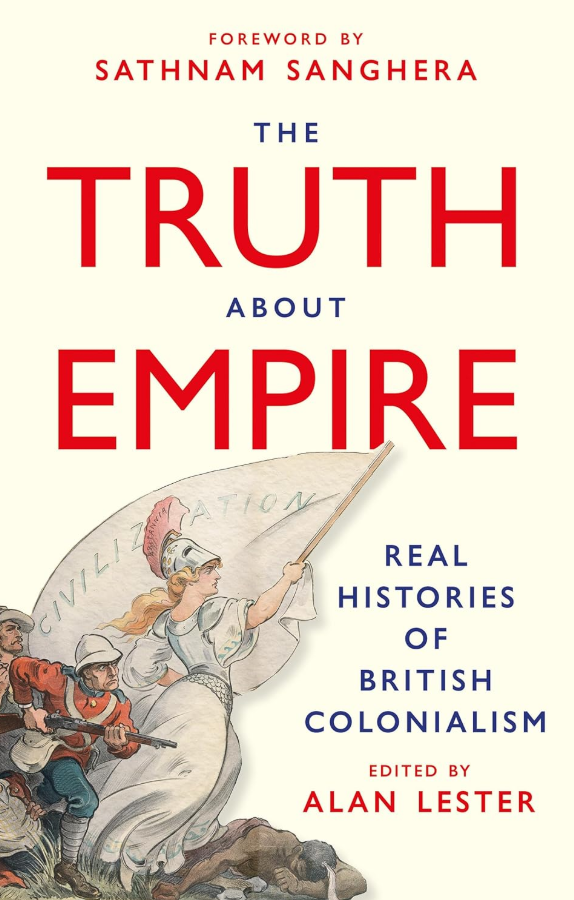
… the story fitted awkwardly with the new dominant historical narrative in Britain, according to which the British Empire was an unequivocally evil institution whose lingering miasma still corrupts not only its former territories but also modern-day Britain.
When Kipling lamented, “What do they know of England, who only England know?” he was not being elegiac as much as describing a statistical fact. Contrary to modern caricatures, apart from episodic busts of enthusiasm, Britons were never very interested in their empire. At its Victorian peak, the great public controversies were more likely to be liturgical than imperial. In 1948, 51% of the British public could not name a single British colony; three years later, the figure had risen to 59%. Admittedly, this was after Indian independence, but it should not have been that hard. Proponents of the “imperial miasma” theory are right in saying that British people are woefully ignorant about their imperial past; but that was the case even when much of the world was colored red.
The Truth About Empire: Real Histories of British Colonialism is a collection of essays edited by Alan Lester, an academic at the University of Sussex who has been at the forefront of the cultural conflict over British imperialism on the “miasma” side — though, like all combatants, he denies being a participant. Indeed, one of the book’s declared aims is to show that its contributors are not engaged in cultural warring.
Their nemesis, whose name appears 376 times in this book (more often than the word “Britain”) is Nigel Biggar, a retired theologian and priest at the University of Oxford. In 2017, Biggar began a project to study the ethics of empire alongside John Darwin, a distinguished imperial historian. The now-familiar academic denunciations then came along, and Darwin, on the cusp of a quiet retirement, withdrew from the project.
Lester was not part of the initial assault on Biggar but has since then emerged as his most voluble critic. He disclaims any political aims, protesting that he and his colleagues are engaged in a purely scholarly enterprise, based on facts and the study of the evidence.
Yet some of Lester’s public interventions — he recently described a poll showing that British people are less proud of their history than before as an “encouraging sign” — are hard to square with this denial. Biggar, by contrast, is refreshingly honest that his aims are both intellectual and political. I must add that both men are serious scholars, which is perhaps why neither has been able to decisively bloody the other in their jousts.
[…]
“What about slavery?” asks Dubow’s Cambridge colleague Bronwen Everill. Unfortunately, her four pages, which read like a last-minute student essay, do not enlighten us. The most she can manage is to point to an 18th-century African monarch abolishing the slave trade as evidence that the British do not deserve any plaudits for their abolitionist efforts across the world, whose cost has been estimated at 1.8% of its gross domestic product over a period of 60 years.
Meanwhile, Abd al Qadir Kane, Everill’s abolitionist monarch, only objected to the enslavement of Muslims but not to slavery generally, his progressive reputation resting mainly on the misunderstandings of Thomas Clarkson, an overenthusiastic English abolitionist. (Either cleverly or lazily, Everill quotes Clarkson’s misleading account, thus avoiding the need to engage with the historiography on Islamic slavery in Africa.)
Everill’s central argument is that abolitionism allowed Britain to rove the world as a moral policeman and to overthrow rulers who refused to abolish slavery. It is never clear, however, why this was morally bad. If anything, Britain did not go far enough: Well into the 1960s, British representatives still manumitted slaves on an ad hoc basis in its Gulf protectorates, when the moral thing would have been to force their rulers to abolish slavery, at gunpoint if necessary.
Comments Off on The academic battle over the legacy of the British Empire
December 2, 2024
Mars? Yes, Mars.
At Postcards From Barsoom, John Carter discusses the pros and cons of colonizing Mars:
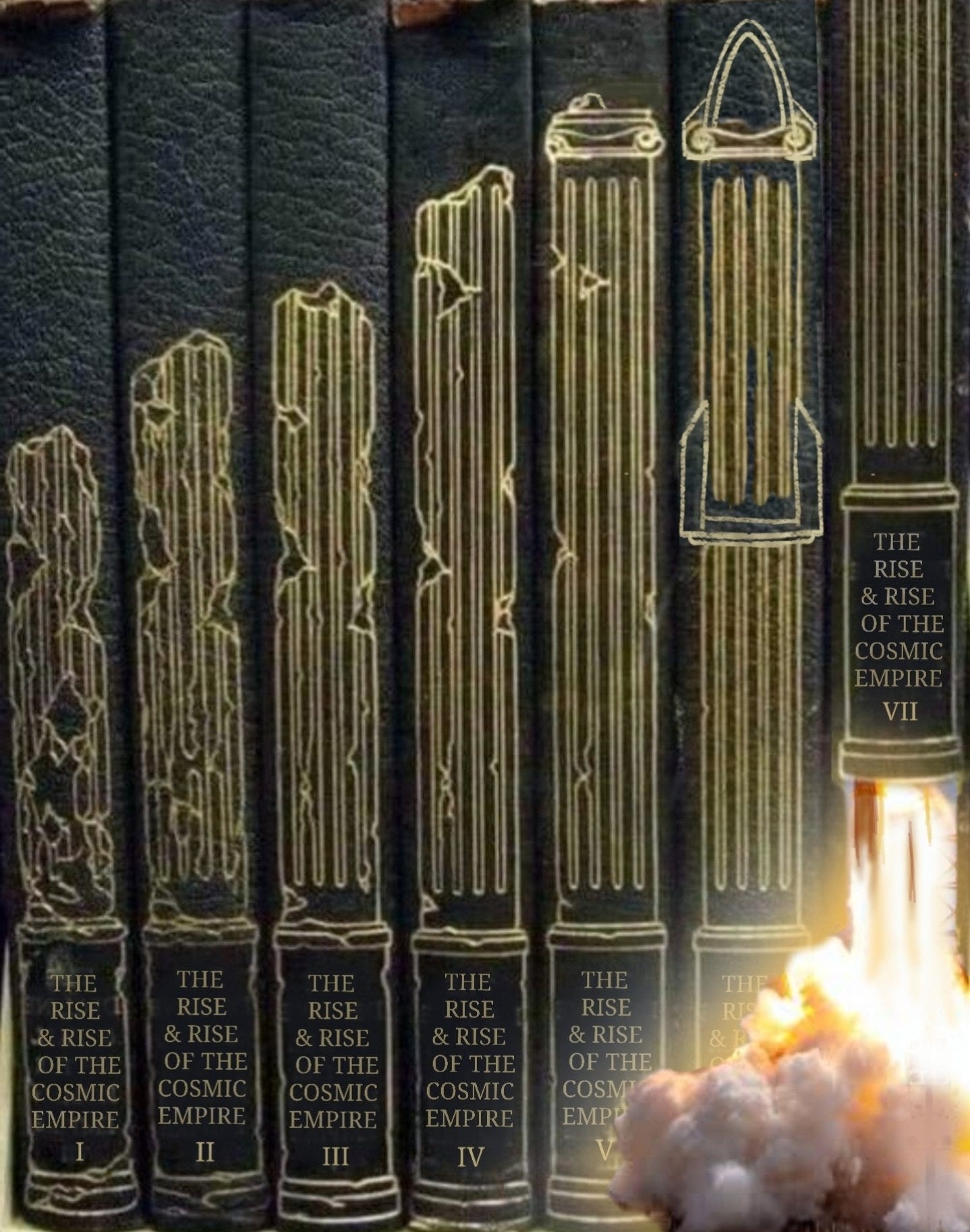
… we’re on the good timeline now.
Not everyone appreciates the good timeline. A persistent current of discourse holds that we shouldn’t go to Mars, that it is a misbegotten ambition, unrealistic, unprofitable, and even counterproductive. “Antarctica would be easier”, they say, “We should start there if we start anywhere”. Mars is too difficult; the technology doesn’t exist; it’s fantastically expensive, with no conceivable profit to be derived from a frigid desert littered with dead rocks, where the clouds themselves are made of red dust, where the air is too thin and toxic to breathe, where nothing can possibly grow. Therefore, they pronounce, we shouldn’t go. We shouldn’t even try to go. We should use our limited resources to solve our pressing problems down here on Earth – climate change, poverty, racism, the gender pay gap, the refusal of the chuds to use the correct pronouns.
Leave aside that if Europeans had waited to solve Europe’s problems, they never would have left.
Leave aside that “we” aren’t doing anything. Some people will use their resources to try this audacious thing; others will use their resources to do other things. The oft-heard phrasing of “we” presupposes that “our” resources are a collective property, their usage to be decided on the basis of utilitarian calculations carried out, presumably, by panels of self-selected technocratic experts. That collective ownership and central planning has been calamitous every time it has been applied in earnest is no barrier to the appeal of the idea over a great many minds.
Leave aside also the economic case for Martian settlement. That case has been made, and made well, by Devon Eriksen in his essay “The Trillionaires of Mars“.
Briefly, Mars is valuable because its shallow gravity well and proximity to the asteroid belt provides an ideal planetary surface on which to build the industrial infrastructure necessary to refine asteroids into useful metals and finished manufactured products, which can then be sent back to the terrestrial market (or shipped elsewhere in the solar system). As to the comparisons to Antarctica, planetary scientist Peter Hague
has addressed this in detail.As Hague points out, Antarctica’s geography means that it receives a vanishingly small amount of solar radiation (and during the winter, none at all). In contrast, while Mars’ greater distance from the Sun (an average of 1.5 Astronomical Units) means that it only gets about 44% of Earth’s irradiance, this is still a lot more than Antarctica. Growing crops is a lot easier on Mars than it is on Antarctica, where it can only be done hydroponically. Setting up shop on Mars means that we can use this solar energy not only to generate electricity, but also for agriculture. On Mars, in principle, one merely mixes human waste with the regolith (after removing the perchlorates) to turn it into topsoil, puts it in a transparent dome, fills the dome with air, and plants the potatoes.
Mars is certainly the easiest extraterrestrial body in the solar system to settle, occupying a sweet spot with its combination of proximity to the Earth, low gravity, an atmosphere, and abundant local resources. It therefore makes perfect sense that it would be prioritized for colonization. It’s Level 1 in the game of becoming multiplanetary. Other bodies may offer much richer prizes in the long run, but they’re also far more challenging.
Still, pace Devon, it’s unlikely that Mars will be profitable in the short run. Even asteroid mining will, at least initially, be far more useful for in situ space manufacturing than it will be for the terrestrial market. As Eriksen points out, correctly, if you strip-mine a quadrillion-dollar asteroid of nickel, iron, and platinum group metals and ship them back to Earth all at once, you’ll just crash the value of those metals. Supply and demand 101. Then again, as Eriksen also points out, raw materials aren’t just numbers on a commodity exchange: they’re actual, physical stuff that you can use to build things, and when society has more of it, society is wealthier in real terms … something that we often forget in our hypothecated financial economy. This is a point I’ve made myself, in the context of a wider discussion about why we should fix our gaze upon the heavens, and ignore those who demand that we wallow perpetually in the mud.
Comments Off on Mars? Yes, Mars.
November 24, 2024
How Newfoundland and Labrador lost their independence
Geography By Geoff
Published Jul 16, 2024Did you know that Newfoundland and Labrador were once an independent country in the same manner as Canada was? It’s true! It was called the Dominion of Newfoundland and due to a series of unfortunate events, it had to relinquish its independence. In today’s video, we cover the vast geography of the province, it’s very old history (including Vikings!) and how the country managed to lose its independence when it managed to survive on its own for decades. Oh … and we’ll also talk about why Labrador got included in the name upon confederating with Canada.
(more…)
Comments Off on How Newfoundland and Labrador lost their independence
November 17, 2024
Contrasting origin stories – the 13 Colonies versus the “Peaceful Dominion”
At Postcards From Barsoom, John Carter outlines some of the perceived (and real) differences in the origin stories of the United States and Canada and how they’ve shaped the respective nations’ self-images:
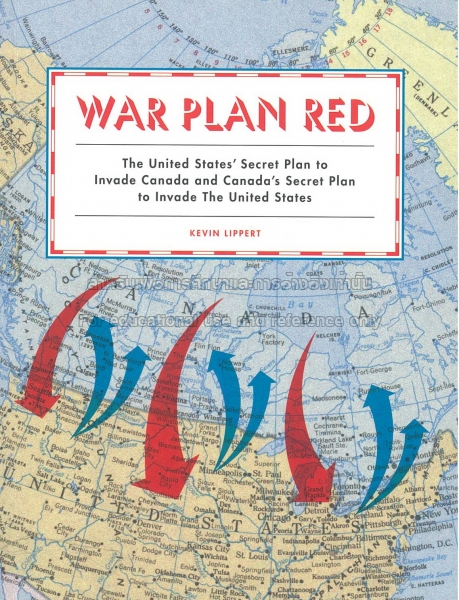
The US had plans to invade Canada that were updated as recently as the 1930s (“War Plan Crimson”, a subset of the larger “War Plan Red” for conflict with the British Empire). Canada also had a plan for conflict with the US, although it fell far short of a full-blooded invasion to conquer the US, designated as “Defence Scheme No. 1”, developed in the early 1920s.
In perennial contrast to its tumultuous southern neighbour, Canada has the reputation of being an extremely boring country.
America’s seeds were planted by grim Puritans seeking a blank slate on which to inscribe the New Jerusalem, and by aristocratic cavaliers who wanted to live the good life while their slaves worked the plantations growing cash crops for the European drug trade. The seeds of America’s hat were planted by fur traders gathering raw materials for funny hats.
America was born in the bloody historical rupture of the Revolutionary War, casting off the yoke of monarchical tyranny in an idealistic struggle for liberty. Canada gained its independence by politely asking mummy dearest if it could be its own country, now, pretty please with some maple syrup on top.
America was split apart in a Civil War that shook the continent, drowning it in an ocean of blood over the question of whether the liberties on which it was founded ought to be extended as a matter of basic principle to the negro. Canada has never had a civil war, just a perennial, passive-aggressive verbal squabble over Quebec sovereignty.1
America’s western expansion was known for its ungovernable violence – cowboys, cattle rustlers, gunslingers, and Indian wars. Canada’s was careful, systematic, and peaceful – disciplined mounties, stout Ukrainian peasants, and equitable Indian treaties.
Once its conquest of the Western frontier was wrapped up, America burst onto the world stage as a vigorous imperial power, snatching islands from the Spanish Empire, crushing Japan and Germany beneath the spurred heel of its cowboy boot, and staring down the Soviet Union in the world’s longest high-stakes game of Texas Hold’Em. Canada, ever dutiful, did some stuff because the British asked nicely, and then they went home to play hockey.
America gave the world jazz music, rock and roll, and hip-hop; Canada contributed Celine Dion and Stan Rogers. America has Hollywood; Canada, the National Film Board and the Canadian Broadcasting Corporation. America dressed the world in blue jeans and leather jackets; Canadians, flannel and toques. America fattened the people with McDonald’s; Canada burnt their tongues with Tim Horton’s, eh.2
The national stereotypes and mythologies of the preceding paragraphs aren’t deceptive, per se. Stereotypes are always based in reality; national mythologies, as with any successful mythology, need to be true at some level in order to resonate with the nations that they’re intended to knit together. Of course, national mythologies usually leave a few things out, emphasizing or exaggerating some elements at the expense of others in the interests of telling a good story. Revisionists, malcontents, and subversives love to pick at the little blind spots and inconsistencies that result in order to spin their own anti-narratives, intended as a rule to dissolve rather than fortify national cohesion and will. Howard Zinn’s People’s History of the United States is a good example of this kind of thing, as is Nikole Hannah-Jones’ tendentious 1619 Project.
Probably the most immediately obvious difference between Americans and Canadians is that Americans don’t suffer from a permanent identity crisis. Demographic dilution due to decades of mass immigration notwithstanding, Americans by and large know who they are, implicitly, without having to flagellate themselves with endless introspective navel-gazing about what it means to be an American. The result of this is that most American media isn’t self-consciously “American”; there are exceptions, of course, such as the occasional patriotic war movie, but for the most part the stories Americans tell are just stories about people who happen to be American doing things that happen to be set in America. Except when the characters aren’t American at all, as in a historical epic set in ancient Rome, or aren’t set in America, as in a science fiction or fantasy movie. That basic American self-assurance in their identity means that Americans effortlessly possess the confidence to tell stories that aren’t about America or Americans at all, as a result of which Hollywood quietly swallowed the entire history of the human species … making it all American.
As Rammstein lamented, We’re All Living in Amerika …
Since we’re all living in Amerika, the basic background assumptions of political and cultural reality that we all operate in are American to their very core. Democracy is good, because reasons, and therefore even de facto dictators hold sham elections in order to pretend that they are “presidents” or “prime ministers” and not czars, emperors, kings, or warlords. Insofar as other countries compete with America, it’s by trying to be more American than the Americans: respecting human rights more; having freer markets; making Hollywood movies better than Hollywood can make them; playing heavy metal louder than boys from Houston can play it. It’s America’s world, and we’re all just along for the ride.
America’s hat, by contrast, is absolutely culturally paralyzed by its own self-consciousness … as a paradoxical result of which, its consciousness of itself has been almost obliterated.
Canada’s origin – the origin of Anglo-Canada, that is – was with the United Empire Loyalists who migrated into the harsh country of Upper Canada in the aftermath of the Revolutionary War. As their name implies, they defined themselves by their near-feudal loyalty to the British Crown. Where America was inspired by Enlightenment liberalism, Canada was founded on the basis of tradition and reaction – Canada explicitly rejected liberalism, offering the promise of “peace, order, and good government” in contrast to the American dream of “life, liberty, and the pursuit of happiness”.
1. Quebec very nearly left the country in a narrow 1995 referendum in which 49.5% of the province’s population voted to separate. It is widely believed in Anglo Canada that had the rest of the country been able to vote on the issue, Quebec would be its own country now.
2. Well actually a Brazilian investment firm has Timmies, but anyhow.
Comments Off on Contrasting origin stories – the 13 Colonies versus the “Peaceful Dominion”


