
Maldivian media outlets this morning published as fact a satirical Telegraph news blog citing “unconfirmed rumours” that the 14th edition of the Times Comprehensive Atlas of the World will omit the Maldives, Tuvalu, “and major parts of Bangladesh” as a statement on global warming.
The blog post, written by climate change skeptic James Delingpole who describes himself as “a writer, journalist and broadcaster who is right about everything”, features comments by a “Times Atlas spokesman” David Rose.
In a UK press scandal this year, “David Rose” was found to be a psuedonym used by left-wing Independent journalist and climate change writer Johaan Hari to edit his own Wikipedia entry, advocate his own position and attack his critics.
Rose, who in Delingpole’s article holds “a doctorate in Cambridge in Climate Change and Sinking Islands Studies so I know what I’m talking about, and if you don’t believe me, ask my friend Johaan Hari who taught me everything I know”, acknowledges that it “may not be strictly geographically accurate to say the Maldives and Tuvalu will definitely have disappeared in about ten years time when our next edition appears.”
“But did you see that picture of the Maldives cabinet holding a meeting underwater? If the Maldives government says the Maldives are drowning, they must be drowning. And frankly I think it’s despicable, all those deniers who are saying it was just a publicity stunt, cooked up by green activist Mark Lynas, to blackmail the international community into giving the Maldives more aid money while simultaneously trying to lure green Trustafarians to come and spend £1500 a night in houses on stilts with gold-plated organic recyclable eco-toilets made of rare earth minerals from China. Why would a government lie about something as serious as climate change?”
Rose goes on to state that “I’m pleased to say that this is a view of the world shared by my colleagues at Times Comprehensive Atlas Of The World. They understand that maps based on accurately recorded geographical features belong in the Victorian age of child chimney sweeps. What we need now is maps that change the world, transforming into something which it isn’t actually yet but might be one day if we don’t act NOW!”
“Delingpole Satire Dupes Maldives Media”, The Global Warming Policy Forum (GWPF), 2011-09-21.
April 17, 2021
QotD: Erasing the Maldives from the atlas
March 28, 2021
“Canadians are largely full of shit on climate change”
The Line wraps up the week with, among other things, an explanation of why they didn’t cover anything to do with the “Conservative” Party’s virtual convention:
We said in last week’s dispatch that we were monitoring the Conservative Party of Canada’s virtual convention, and that we’d bring you any commentary that it warranted. We brought you no such commentary this week. Draw your own conclusions.
We will say, this, though. We think the kerfuffle about the party delegates’ vote to not affirm their belief in climate change is overblown, for two big reasons. The first is that Canadians are largely full of shit on climate change. Yes, it’s true that polls indicate we are concerned about the issue — Very Concerned, even. But polls also show how much we’re actually willing to do about it, and the answer is, not a fuck of a lot.
The second point we’d make is that every Conservative convention comes with warnings of deep splits within the party, with long features by Toronto- or Ottawa-based writers explaining how out of touch Tories are with “mainstream Canadians” like them, how unelectable they are outside their western base, and so on and so on. We agree that the Tories have problems, and it’s clear that not everybody is happy inside that big blue tent (or any big tent). But the Conservatives won the popular vote last time, and though Brownface Trudeau did a lot of the heavy lifting don’t forget: Andrew Scheer was the CPC leader. Can we suggest that one comes out a wash?
Don’t read too much into the doom and gloom that surrounds every CPC convention. There are always stories just like the climate change one, and if you don’t believe us, just recall that long-ago era of, ahem, one week ago, when all the coverage was warning that pro-life insurgents in the party were going to hijack the agenda and cause a meltdown by chanting about abortion all weekend.
Didn’t happen. Went nowhere. We suspect the coverage of the climate change issue, though unhelpful and awkward, will vanish just as quickly now that the chattering classes, ourselves included, have filed the obligatory quota of “convention stories” and moved on to something more interesting (which is almost anything).
January 30, 2021
Obey your technocratic elites, peasant!
Scott Alexander considers some historical (and current) examples of you peasants being steamrolled by the powers of the government at the behest of the technological elites of the day:
I am not defending technocracy.
Nobody ever defends technocracy. It’s like “elitism” or “statism”. There is no Statist Party. Nobody holds rallies demanding more statism. There is no Citizens for Statism Facebook page with thousands of likes and followers.
[…] it worries me that everyone analyzes the exact same three examples of the failures of top-down planning: Soviet collective farms, Brasilia, and Robert Moses. I’d like to propose some other case studies:
1. Mandatory vaccinations: Technocrats used complicated mathematical models to determine that mass vaccination would create a “herd immunity” to disease. Certain that their models were “objectively” correct and so could not possibly be flawed, these elites decided to force vaccines on a hostile population. Despite popular protest (did you know that in 1800s England, anti-smallpox-vaccine rallies attracted tens of thousands of demonstrators?), these technocrats continued to want to “arrogantly remake the world in their image,” and pushed ahead with their plan, ignoring normal citizens’ warnings that their policies might have unintended consequences, like causing autism.
2. School desegregation: Nine unelected experts with Harvard and Yale degrees, using a bunch of Latin terms like a certiori and de facto that ordinary people could not understand let alone criticize, decided to completely upend the traditional education system of thousands of small communities to make it better conform to some rules written in a two-hundred-year-old document. The communities themselves opposed it strongly enough to offer violent resistance, but the technocrats steamrolled over all objections and sent in the National Guard to enforce their orders.
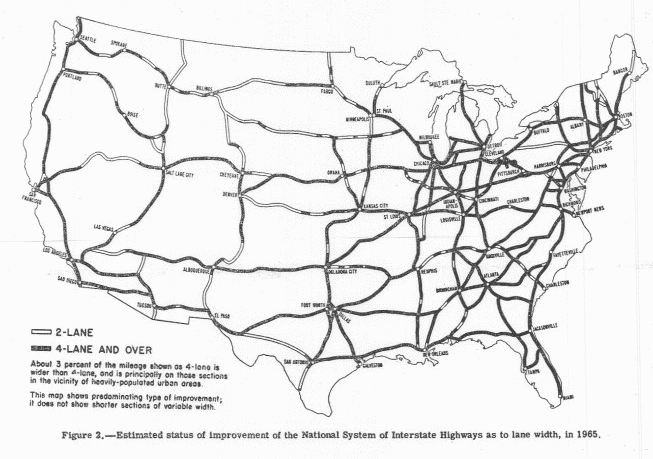
US Highway System needs in 1965 from “Needs of the Highway Systems 1955-1984”, a letter from the Secretary of Commerce to the House Committee on Public Works, approved May 6, 1954.
US Government Printing Office via Wikimedia Commons.3. The interstate highway system: 1950s army bureaucrats with a Prussia fetish decided America needed its own equivalent of the Reichsautobahn. The federal government came up with a Robert-Moses-like plan to spend $114 billion over several decades to build a rectangular grid of numbered giant roads all up and down the country, literally paving over whatever was there before, all according to pre-agreed federal standards. The public had so little say in the process that they started hundreds of freeway revolts trying to organize to prevent freeways from being built through their cities; the government crushed these when it could, and relocated the freeways to less politically influential areas when it couldn’t.
4. Climate change: In the second half of the 20th century, scientists determined that carbon dioxide emissions were raising global temperatures, with potentially catastrophic consequences. Climatologists created complicated formal models to determine how quickly global temperatures might rise, and economists designed clever from-first-principle mechanisms that could reduce emissions, like cap-and-trade systems and carbon taxes. But these people were members of the elite toying with equations that could not possibly include all the relevant factors, and who were vulnerable to their elite biases. So the United States decided to leave the decision up to democratic mechanisms, which allowed people to contribute “outside-the-system” insights like “Actually global warming is fake and it’s all a Chinese plot”.
5. Coronavirus lockdowns: The government appointed a set of supposedly infallible scientist-priests to determine when people were or weren’t allowed to engage in normal economic activity. The scientist-priests, who knew nothing about the complex set of factors that make one person decide to go to a rock festival and another to a bar, decided that vast swathes of economic activity they didn’t understand must stop. The ordinary people affected tried to engage in the usual mechanisms of democracy, like complaining, holding protests, and plotting to kidnap their governors – but the scientist-priests, certain that their analyses were “objective” and “fact-based”, thought ordinary people couldn’t possibly be smart enough to challenge them, and so refused to budge.
Nobody uses the word “technocrat” except when they’re criticizing something. So “technocracy” accretes this entire language around it – unintended consequences, the perils of supposed “objectivity”, the biases inherent in elite paradigms. And then when you describe something using this language, it’s like “Oh, of course that’s going to fail – everything like that has always failed before!”
But if you accept that “technocracy” describes things other than Soviet farming, Brasilia, and Robert Moses, the trick stops working. You notice a lot of things you could describe using the same vocabulary were good decisions that went well. Then you have to ask yourself: is Seeing Like A State the definitive proof that technocratic schemes never work? Or is it a compendium of rare man-bites-dog style cases, interesting precisely because of how unusual they are?
I want to make it really clear that I’m not saying that technocracy is good and democracy is bad. I’m saying that this is actually a hard problem. It’s not a morality play, where you tell ghost stories about scary High Modernists, point vaguely in the direction of Brasilia, say some platitudes about how no system can ever be truly unbiased, and then your work is done. There are actually a bunch of complicated reasons why formal expertise might be more useful in some situations, and local knowledge might be more useful in others.
September 24, 2020
That Prometheus dude has a lot to answer for…
Arthur Chrenkoff on the surprisingly high percentage of wildfires that don’t have a natural origin:
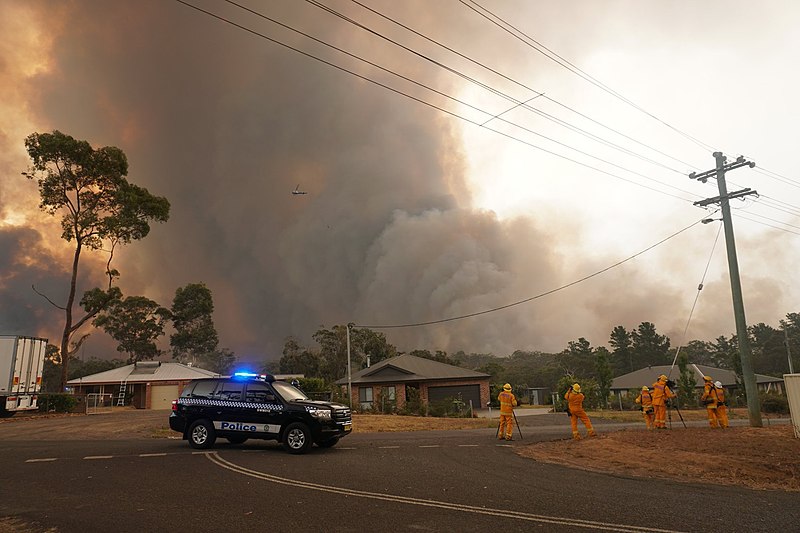
The Green Wattle Creek bushfire moves towards the Southern Highlands township of Yanderra as police evacuate residents from Yanderra Road, 21 December, 2019.
Photo by Helitak430 via Wikimedia Commons
Whatever your position on climate change – majority of experts believe that higher temperatures and drier conditions exacerbate wildfires, both in Australia and America – there is no immediate solution to be found on the global level. If you agree that man-made emissions are driving up temperatures, there is no course of action that will in any substantial way change the climatic conditions for the better over the next few decades (the most ambitious climate change plans talk in terms of slowing down temperature increases, not reversing the trend). Shut down the whole industrial civilisation tomorrow, and the present climate would still lag behind. Talking about wildfires and climate change (as Pelosi, Newsom and many others do) might be a good propaganda for climate action, but it will do nothing for this or any future fiery disasters.
Fortunately, there are much more immediate factors and solutions than shutting down coal and transitioning to renewable energy (themselves decades-long projects). Wildfires are almost exclusively man-made calamities, but not in the way the climate change activists think. Changing climate might indeed be making fires more difficult to contain and extinguish, but it neither starts nor fuels them. We do. Herein, therefore, lie the opportunities to mitigate such disasters as we are witnessing at the moment.
Almost all fires are started by humans
Forests don’t spontaneously combust. And while lightning can often set trees on fire, this accounts for only a very small proportion of all fires.
In Australia, it has been estimated that 87 per cent of 113,000 fires that occurred “in nature” between 1997 and 2009 have been man-made.
In the United States, the latest study from the University of Colorado at Boulder calculates that 97 per cent of fires between 1992 and 2015 that threatened homes (i.e. those happening in the so called “wildland-urban interface”) were started by humans (as were 85 per cent of all fires in “very-low-density housing” areas and 59% of all wildfires in the wild).
A word of caution: man-made does not automatically mean intentional. The scenarios range from broken glass acting as lenses for sun rays or sparks from power lines and machinery, through carelessly discarded cigarette butts and incompletely extinguished bonfires, to amateur back burn attempts getting out of control and – yes – deliberate arson.
During the Australian bushfire crises, I have compiled media reports of around 200 individuals who have been arrested and/or charged in connection with starting fires – many, though not all, on purpose.
In the United States, the cases of arsonists caught by the authorities are mounting, though nowhere near the Australian numbers yet. In Portland, a man was arrested for starting a fire, released, and started another six fires – at this rate, the US might quickly catch up to Down Under.
July 27, 2020
The Bronze Age Collapse (approximately 1200 B.C.E.)
Historia Civilis
Published 25 Jul 2020Just casually thinkin bout the end of the world. No, no reason, why?
Patreon | http://patreon.com/HistoriaCivilis
Donate | http://www.paypal.com/cgi-bin/webscr?…
Merch | teespring.com/stores/historiacivilis
Twitter | http://twitter.com/HistoriaCivilis
Website | http://historiacivilis.comSources:
The Medinet Habu Inscription | https://bit.ly/2Ba2Lvf
David O’Connor & Stephen Quirke, Mysterious Lands | https://amzn.to/3jdQOWu
—
Eric H. Cline, 1177 B.C.: The Year Civilization Collapsed | https://amzn.to/2ClWgpO
Robert Drews, The End of the Bronze Age: Changes in Warfare and the Catastrophe ca. 1200 B.C. | https://amzn.to/2CkJ7NC
Paul Kriwaczek, Babylon: Mesopotamia and the Birth of Civilization | https://amzn.to/2Wra8G4
Oliver Dickinson, The Aegean From Bronze Age to Iron Age: Continuity and Change Between the Twelfth and Eighth Centuries B.C. | https://amzn.to/3h8ar0rMusic:
“Mell’s Parade,” by Broke For Free
“Sad Cyclops,” by Podington Bear
“Infados,” by Kevin MacLeod
“Heliograph,” by Chris Zabriskie
“Deluge,” by Cellophane SamWe are a participant in the Amazon Services LLC Associates Program, an affiliate advertising program designed to provide a means for us to earn fees by linking to Amazon.com and affiliated sites.
From the comments:
ka v
1 day ago
I got Sea People Return in the December slot of my 2020 Apocalypse bingo card.
June 26, 2020
Progressive hate for nuclear power
In Quillette, Michael Shellenberger discusses the demands of some climate activists who also reject the best solutions to the problems they foresee:
For the last decade I have been obsessed with a question: Why are the people who are the most alarmist about environmental issues also opposed to all of the obvious solutions?
Those who raise the alarm about food shortages oppose expanding the use of chemical fertilizers, tractors, and GMOs. Those who raise the alarm about Amazon deforestation promote policies that fragment the forest. And those who raise the alarm about climate change oppose nuclear energy, the largest source of zero-emissions energy in developed nations. Why is that?
It is not an academic question for me. I have been a climate activist for 20 years and an energy expert for 10 of them. I was adamantly against nuclear energy until about a decade ago when it became clear renewables couldn’t replace fossil fuels. After educating myself about the facts, I came to support the technology.
Over the last five years, I have campaigned, as founder and president of my small and independent nonprofit research organization, Environmental Progress, to expand the use of nuclear energy. During that time our main opponents have not been climate skeptics or even the fossil fuel industry but rather other climate activists.
This is the case around the world. It is climate alarmist Democrats and Greens who are seeking to shut down nuclear plants in the US and Europe. Greta Thunberg last year condemned the technology as “extremely dangerous, expensive, & time-consuming,” which is false. And Green New Deal architect Rep. Alexandria Ocasio-Cortez (AOC) has advocated closing the Indian Point nuclear plant in New York, which is now being replaced with natural gas.
In nearly every situation around the world, support for nuclear energy from climate activists like Thunberg and AOC would make the difference between nuclear plants staying open or closing, and being built or not being built. Had Thunberg spoken out in defense of nuclear power she likely could have prevented two reactors in her home nation of Sweden from being closed. Had AOC advocated for Indian Point rather than condemned it as dangerous, it could likely keep operating, for at least 40 years longer.
That’s because the main problem facing nuclear energy is that it’s unpopular — and far more among progressives than conservatives, and far more among women than men. There are no good technical or economic reasons that nations from the US and Japan to Sweden and Germany are closing their nuclear plants. Center-left governments are closing them early in response to the demands of progressives and Greens — the very same people who are claiming climate change will kill billions of people.
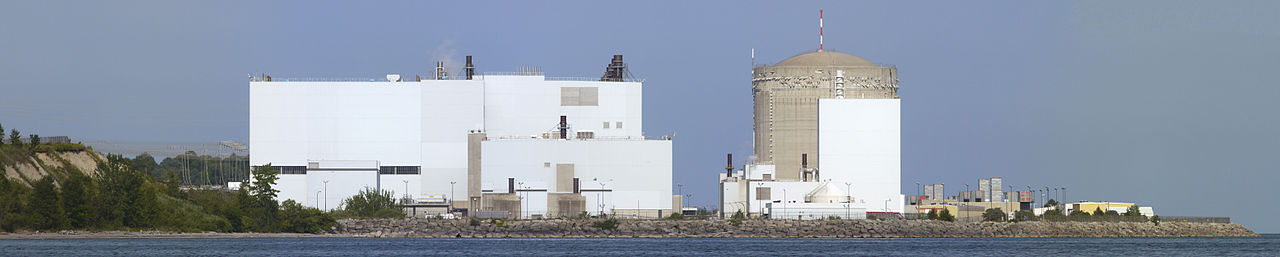
Darlington Nuclear Generating Station in Clarington, Ontario.
Photo by Óðinn via Wikimedia Commons.
Some prominent environmental groups have a pecuniary interest in replacing existing nuclear generating stations with natural gas and “renewable” energy sources, but money isn’t the only reason for the widespread opposition to nuclear power:
Sierra Club, NRDC, and EDF have worked to shut down nuclear plants and replace them with fossil fuels and a smattering of renewables since the 1970s. They have created detailed reports for policymakers, journalists, and the public purporting to show that neither nuclear plants nor fossil fuels are needed to meet electricity demand, thanks to energy efficiency and renewables. And yet, as we have seen, almost everywhere nuclear plants are closed, or not built, fossil fuels are burned instead.
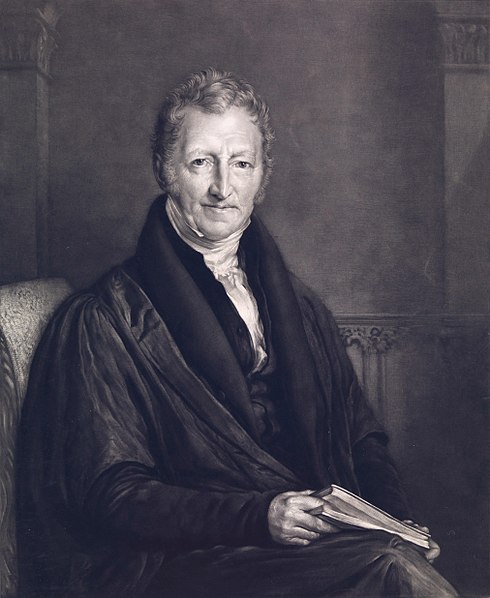
Thomas Malthus.
Portrait by John Linnell, 1834, via Wikimedia CommonsBut it’s not just about money. It’s also about ideology. Anti-nuclear groups have long had a deeply ideological motivation to kill off nuclear energy.
Policymakers, journalists, conservationists, and other educated elites in the ’50s and ’60s knew that nuclear was unlimited energy and that unlimited energy meant unlimited food and water.
We could use desalination to convert ocean water into freshwater. We could create fertilizer without fossil fuels, by harvesting nitrogen from the air, and hydrogen from water, and combining them. We could create transportation fuels without fossil fuels, by taking carbon dioxide out of the atmosphere to make artificial hydrocarbons, or by splitting water to make pure hydrogen gas.
Nuclear energy thus created a serious problem for Malthusians — followers of widely-debunked 18th-century economist, Thomas Robert Malthus — who argued that the world was on the brink of ecological collapse and resource scarcity. Nuclear energy not only meant infinite fertilizer, freshwater, and food but also zero pollution and a radically reduced environmental footprint.
In reaction, Malthusians attacked nuclear energy as dangerous, mostly by suggesting that it would lead to nuclear war, but also by spreading misinformation about nuclear “waste” — the tiny quantity of used fuel rods — and the rapidly decaying radiation that escapes from nuclear plants during their worst accidents.
There is a pattern: Malthusians raise the alarm about resource depletion or environmental problems and then attack the obvious technical solutions. In the late 1700s, Thomas Malthus had to reject birth control to predict overpopulation. In the 1960s, Malthusians had to claim fossil fuels were scarce to oppose the extension of fertilizers and industrial agriculture to poor nations and to raise the alarm over famine. And today, climate activists reject nuclear energy in order to declare a coming climate apocalypse.
QotD: “The freedom to tell lies is one of the most basic freedoms of all”
But even if there were answers to these questions that were a good deal more certainly true than any answers that we possess today, it still would not be right to silence doubters and deniers: for error and even malice are the price of freedom. In the realm of intellectual freedom it is not truth that sets you free, but error, or rather the permissibility of error. And the freedom to tell lies is one of the most basic freedoms of all. There can be no freedom without it.
Well, the audience was only young and perhaps this was strong meat for their immature digestions rendered sensitive by a constant diet of modern pieties, as the young these days are said to be more likely to develop allergies because of the sterility and cleanliness of modern homes and ways of life (what they need is more dirt and early contact with potential pathogens). But soon they would be going off to university, where it was likely that they would encounter an even narrower and powerfully self-reinforcing view of the world. The pressure to conform would add to the natural self-righteousness of youth, which is often mistaken for idealism, and their impulse to censor in the name of their own irreproachable virtue would be strengthened and entrenched.
The long-term prospects for freedom of speech, then, are not altogether rosy. Those who value it are less vehement in their defence of it than are the self-righteous in their assault on it.
Anthony Daniels, “Free Speech’s Emboldened Enemies”, Quadrant, 2018-03-10.
May 2, 2020
Drawing some conclusions from our Wuhan Coronavirus experiences
At Catallaxy Files, Justinian the Great provides an expanded list of nine lessons we should learn from our still ongoing Wuhan Coronavirus (aka “Chinese Batflu”, “Kung Flu”, “Bat-biter Bronchitis” and other names our betters insist we not use):
1. Models are not infallible.
When dealing with complex subject matter involving lots of uncertainties, unknowns and data gaps, modelling will almost certainly be wrong. That doesn’t make them worthless but nor does it mean they should be elevated to infallible status and acted upon as though they constitute proof of something.
If we can’t get epidemiological models right involving trajectories of months what is the chance of climate models being correct considering they involve substantially greater uncertainty, unknowns and data problems involving trajectories of decades to centuries?
[…]
2. Experts can get it wrong.
The pandemic has shown that epidemiologists and health experts the world over have got COVID-19 wrong at one stage or another.
The most famous example is the Imperial College model that forecast 2.2m deaths in the United States and over 500,000 deaths in the UK. Critics have argued this was never plausible but it was the catalyst for UK lockdown policy.
[…]
3. Experts can disagree
Experts can disagree and this is normal in science (and policy making).
During the pandemic, health experts across the world have disagreed over epidemiology models (e.g. R0) ranging from thousands of deaths to millions, over treatments (i.e. the efficacy of anti-virals and anti-malarials), over who and how to test (targeted (symptomatic) versus broad based (even antibody testing), how to record cases and fatalities (e.g. Italy counting deaths with COVID the same as due to COVID, Belgium recording deaths suspected to be COVID related but not verified), the origin and nature of the virus (laboratory/synthetic or wet market/natural), over what the public health response should be (full lockdowns, targeted lockdowns, Sweden (minimal) or something in-between), and the susceptibility of children to the virus, leading to divergence on school closures.
[…]
4. The Precautionary Principle – No such thing as a free lunch
The COVID-19 crisis is a classic case of the precautionary principle in action. The policy measures put in place have been justified by the worse case scenarios of epidemic models forecasting mass deaths and hospital systems in collapse. These scenarios have been hyped up by an alarmist media presenting such scenarios / predictions as established fact.
Part of the problem stems from politicians abdicating responsibility for decision-making and hiding behind health experts as human shields. These experts have nothing to gain and everything to lose from underestimating the epidemic. No-one wants to be blamed for hundreds of thousands of preventable deaths.
[…]
5. If you can’t trust the WHO in a pandemic why would you trust the IPCC on climate change?
The neo-liberal (in international relations terms) notion that the UN (and other international institutions) are independent actors working altruistically for the global good has been blown to bits during the COVID-19 pandemic.
The conduct of the WHO and its complicity with China throughout the pandemic has demonstrated what realists have always known, i.e. international institutions are not independent actors, but instead reflect the interests of great powers in the international system.
[…]
6. If you can’t trust the Chinese in a pandemic how can you trust them on climate?
The COVID crisis also demonstrates why should not trust a communist dictatorship to act truthfully, transparently or ethically, much less put global interests above national interests even in times of an international crisis.
If we can’t believe China about infection rates, how can we believe their carbon accounting? If we can’t trust China to reduce the spread of a virus, how can we trust China to reduce the growth in CO2 emissions? If we believe China has captured/corrupted the WHO how do we know it hasn’t captured/corrupted the IPCC? If China will prioritise national interest in a health crisis, why won’t China prioritise national interest in a climate crisis? If we don’t believe China action/excuses in a pandemic why would we believe China action/excuses on climate change? If we can acknowledge China is trying to exploit the health crisis geo-strategically (i.e. South China Sea military manoeuvres) and geo-economically (belt and road and coercive threats), why will it not exploit climate change in the exact same way?
April 14, 2020
The role of disease and climate change in the fall of the western Roman Empire
In Quillette, Jaspreet Singh Boparai reviews a new book by Kyle Harper that tries to incorporate what we have learned about epidemics and climate change into the narrative on the decline of Rome:
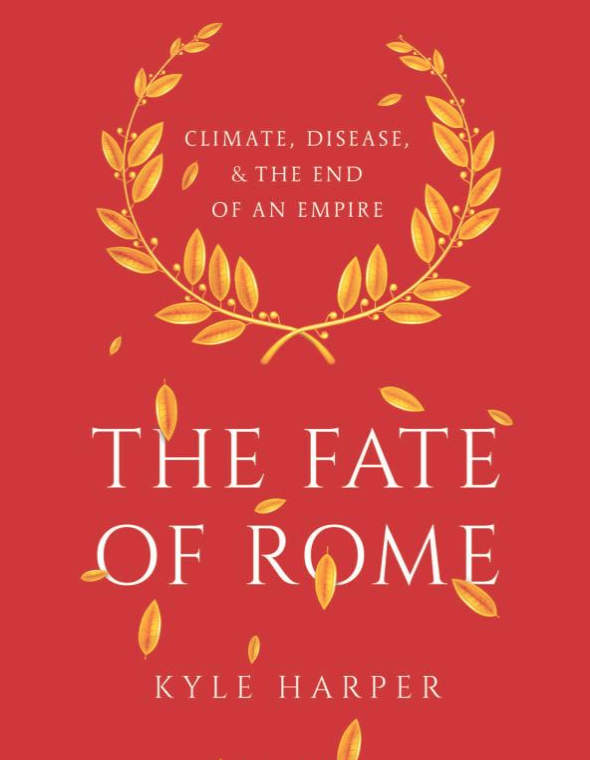
Why did the Roman Empire fall? The classic answer is given by Edward Gibbon (1737 — 1794), in chapter 38 of the third volume of The History of the Fall and Decline of the Roman Empire (1776 — 1789):
The decline of Rome was the natural and inevitable effect of immoderate greatness. Prosperity ripened the principle of decay; the causes of destruction multiplied with the extent of conquest; and as soon as time or accident had removed the artificial supports, the stupendous fabric yielded to the pressure of its own weight.
Kyle Harper, Senior Vice President and Provost of the University of Oklahoma, seeks to complement Gibbon’s account by emphasising the role of nature, and specifically climate change and infectious disease, in the fall of Rome in his provocative, exceptionally well-written book The Fate of Rome: Climate, Disease and the End of an Empire. Is Harper correct? Were plagues and climate events fatal for Rome?
Harper accepts the conventional view that Rome’s civilizational collapse began in the later second century AD, accelerated amidst chaos and bloodshed during the third century, and culminated in the humiliations of the fifth century, when Rome was famously sacked by barbarians, and the last, weak, insignificant Roman Emperor was pushed off the throne in AD 476.
[…]
Harper begins The Fate of Rome with a description of Rome as it advertised itself in AD 400. Contemporary inventories record: 28 libraries, 19 aqueducts, two circuses, 37 gates, 423 neighborhoods, 46,602 blocks of flats, 1,790 grand houses, 290 granaries, 856 public baths, 1,352 cisterns, 254 bakeries, 46 brothels, and 144 public latrines. The population is estimated at 700,000 or so. This figure diminished rapidly after August 24th, AD 410, when Rome was sacked by an army of Goths.
The traditional date of Rome’s fall is September 4th, AD 476, when the 16-year-old Emperor Romulus Augustus, the son of a former secretary to Attila the Hun, was forced to abdicate the throne by a barbarian warlord, and dismissed to spend the rest of his days at a seaside villa near Naples. His date of death is not recorded; he was too unimportant to fear assassination. At this point, the city of Rome’s population was still as high as 400,000.
Rome was invaded and sacked a few times over the centuries; more and more of it was abandoned; by the 10th century it was a suburb to nowhere surrounded by malarial swamps, and may have had only 9,000 inhabitants. Most of the economy was related to religious pilgrimages; the city was controlled by gangsters and petty warlords. What was left amidst the ruins was sacked again in AD 1084 by an army that outnumbered residents by as much as three to one.
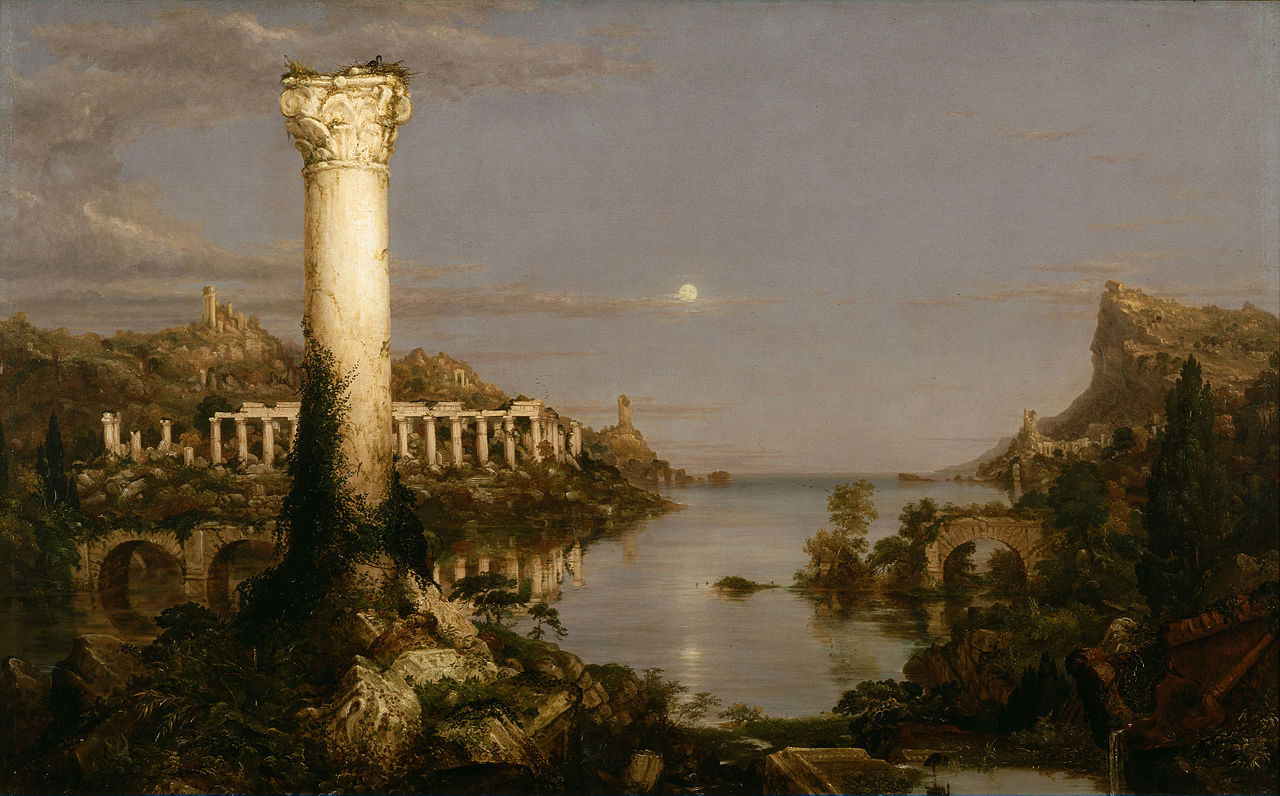
“The Course of Empire – Desolation” by Thomas Cole, one of a series of five paintings created between 1833 and 1836.
Wikimedia Commons.
April 8, 2020
If the Wuhan Coronavirus panic feels oddly familiar … there’s a good reason for it
Warren Meyer explains why his skepticism about the dangers of the Wuhan Coronavirus epidemic kicked in quickly because it followed a very familiar pattern:
I have been skeptical about extreme global warming and climate change forecasts, but those were informed by my knowledge of physics and dynamic systems (e.g. feedback mechanics). I have been immensely skeptical of Elon Musk, but again that skepticism has been informed by domain knowledge (e.g. engineering in the case of the hyperloop and business strategy in the case of SolarCity and Tesla). But I have no domain knowledge that is at all relevant to disease transfer and pathology. So why was I immediately skeptical when, for example, the governor of Texas was told by “experts” that a million persons would die in Texas if a lock-down order was not issued?
I think the reason for my skepticism was pattern recognition — I saw a lot of elements in COVID-19 modelling and responses that appeared really similar to what I thought were the most questionable aspects of climate science. For example:
- We seem to have a sorting process of “experts” that selects for only the most extreme. We start any such question, such as forecasting disease death rates or global temperature increases, with a wide range of opinion among people with domain knowledge. When presented with a range of possible outcomes, the media’s incentives generally push it to present the most extreme. So if five folks say 100,000 might die and one person says a million, the media will feature the latter person as their “expert” and tell the public “up to a million expected to die.” After this new “expert” is repetitively featured in the media, that person becomes the go-to expert for politicians, as politicians want to be seen by the public to be using “experts” the public recognizes as “experts.”
- Computer models are converted from tools to project out the implications of a certain set of starting hypotheses and assumptions into “facts” in and of themselves. They are treated as having a reality, and a certainty, that actually exceeds that of their inputs (a scientific absurdity but a media reality I have observed so many times I gave it the name “data-washing”). Never are the key assumptions that drive the model’s behavior ever disclosed along with the model results. Rather than go on forever on this topic, I will refer you to my earlier article.
- Defenders of alarmist projections cloak themselves in a mantle of being pro-science. Their discussions of the topic tend to by science-y without being scientific. They tend to understand one aspect of the science — exponential growth in viruses or tipping points in systems dominated by positive feedback. But they don’t really understand it — for example, what is interesting about exponential growth is not the math of its growth, but what stops the growth from being infinite. Why doesn’t a bacteria culture grow to the mass of the Earth, or nuclear fission continue until all the fuel is used up? We are going to have a lot of problem with this after COVID-19. People will want to attribute the end of the exponential growth to lock-downs and distancing, but it’s hard to really make this analysis without understanding at what point — and there is a point — the virus’s growth would have turned down anyway.
- Alarmists who claim to be anti-science have a tendency to insist on “solutions” that have absolutely no basis in science, or even ones that science has proven to be utterly bankrupt. Ethanol and wind power likely do little to reduce CO2 emissions and may make them worse, yet we spend billions on them as taxpayers. And don’t get me started on plastic bag and straw bans. I am willing to cut COVID-19 responses a little more slack because we don’t have the time to do elaborate studies. But just don’t tell me lockdown orders are science — they are guesses as to the correct response. I live in Phoenix where it was sunny and 80F this weekend. We are on lockdown in our houses. I could argue that ordering everyone out into the natural disinfectant of heat and sunlight for 2 hours a day is as effective a response as forcing families into their houses (initial data, though it is sketchy, of limited transfer of the virus in summertime Australia is interesting — only a small portion of cases are from community transfer. By comparison less than a half percent of US cases from travel).
March 29, 2020
March 1, 2020
The Black Death of the 14th Century
Ed West looks at what we know of the spread of the worst plague to hit western Europe in the 1300s:
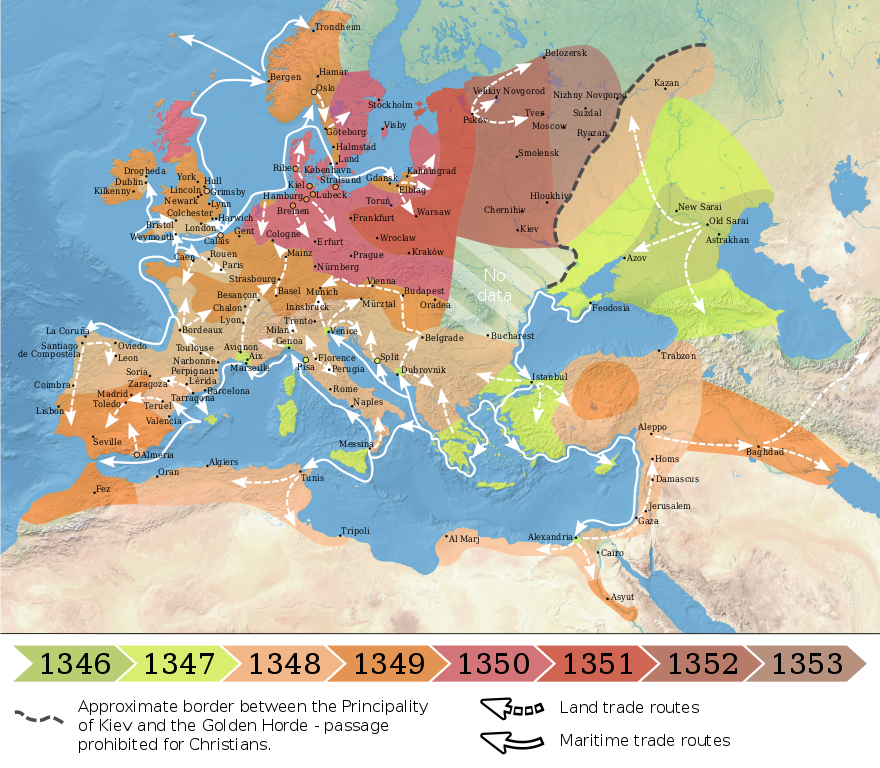
Map showing the spread of the Black Death in Europe between 1346 and 1353.
Map by Flappiefh via Wikimedia Commons.
There had never been a terror like it, and the “Great Mortality” as it was known — and much later, the “Black Death” — has seared itself in the European imagination. It changed the culture and tested the institutions of the time, and as we anxiously await the arrival of another — thankfully far less deadly — contagion from Italy its legacy and impact are worth remembering.
Epidemics have been around as long as civilization. Plaga — from the Greek for “strike” or “hit” — devastated classical Athens in the 5th century BC, when the historian Thucydides nursed sufferers; the Antonine Plague — probably smallpox or measles — killed as many as five million Romans at the empire’s peak. Far more deadly was the Plague of Justinian in the sixth century, which had a toll of 25 million and emptied whole regions of the eastern (Byzantine) Empire. Only in the 21st century did researchers confirm that this was the same illness that would appear eight centuries later — the Bubonic Plague.
Empires were particularly affected by these horrific epidemics, because empires are a form of globalisation — bringing different people into contact with each other and, more dangerously, into contact with other mammals, who act as disease vectors.
Another danger is climate change, which might turn a mild virus into a deadly one, or cause disease-carrying animals to migrate. This is what happened during the 14th century when the northern hemisphere became considerably cooler, soon after the Mongols had created the largest contiguous empire in history.
Genghis Khan’s people have generally received a historical bad press — people are more likely to recall the pyramid of skulls and the Tigris flowing black and red — yet their rule had opened up trade routes, allowing goods and people to cross Asia. Whether brought at the point of a sword or a trade deal, globalisation always brings the new: new cultures, new ideas, new languages and new pathogens.
Yersinia pestis had been living on gerbils and other rodents in central Asia, but unstable climate conditions in 1330s caused the disease to jump onto the rat flea. It was killing people by 1339, and in the mid-1340s Christians first heard of a disease raging in the Islamic world, which some at least took as divine punishment for the crusades.
After two centuries of Holy War this was understandable, yet hatred was not universal and during these conflicts Italian merchants had continually done business with Muslims, much to the Church’s fury. Now this trade, once the source of prosperity and peace, proved deadly: plague reached Europe via the Genovese colony of Caffa on the Black Sea (now Feodosiya, in the Ukraine). In October 1347, four ships escaping the diseased city had turned up in Sicily, condemning Italy to its fate.
February 23, 2020
Justin’s hidden victory – “… in the fight against global warming, this has to have been Canada’s best two weeks EVER”
As Rex Murphy points out, the nattering nabobs of negativity (okay, he didn’t call ’em that) miss the key benefits of Justin Trudeau’s tour de force of ingenious diplomacy and inaction:
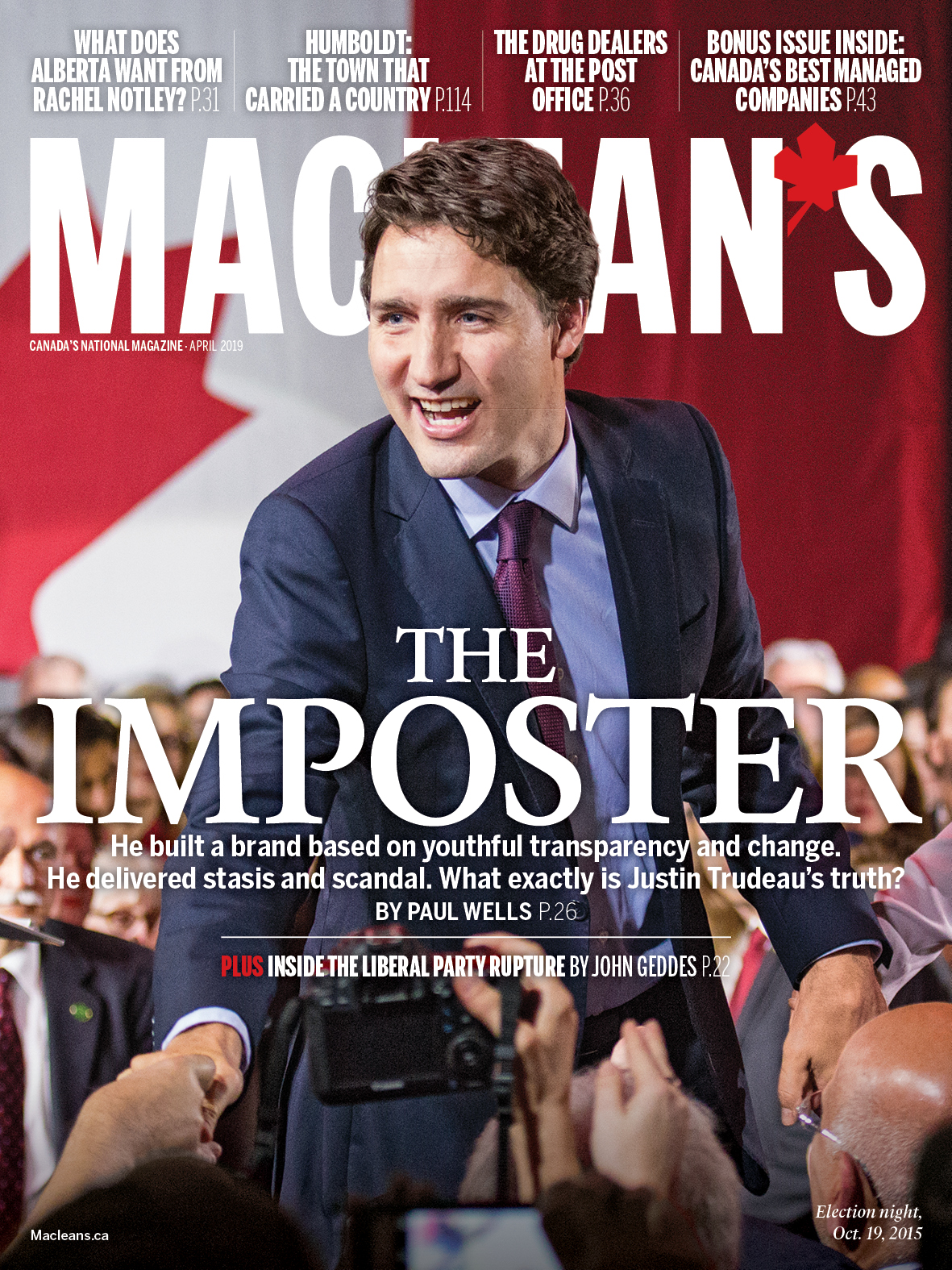
It was at the very heart of Justin Trudeau’s triumph in his first election, that having vanquished the Mordor orcs of Harperland, that the country was going to be served by new thinking and fresh approaches, that anger and conflict would be no more. In an era marked by respectful thinking, exquisitely careful language, above all by the ability to listen, protests would be no more. Concord would reign, all would be sweetness and light.
What few and feeble disputes that might emerge would be defused with a waving of the diversity wand, and a choir drawn from the Liberal backbenches intoning solemnly “this is not who we are as Canadians” before the Centennial Flame on Parliament Hill.
As an ultimate fillip every month a kitten and a ball of wool would be sent to every Canadian household (and Lo, a zen-like tranquillity would settle over the land). To be clear, these would be very progressive kittens, and the wood fair-trade down to the last twisted fibre.
[…]
Looked at in the cool light of reason, in the fight against global warming, this has to have been Canada’s best two weeks EVER. Keep it up and Canada, the whole wide, cold country, can soon declare itself one half-a-continent carbon-emission-free zone. Apocalypse deferred.
How do you spell Hallelujah? Greta Thunberg — Canada has heard you. Find a bamboo raft and come visit us again.
February 15, 2020
Disrupting railways as an activist tactic appears to work really, really well
As Colby Cosh writes, for all the issues Alberta has with the government in Ottawa, nobody seriously suggested messing up the railways to get attention. Perhaps they should have:
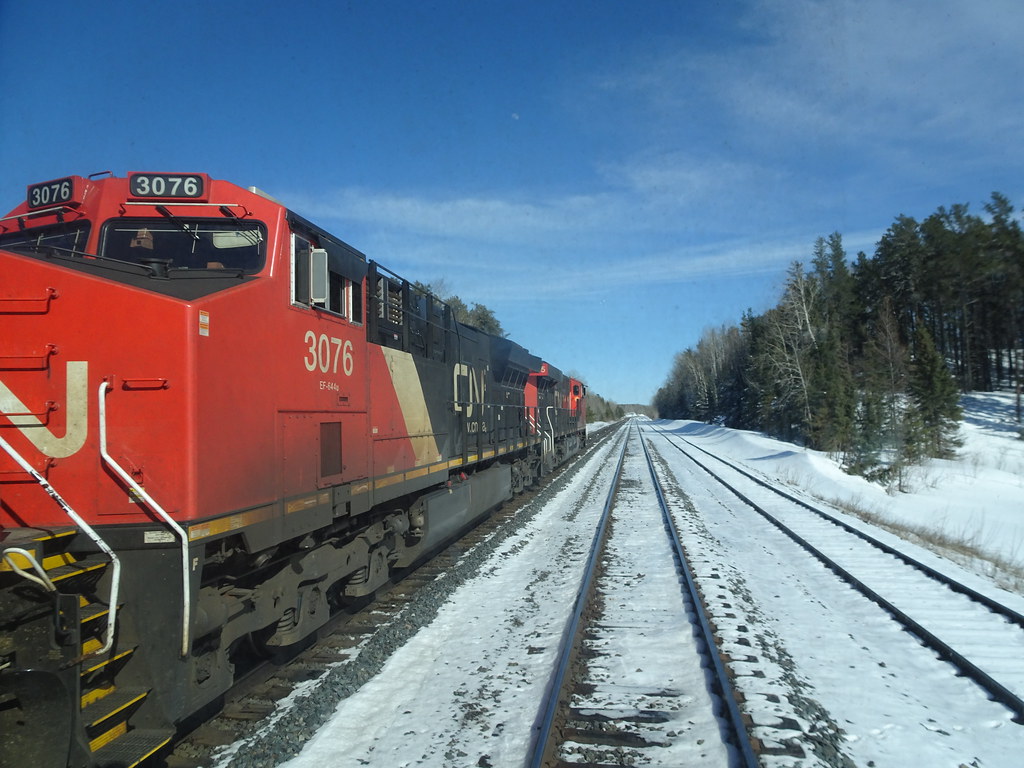
“DSC02285” by Bengt 1955 is licensed under CC BY-NC 2.0


It never occurred to us to mess with the rail network in Eastern Canada — to inconvenience the precious commuters of the Golden Horseshoe — as a means of gaining negotiating leverage. Actually, I’m sure some people must have suggested it, but they would have been written off as selfish, dangerous idiots advocating counterproductive tactics.
The economic impact of the rail protests is big, but surely comparable, at the moment, to that of a big storm. Yet because a B.C. Aboriginal community is carrying its fight with the B.C. government to the guts of Canada, the clamour over whether large public works are now possible at all in Canada has instantly achieved new and unfamiliar volume levels.
The Coastal GasLink that is the source of the strife is a provincially regulated work running from Dawson Creek to the coast; unlike the vastly more expensive problems Alberta has encountered, this technically isn’t an issue for the wider federation at all. Except, whoops, it is! Because someone decided to make it one!
The levels of irony dazzle the imagination. The Canadian West was settled by means of passenger rail, which is supposedly one reason it was chosen as a target by the radicals supporting the Wet’suwet’en hereditary chiefs in their pipeline fight. But intercity commuter rail no longer really exists between the West Coast and Hamilton. The West is ultimately as dependent on rail freight as the East, and maybe more so, but it was that commuter inconvenience that gave rise to an immediate sense of national crisis, while Calgary and Saskatoon and Winnipeg snoozed.
And climate-change activists found themselves blocking rail lines in “solidarity” with the Wet’suwet’en, even though the chiefs’ fight is a question of territorial principle rather than carbon sins. This put the greenies in the position of opposing and thwarting actual rail travel. They admit this is anomalous; nobody likes to attach the word “hypocritical” to himself.
One of the protesters pointed out to the Star‘s Alex Boyd how dependence on rail — dependence of the sort that they spend 364 days a year advocating for intra-city commuters — facilitates unlawful, obstructive protest as a means for the self-anointed to “put pressure on decision-makers.” It is a little harder to block paved roads than railroads, and much harder to sabotage them, if it comes to that — which it might have if the police had used force to immediately disperse the protests. For some, this counts as a feature of rail, not a bug.
January 23, 2020
Pascal’s Wager, environmentalists’ version
Hector Drummond indulges in a proper “Fisking” of a recent column in the Telegraph:
We don’t have to buy into the apocalyptic angst of Greta Thunberg, on show again in Davos yesterday, to recognise that something has to be done.
He actually said “Something Has To Be Done”. How about we do a snow dance, Philip? That’s “something”.
Whether or not you are a sceptic about the impact of CO2 on the climate or question man’s involvement in producing the greenhouse gas, our energy future is a non-carbon one, like it or not.
Our energy future involves a lot of talk about non-carbon energy sources, while relying on “carbon” for a long time to come.
Virtually every government has committed to this as an overt aspect of public policy and those that haven’t, like China or the US, have a rapidly growing green energy sector poised to exploit the move to a carbon‑free future.
You mean the China that’s building coal-fired power plants at a rate of knots? That China?
Later on, the column invokes Pascal’s Wager, which Hector finds both amusing and irritating:
Seriously? Pascal’s Wager, which has been long ridiculed by most scientists and philosophers and thinkers, is now the basis for the largest and riskiest economic and political transformation in human history?
Pascal’s Wager justifies any proposed change in response to any possible threat. It’s possible that all the ducks in the world are really super-intelligent and they’re about to launch a takeover, so we need to kill them all. It’s possible that nylon stockings are eventually going to cause a nuclear explosion. Make your own ones up. The consequences of doing nothing, should these claims turns out to be true, are calamitous. In fact, they’re far more calamitous than most of the possible climate change scenarios.
Proper risk analysis, on the other hand, tells us to look at probabilities of the possible bad outcomes, not just how bad some possible bad outcome would be, were it true. The catastrophic climate change scenarios all have tiny probabilities. Even the IPCC admits that.
[…]
Then we have to look at the costs of the proposed action. The real costs, that is, not just vague claims like “Oh, moving everything to solar energy would be, like, you know, cool, my friend went to this talk once and she said that apparently solar works just as well as coal”. The costs – the real costs – are what needs be weighed against alternative courses of action.
The costs of abandoning fossil fuels are not zero. Not even remotely. Changing to renewables will be massively expensive, destroy jobs, and hinder prosperity, because they cannot provide anywhere near the energy we need. “Generate growth and prosperity” is nonsense, and Johnston should be ashamed of himself for falling for this.


