Quotulatiousness

January 6, 2022

“When speaking to a contemptible idiot who is kind of evil, don’t call them a contemptible idiot who is kind of evil! Many contemptible idiots find that language insulting”

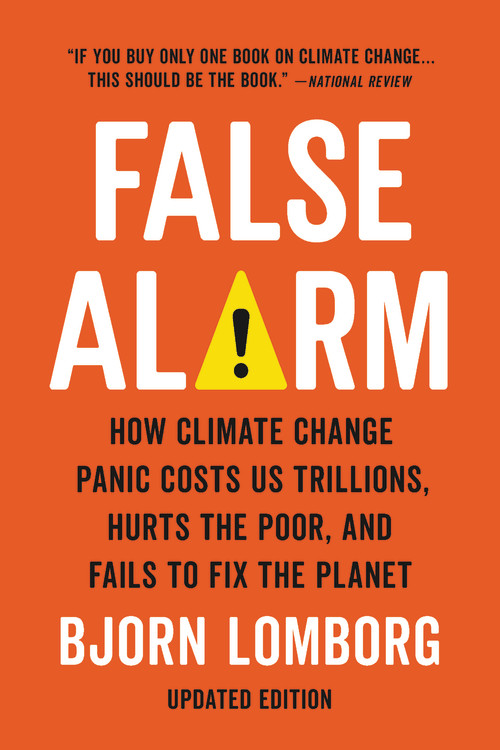
Tom Chivers reviews a recent book from Lee McIntyre, How to Talk to a Science Denier: Conversations with Flat Earthers, Climate Deniers, and Others Who Defy Reason:

Imagine you bought a book with the title How to Talk to A Contemptible Idiot Who Is Kind of Evil. You open the book, and read the author earnestly telling you how important it is that you listen, and show empathy, and acknowledge why the people you’re talking to might believe the things they believe. If you want to persuade them, he says, you need to treat them with respect! But all the way through the book, the author continues to refer to the people he wants to persuade as “contemptible idiots who are kind of evil”.

At one stage he even says: “When speaking to a contemptible idiot who is kind of evil, don’t call them a contemptible idiot who is kind of evil! Many contemptible idiots find that language insulting.” But he continues to do it, and frequently segues into lengthy digressions about how stupid and harmful the idiots’ beliefs are. Presumably you would not feel that the author had really taken his own advice on board

This is very much how I feel about How to Talk to A Science Denier, by the Harvard philosopher Lee McIntyre.

McIntyre wants to help us change people’s minds. Specifically, to help us change the minds of these strange, incomprehensible people called “science deniers”. He addresses five main groups of “deniers”: flat earthers; climate deniers; anti-vaxxers; GMO sceptics; and Covid deniers.

This is, on the face of it, an important project. It’s a truism that the world is polarised, and our sense of shared reality is under attack. If there is some way of learning how to talk across difference, and to persuade without attacking, that might go a long way to bridging our various divides, not just the five he discusses.

The framing is that McIntyre goes and meets representatives of these groups and tries to persuade them out of their wrong beliefs. He goes armed with social-psychology research about how best to persuade people. His big trick (which I think is a good, if limited, one) is asking: what evidence would it take to make you change your mind?

But the whole book is premised on one idea: McIntyre is right, and the people he is “talking to” are wrong.

[…]

McIntyre constantly wants to make a clean distinction between “science deniers” and non-deniers. So, for instance, he says that there are five “common reasoning errors made by all science deniers” [my emphasis]. They are: cherrypicking, a belief in conspiracy theories, a reliance on fake experts, illogical reasoning and an insistence that science must be perfect. If you don’t make all five of those errors, you’re not an official McIntyre-accredited science denier.

Hang on, though. A “belief in conspiracy theories”? McIntyre spends a lot of time talking about the tobacco firms who manufactured doubt in the smoking/lung cancer link, and the oil firms who did the same with the fossil fuel/climate change link. He says that the spread of Covid denialism through the US government was driven by Republican desire to keep the economy open and win the election. Aren’t these conspiracy theories?

Ah, but for McIntyre these aren’t conspiracy theories, they’re conspiracies. The distinction is “between actual conspiracies (for which there should be some evidence) and conspiracy theories (which customarily have no credible evidence).”

January 2, 2022

Eat the bugs, peasants! Leave the meat for your betters!

Andrew Orlowski on the self-imagined elite attitudes to the environment and — as a direct result — the growing chorus of journalists pushing the idea of substituting plant-based synthetics and/or insects in place of meat for us proles:

In recent years, media messaging has been emphatically bossy about what we should eat. State micromanagement of taste has increased, too. After government intervention, British staples ranging from sticky-toffee pudding to Sugar Puffs have been reformulated beyond recognition. But the anti-meat crusade demands that something far more radical should happen – it seeks to stigmatise something central to many of our lives, and demands a shift in how we regard nature. As part of this, our media now seek to normalise lab-grown Frankenmeats, and strangest of all, adopt entomophagy – the practice of eating insects.

So what’s behind the war on meat? The apparent justification is the political elite’s great preoccupation of our time – climate change. We’re told that rearing livestock for meat is bad for the environment, and that cows are the worst offenders of all. That’s the assumption behind hit YouTube videos like Mark Rober’s “Feeding Bill Gates a fake burger (to save the world)”, a promotional video for Gates’ synthetic-meat investments, which has racked up nearly 46million views.

But the environmental argument doesn’t look so robust on closer examination. Agricultural CO2 emissions are small – so small that if the United States turned entirely vegan this decade, it would lower US emissions by just 2.6 per cent. In reality, a cow is a highly efficient protein-conversion system, turning protein that we can’t eat into protein that we love to eat. Three quarters of livestock, on balance, improve the environment, enhancing the yield of the land through fertiliser, which would otherwise need to be made synthetically. For example, one of the crimes regularly levelled against beef is water consumption. But the cow loses most of this water the same day – it’s returned to nature. So with environmental claims so weak, there must be some other rationale for the war on meat.

Much of today’s war on meat appears to be driven by venture capitalists, and their client journalists in the media. Ever eager for the next dot-com boom, Silicon Valley has made a bet on lab-grown, synthetic meat. This requires an industrial bioreactor – an expensive chemical process. But lab-grown meat doesn’t seem to be going anywhere. Business Insider recently reported that scepticism about the sector is growing, as costs remain higher than those for real meat – and this is before one single laboratory-meat formula has received regulatory approval, let alone passed the consumer test.

Another factor driving the war on meat is the academic blob. For example, Professor Peter Smith, an environmental scientist at Aberdeen University and a leading contributor to the UN’s Intergovernmental Panel on Climate Change (IPCC), likes to insist that “we’re not telling people to stop eating meat”, before adding that “it’s obvious that in the West we’re eating far too much”. Have a guess who defines what is “too much”. It’s Smith and his colleagues, not you or me making informed consumer choices.

But the oddest spectacle of all is the relentless promotion of entomophagy at the posh end of the media. The posher the paper, the keener they are on normalising bug-eating.

This is a campaign that has a high hurdle to overcome in most markets, where insects are associated with disease. “Deeply embedded in the Western psyche is a view of insects as dirty, disgusting and dangerous”, a group of academics found in 2014. Many bugs, such as cockroaches, carry disease. Flies like shit, as the saying goes. “Individuals vary in their sensitivity to disgust”, another academic paper acknowledges. “This sensitivity extends to three dimensions of disgust: core, animal reminder and contamination.” Only seven per cent of the US population would countenance the idea of eating insects, even in powdered form, according to one academic study in 2018. Processing insects also raises practical problems, with e-coli and salmonella. “Spore-forming bacteria and enterobacteriaceae have been reported in mealworms and crickets, with higher levels found in insects that had been crushed – likely due to the release of bacteria from the gut”, another study found. It’s easier to clean a cow’s stomach than a cockroach’s.

It should be no surprise, then, that the edible-insect movement has hit a few snags. Blythman recalls the startup, Eat Grub (geddit?), providing the snacks for an insect pop-up in London’s hipster East End. On the menu were “Thai-inspired” creations such as spicy cricket rice cakes and buffalo worms wrapped in betel leaf. “It tasted disgusting, and so I swallowed it whole. Then the legs stuck in my throat”, she recalls. The pop-up hasn’t returned. The following year, Sainsbury’s tapped Eat Grub for its first range of insect products – barbeque-flavoured crickets. Today, the only crickets you can buy at Sainsbury’s are cigarette lighters.

December 17, 2021

Scott Alexander on the risk of ancient plagues returning

Filed under: Environment, Health, History — Tags: , , , , , , , — Nicholas @ 03:00

The other day, Scott Alexander responded to a hair-on-fire New York Magazine piece of hysteria-mongering about climate change warming up arctic zones that may still harbour ancient plagues that can return:

I’m a little nervous talking about this, because I am not a microbiologist. But I haven’t seen the proper experts address this properly, so I’ll try, and if I’m wrong you guys can shout me down.

(Also, the real microbiologists are apparently “self-injecting [3.5 million year old bacteria] just out of curiosity” and we should probably stay away from them for now)

I think we probably don’t have to worry very much about ancient diseases from millions of years ago.

Animal diseases can’t trivially become contagious among humans. Sometimes an animal disease jumps from beast to man, like COVID or HIV, but these are rare and epochal events. Usually they happen when the disease is very common in some population of animals that lives very close to humans for a long time. It’s not “one guy digs up a reindeer and then boom”.

If a plague is so ancient that it’s from before humans evolved, it’s probably not that dangerous. In theory, it could be dangerous for whatever animal it originally evolved for — a rabbit plague infecting rabbits, or an elephant plague infecting elephants. And then maybe after many rabbits are infected, some human might eat an infected rabbit and get unlucky, and the plague might mutate to affect humans. But I don’t think this is any more likely than any of the zillion plagues that already infect rabbits jumping to humans, and nobody is worrying about those.

The story about anthrax is a distraction. The fact that someone got anthrax from a corpse frozen in permafrost is irrelevant; there is anthrax now, and you could get it from a perfectly fresh corpse or living animal if you wanted. It’s adapted to animals and it can’t spread from person to person. Just because you got an irrelevant-to-humans modern animal disease when you dug up a modern animal, doesn’t mean you’re going to get a dangerous-to-humans disease from an ancient animals.

But I’m more concerned about recent human plagues coming back.

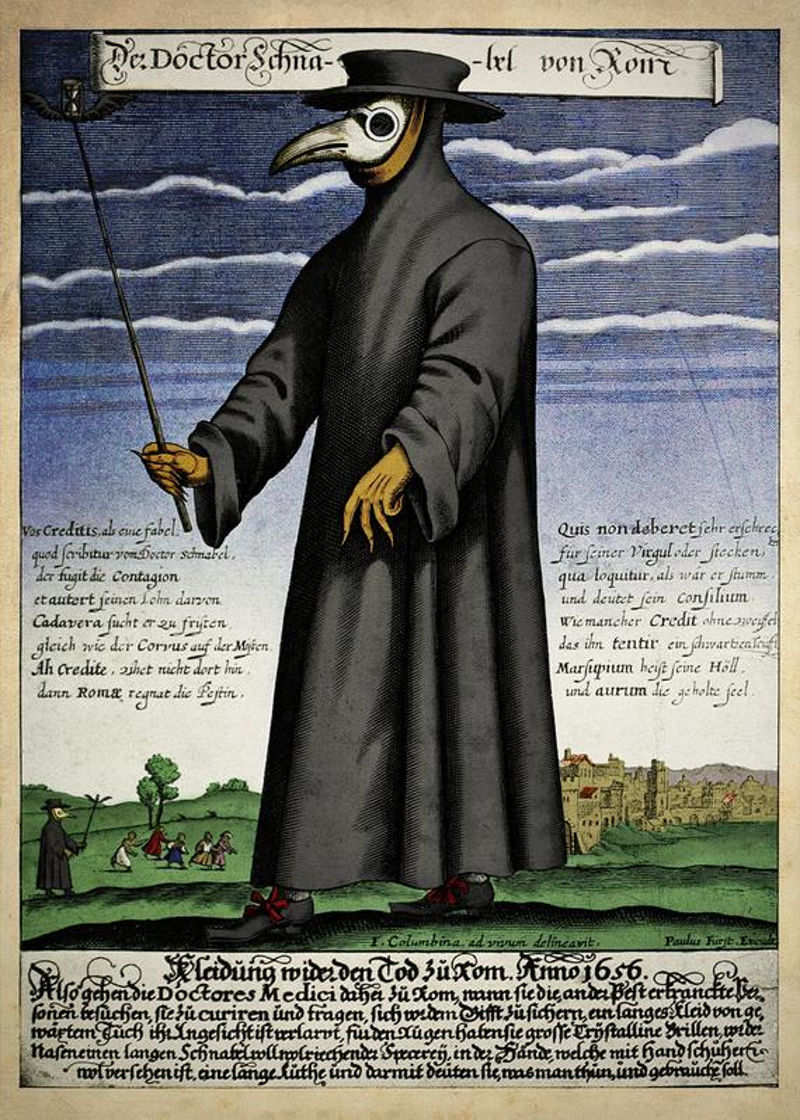
Not bubonic plague; that one is another distraction. The reason we don’t get more Black Deaths isn’t because yersinia pestis died off or mellowed out. It’s because we have good sanitation and pest control.

And doctors whose knowledge of medicine doesn’t begin and end with “look like a creepy bird”

But the 1918 Spanish flu has, as far as I know, legitimately died out. Lots of people like saying that in a sense it’s still with us. This NEJM paper (with a celebrity author!) points out that it’s the ancestor of all existing flu strains. But most of these flu strains are less infectious than it was. This didn’t make sense to me the first, second, or third time I asked about it: why would a flu evolve into an inferior flu? Sure, it might evolve into a less deadly flu because it’s perfectly happy being more infectious but less deadly. But I think the Spanish flu was also especially infectious; so why would it evolve away from that?

December 14, 2021

QotD: Insulated from reality

To understand the green movement, really understand it, you could do worse than look at the photographs of today’s vast tailbacks on the M25. Here were thousands of ordinary people – workers, deliverymen, mums and dads, holidaymakers – delayed for hours by the self-righteousness of middle-class greens. Activists from a group called Insulate Britain – which, almost comically, agitates for the insulation of British homes – blocked various junctions on the M25, causing distress to people who had places to be. It was eco-elitism distilled: the sanctimonious zealots of the green religion disrupting the lives of the plebs to make some daft point.

The first notable thing about today’s act of public nuisance masquerading as a protest was the hilarity of the campaign group itself. Remember when radicals fought for higher wages or better working conditions or for a revolution to replace capitalism with something else? Not anymore. Today’s self-styled militants demand the insulation of houses. “What do we want? The creation of a thermal envelope in people’s homes! When do we want it? Now!” What a crock to go to the barricades for. Also notable is the irony of supposed planet-lovers causing so much pollution by forcing hundreds of cars and trucks to sit still for ages, chugging fumes into the air for nought. Well played, greenies.

But the most striking thing about these kinds of protests is their sheer arrogance. Their inherently anti-democratic, anti-masses nature, where the aim is always, but always, to inconvenience the little people and teach us a lesson. You’re on your way to Heathrow for a much-needed jaunt to Malaga to escape the stresses of work? Not anymore, you’re not – the eco-elitists blocked junction 14, which leads to one of Heathrow’s terminals. You’re a knackered trucker who’s been driving all night long and now wants to get back to his family? Tough shit. These plummy alarmists have decided to make you the collateral damage of one of their narcissistic stunts.

Brendan O’Neill, “Environmentalism is a revolt against the people”, Spiked, 2021-09-13.

November 17, 2021

Environmental pessimism despite the facts

Filed under: Economics, Environment, Media — Tags: , , , , — Nicholas @ 05:00

Alexander Hammond refutes one of the many, many articles preaching global environmental doom and disaster:

Last week, The Scotsman published an article by the journalist Anastasiia Zagoruichyk. In the piece, Zagoruichyk claims that thanks to climate change, fires, and deforestation in her native Ukraine, her children won’t get to experience childhood joys like “walking in the autumn forest, picking mushrooms and breathing fresh air.”

Forest coverage in Ukraine is, admittedly, a niche topic, but alarmism about the future of our forests and our children is unfortunately widespread. Indeed, it was not long ago that Extinction Rebellion founder Roger Hallam confidently declared that due to deforestation and other environmental damage, “our children are going to die in the next 10-20 years.” Thankfully for humanity, these far-fetched claims are not based in reality.

Contrary to what Zagoruichyk would have you believe, forest coverage in Ukraine has increased drastically in recent years. Between 1992 (the oldest data available) and 2020, the share of land in Ukraine covered by forest increased from 16.1 percent to 16.7 percent. While a 0.6 percentage point increase might seem like a small amount, this equates to an additional 3,622 square kilometers of forest – a land area roughly 1.5 times larger than the country of Georgia.

Globally, the world does continue to lose forest area. However, according to the United Nation’s Food and Agriculture Organisation (FAO), the rate of deforestation between 2010-2020 was 40 percent lower than in 1990-2000. At this rate, even without additional promises from world leaders at COP, the global deforestation rate will likely hit zero. Indeed, over the last 30 years, net afforestation has occurred in Europe (including Russia), North America, Oceania, and Asia.

The world’s two poorest regions, South America and Africa, are also the only ones that continue to experience net deforestation. This is no coincidence; many environmental scientists and commentators suggest that economic and ecological well-being are intimately related. According to one hypothesis, called the Environmental Kuznets Curve, a region’s environment worsens in tandem with economic growth but only until a certain income per capita is reached. At that point, people can afford to protect the environment, and ecosystems flourish. This environmental recovery has occurred across Europe and North America and is currently happening in China, Russia, India, and Vietnam.

Therefore, as South America and Africa continue to become richer, we can expect their rate of forest loss to slow and eventually reverse. Given this good news, why is there so much pessimism about the future of our forests? Zagoruichyk’s article offers some answers.

Earlier this month, Michael Shellenberger also had good-but-ignored environmental news to report in UnHerd:

No global problem has ever been more exaggerated than climate change. As it has gone from being an obscure scientific question to a theme in popular culture, we’ve lost all sense of perspective.

Here are the facts: in Europe, emissions in 2020 were 26% below 1990 levels. In the United States, emissions in 2020 were 22% below 2005 levels. Emissions are likely to start declining, too, in developing nations, including China and India, within the next decade. Most nations’ emissions will be bigger this year than last, due to post-Covid economic growth. But global emissions are still likely to peak within the next decade.

And the result will be a much smaller increase in global average temperatures than almost anyone predicted just five years ago. The best science now predicts that temperatures are likely to rise just 2.5-3°C above pre-industrial levels. It’s not ideal, but it’s a far cry from the hysterical and apocalyptic predictions of 6°C, made just a decade ago. A 3°C increase is hardly an existential threat to humanity.

Not that you’d know it, if you had half an eye on the headlines this summer. The floods, fires and heatwaves that plagued the world were, for many observers, proof that the impacts of climate change have already become catastrophic. In Europe, more than 150 people died in flooding. In the United States, wildfire season started earlier and lasted longer, razing hundreds of thousands of acres. Around the world, hundreds died from heatwaves.

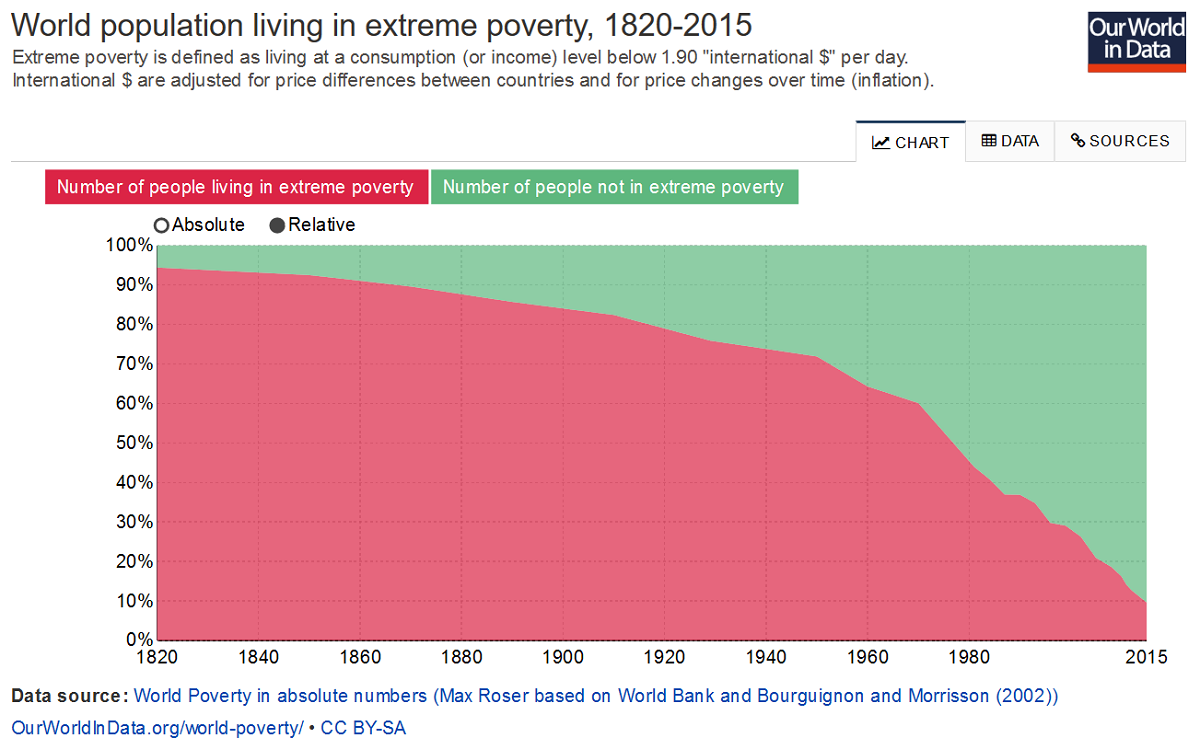
But again, it’s worth reminding ourselves of the facts: there has been a 92% decline in the per decade death toll from natural disasters since its peak in the 1920s. In that decade, 5.4 million people died from natural disasters. In the 2010s, just 0.4 million did. Globally, the five-year period ending in 2020 had the fewest natural disaster deaths of any five-year period since 1900. And this decline occurred during a period when the global population nearly quadrupled — and temperatures rose more than 1°C degree centigrade above pre-industrial levels.

November 10, 2021

When the police get posh – “The ruling class needs a woke paramilitary vanguard for when the people revolt”

Filed under: Britain, Environment, Law, Liberty, Politics — Tags: , , , , , , — Nicholas @ 03:00

In The Critic, Harry Miller decries the comfortable middle- and upper-middle-class wokesters who can posture and protest and cause mass disruptions to the workers and lower-middle-class with impunity, because on the very few occasions they are brought to court, the judiciary demonstrate that their hearts are with the posh protest movements, not with the people:

Of course, there is a risk when elected leaders burn up the air miles to feast with the Bacchanalian elite, whilst simultaneously preaching that climate armageddon will only be avoided if the hoi polloi ditch their cars and, once a week, take the peasant wagon to Lidl. When “let them eat cake” becomes “let them eat insects and plant based mash”, there is a heightened risk that the working class will take to the streets to sing “One Day More” with a spare rib in one hand a pitchfork in the other. And it is the working class which poses the threat as the middle class can afford to make a virtue of its suffering. Trading in the Discovery Sport for a hybrid Mini Countryman and a bag full of social bragging rights is substantially different from having to choose between putting on the heating and a week on the beer in Faliraki.

In anticipation of the backlash the government has turned a blind eye to the politicisation of the police and is now recruiting exclusively from the middle class. Why else do you suppose a career in the police is now only open to those with a degree? The ruling class needs a woke paramilitary vanguard, well versed in the etiquette of uncritical obedience, for when the people revolt.

When the police embrace a political cause, there is no expression of support that is too extreme. Humberside Police endorsed a lunatic with connections to organised crime who once told Julie Burchill, a writer of Jewish heritage, that Hitler had the right idea. And the national lead on Hate Crime, Paul Giannasi OBE, recently introduced the concept of laudable hate, provided it serves middle class preoccupations such as gender identity or preserving the tundra.

And then there is the obscene spectacle of politically sponsored riot shields being paraded by the police through the streets of Leicester. We are meant to swallow the lie that this is a benign display of support for a marginalised community when, in reality, it is an emblematic reminder to the working class to Remember The Battle Of Orgreave. On the 18th of June, 1984, ordinary working people lent their support to the picketing miners and were met with a baton charge, preceded by the pounding of riot shields, in scenes reminiscent of Zulu. Lest they forget.

Photo from The Critic

The crimes of the woke middle class, where they are prosecuted at all, come with the safety net of a judiciary that is also in on the racket. When six XR zealots found themselves in the dock for progressing the cause of Greta Thunberg by taking hammers to the glass frontage of Shell’s London Headquarters, Judge Gregory Perrin advised that their actions had no defence at law. Nevertheless, he offered gratitude for the care and diligence taken by the jury when it returned a not-guilty verdict. Last week, three activists were found guilty of criminal damage for graffitiing “Lies, lies, lies” on the Westminster Office of the Global Warming Policy Foundation in response to its sin of climate scepticism. Before being slammed with peppercorn fines, the criminals — Clare, Jessica and Rupert — were praised by the bench for their openness and honesty. It is yet to be seen whether similar leeway will be afforded to working class criminals who, in pursuit of Net Zero, begin half inching insulation from Travis Perkins.

November 7, 2021

Prime Minister Look-at-my-socks loves the limelight at COP26

Jen Gerson on Canada’s fundamentally unserious Prime Minister Photo-Op grandstanding at the climate love-in in Glasgow:

In a rare moment of unity, both Alberta Premier Jason Kenney and NDP opposition leader Rachel Notley objected to Trudeau’s announcements.

“I don’t know why they would make an announcement like this without consulting with the province that actually owns the overwhelming majority of Canada’s oil and gas reserve,” said Kenney.

I mean, yeah. He’s right.

When asked for actual details about this brave new plan at COP26, Environment Minister Steven Guilbeault didn’t have much to share … because the plan doesn’t exist yet. It’s a plan to make a plan.

“We will need to be developing this, and that’s exactly what we will be doing in the coming months,” Guilbeault said, according to the CBC. Both he and Natural Resources Minister Jonathan Wilkinson have asked the net-zero advisory board to help them come up with a plan. “Specifically, we seek your advice on key guiding principles to inform the development of quantitative five-year targets,” they said in a letter sent on Monday.

There’s no path, here. There’s been no discussion; no consultation, nothing. There’s not even a draft of an idea.

So why is Trudeau getting on a stage in front of the world’s leaders half-cocked with ambitious promises for an emissions cap before he’s worked out the details at home?

To quote Line co-founder Matt Gurney during our weekly meeting: “To ask that question is to answer it.”

Trudeau is signalling what he cares about and what he doesn’t. He’s more concerned with how the audience abroad perceives him than he is about the finer points of governing. It’s about getting back-pats by the Davos set, not actually running our embarrassing, open-pit G7 backwater.

It was hard to avoid the sense during the last election that Trudeau didn’t have his heart in the fight; that he’s more invested in acting the part of prime minister than being it.

I put little stock in rumours that the Liberal leader will soon leave his role — if you’re going to act a part, after all, there are few better. And what a great platform it provides for a launch to better things. But I do wonder: If someone offered him a ranking job at the UN or the WEF or something else with a suitably impressive acronym and a travel expense account, how long would he stick around?

November 5, 2021

“There is nothing to debate anymore. The climate catastrophe is coming. Now is the time for action”

Filed under: Environment, Media, Politics, Science — Tags: , , , — Nicholas @ 05:00

Unlike all the other (dozens? scores? hundreds?) times since the 1970s we’ve been warned about imminent climatological disaster unless we gave up on industrial civilization, heating our homes, and all the other white supremacist, racist, colonialist, transphobic, etc., exploitations we have been enjoying up to now, we’re finally out of time and we must act NOW:

COP26 is an extravaganza of ideological conformity. From the 30,000 delegates and heads of state sequestered in the “blue zone” to the NGOs, academics and green businesses exhibiting in the public “green zone”, the message is the same. There is nothing to debate anymore. The climate catastrophe is coming. Now is the time for action.

Similar sentiments abound outside COP26, where the protesters are gathered. There the likes of young eco-millenarian Greta Thunberg also claim that the end is nigh, that the time for debate is over. Or as the Swedish teenager herself put it during a protest on Sunday, there’s no need for any more of this “blah, blah, blah”.

This is essentially what all those in and around COP26 are saying. That, in effect, there is nothing to debate anymore. And so, over the next few days, Western-led policymakers, angrily cheered on by protesters, will try to decide our futures for the next few decades. They will regulate, restrict and limit. And they will be able to do so without dissent or debate.

How have we got here? How have we ended up at a point where debating climate change has become nigh-on impossible? The answer lies principally in the use and abuse of the authority of science. The standard justification for shutting down those challenging the alarmist climate-change narrative amounts, effectively, to saying “the science has spoken”.

This was clear in the run-up to COP26, when Mark Lynas, a long-time environmentalist campaigner and now a visiting fellow at Cornell University, published a widely reported-on study asserting that the scientific consensus that humans are altering the climate is now agreed upon by 99.9 per cent of scientists. That’s how certain The Science now is. Not just 97 to 98 per cent certain, as it used to be, but 99.9 per cent certain. “It is really case closed”, said Lynas. “There is nobody of significance in the scientific community who doubts human-caused climate change.”

“Case closed.” No “doubts” and no appeal. These are revealing words. Climate change has long since ceased to be an issue to be addressed, or a set of challenges to be overcome. It is now the revealed truth, the God-like judgement around which we must organise the entirety of societal life. To question this truth is tantamount to apostasy. Hence Lynas calls for any remaining heretics to be censored, urging Facebook and Twitter “to look at their algorithms and policies” to root out “climate misinformation”.

Indeed, those daring to question any aspect of the alarmist narrative are now routinely dismissed not as heretics, but as “deniers” – a term which morally equates those who question, say, certain decarbonisation policies with anti-Semites who deny that the Holocaust happened.

October 18, 2021

“If Extinction Rebellion had brains, they’d be blockading building sites rather than airports”

In The Critic, Andrew Hunt runs through the invisible environmental costs of the building industry and points out that despite the eye-opening amount of carbon emissions, the buildings we’re putting up everywhere are just not built to stand the test of time:

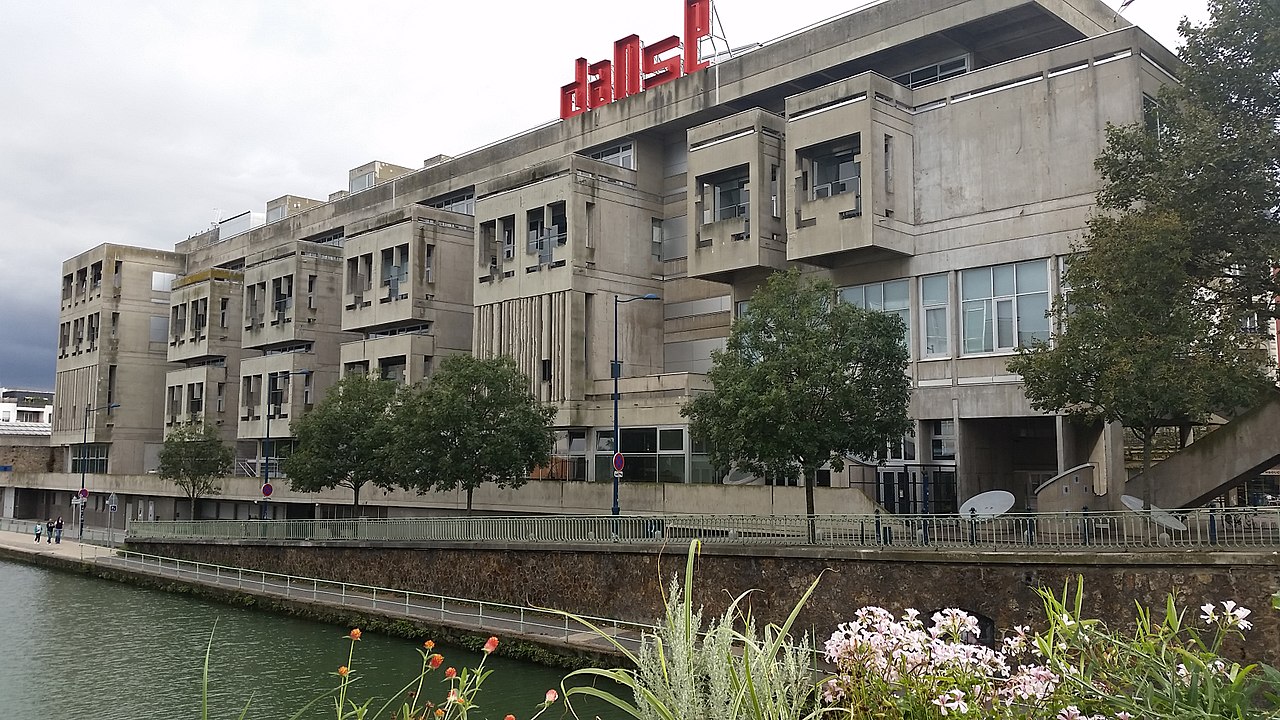
The Centre national de la danse in Pantin (Seine-Saint-Denis), designed in 1965 by Jacques Kalisz.
Photo by Cinerama14 via Wikimedia Commons.

In the run up to COP26, you can be sure we won’t be spared the preaching about windmills, electric cars and heat pumps, along with pious admonishments against any form of human pleasure, from taking holidays to eating a steak. As always, those in charge will ignore the elephant in the room. The world’s biggest polluter by far is the construction industry. According to the UN, it produces 38 per cent of global emissions. By comparison, airlines produce just 2 per cent. If Extinction Rebellion had brains, they’d be blockading building sites rather than airports.

Politicians seem equally blind. They fetishise house-building, but fail to notice that building even a two-bed house creates 80 tonnes of carbon and uses 150 tonnes of materials – the same amount of landfill as an average household creates over 300 years! By comparison, powering your house produces about 2 tonnes of CO2 per year. Even if you could build a truly net zero home tomorrow (which you can’t), it would take forty years to break even.

A big part of the problem is modern construction materials. Producing concrete (180kg of CO2/tonne) and steel (1.85 tonnes of CO2/tonne!) are two of the most ubiquitous and environmentally destructive industries on the planet. By contrast, sandstone has a carbon footprint of just 77kg/tonne, and wood can be CO2 negative as it locks in carbon. Those old materials last longer as well. There are stone buildings that have been knocking around for more than a millennium — Rome’s Pantheon is 1900 years old. If treated properly, wooden buildings can last almost as long. The world’s oldest inhabited house in the Faroe Islands is 900 years old and built from wood. China’s ornately carved Nanchang Temple has been welcoming Buddhists since the 8th century.

Pre-stressed concrete meanwhile has a lifespan of 50-100 years, meaning many of the first concrete structures have already crumbled into carcinogenic dust.

It’s not just the materials. For buildings to last, we must love them enough to preserve them.

In a little-known study, “Sustainable Build Heritage“, a group of Danish academics looked at why some buildings stand for centuries while others are demolished in as little as a generation. Their conclusion was that buildings that last are made of good materials, are functional and, above all, are beautiful. They acknowledged the timelessness of traditional notions of beauty: how some buildings give us the same gut reactions as they did our ancestors. Copenhagen is of course full of examples — not least her colourful townhouses that have been standing for over two centuries. They have had to be adapted, but they have always been popular places to live.

Closer to home, badly built eyesores are being torn down barely a generation after their construction: tower blocks from the 60s, council offices from the 70s and shopping centres from the 90s. That’s billions of tonnes of fossil fuels and mining degradation ending up as landfill.

Has anything been learnt? The Prime minister’s “Build Back Better” plan is in no way green. Construction can never be green. Is it possible to conceive of a crueller thing to do to future generations than a debt-fuelled frenzy of brutalist carbuncles that will be theirs to demolish? When Greta Thunberg described Build Back Better as “blah-blah-blah”, she was being generous. It’s an environmental catastrophe.

September 27, 2021

Why Were Things So Terrible In the 17th Century – General Crisis Theory

Kings and Generals
Published 26 Sep 2021

💻 Go to https://NordVPN.com/kingsandgenerals and use code kingsandgenerals to get a 2-year plan with a huge discount plus 4 additional months for free. Protect yourself online today!

Kings and Generals animated historical documentary series on early modern history and economic history continue with a video on the general crisis theory, as we try to deduce why the 17th century events were so terrible and why so many wars, rebellions, and upheavals happened in this period

Support us on Patreon: http://www.patreon.com/KingsandGenerals or Paypal: http://paypal.me/kingsandgenerals. We are grateful to our patrons and sponsors, who made this video possible: https://docs.google.com/document/d/1o…

The video was made by EdStudio while the script was researched and written by Turgut Gambar. Narration by Officially Devin (https://www.youtube.com/user/OfficiallyDevin)

✔ Merch store ► teespring.com/stores/kingsandgenerals
✔ Podcast ► http://www.kingsandgenerals.net/podcast/
✔ Twitter ► https://twitter.com/KingsGenerals
✔ Instagram ► http://www.instagram.com/Kings_Generals

Production Music courtesy of Epidemic Sound: http://www.epidemicsound.com

#Documentary #EarlyModern #GeneralCrisis

August 9, 2021

1815 Eruption of Mount Tambora

The History Guy: History Deserves to Be Remembered
Published 6 May 2020

In 1815, the volcano Mount Tambora on the island of Sumbawa in the Dutch East Indies erupted in the most explosive volcanic eruption in human history. The explosion affected the world’s climate, changing history in surprising ways. The History Guy recalls the forgotten history of the year without a summer.

This is original content based on research by The History Guy. Images in the Public Domain are carefully selected and provide illustration. As very few images of the actual event are available in the Public Domain, images of similar objects and events are used for illustration.

You can purchase the “offshore” bow tie worn in this episode at The Tie Bar:
https://www.thetiebar.com/?utm_campai…​

All events are portrayed in historical context and for educational purposes. No images or content are primarily intended to shock and disgust. Those who do not learn from history are doomed to repeat it. Non censuram.

Find The History Guy at:

Patreon: https://www.patreon.com/TheHistoryGuy​

The History Guy: History Deserves to Be Remembered is the place to find short snippets of forgotten history from five to fifteen minutes long. If you like history too, this is the channel for you.

Awesome The History Guy merchandise is available at:
teespring.com/stores/the-history-guy​

Script by THG

#volcano​ #thehistoryguy​ #history

From the comments:

The History Guy: History Deserves to Be Remembered
11 months ago
A viewer complained that much of the footage of volcanoes were volcanoes dissimilar to Tambora. Notably, Tambora is a stratovolcano. Lava from stratovolcano eruptions tends to be very viscous and cools quickly, whereas much of the footage in the episode is from shield volcanos in Hawaii, which produce free-flowing lava. Please understand that I can only use media in the Public Domain. I did not mean to misinform the audience by using the available footage and photographs.

June 30, 2021

“We’re having a heat wave/A tropical heat wave …”

Filed under: Cancon, Environment, Media — Tags: , , , , , — Nicholas @ 03:00

Jay Currie is apparently melting in the heat somewhere out on the left coast of Canada:

As my readers know I live on Vancouver Island right by the ocean. Normally, it is too cool to be comfortable having the evening g&t on the deck. Well, yesterday and today and very possibly tomorrow it will be way too hot.

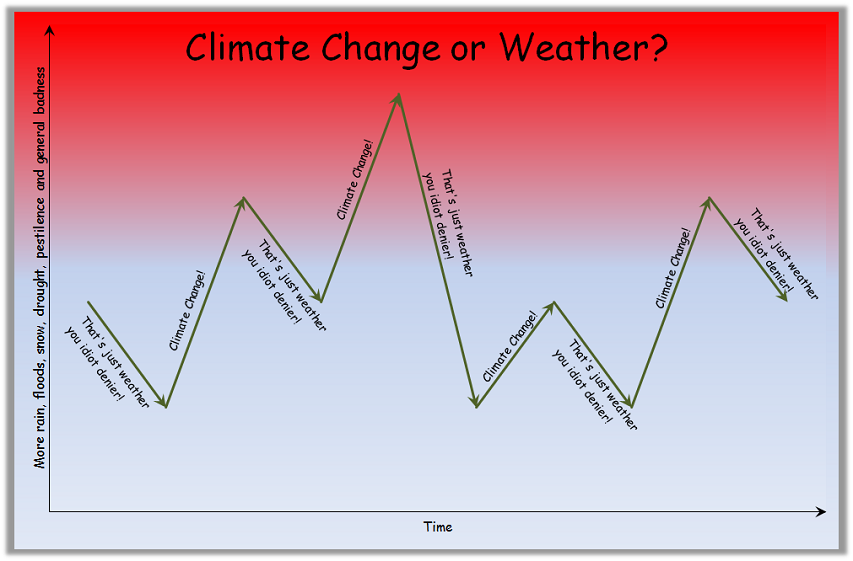
The thing about heat waves is that they bring out the climatistas ready to ascribe weather to climate change. On #bcpoli Twitter it is a dead heat between the unscientific “I will wear a mask until there is no COVID anywhere on Earth” people and the people who insist that the present heat wave “proves” global warming. Well it doesn’t.

What we are in the grips of is a jet stream excursion. A big loop of hot air is sitting on top of us. It is practically the definition of “weather”. Three weeks ago Victoria set an all time record for coldest June day in the middle of a series of anomalously cold days. This too was “weather”.

The warmists are not deterred. “Well, over all the ‘weather’ is getting hotter because of climate change.” “The jet stream is behaving eccentrically because the Arctic is getting warmer and that’s climate change.” And then they add their policy prescription d’jour – Save Old Growth, Raise the carbon tax, Stop LNG exports and so on.

The brutal narcissism of the climate crusaders is touching. The problem and its solution are all about them. Other than the Pacific North West, the rest of the world is normal to cold. The Eastern US has been wet and cool, South America is freezing, Australia and New Zealand are experiencing an early ferociously cold winter, summer snow is falling in Scandinavia. The fact the major factor in the northern and jet stream’s preignitions is the level of solar activity is borne out by the general coolness of 2021. Guess what, the Sun is very quiet at the moment which is historically linked to cooling rather than warming.

But, for fun, let’s propose that the climate change fanatics are right and there is a direct link between CO2 and the present heat wave – not one of their favoured solutions will make the slightest difference. We could all walk to hug the trees and it would not matter.

Here’s why […]

May 25, 2021

536 AD – Worst Year in History

Kings and Generals
Published 11 May 2021

Start speaking a new language in 3 weeks with Babbel 🎉 Get 6 months FREE when you sign up for 6 months! ➡️ HERE: https://go.babbel.com/6plus6-youtube-…

Kings and Generals’ historical animated documentary series on the history of Ancient Civilizations continues with a video on the year 536 AD, which many historians consider the worst year in history, as plague, famine, volcanic eruption, and extreme weather patterns changed the fate of the millions, especially influencing Sassanid and Eastern Roman Empires.

Support us on Patreon: http://www.patreon.com/KingsandGenerals or Paypal: http://paypal.me/kingsandgenerals We are grateful to our patrons and sponsors, who made this video possible: https://docs.google.com/document/d/1o…

Art and animation: Haley Castel Branco
Narration: Officially Devin (https://www.youtube.com/user/OfficiallyDevin)
Script: Matt Hollis

✔ Merch store ► teespring.com/stores/kingsandgenerals
✔ Podcast ► Google Play: http://bit.ly/2QDF7y0 iTunes: https://apple.co/2QTuMNG
✔ Twitter ► https://twitter.com/KingsGenerals
✔ Instagram ► http://www.instagram.com/Kings_Generals

Production Music courtesy of EpidemicSound

#Documentary #WorstYearInHistory #536

April 17, 2021

QotD: Erasing the Maldives from the atlas

Filed under: Asia, Books, Britain, Environment, Humour, Quotations — Tags: , , , — Nicholas @ 01:00

Maldivian media outlets this morning published as fact a satirical Telegraph news blog citing “unconfirmed rumours” that the 14th edition of the Times Comprehensive Atlas of the World will omit the Maldives, Tuvalu, “and major parts of Bangladesh” as a statement on global warming.

The blog post, written by climate change skeptic James Delingpole who describes himself as “a writer, journalist and broadcaster who is right about everything”, features comments by a “Times Atlas spokesman” David Rose.

In a UK press scandal this year, “David Rose” was found to be a psuedonym used by left-wing Independent journalist and climate change writer Johaan Hari to edit his own Wikipedia entry, advocate his own position and attack his critics.

Rose, who in Delingpole’s article holds “a doctorate in Cambridge in Climate Change and Sinking Islands Studies so I know what I’m talking about, and if you don’t believe me, ask my friend Johaan Hari who taught me everything I know”, acknowledges that it “may not be strictly geographically accurate to say the Maldives and Tuvalu will definitely have disappeared in about ten years time when our next edition appears.”

“But did you see that picture of the Maldives cabinet holding a meeting underwater? If the Maldives government says the Maldives are drowning, they must be drowning. And frankly I think it’s despicable, all those deniers who are saying it was just a publicity stunt, cooked up by green activist Mark Lynas, to blackmail the international community into giving the Maldives more aid money while simultaneously trying to lure green Trustafarians to come and spend £1500 a night in houses on stilts with gold-plated organic recyclable eco-toilets made of rare earth minerals from China. Why would a government lie about something as serious as climate change?”

Rose goes on to state that “I’m pleased to say that this is a view of the world shared by my colleagues at Times Comprehensive Atlas Of The World. They understand that maps based on accurately recorded geographical features belong in the Victorian age of child chimney sweeps. What we need now is maps that change the world, transforming into something which it isn’t actually yet but might be one day if we don’t act NOW!”

“Delingpole Satire Dupes Maldives Media”, The Global Warming Policy Forum (GWPF), 2011-09-21.

March 28, 2021

“Canadians are largely full of shit on climate change”

Filed under: Cancon, Environment, Politics — Tags: , , , — Nicholas @ 03:00

The Line wraps up the week with, among other things, an explanation of why they didn’t cover anything to do with the “Conservative” Party’s virtual convention:

We said in last week’s dispatch that we were monitoring the Conservative Party of Canada’s virtual convention, and that we’d bring you any commentary that it warranted. We brought you no such commentary this week. Draw your own conclusions.

We will say, this, though. We think the kerfuffle about the party delegates’ vote to not affirm their belief in climate change is overblown, for two big reasons. The first is that Canadians are largely full of shit on climate change. Yes, it’s true that polls indicate we are concerned about the issue — Very Concerned, even. But polls also show how much we’re actually willing to do about it, and the answer is, not a fuck of a lot.

The second point we’d make is that every Conservative convention comes with warnings of deep splits within the party, with long features by Toronto- or Ottawa-based writers explaining how out of touch Tories are with “mainstream Canadians” like them, how unelectable they are outside their western base, and so on and so on. We agree that the Tories have problems, and it’s clear that not everybody is happy inside that big blue tent (or any big tent). But the Conservatives won the popular vote last time, and though Brownface Trudeau did a lot of the heavy lifting don’t forget: Andrew Scheer was the CPC leader. Can we suggest that one comes out a wash?

Don’t read too much into the doom and gloom that surrounds every CPC convention. There are always stories just like the climate change one, and if you don’t believe us, just recall that long-ago era of, ahem, one week ago, when all the coverage was warning that pro-life insurgents in the party were going to hijack the agenda and cause a meltdown by chanting about abortion all weekend.

Didn’t happen. Went nowhere. We suspect the coverage of the climate change issue, though unhelpful and awkward, will vanish just as quickly now that the chattering classes, ourselves included, have filed the obligatory quota of “convention stories” and moved on to something more interesting (which is almost anything).

« Newer PostsOlder Posts »

Powered by WordPress