
… our era does seem to be peculiarly marked by careless design. Few of the men who built middle-class versions of the Craftsman bungalow or Colonial Revival in the early twentieth century were trained architects, and they often adapted or simplified their designs to cut costs, and yet they somehow managed to get their proportions right. They might have used fewer columns than the more expensive examples of their styles, but what columns they did employ were the right shape, while today’s are liable to be too skinny (if Classically-inspired) or fat and stubby (if Craftsman). I won’t pretend I have an explanation for this — it seems a small aesthetic piece of a much broader societal failure, just one more case of chucking tradition out the window. Architect Léon Krier suggests that once the language of traditional design had been intentionally destroyed by architecture schools, it was very hard to recreate or rediscover because our new and exciting construction materials do not punish us for our errors the way wood, stone, and lime do. (“Even a genius,” he writes, “cannot build a lasting mistake out of nature’s materials.”)
But the real crime of most new construction isn’t the exterior details. It’s inside, and it’s walls. They’re missing.
Open floorplans are bad. They’re bad for entertaining and they’re bad for families. Sure, that photo looks great (if you’re allergic to color and texture) and the HGTV hosts love ’em, but imagine actually living in that room with children. Seriously, just try: how fast are the cushions coming off those couches? How fast are your neutrals drowned beneath colorful toys and backpacks? (Unless you’re inflicting the same sad beige color scheme on your children.) How much visual clutter can a room of that size accumulate, and how much help will a small child need just figuring out where to start tidying up?
How many times do you have to ask the monster truck vs. dinosaur battle by the fireplace to pipe down so you can talk to Daddy over here by the stove, for Pete’s sake?
There’s a school of American parenting that says every moment with your child should be spent intensively nurturing his or her precious individual development. At lunch, for instance, you should make eye contact with your ten-month-old and describe the texture and flavor of each food (perhaps in French!) while Baby carefully grinds it into her hair. Your child’s quiet drawing time will surely be enhanced by his mother hovering at his elbow: “Tell me about your picture, honey! Uh-huh, and how do we think the villagers feel about Gigantor devouring them? Gosh, you sure gave him some big teeth!” An open floorplan is a tremendous boon to this sort of parenting: your child is always visible, so you can always be engaged.
It is completely impossible to raise more than maybe two children this way.
I don’t know which way the causation goes — do parents who were already inclined to be a little more laid-back and hands-off find their lives have room for more kids, or does sheer number of children force you to alter your tactics? — but either way, small families and intensive parenting go together, and they live in an open-concept house with 1.64 children.
Walls and doors, on the other hand, are God’s greatest gift to large families. Of course it is wonderful to be together. It’s important to have spaces that will fit everyone. (We were very sad when it was no longer possible to pile everyone into a king-size bed, even with elbows.) But it’s just as important to be able to be apart: because your little brother is practicing piano while you’re trying to do algebra, or a blanket fort combines poorly with an elaborate board game, or just because LEGO spaceships are a noisy business and your mother is reading to your sisters. (Or, God forbid, reading a book herself.)
Because at the end of the day, houses are just the stage where life happens. This isn’t to say that the stage-dressing is irrelevant — there is real worth and value to surrounding ourselves with order and beauty, and understanding how your house or neighborhood got to be that way can illuminate new things about the world. But ultimately, what matters most is how you make it a home.
Jane Psmith, “REVIEW: A Field Guide to American Houses, by Virginia Savage McAlester”, Mr. and Mrs. Psmith’s Bookshelf, 2023-12-05.
May 16, 2024
QotD: Modern parenting in open-concept houses
May 5, 2024
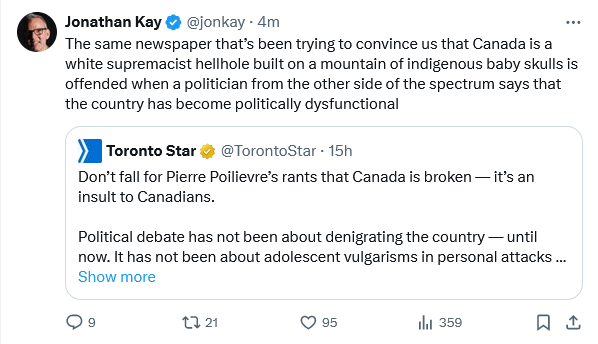
Trudeau’s shameful role in promoting “the blood libel against Canada”
Conrad Black believes that Justin Trudeau owes Canadians an apology for his role in pushing the most extreme version of the Residential Schools propaganda:
A very well-informed friend of many years, a contemporary of mine, wrote me the other day that “The blood libel against Canada of this monstrous fiction of thousands of secretly buried Indigenous victims of residential schools may be the single worst injustice this country has suffered in our lifetimes. It is now a conspiracy of silence involving both federal and provincial governments, the RCMP (shameless and useless as ever), and the media, and ‘let’s be frank’, (quoting a Soviet diplomat many years ago whom we both always found rather entertaining in the utter nonsense he used to recite at international meetings), a large section of the public, which knows this to be a falsehood but chooses to side with the silent forces”.
Almost all readers will be aware of the tidal wave of self-mutilating hysteria that inundated this country when, on the basis of apparent anomalies detected by underground radar close to a former Indian Residential School site at Kamloops, British Columbia, a couple of years ago. Immediately, the theory took hold that thousands of native children in those schools had died because of negligence or outright homicide, were buried secretly in unmarked graves, their deaths never recorded and no account given to their families. There is no evidence to support this, yet the prime minister led the nation in an almost medieval circular mass pilgrimage of self-flagellation. In order to impress upon ourselves and the entire world the profundity of our self-humiliation, all official Canadian flags everywhere were lowered to half-mast and maintained in that condition for an unheard-of period of six months.
Parliament voted to spend $27 million to conduct the excavations necessary to verify or otherwise the existence and extent of these graves. This work could have been accomplished by a small group for a few thousand dollars, but the suggestion of actually establishing what happened set up the customary cacophony of complaints about the sacred untouchability of burial grounds, even though it was not clear that there was burial ground at the Kamloops site, and if it was it was rank speculation about who might be buried there if it was. It is not conceivable to me that the country could dress itself out in sackcloth and ashes and flay the flesh off its own back before the bemused or astonished eyes of the entire world and then produce no evidence whatever of the unspeakable outrages that allegedly occurred and gave rise to this conduct, and then simply lapse into Sphinx-like incommunicability: a pristine silence of perfect ambiguity followed a near-terminal St. Vitus dance of window-rattling ululations of national guilt, shame, and self-hate.
Kamloops Indian Residential School, 1930.
Photo from Archives Deschâtelets-NDC, Richelieu via Wikimedia Commons.Various parts of this macabre fable have been precisely and publicly put to rest: children in residential schools were not buried secretly and records were not destroyed; residential school students were accounted for and if they died while at the schools the reason was typically provided and it was almost invariably as a result of illnesses that were not as well treated in those times, and particularly tuberculosis. Beyond that, there has been silence: the febrile allegations of hideous wrongdoing vituperatively hurled at Canadian history and society – at the ancestors of English and French Canadians, at the main Christian churches, at the principal founder of our country whose distinguished name (John A. Macdonald) has been taken down from public buildings, statues of him overturned or removed, and effigies of him burned at festivities of confected righteous anger from coast to coast; all just mysteriously stopped. It is a sonic version of the celebrated poem by Shelley about the fallen monument of a once great King: “Round the decay of that colossal wreck, boundless and bare, the loan and level sands stretch far away.”
April 30, 2024
TikTok for Tots (and Instagram, and Facebook, and Twitter, and …)
Ted Gioia has some rather alarming information on just how many kids are spending a lot of time online from a very early age:
The leader in this movement is TikTok. But the other major platforms (Instagram, Twitter, Facebook, YouTube, etc.) are imitating its fast-paced video reels.
My articles have stirred up discussion and debate—especially about the impact of slot machine-ish social media platforms on youngsters.
So I decided to dig into the available data on children and social media. And it was even worse than I feared.
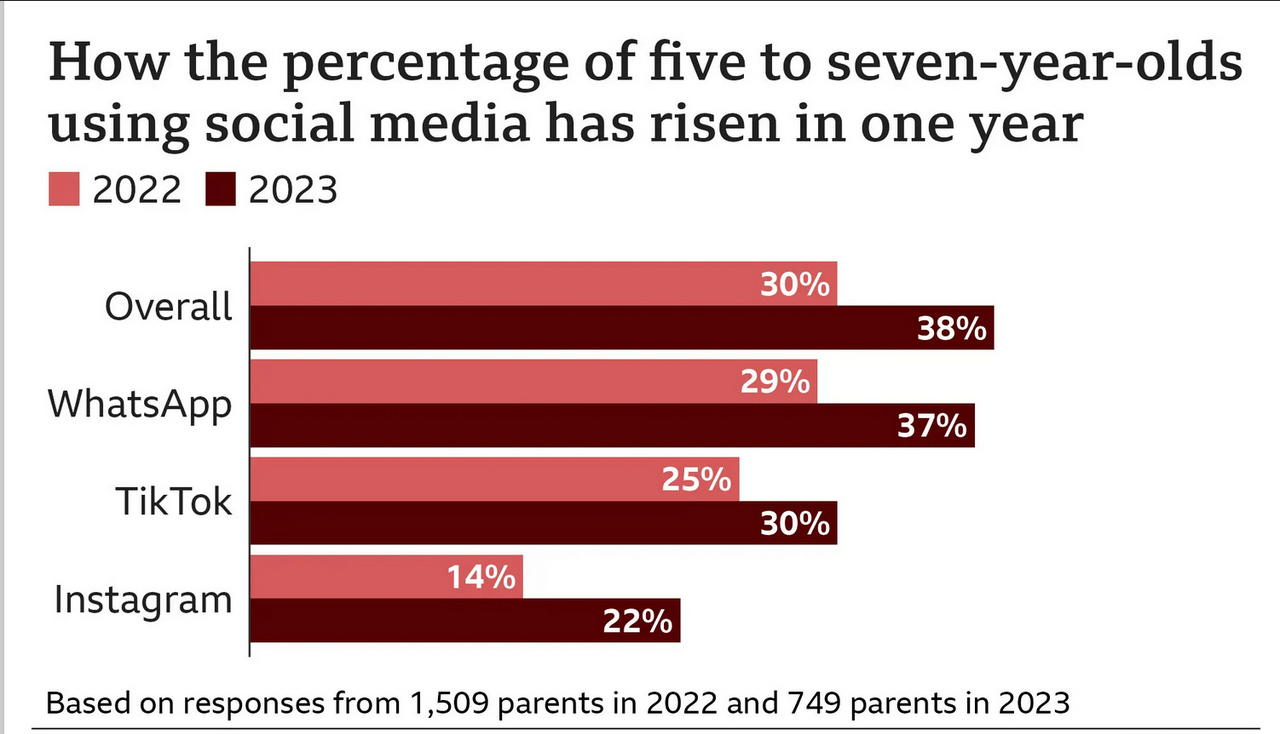
30% of children ages 5 through 7 are using TikTok — despite the platform’s policy that you can’t sign up until age 13.
The story gets worse. The numbers are rising rapidly — usage among this vulnerable group jumped 5% in just one year.
By the way, almost a quarter of children in this demographic have a smartphone. More than three-quarters use a tablet computer.
These figures come from Ofcom, a UK-based regulatory group. I’ll let you decide how applicable they are to other countries. My hunch is that the situation in the US is even worse, but that’s just an educated guess based on having lived in both countries.
What happened in 2010?
One thing is certain — the mental health of youths in both the US and UK is deteriorating rapidly. There are dozens of ways of measuring the crisis, but they all tell the same tragic story.
Something happened around 2010, and it’s destroying millions of lives. […]
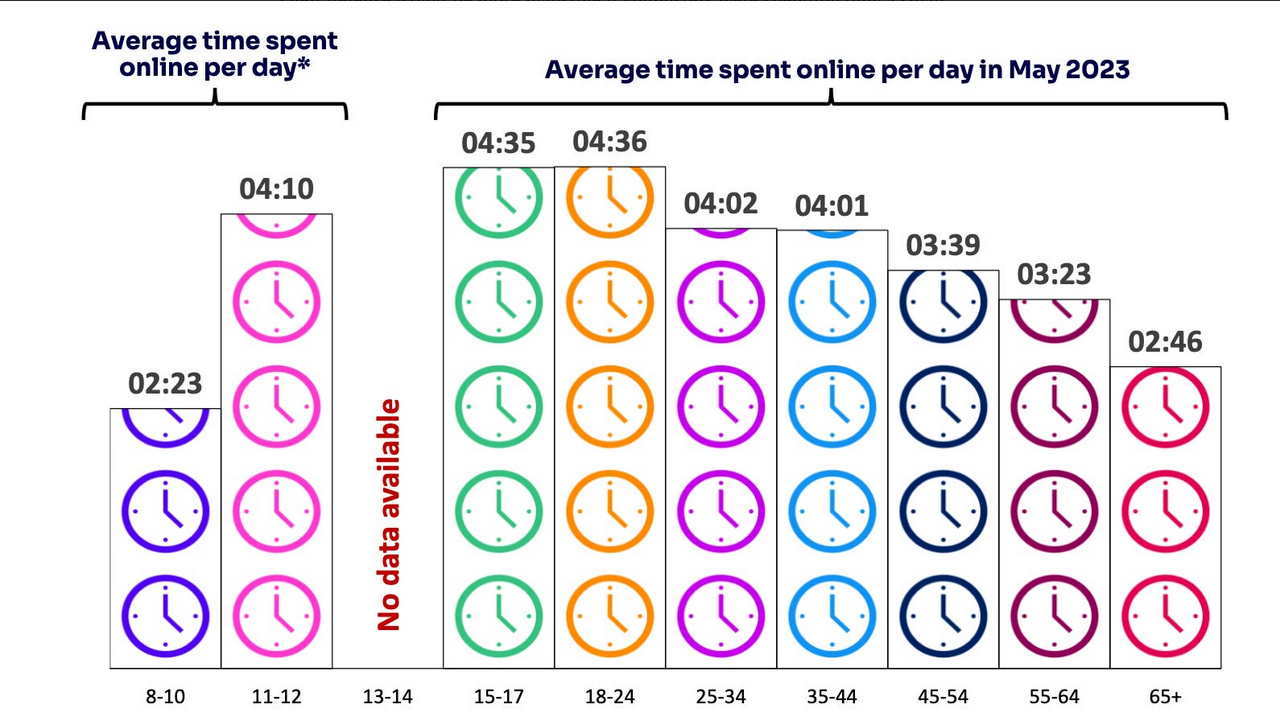
As early as age 11, children are spending more than four hours per day online.
Here’s a comparison of time spent online by age. Even before they reach their teens, youngsters are spending more than four hours per day staring into a screen.
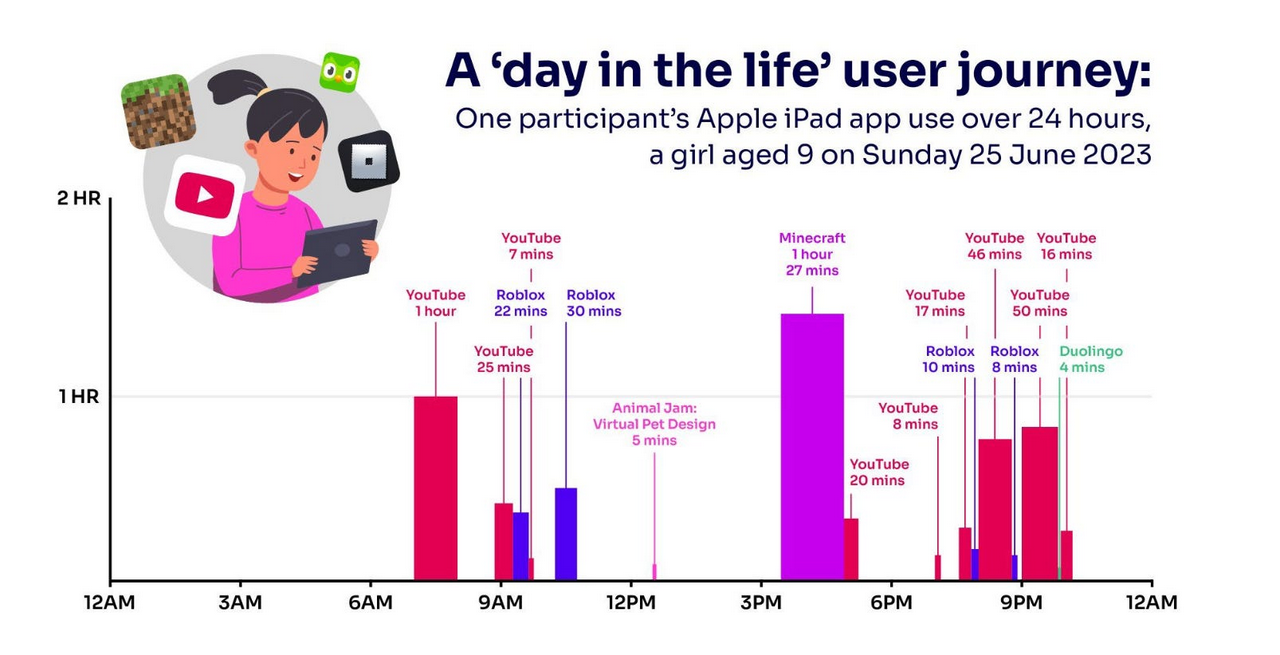
Here’s what a day in the digital life of a typical 9-year-old girl looks like.
I don’t find any of this amusing. But if you’re looking for dark humor, I’ll point to the four minutes spent on the Duolingo language training app at the end of the day. This provides an indicator of the relative role of learning in the digital regimen on the rising generation.
April 20, 2024
“Identity quakes”
Andrew Doyle explains why some people cling to aspects of their worldview so tightly because to admit that they were mistaken would actually threaten their individual identity:
Both Gosse’s memoir and Potter’s dramatisation grapple with what Peter Boghossian and James Lindsay (in their book How to Have Impossible Conversations) call an “identity quake”, the “emotional reaction that follows from having one’s core values disrupted”. Their point is that when arguing with those who see the world in an entirely different way, we must be sensitive to the ways in which certain ideas constitute an aspect of our sense of self. In such circumstances, to dispense with a cherished viewpoint can be as traumatic as losing a limb.
The concept of identity quakes helps us to understand the extreme political tribalism of our times. It isn’t simply that the left disagrees with the right, but that to be “left-wing” has become integral to self-conceptualisation. How often have we seen “#FBPE” or “anti-Tory” in social media bios? These aren’t simply political affiliations; they are defining aspects of these people’s lives. This is also why so many online disputes seem to be untethered from reason; many are following a set of rules established by their “side”, not thinking for themselves. When it comes to fealty to the cause, truth becomes irrelevant. We are no longer dealing with disputants in an argument, but individuals who occupy entirely different epistemological frameworks.
Since the publication of the Cass Review, we have seen countless examples of this kind of phenomena. Even faced with the evidence that “gender-affirming” care is unsafe for children, those whose identity has been cultivated in the gender wars will find it almost impossible to accept the truth. Trans rights activists have insisted that “gender identity” is a reality, and their “allies” have been the most strident of all on this point. As an essentially supernatural belief, it should come as no surprise that it has been insisted on with such vigour, and that those who have attempted to challenge this view have been bullied and demonised as heretics.
Consider the reaction from Novara Media, a left-wing independent media company, which once published some tips on how to deceive a doctor into prescribing cross-sex hormones. Novara has claimed that “within hours of publication” the Cass Review had been “torn to shreds”. Like all ideologues, they are invested in a creed, and it just so happens that the conviction that “gender identity” is innate and fixed (and simultaneously infinitely fluid) has become a firm dogma of the identity-obsessed intersectional cult.
Identity quakes will be all the more seismic within a movement whose members have elevated “identity” itself to hallowed status. When tax expert Maya Forstater sued her former employers for discrimination due to her gender-critical beliefs in 2019, one of the company’s representatives, Luke Easley, made a revealing declaration during the hearing. “Identity is reality,” he said, “without identity there’s just a corpse”.
This sentiment encapsulates the kind of magical thinking that lies at the core of the creed. So while it becomes increasingly obvious that gender identity ideology is a reactionary force that represents a direct threat to the rights of women and gay people, there will be many who simply will not be able to admit it. In Easley’s terms, if their entire identity is based on a lie, only “a corpse” remains. From this perspective, to abandon one’s worldview is tantamount to suicide.
April 15, 2024
Is “Big Trans” in retreat?
In the latest Weekly Dish, Andrew Sullivan considers just how much things have changed in recent years, especially with the publication of the Cass Report on the true medical situation for children being prescribed puberty blocking or opposite sex hormones … and it really doesn’t match the rhetoric we’ve been hearing from activists over the last few years:
Tribalization does funny things to people. If you’d told me a decade ago that within a few years, Republicans would be against Ukraine defending itself from a Russian invasion, and Democrats would be pulling the Full Churchill to counter the Kremlin, I’d have gently asked what sativa strain you were smoking.
If you’d told me the Democrats would soon be the party most protective of the CIA and the FBI, and that Republicans would regard them as part of an evil “deep state,” ditto. And who would have thought that a president accused in 2017 of having “no real ideology [but] white supremacy” would today be doubling his support with black voters, and tripling it with black men? Who would have bet the Dems would go all-in on Big Pharma when it came to Covid vaccines? And who would have thought Republicans who long carried little copies of the Constitution in their suit pockets would lead a riot to prevent the peaceful transfer of power? You live and learn.
But would anyone have predicted that the Democrats and the left in general would soon favor a vast, completely unregulated, for-profit medical industry that would conduct a vast, new experimental treatment on children with drugs that were off-label and without any clinical trials to prove their effectiveness and safety? In the 2016 presidential race, both Dem contenders railed against Big Pharma, with Bernie going as far as calling the industry “a health hazard for the American people.” Back in 2009, you saw MSM stories like this:
The Food and Drug Administration said adults using prescription testosterone gel must be extra careful not to get any of it on children to avoid causing serious side effects. These include enlargement of the genital organs, aggressive behavior, early aging of the bones, premature growth of pubic hair, and increased sexual drive. Boys and girls are both at risk. The agency ordered its strongest warning on the products — a so-called black box.
Nowadays, it’s deemed a “genocide” if you don’t hand out these potent drugs to children almost on demand. Drugs used to castrate sex offenders and to treat adult prostate cancer have been re-purposed, off-label, to sexually reassign children before they even got through puberty. Big Pharma created lucrative “customers for life” by putting kids on irreversible drugs for a condition that could not be measured or identified by doctors and entirely self-diagnosed by … children.
And what if over 80 percent of the children subject to this experiment were of a marginalized group — gay kids? And the result of these procedures was to cure them of same-sex attraction by converting them to the opposite sex? I simply cannot imagine that any liberal or progressive would hand over gender-nonconforming children, let alone their own children, to the pharmaceutical and medical-industrial complex to be experimented on in this way.
And yet for years now, this has been the absolutely rigid left position on sex reassignments for children with gender dysphoria on the verge of puberty. And for years now, those of us who have expressed concern have been vilified, hounded, canceled and physically attacked for our advocacy. When we argued that children should get counseling and support but wait until they have matured before making irreversible, life-long medical choices they have no way of fully understanding, we were told we were bigots, transphobes and haters.
The reason we were told that children couldn’t wait and mature was that they would kill themselves if they didn’t. This is one of the most malicious lies ever told in pediatric medicine. While there is a higher chance of suicide among children with gender distress than those without, it is still extremely rare. And there is absolutely no solid evidence that treatment reduces suicide rates at all.
Don’t take this from me. The most authoritative and definitive study of the question has just been published in Britain, The Cass Report, by Hilary Cass, one of the most respected pediatricians in the country. It’s 388 pages long, crammed with references, five years in the making, based on serious research and interviews with countless doctors, parents, scientists and, most importantly, children and trans people directly affected. In the UK, its findings have been accepted by both major parties and even some of the groups who helped pioneer and enable this experiment. I urge you to read it — if only the preliminary summary.
It’s a decisive moment in this debate. After weighing all the credible evidence and data, the report concludes that puberty blockers are not reversible and not used to “take time” to consider sex reassignment, but rather irreversible precursors for a lifetime of medication. It says that gender incongruence among kids is perfectly normal and that kids should be left alone to explore their own identities; that early social transitioning is not neutral in affecting long-term outcomes; and that there is no evidence that sex reassignment for children increases or reduces suicides.
How on earth did all the American medical authorities come to support this? The report explains that as well: all the studies that purport to show positive results are plagued by profound limitations: no control group, no randomization, no double-blind studies, no subsequent follow-up with patients, or simply poor quality.
April 5, 2024
“[T]oo many charlatans of this species have already been allowed to make vast fortunes at the expense of a gullible public”
Colby Cosh on his “emerging love-Haidt relationship” as Jonathan Haidt’s new book is generating a lot of buzz:
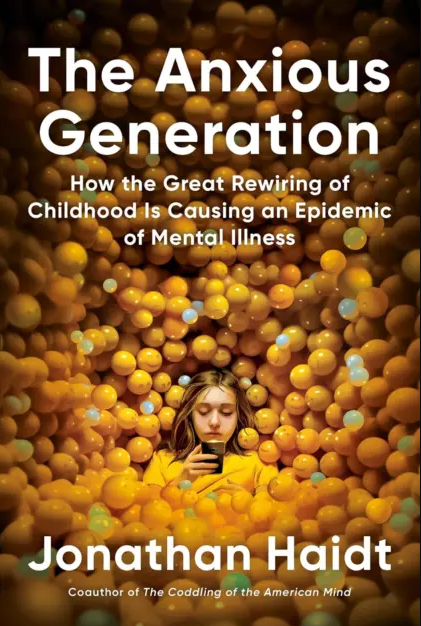
If Haidt has special expertise that wouldn’t pertain to any well-educated person, I wonder a little in what precise realm it lies. Read the second sentence of this article again: he’s a psychologist … who teaches ethics … at a business school? Note that he seems to have abandoned a prior career as an evolutionary biology pedlar, and the COVID pandemic wasn’t kind to his influential ideas about political conservatives being specially motivated by disgust and purity. Much of The Anxious Generation is instead devoted to trendy findings from “neuroscience” that it might be too kind to describe as “speculative”. (I’ll say it again until it’s conventional wisdom: a “neuroscientist” is somebody in a newly invented pseudofield who couldn’t get three inches into the previously established “-ology” for “neuro-“.)
These are my overwhelming prejudices against Haidt; and, in spite of all of them, I suspect somebody had to do what he is now doing, which is to make the strongest available case for social media as a historical impactor on social arrangements and child development. Today the economist/podcaster Tyler Cowen has published a delightfully adversarial interview with Haidt that provides a relatively fast way of boning up on the Haidt Crusade. Cowen belongs to my pro-innovation, techno-optimist, libertarian tribe: we both feel positive panic at the prospect of conservative-flavoured state restrictions on media, which are at the heart of the Haidt agenda.
But reading the interview makes me somewhat more pro-Haidt than I would otherwise be (i.e., not one tiny little bit). On a basic level, Cowen doesn’t, by any means, win the impromptu debate by a knockout — even though he is one of the most formidable debaters alive. Haidt has four key reforms he would like to see implemented politically: “No smartphones before high school; no social media before age 16; phone-free schools; far more unsupervised play and childhood independence.”
This is a fairly limited, gentle agenda for school design and other policies, and although I believe Haidt’s talk of “rewiring brains” is mostly ignorable BS, none of his age-limitation rules are incompatible with a free society, and none bear on adults, except in their capacity as teachers and parents.
The “rewiring” talk isn’t BS because it’s necessarily untrue, mind you. Haidt, like Jordan Peterson, is another latter-day Marshall McLuhan — a boundary-defying celebrity intellectual who strategically turns speculation into assertion, and forces us, for better or worse, to re-examine our beliefs. McLuhan preached that new forms of media like movable type or radio do drive neurological change, that they cause genuine warp-speed human evolution — but his attitude, unlike Haidt’s, was that these changes are certain to happen, and that arguing against them was like arguing with the clouds in favour of a sunny day. The children who seem “addicted” to social media are implicitly preparing to live in a world that has social media. They are natives of the future, and we adults are just observers of it.
March 24, 2024
QotD: Adolescence
In the old days, of course (in every culture), adulthood came earlier, and adolescence was merely its apprentice form. Now thanks to an extended, debilitating system of “education”, bureaucratically controlled, adolescence itself, or the semblance of it, may be extended past the age of thirty; and with the further interventions of what I call Twisted Nanny State, from birth (when permitted) to death (however caused). The old notion that one must take responsibility for oneself and in one’s neighbourhood (whatever that may be) has come to be replaced by the new notion that one is the member of a demographic group, to be assigned responsibilities by one’s progressive betters.
David Warren, “Against ‘education'”, Essays in Idleness, 2019-09-06.
March 14, 2024
“The dark world of pediatric gender ‘medicine’ in Canada”
The release of internal documents from the World Professional Association for Transgender Health (WPATH) revealed just how little science went into many or most juvenile gender transitions and how much the process was being driven politically rather than scientifically. Shannon Douglas Boschy digs into how the WPATH’s methods are implemented in Canada:
An undercover investigation at a Quebec gender clinic recently documented that a fourteen-year-old girl was prescribed testosterone for the purpose of medical gender transition within ten minutes of seeing a doctor. She received no other medical or mental health assessment and no information on side-effects. This is status quo in the dark world of pediatric gender “medicine” in Canada.
On March 5th Michael Shellenberger, one of the journalists who broke the Twitter Files in 2022, along with local Ottawa journalist Mia Hughes, released shocking leaks from inside WPATH, the organization that proclaims itself the global scientific and medical authority on gender affirming care. The World Professional Association of Transgender Health is the same organization that the Quebec gender clinic, and Ottawa’s CHEO, cite as their authority for the provision of sex-change interventions for children.
These leaks expose WPATH as nothing more than a self-appointed activist body overseeing and encouraging experimental and hormonal and surgical sex-change interventions on children and vulnerable adults. Shellenberger and Hughes reveal that members fully understand that children cannot consent to loss of fertility and of sexual function, nor can they understand the lifetime risks that will result from gender-affirming medicalization, and they ignore these breaches of medical ethics.
The report reveals communication from an “Internal messaging forum, as well as a leaked internal panel discussion, demonstrat(ing) that the world-leading transgender healthcare group is neither scientific nor advocating for ethical medical care. These internal communications reveal that WPATH advocates for many arbitrary medical practices, including hormonal and surgical experimentation on minors and vulnerable adults. Its approach to medicine is consumer-driven and pseudoscientific, and its members appear to be engaged in political activism, not science.”
These findings have profound implications for medical and public education policies in Canada and raise serious concerns about the practices of secret affirmations and social transitions of children in local schools.
These leaks follow on the recent publication of a British Medical Journal study (BMJ Mental Health), covering 25-years of data, dispelling the myth that without gender-affirmation that children will kill themselves. The study, comparing over 2,000 patients to a control population, found that after factoring for other mental health issues, there was no convincing evidence that children and youth who are not gender-affirmed were at higher risk of suicide than the general population.
In the last week, a second study was released, this one from the American Urology Association, showing that post-surgical transgender-identified men, who underwent vaginoplasty, have twice the rate of suicide attempts as before affirmation surgery, and showing that trans-identified women who underwent phalloplasty, showed no change in pre-operative rates of suicide and post-operative.
These and other studies are now thoroughly debunking the emotional blackmail myths promoted by WPATH, that the absence of sex-change interventions, suggest that gender-distressed children are at high risk of taking their own lives.
March 11, 2024
“Is it possible that the new therapy culture and the emphasis on introspection is actually making things worse?”
In Quillette, Brandon McMurtrie asks us to consider why, with more people in therapy than ever before, the overall mental health of the population is declining:
Why has mental health got worse given the prevailing emphasis on self-care and accurately knowing and expressing oneself? And why do people and groups most inclined to focus on their identity appear to be the most distressed, confused, and mentally unwell? Is it possible that the new therapy culture and the emphasis on introspection is actually making things worse?
I am not the first to notice these developments — Abigail Shrier’s new book Bad Therapy has carefully delineated a similar argument. Her arguments are elsewhere supported by research on semantic satiation and ironic uncertainty, the effects of mirror gazing, the effects of meditation, and how all this relates to the constant introspection encouraged by therapy culture and concept creep.
Satiation and Its Effects
Semantic satiation is the uncanny sensation that occurs when a word or sentence is repeated again and again, until it appears to become foreign and nonsensical to the speaker. You may have done this as a child, repeating a word in quick succession until it no longer seems to be recognizable. It’s a highly reliable effect — you can try it now. Repeat a word to yourself quickly, out loud, for an extended period, and really focus on the word and its meaning. Under these circumstances, most people experience semantic satiation.
This well-studied phenomenon — sometimes called “inhibition”, “fatigue”, “lapse of meaning”, “adaptation”, or “stimulus satiation” — applies to objects as well as language. Studies have found that compulsive staring at something can result in dissociation and derealization. Likewise, repeatedly visually checking something can make us uncertain of our perception, which results, paradoxically, in uncertainty and poor memory of the object. This may also occur with facial recognition.
Interestingly, a similar phenomenon can occur in the realm of self-perception. Mirror gazing (staring into one’s own eyes in the mirror) may induce feelings of depersonalization and derealization, causing distortions of self-perception and bodily sensation. This persistent self-inspection can result in a person feeling that they don’t recognize their own face, that they no longer feel real, that their body no longer feels the same as it once did, or that it is not their body at all. Mirror-gazing so reliably produces depersonalization and realization (and a wide range of other anomalous effects), that it can be used in experimental manipulations to trigger these symptoms for research purposes.
[…]
The Satiation of Gender Identity
The number of people identifying as non-binary or trans has skyrocketed in recent years, and a growing number of schools are now teaching gender theory and discussing it with children — sometimes in kindergarten, more often in primary school, but especially in middle- and high-school (though in other schools it is entirely banned). While this may be beneficial for those already struggling with gender confusion, it may also present an avenue for other children to ruminate and become confused via “identity satiation”.
The kind of gender theory increasingly taught in schools encourages children to spend extended periods of time ruminating on self-concepts that most would not otherwise have struggled with. They are given exercises that encourage them to doubt their own unconscious intuitions about themselves, and to ruminate on questions like “Do I feel like a boy?” and “What does it mean to feel like a boy?” and “I thought I was a boy but what if I am not?”
Such questions are often confusing to answer and difficult to express, even for adults unaffected by gender dysphoria. But asking children to ruminate in this way may lead to confusion and depersonalization-derealization via the mechanisms described above. “Identity satiation” may then lead them to decide they are non-binary or trans, especially when identifying as such is rewarded with social recognition and social support. Many people who subsequently de-transitioned have described this process: “I never thought about my gender or had a problem with being a girl before”.
March 7, 2024
The WPATH to danger … for children and teens
Andrew Doyle outlines the exposure of internal communications from the World Professional Association for Transgender Health (WPATH) showing some extremely concerning things about the organization and the political agenda of many of its members:
The ideological march through the medical institutions was rapid and unexpected. In recent years, we have seen leading paediatric specialists asserting that children who say they are “in the wrong body” must have their feelings immediately affirmed. We have been told that if a boy claims to be a girl, or vice versa, they must be believed and fast-tracked onto a pathway to medicalisation: first puberty blockers, then cross-sex hormones, and in some cases irreversible surgery.
This worldwide medical scandal has disproportionately impacted gay, autistic, and gender non-conforming children. Where clinicians should have been looking out for the interests of the vulnerable, they have been encouraging them to proceed with experimental treatments. Few people would have imagined that mutilating children to ensure they better conform to gendered stereotypes would one day be considered progressive. But here we are.
Much of the responsibility must lie in the hands of WPATH (World Professional Association for Transgender Health), a US-based organisation established in 1979 that is recognised as the leading global authority in this area. WPATH has pushed for the normalisation of the “gender-affirming” approach, and its “Standards of Care” have formed the basis of policies throughout the western world, including in the NHS.
But in an explosive series of leaked files, the credibility of WPATH might now be irreparably shattered. Whistleblowers have provided author and journalist Michael Shellenberger with videos and messages from the WPATH internal chat system which suggest that the health professionals involved in recommending “gender-affirming” healthcare are aware that it is not scientifically or medically sound. A full report has been written by journalist Mia Hughes for the Environmental Progress think-tank. The title is as chilling as its contents: The WPATH Files: Pseudoscientific Surgical and Hormonal Experiments on Children, Adolescents, and Vulnerable Adults.
Some of the leaked internal messages are astonishing in their disregard for basic medical and ethical standards. For all that paediatric gender specialists have publicly stated that there is a consensus in favour of the “affirmative” model, that it is evidence-based, and that it is safer than a psychotherapeutic alternative, their private conversations would seem to suggest otherwise.
There are messages in the WPATH Files proving that surgeons and therapists are aware that a significant proportion of young people referred to gender clinicians suffer from mental health problems. Some specialists associated with WPATH are proceeding with treatment even for those who cannot realistically consent to it. After all, how could a pre-pubescent or even adolescent child fully grasp the concepts of lifelong sterility and the loss of sexual function? As one author of the WPATH “Standards of Care” acknowledges in a leaked message:
[It is] out of their developmental range to understand the extent to which some of these medical interventions are impacting them. They’ll say they understand, but then they’ll say something else that makes you think, oh, they didn’t really understand that they are going to have facial hair.
Or what about the endocrinologist who admits that “we’re often explaining these sorts of things to people who haven’t even had biology in high school yet”? And these are the very patients who have been approved for potentially irreversible procedures.
March 6, 2024
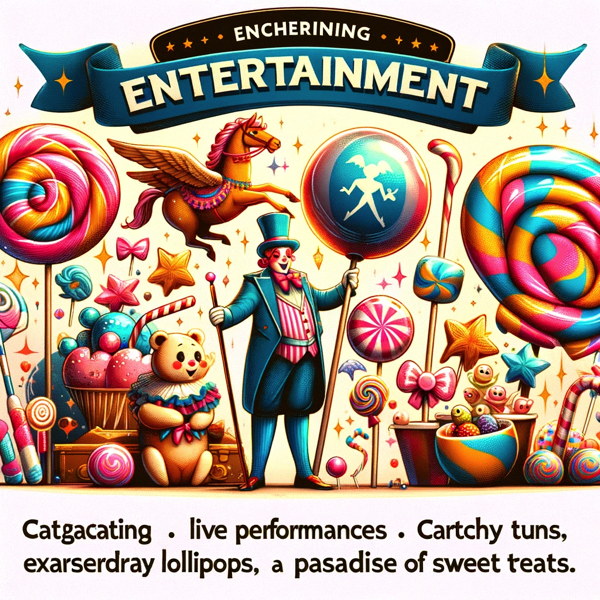
You had me at “Cartchy tuns, exarserdray lollipops” and “a pasadise of sweet teats”
Charlie Stross checks in with a Willy Wonka-adjacent story from Glasgow that utterly failed to live up to the billing:
This is no longer in the current news cycle, but definitely needs to be filed under “stuff too insane for Charlie to make up”, or maybe “promising screwball comedy plot line to explore”, or even “perils of outsourcing creative media work to generative AI”.
So. Last weekend saw insane news-generating scenes in Glasgow around a public event aimed at children: Willy’s Chocolate Experience, a blatant attempt to cash in on Roald Dahl’s cautionary children’s tale, Willy Wonka and the Chocolate Factory. Which is currently most prominently associated in the zeitgeist with a 2004 movie directed by Tim Burton, who probably needs no introduction, even to a cinematic illiterate like me. Although I gather a prequel movie (called, predictably, Wonka), came out in 2023.
(Because sooner or later the folks behind “House of Illuminati Ltd” will wise up and delete the website, here’s a handy link to how it looked on February 24th via archive.org.)
INDULGE IN A CHOCOLATE FANTASY LIKE NEVER BEFORE – CAPTURE THE ENCHANTMENT ™!
Tickets to Willys Chocolate Experience™ are on sale now!
The event was advertised with amazing, almost hallucinogenic, graphics that were clearly AI generated, and equally clearly not proofread because Stable Diffusion utterly sucks at writing English captions, as opposed to word salad offering enticements such as Catgacating • live performances • Cartchy tuns, exarserdray lollipops, a pasadise of sweet teats.* And tickets were on sale for a mere £35 per child!
Anyway, it hit the news (and not in a good way) and the event was terminated on day one after the police were called. Here’s The Guardian‘s coverage:
The event publicity promised giant mushrooms, candy canes and chocolate fountains, along with special audio and visual effects, all narrated by dancing Oompa-Loompas — the tiny, orange men who power Wonka’s chocolate factory in the Roald Dahl book which inspired the prequel film.
But instead, when eager families turned up to the address in Whiteinch, an industrial area of Glasgow, they discovered a sparsely decorated warehouse with a scattering of plastic props, a small bouncy castle and some backdrops pinned against the walls.
Anyway, since the near-riot and hasty shutdown of the event, things have … recomplicated? I think that’s the diplomatic way to phrase it.
February 28, 2024
Accusations aplenty, but still no clear evidence
Michelle Stirling outlines the establishment of the North West Mounted Police (today’s Royal Canadian Mounted Police) and their role in driving out American whiskey traders and criminal gangs who had invaded the Canadian west, and the initial role of Sir John A. Macdonald in setting up the first residential schools for First Nations children:

Kamloops Indian Residential School, 1930.
Photo from Archives Deschâtelets-NDC, Richelieu via Wikimedia Commons.
It is clear that the claim of “mass graves” of children allegedly found by Ground Penetrating Radar (GPR) at the former Kamloops Indian Residential School is false. The main reason is that there is no list of names of missing persons — over the course of 113 years of Indian Residential Schools, which saw 150,000 students go through the system, some staying for a year, most for an average of 4.5 years, some staying for a decade or more and graduating, and some orphans being taken in to the school as children, then remaining to work as Indigenous staff — these many thousands of children passed through Indian Residential Schools, their parents enrolling and re-enrolling them year after year.
And there is no list of names of missing persons.
There are many claims of missing persons.
Some of these claims are quite fatuous — with one person claiming that in their Band, every family had four or five children who went missing at that school. Another person claimed that their grandfather had ten siblings disappear in that school.
If that were true, the Band would have ceased to exist.
Despite these claims, there are no missing persons records.
And every student who went to that school is documented on the Band’s Treaty rolls, in documents of the Indian Agent, in the enrollment forms at the Department of Indian Affairs, along with the student’s medical certificate for entry, and in the quarterly reports of the department.
In fact, the Indigenous population of Canada grew from about 102,358 in 1871 to now 1.8 million.
It seems that the claim of a “mass grave” on the former Kamloops Indian Residential School site was timed to “nudge” the approval of the United Nations Declaration of the Rights of Indigenous People through parliament — which it did! The bill had been “stuck” as six provinces had requested delay and clarity on key issues. Once the claim of “mass graves” surfaced — boom!
Less than a month after the “mass graves” news shot round the world, shocking the global community that Canadians — once known as international peacemakers, were actually hideous murderers of Indigenous children — UNDRIP swept through the Canadian Parliament with no objection.
A day later, China accused Canada of genocide, citing the Kamloops “mass graves” find as proof. For those of you following the concerns about China’s alleged interference in elections in Canada, this rather convenient timing might set off some alarm bells.
If anything, the RCMP should be investigating this matter on grounds of false pretences or fraud. But the RCMP appear to have transferred the investigation of the Kamloops “mass grave” to the people who claimed to have found them! Ground Penetrating Radar (GPR) can only identify “disturbances” under ground, not bodies or coffins. In fact, based on previous land use records, most likely the GPR found 215 clay tiles of an old septic trench.
February 26, 2024
Time to pry the smartphones from the clutches of our dopamine-addicted youngsters?
A couple of articles this weekend deal with the already acknowledged problem of dopamine addiction especially among the young whose brains and personalities are still in the formative stages. First, here’s Christopher Gage reporting with some delight that British schoolchildren are going to have to learn how to cope with a full school day without the electronic binkies they’ve grown so dependent on:
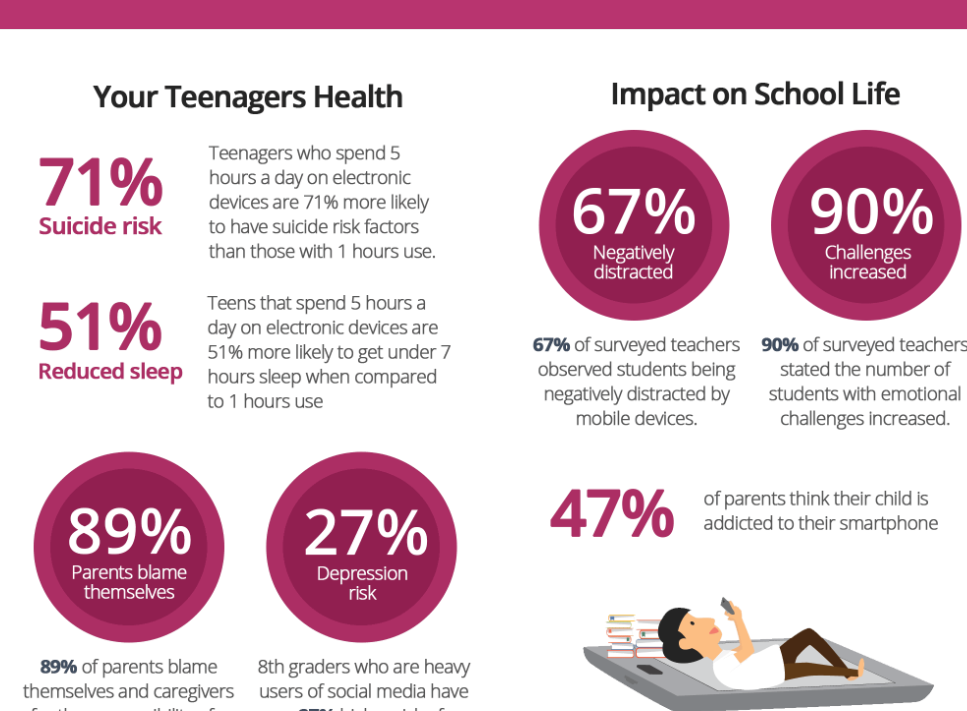
Detail of an article at bankmycell.com
I long for the day when gawking at one’s phone like a lobotomy patient invokes derision. Don’t you know your filthy addiction pollutes every atom of our society? You selfish bastard. You perverts should be ashamed of yourselves, etc. That day is on the horizon.
This week, British lawmakers banned smartphones in schools. Those pocket perils are lobotomising those whom sentimentalists call “the nation’s future”. Denied their devil devices, schoolchildren will endure hours of reading, thinking, and writing. Heaven forbid, they’ll talk to their friends and teachers in flesh and blood.
In these matters, I am militant. Children are not vessels of wisdom and wonder corrupted by a cruel world. They’re ignorant. By teaching them how to think and live, adults civilise children. That bleeping burping buzzing beehive in their pockets renders that civilising mission impossible.
Many disagree. But their knee-jerk reaction to this “knee-jerk reaction” crashes against concrete evidence. Smartphones erode concentration, dull critical thinking, blunt memory, and shred retention. The monstrous equation: Smartphones plus face-hugger apps equals ignorant, depressed, anxious youths.
Yes, technology invites moral panic. Plato worried that the written word would mulch minds into mush. But this is serious.
Last year, Dr Vivek Murthy, the United States surgeon general, issued a rare public health advisory. Across 19 pages, Dr Murthy warned that the effects of social media on adolescent mental health were “not fully understood”.
“There are ample indicators that social media can also have a profound risk of harm to the mental health and well-being of children and adolescents,” he said.
And what did we say? Not much. We had more important matters to attend. If I remember correctly, on that very day, Kim Kardashian revealed on Instagram her latest arse or her newest boyfriend.
However, serious people think this is a serious problem. Dr Benjamin Maxwell, a director of child and adolescent psychiatry at Rady Children’s Hospital in San Diego, said he is “immensely concerned” by a study linking social media and poor mental health. That “highly stimulating environment” may corrode “cognitive ability, attention span and memory during a time when their brains are still developing,” Maxwell said. “What are the long-term consequences? I don’t think we know.”
The UN’s education, science, and culture agency says the more young Jack scrolls through TikTok and the like, the lower his grades sink.
Countless studies show smartphones and their face-hugger apps — designed by behavioural psychologists to addict and milk the user — worsen anxiety, depression, and self-esteem. Not to mention lining up children for the predation of bullies 24/7.
Psychologists Jonathan Haidt and Jean Twenge are the canaries in the cultural coalmine. They say HMS Progress is crashing toward the icebergs — rising rates of suicide, depression, and anxiety. To them, the evidence is almost irrefutable. Turn back now, they say, or the ship sinks.
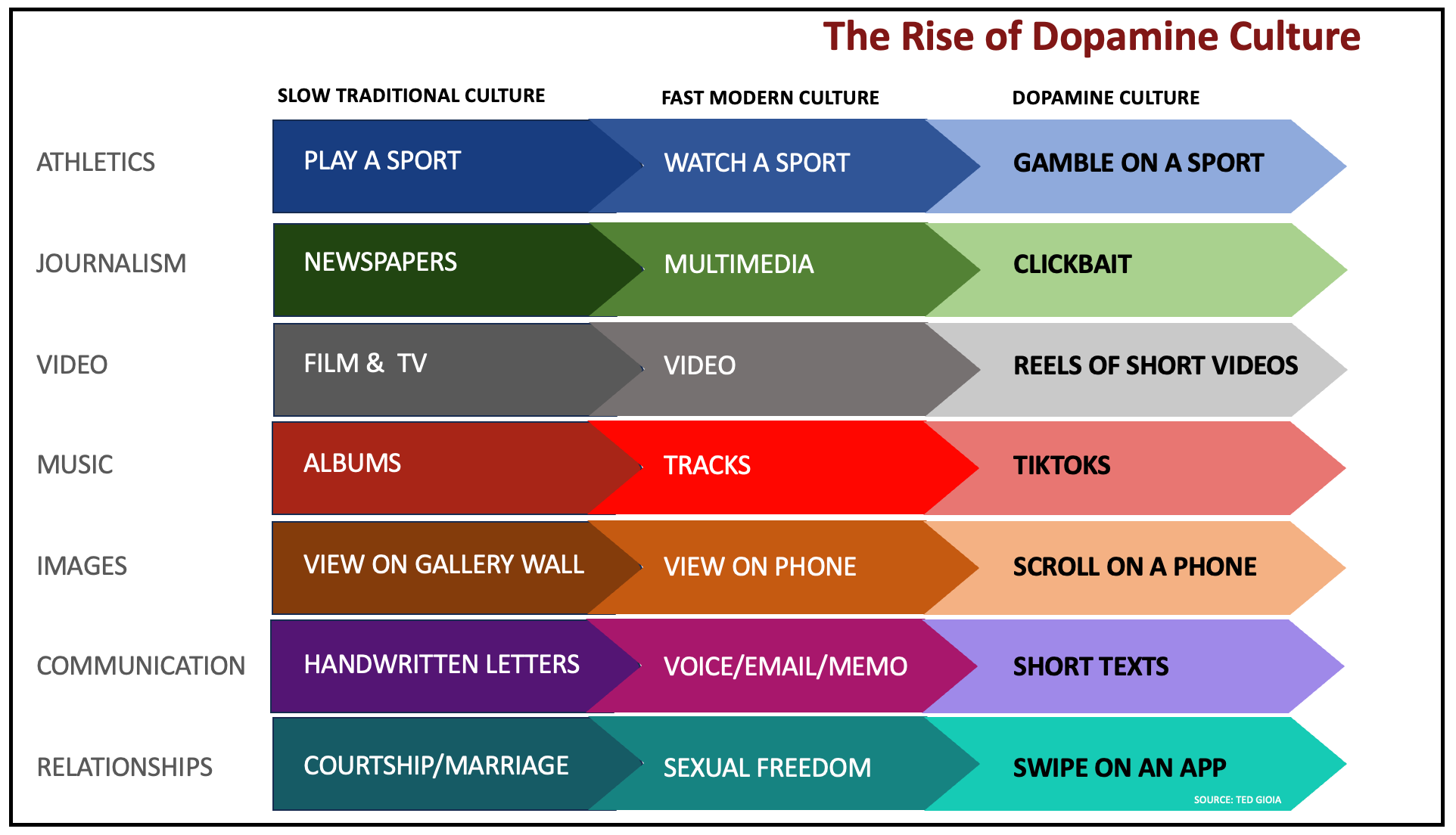
The second item is a follow-up by Ted Gioia to his post on dopamine culture last week:
My article on “dopamine culture” has stirred up interest and (even more) raised concerns among readers who recognize the symptoms I described.
One of the illustration went viral in a big way. And I’ve gotten requests from all over the world for permission to translate and share the material. (Yes, you can all quote generously from the article, and reprint my charts with attribution.)
This image was shared widely online
But many have asked for more specific guidance.
What can we do in a culture dominated by huge corporations that want us to spend hours every day swiping and scrolling?
I find it revealing and disturbing that readers who work on the front lines (in education, therapy, or tech itself) expressed the highest degree of alarm. They know better than anybody where we’re heading, and want to find an escape path.
Here’s a typical comment from teacher Adam Whybray:
I see it massively as a teacher. Kids desperately pleading for toilet breaks, claiming their human rights are being infringed, so they can check TikTok, treating lessons as though they’re in a Youtube reaction video, needing to react with a meme or a take — saying that silence in lessons scares them or freaks them out.
One notable difference from when I was at school was that I remember a lesson in which we got to watch a film was a relief or even pleasurable (depending on the film). My students today often say they are unable to watch films because they can’t focus. I had one boy getting quite emotional, begging to be allowed to look at his phone instead.
Another teacher asked if the proper response is to unplug regularly? Others have already embraced digital detox techniques of various sorts (see here and here).
I hope to write more about this in the future.
In particular, I want to focus on the many positive ways people create a healthy, integrated life that minimizes scrolling and swiping and mindless digital distractions. Many of you have found joy and solace — and an escape from app dependence — in artmaking or nature walks or other real world activities. There are countless ways of being-in-the-world with contentment and mindfulness.
Today I want to discuss just one bedrock of real world life that is often neglected — or frequently even mocked: Ritual.
I know how much I rely on my daily rituals as a way of creating wholeness and balance. I spend every morning in an elaborate ritual involving breakfast, reading books (physical copies, not on a screen), listening to music, and enjoying home life.
Even my morning coffee preparation is ritualistic. (However, I’m not as extreme as this person — who rivals the Japanese tea ceremony in attention to detail.)
I try to avoid plugging into the digital world until after noon.
I look forward to this daily time away from screens. But my personal rituals are just one tiny example. There are many larger ways that rituals provide an antidote to the more toxic aspects of tech-dominated society.
Below I share 13 observations on ritual.
February 25, 2024
Who Killed Canadian History?
I was not aware that it has been a full twenty-five years since J.L. Granatstein published his polemical Who Killed Canadian History?:

In that work, Granatstein asserts that the rationale for the history taught in Canadian schools was political, not historical. And sexism and racism were being taught, not history.
In the postmodern era, the priority of vast areas of history teaching and historiography, and Granatstein is far from the only academic who noticed this, transitioned from evidence and facts, to morals and emotions. Western oppression became the source of historiographical obsession. And the practice, which has shaped Western historiography since at least the turn of the twentieth century, of injecting moral judgements adjacent to facts and timelines, became entrenched.
This has happened because important areas of historiography, and historical pedagogy, have been subsumed into social sciences. My 9 and 11 year old children do not have a history class. What they learn about history, which isn’t much, is in a class called “social studies”. My son, who is in grade 6, and who was never previously taught anything about the Holocaust, is learning about Nazis Germany’s persecution of the Jews in the most obscure way. His introduction to the Holocaust included a lesson pertaining to the MS St. Louis, a passenger ship carrying 907 Jewish refugees fleeing Nazi persecution that was refused entry into Canada in 1939.
The ship’s Jewish passengers were safely returned to four European countries, but tragically 254 were later killed in the Holocaust. A terrible outcome. Indeed, one of the rare dark stains on Canada’s otherwise quite exemplary record of offering sanctuary to refugees. But if Canadians at the time had known that refusing entry to the MS St. Louis would result in the cold-blooded murder of 254 innocent people, would they have allowed entry? A question not raised in my son’s class.
As well, what Canadians knew or didn’t know about the genocidal ambitions of the Nazis did not come up in my son’s classroom discussions. Indeed, that would be too complex and nuanced for 12 year old’s. They also did not discuss conditions in Canada at the time that may have played a role in the consequential decision to turn away the MS St. Louis. Nor did they mention the Evian Conference, which occurred the year prior to the MS St. Louis‘ ill-fated arrival to Canada.
The Evian Conference of 1938 was held in the French resort town of Évian-les-Bains. There were 32 participating nations, including Canada, who were “to seek, by international agreement, avenues for an orderly resettlement of (Jewish) refugees from Germany and Austria”. Shockingly, at the close of the talks, none of the nations involved had offered to accept any Jewish refugees.
From the London Spectator (1938):
If the Conference has not been a complete failure, it has achieved little to boast about, all the States sympathizing and none desiring to admit refugees. Even the United States, as prime mover, offers no more than the quota.
My son did not come away from his class with an impression that Canada was not alone in its reluctance to accept refugees. This, and other such lessons, seem as if they are designed to implant a sense of revulsion over Canada’s past failures, instead of patriotism over its achievements and victories. What a disservice to young Canadian learners.
This cherry-picked event from history, which doesn’t really deal with the Holocaust, but assumes kids will appreciate related events that occurred over the backdrop of the Holocaust, is doubly misleading in that it presents Canada as a racist country hostile to refugees, before establishing that the opposite was (and is) overwhelmingly true throughout the arc of Canadian history up to the present.
It’s not even clear if my son took away from the lesson that Hitler was the far bigger villain, compared to his “racist colonial” country of Canada.
Clearly, Canada eventually let in Jewish people, and people from all ethnicities. We became the world’s first multiculturalism, and our large cities are among the most cosmopolitan and multicultural places in the world. This needs to be established first for young learners of Canada’s story. Clearly established, before one starts teaching the exceptions to the rule. But my son is getting some weird blend of oddities presented as introductory material to larger subjects which hold historical conclusions opposite to the ones the cherry-picked exceptions portray. It only makes sense that these exceptional events are selected deliberately for political, not educational, reasons.
Twenty-five years ago, Granatstein wrote of Canadian schools,
The material taught stressed the existence of anti-Aboriginal, anti-Metis, and anti-Asian racism, as well as male sexism and discrimination against women, as if these issues were and always had been the primary identifying characteristics of Canada … The history taught is that of the grievers among us, the present-day crusaders against public policy or discrimination. The history omitted is that of the Canadian nation and people.
Who Killed Canadian History? also criticized the teacher-curated practice whereby early exposure to Canadian history is random and discontinuous concerning time periods and individuals, and “without much regard for chronology”. Exactly what I have been experiencing with my kids, decades after Granatstein identified the problem.
February 23, 2024
“… the very act of education is ‘a colonial structure that centres whiteness'”
Teachers in the Toronto District School Board are being told they have to focus on the race of their students above everything else:

The Canadian education system exists exclusively to perpetuate “white supremacy” and schools must prioritize the race of their students above any other factor, reads an official guidebook distributed to all 20,000 Toronto public school teachers.
“Race matters — it is a visible and dominant identity factor in determining people’s social, political, economic, and cultural experiences,” reads one of the introductory paragraphs of Facilitating Critical Conversations, a handbook produced and distributed by the Toronto District School Board.
Teachers are told that they serve an educational system “inherently designed for the benefit of the dominant culture” and that the very act of education is “a colonial structure that centres whiteness”.
“Therefore it must be actively decolonized,” the guide says.
Authored by the TDSB’s Equity, Anti-Racism and Anti-Oppression Department, the guide is one of several new policy documents telling teachers to become agents of “decolonization”.
At multiple points, teachers are told to interact with students based primarily on their “identity group”.
“Am I thinking about the various identities students may hold, whether they are part of a group, their comfort in identifying as part of this group, and articulating/coming out as part of this group,” reads one entry in a checklist of how teachers should engage in “critical conversation”.
The “critical conversation” itself is defined as a means of conditioning students that “identity and power” is inextricable, and that the world around them is chiefly defined by “structures that privilege some at the expense of others”.
“White Supremacy is a structural reality that impacts all students and must be discussed and dismantled in classrooms, schools, and communities,” it reads.
The entire document was produced to replace a 21-year-old TDSB guidebook that was previously the standard text for addressing “controversial and sensitive issues” in the classroom.


