Quotulatiousness

March 23, 2021

The Beretta PM-12S Submachine Gun

Filed under: Europe, History, Italy, Military, Weapons — Tags: , , , — Nicholas @ 02:00

Forgotten Weapons
Published 22 Apr 2017

For several decades, the Beretta company’s handguns and submachine guns were nearly all designed by the very talented Tulio Marengoni … but nothing can last forever. After World War 2, Beretta engineer Domenico Salza began working on a new SMG design, one which would be more compact and more controllable that the M38 family. At roughly the same time, Beretta changed its naming convention to avoid looking like it was still marketing old guns; the Model 38/49 become the Model 1. Each new design took the next number, until in 1958 the Model 12 was introduced.

The Model 12 (and this improved Model 12S) has both forward and rear pistol grips, and a bolt which wraps around the barrel well forward of the chamber. This movement of the reciprocating mass forward helps reduce the gun’s tendency to climb, and makes the Model 12 a quite capable design. It is still in common use with a variety of military and police forces today — including being a common sight in the hands of security guards in Italy today.

http://www.patreon.com/ForgottenWeapons

Cool Forgotten Weapons merch! http://shop.bbtv.com/collections/forg…

If you enjoy Forgotten Weapons, check out its sister channel, InRangeTV! http://www.youtube.com/InRangeTVShow

QotD: Marx was right … but not about the proletariat

Filed under: Books, History, Quotations — Tags: , , , — Nicholas @ 01:00

Karl Marx, damn his rotten soul, was right. Or, more accurately, his followers made him right. The Proletariat never achieved class consciousness on their own. Nor did they do it with the assistance of the Vanguard Party, like Lenin thought. In fact, they only did it — incompletely; they’re in the process of doing it now — with the assistance of a bunch of drooling idiots who can’t even spell “Karl Marx.” I’m speaking, of course, of the Apparat, the managerial class, the iron rice bowl perma-bureaucracy that runs the Imperial Capital.

Those fuckheads achieved class consciousness here in the last 30 years, and now they’re doing what Marx said the Proletariat would – making Revolution, overturning the system, causing the State to wither away as they pursue their own interests against tradition, religion, all enemies foreign and domestic. Theirs is a “Marxism” boiled down to its essence: Nihilistic, suicidal envy.

[…]

Once they achieve class consciousness, the Revolution is inevitable – Marx was right about that, too. There are only so many places in the Apparat, after all, and the number of talented, ambitious people in the Empire — even now, after a century’s worth of mandatory “education” — far exceeds the number of make-work jobs the Apparat, any Apparat, can support. Provided we survive it, it will be some cold comfort, watching the bewilderment in their faces as they’re lined up against the wall. Ever read Darkness at Noon?

Severian, “Skynet Becomes Self-Aware”, Rotten Chestnuts, 2020-12-11.

March 22, 2021

Apocrypha: Tour of the Kyrö Distillery

Filed under: Business, Europe — Tags: , , , — Nicholas @ 04:00

Forgotten Weapons
Published 21 Mar 2021

While I was in Finland for Finnish Brutality 2021, I took a day to hitch a train ride up to Isokyrö, about 400km northwest of Helsinki. The Kyrö distillery was founded there in 2012, making single malt Finnish rye whiskey and several varieties of gin.

Their own video does a fine job describing the origins of the distillery:

https://youtu.be/6Q35akNanEs​

But I wanted to get a look at the production process — and it’s impressively well set up! The rye is made in a pair of imported Scottish pot stills, and the gin uses a combination of pot and column distillation. They were kind enough to give me a tour of the whole place, so let’s have a look around!

They are distributed throughout the EU, and to a limited extent in the US.

https://kyrodistillery.com

(Apocrypha is a behind-the-scenes periodic series normally only available to Patreon supporters of Forgotten Weapons. Want to see more? Sign up to help support me directly at http://www.patreon.com/forgottenweapons​)

Happy 75th anniversary to the Foundation for Economic Education

Filed under: Economics, Education, Liberty, USA — Tags: — Nicholas @ 03:00

The Foundation for Economic Education was founded by Leonard E. Read in 1946:

This month marks the 75th anniversary of the Foundation for Economic Education. As I have benefitted from reading FEE’s literature for nearly two thirds of that time and contributed to it for decades, I feel that it is definitely worth celebrating.

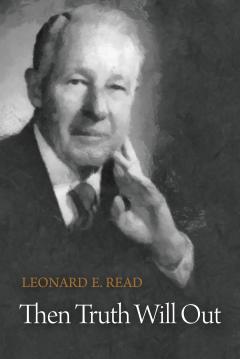
This year is also the 50th anniversary of Then Truth Will Out, by Leonard Read, FEE’s founder, which he wrote involved “An assessment of position on the freedom road after passing the 25th milestone at FEE.”

That sort of compound anniversary — 25th, 50th and 75th rolled into one — suggests that we might profit from a look back at “the freedom road” with Then Truth Will Out.

I think it is one of Read’s best books, as attested to by the fact that four of the chapters in my Apostle of Peace, which discusses what I consider some of his best sustained arguments, derive from it. But in looking at the book now, I have been most struck by its opening chapter, “A Confession of Faith.”

  1. Perhaps the clearest way to identify one’s politico-economic position — at least in broad outline — is to reveal his idea of the ideal, that is, what he means by civilization or by a civilized people.
  2. To me, civilization can mean nothing less than a society of civilized people. So how is a civilized person to be identified?
  3. A civilized person, according to my ideal, must recognize that man is at once a social and an individualistic being.
  4. Thus, he must not only be self-responsible but, at the same time, understand that he owes to others no infringements on their rights.
  5. In a word, the truly civilized person is a devotee of freedom; he opposes all man-concocted restraints against the release of creative human energy.
  6. The civilized person realizes how incorrect it is to think of freedom as synonymous with unrestrained action.
  7. Freedom does not and cannot include any action, regardless of sponsorship, which lessens the freedom of a single human being. To argue contrarily is to claim that freedom can be composed of freedom negations, patently absurd.
  8. Unrestraint carried to the point of impairing the freedom of others is the exercise of license, not freedom. To minimize the exercise of license is to maximize the area of freedom.
  9. In order to achieve this ideal, it is necessary that there be an agency of society — representative of the social side of man — which codifies the thou-shalt-nots, the taboos, the destructive actions and enforces their observation.
  10. The fact that society’s agency — government — has a historical record of getting out of hand, of becoming destructive itself, only testifies to how far from civilized we are. It does not warrant discarding the idea of the ideal; it does not justify anarchy.

The Geography of Spices and Herbs

Filed under: Food, History — Tags: , , , — Nicholas @ 02:00

Atlas Pro
Published 4 Jan 2019

Fun fact, I got the idea for this video while working as a cook in a Taco Bar.

Support me on patreon maybe? https://www.patreon.com/atlaspro

“Arroz Con Pollo” Kevin MacLeod (incompetech.com)
Licensed under Creative Commons: By Attribution 3.0 License
http://creativecommons.org/licenses/b…

QotD: Signalling

Filed under: Quotations, USA — Tags: , , , , — Nicholas @ 01:00

One of the many concepts that has entered the mainstream from the Dissident Right is signalling. Its first appearance came as criticism of social justice warriors, who were signalling their virtue by opposing someone or some thing, real or imagined. Virtue signalling is not new. It has probably been a part of human society since people began to settle into agricultural communities. Scipio Africanus, the great Roman general, who defeated Hannibal at Zama, was also famous for his virtue signalling.

These days, you will hear guys on the alt-right talk about counter-signalling. The easiest example of this is the newly minted rich guy going out and buying expensive display items, like cars or gaudy homes. NBA players are prone to this. They want to signal their wealth by acquiring highly visible, expensive items. An old money guy, in contrast, counter-signals by living in an old farmhouse that has been in the family for generations and driving a 40 year old Saab. He’s the sort of rich that feels no need to advertise it.

Signalling is a basic human trait. We all do it to one degree or another. Walk into a prison and you will see an array of tattoos on the inmates. These will signal gang affiliations, time served in the system, facilities in which the inmate has served and the individual’s violence capital. That last part is an important part of keeping the peace. To civilians, a face tattoo is always scary, but in jail, the right neck tattoo can tell other inmates that they are in the presence of an accomplished killer for a particular prison gang.

Virtue signalling and danger signalling are the easiest to understand, but people also use verbal and non-verbal signals to indicate trust or test the trustworthiness of others. A criminal organization, for example, will have a new member commit a pointless crime to demonstrate their trustworthiness. This is not just to sort out police informants, as is portrayed on television. It’s mostly to ascertain the willingness of the person to commit to the life of the organization. It’s hard to be a criminal if you will not commit crimes.

Outlaw biker culture is a good example of the use of signalling to establish trust relationships. Bikers have always, for example, adopted Nazi symbols as part of their display items. Bikers are not sitting around reading Julius Evola. What they are doing is signalling their complete rejection of the prevailing morality. By adopting taboo symbols and clothing, the outlaw biker is letting other bikers know his status, as much as he is letting the squares know he is a dangerous guy, who should be avoided.

The Z Man, “Codes of the Underworld”, The Z Blog, 2017-07-26.

March 21, 2021

The two Britains, gastronomically speaking

Filed under: Britain, Food, Health — Tags: , , , , , — Nicholas @ 05:00

Theodore Dalrymple on the British diet (at least before the neverending lockdowns):

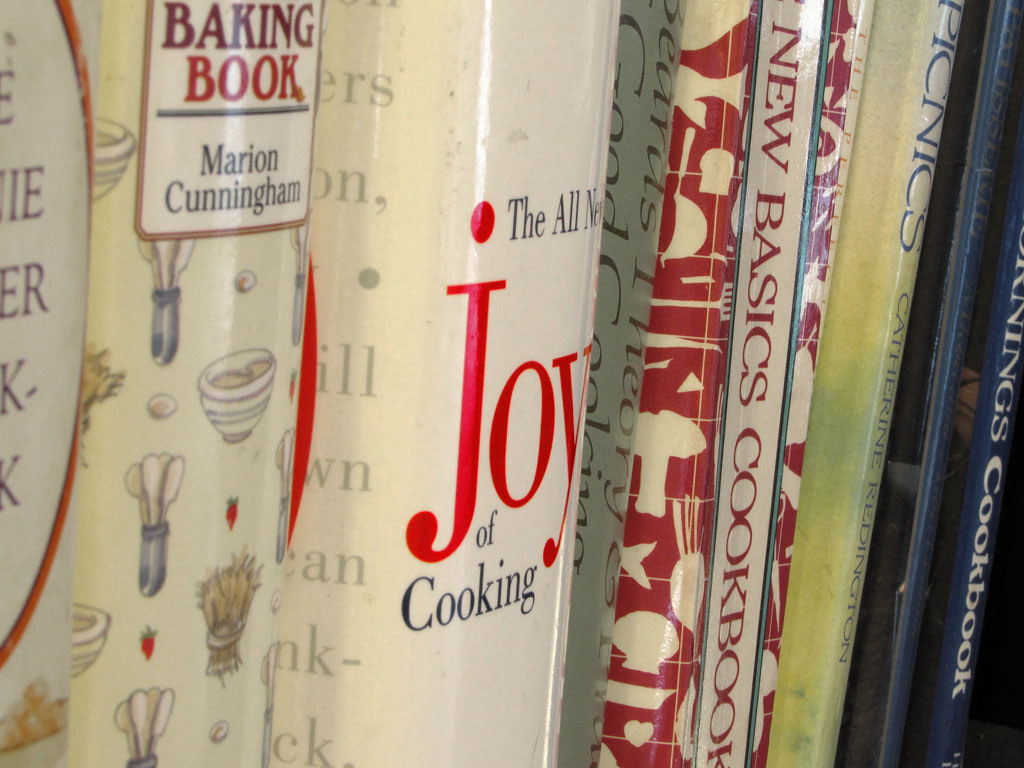
“The Joy of Cookbooks” by shoutabyss is licensed under CC BY 2.0

As in many other things, the population has divided into two: those with increasingly refined tastes in gastronomy, and those who eat mainly junk and takeaway food for the quickest but also crudest possible gratification.

Gastronomy often seems the only aesthetic sphere in which the modern British display any real interest. Their dress, their music, their art (or at least such as gains any publicity), their literature, and of course their architecture, are hideously ugly, even militantly so, but a Michelin-starred restaurant receives their adulation — or did in the now-distant days when restaurants were open.

But the modern interest in food is not the same as a mass market for fish, which has, alas, mainly to be cooked, and the fact is that the British are, grosso modo, too lazy and ignorant to cook properly. Many millions of them would be horrified by the sight of a whole fish, or even any part of a raw fish: they don’t want to eat anything that hasn’t been through a complex industrial process, had chemicals and preservatives added to it, and cannot be just stuck in a microwave for a few minutes before consumption in front of the television. Besides, they wouldn’t know what to do with a fish, let alone a crustacean.

It is said that about a fifth of British children do not eat a meal with another member of their household (family would, perhaps, be a misleading term) more than once a fortnight, turning meals into asocial and even furtive occasions. Many households do not have a dining table, and in my visiting days as a doctor I discovered that the microwave is often a household’s entire batterie de cuisine.

This slovenly and asocial approach to eating — evident in the detritus left behind in British streets as people eat wherever they happen to be, in their cars, walking along, in trains and buses, in fact anywhere but a dining room and with others — is not the consequence of poverty, but of a degraded style of life.

Many years ago I noticed that shops in poor areas where there were many immigrants of Indian origin had enormous piles of a vast array of vegetables so cheap that the problem was carrying them home rather than their cost. I would see Indian housewives selecting their purchases with care and attention: the quality and not just the price mattered to them. Uncompelled by economic necessity to shop there, I would nevertheless do so; but I never saw poor whites doing so. The problem with all those vegetables was that they required cooking, preferably with skill, which very few poor whites, as against poor Indians, had. And this is a cultural problem, if the taste for and consumption of a diet of junk food (what the French more vividly call malbouffe) is a problem.

The Indians are fat, with bad health consequences, from eating too much good food; the native British, with bad health consequences, from eating too much bad food. The prevalence of obesity in Britain, greater than in most other European countries, is possibly one of the reasons that its death rate from COVID-19 is so high, among the highest if not actually the highest. And this obesity is immediately obvious on arrival in Britain from any European country.

Crap Tactics in the Pacific – Shall MacArthur Return? – WW2 – 134 – March 20, 1942

World War Two
Published 20 Mar 2021

MacArthur makes one of the most iconic remarks of the whole war, but considering the fact that the Philippines seem unsalvageable, it’s pretty unclear just how he’ll do it, especially since even though ever more American soldiers are arriving in Australia, the Japanese threat to Australia grows daily. Bill Slim arrives in Burma to take command of I Burma Corps, and Joe Stilwell has taken over two Chinese Nationalist armies, so the defense of Burma looks like it might go on a while longer, though the Allies are at a serious disadvantage after losing Rangoon. The Japanese, for their part, are trying to figure out how the heck they’re going to administer all the territory they’ve taken this year and bring natural resources to Japan itself. There is still scattered fighting in the USSR, but the spring muds have put pad to any major offensives for the time being. As for the British, they launch Operation Outward, a hydrogen balloon campaign over Germany. Yep, you read that right. What a week.

Join us on Patreon: https://www.patreon.com/TimeGhostHistory
Or join The TimeGhost Army directly at: https://timeghost.tv

Follow WW2 day by day on Instagram @ww2_day_by_day – https://www.instagram.com/ww2_day_by_day
Between 2 Wars: https://www.youtube.com/playlist?list…
Source list: http://bit.ly/WW2sources

Written and Hosted by: Indy Neidell
Director: Astrid Deinhard
Producers: Astrid Deinhard and Spartacus Olsson
Executive Producers: Astrid Deinhard, Indy Neidell, Spartacus Olsson, Bodo Rittenauer
Creative Producer: Maria Kyhle
Post-Production Director: Wieke Kapteijns
Research by: Indy Neidell
Edited by: Iryna Dulka
Sound design: Marek Kamiński
Map animations: Eastory (https://www.youtube.com/c/eastory​)

Colorizations by:
– Mikołaj Uchman
– Daniel Weiss
– Norman Stewart – https://oldtimesincolor.blogspot.com/​
– Adrien Fillon – https://www.instagram.com/adrien.colo…​
– Olga Shirnina, a.k.a. Klimbim – https://klimbim2014.wordpress.com/​

Soundtracks from the Epidemic Sound:
– Rannar Sillard – “Easy Target”
– Jo Wandrini – “Dragon King”
– Wendel Scherer – “Time to Face Them”
– Howard Harper-Barnes – “London”
– Philip Ayers – “The Unexplored”
– Farrell Wooten – “Duels”
– Johan Hynynen – “Dark Beginning”
– Craft Case – “Secret Cargo”
– Johannes Bornlöf – “The Inspector 4”

Archive by Screenocean/Reuters https://www.screenocean.com​.

A TimeGhost chronological documentary produced by OnLion Entertainment GmbH.

“Speaking of military affairs […] the sexual misconduct scandals continue to rock the senior leadership of the Canadian Armed Forces”

Filed under: Cancon, Government, Media, Military — Tags: , , , , — Nicholas @ 03:00

The weekend round-up at The Line includes a bit more on the ongoing scandal where over a third of the senior military leadership of the Canadian Forces are currently under investigation for sexual impropriety:

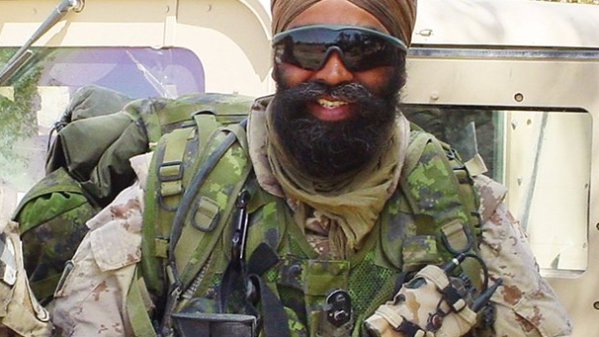
Canadian Defence Minister (at least for the moment) Harjit Sajjan in better times.

We noted with interest Steve Saideman, who holds the Paterson Chair in International Affairs at Carleton, has called for National Defence Minister Harjit Sajjan’s resignation — and Saideman is no partisan alarmist.

We agree with Saideman. Sajjan should quit or be sacked, frankly, pour encourager les autres. He should be epically sacked for birthing one of the stupidest possible excuses for inaction that we’ve ever heard from a minister of the Crown. Sajjan, under sharp questioning at committee, said — he really said this, we shit you not — that it wasn’t his place to get involved when allegations of sexual misconduct by retired army general Jonathan Vance were brought to his attention because, since Sajjan is an elected official, his involvement would politicize the matter.

Think about that for a minute. The entire goddamned basis of our system of government is ministerial accountability. Once upon a time, before it became awkward and inconvenient for him personally, Prime Minister Trudeau used to even boast about how he was bringing back government by cabinet, in contrast to that nasty, evil, centralizing Harper fellow. But according to Minister Sajjan, ministers are actually the wrong people to get involved in these serious issues … because they’re politicians. This completely inverts the way our government is supposed to work, though it might actually be a depressingly accurate summary of how Trudeau’s cabinet ministers interpret their roles.

But think about the message it sends to to our women (and men!) in uniform who’ve been the victim of abuse and harassment, sexual or otherwise: sorry, guys, I’d love to help and all, but I’m too busy being a fucking Liberal politician to step in as minister of National Defence.

Sajjan’s gotta go. Now. If he doesn’t quit he should be fired. And as we’ve been saying for weeks now, this is only getting worse — the sexual misconduct scandal that was frantically ignored by Canada’s self-styled feminist government has now made The New York Times, which means, if you’re an Ottawa Liberal, this is about as real as it gets. All that media attention was nice when it was fawning, with nice photo spreads, but … this? This isn’t fun for the Liberals at all.

How Did the Zulus Go From Tribe to Empire? | Rise of the Zulus (1790-1828)

Filed under: Africa, History, Military — Tags: , , , — Nicholas @ 02:00

History With Hilbert
Published 28 Mar 2020

Perhaps the most famous of Africa’s tribes, the Zulus rose to prominence under their King Shaka at the start of the 19th Century on the Eastern seaboard of what’s now South Africa. In the years following Shaka’s death his successors would have encounters with the Boer Voortrekkers and more famously, with the British culminating in the Anglo-Zulu War (1879) where they managed to decisively defeat them at the Battle of Isandlwana before themselves suffering defeat at the now infamous Battle of Rorke’s Drift. But in this video I’m not going to be talking about the much more well known story of the British Invasion of Zululand in the later 19th Century and the demise of the Zulu Empire, but rather about its origin and how it came about. In the 18th Century the Zulu as a people had only just become a separate entity, and certainly were not one of the major players on the scene before the time of Shaka. A series of factors played a role in their rise to power around the turn of the 19th Century, most notably the actions of Shaka himself as well as a shift in the way in which warfare was carried about by the tribes of the region and their interactions with European trading networks.

Go Fund My Windmills (Patreon):
https://www.patreon.com/HistorywithHi…

Join in the Banter on Twitter:
https://twitter.com/HistorywHilbert

Indulge in some Instagram..? (the alliteration needs to stop):
https://www.instagram.com/historywith…

Music Used:
Eine Kleine Nachtmusik” – Wolfgang Amadeus Mozart
“Expeditionary” – Kevin MacLeod
“Sunday Dub” – Kevin MacLeod (incompetech.com)
Licensed under Creative Commons: By Attribution 3.0 License

Send me an email if you’d be interested in doing a collaboration! historywithhilbert@gmail.com

#Zulu #SouthAfrica #History

QotD: Expressions of love

Filed under: Britain, Humour, Quotations — Tags: — Nicholas @ 01:00

Love is a delicate plant that needs constant tending and nurturing, and this cannot be done by snorting at the adored object like a gas explosion and calling her friends lice.

P.G. Wodehouse, Jeeves and the Feudal Spirit.

March 20, 2021

Iron cannon, improved celestial navigation techniques, and “race-built” galleons

In the latest Age of Invention newsletter, Anton Howes considers some of the technological innovations which helped English sailors to overcome powerful adversaries of the Spanish and Portuguese navies in the late 1500s and early 1600s:

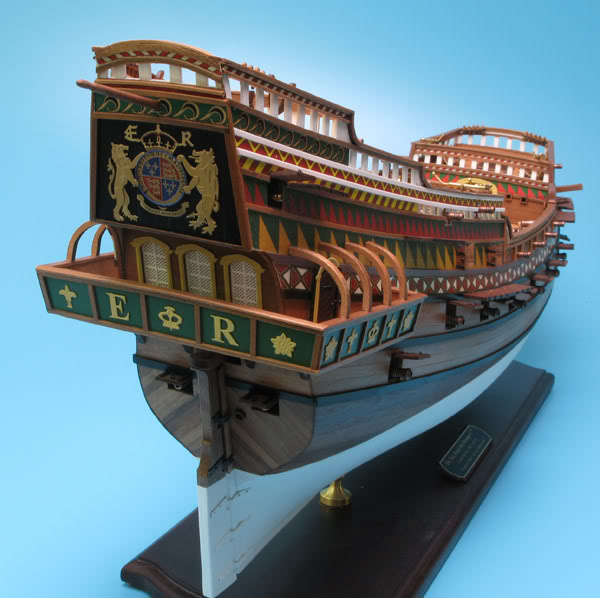
Stern view of a model of the Revenge as an example of a race-built galleon, 1577.
Image from modellmarine.de

Apart from the adoption and refinement of celestial navigation techniques, however, English seafaring capabilities also benefited from some more obvious, physical changes. In 1588, for example, on the eve of the Spanish Armada, a senior Spanish officer believed that the English had “many more long-range guns”. By the 1540s, medieval ironmaking techniques involving the blast furnace had gradually spread from Germany, to Normandy, and thence to the Weald of Sussex and Kent. Whereas in the first half of the sixteenth century England had typically imported three quarters of its iron from Spain, by 1590 it had not only quintupled its consumption of iron but was also almost entirely self-sufficient. And by allowing England to exploit its plentiful domestic deposits of iron, the blast furnace resulted in it producing many more cheap cannon.

Iron guns were in many ways worse for ships than those of bronze. They were heavier, prone to corrosion, and more likely to explode without warning. Bronze guns, by contrast, would first bulge and then split, but in any case tended to last. When the British captured Gorée off the coast of Senegal in 1758, they found a working English-made bronze cannon that dated from 1582. Yet iron was only 10-20% the price of bronze. Although the Royal Navy for decades continued to prefer bronze, cheap, medium-sized cannon of iron proliferated, becoming affordable to merchants, pirates, and privateers — a situation that was unique to England.

English ships were thus especially well-armed, allowing them to access new markets even when they sailed into hostile waters. They were soon some of the only merchants able to hold their own against the latest Mediterranean apex predator, whether it be the Spanish navy, Algeria-based corsairs, or Ottoman galleys. And they were able to insert themselves, sometimes violently, into the inter-oceanic trades — all despite the armed resistance of the Spanish and Portuguese, who had long monopolised those routes. In the 1560s, John Hawkins tried a few times to muscle in on the transatlantic Portuguese and Spanish trade in slaves. With backing from the monarch and her ministers, he captured Portuguese slave ships, raided and traded along the African coastline himself, and then sold slaves in the Spanish colonies of the Americas, sometimes having to attack those colonies before the local governor would allow them to trade. (The attempt was ultimately unsuccessful, as Hawkins’s privateering fleet was all but destroyed in 1568 and the English were not involved in the slave trade again for almost a century.)

The English hold over the hostile markets was only threatened during times of peace on the continent, when their ships’ defensiveness no longer gave them a special advantage. The Dutch usurped English dominance of the trade with Iberia and the Mediterranean, for example, during the Dutch Republic’s truce with Spain 1609-21. Their more efficient ships, especially for bulk commodities — the fluyt invented at Hoorn in the late 1580s — were cheaper to build, required fewer sailors, and were easier to handle. But these advantages only made them competitive when the risk of attack was low, as they were hardly armed. When wars resumed, the English had a chance to regain their position.

Finally, the English acquired a few further advantages when it came to ship design. Thanks to the shipwright Matthew Baker, who had been on the trial voyage Cabot dispatched to the Mediterranean, England experienced a revolution in using mathematics to design ships. Baker’s methods, seemingly developed in the 1560s, allowed him to more cheaply experiment with new forms, and by the 1570s these began to bear fruit. The old ocean-going carracks and galleons, with their high forecastles and aftercastles, became substantially sleeker. Taking inspiration from nature, Baker designed a streamlined, elongated hull modelled below the waterline upon a cod’s head with a mackerel tail. Above the waterline, too, he lowered the forecastle and set it further back, as well as flattening the aftercastle.

Starting in 1570 with his prototype the Foresight, and more fully developed in 1575-77 with the Revenge, these razed or “race-built” galleons gave the English some significant advantages. Drake even chose the Revenge as his flagship to battle the Spanish Armada in 1588, and to lead an ill-fated reprisal invasion of Portugal the following year. The higher castles of carracks and old-style galleons were suited to clearing an enemy’s decks with arrows and gunfire, as well as to defend against boarders. They were designed for combat at close quarters, in which height was an advantage. They were floating fortresses, their imposing height known to inspire terror. The race-built galleons, by contrast, by making the ship less top-heavy, could have longer and lower gundecks, with more of the ship’s displacement devoted to ordnance — especially useful when taking advantage of the cheaper but heavier cannon made of iron. Rather than killing an enemy ship’s sailors and soldiers, the race-built galleons were optimised for blasting through its hull. What they lost in “majesty and terror”, they made up for with overwhelming firepower. They aimed to sink.


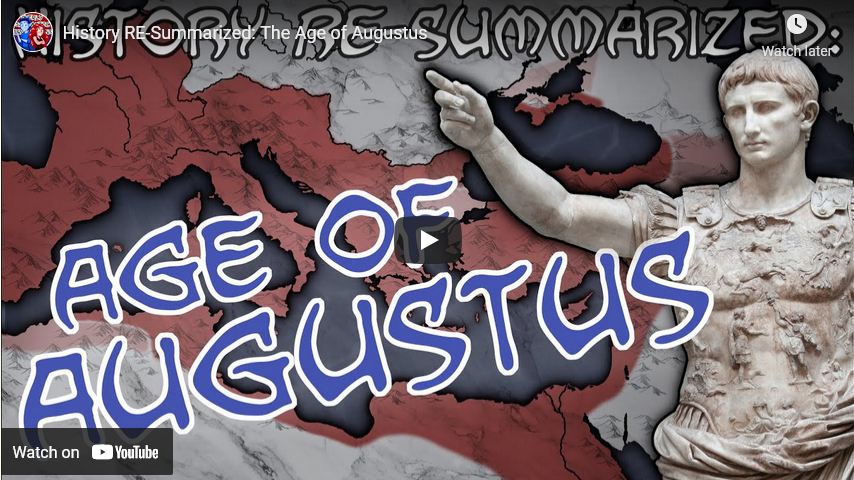
History RE-Summarized: The Age of Augustus

Overly Sarcastic Productions
Published 19 Mar 2021

Many Romans had conquered the Republic, but nobody could keep it, until Augustus. In the half century after the assassination of Caesar, his adoptive son would fundamentally transform the Roman state: expanding it, reforming it, and bringing it under the control of one man. The Age of Augustus found Rome a Republic and left it an Empire.

This video is a Remastered, Definitive Edition of three previous videos from this channel — History Summarized: “Augustus Versus The Assassins”, “Augustus Versus Antony”, and “How Augustus Made An Empire”. This video combines them all into one narrative, fully upgrading all of the visuals and audio. If you want more Histories to be Re-Summarized, please comment and let me know!

SOURCES & Further Reading: The Age of Augustus by Werner Eck, Augustus and the Creation of the Roman Empire by Ronald Mellor, Cleopatra: A Life by Stacy Schiff, Virgil’s Aeneid, Polybius’ Histories, Livy’s Ab Urbe Condita, Plutarch’s Parallel Lives, SPQR by Mary Beard, Rome: A History in Seven Sackings by Matt Kneale, (and also my degree in Classical Studies).

SECTION TIME-CODES:
0:00​​ 1 — Octavian V. the Assassins
07:40​​ 2 — Octavian V. Antony
17:36​​ 3 — Augustus as Emperor

Our content is intended for teenage audiences and up.

PATREON: https://www.Patreon.com/OSP​

PODCAST: https://overlysarcasticpodcast.transi…​

DISCORD: https://discord.gg/osp​

MERCH LINKS: http://rdbl.co/osp​

OUR WEBSITE: https://www.OverlySarcasticProductions.com
Find us on Twitter https://www.Twitter.com/OSPYouTube​
Find us on Reddit https://www.Reddit.com/r/OSP/

The rise of Turkish leader Recep Tayyip Erdogan

Filed under: Books, Europe, History, Middle East — Tags: , , , — Nicholas @ 03:00

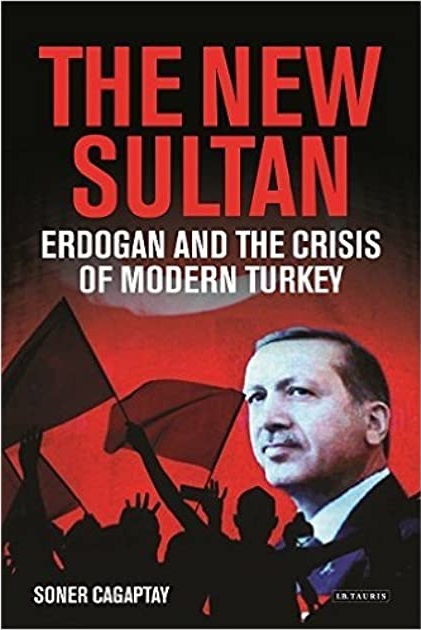
Scott Alexander reviews Soner Cagaptay’s recent book The New Sultan: Erdogan And The Crisis Of Modern Turkey:

If you only learn one thing from this post: it’s pronounced “air-do-wan”.

If you learn two things from this post, learn that, plus how a country which starts out as a flawed but somewhat-liberal democracy can lapse into near-dictatorship over the course of a few years.

I got The New Sultan: Erdogan And The Crisis Of Modern Turkey because, as a libertarian, I spend a lot of time worrying about the risk that my country might backslide into illiberal repression. To develop a better threat model, I wanted to see how this process has gone in other countries, what the key mistakes were, and whether their stories give any hints about how to prevent it from happening here. Recep Tayyip Erdogan transformed Turkey from a flawed democracy to a partial dictatorship over the past few decades, and I wanted to know more about how.

As an analysis of the rise of a dictator, this book fails a pretty basic desideratum: it seems less than fully convinced the dictator’s rise was bad. Again and again I found myself checking to make sure I hadn’t accidentally picked up a pro-Erdogan book. I didn’t; author Soner Cagaptay is a well-respected Turkey scholar in a US think tank who’s written other much more critical things. The fact is, Erdogan’s rise is inherently a pretty sympathetic story. If he’d died of a heart attack in 2008, we might remember him as a successful crusader against injustice, a scrappy kid who overcame poverty and discrimination to become a great and unifying leader.

I want to go into some of this in more depth, because I think this is the main reason why Erdogan’s example doesn’t generalize to other countries. What went wrong in Turkey was mostly Turkey-specific, a reckoning for Turkey’s unique flaws. Erdogan rose to power on credible promises to help people disenfranchised by the old system; by the time he turned the tables and started disenfranchising others in turn, it was too late to root him out. If there’s a general moral here, it’s that having the “good guys” oppress and censor the “bad guys” is fun while it lasts, but it’s hard to know whether you’re building up a karmic debt, or when you’re going to have to pay the piper.

Given how hard it is to convince people of that moral, let’s go through the full story in more detail.

And given that it’s impossible to discuss modern Turkey without at least briefly touching on the founder of the country, here’s an amusing apocryphal story about “The Father of the Turks”:

Medieval Turkey was dominated by the Ottoman Empire, officially an Islamic caliphate though in practice only inconsistently religious, ruled by autocratic sultans and a dizzying series of provincial governors. As time passed, they fell further and further behind Western Europe; by World War I, they were a mess. As the stress of the war caused the empire to fracture, General Mustafa Kemal seized power, reorganized the scraps of Ottoman Anatolia into modern Turkey, and was renamed ATATURK, meaning “Father of Turks”.

Ataturk was born in Ottoman-controlled Greece, and was typical of a class of military officers at the time who were well-educated and “Europeanized”. He wanted to turn backwards Turkey into an advanced Western country — and Western countries were mostly secular. He saw Islam — the religion of the old Ottoman Empire — as a roadblock, and passed various laws meant to relegate it to the margins of public life.

(my favorite Ataturk story, probably apocryphal, was that he passed a law banning women from wearing hijabs. Nobody followed it and the police wouldn’t enforce it, so he passed a second law requiring prostitutes to wear hijabs, after which other women abandoned them. As far as I can tell this is an urban legend, but it captures the spirit of the sort of measures he took to drag Turkey, kicking and screaming, into secular modernity.)

The Uzi Submachine Gun: Excellent or Overrated?

Filed under: History, Middle East, Weapons — Tags: , , , — Nicholas @ 02:00

Forgotten Weapons
Published 5 Mar 2018

The Israeli Uzi has become a truly iconic submachine gun through both its military use and its Hollywood stunts — but how effective is it really?

I found this fully automatic Uzi Model A to be actually rather better than I had expected. Despite the uncomfortable sharp metal stock, the rate of fire and large sights make this a relatively easy gun to shoot. Not one of the absolute best, but certainly above average.

http://www.patreon.com/ForgottenWeapons

Cool Forgotten Weapons merch! http://shop.bbtv.com/collections/forg…

If you enjoy Forgotten Weapons, check out its sister channel, InRangeTV! http://www.youtube.com/InRangeTVShow

Contact:
Forgotten Weapons
6281 N Oracle #36270
Tucson, AZ 85704

« Newer PostsOlder Posts »

Powered by WordPress