
Heh. State representative Fred Maslack of Vermont has proposed a bill under which non-gun-owners would have to register and pay a fee. Entertainingly enough, there is actual justification for this in a careful reading of the Vermont state constitution.
The Hon. Rep. Maslack is joking. I think. And I’m against requiring people who don’t want to bear arms to do so. But gad, how tempting – because underlying his argument is a truth that the drafters of the Vermont and U.S. constitutions understood. People who refuse to take arms in defense of themselves and their neighbors are inflicting a cost on their communities far more certainly than healthy people who refuse to buy medical insurance (and yes, I do think that proposed mandate is an intended target of Maslack’s jab). That externality is measured in higher crime rates, higher law-enforcement and prison budgets, and all the (dis)opportunity costs associated with increased crime. And that’s before you get to the political consequences …
I’ve never made a secret of my evaluation that refusal to bear arms is a form of moral cowardice masquerading as virtue. Real adults know how precious human life is, when they are ethically required to risk it on behalf of others, and when killing is both necessary and justified. Real adults know that there is no magic about wearing a police or military uniform; those decisions are just as hard, and just as necessary, when we deny we’re making them by delegating them to others. Real adults do not shirk the responsibility that this knowledge implies. And the wistful thought Rep Maslack’s proposal leaves me with is … maybe if moral cowardice cost money and humiliation, there would be less of it.
Eric S. Raymond, “Maybe if moral cowardice cost money, it would be less common?”, Armed and Dangerous, 2009-11-05.
March 20, 2021
QotD: Flipping the table on gun ownership regulation
March 19, 2021
Did Soviet Soldiers Ever Get Time Off? – WW2 – OOTF 021
World War Two
Published 18 Mar 2021Ever wonder if the Kriegsmarine saw any action in the Pacific Ocean? Or if the average Soviet soldier ever got a vacation from the most destructive conflict in the history of humanity? You can find out the answers in this episode of Out of the Foxholes!
Join us on Patreon: https://www.patreon.com/TimeGhostHistory
Or join The TimeGhost Army directly at: https://timeghost.tvFollow WW2 day by day on Instagram @ww2_day_by_day – https://www.instagram.com/ww2_day_by_day
Between 2 Wars: https://www.youtube.com/playlist?list…
Source list: http://bit.ly/WW2sourcesHosted by: Indy Neidell
Written by: Lewis Braithwaite and Dennis Stepanov
Director: Astrid Deinhard
Producers: Astrid Deinhard and Spartacus Olsson
Executive Producers: Astrid Deinhard, Indy Neidell, Spartacus Olsson, Bodo Rittenauer
Creative Producer: Maria Kyhle
Post-Production Director: Wieke Kapteijns
Research by: Dennis Stepanov and Lewis Braithwaite
Edited by: Miki Cackowski
Sound design: Marek Kamiński
Map animations: Eastory (https://www.youtube.com/c/eastory)Colorizations by:
Daniel WeissSources:
David Rumsey Map Collection, David Rumsey Map Center, Stanford Libraries
Bundesarchiv
Portrait of Robert Eyssen, courtesy of Gareth Collins
Komet schematics, courtesy of Rama https://commons.wikimedia.org/wiki/Fi…
Narodowe Archiwum Cyfrowe
State Library of QueenslandSoundtracks from the Epidemic Sound:
Phoenix Tail – “At the Front”
Johannes Bornlof – “The Inspector 4”
Howard Harper-Barnes – “Prescient”
Jo Wandrini – “Puzzle Of Complexity”Archive by Screenocean/Reuters https://www.screenocean.com.
A TimeGhost chronological documentary produced by OnLion Entertainment GmbH.

Cancel culture victims on the left
In Quillette, Jonathan Kay looks at the attempt to cancel Jesse Singal who has repeatedly failed to follow the “party line” on Trans issues for several years:

One of the odd-seeming aspects of progressive cancel culture is that many of the figures targeted by mobs aren’t especially conservative in their views. Rather, the victims tend to be heterodox liberals who simply offer a dissenting opinion on one or more compartmentalized issues — since these liberal targets tend to operate in left-leaning professional and social milieus through which a mob can exercise leverage and demand concessions. There are numerous popular writers and broadcasters who promote deeply conservative themes without attracting any notice from cancel mobs — even as lifelong leftists within such niche genres as Young Adult fiction, LGBT theatre, and knitting-trade journalism are excommunicated on the basis of minor verbal infractions.
In some notable mobbings chronicled by Quillette, in fact, the targeted dissenter wasn’t even offering an opinion per se, but merely highlighting facts we’re all expected to ignore. James Damore wasn’t fired by Google because he gratuitously insulted women, but because he pointed out real differences between the sexes. In Canadian literary circles, Margaret Atwood became reviled among a progressive fringe when she argued (correctly, as it turns out) that falsely accused novelist Steven Galloway should have received due process before being tarred as a rapist. If you grovel enough, woke mobs might eventually forgive you for being wrong — but never for being right.
On the issue of gender, a particularly interesting case study centres on Jesse Singal, a mild-mannered and amiable (I’ve met him) New York-based journalist, book author, and podcaster whom Quillette readers may remember from his 2019 appearance on our own show. As early as 2016, well before the culture war over trans rights reached its crescendo, Singal authored a ground-breaking New York magazine exposé on the cynical takedown of eminent Toronto psychologist Dr. Kenneth Zucker (who was subsequently paid more than half a million dollars by his former employer, the Centre for Addiction and Mental Health, as part of a legal settlement relating to its part in that smear campaign). Two years later, Singal wrote an impeccably researched cover story for the Atlantic titled “When Children Say They’re Trans” — one of the most widely discussed features in the magazine’s recent history. In these articles, and on social media, Singal has dealt with the issue of gender dysphoria with care and sensitivity, documenting the challenges faced by those experiencing the condition. And while he is the furthest thing from an actual transphobe, he acknowledges the plain fact that some children who present as trans later “desist” to an identity that accords with their biological sex.
As anyone who follows this issue closely can guess, Singal’s measured approach doesn’t always sit well with progressive activist and journalistic subcultures, wherein the approved view is that any child’s expression of trans identity must summarily be “affirmed” by parents, educators, and therapists. Within these circles, Singal himself has written, “desistance isn’t viewed as a phenomenon we’ve yet to fully understand and quantify but rather as a myth to be dispelled. Those who raise the subject of desistance are often believed to have nefarious motives — the liberal outlet ThinkProgress, for example, referred to desistance research as ‘the pernicious junk science stalking trans kids’ … But the evidence that desistance occurs is overwhelming.”
We know from experienced psychotherapists in this area that children can present as trans for all sorts of reasons, sometimes related to trauma, sexual anxieties, or comorbid mental-health conditions. In some cases, the dysphoria is permanent, but in other cases, it isn’t (which is why the analogy with sexual orientation is misleading). Certainly, the idea that desistance is some kind of transphobic “myth” has now itself been shown to be a myth: In late 2020, British jurists upheld desister Keira Bell’s claim that the country’s Gender Identity Development Service had improperly rushed her through a medical reassignment process, at age 16, without proper safeguards. At the age of 23, Bell now is recovering from the after-effects of these treatments — including a needless double mastectomy — and confronts a lifetime of possible medical complications.
As we wrote in a recent Quillette editorial about Bell, it won’t just be doctors and politicians whose actions will be judged in relation to the excesses surrounding the transition of young people, but also those many journalists who’ve chosen to prioritize political fashion over journalistic integrity. Singal stands out as one of the few honourable exceptions. Indeed, Bell’s case is exactly the sort of tragedy that he’s consistently warned about over the past five years. To a certain kind of ideologue, such prescience is unforgiveable.
Napoleon Defeated! Aspern 1809
Epic History TV
Published 9 May 2019In 1809, with Napoleon and his best troops bogged down in Spain, Austria decided to try to get revenge for her humiliation at Austerlitz three years before. Archduke Charles led an invasion of France’s ally Bavaria, but Napoleon raised fresh troops and transformed the strategic situation in four days of hard fighting along the Danube. But having taken Vienna, Napoleon’s overconfidence led to a desperate battle at Aspern-Essling, resulting in his first major defeat as Emperor, and the death of his closest friend.
With thanks to HistoryMarche, check out his channel here: https://www.youtube.com/channel/UC8MX…
Get early access & vote for future topics at Patreon https://www.patreon.com/epichistorytv
Find Osprey books on the Napoleonic Wars https://ospreypublishing.com/
Recommended books on the Napoleonic Wars (as an Amazon Associate I earn from qualifying purchases):
Eggmühl 1809: Storm Over Bavaria https://geni.us/mRvuG
Aspern & Wagram 1809 https://geni.us/4wewlr
French Napoleonic Infantryman 1803-15 https://geni.us/ivLojZD
British Light Infantry & Rifle Tactics of the Napoleonic Wars https://geni.us/02ycFR4
Tactics and the Experience of Battle in the Age of Napoleon https://geni.us/mKAYz
Napoleon the Great http://geni.us/NqMWMusic from Filmstro: https://filmstro.com/?ref=7765
Get 20% off an annual license with this exclusive code:EPICHISTORYTV_ANN#EpicHistoryTV #NapoleonicWars #Napoleon

QotD: English food
Maybe the first question is how English cooking got to be so bad in the first place. A good guess is that the country’s early industrialization and urbanization was the culprit. Millions of people moved rapidly off the land and away from access to traditional ingredients. Worse, they did so at a time when the technology of urban food supply was still primitive: Victorian London already had well over a million people, but most of its food came in by horse-drawn barge. And so ordinary people, and even the middle classes, were forced into a cuisine based on canned goods (mushy peas!), preserved meats (hence those pies), and root vegetables that didn’t need refrigeration (e.g. potatoes, which explain the chips).
But why did the food stay so bad after refrigerated railroad cars and ships, frozen foods (better than canned, anyway), and eventually air-freight deliveries of fresh fish and vegetables had become available? Now we’re talking about economics — and about the limits of conventional economic theory. For the answer is surely that by the time it became possible for urban Britons to eat decently, they no longer knew the difference. The appreciation of good food is, quite literally, an acquired taste — but because your typical Englishman, circa, say, 1975, had never had a really good meal, he didn’t demand one. And because consumers didn’t demand good food, they didn’t get it. Even then there were surely some people who would have liked better, just not enough to provide a critical mass.
And then things changed. Partly this may have been the result of immigration. (Although earlier waves of immigrants simply adapted to English standards — I remember visiting one fairly expensive London Italian restaurant in 1983 that advised diners to call in advance if they wanted their pasta freshly cooked.) Growing affluence and the overseas vacations it made possible may have been more important — how can you keep them eating bangers once they’ve had foie gras? But at a certain point the process became self-reinforcing: Enough people knew what good food tasted like that stores and restaurants began providing it — and that allowed even more people to acquire civilized taste buds.
Paul Krugman, “Supply, Demand, and English Food”, https://web.mit.edu/krugman/www/mushy.html.
March 18, 2021
Build the CLASSIC Shaker end table (Simple Table Build Part 2)
Rex Krueger
Published 17 Mar 2021This beautiful Shaker end table is easier than you think. Hand tool details and easy finishing.
More video and exclusive content: http://www.patreon.com/rexkrueger
*Get the plans: https://www.rexkrueger.com/store/plan…
(more…)
What’s the German phrase for “waiting for the other shoe to drop”?
Sarah Hoyt on the current situation in American politics:

As we sit here, waiting for the other shoe to drop, almost weekly, if not daily, I field the question “Why isn’t anyone doing anything yet?” This is usually followed by wails that we’ll do nothing that we’ll just sit here and take it.
There are two things to take into account. The first is that most people aren’t us. Most people aren’t political junkies who know every stupid, unjust and just plain suicidal executive order coming from on high, from the office of the vice-roi of the middle kingdom installed over us.
The second is the shock part of shocked disbelief. Which tends to delay reactions quite a bit.
On the first one “but how can they not know?” Well, because most of our media is and has been devoted to lying to the people. They are the propaganda arm of international socialism, drumming madly for their billionaire owners, who somehow have failed to read a single word of history and think they’ll end up on top.
No, forgive me. It’s not that. It’s that they don’t think at all. They want to be accepted with the “best” people, who at their level are the old aristocratic families of Europe, who of course are all on the spectrum of socialism/communism.
What our idiot nouveau riche have failed to absorb is that these more inbred and pedigreed mental midgets might not know why they support the bullshit anymore, but it all started in the early 20th century with their being convinced communism was inevitable and putting on wolf suits before they were eaten by the wolves.
So we get back to the idiot millionaires and billionaires (hi Bernie!) are stupid and have never read history. After all they made lots of money in various ways that have nothing to do with learning history, so why should they bother.
And below them are the scrambling multitudes of the upper middle class who ape what they view as the beliefs of their betters and — when they attended college — the “smart people” who in turn were taught by the fossils of the 20th century that communism was inevitable and that all smart people are communist.
All of which amounts to: most of the people have not yet found out what Zhou Bai den has been signing at warp speed, or what it saddles us with. Fear not. These people are very very stupid, bordering on mentally slow, and they will make sure everyone knows, soon enough. Why, they’re proud of it.
People are already finding out retail, anyway. Very retail. As in, they are finding out every price is going up, and what was their very nice lifestyle is now evaporating before their eyes, as is any hope of getting better.
The Hornby Story
Little Car
Published 27 Feb 2020Hornby Railways is a British model railway brand. Its roots date back to 1901, when founder Frank Hornby received a patent for his Meccano construction toy. The first clockwork train was produced in 1920. In 1938, Hornby launched its first 00 gauge train. In 1964, Hornby and Meccano were bought by their competitor, Tri-ang, and sold on when Tri-ang went into receivership. Hornby Railways became independent again in the 1980s, and became listed on the London Stock Exchange, but due to recent financial troubles, reported in June 2017, is presently majority owned by turnaround specialist Phoenix Asset Management.
The script for this video comes from Wikipedia:
https://en.wikipedia.org/wiki/Hornby_…
If you find issues with the content, I encourage you to update the Wikipedia article, so everyone can benefit from your knowledge.To get early ad-free access to new videos, or your name at the end of my videos, please consider supporting me from just $1 or 80p a month at https://www.patreon.com/bigcar
#hornby #hornbyrailways

QotD: Leftists are generally rebelling against the man … even when they’re in charge
That’s where religion really comes in handy, and it’s no surprise that Leftism has so rapidly curdled into a chiliastic suicide cult. Not to tell guys like Max Müller their jobs, but it’s wrong to call Christianity an “Abrahamic” faith. Yes, it sprang from Judaism in its externals, but its orientation is totally inward. Judiasm, and Islam (which IS an “Abrahamic” faith) are outwardly oriented, communitarian. They’re ideally suited for small, tight-knit communities. So are Taoism, Confucianism, Shinto, Hinduism, and so forth. All of these are best described as ethnic religions — one doesn’t convert to Judaism or Hinduism; one must be adopted into the group.
Christianity and Buddhism, by contrast, are renunciant religions. From the very beginning they were urban faiths. Their ideal figure is the hermit or stylite, but in practice these men are supported by a small, tight-knit community … as opposed, as ostentatiously as possible, to the hustle and bustle of the big city. (That Europe in the “Christian centuries” was overwhelmingly rural is incidental. Christianity took root in the only place it could — the teeming metropolises of the Roman Empire. It spread out from its urban core, such that it was well established in the hinterland by the time the Empire fell). Christians are specifically commanded to be IN the world, but not OF the world, while the whole point of Buddhism is to escape the world while still somehow being physically in it.
It should come as no surprise, then, that what I call Lifestyle Leftists — those groovy folks who aren’t really political, who only mouth the slogans because they’re still trying to live like college kids well into middle age — all adopted some vague Buddhist-flavored “spirituality” back when. They want to make a big show of being against the dominant culture, but they lack the discipline for any real religious commitment, so they, you know, meditate on their, like, auras, man. Lots of nominally Christian denominations got in on the act, too, and hey, look at that
Despite the professional musicians and the light shows, people couldn’t be arsed to go to church, because why would they? Better to, you know, just kinda, like, do your own thing, man, I’m spiritual but not religious.
Alas for them, they forgot the basic thing we noted, above — renunciant doesn’t mean “doing your own individual thing;” it means “retreating into a monastic community.” The sangha is one of the pillars of Buddhism, and the only reason anyone has heard of the Desert Fathers is because those supposed hermits had large communities built up around them. You simply can’t be a solitary Christian or Buddhist, pursuing your own individual enlightenment without reference to the wider world. It doesn’t work like that.
Severian, “Alienation II”, Rotten Chestnuts, 2020-10-30.
March 17, 2021
Rebuilding the Royal Canadian Navy
I somehow missed this article by Sir Humphrey when he posted it a few weeks back. He’s looking at the Australian and Canadian governments’ respective decisions to use the British Type 26 design to replace their current anti-submarine fleets and considering some of the economic and military concerns that led to the decision.
In both cases there have been media articles in the last week over the programmes and concerns. In Canada, the challenge has been that the cost has grown to a total of $77bn for 15 escorts. There has been cost growth from an originally scheduled $14bn many years ago, and the first of class will not now be delivered until 2031. This has led to suggestions in some media quarters that Canada could do things faster and more cheaply if it simply bought an off the shelf foreign design now and got on with things.
An artist’s rendition of BAE’s Type 26 Global Combat Ship, which was selected as the Canadian Surface Combatant design in 2019, the most recent “largest single expenditure in Canadian government history” (as all major weapon systems purchases tend to be).
(BAE Systems, via Flickr)[…]
The issue now is that Canada will need to establish, almost from scratch, a frigate construction programme and workforce for a finite period of time without a clear plan of what follows on when the last hull is completed. At the same time it will need to run on ships that are becoming increasingly elderly – it is likely that most of the Halifax class will see more than 40 years of service, and some may approach their 50th birthdays before being replaced – something that will pose an increasing maintenance and resource challenge.
Could things be done more cheaply or quickly? Almost certainly yes, but only if you are willing to make massive compromises. It could be possible, for example, to look to licence build an existing design that is already in service. There are plenty of designs out there that could be licence built and brought into service in the next few years — probably at less cost than the T26 programme.
But while this may sound easy, its also a recipe for disaster. It’s easy to look at country X and say “they’re buying this ship for that much” and assume that Canada is getting a bad deal. But Country X is likely to have a very different set of requirements, and their design will reflect it.
For example, Canada needs a ship able to operate with NATO and 5 EYES as a fully integrated player – this adds cost to fit specific systems and equipment that is compatible. Canada will also want to fit bespoke systems to meet national needs – again this will require design changes, that come at a price. Bolting on all manner of different requirements that Canada needs to meet the unique operational circumstances adds price and complexity to the design.
While you probably could take an off the shelf design and build it now, it would be just that, an off the shelf design. It wouldn’t be optimised for local needs, and it wouldn’t have the right equipment, comms, meet local design standards, or be certified for use with national equipment.
You are then faced with two choices – either bring a cheap ship into service that is entirely unsuitable and not designed for your needs, but is a lot cheaper, or spend an enormous amount of money shifting the design to better reflect your needs. If you choose the latter, then suddenly you are adding cost and time in, and the 2031 date will slip even further.
If you choose the former, then you have to accept that the design is “as it comes” and will have minimal Canadian input – so limited industrial offsets, very little economic benefit, and the long-term support solutions will firmly be tied into the country of origin and not Canada. In other words, Canadian taxpayer dollars will be spent to support a foreign economy.

That last point is really the key. Canadian governments, in my lifetime at least, never look at the military requirement as the top priority and sometimes not even the second or third priority. The economic spin-offs, especially in those cases where the benefits can be allocated to marginal parliamentary constituencies, will be the top priority. As is always a talking point in the case of any major military hardware acquisition, this is going to be the “single largest expenditure in Canadian government history”. Just as the replacement of the RCAF’s aged CF-18 fighters will be the largest expenditure in its turn.
Sunny Beaches, Fascist Leaders, and Nazi Spies – WW2 – Spies & Ties 01
World War Two
Published 16 Mar 2021South America is home to one of Germany’s most effective spy-networks. In Operation Bolivar, dozens of German operatives transmit information from and to the USA, Brazil, Argentina, and other South and Central American countries, giving the Abwehr and SD access to crucial information on politics, economics, and military business.
(more…)
The long-gone economic framework of print newspapers
In The Line, Peter Menzies explains the economic underpinnings of the newspaper world back in the “good old days” before first radio, then TV, and finally the internet took all the profits out of their model:

“Newspaper Boxes” by Randy Landicho is licensed under CC BY 2.0

We will hear a lot in the months ahead about who’s making money from news, so let’s get something straight: Even in the profit-soaked heyday of Canadian newspapers, no one made money from news.
That all ended about 100 years ago when radio — and then television — began delivering it for free.
Oh sure, the occasional ongoing news story would inspire people to buy more newspapers. But in my 30 years in that business the only event that did so in any significant way was the death and funeral of Princess Diana. Even then, after the extra cost of newsprint and distribution, the financial return was insignificant.
But mythologies die hard. People in newsrooms believed news made money — and apparently some still do — even when year after year, surveys of readers showed that there were lots of other things that sold and sustained newspapers.
Some people bought them because they were looking for a job. For others, it was a house, a plumber, a companion, a pet, a car or, really, almost anything else you can think of that might be needed. Classified pages were every town and city’s marketplace. That’s where you found stuff you had to get and bought an ad when you had something to sell or tell people about. It was where you announced the births of your babies, the graduations, engagements and weddings of your children and the deaths of your parents. The lives of communities were recorded in the classified pages of their newspapers.
After a glance at the headlines, many other readers’ first and sometimes only stops were the horoscope, comics, crossword (an error there generated far more calls than a rogue columnist ever could) and other pleasant distractions. For still more, it was the stocks listings, sports scores or recipes to which they were primarily drawn.
There were movie and entertainment listings — even a TV guide so you’d know where and when to find Seinfeld. On Thursdays, you might buy a paper just for the Canadian Tire flyer. On weekends, specialty sections discussed books and told tales of travel adventures well-supported by the latest deals advertised by travel agencies. Housing developers pitched their latest home designs in special real estate sections. And there were magazines. Honestly, there were.
It’s been literal decades since we last subscribed to a print newspaper, and nearly as long since I picked one up from a news stand. My mother is the last person I recall still depending on buying a physical newspaper — she only stopped buying a Saturday Toronto Star in the last year or so — but that was mainly for the TV listings. Back when I still occasionally travelled on business (also more than a decade ago, now), it was a nostalgic treat to find a copy of USA Today at the door of my hotel room in the morning.
Heavy But Effective: Britain’s No4 MkI (T) Sniper Rifle
Forgotten Weapons
Published 29 Aug 2018http://www.patreon.com/ForgottenWeapons
Cool Forgotten Weapons merch! http://shop.bbtv.com/collections/forg…
The main British sniper rifle of World War Two, and arguably one of the best looking military sniper rifles of all time, the No4 MkI (T) was something the British military knew they would want even before the No4 MkI rifle had gone into real production. The first No4 snipers were built on leftover trials rifles from Enfield, and the pattern was formally introduced in February of 1942. First use was in North Africa, but the fighting there was not really suited to sniper rifles, and the weapon’s practical combat debut was in Italy in 1943.
The No4 MkI (T) was a conversion of a standard No4 MkI rifle, using examples chosen for particular good accuracy. They were sent to Holland & Holland to have scope mount bases added and No32 telescopic sights fitted (along with cheek risers on the stocks and having the battle sight aperture ground off to allow room for the scope bell). Between 23,000 and 26,000 were made during the war, and they would continue to be used in the British military for decades, including later conversion into 7.62mm NATO L42A1 rifles [which Ian discusses here].
Contact:
Forgotten Weapons
6281 N Oracle #36270
Tucson, AZ 85704

QotD: Technocracy’s failure mode
That engineering mindset is one of order, of processes, of structures. Free form and flowing is not generally described as desirable among engineers.
To change examples, Major Douglas came up with the idea of Social Credit. Calculate the profits in an economy and then distribute them to the people. This makes sense to an engineer. The shoot down that we never can calculate such profits in anything like real time just does not compute.
To engineers, if we’ve a process, a structure, then we can handle these things. Yet human life and society is simply too complex to be handled in such a manner. Sure, Hayek never was talking about sexual harassment but the point does still stand.
No, this is not really specifically about Google nor sexual harassment. Rather, it’s about technocracy and the undesirability of it as a ruling method. Here we’ve got just great engineers stepping off their comfort zone and into social relationships. The nerds that is, the very ones we’ve been deriding for centuries as not quite getting it about those social relationships, trying to define and encode those things we’re suspicious they don’t quite understand in the first place.
That is, rule by experts doesn’t work simply because experts always do try to step out of their areas of expertise. Where they’re just as bad and dumb as the rest of us. Possibly, even worse, given the attributes that led them to their areas of expertise in the first place.
Tim Worstall, “Google’s Sexual Harassment Policies – Why We Don’t Let The Technocrats Run The World”, Continental Telegraph, 2018-11-08.
March 16, 2021
Mumford & [REDACTED]
Jack Stacey on the group-mandated self-cancellation of Winston Marshall by his band mates in Mumford & Sons at the behest of a social media mob for the mortal sin of complimenting a book publicly:
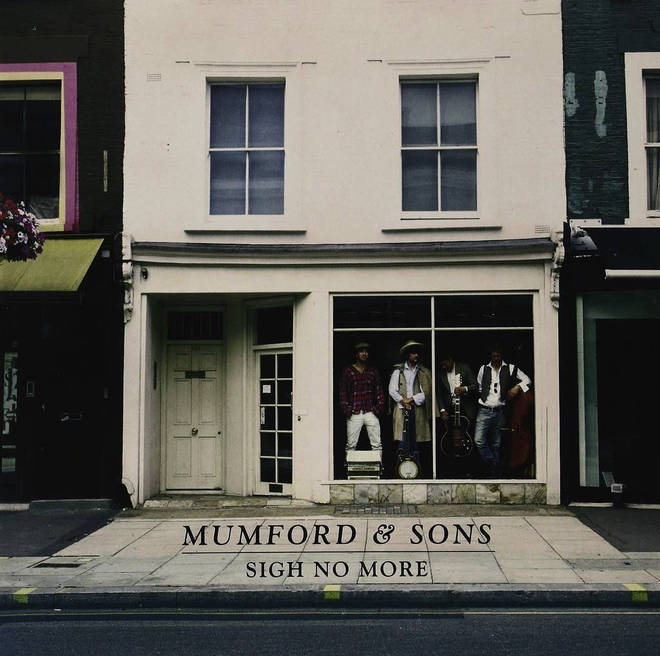
As the band’s most famous lyric goes, he really fucked it up this time. For while the book in question does describe the left’s penchant for totalitarian control disguised as benevolence, it was not the above classic [Nineteen Eighty-Four] (yet to be deemed problematic), but Unmasked by journalist Andy Ngo, which gets Inside Antifa’s Radical Plan to Destroy Democracy in the name of social justice.
Following this transgression against the militant arm of wokery and pressure from the rest of the group for his “increasingly right-wing views”, Marshall the banjoist has pushed his entire Twitter feed down the memory hole leaving only a mea culpa pinned to the start. It states: “Over the past few days I have come to better understand the pain caused by the book I endorsed. I have offended not only a lot of people I don’t know, but also those closest to me, including my bandmates, and for that I am truly sorry.”
He adds in his adopted Newspeak that he will use his absence “to examine my blindspots”, and concludes: “For now, please know that I realise how my endorsements have the potential to be viewed as approvals of hateful, divisive behaviour. I apologise, as this was not at all my intention.”
You would have thought he’d had rats caged to his face to become so repentant. But no, it appears that, as ever, some people got angry on social media, after which his partners at the tweed and ‘tache firm he’d helped set up have made him genuinely believe he deserved it for mucking around in politically incorrect prole territory.
For don’t let the & Sons bit fool you. Like the band’s resulting output, their name was chosen to add an earthy patina to bely the fact that they were, as Bo’ Selecta!’s Mel B might have it, “posh as fook”, rather than as they would have you think: “common as mook”.


