Quotulatiousness

July 22, 2021

Conservative cancel culture?

Filed under: Media, Politics, USA — Tags: , , , , , , — Nicholas @ 05:00

Kurt Schlichter addresses the notion that “cancel culture” is alive and well among conservatives as much as it is among progressives:

“A little Black Rifle Coffee pour over this morning.” by jonmrogers is licensed under CC BY 2.0

Is there a conservative cancel culture? No. What there is now is a consensus among conservatives that we will refuse to subsidize institutions and entities that hate us. “Cancel culture,” properly understood – in this time of words meaning whatever they need to mean at any given moment, I’m going to have to insist on fixed definitions – is the attempt to use formal and informal sanctions to stop people from expressing dissenting views. But conservatives don’t care what the conservatives who cry about it when they are caught shafting us – hi Kristi! – think; conservatives care about what these people do or don’t do. Labeling our rejection of squishes and RINOs as “cancel culture” is a cheesy attempt to stop us from insisting that conservatives actually conserve. If the left, and the GOPuffballs, want to call this act of self-preservation “cancel culture” and shame us into unilateral disarmament in the name of some sort of pseudo-consistency, let them try. We’re not tying ourselves up with alleged “principles” anymore; ideological bondage is not our scene.

[…]

There was a certain coffee company created by vets that embraced a kind of vet-bro/gun vibe and it worked hard to cultivate a following in the conservative community. And then they stamped their combat boots hard on their own tender beans. Black Rifle Coffee Company’s problem provides an important lesson not just for companies seeking to operate on the conservative tip, but for GOP politicians as well.

What happened? BRCC gave an interview to The New York Times that many cons saw as taking sides against us conservatives. Did it or didn’t it take sides against us? The company denies it and is trying to repair the damage, but the facts of the case are not the point we are discussing here – the point is how conservatives, the cheated-on wives of American politics, reacted when they felt, rightly or wrongly, betrayed.

The conservatives went nuclear. Here’s the thing a lot of people seem to not understand. No faction has been screwed over by its own side more than conservatives. How many politicians, when they had the power to do the conservative things they ran on, opted for favorable WaPo coverage over keeping their promises? The incentives to cooperate are huge … like coverage in the DC paper of record explaining how one has “grown”. But we’re done with the bait-and-switch. We’re super-sensitive and super-suspicious, because we’ve been burned before.

So, conservatives have a hair trigger for perceived betrayal – if they even suspect it, they go off. Those seeking our support should act accordingly, as cons have been serially betrayed for decades. Take W, please, back to his ranch to paint his paintings. But before you do, remember what he did to all of us who defended him when he refused to defend himself – he talked smack about us as he partied with his new pals the Clintons and Obamas.

The Ahoy Crew used to at least pretend to be with us – Cap’n Bill Kristol, David Aptly-Named French, Jonah Heavy G Goldberg, and the rest turned on us the second they perceived their sinecures were in peril due to our swelling demand for actual victory.

Them or us. Pick one. But you can’t choose both, or neither.

Update: The CEO of the company is either in desperate damage control mode or genuinely upset at the misrepresentation of his views by the New York Times:

Let’s get the air cleared right away. Black Rifle Coffee’s founder and CEO has spoken out and is disputing how his comments were presented by the New York Times and represented by those reacting to the article, who were led to believe that Black Rifle Coffee bashed conservatives.

Evan Hafer decided to set the record straight regarding the “significant amount of misinformation being put out on the internet” about Black Rifle Coffee and about statements that he has made.

Hafer quickly debunked the notion that he made derogatory remarks about BRCC’s customers or conservatives and then proceeded to explain how the New York Times deliberately twisted his words and took them out of context. According to Hafer, his conversation with the NYT Magazine reporter was in the context of racism and anti-Semitism in America in light of Hafer being the target of an organized attack last year because of “my last name and my heritage.”

“We were purely discussing that,” Hafer says, and he was not conflating those groups with conservatives.

“The New York Times, as we know, the chances of them being objective were fairly slim, but we gave them the opportunity,” he added. He went on to mention veterans issues he hoped to bring attention to. But, unfortunately, the New York Times chose to go with “the salacious headline” about the company instead.

Hafer reiterated that racists and anti-Semites have no place in his company.
Build a Shavehorse from Two Boards

Filed under: Tools, Woodworking — Tags: , , — Nicholas @ 04:00

Rex Krueger
Published 21 Jul 2021

This traditional woodland vise gives amazing hold and will set you up for lots of outdoor projects.

More video and exclusive content: http://www.patreon.com/rexkrueger
(more…)

Bourbon, almost an accidental hit

Filed under: Business, History, USA — Tags: , , — Nicholas @ 03:00

At TownHall, Salena Zito discusses the way Bourbon became a popular modern beverage from a none-too-promising eighteenth century beginning:

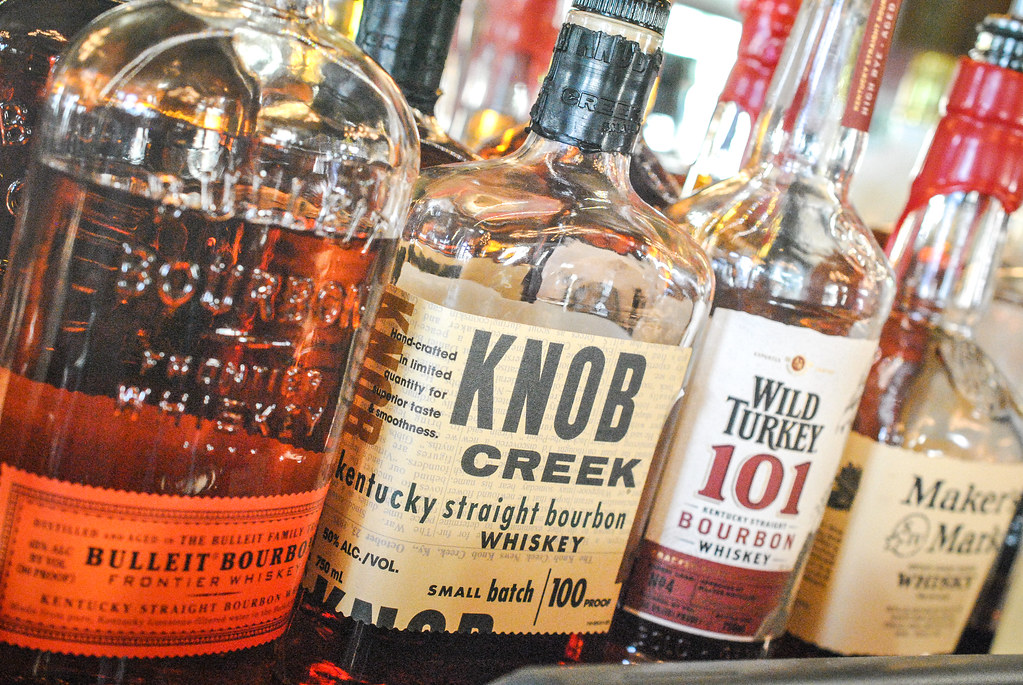
“Bourbon Bottles” by larryjh1234 is licensed under CC BY 2.0

About 250 years ago, farmers looking for a way to make their surplus corn crop profitable decided to distill it. Today, that leftover grain has become a billion-dollar industry and a symbol of the Bluegrass State’s identity, economy and culture.

“How bourbon came about is (what) … the American spirit looks like: business, independence, freedom, a little bit of luck and a lot of perseverance,” said Justin Thompson.

Thompson and his colleague Justin Sloan are the proprietors of The House of Bourbon, the world’s largest bourbon store, located on West Main Street in Lexington right across from Mary Todd Lincoln’s childhood home.

And right now, business is booming.

Thompson and Sloan started collecting rare and vintage bottles of bourbon 20 years ago, when the drink was out of favor. Then, four years ago, the state passed a law allowing the resale of distilled spirits and the duo opened their store, selling not just their stockpile but the history of the drink itself.

Bourbon is concocted from a strict formula. “By law it has to be made with a minimum of 51% corn, aged in charred new oak barrels and stored at no more than 125 proof and bottled at no less than 80 proof,” Thompson said.

But its sweet, rich flavor was actually born out of happenstance. In the early days, the best market for bourbon was on the East Coast, so farmers had to ship their barrels down the Mississippi to Louisiana then around Florida and up the coast. The trip took months but also allowed the whiskey to age beautifully.

“When merchants along the East Coast started marveling about this red whiskey with its unique flavor, that marked the beginning of the bourbon industry,” said Thompson.

In 1964, Congress deemed bourbon the nation’s native spirit, and there’s nothing more American than enjoying a sip of the brown stuff in a classic cocktail like a mint julep or an Old-Fashioned on the Fourth of July weekend.

Type 1 Russian AK: The First Production Stamped AK (Updated)

Filed under: History, Military, Russia, Weapons — Tags: , , , , — Nicholas @ 02:00

Forgotten Weapons
Published 8 Jul 2018

http://www.patreon.com/ForgottenWeapons​

Cool Forgotten Weapons merch! http://shop.bbtv.com/collections/forg…​

Updated to fix errors of nomenclature and production dates.

The AK was formally adopted in 1947, and went into production in 1948. In this very first form, it used a stamped receiver with front and rear trunnions riveted in place. Unfortunately, while the hand-fitted preproduction guns were quite excellent, the manufacturing processes and quality control left a lot to be desired. The stamped receiver was relatively thin (especially compared to previous stamped Russian small arms like the PPS-43), and was very susceptible to warping during heat treating and other parts of the manufacturing process. The guns that met QC requirements were every bit as good as expected, but the high number of rejects nullified much of the point of having those stamped parts in the first place.

For this reason, Type 1 AK production ended in 1951, and a milled receiver was developed to allow rifles to continue being made while the engineering and production team worked to improve the receiver design and the manufacturing processes around it.

It should be noted that the “AK-47” was the final prototype version of the gun, and the Type 1 was designated simply “AK” in official Soviet documentation.

Today, the first pattern AK47 is an extremely rare weapon, and I am grateful to the private collector who allowed me to video this one for you!

If you enjoy Forgotten Weapons, check out its sister channel, InRangeTV! http://www.youtube.com/InRangeTVShow​

Contact:
Forgotten Weapons
6281 N Oracle #36270​
Tucson, AZ 85704

QotD: Nelson

Filed under: Britain, France, History, Humour, Military, Quotations — Tags: , , , — Nicholas @ 01:00

Napoleon ought never to be confused with Nelson, in spite of their hats being so alike; they can most easily be distinguished from one another by the fact that Nelson always stood with his arm like this, while Napoleon always stood with his arms like that.

Nelson was one of England’s most naval officers, and despised weak commands. At one battle when he was told that his Admiral-in-Chief had ordered him to cease fire, he put the telephone under his blind arm and exclaimed in disgust: “Kiss me, Hardy!”

By this and other intrepid manoeuvres the French were utterly driven from the seas.

W.C. Sellar & R.J. Yeatman, 1066 And All That, 1930.

July 21, 2021

The Abwehr: The Trojan Horse in Nazi Germany – WW2 – Spies & Ties 06

Filed under: Germany, History, Military, WW2 — Tags: , , , , , — Nicholas @ 04:00

World War Two
Published 20 Jul 2021

The Abwehr was the German military intelligence agency during World War Two. At the same time, it was the home of some high-ranking anti-Nazi resistance members.
(more…)

Tank Chats #116 | Churchill III | The Tank Museum

Filed under: Britain, History, Military, Weapons, WW2 — Tags: , — Nicholas @ 02:00

The Tank Museum
Published 15 Jan 2021

The Tank Museum’s Historian David Fletcher discusses the Second World War British Churchill Mark III. The Mark III was the first Churchill to receive the upgraded and more powerful 6 pounder gun. The Museum’s Mark III* also mentioned, is now an incredibly rare variant, and was converted from an AVRE and given the even more powerful 75mm gun.
(more…)

QotD: The expansion of the English vocabulary (through plundering French)

Filed under: Britain, France, History, Quotations — Tags: , , , — Nicholas @ 01:00

Because French was at that time the international language of trade, it acted as a conduit, sometimes via Latin, for words from the markets of the East. Arabic words that it then gave to English include: “saffron” (safran), “mattress” (materas), “hazard” (hasard), “camphor” (camphre), “alchemy” (alquimie), “lute” (lut), “amber” (ambre), “syrup” (sirop). The word “checkmate” comes through the French “eschec mat” from the Arabic “Sh h m t“, meaning the king is dead. Again, as with virtue and as with hundreds of the words already mentioned, a word, at its simplest, is a window. In that case, English was perhaps as much threatened by light as by darkness, as much in danger of being blinded by these new revelations as buried under their weight.

Yet the best of English somehow managed to avoid both these fates. It retained its grammar, it held on to its basic words, it kept its nerve, but what it did most remarkably was to accept and absorb French as a layering, not as a replacement but as an enricher. It had begun to do that when Old English met Old Norse: hide/skin; craft/skill. Now it exercised all its powers before a far mightier opponent. The acceptance of the Norse had been limited in terms of vocabulary. Here English was Tom Thumb. But it worked in the same way.

So, a young English hare came to be named by the French word “leveret“, but “hare” was not displaced. Similarly with English “swan”, French “cygnet“. A small English “axe” is a French “hatchet“. “Axe” remained. There are hundreds of examples of this, of English as it were taking a punch but not giving ground.

More subtle distinctions were set in train. “Ask” – English – and “demand” – from French – were initially used for the same purpose but even in the Middle Ages their finer meanings might have differed and now, though close, we use them for markedly different purposes. “I ask you for ten pounds”; “I demand ten pounds”: two wholly different stories. But both words remained. So do “bit” and “morsel”, “wish” and “desire”, “room” and “chamber”. At the time the French might have expected to displace the English. It did not and perhaps the chief reason for that is that people saw the possibilities of increasing clarity of thought, accuracy of expression by refining meaning between two words supposed to be the same. On the surface some of these appear to be interchangeable and sometimes they are. But much more interesting are these fine differences, whose subtleties increase as time carries them first a hair’s breadth apart and then widens the gap, multiplies the distinctions: just as “ask” has evolved far away from “demand”.

Not only did they drift apart but something else happened which demonstrates how deeply not only history but class is buried in language. You can take an (English) “bit” of cheese and most people do. If you want to use a more elegant word you take a (French) “morsel” of cheese. It is undoubtedly thought to be a better class of word and yet “bit”, I think, might prove to have more stamina. You can “start” a meeting or you can “commence” a meeting. Again, “commence” carries a touch more cultural clout though “start” has the better sound and meaning to it for my ear. But it was the embrace which was the triumph, the coupling which was never quite one.

That’s the beauty of it. That was the sweet revenge which English took on French: it not only anglicised it, it used the invasion to increase its own strength; it looted the looters, plundered those who had plundered, out of weakness brought forth strength. For “answer” is not quite “respond”; now they have almost independent lives. “Liberty” isn’t always “freedom”. Shades of meaning, representing shades of thought, were massively absorbed into our language and our imagination at that time. It was new lamps and old; both. The extensive range of what I would call “almost synonyms” became one of the glories of the English language, giving it astonishing precision and flexibility, allowing its speakers and writers over the centuries to discover what seemed to be exactly the right word.

Rather than replace English, French was being brought into service to help enrich and equip it for the role it was on its way to reassuming.

Melvyn Bragg, The Adventure of English, as quoted by Brian Micklethwait, “Melvyn Bragg on England’s verbal twins”, Samizdata, 2018-12-23.

July 20, 2021

Kurt Westergaard, RIP

Filed under: Europe, Liberty, Media, Religion — Tags: , , , , , , — Nicholas @ 05:00

Mark Steyn on the life and work of cartoonist Kurt Westergaard:

Kurt Westergaard and I were successive winners of the Danish Free Press Society’s Sappho Award. I was very flattered to find myself in his company, but couldn’t honestly say I deserved to be. Kurt was one of the bravest men of our time – not because he was inclined to bravery, but simply because, when it was required, he met the challenge and never backed down.

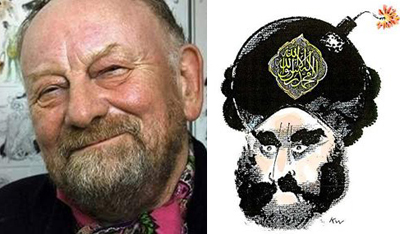
Sixteen years ago Flemming Rose of the Danish newspaper Jyllands-Posten decided to conduct a thought experiment in public after an author casually revealed that he couldn’t find any Danish artist willing to illustrate his book about “the Prophet Mohammed” (as the BBC now routinely styles him). So Flemming called twelve cartoonists and invited them to depict the late Prophet. Kurt Westergaard’s cartoon was the memorable one, and the one you recall as the years roll by. It was a pithy visual jest: Mohammed’s turban as a bomb with a lit fuse. See picture at top right.

“I attempted to show that terrorists get their spiritual ammunition from parts of Islam, and with this spiritual ammunition, and with dynamite and other explosives, they kill people,” Kurt told my old newspaper The National Post a few years back. “I showed this in a cartoon and what happened? They want to kill me, so I think I was right.”

An otherwise courtly, cultured Dane, Kurt Westergaard had a somewhat arresting dress code, preferring le rouge et le noir, the colors of anarchists, although, as a practical matter, it’s hard for a man of advanced years to carry off red trousers, whatever his motivation. He would qualify his pantaloons by explaining that he was not a political anarchist but a cultural one. Still, one can gather from the garb alone that Westergaard was no “right-winger”. Like most of the men and women I have shared a stage with in Europe this century, he was an old Sixties radical sufficiently principled to think the same kind of jokes he’d applied to church, monarchy, parliament and every other societal institution should also be applied to Islam. He never wanted to be a “free speech hero”, but gamely bore the burthen once it had been dropped on him. He certainly never wanted to be world-famous, albeit more so in Mogadishu than Manhattan and Lahore than Los Angeles. It cost him a comfortable retirement, weakened his health, and an ever more craven culture denied him the consolations of monetary exploitation. When I expressed sympathy, he laughed and said he’d do the same cartoon all over again even knowing what he was in for.

The blood lust began with a trio of imams on the make shopping the twelve cartoons (plus three cruder fakes) round the Muslim world, and leaving it to the usual Islamonutters to take it from there: In nothing flat, over two hundred people were dead – which meant that CNN & Co were obliged to cover the story. They did so by modifying Westergaard’s cartoon, with Mohammed’s face pixilated, as if he’d entered the witness protection programme. If only. In reality, it was that dwindling band of people who believe in free speech – and, indeed, free speech itself – that found itself in the witness protection programme.

Does Facebook have a war on history?

Filed under: History, Media, Politics, USA — Tags: , , , — Nicholas @ 04:00

Study of Antiquity and the Middle Ages
Published 19 Jul 2021

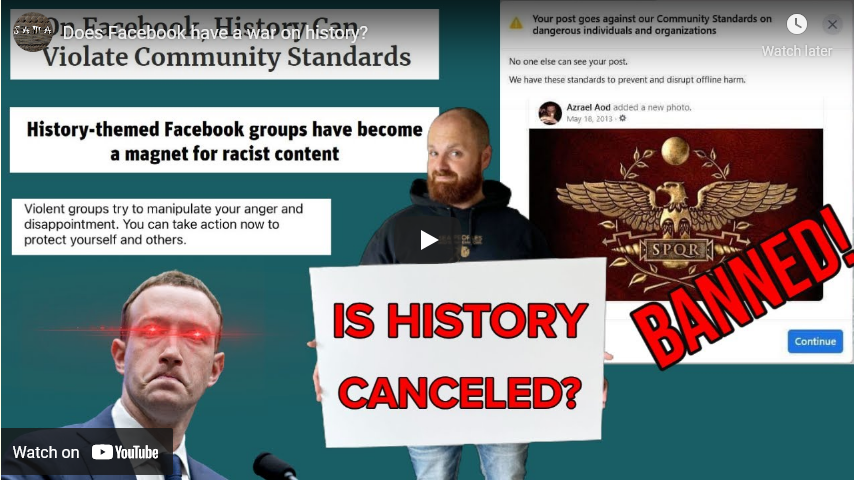
Does Facebook have a war on history? The answer is a simple no but the story is complicated.

In this episode I am joined by author and reporter Peter Suciu on his article “On Facebook, History Can Violate Community Standards”.

To quote the article * One thing that is often taught to students of history is that “history” didn’t happen. Events happened in the past, but history is just our way of chronicling those events. There is also a saying that history is written by the winners, but that too isn’t entirely accurate – if history were only written by the winners we’d never hear of the setbacks, mistakes made by generals or losses incurred by said winners. History, to put it bluntly, is written by historians and those with knowledge of past events.

On Facebook it now seems that merely writing about – and then sharing those writings – could violate community standards. Even in this era of “fake news” it isn’t so easy to understand why the social network has taken this stance – end quote.

Recently an incident on Facebook lead me to create this video … while scrolling through my Roman themed history groups I noticed a post by a member showing that their history post had been taken down by Facebook for violating community standards. The post was a picture of the Roman Eagle with SPQR under its feet. This particular illustration was actually from the Rome Total War Gaming Franchise and that lead me to wonder more about how and why Facebook targets certain posts?

Is there confusion among Facebook employees and its algorithms involving not just Ancient History but specifically Roman History?

Why are Third Reich posts and photos censored? And why are they censored even if there are no violent images or symbols of hate shown?

Why are militaria groups coming under fire for trading, buying and selling Third Reich memorabilia when other memorabilia such as relating to the USSR or the CCP are deemed acceptable?

Why is Facebook warning me that the history groups I’m in may be exposing me to extremist content?

These are questions that I pondered while making this episode and so I hosted a fellow history buff and militaria collector on whether or not history can violate Facebooks Community Standards?

Support our great guest at all these links below!

On Facebook, History Can Violate Community Standards
https://www.forbes.com/sites/petersuc…

Twitter: https://twitter.com/PeterSuciu

Forbes: https://www.forbes.com/sites/petersuc…

National Interest: https://nationalinterest.org/profile/…

His awesome history store: https://www.plundererpete.com/

Reference Links Below!

Facebook warns users they may have been exposed to ‘harmful’ extremists.
https://www.foxnews.com/media/faceboo…

Facebook bans historical St. Augustine groups, pages: Is the word ‘militia’ to blame?
https://www.firstcoastnews.com/articl…

History-themed Facebook groups have become a magnet for racist content.
https://www.newstatesman.com/science-…

An article involving Channel host Nick Barksdale and Facebook.
https://news.law.fordham.edu/blog/202…

Inside “Facebook Jail”: The Secret Rules That Put Users in the Doghouse.
https://www.wsj.com/articles/inside-f…

An unlikely survivor in India, His Highness the Prince of Arcot

Filed under: Britain, Government, History, India — Tags: , , , — Nicholas @ 03:00

Ned Donovan explains why there is still a Prince of Arcot, despite the Indian government having abolished all the titles and privileges of the nearly 600 “Maharajas, Maharanas, Rajas, Nawabs, Khans and so on” of the Princely states that were incorporated into modern India after Partition in 1947:

A significant amount of effort was taken during the process of independence to integrate these princely states into the newly independent countries. Almost all of the rulers acceded quickly and peacefully in return for recognition of their symbolic status and titles by the new republics who also promised perpetual large annual payments to sweeten the deal. A handful of princely states were stubborn and were integrated by force, with issues as a result to this day, such as Jammu and Kashmir.

As a result, for the first few decades of independent India, there existed a class of royals recognised within the republic, with privileges and financial support not that different to what they received during the period of British rule. But in 1971 this came tumbling down.

The then-Prime Minister Indira Gandhi amended the Indian Constitution to abolish all privileges and titles, along with any financial subsidies. She believed the whole system to be at odds with the secular socialist republic she was attempting to perfect. The move also had financial benefits: the large princely subsidies stopped being a drain on the Indian treasury while much of the royals’ gold and property were seized by the Government in the process. In 1972, Pakistan followed suit and similarly abolished its remaining princes’ titles.

But the title “Prince of Arcot” somehow escaped to carry on to the modern day … thanks to an unusual historical situation and the presentation of letters patent from Queen Victoria:

In 1855, the 13th Nawab of Arcot died without children. The British, influenced by the East India Company, declared the kingdom had lapsed as a result and annexed it entirely. As a token compensation, Queen Victoria in 1870 gave the last Nawab’s uncle a pension and the title of “His Highness the Prince of Arcot” for him and his descendants in perpetuity. This was granted in a type of royal charter, known as letters patent.

As there was no land still to rule, the Princes of Arcot existed in a strange realm of being kings without a kingdom but with significant influence and prestige. The title continued to pass down through the original holder’s family and they built a large palace, Amir Mahal, in Madras that became a centre of culture instead of one of government.

H/T to Colby Cosh for the link.

History Summarized: Christianity, Judaism, and the Muslim Conquest

Filed under: History, Humour, Middle East, Religion — Tags: , , , — Nicholas @ 02:00

Overly Sarcastic Productions
Published 10 Jun 2017

It’s all coming together now. With the individual histories of Islam, Christianity, and Judaism covered, Blue puts it together to summarize how the three interacted in the centuries leading up to the Crusades. The next video will cover the Crusades. Hype.

RELEVANT LINKS:
History Summarized: Islam: https://youtu.be/Uvq59FPgx88​
History Summarized: Christianity: https://youtu.be/A86fIELxFds
History Summarized: Judaism: https://youtu.be/aKB6WduDwNE​

History Summarized: The Crusades: https://youtu.be/wZhyDIIkeLo​
History Summarized: Abrahamic Religious Philosophy: https://youtu.be/B7myRRt0Mn8

PATREON: www.patreon.com/user?u=4664797

MERCH LINKS:
Shirts – https://overlysarcasticproducts.threa…​
All the other stuff – http://www.cafepress.com/OverlySarcas…

QotD: Lenin’s “Hanging Order”

Filed under: History, Quotations, Russia, WW1 — Tags: , , , , — Nicholas @ 01:00

Lenin is the same cold-blooded thug who famously wrote, “We must be ready to employ trickery, deceit, law-breaking, withholding and concealing truth[.] … We can and must write in a language which sows among the masses hate, revulsion, and scorn toward those who disagree with us.”

Elsewhere, Lenin declared that “The proletariat needs state power, the centralized organization of force, the organization of violence, for the purpose of crushing the resistance … and for the purpose of leading the great mass of the population … in the work of organizing a socialist economy.”

In August 1918, Lenin sent his now famous “Hanging Order” telegram. It instructed local Bolsheviks in the Penza region to deal harshly with the farmers (kulaks) who owned land there and were standing in the way of its nationalization. The British historian Robert Service discovered it in Soviet archives in the 1990s. It read as follows:

    Comrades! The insurrection of five kulak districts should be pitilessly suppressed. The interests of the whole revolution require this because ‘the last decisive battle’ with the kulaks is now underway everywhere. An example must be made.

    1. Hang (absolutely hang, in full view of the people) no fewer than one hundred known kulaks, fatcats, bloodsuckers.
    2. Publish their names.
    3. Seize all grain from them.
    4. Designate hostages, in accordance with yesterday’s telegram.

    Do it in such a fashion, that for hundreds of miles around the people see, tremble, know, shout: “The bloodsucking kulaks are being strangled and will be strangled.”

    Telegraph receipt and implementation.

    Yours, Lenin.

    P.S. Use your toughest people for this.

That chilling telegram ushered in the “Red Terror” which murdered Russians by the tens of thousands over the next two years.

Lawrence W. Reed, “How Germany’s ‘Deal With the Devil’ Backfired and Changed History”, Foundation for Economic Education, 2021-04-16.

July 19, 2021

George Orwell: The Uncompromising Visionary

Filed under: Asia, Books, Britain, History, India, Liberty — Tags: , , , , , , — Nicholas @ 04:00

Biographics
Published 29 Nov 2019

This video is #sponsored by NordVPN.

Credits:
Host – Simon Whistler
Author – Morris M
Producer – Jennifer Da Silva
Executive Producer – Shell Harris

Business inquiries to biographics.email@gmail.com

Source/Further reading:

Britannica’s Orwell Bio: https://www.britannica.com/biography/…
Excellent, very informative ONDB biography (paywall for non-UK users. UK users need only enter library card number to access): https://www.oxforddnb.com/view/10.109…
Spanish civil war: https://encyclopedia.ushmm.org/conten…
https://www.history.com/this-day-in-h…
Orwell’s mistakes on the Spanish Civil War: https://www.theguardian.com/books/201…
Orwell at the BBC: https://www.bbc.com/news/entertainmen…

Talk is cheap, as a pizza chain CEO demonstrates brilliantly

Filed under: Business, Economics, USA — Tags: , , , , , — Nicholas @ 03:00

John Miltimore examines the claims of the CEO of the &pizza chain in the Washington DC area that his stores have no problem getting staff because he pays them a “living wage”:

As far as PR goes, Lastoria gets an A+. He was profiled by Business Insider, CBS News, and other media outlets. His economics grade, however, is another story.

First, the notion that &pizza’s wages are uniquely generous is wrong. The minimum wage in the nation’s capital, after all, is $15.20. Considering that Washington, DC has one of the highest costs of living in the US, it’s not unreasonable to assume that &pizza is paying workers what amounts to the market wage of their labor (i.e. the price they’d get in the absence of a wage floor). This is a stark contrast to other parts of the United States. Fifteen dollars in DC translates to roughly $24 in Florida, $25 in Alabama and Tennessee, $26 in New Mexico, and $27 in Louisiana.

Second, Lastoria decries the alleged “shortage of business owners willing to pay a living wage.” But it should be pointed out that &pizza is one of those businesses.

While there is no objective standard to determine what a living wage actually is, MIT has a Living Wage Calculator that allows readers to compute living wages based on the formula created by Dr. Amy K. Glasmeier.

To say that &pizza doesn’t pay its employees a “living wage” is an understatement. The living wage for a single mom with one child is $38.48 in Washington DC. For a single mother with two children, it’s $47.89. Indeed, even for a married couple with just one child, the living wage is $20.69 — nearly $5 an hour more than the average pay of Lastoria’s workers. (It’s unclear why Lastoria is having fewer problems hiring workers than other businesses, but it’s most likely attributable to local factors, such as the fact that he’s servicing nine of the twenty wealthiest counties in America.)

Finally, Lastoria’s claim that higher wages increase productivity enough to improve a company’s bottom line — the efficiency wage hypothesis — has problems logically and empirically. First, it implies that companies not currently paying an efficiency wage are willing to take less profit simply to make workers poorer. Moreover, efficiency wages have been shown to reduce employment, similar to minimum wage laws.

Lastoria might see the $16 an hour average wage as exceedingly generous — especially when he compares it to lower nominal wages paid in other parts of the country — but it’s a far cry from a “living wage”, according to the model used by living wage advocates.

I asked Lastoria how he’d respond to those who say restaurants like his should be required to pay each worker a living wage. He didn’t respond.

« Newer PostsOlder Posts »

Powered by WordPress