Quotulatiousness

July 19, 2021

Luxembourg FN49 Semiauto Sniper Rifle

Filed under: Europe, History, Military, USA, Weapons — Tags: , , , , — Nicholas @ 02:00

Forgotten Weapons
Published 30 Jan 2019

http://www.patreon.com/ForgottenWeapons​

Cool Forgotten Weapons merch! http://shop.bbtv.com/collections/forg…​

After World War Two, Luxembourg was one of the nations which opted to purchase new FN-49 rifles. It bought a total of 6,203 of them for the military — an initial purchase of 4,000 semiauto SAFN rifles and a followup purchase of 2,000 AFN select-fire rifles and 203 semiauto rifles fitted with Belgian OIP telescopic sights. The scope mounts were commercial Echo mounts, designed and manufactured by an American engineer named Herkner, in Boise Idaho.

When Luxembourg replaced its FN49 rifles with the newer FN FAL type, the snipers were either scrapped or sold as surplus, but the scopes were kept and reused on FALs. However, the Luxembourg rifles used the same pattern OIP scopes as the Belgian military, and these are often found mounted to surviving Luxembourg rifles.

Contact:
Forgotten Weapons
PO Box 87647
Tucson, AZ 85754

QotD: Antifa

Filed under: Health, Politics, Quotations, USA — Tags: , , , , — Nicholas @ 01:00

As noted here many times, it helps if you think of Antifa not as a political movement but as a metastasising personality disorder, a Cluster B contagion. An attempt to dominate by deranged and spiteful egos, rendered in shattered glass and burning livelihoods. They will never be satisfied and can never be appeased, merely encouraged and emboldened by any concession, any excuse, any hesitation.

They destroy and burn and intimidate, and beat people senseless, because they enjoy it. It’s something they wish to do, and choose to do, repeatedly. It makes them feel powerful. Everything else is a pretext, a rationalisation, a lie:

    This is us taking the high road. This is us trying to create a world filled with love.

David Thompson, commenting on “Files of the Severely Educated”, DavidThompson, 2021-04-18.

July 18, 2021

“Yes, we know Facebook is not the only harmful corporation on Earth, but sweet-jeepers-boy-howdy it is a blood-curdling fart in the elevator of existence”

Filed under: Business, Media, USA — Tags: , , — Nicholas @ 05:00

At Damn Interesting, Alan Bellows bids an unfond farewell to Facebook:

For the past few years, we at Damn Interesting have been hearing from scores of long-time fans who were under the mistaken impression that we had ceased all operations years ago. These fans are typically delighted to hear that a) we are still writing and podcasting; and b) there is a wealth of new content since they last visited. When we ask them what caused the assumption of our demise, they invariably cite the fact that our posts disappeared from their Facebook news feeds.

I never had anything like the number of contacts on Facebook that Damn Interesting had, but I had the same experience with people contacting me to ask if I’d given up blogging because none of my posts were showing up in their timelines any more. As more information came out about just how creepy Facebook’s activities are, I stopped even trying to share to that site and eventually stopped linking to any content hosted there. For video credits where the only link for a creator is their FB page, I choose not to make it an active link (although I don’t remove the text). The only use I had after that was for keeping in touch with a few family members who only use that platform, and even that went away after I got locked out of my personal account anyway.

This trend roughly coincides with Facebook’s introduction of “boosting” for pages; in this new model, according to the stats we can see, Facebook stopped showing our posts to approximately 94% of our followers, demanding a fee to “boost” each post into an ad, which would make it visible to more of our audience. We lost contact with tens of thousands of fans practically overnight. We don’t mind paying for a service if it is valuable, but we absolutely don’t want to reach our audience by buying ad space on Facebook. Yuck. But no other option is given to reach the many people who previously followed our posts, and who presumably want to continue to do so.

[…] In a move that feels long overdue, we at Damn Interesting are abandoning all interactions and connections with Facebook.

We really should have done this back when it was revealed that Facebook used the ubiquitous embedded “Like on Facebook” buttons to follow people’s movements around the web without their knowledge or consent.

This bit of belated information prompted me to check the settings on the Share This plug-in I’ve been using for several years and yes, all this time I’ve been inadvertently enabling FB to track anyone on my blog who uses that button (and possibly any other sharing button — that isn’t quite clear). I’ve eliminated that plug-in just in case.

Our reasons for leaving are not entirely abstract. We’re sure many of you, like us, have experienced first-hand how Facebook gives people license to be their worst selves. It can elevate mere differences of political opinion into anger and hostility, pushing friends and family into extreme views, turning loved ones into ugly caricatures of their former selves. Perhaps you have even regretted some of your own posts there; the Facebook interface is designed to make it difficult to engage in good-faith disagreements. It gives undeserved forum to misinformation, disinformation, and hate. Using Facebook has been scientifically demonstrated to cause depression. Facebook subtracts from the quality of the world at a magnitude seldom seen in history, and we’ll all be better off when it goes away.

H/T to Robert Swanson (@WWI) on Gab for the link.

Stalingrad Now a Primary Objective?! – Hitler’s Chaotic Directives – WW2 – 151 – July 17, 1942

Filed under: Africa, Germany, History, Military, Russia, WW2 — Tags: , , , , , , — Nicholas @ 04:00

World War Two
Published 17 Jul 2021

The second phase of Fall Blau begins with second guessing by the Axis Powers and constant changes in directive. The Soviet Union’s response to the successes of the first phase of Fall Blau is equally chaotic. Over in North Africa there is the question of it maybe ending in stalemate.
(more…)

A different kind of “tone policing”

Filed under: Law, Politics, USA — Tags: , , , , — Nicholas @ 03:00

John McWhorter on a recent study on interactions between the police and the general population:

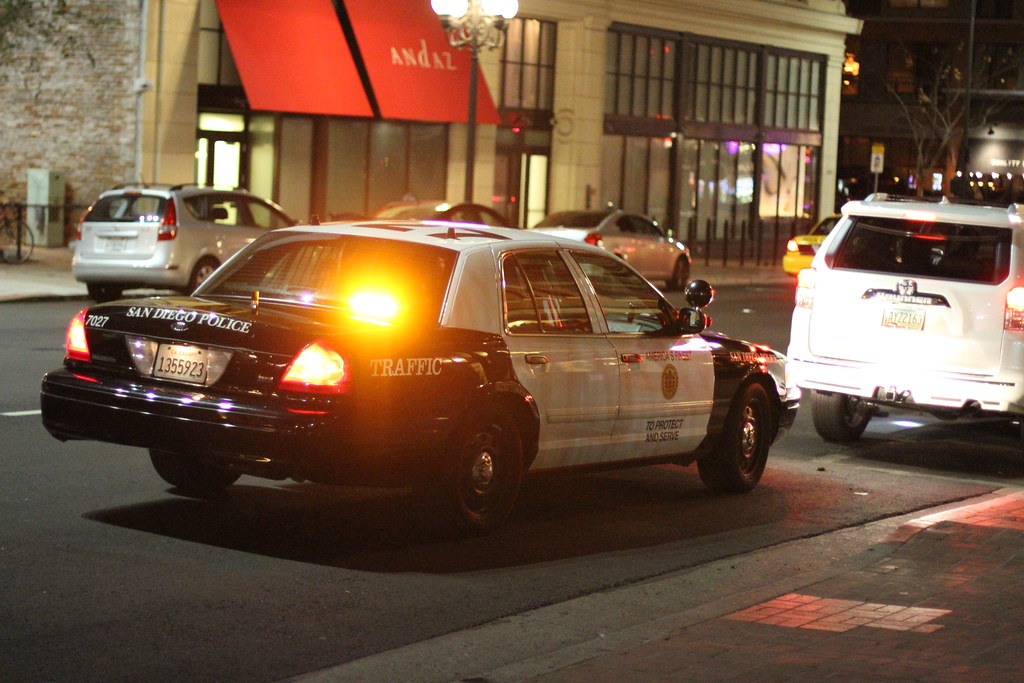
“Police stop” by San Diego Shooter is licensed under CC BY-NC-ND 2.0

A fascinating, and depressing, new study will be celebrated as revealing the subtle but powerful operations of racism. It also reveals, however, the pitfalls in the way we are taught to address that racism these days.

The study shows that police officers tend to talk in a less friendly way to black people they stop than white ones. People were played slivers of body-cam audio of the officers talking to citizens, with the content of the exchange disguised. People could tell with dismaying regularity what color person the officer was speaking to simply by the tone of voice. It wasn’t that officers outright sneer at black people. Rather, their tone with whites tends to be more pleasant, to have a hint of cheer, whereas with black people it is more impersonal, flat, unwarm.

The study also shows how these things fashion a vicious cycle. People tested who had negative experiences with cops and/or less trust in them processed even the exchanges the cops had with white citizens as less positive than other people tested did. That is, their life experience has implanted in them a distrust of the cops, that can anticipate actual interactions with them – and certainly, of course, unintentionally pollute them.

* * *

This study reminds me of something else that goes in the other direction. To whites, subtle things about black communication, including vocal tone, can come off as threatening when no threat is intended.

I once happened to hear two 30-something black men talking about a misunderstanding one of them had had at work. They were just unwinding, but there was what many might process as a tinge of impending battle in their voices, inflections and gestures. “Man, I wanted to ‘Mmmph!’ [jab of the arm, click of the tongue] Gimme a break! An’ I was like … [putting on a challenging glare] don’t even start.”

No black listener would assume these guys actually meant the hints at violence literally. However, outside listeners can hear this way of talking as edgy. Kelefa Sanneh’s term for this twenty years ago, writing about rap and its lyrics, was perfect: a certain “confrontational cadence”.

Yes, all people trash-talk. But this particular way of talking has a special place in black American culture. No, that’s not stereotyping: sympathetic black academics have documented it. CUNY’s Arthur Spears, today one of the deans of the academic study of black American speech, has written about what he calls “directness”. Speech “that may appear to outsiders to be abusive or insulting is not necessarily intended to be nor is it taken that way by audiences and addressees,” Spears noted. He then quoted a father-child exchange: Father: “Go to bed!” Little boy: “Aw, Daddy, we’re playing dominoes.” Father: “I’m gonna domino your ass if you don’t go to bed now.” Notice how awkwardly this, or Eddie Murphy’s routine about the mother throwing the shoe in Delirious, would translate into the world of Modern Family.

This “confrontational cadence” can inflect even casual exchanges between black and white people. Aspects of black intonation, steeped in a lifetime’s experience in a language culture that values performative aggression as a kind of communal élan, can sound cranky, disrepectful, and even aggressive to a white person. It is all but impossible that this does not color encounters between black people and white cops; I highly suspect a study like the first one I mentioned would reveal it.

How to Set up & use a Bullnose Plane | Paul Sellers

Filed under: Tools, Woodworking — Tags: , , — Nicholas @ 02:00

Paul Sellers
Published 8 Apr 2021

This little-used terrier of a plane has many different uses, not the least of which is the final fitting of awkward to reach places like the insides of cabinets to ease the fit of elements such as doors and drawers.

This video shows how to use the bullnose and set one up, and will help you to make a more educated assessment as to whether you might want to own one or not.
——————–

Want to learn more about woodworking?

Go to Woodworking Masterclasses for weekly project episodes: http://bit.ly/2JeH3a9​

Go to Common Woodworking for step-by-step beginner guides and courses: http://bit.ly/35VQV2o

http://bit.ly/2BXmuei​ for Paul’s latest ventures on his blog

——————–

Instagram- http://bit.ly/2oWpy7W​

Twitter- http://bit.ly/33S7RFa​

Pinterest- http://bit.ly/35X5uTf

QotD: Rules of wars in the Eighteenth Century

Filed under: Britain, France, History, Humour, Quotations — Tags: , , , , , — Nicholas @ 01:00

Although the Succession of Wars went on nearly the whole time in the eighteenth century, the countries kept on making a treaty called the Treaty of Paris (or Utrecht).

This Treaty was a Good Thing and laid down the Rules for fighting the wars; these were:

(1) that there should be a mutual restitution of conquests except that England should keep Gibraltar, Malta, Minorca, Canada, India, etc.;

(2) that France should hand over to England the West Indian islands of San Flamingo, Tapioca, Sago, Dago, Bezique and Contango, while the Dutch were always to have Lumbago and the Laxative Islands;

(3) that everyone, however Infantile or even insane, should renounce all claim to the Spanish throne;

(4) that the King (or Queen) of France should admit that the King (or Queen) of England was King (or Queen) of England and should not harbour the Young Pretender, but that the fortifications of Dunkirk should be disgruntled and raised to the ground.

Thus, as soon as the fortifications of Dunkirk had been gruntled again, or the Young Pretender was found in a harbour in France, or it was discovered that the Dutch had not got Lumbago, etc., the countries knew that it was time for the treaty to be signed again, so that the War could continue in an orderly manner.

W.C. Sellar & R.J. Yeatman, 1066 And All That, 1930.

July 17, 2021

“Now I am become Twitter, the destroyer of worlds”

Filed under: Media, Politics, Technology, USA — Tags: , , , — Nicholas @ 05:00

In UnHerd, Douglas Murray remembers what it was like before Twitter ruined everything:

Fifteen years ago today, an innovation was unveiled that has probably changed our lives as much as any other this century. It was on 15 July 2006 that software developer Jack Dorsey and his team launched an online platform where text messages of 140 characters could be shared in a group; six days later Dorsey sent his first tweet, launching a new age of reasoned debate and engagement.

There are some who want to celebrate today — principally Dorsey, along with the small number of other people who have become unimaginably rich off the platform. But for everybody else on the planet, I suspect we should welcome the anniversary with roughly the same enthusiasm that we would the emergence of the Ebola virus. For the further away we have come from Twitter’s birth, the clearer it has become that the platform is a source of unimaginable harm to almost every aspect of society.

In the early days, it didn’t feel like this. Like Facebook, Amazon, Google and the other Big Tech monoliths, it all started out so well. Twitter was actually fun back then. People said whacky things. There were cat videos. There was Follow Friday and friendships were made. As professional and amateur newshounds took to the platform, it became the fastest way to learn about any developing story.

If something was going on, Twitter was there first, certainly ahead of the BBC or any of the other news establishments who had to lumber through the old legal and editorial hurdles, rather than enjoying the lightning-quick response time of social media. Politics is a drug, and the most successful drugs provide an instant hit. But they are also the most dangerous, and the downsides soon started to assert themselves.

Soon many started using the site in a game of competitive grievance, or competitive sanctimony. They took obvious glee in targeting victims who had transgressed some moral code; the obvious righteousness of these online crusaders meant they rarely recognised themselves as the aggressors or bullies.

And soon it became apparent that, while everyone was on the site, everyone also hated it. Those on the ideological Left began to turn against the platform when it became clear that it allowed their opponents on the Right to spread “hate”, a scourge which they defined generously. Just as they used it themselves to spread their message.

This all reached its nadir with Donald Trump, whose presidency is to many people the most concrete result of Twitter. The world watched aghast as Trump was able to say often the craziest of things to millions upon millions of followers, speaking unfiltered and directly — in a way the old news media would never have allowed. When he won the presidency and then thanked Twitter for the helping him to get it, many of these natural Twitter followers lost their faith in the platform. How could they have let it happen? It was their platform, after all, this noisy minority of the American and British electorate. Indeed, if you had read UK Twitter ahead of the 2019 election, you would have been absolute certain of a Jeremy Corbyn landslide. Where were these millions of Tory voters who didn’t like Jeremy?

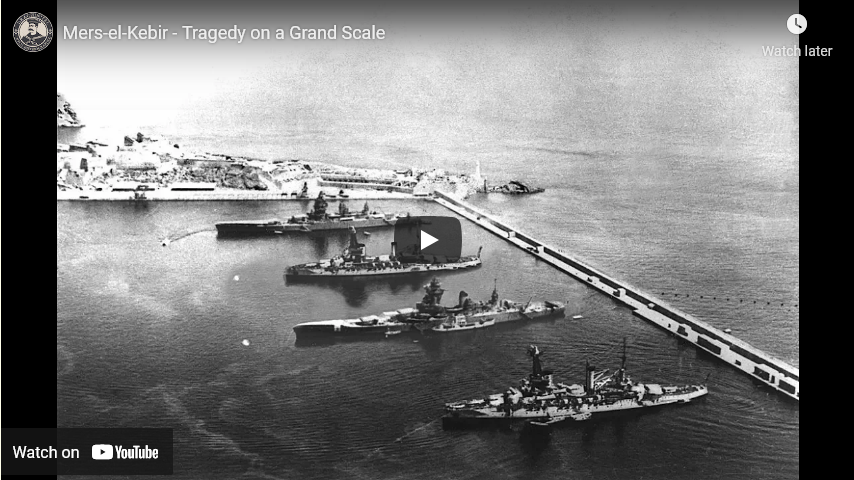
Mers-el-Kebir – Tragedy on a Grand Scale

Filed under: Africa, Britain, France, History, Military, WW2 — Tags: , , , , , — Nicholas @ 04:00

Drachinifel
Published 30 Oct 2019

Today we look at the facts and thinking behind the attack on Mers-el-Kebir, with my own take on roles and responsibilities.

Comments and Discussion welcome.

Want to support the channel? – https://www.patreon.com/Drachinifel

Want a shirt/mug/hoodie – https://shop.spreadshirt.com/drachini…

Want a medal? – https://www.etsy.com/uk/shop/Drachinifel

Want to talk about ships? https://discord.gg/TYu88mt

Want to get some books? www.amazon.co.uk/shop/drachinifel

Drydock Episodes in podcast format – https://soundcloud.com/user-21912004

Music – https://www.youtube.com/c/NCMEpicMusic

The Great Western Railway before nationalization (and back again)

Filed under: Britain, History, Railways — Tags: , , , — Nicholas @ 03:00

In The Critic, Jonathan Glancey sings the praises of the steam locomotive designs and liveries of the pre-nationalization Great Western Railway:

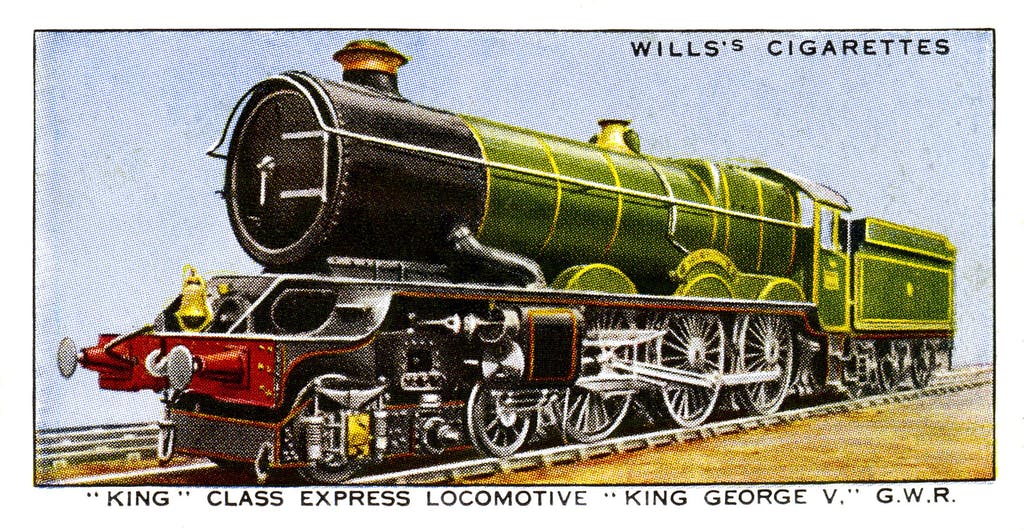
The greatest of all Great Western Railway locomotives were the King Class 4-6-0s. From 1927, and for more than 30 years, they headed principal express trains from Paddington to Bristol, Plymouth, South Wales and the West Midlands with power, precision and truly regal style.

In a livery of lined dark green with copper-capped chimneys, brass safety valve covers, and names emblazoned above their driving wheels, the Kings led long chocolate and cream-coloured trains through landscapes they enhanced in days of both private and public ownership. Together with their less powerful shed-mates — Castles, Halls, Granges and Manors — these puissant machines breathed “Great Western” with every beat of their crisp exhausts.

In the beginning, the Kings were to have been Cathedrals, an appropriate name for locomotives representing a concern that, incorporated in 1835 and engineered by Isambard Kingdom Brunel, was revered by many employees, passengers and most enthusiasts as something more akin to a religion than a mere railway. Its engineering was progressive, and yet its corporate identity (what today’s marketing jargoneers would call its “brand”) retained a gloriously ecclesiastical and slightly old-fashioned air throughout the railway’s life.

Sir William Stanier, a Great Western engineer who moved from Swindon to the LMS at Crewe and then to the chairmanship of Power Jets in the Second World War, was asked by Cuthbert Hamilton Ellis, a writer on railways, “whether there was some nameless cabal at Swindon which ruled the styling of a Great Western locomotive” from the latest 1940s designs back through the Edwardian Saints and Stars to engines of the 1880s designed by William Dean. Stanier smiled and exclaimed: “Dean? Gooch! [the GWR’s first locomotive engineer]. It was traditional.”

The tradition lives on. In 2015, today’s Great Western Railway — an operation owned by the multi-national FirstGroup — adopted a handsome dark green livery, created by the design agency Pentagram, that reaches back to the Kings and, by association, all the way to Gooch and Brunel.

The new look was sung as if from the Great Western’s “Ancient and Modern” hymn book of design. In a privatised railway world of largely gimcrack style and branding, with all too many trains looking as if their design inspiration has been that of sports shoes or the packaging of sweets such as Refreshers, the Great Western re-introduced gravitas, continuity and regional sensibility to the way its trains looked.

This is something those in charge of the newly announced Great British Railways (GBR) should think about carefully as this new public body takes over the national railway infrastructure in 2023, its remit including corporate identity. While its name is, perhaps, rather too close to Little Britain’s Great British Air, the possibility of it exercising a civilising influence over the design of our trains is there. A national design standard and identity could yet be created that speak of the unity of the British railway network and its diversity in the same breath.

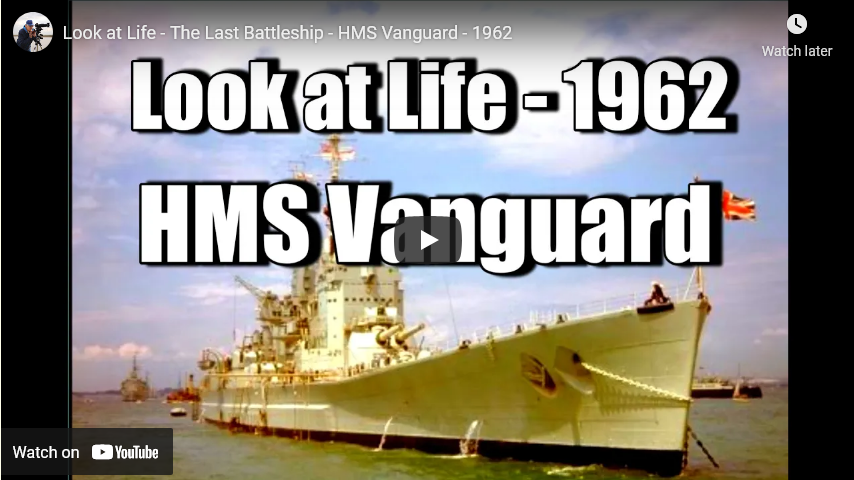
Look at Life – The Last Battleship – HMS Vanguard (1962)

Filed under: Britain, History, Military — Tags: , , , — Nicholas @ 02:00

capspread
Published 29 Nov 2020

#LookatLife​ #HMSVanguard​ #RoyalNavy​ #Shipping​ #Battleship​

The life and death of HMS Vanguard, and the uses to which her steel will be put.

Another Look at Life Documentary from Volume 2 – Military – The Last Battleship – HMS Vanguard made in 1962.

HMS Vanguard was a British fast battleship built during the Second World War & commissioned afterwards. She was the biggest and fastest of the Royal Navy’s battleships, the only ship of her class, and the last battleship to be built. Work on Vanguard was started and stopped several times during the war and her design was revised several times during her construction to reflect war experience. These stoppages and changes prevented her from being completed before the end of the war.

Vanguard‘s first task after completing her sea trial at the end of 1946 was, early the next year, to convey King George VI & his family on the first Royal Tour of South Africa by a reigning monarch. While refitting after her return, she was selected for another Royal Tour of Australia and New Zealand in 1948. This was cancelled due to King George’s declining health & Vanguard briefly became flagship of the Mediterranean Fleet in early 1949. After her return home in mid-1949, she became flagship of the Home Fleet Training Squadron. Throughout her career, the battleship usually served as the flagship of any unit to which she was assigned. During the early 1950s, Vanguard was involved in a number of training exercises with NATO forces. In 1953 she participated in Queen Elizabeth II’s Coronation Review. While she was refitting in 1955, the Admiralty announced that the ship was going to be put into reserve upon completion of the work. Vanguard was sold for scrap and was broken up beginning in 1960.

Vanguard had an overall length of 814 feet 4 inches (248.2 m), a beam of 107 feet 6 inches (32.8 m) & a draught of 36 feet (11 m) at deep load. She displaced 44,500 long tons (45,200 t) at standard load and 51,420 long tons (52,250 t) at deep load. The ship was significantly larger than her predecessors of the class, almost 50 feet (15.2 m) longer & displaced about 6,000 long tons (6,100 t) more than the older ships at deep load. Vanguard was overweight by some 2,200 long tons (2,200 t), which magnified the difference. The ship had a complete double bottom 5 feet (1.5 m) deep & she was divided into 27 main compartments by watertight bulkheads.

The King George V-class ships had been built with almost no sheer to the main deck forwards to allow ‘A’ turret to fire straight forward at zero elevation, resulting in those ships being wet forward. Vanguard was redesigned as a result of this experience, significant sheer & flare being added to the bow. The ship was well regarded as seaworthy, able to keep an even keel in rough seas. At full load, Vanguard had a metacentric height of 8.2 feet (2.5 m).

As a fleet flagship, her complement was 115 officers and 1,860 men in 1947. Air conditioning was provided for many of the ship’s control spaces, & asbestos insulation was provided on exposed areas of the ship’s sides, decks and bulkheads. Steam heating was provided for her armament, instruments, look-out positions & other equipment to make Vanguard suitable for operations in the Arctic. An Action Information Centre was fitted below the main armour deck with facilities to track aircraft & ships around Vanguard.

Vanguard was laid down on 2 October 1941 by John Brown and Company of Clydebank, Scotland. After the Japanese invasion of Malaya in December, the ship was given an A1 priority in the hope of finishing her by the end of 1944, and construction of the light cruiser HMS Bellerophon, as well as some merchant shipping, was halted to expedite the ship’s completion. This was unsuccessful, however, due to a shortage of skilled labour. As a result, it was not until 30 November 1944 that the ship was launched. Princess Elizabeth presided over this ceremony, the first ship she ever launched, and was presented with a diamond rose brooch to commemorate the event.

The end of hostilities following Japan’s surrender reduced the need for new warships, and consequently the ship was not commissioned until 12 May 1946. By this time, a total of £11,530,503, including £3,186,868 for the modernisation of the main armament, had been spent on producing Vanguard.

On 9 October 1959 the Admiralty announced that Vanguard would be scrapped, as she was considered obsolete and too expensive to maintain. She was decommissioned on 7 June 1960 & sold to BISCO for £560,000. On 4 August 1960, the ship was towed from Portsmouth to the breaker’s yard at Faslane, Scotland. As Vanguard was being towed towards the harbour entrance, she slewed across the harbour and ran aground near the Still & West pub. She was pulled off by five tugboats an hour later, and made her final exit from Portsmouth. Five days later she arrived at Faslane, and by mid-1962 the demolition process was complete.


QotD: “Magic” bullets

Filed under: Business, Humour, Quotations, Technology, USA, Weapons — Tags: , , , — Nicholas @ 01:00

As I write this, another wave of ballistic hyperbole is sweeping across the Internet. There’s a new bullet out! It sets the paradigm on its ear! Gun owners are drooling for this, the last bullet you’ll ever need! Blah, blah, blah, yakkity-shmakkity.

Stick around long enough and you’ll notice this phenomenon happen every few years. You’re sitting there, minding your own business, and the next thing you know, friends from work or church or the book club who know you as “The Gun Expert” are coming up to you and asking about this bullet that’s being hyped in the mainstream media as either the surest felon-stopper since Wyatt Earp or the biggest menace to society since John Dillinger.

It’s rare for something as esoteric as a projectile design to come to the attention of the non-gun press. Generally, for that to happen, it takes one of two things: either a mainstream manufacturer made an unusually poor PR choice in the bullet naming *cough*BlackTalon*cough*, or someone has launched a buzzword-laden press release with all the discrimination of a desert island dweller putting notes in bottles.

[…]

When a new Magic Bullet is launched and makes media waves, I always apply two filters as to whether it’s worth chasing down. The first filter is “Are the police using this?” This is not necessarily because I think that the police are all-that-and-a bag-of-chips in the gear-selection department, but they’ve generally been okay with bullets for the last 15 or 20 years and, should I ever have to justify my choice of rounds in a courtroom, it would be nice to be able to say “You, alright! I learned it by watching you!” like the kid in the commercial.

The second filter? The second filter is “Is this cartridge sold in six-round blister packs with pictures of explosions and rappelling ninjas on them?” Because if it is, well, I’m just not Operator enough.

Tamara Keel, “No Magic Bullet”, GunsAmerica Digest, 2018-11-27.

July 16, 2021

Do US intelligence agencies only work on domestic surveillance these days?

Matt Taibbi discusses the (recent?) US intelligence agencies’ apparent concentration on domestic “enemies” like Republicans, Jewish organizations, conservative broadcasters, and US Presidents and their appointed officials:

The scene was perfectly representative of what the erstwhile “liberal” press has become: collections of current and former enforcement types, masquerading as journalists, engaged in patriotic denunciations of critics and rote recitals of quasi-official statements.

Not that it matters to [Fox TV host Tucker] Carlson’s critics, but odds favor the NSA scandal being true. An extraordinarily rich recent history of illegal, politically-directed leaks has gone mostly uncovered, in another glaring recent press failure that itself is part of this story.

It’s admitted. Go back to December, 2015, and you’ll find a Wall Street Journal story by Adam Entous and Danny Yadron quoting senior government officials copping to the fact that the Obama White House reviewed intercepts of conversations between “U.S lawmakers and American-Jewish groups.”

The White House in that case was anxious to know what congressional opponents to Obama’s Iran deal were thinking, and peeked in the electronic cookie jar to get an advance preview at such “incidentally” collected info. This prompted what one official called an “Oh, shit” moment, when they realized that what they’d done might result in “the executive branch being accused of spying.”

After Obama left office, illegal leaks of classified intercepts became commonplace. Many, including the famed January, 2017 leak of conversations between Michael Flynn and Russian ambassador Sergei Kislyak, were key elements of major, news-cycle-dominating bombshells. Others, like “Russian ambassador told Moscow that Kushner wanted secret communications channel with Kremlin,” or news that former National Security Adviser Susan Rice unmasked the identities of senior Trump officials in foreign intercepts, were openly violative of the prohibition against disclosing the existence of such surveillance, let alone the contents.

These leaks tended to go to the same small coterie of reporters at outlets like the Washington Post, New York Times, and CNN, and not one prompted blowback. This was a major forgotten element of the Reality Winner story. Winner, a relatively low-level contractor acting on her own, was caught, charged, and jailed with extraordinary speed after leaking an NSA document about Russian interference to the Intercept. But these dozens of similar violations by senior intelligence officials, mainly in leaks about Trump, went not just unpunished but un-investigated. As Winner’s lawyer, Titus Nichols, told me years ago, his client’s case was “about low-hanging fruit.”

Forced Sterilization Experiments Begin at Auschwitz – WAH 038 – July 1942, Pt. 1

Filed under: Britain, Europe, Germany, History, Military, WW2 — Tags: , , , , , — Nicholas @ 04:00

World War Two
Published 15 Jul 2021

Operation Millennium is discontinued, while in Poland the Auschwitz Birkenau camp starts to systematically gas thousands of people a week. Some who aren’t murdered on arrival are subjected to horrific medical and sterilization experiments.
(more…)

The lure of London and agricultural specialization in post-Black Death England

Filed under: Britain, Economics, Food, History — Tags: , , , , — Nicholas @ 03:00

In the latest edition of his Age of Invention newsletter, Anton Howes outlines the “push” and “pull” theories to account for the vast growth of London and how that urban growth strongly encouraged specialization in English agriculture to feed the great city:

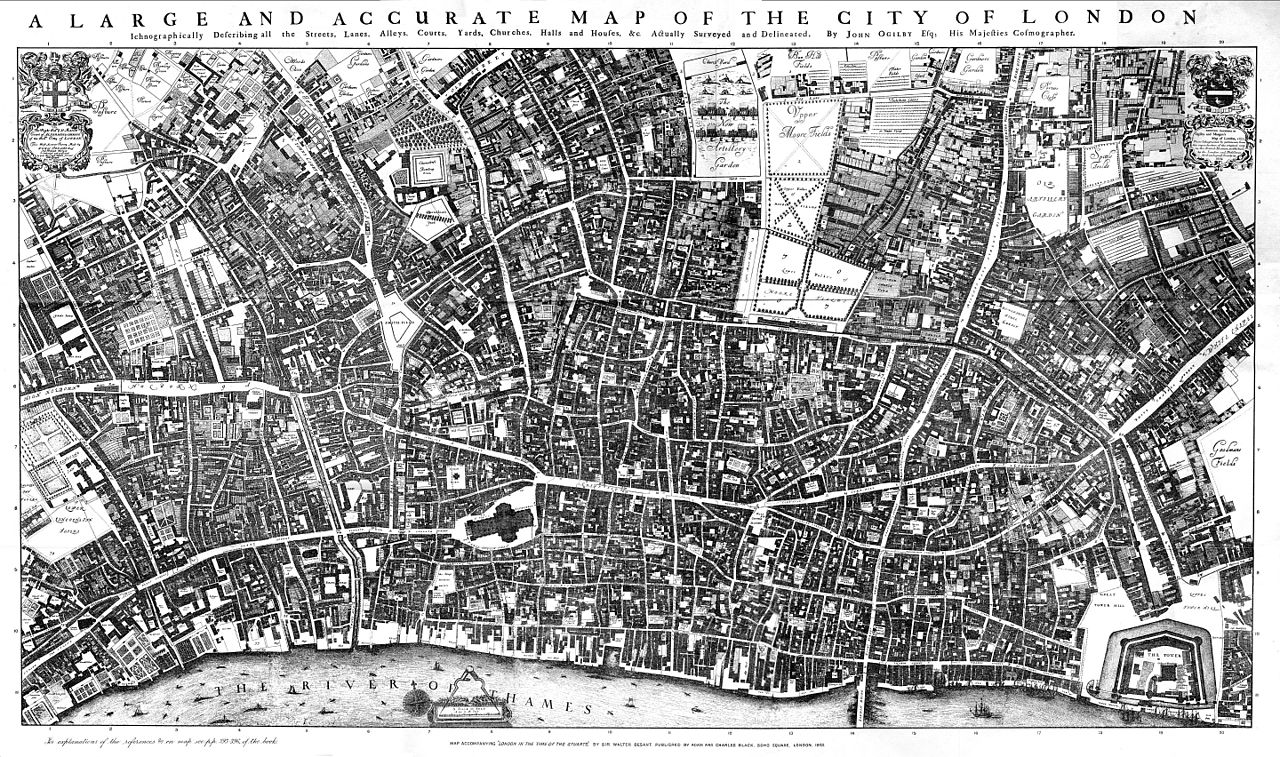
The 1677 original of this map is 8 feet 5 inches by 4 feet 7 inches, in 20 sheets. In 1894 the British Museum granted permission to the London and Middlesex Archaeological Society to make a reduced copy, of which the original of this scan is a copy. The L&M Society copy apparently did not match the dissected sheets perfectly, and the misjoins can be seen in places in this reproduction.
Scanned copy of reproduction in Maps of Old London (1908) of Ogilby & Morgan’s Map of London.

Something significant happened to the English countryside in the century before 1650. Although England’s population merely recovered to its pre-Black Death high of about 5 million, the economy was transformed. Having once been an overwhelmingly agrarian society, by 1650 a small but unprecedented proportion of the population now lived in cities, and less than half of the workforce was employed in agriculture. The country had de-agrarianised, and most remarkably of all, its food was still grown at home.

[…]

One possibly explanation is that there was some special change in England’s agricultural technology that increased its productivity, requiring fewer and fewer people, and possibly even driving them off the land, so that they were forced to find alternative employment. This thesis comes in various forms, many of which I’m still coming to grips with, but broadly speaking it implies a “push” from the fields, and into industry and the cities. Desperate, and unable to demand high wages, these cheaper workers should have stimulated industry’s growth.

The alternative, however, is that there was nothing very special or innovative about English agriculture, and that instead there was an even larger increase in the demand for workers in industry and services. The thesis implies a “pull” into industry and the cities, causing people to abandon agriculture for more profitable pursuits, and thereby making England’s agriculture de facto more productive — something that may or may not have actually been accompanied by any changes to agricultural technology, depending on how much slack there was in how the labourers or land had been employed.

The push thesis implies agricultural productivity was an original cause of England’s structural transformation; the pull thesis that it was a result. The evidence, I think, is in favour of a pull — specifically one caused by the dramatic growth of London’s trade.

Even though the population eventually recovered from the massive impact of the Black Death, not all of the land that was under plough was returned to active farming and a much greater diversity of uses for rural land emerged, including more pastures for grazing livestock, and small cash crops to be sold into the cities (especially into London).

With the dramatic growth of London in the sixteenth and seventeenth centuries, the more intensive methods came to be in much higher demand. Indeed, the extraordinary pull of the city’s growth resulted in English agriculture becoming increasingly specialised. Not only were there millions of acres of pasture still left that could be returned to the plough, but despite the relative fall in the prices of livestock, some areas actually became even more devoted to pasture. Many of the villages that had been abandoned after the Black Death were, even by the 1870s, over half a millennium later, still not being farmed. With wealthy Londoners demanding more varied diets, with meat and dairy, the various regions of England discovered their comparative advantages rather than all shifting to grain. There was thus extra room for agriculture to become more productive simply by devoting the best land for pasture to pasture, and the best soils for arable to arable, then trading the produce with one another, rather than have each area try to be self-sufficient. It’s something we also see in the decline of grains like rye, especially near London, to be replaced by wheat — the switching of a crop best-suited to local subsistence, to one that could be sold elsewhere and in bulk for cash.

In general, the south and east of England became increasingly arable, while the north-west concentrated on pasture. Yet there were also exceptions to be made for London’s particular wants. Thus, county Durham converted more land to arable to feed the miners of Newcastle coal, used to heat London’s homes; and the county of Middlesex, now largely disappeared under London’s own expansion, specialised in pasture for horses, rather than feeding people, so as to feed the city’s main sources of transportation. As the writer Daniel Defoe put it in the 1720s, “this whole Kingdom, as well the people, as the land, and even the sea, in every part of it, are employed to furnish something, and I may add, the best of everything, to supply the city of London with provisions.”

« Newer PostsOlder Posts »

Powered by WordPress