
… I’m baffled by this idea — seemingly everywhere in modern marketing — that they can somehow annoy you into buying their products. Music streaming services like Spotify are all but unlistenable because of it — not only do you get four ads every three songs, but three of the four ads ask “Want a break from the ads? Join premium!!” Or … you know … I could just go back to listening to tunes the old fashioned way. Humanity’s Greatest Genius, when he lays off that shtick for a minute, actually has some good riffs on this. We all must learn to deprogram ourselves from the Cult of Free. If they’re giving away the product, then you are the product. Much like a college degree, “free” tech is actually negative equity — you’re actually worse off for doing it.
It has gotten so bad lately that they don’t just barrage you with ads, they’re now starting to force-feed you content. I used to have Amazon Music — the free one, of course — because it was a good way to listen to The Z Man’s podcasts and my classical library during my commute. I’d download albums to my phone, switch to “offline” mode, and listen that way. Which Amazon obviously considers no good, because they pushed out some “car mode” bullshit that now automatically turns your wifi on, then starts blasting hip hop at you. And that’s not all! A few weeks back, while trying to figure out a way to turn the damn thing off, I noticed that it now has a “your playlist” feature, based on “your” music … which is, of course, the same force-fed rap shit I’ve been trying so desperately to avoid. It has decided that not only shall I listen to Young Jeezy, Big Weezy, and MC Funetik Spelyn, I will also like it, to such a degree that they will start force-feeding me other shit based on my “likes”.
Yeah. Uninstalled. Fuck you, Bezos. I’ve got a CD player. And when Microsoft decides that I’m not listening to the right music on that, and uninstalls the driver, I’ve got a tape deck. And when that breaks, I will sing to myself as I go down the highway. 99 bottles of beer on the wall, motherfucker, just like bus trips back in Boy Scouts. Enough is enough.
Severian, “Mailbag / Grab Bag”, Rotten Chestnuts, 2021-06-18.
September 23, 2021
QotD: The problem with “free” tech stuff
September 22, 2021
The “She-lection” or the “what was that?” election or the “what was the point?” election
In Tuesday’s NP Platformed newsletter, Colby Cosh looks at the sham election we just experienced … differently … here:
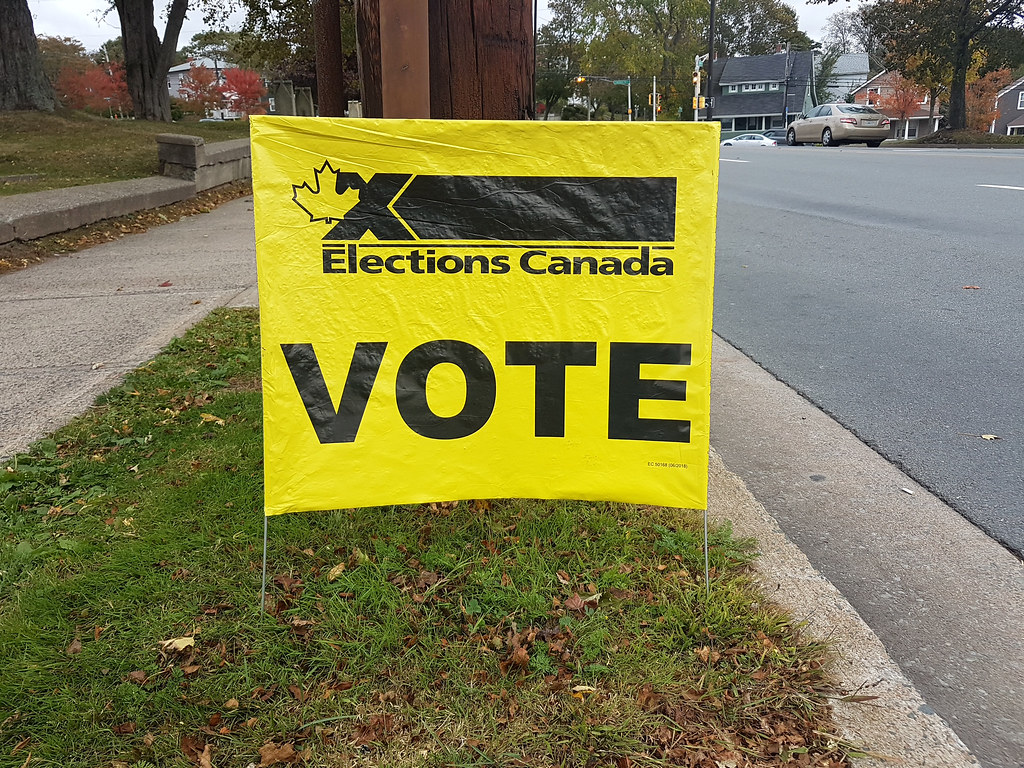
“2019 Canadian federal election – VOTE” by Indrid__Cold is licensed under CC BY-SA 2.0


What to say about a federal election in which nothing happened? Surely last night’s refusal by the Canadian public to budge an inch is more astonishing than almost any other imaginable result could be. Our last two elections were separated by exactly 700 days. During that brief time, Canada experienced a science-fiction disease pandemic with mass death and violent protests, a fairly urgent diplomatic crisis with China, a dramatic change in the U.S. presidency, a foreign-policy disaster in Afghanistan, epic Liberal scandals and constitutional strife. Canadians seem to have lived through all of this and decided that it made no difference, or no net difference, in how they wanted to vote.
Maybe this could be considered a psychological defence reaction to the surprising prospect of an election. Given the incredible result — no consecutive Canadian elections have ever been remotely this close in seat outcome — we can hardly even say “surprising and unwelcome”. Everyone knew who was responsible for calling an election. In Liberal ridings, the response seems to have been gratitude for the opportunity to vote Liberal again so soon.
In conversation with a non-representative sample of Canadian voters outside the Toronto border, it’s rare to find people who admit to voting Liberal, yet clearly enough people did yet again — nearly 20,000 of them in my riding alone. I live in Erin O’Toole’s riding, so the winner wasn’t in a lot of doubt despite him not having any spare time to campaign here. I was pleased to find over 3,600 other Durham voters willing to vote PPC this time around, giving Patricia Conlin about 5.6% of the vote. I’ve generally been a Libertarian voter all these years … at least when there’s been a Libertarian candidate to vote for … but this time around as in 2019 the Libertarians didn’t have anyone running here, so voting PPC was my best option.
The more we watch NDP Leader Jagmeet Singh campaign, the more we think, “Toronto does have an awful lot of people who ought not to be especially eager to run headlong into stuff like wealth taxes and confiscatory rates on capital gains.” The New Democrats seem increasingly determined to cement their all-urban base among youths and convinced leftists with bolshie rhetoric. Are the resentful, hopeless millions they hope to add to these stagnant forces really out there? Was this an election result that reveals a populace disaffected with neoliberal capitalism — of a kind genuinely beset by rent-seeking, cronyism and corruption — and keen on revolutionary change?
Unfortunately, the very failure of the election to yield a different result probably means that every party can treat last night as a rehearsal rather than a test. NP Platformed‘s initial instinct, which we reserve the right to throw out, is that we’ll be back at it with the same cast of characters in another 700 days or so. Everyone failed: what else is there but to follow Beckett’s dictum? “Try again. Fail again. Fail better.”
Other than Maxime Bernier, is there a federal party leader who can point to the results of this election and claim much more than a bare moral victory?
The Extremely Bizarre Engineering Rituals of Canada (And the Fascinating Way They Came to Be)
Today I Found Out
Published 31 Jul 2021This video is #sponsored by NordVPN.
Sources:
Andrews, Gordon, Canadian Professional Engineering and Geoscience: Practice and Ethics, Thomson Nelson Canada Ltd, 2005
Kipling, Rudyard, “The Hymn of Breaking Strain”, 1935, http://www.cuug.ab.ca/~branderr/risk_…
2 Esdras 4:5-10, https://thekingjamesversionbible.com/…
Bateman, Chris, The Secrets of Engineering’s Strange and Mysterious Initiation Ritual, TVO, April 24, 2018, https://www.tvo.org/article/the-secre…
“Background: The Calling of an Engineer, The Ritual of the Calling of an Engineer”, https://www.ironring.ca/background-en/
Anderson, Bill, “Why Engineering is Purple”, April 16, 2019, https://profbillanderson.com/2019/04/…

Speaking of highly sus votes … here’s an example from California’s recall election
At Samizdata, Niall Kilmartin recounts what he heard from a Californian friend after their recent election on recalling the sitting governor:
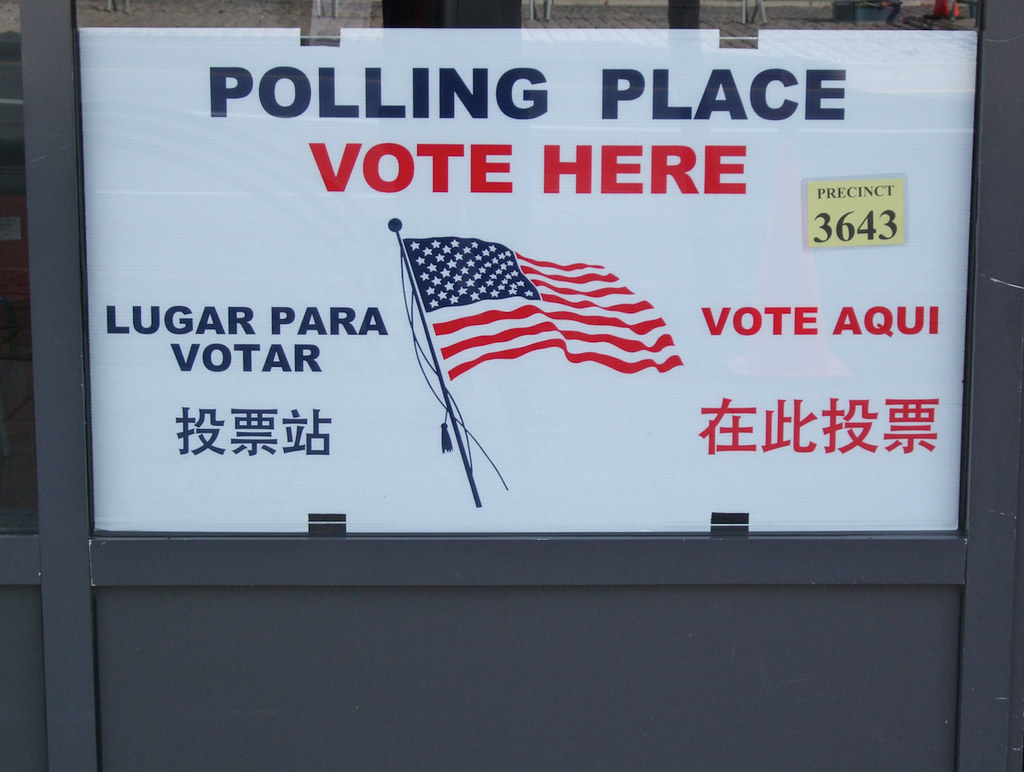
“Polling Place Vote Here” by Scott Beale is licensed under CC BY-NC-ND 2.0


He was sent a postal ballot – a ballot and an envelope to return it in. He had not asked for it and did not want it but got it anyway. His wife was also sent one and what I say below applies to her as well.
Both envelope and ballot had serial numbers printed on them – and they were sequential: the return envelope’s serial number differed by one from its ballot’s serial number. (His wife’s likewise, so it seemed to be a pattern.) This gave him some concerns.
- As the state had posted the serial-numbered ballot specifically to him, it sure looked like, after the election, the authorities would be able to tell how he’d voted. In a state where expressing a heterodox thought can be career-ending, this was a little worrying. Of course, he could have chosen to trust the Governor’s assurance that the state would never dream of recording the serial-to-address data, let alone exploiting it afterwards (if the Governor had given that specific assurance, but he did not recall whether Newsom had clearly promised that as such).
- As the envelope and ballot serials had this simple sequential relationship, it sure looked like anyone who saw the returned envelope (which had to have his name and address on it), would be able to deduce the serial of his ballot. In a state where the operation of the law can make defying antifa more dangerous to you than to them, this was a little worrying. Of course, he could have chosen to trust the Governor’s assurance that no such person would later be able to get access to the ballots or their scanned data to relate his name and address to his vote (if the Governor had given that specific assurance, but he did not recall whether Newsom had clearly promised that as such).
- As there was no secrecy sleeve, it sure looked like whoever ripped the envelope open to get the ballot during the count would have a hard time not seeing his name, address and vote all at once anyway. In a state where supporting the wrong party can lead to unequal application of the law, this was a little worrying. Of course, he could have chosen to trust the Governor’s assurance that the electoral staff would be unable to record or memorise such information (if the Governor had given that specific assurance, but he did not recall whether Newsom had clearly promised that as such).
After thinking about this, he went to the local polling station on election day to try and get a ballot from them and put it in the ballot box the old-fashioned way. Wisely, he took the postal ballot with him, knowing they should – and in this case probably would – want to see it destroyed. Unwisely, he filled it in beforehand in case they refused to let him vote the old fashioned way (so that, in that case, he could at least put the postal ballot straight into the box, thus cutting some intermediaries out of the insecure loop, without making a second visit). He gave me a vivid word-picture of the crossed-arms, blocking-the-way lady in change of the polling place when he made his request. They did not absolutely refuse, but it was made clear to him that the first thing to happen would be his postal vote being torn open and carefully examined before its destruction. Cursing himself for the “forethought” of filling it in “in case”, he decided that that would destroy the point of the exercise, which was to cast a secret ballot – though he did wonder by then whether, despite his studiously-meek demeanour, the lady felt any more doubt of whom he was voting for than he felt of whom she was voting for. So in the end he used it as the state intended he should.
Ishapore SMLE MkI** India Pattern
Forgotten Weapons
Published 6 Feb 2017While many people are familiar with the Ishapore 2A1 rifles chambered in 7.62mm NATO (largely thanks to their importation and sale in the US in large numbers), production of Indian Enfield rifles actually dates back to 1905, when the Ishapore arsenal was opened. The first rifles produced there were a batch of 3,000 MkI Enfield rifles in 1908/9. These were of course early pattern SMLEs, with features like split charger bridges, volley sights, and magazine cutoffs. Production quickly changed to the No1 Mk III pattern of rifle, which had been formally adopted in Britain in 1907.
During World War One, the need for arms led to those first early rifles being rebuilt in the MkIII configuration, but they retain their original markings, showing their origin. Today we have one of those first 3,000 to look at.
http://www.patreon.com/ForgottenWeapons
Cool Forgotten Weapons merch! http://shop.bbtv.com/collections/forg…
If you enjoy Forgotten Weapons, check out its sister channel, InRangeTV! http://www.youtube.com/InRangeTVShow

QotD: Urban bohemians
Powers fails to recognize that her bohemia is predicated upon a market liberalism that throws off so much wealth that you can live like a Pharaoh just by scavenging what other people throw out — as she and her slacker buddies did in San Francisco in the ’80s and early ’90s. Her bohemian lifestyle is part of the same system that underwrites free markets, consumerism, and tolerance for all sorts of offensive speech and alternative lifestyles. In other words, the liberty to be bohemian is a glorious result of the very capitalist reality that Powers says a real bohemian must be against.
Brian Doherty, “Rage On: The strange politics of millionaire rock stars”, Reason Online, 2000-10.
Update: Broken link fixed, thanks to “somercet1” for the heads-up.
September 21, 2021
Early Rome, Part V: Introduction to Modern Scholarship
Thersites the Historian
Published 6 Sep 2021In this video, we look at what modern scholars tend to think about early Rome and some of the ways in which they approach this fraught topic.
Patreon link: https://www.patreon.com/thersites
PayPal link: paypal.me/thersites
Discord: https://discord.gg/QCaXXFr
Brave Browser: https://brave.com/noa557
Twitter link: https://twitter.com/ThersitesAthens
Minds.com link: https://www.minds.com/ThersitestheHis…
Steemit/dtube link: https://steemit.com/@thersites/feed
BitChute: https://www.bitchute.com/channel/jbyg…

A little New York City tale
Jim Treacher found the twists and turns in this NYC local story to be disturbing his sleep:
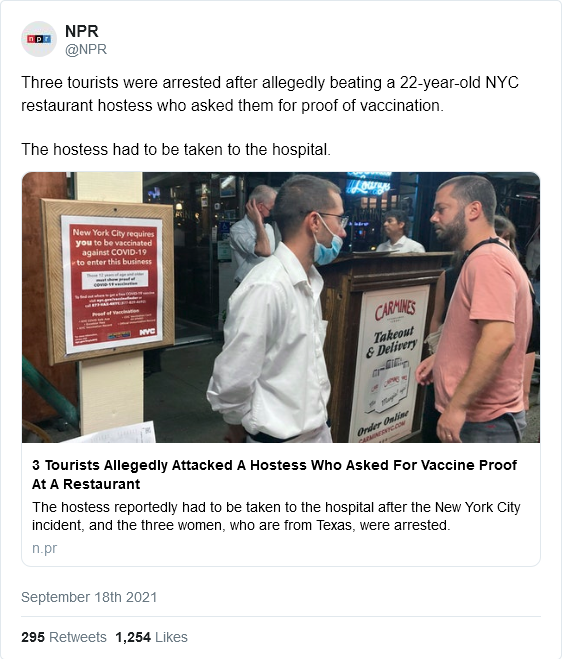
An odd little news story got stuck in my brain over the weekend, so I tried to figure out why. Last week, three Texas women attacked a hostess at a restaurant in New York City because the hostess asked them for proof that they’re vaccinated:
Seems like an overreaction, no? It’s not like a restaurant hostess is responsible for state and local laws. She was just doing her job.
In the initial NPR story I read, the women were described only as being “from Texas”. Which immediately tells a certain audience, NPR’s audience, everything they need to hear. Everyone knows what those Texans are like, right? Yeeeeeee-haw! Them inbred redneck anti-vax science-denyin’ hayseeds prob’ly voted for Trump, didn’t they? Yer darn tootin’!
It just goes to show how evil those dirty Republicans really are. They’d rather beat up a woman in public than surrender a little bit of their freedom for the greater good. I’ll bet they weren’t even wearing masks. Tsk, tsk, tsk. And another tsk for good measure!
But when you read past the headline, you learn a bit more about these three lovely ladies:
Police arrested three women — 21-year-old Tyonnie Keshay Rankin, 44-year-old Kaeita Nkeenge Rankin and 49-year-old Sally Rechelle Lewis — and they have since been charged with misdemeanor assault and criminal mischief …
Now, at the risk of being branded a racist — the most damning yet ubiquitous accusation in the modern world — I saw those names and I assumed those women are African-American.
I know. I know! I’m not proud of it, but that’s just how deeply my white privilege has taken root in my soul.
The headline doesn’t mention their race (“3 Tourists Allegedly Attacked A Hostess Who Asked For Vaccine Proof At A Restaurant”). There’s no mention of race in the story at all, so according to National Public Radio, race had nothing to do with it.
Well, race is about to have something to do with it:
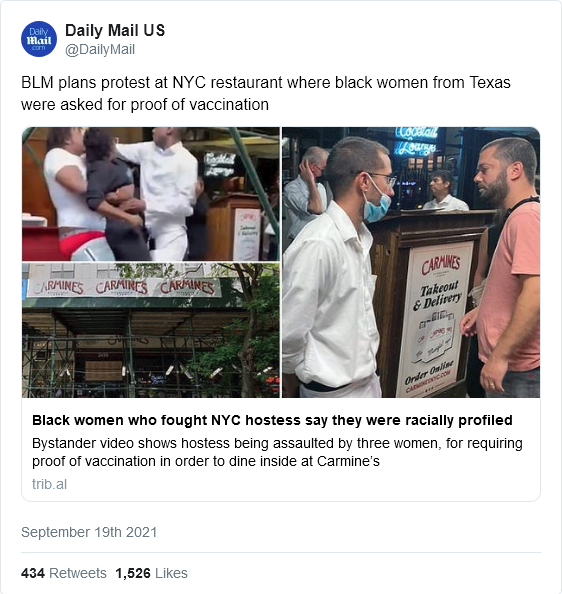
Presto! In the blink of an eye, this story just magically transformed from “Stupid Anti-Vax Texans Literally Punch Science in the Face” to “Black Women in NYC Restaurant Latest Victims of Racial Profiling.” (Remember that Starbucks incident? Remember how the whole company shut down for an entire afternoon to do “anti-racial bias” training?)
And if those dueling narratives aren’t confusing enough for the average liberal mind, it gets even better: The hostess is Asian. So, here’s yet another victim of the anti-Asian violence we’ve been hearing about for the past 18 months. #StopAsianHate, anyone?
Anyone? Hello?
No, that’s not the narrative this time. Which is what this is all about: narratives, not facts.
Why Paul Sellers likes the #4 Plane | Paul Sellers
Paul Sellers
Published 4 Jun 2021No matter who you are, wherever you are in the world, if you follow me at all, you will know that I am always refining my woodworking and my wood with a #4 Stanley bench plane.
You can buy them secondhand and enjoy them as I have throughout a lifetime of woodworking. Follow my channel here to find out how to restore them, fine-tune them, maintain them and use them. You will not regret it!
——————–
Want to learn more about woodworking?
Go to Woodworking Masterclasses for weekly project episodes: http://bit.ly/2JeH3a9
Go to Common Woodworking for step-by-step beginner guides and courses: http://bit.ly/35VQV2o
http://bit.ly/2BXmuei for Paul’s latest ventures on his blog
——————–
Instagram- http://bit.ly/2oWpy7W
Twitter- http://bit.ly/33S7RFa
Pinterest- http://bit.ly/35X5uTf

QotD: Canadian international virtue signalling is not a new thing
You know how much of that $425 million has been spent so far? Fifty thousand dollars — Canadian. That’s about 40 grand in U.S. dollars. The rest isn’t tied up in [Sri Lankan] bureaucracy, it’s back in Ottawa. But, unlike horrible “unilateralist” America, Canada enjoys a reputation as the perfect global citizen, renowned for its commitment to the U.N. and multilateralism. And on the beaches of Sri Lanka, that and a buck’ll get you a strawberry daiquiri. Canada’s contribution to tsunami relief is objectively useless and rhetorically fraudulent.
Mark Steyn, “Bolton’s sin is telling truth about system”, Chicago Sun-Times, 2005-05-15.
September 20, 2021
History-Makers: Maimonides
Overly Sarcastic Productions
Published 17 Sep 2021“From Moses to Moses, there was none like Moses.” Jump into 1100s Cordoba & Cairo as we take a look at the life of one of the Medieval world’s most boundary-breaking History-Makers: Moses Maimonides!
SOURCES & Further Reading: Great Courses lectures “Jewish Scholar in Cairo: Moses Maimonides” from The History and Achievements of the Islamic Golden Age by Eamonn Gearon and “Maimonides and Jewish Law” from Great Minds of the Medieval World by Dorsey Armstrong. Britannica “Maimonides” https://www.britannica.com/biography/…, Stanford Encyclopedia of Philosophy “Maimonides” https://plato.stanford.edu/entries/ma…, The Guide For The Perplexed, Mishne Torah and Commentary on the Mishnah by Maimonides
Special thanks to Yellow/LudoHistory for his assistance in checking over my script. You can check out his livestreams playing historically-inspired videogames over at https://www.twitch.tv/ludohistory
Our content is intended for teenage audiences and up.PATREON: https://www.Patreon.com/OSP
PODCAST: https://overlysarcasticpodcast.transi…
DISCORD: https://discord.gg/osp
MERCH LINKS: http://rdbl.co/osp
OUR WEBSITE: https://www.OverlySarcasticProductions.com
Find us on Twitter https://www.Twitter.com/OSPYouTube
Find us on Reddit https://www.Reddit.com/r/OSP/

Canada was given advance notice of the AUKUS deal … about five minutes notice
When the news broke about a new western alliance involving Australia, the United Kingdom and the United States, the official line — belatedly — was that our allies had kept Canadian officials “in the loop”, about the negotiations. Now that everyone’s attention is on the vote-counting, it can be safely acknowledged that the Canadian government got a heads-up just a few minutes before the formal announcement, as Ted Campbell discusses:
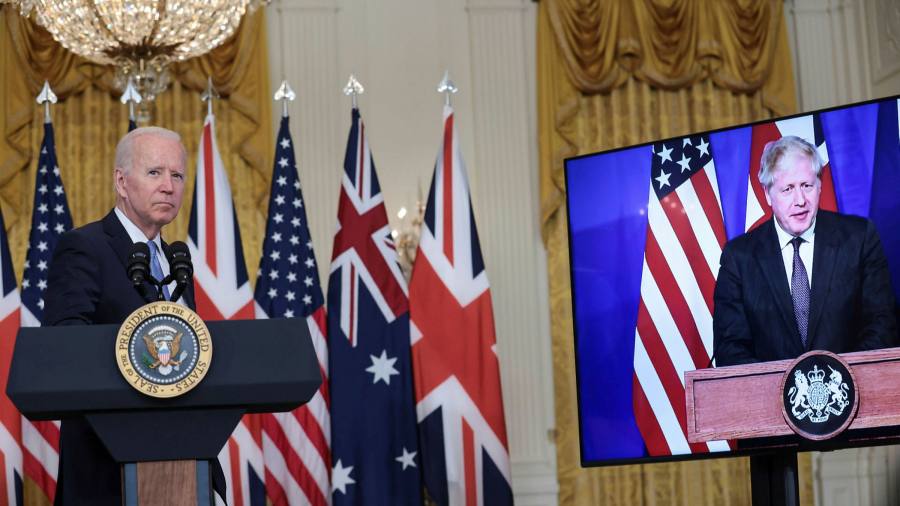
US President Joe Biden with British Prime Minister Boris Johnson (onscreen) during the AUKUS announcement.
Image from businesstelegraph.co.uk.
So, Steven Chase and Robert Fife say, in the Globe and Mail, that “The Canadian government was surprised this week by the announcement of a new security pact between the United States, Britain and Australia, one that excluded Canada and is aimed at confronting China’s growing military and political influence in the Indo-Pacific region, according to senior government officials [and] Three officials, representing Canada’s foreign affairs, intelligence and defence departments, told The Globe and Mail that Ottawa was not consulted about the pact, and had no idea the trilateral security announcement was coming until it was made on Wednesday by U.S. President Joe Biden, British Prime Minister Boris Johnson and Australian Prime Minister Scott Morrison.”
Not only did our oldest and closest friends and allies kick Canada out of the “inner circle”, they didn’t even bother to tell us that the political and diplomatic kick in the arse was coming, although, the Globe journalists say, the Australian and British defence ministers gave Harjit Sajjan a brief “heads up” just minutes before the announcement. Mr Sajjan’s spokesman said that Canada “had been kept in the loop”, I call BS.
Vice Admiral Mark Norman, someone who knows a lot about what happens at the highest echelons of government in Ottawa said that “if Mr. Trudeau was fully briefed” [on this new AUKUS pact, then] “he doesn’t understand what is going on internationally and he doesn’t understand what the significance of an arrangement like this is as it relates to international security.” I don’t think he had heard a word about this until Minister Sajjan’s senior aids called the PCO and PMO on Wednesday afternoon.
One can easily imagine the conversations on Wednesday and Thursday in some of the corridors of power in Ottawa: “
Biden us!” said one senior official. “No,” said another, even more senior, “this has been coming for a long time. It’s a shock, but it really shouldn’t be a surprise.” “They screwed us,” said a third, “we’ve done nothing to deserve this. It’s just because we aren’t spending as much as Biden and Morrison want on the military and it’s because we’re not sending more ships to Asia, more often.” “No,” the second person said, “it’s because we decided, all of us, you and me, too, to not do whatever it took to arrest the changes in our national strategic outlook.” “How can you say that?” the first speaker said, “We all protested, I wrote a long brief explaining why we needed to step up …” “We’re still here,” the more senior official said. “We didn’t resign and go public as soon as we saw how things were shaping up. Almost no one did.” “No one listens when senior officials or admirals or generals resign,” said the third official, “it wouldn’t have done any good.” “You’re right,” the most senior official answered, “resignations are, normally, not news and they rarely change politicians’ minds … not, anyway, when they’re done one at a time. Back in 2016, when many us started to see, clearly, how things were going we should have resigned en masse ~ and not just we three, but dozens of us from PCO, from Foreign Affairs and from DND and the military. If the senior public service had rebelled, as it should when the government makes destructive policy choice against our advice, then there would have been enormous, even irresistible political pressure. But we didn’t, did we? We all stayed on and wrote a couple of arse-covering briefing notes and went about our business. We are as much to blame for this as are those dimwits in Trudeau’s cabinet and inner circle. We failed Canada.” Vice Admiral Norman, the article explains, “said the agreement goes far beyond access to U.S. submarine technology [which is Mr Trudeau’s lame excuse for why Canada was kicked out of the inner circle] This is about accessing both current and emerging technologies, from cyber and artificial intelligence, to acoustics and underwater warfare – a whole range of very important strategic capabilities.” Further, “Mr. Norman said Canada has many national interests in the Indo-Pacific – including trade, promoting the rule of law and democracy, and countering China’s aggressive behaviour and posturing – but he suspects close allies do not take Canadian defence commitments seriously [and he added] I don’t think our allies think we are serious when it comes to defence. I think they have concerns not just about our defence expenditures, but also the extent to which our [international] commitments are both lasting and meaningful.” This has been evident since 2015. Justin Trudeau effectively campaigned on doing less in the world. Everyone knew this was coming ~ especially those who voted for the Liberal Party … it is what they wanted. It’s what Canada got.
You Can’t See Memes on the Radio
Alasdair Beckett-King
Published 4 Jun 2021The hottest memes on 1940s radio. Support me on kofi (https://ko-fi.com/misterabk) and/or laboriously describe your favourite memes in the comments.
Carbon ringmount microphone model by Inlite: https://blendswap.com/blend/6724

QotD: English jingoism
The reason why the English anti-militarism disgusts foreign observers is that it ignores the existence of the British Empire. It looks like sheer hypocrisy. After all, the English have absorbed a quarter of the earth and held on to it by means of a huge navy. How dare they then turn round and say that war is wicked?
It is quite true that the English are hypocritical about their Empire. In the working class this hypocrisy takes the form of not knowing that the Empire exists. But their dislike of standing armies is a perfectly sound instinct. A navy employs comparatively few people, and it is an external weapon which cannot affect home politics directly. Military dictatorships exist everywhere, but there is no such thing as a naval dictatorship. What English people of nearly all classes loathe from the bottom of their hearts is the swaggering officer type, the jingle of spurs and the crash of boots. Decades before Hitler was ever heard of, the word “Prussian” had much the same significance in England as “Nazi” has to-day. So deep does this feeling go that for a hundred years past the officers of the British Army, in peace-time, have always worn civilian clothes when off duty.
George Orwell, “The Lion And The Unicorn: Socialism and the English Genius”, 1941-02-19.
September 19, 2021
Erin O’Toole suddenly scrambling to try to win back votes from Maxime Bernier’s PPC
John Paul Tasker reports for the CBC on Conservative leader Erin O’Toole’s last minute appeal to wavering supporters (that is, people who would prefer actual conservative or even libertarian policies to what O’Toole’s “Conservatives” have on offer):
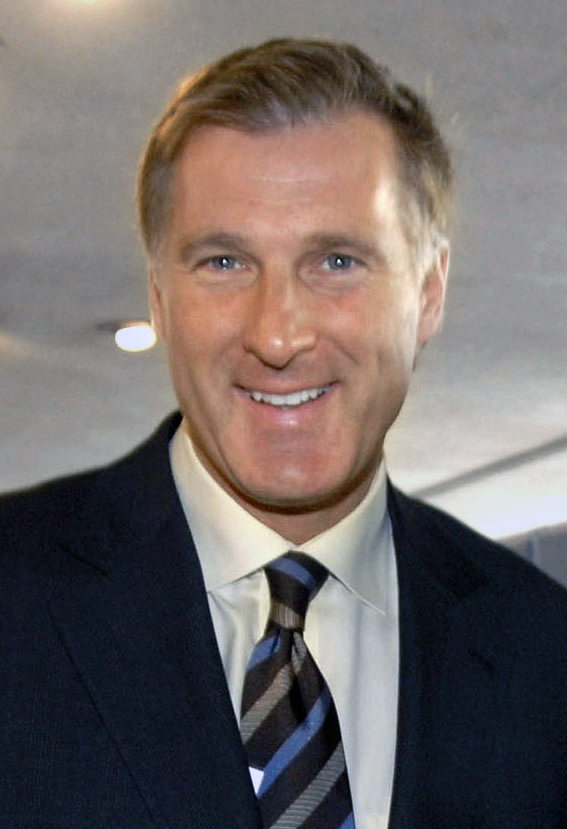
Conservative Leader Erin O’Toole said today that conservative-minded voters sick of the Liberal government should park their votes with the Tories rather than turn to the People’s Party of Canada (PPC) in this election.
Speaking to reporters at a campaign stop in London, Ont., O’Toole said his party is the only one in a position to replace the Liberal government and a right-wing vote split could lead to four more years of Justin Trudeau.
“There are actually millions of Canadians who are very frustrated with Mr. Trudeau. If they allow that frustration to do anything other than vote Conservative, they’re voting for Mr. Trudeau,” O’Toole said.
“There are five parties and there are two choices. More of the same with Mr. Trudeau or real change and ethical government with Canada’s Conservatives.”
O’Toole said Trudeau wants Conservative voters to “vote for smaller parties” rather than unify behind O’Toole’s candidacy.
CBC’s poll tracker has the PPC at 6.2% support, which is nearly four times what it was in the last election. Other trackers have the PPC at least a few points more than that, and it might be noteworthy that PPC-leaning voters are probably not be as interested in sharing their preferences with pollsters as supporters of more left-wing parties like the Liberals and Conservatives.
After the last election campaign, a CBC News analysis showed that — even with its rather dismal level of support — the PPC likely cost the Conservatives seven seats in the House of Commons by splitting the vote (six seats went to the Liberals, one to the NDP).
With polls suggesting PPC support is now well above its 2019 level, the party’s impact could be even greater in 2021.
While polls suggest some PPC support is coming from first-time or infrequent voters, there’s no question the PPC is drawing at least some support from former Conservative voters.
[…]
“The Conservative Party is not conservative anymore,” Bernier said today in response to a question about O’Toole’s warnings about a vote split.
“O’Toole has flip-flopped and adopted the Liberal program on the few remaining issues where there were still difference between the two parties, such as the carbon tax, gun bans and COVID passports,” Bernier said in an emailed statement. “Mr. O’Toole will have to live with the consequences of his failing strategy.”
Some of Bernier’s recent momentum is driven by his opposition to pandemic measures. The PPC leader has slammed the proposed federal vaccine mandate as a “draconian” and “immoral” measure.


