
World War Two
Published 18 Sep 2021It’s a big week, but by now they all are. The fighting in Stalingrad is intense, the fighting on Guadalcanal is intense, and the US loses a carrier in the Pacific. And the German quest for oil in the Caucasus … how’s that going again?
(more…)
September 19, 2021
Stalingrad Falls? – WW2 – 160 – September 18, 1942
Comments Off on Stalingrad Falls? – WW2 – 160 – September 18, 1942
A communist-party-connected publisher reprinted Justin Trudeau’s 2014 book Common Ground
Aha! I thought … yet more scandal! This time with direct pay-offs to Trudeau from his Beijing paymasters! Sadly, for the conspiracy minded among us, it’s not much more significant or scandalous than Barack Obama’s endorsement of Trudeau, as Kenneth Whyte explains:
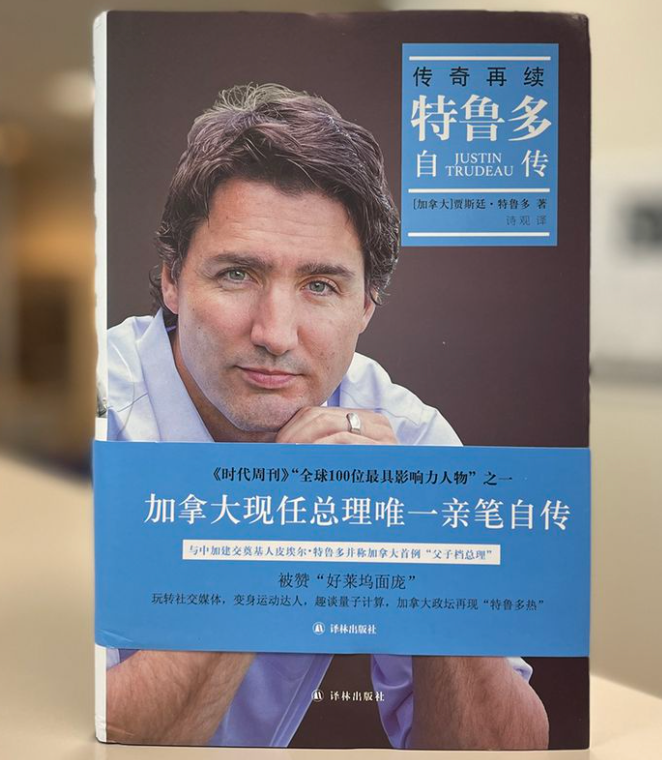
… the Globe & Mail reported that Justin Trudeau’s 2014 memoir Common Ground was republished in a Chinese edition in 2016.
Doesn’t sound like much of a story, does it? Foreign editions of Canadian books are released all the time.
What’s different in this case, says the Globe, is that the Chinese publisher is Yilin Press of Nanjing, part of the state-owned enterprise Jiangsu Phoenix Publishing and Media, which “takes operational direction from the propaganda department of the Jiangsu provincial communist party committee.”
Why would a propaganda wing of the communist party make such a deal? The Globe quotes foreign policy experts who say that the republication of Trudeau’s book is “a classic ploy” by Beijing to flatter a foreign leader. “They are trying to do anything they can to encourage him to look positive on China and the Chinese state,” according to one of the experts.
Says another: “Clearly, by publishing his biography they wanted to please him. They are the masters of propaganda.”
What do the Chinese hope to get out of courting Trudeau? “Beijing had high hopes it could persuade Canada to sign a free-trade agreement and was seeking Canada’s help in its global campaign Operation Fox Hunt to track down people it called criminals, many of whom were Chinese dissidents,” writes the Globe.
The Globe also finds it notable that the Liberals, at the time, were trotting Trudeau out to private events at the homes of wealthy Chinese-Canadians. The PM would do a little dance and the money would flow:
Chinese billionaire and Communist Party official Zhang Bin attended a May 19, 2016, fundraiser at the home of Benson Wong, chair of the Chinese Business Chamber of Canada. A few weeks later, Mr. Zhang and his business partner, Niu Gensheng, donated $200,000 to the Pierre Elliott Trudeau Foundation and $50,000 to erect a statue of Mr. Trudeau’s father.
So it all looks a bit unseemly.
I poked around and was reliably informed by someone in a position to know that Trudeau and his agent sold worldwide rights to Common Ground to HarperCollins Canada. That means it was up to HarperCollins to publish the book in Canada and also sell rights to its republication in as many foreign markets as possible. Trudeau would get a cut of revenues from those sales.
Except, as he further reveals, Trudeau had long since assigned any profits from the book to a charity, so he’s not being secretly bribed by copious amounts of money from the Chinese Communist Party’s propaganda budget (at least, not in this case, hedging just a bit …).
Should the PM, or someone in his office, have asked questions about Yilin Press and its connections to the communist party? Maybe, but it’s not like there was a free-market alternative down the street from Yilin. Every publisher in China is accountable to the communist party in one way or another. To get an ISBN number in the Chinese market, you have to go through the state, not because the state provides the service, but because it monitors all publications. Si Limin, chairman of the China Book Publishing Industry Association, is the former director of the News and Newspapers Department of the State Administration of Press, Publication, Radio, Film and Television. And so on.
As for the trade deal the Chinese were supposedly eager for Trudeau to sign? It was more the other way around. In 2017, the Liberals tried to convince Beijing to adopt Trudeau-style progressivism in return for free-trade with Canada. They were laughed out of town. The Chinese couldn’t even be bothered to pretend an interest in human rights to get a deal signed.
I have all kinds of problems with the ethical standards of the Liberal party, Trudeau’s personal judgment, those cash for access meetings, and his Chinese policy, but there’s nothing much to see here.
Comments Off on A communist-party-connected publisher reprinted Justin Trudeau’s 2014 book Common Ground
Chassepot: Best of the Needle Rifles
Forgotten Weapons
Published 3 May 2019The Model 1866 Chassepot was France’s first military cartridge-firing rifle. It used a self-contained paper cartridge on the same basic principle as the Prussian 1841 Dreyse rifle, but was a substantial improvement on that system. The Chassepot fired an 11mm bullet at about 1350 fps (410 m/s), which was substantially higher velocity than the Dreyse. It was more accurate and had a substantially longer effective range. The French would produce about 1.5 million Chassepot rifles, most of them before the Franco-Prussian War.
Despite the quality of the Chassepot rifle, that war would go tremendously badly for the French, with hundreds of thousands of men and arms captured by the Prussians and the new German state being declared in the palace of Versailles. In the aftermath, many German cavalry units would adopt Chassepots for their own use, until the Gewehr 71 was available in carbine form. The French would resume Chassepot production briefly after the war, but would soon transition to a new rifle, the metallic cartridge firing Gras.
http://www.patreon.com/ForgottenWeapons
Cool Forgotten Weapons merch! http://shop.bbtv.com/collections/forg…
Contact:
Forgotten Weapons
PO Box 87647
Tucson, AZ 85754

Comments Off on Chassepot: Best of the Needle Rifles
QotD: Gender stereotypes
Whenever I hear people stereotyping based on gender. “Women vote this way”, “Men act in this manner”, I am reminded of the great contrast between Britain’s two women Prime Ministers. Thatcher, won a brilliant renegotiation of the EEC, trounced the unions, denationalized vast swaths of obscene nationalized industries, and was one of the four people instrumental in ending the cold war. May, the other lady from number 10, apparently couldn’t negotiate the purchase of a sausage supper for fifty quid in the local fish and chip shop.
Apparently, it is more to do with the content of your character than the content of your underpants.
Fraser Orr, commenting at Samizdata, 2018-12-08.
Comments Off on QotD: Gender stereotypes
September 18, 2021
What if Pearl Harbor Never Happened, Life in Cyprus, and Peasant Armies of China – WW2 – OOTF 024
World War Two
Published 17 Sep 2021Ever wonder what would have happened if Japan just never attacked Pearl Harbor but invaded the Indies anyway? Or how the people of Cyprus are faring in the war? Or if the Chinese armies had any specialized combat forces? Find out in this Out of the Foxholes!
(more…)
Comments Off on What if Pearl Harbor Never Happened, Life in Cyprus, and Peasant Armies of China – WW2 – OOTF 024
Paris Fights Back – The French Battle Against German Encirclement I Franco-Prussian War 1870
Real Time History
Published 16 Sep 2021Support Glory & Defeat: https://realtimehistory.net/gloryandd…
The German armies are on their way to encircle the French capital Paris after their victory at Sedan. The new French government is raising new troops all across the country and in Paris itself to stem the tide. Poorly equipped and poorly trained troops fight the Germans at Sceaux/Chatillon. Meanwhile, the German states start their negotiations for German unification.
» THANK YOU TO OUR CO-PRODUCERS
John Ozment
James Darcangelo
Jacob Carter Landt
Thomas Brendan» OUR PODCAST
https://realtimehistory.net/podcast – interviews with historians and background info for the show.» LITERATURE
Arand, Tobias: 1870/71. Die Geschichte des Deutsch-Französischen Krieges erzählt in Einzelschicksalen. Hamburg 2018Bourguinat, Nicolas/Vogt, Gilles: La guerre franco-allemande de 1870. Une histoire globale. Paris 2020
Gouttman, Alain. La grande défaite de 1870-1871. Paris 2015
Haselhorst, Olaf: Operationen der deutschen Heere im Krieg gegen Frankreich 1870/71, in: Der Deutsch-Französische Krieg 1870/71.
Vorgeschichte, Verlauf, Folgen, hrsg. v. J. Ganschow unter anderem Graz 2009, S. 83–120
Milza, Pierre: L’année terrible. Paris 2009
» SOURCES
Chuquet, Arthur: La Guerre 1870-71. Paris 1895Busch, Moritz: Bismarck und seine Leute während des Kriegs mit Frankreich Band. 1. Leipzig 1878.
Goncourt, Edmonde de: Memoires de la vie Litteraire. Paris 1890
Kriegsgeschichtliche Abtheilung des Großen Generalstabes (Hrsg.): Der deutsch-französische Krieg 1870-71. II.1 Berlin. 1878
Russell, William Howard: My diary during the last great war. London and New York, 1874
Sternegg, Generalmajor von: Schlachten-Atlas des 19. Jahrhunderts. Band 10. Deutsch-Französischer Krieg1870/71. Leipzig u.a. o.J. [1885]
» OUR STORE
Website: https://realtimehistory.net»CREDITS
Presented by: Jesse Alexander
Written by: Cathérine Pfauth, Prof. Dr. Tobias Arand, Jesse Alexander
Director: Toni Steller & Florian Wittig
Director of Photography: Toni Steller
Sound: Above Zero
Editing: Toni Steller
Motion Design: Philipp Appelt
Mixing, Mastering & Sound Design: http://above-zero.com
Maps: Battlefield Design
Research by: Cathérine Pfauth, Prof. Dr. Tobias Arand
Fact checking: Cathérine Pfauth, Prof. Dr. Tobias ArandChannel Design: Battlefield Design
Contains licensed material by getty images
All rights reserved – Real Time History GmbH 2021

Comments Off on Paris Fights Back – The French Battle Against German Encirclement I Franco-Prussian War 1870
“Martin Gurri’s The Revolt Of The Public is from 2014, which means you might as well read the Epic of Gilgamesh“
In another of his interesting series of book reviews, Scott Alexander looks at a book from 2014 that seems to have done a great job of predicting the situation today, but doesn’t help in looking forward from today:
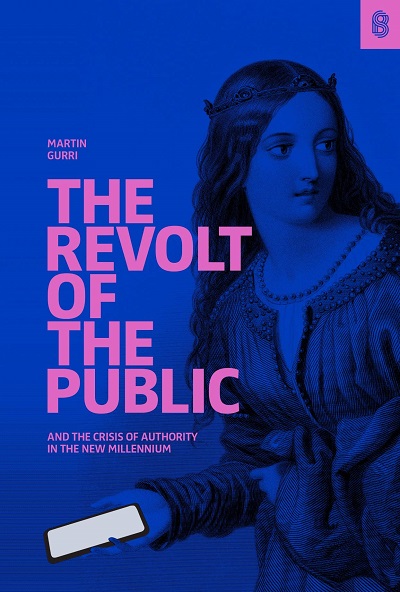
… It has a second-edition-update-chapter from 2017, which means it might as well be Beowulf. The book is about how social-media-connected masses are revolting against elites, but the revolt has moved forward so quickly that a lot of what Gurri considers wild speculation is now obvious fact. I picked up the book on its “accurately predicted the present moment” cred, but it predicted the present moment so accurately that it’s barely worth reading anymore. It might as well just say “open your eyes and look around”.
In fact, I can’t even really confirm whether it predicted anything accurately or not. Certainly everything it says is true. Anyone who wrote it in 2000 would have been a prophet. Anyone who wrote it in 2020 would have been stating the obvious. Was writing it in 2014 a boring chronicle of clear truths, or an achievement for the ages? I find my memories are insufficiently precise to be sure. It’s like that thing where someone who warned about the coronavirus on March 1 2020 was a bold visionary, but someone who warned about it on March 20 was a conformist bandwagoner — except about the entire history of the 21st century so far. Maybe the best we can do with it is read it backwards, as an artifact of the era when the public was only ambiguously revolting, to see how the knowledge of the coming age arose and spread.
We remember the Arab Spring, those few months in 2011 when revolts spread across various Arab countries and longstanding regimes were toppled by protesters with smartphones and Twitter accounts. Gurri hits the relevant beats, but doesn’t limit himself to the Middle East.
In Spain, a vague formless group called the indignados (or Real Democracy Now, or Youth Without A Future) took to the streets. For months, they filled public squares, streets, and tent cities. Some protests attracted tens of thousands of participants; a few, hundreds of thousands. Some of them were vaguely socialist, but it wasn’t exactly a socialist protest; in fact, the government they were protesting was dominated by the Socialist Workers Party. They were just sort of vaguely angry. From their manifesto:
Some of us consider ourselves more progressive, others more conservative. Some are believers, others not. Some have well-defined ideologies, others consider ourselves apolitical … but all of us are worried and outraged by the political, economic, and social landscape we see about us. By the corruption of the politicians, businessmen, bankers …
And so on.
At the same moment, hundreds of thousands of people were marching through the streets of Israel. The apparent trigger was a 25-year-old video editor named Daphni Leef who couldn’t afford an apartment near her job. She started a Facebook page saying people should protest the cost of living, one thing led to another, and soon 300,000 people were marching through the streets of Israel and Leef was a national hero.
[…]
Gurri argues all of this was connected, and all of it was a sharp break from what came before. These movements were essentially leaderless. Some had charismatic spokespeople, like Daphni Leef in Israel or Tahrir-Square-Facebook-page-admin Wael Ghonim in Egypt, but these people were at best the trigger that caused a viral movement to coalesce out of nothing. When Martin Luther King marched on Washington, he built an alliance of various civil rights groups, unions, churches, and other large organizations who could turn out their members. He planned the agenda, got funding, ran through an official program of speakers, met with politicians, told them the legislation they wanted, then went home. The protests of 2011 were nothing like that. They were just a bunch of people who read about protests on Twitter and decided to show up.
Also, they were mostly well-off. Gurri hammers this in again and again. Daphni Leef had just graduated from film school, hardly the sort of thing that puts her among the wretched of the earth. All of these movements were mostly their respective countries’ upper-middle classes; well-connected, web-savvy during an age when that meant something. Mostly young, mostly university-educated, mostly part of their countries’ most privileged ethnic groups. Not the kind of people you usually see taking to the streets or building tent cities.
Some of the protests were more socialist and anarchist than others, but none were successfully captured by establishment strains of Marxism or existing movements. Many successfully combined conservative and liberal elements. Gurri calls them nihilists. They believed that the existing order was entirely rotten, that everyone involved was corrupt and irredeemable, and that some sort of apocalyptic transformation was needed. All existing institutions were illegitimate, everyone needed to be kicked out, that kind of thing. But so few specifics that socialists and reactionaries could march under the same banner, with no need to agree on anything besides “not this”.
Comments Off on “Martin Gurri’s The Revolt Of The Public is from 2014, which means you might as well read the Epic of Gilgamesh“
Early American Ammunition
Townsends
Published 2 Jun 2021Visit Our Website! ➧ http://www.townsends.us/ ➧➧
Help support the channel with Patreon ➧ https://www.patreon.com/townsend ➧➧

Comments Off on Early American Ammunition
QotD: Material prosperity and happiness
Gallantly, Mister Tucker has articulated the desire of the Right and Left-wavering to raise the tone of American politics to that of Bhutan. His most striking expressions called attention to the fact that material prosperity does not make people happy. Perhaps we should instruct the statisticians to replace their calculations of Gross Domestic Product, with Gross National Happiness, as they now do in Thimphu. The figure would still be meaningless, but might provide some modest, transient uplift.
In my humbly contrary view, material prosperity — i.e. getting filthy rich — does actually make people happy. Those who win the lottery do not cry from despair. But within a few months of scoring, and often within days, they have a new set of personal problems, to pile upon the old ones. Happiness, from material causes, does not last; not even for the poor. It is emotional catharsis. Something makes you happy; and then it fades away.
Only drugs can keep you happy, until you die. But the downside there is that they kill you.
David Warren, “More populist than thou”, Essays in Idleness, 2019-01-04.
Comments Off on QotD: Material prosperity and happiness
September 17, 2021
The Real-Life Nazi Pirates – WW2 Special
World War Two
Published 16 Sep 2021There is more to war on merchant shipping than U-Boats and the Battle of the Atlantic. Raiders disguised as innocent traders also play the role of privateers; stalking vessels, approaching with a false flag, and then striking before anyone can react. Here’s the story of one: Kormoran.
(more…)
Comments Off on The Real-Life Nazi Pirates – WW2 Special
Australia, the UK, and the US join in a military alliance … Canada of course is nowhere in sight
News broke the other day about a new three-nation military arrangement clearly aimed at containing Chinese ambitions in the Pacific, involving Australia, Britain, and the United States, to be known as AUKUS (or AUUKUS, depending on the reporting source). These three countries are already tightly linked in the “Five Eyes” intelligence sharing network which also includes Canada and New Zealand. As more than one wit noted on Twitter after the announcement, it’s a good thing Canada doesn’t have a Pacific coast or any economic interests in that ocean…
Ted Campbell, who recently emerged from a blogging hiatus to comment on the ongoing federal election, felt this new pact cemented the idea that Canada is “no longer a serious country” in military terms:
It is now abundantly clear that the USA, inter alia, puts Justin Trudeau’s Canada in the same league as (anti-nuclear) New Zealand. Canada is no longer one of the most trusted allies … Australia is; Britain is: India is; Japan is … Canada is NOT.
Prime Minister Justin Trudeau has, in six short years, moved Canada from one of America’s best friends to, de facto, a Chinese puppet state. He has done this with his own (and his many advisors’) eyes wide open. Canada, Justin Trudeau’s Canada is no longer a serious nation … perhaps we don’t really deserve to be. After all, we (almost 40% of the almost 70% who bothered to vote at all) elected him … then we did it again. Maybe the world is just concluding that we are not serious people who can be relied upon when the going gets tough.
He followed this up with a bit more concern on the sinking Canadian international profile:
Just take a look at those technologies ~ AI, quantum computing, cyber warfare ~ those are all areas vital to Canada’s security and prosperity and what are we focused on? Climate change and Québec’s latest attempts to make Canada into an illiberal state. China spews out more carbon in a week than Canada does in a year. China is aiming to displace America as the global guarantor of peace, security and trade. Do any of the dimwits in the Liberal government understand that? Why in hell is Prime Minister Trudeau attacking Alberta’s (relatively clean) oil industry rather than, for example, concentrating on making Canadian nuclear energy work for us?
A few days ago I said that Canada needs nuclear powered submarines to assert and protect our sovereignty in the waters we claim as our own. No one contradicted me. No one ever raises any serious, well-founded objections to nuclear submarines for Canada. It’s a no brainer. But, look at the last line in the quote above. Who is getting nuclear submarines? Australia … because it is a serious country with adult political leadership.
Prime Minister Justin Trudeau’s regime has sidelines Canada. Our strongest, most traditional allies have abandoned us. We have been sold out … to China.
I use that term “sold out”, intentionally. I do NOT believe that Justin Trudeau is a traitor … for heaven’s sake, he’s not smart enough to betray anything. He’s barely able to memorize his lines. But a lot of people have invested a lot in China ~ the Desmarais family (of Power Corporation fame) and former Prime Minister Jean Chrétien and Bob Rae, Canada’s Ambassador to the UN, for example, are all closely tied together and even more closely tied to the Canada-China trade file. I assert that the “China lobby” in Canada is very, very powerful, very, very rich and extraordinarily well connected to Canada’s political leadership ~ Liberal and Conservative, alike. I further assert that it, not Justin Trudeau and Marc Garneau and the mandarins in Ottawa, drives Canada’s foreign, trade and fiscal policies. Prime Minister Justin Trudeau is NOT a traitor … but he is puppet and people whose vital interests are centred on China, not Canada, pull the strings.
Why is Canada excluded from the AUKUS pact?
One reason Canada isn’t involved is certainly the distraction of the federal election, and there would have been no way that Justin Trudeau would have wanted to answer questions on the campaign trail about anything geostrategic or military, and he especially doesn’t want Canadians looking closely at his servile deference to the Chinese government. Of course, given that he’s literally bribed the major newspaper chains and TV networks with “subsidies” right before the election was called, he might well have been safe from any hint of an awkward question from his unofficial PR branches in Montreal, Toronto, and Vancouver.
Over at the Thin Pinstriped Line, Sir Humphrey looks at the military and technical implications of the new alliance:
The Royal Australian Navy is likely to become the next nation to join the nuclear submarine operators club. This is the key headline emerging from the surprise tri-lateral announcement on Wed 15 September by the Prime Ministers of Australia and the UK, and the President of the United States.
The move, forming a new “three eyes” club known as AUKUS is a genuinely significant development intended to provide a significant uplift in capability in the Indo-Pacific region. For the first time in nearly 70 years, the US has agreed to share some of its most sensitive technology with a third party, to help Australia become a “naval power underway on nuclear power”.
There are several ramifications of this decision, that will be felt for many years to come. The first is that from an American perspective, this is a good opportunity to take steps to increase burden sharing in the Pacific.
[…]
From a wider diplomatic perspective, there are three distinct groupings to consider. Firstly, the remaining 5-EYES members (Canada and New Zealand). Its unlikely that this will do much damage to 5-EYES – for example New Zealand would never have been approached as the acquisition of a nuclear submarine would be vastly beyond the budget, or needs, of the small but incredibly professional Royal New Zealand Navy.
Canada may be feeling slightly raw about this – particularly those with long memories who recall the 1980s and the doomed plan to acquire nuclear submarines for the RCN. But who knows, in terms of timelines these vessels may be entering service in the same timeframe as Canada seeks to replace the Upholder/Victoria class – it is not beyond the realm of possibility that they may seek to join in later on.
Given 5-EYES is more than just an Indo-Pacific focus, it would be wrong to read much into this as a statement on the future of that Alliance. Rather it is better to see this as a subgrouping of a very successful international alliance.
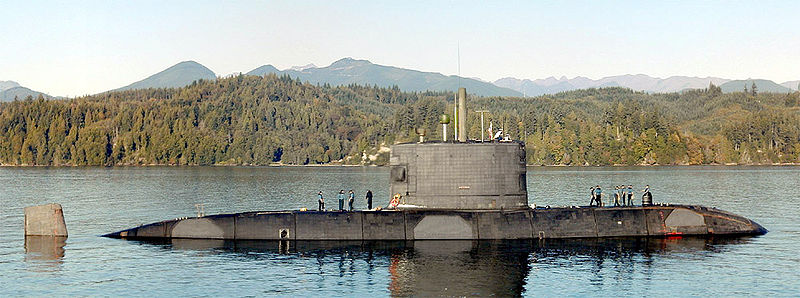
HMCS Victoria
Image via Wikimedia Commons.
Comments Off on Australia, the UK, and the US join in a military alliance … Canada of course is nowhere in sight
The Battle of Lissa, 1866
Drachinifel
Published 26 Sep 2018One of the most unintentionally hilarious battles of the 19th century is the subject of today’s special video.
“Bezeuge Mich!” – Admiral Tegethoff 1866 (probably)

Comments Off on The Battle of Lissa, 1866
QotD: Journalism
Colby Cosh, “A useless living dead”, ColbyCosh.com, 2005-03-28.
Comments Off on QotD: Journalism
September 16, 2021
Build a Traditional Schoolhouse Desk from Pine and Nails
Rex Krueger
Published 15 Sep 2021A piece of the past & a useful piece of furniture come together in this softwood project!
More video and exclusive content: http://www.patreon.com/rexkrueger
Get the Softwood Furniture Bundle and more below! (Scroll down)
(more…)
Comments Off on Build a Traditional Schoolhouse Desk from Pine and Nails
Who is the typical PPC supporter?
In The Line, Matt Gurney grapples with inadequate polling data to determine what the “average” supporter of Maxime Bernier’s People’s Party of Canada believes and who they are compared to typical Canadians:

Poll after poll has shown that the People’s Party of Canada, led by former Conservative Maxime Bernier, is surging in popular support. The party, which captured only 1.6 per cent of the vote in 2019, electing zero candidates, is now polling at closer to five or six per cent, or higher. These gains have not come at any obvious loss to any major party (the hapless Green party may be an exception, but there were only so many Green voters in the first place). While there is no doubt that some voters are bolting to the PPC from traditional parties, it seems certain — and polling suggests — that they are also drawing support from the nine million Canadians who were eligible to vote in 2019 but did not.
This is, to put it very mildly, worth watching. In a recent column here, drawing on polling information provided by John Wright, the executive vice president of Maru Public Opinion, we tried to establish what we could about a PPC supporter. They are not particularly remarkable; as noted last week, a typical PPC voter is a typical Canadian. They are fairly evenly distributed across all demographic segments and found in generally similar numbers in the various provinces. The earlier numbers were based on a fairly small sample size — the PPC’s low support on a national level has limited their numbers in any typical national-level poll. Last week, I said that more polling was necessary, to firm up the profile of who a PPC voter is and where they live. Wright has been doing that polling — the sample sizes are still modest, but a representative profile is beginning to emerge … not just of who a PPC voter is, but what they believe.
There is a degree of background context that must be established before we can move onto the numbers. When he presented me with his latest results on Tuesday, Wright noted that polling PPC voters is a particular challenge for his industry. The very concept of “the typical PPC voter” is rapidly shifting. The PPC base of even five weeks ago was a small fringe of grumpy people loosely assembled around a handful of vaguely libertarian policies, some anti-immigration blather and a disillusionment with the political status quo. (A typical PPC billboard encapsulates this unfocused dissatisfaction: “The Other Options Suck.”) Many polling companies track the attitudes of partisans of various affiliations by creating a panel of those partisans and then polling them over and over. Polling companies trying to track the PPC’s sudden rise, if they rely on such an identified panel of PPC voters that will be repeatedly surveyed, are capturing the PPC as it existed before the mid-August influx of new supporters. This is undoubtedly skewing our understanding of what the PPC voter, as they exist right now, believes. Wright has done four waves of polling in the last 10 days to update, as best as possible, our understanding of what the PPC voter believes today. He will continue to poll several times a week for the foreseeable future.
As to that August surge, as discussed in my column here last week, the best way to explain it is to look for something that recently changed — and something has: there are millions of Canadians who are adamantly anti-vax and anti-vaccine mandate/passport. The PPC surge began at the precise moment that vaccine mandates became a major issue in the federal campaign, and provinces began discussing their plans for certificates to verify vaccination status for domestic purposes. Pollsters needed a few weeks to notice the surge and verify it was real.
[…]
Roughly a third of Canadians (35 per cent) agree that the government is stripping away personal liberties; with Conservative and Green voters answering in the affirmative more often than NDP and Liberals. By comparison, 89 per cent of PPC voters believe the government is stripping away their liberty. Almost 90 per cent of PPC voters further agree that their governments are creating “tyranny” over the population. To put that in context, only about 40 per cent of Conservatives feel that way, with the other major parties way behind.
Oh, and here’s a cheerful one to chew over: Wright asked Canadians if they’d agree that “we are on the verge of a revolution in our society to take our freedom back from governments who are limiting it.” That question received 32 per cent support nationally — but an incredible 84 per cent from PPC supporters.
This sounds like the kind of thing we maybe ought to be paying attention to, eh?
I find it fascinating that the PPC appears to be motivating lots of people who haven’t been interested in voting by providing an option for them that isn’t just a red or blue coloured version of pretty much exactly the same policies and goals. I don’t expect the PPC to “break through” in this election, but if they can continue drawing the interest of those Canadians who feel disenfranchised by the Liberals and Conservatives, they can be a significant force for change in our political future.
Comments Off on Who is the typical PPC supporter?


