
The Tank Museum
Published 23 Apr 2021David Fletcher MBE explores the experimental FV4005, with original turret and 183mm gun fitted on a Centurion Mark 12 hull.
(more…)
September 16, 2021
Tanks Chat #124 | FV4005 Tank Destroyer | The Tank Museum
Comments Off on Tanks Chat #124 | FV4005 Tank Destroyer | The Tank Museum
QotD: The youthful Utopian
More than half a century ago, I had a friend in junior high school I could never figure out or drum much common sense into. He was quite the dreamer. He loved science fiction. His nickname was “Angus” — derived from the fact that he was rather rotund, and our school was surrounded by farm fields. When we grazed at the same lunch table, he would speculate endlessly about what life on other planets might be like. He was very earnest, and very entertaining.
One day I suggested facetiously that Angus stop speculating and go find out for himself. “Build a spaceship someday and fly to the planet of your choice,” I recommended. To my surprise, he took me seriously.
Some days later, Angus excitedly told me he had it all worked out. He had designed the spaceship and even brought the plans to show me. Then he unfolded a large sheet of brown wrapping paper. There it was — the entire cockpit control panel of the craft that would take Angus to the cosmos. There was a button for everything.
“This is not a plan!” I declared with a laugh. “It’s just a bunch of buttons with labels on them.”
“But it’s all here,” Angus insisted. “I’ve thought of everything — Start, Stop, Land, Take-off, Dodge Asteroids, you name it, everything you need to know.” He even had an all-purpose button to take care of anything unexpected, which he thought was a genius innovation.
What I remember most vividly about this experience was not the fine detail of my friend’s sketch. It was my frustrating inability to convince him he was delusional, that his plan was no plan at all, that as a 14-year-old he wasn’t yet ready for a senior position at NASA. He was what philosopher Eric Hoffer might call a “true believer” — convinced beyond any hope of convincing otherwise that his plan was thorough, perfect, and sure to work.
I lost track of Angus after graduation, but I am quite certain his spaceship never left the ground.
Lawrence W. Reed, “The Dark Side of Paradise: A Brief History of America’s Utopian Experiments in Communal Living”, Foundation for Economic Education, 2021-06-13.
Comments Off on QotD: The youthful Utopian
September 15, 2021
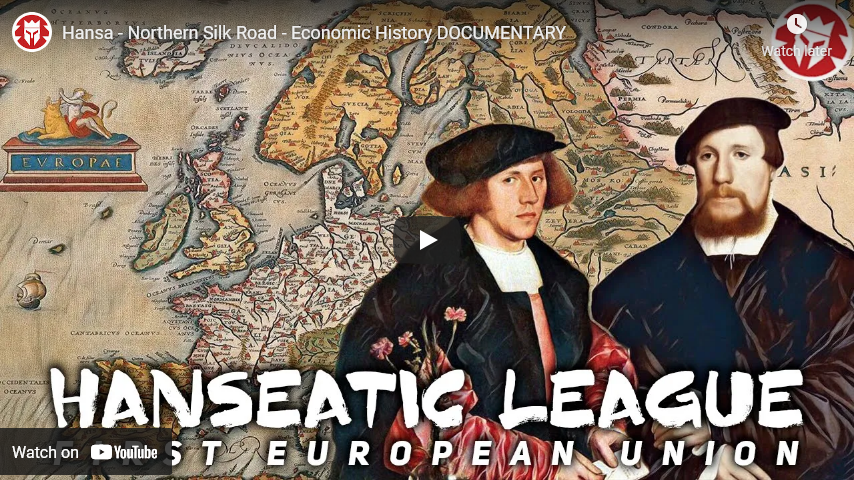
Hansa – Northern Silk Road – Economic History
Kings and Generals
Pubished 14 Sep 2021Use our code
KINGSANDGENERALS10and link: https://bit.ly/3mACCeg to get 10% off (save up to $47!) your own authentic Japanese subscription box from Bokksu! Don’t miss out on this amazing snack-journey through Japan!Kings and Generals animated historical documentary series on medieval history and economic history continues with a video on Hansa, also known as the Hanseatic League, which played a crucial role in the European trade in the late medieval, becoming known as the Northern Silk Road and dominating Baltic and North Sea trade for centuries.
Support us on Patreon: http://www.patreon.com/KingsandGenerals or Paypal: http://paypal.me/kingsandgenerals. We are grateful to our patrons and sponsors, who made this video possible: https://docs.google.com/document/d/1o…
The video was made by Michael Merc https://bit.ly/340tcO2 while the script was researched and written by Matt Hollis. 2d art and animation – amicus verus (https://www.artstation.com/amicus_verus). Narration by Officially Devin (https://www.youtube.com/user/OfficiallyDevin)
✔ Merch store ► https://teespring.com/stores/kingsand…
✔ Podcast ► http://www.kingsandgenerals.net/podcast/
✔ Twitter ► https://twitter.com/KingsGenerals
✔ Instagram ► http://www.instagram.com/Kings_GeneralsProduction Music courtesy of Epidemic Sound: http://www.epidemicsound.com
#Documentary #Hansa #EconomicHistory
This video was sponsored by Bokksu
Comments Off on Hansa – Northern Silk Road – Economic History
Narendra Modi apparently doesn’t inspire mere biographies … he gets hagiographies
Scott Alexander reviews Andy Marino’s gushingly admiring Modi: A Political Biography:
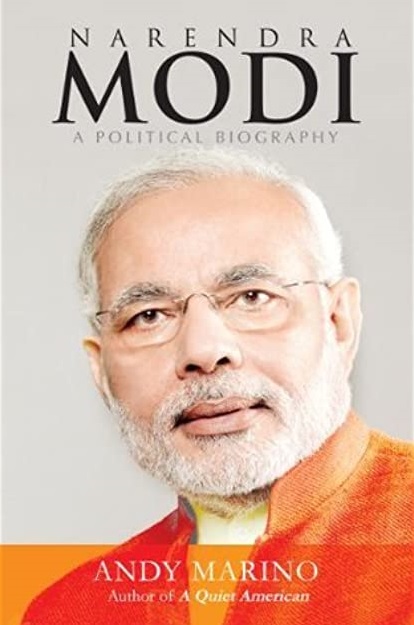
The author begins by writing about how Modi let him ride with him in his private helicopter and gave him unprecedented access to have “open-ended conversations” about “every aspect of his life”. The cover promises an objective evaluation, but on page 2, the author notes that “Objectivity does not mean flying in the face of incontrovertible evidence”, adding that “Modi has been the subject of the longest, most intense — and probably the most vituperative — campaign of vilification.” Marino promises to replace this campaign with “a narrative that is balanced, objective, and fair — but also unsparingly critical of [Modi’s] foibles” — which is an interesting construction, given how it contrasts criticism with fairness — and also pre-emptively declares the flaws he will be criticizing “foibles”. I’m not sure we ever get around to the criticism anyway, so it doesn’t really matter.
I am still going to summarize and review this book, but I recommend thinking of it as Modi’s autobiography, ghost-written by Andy Marino. I hope to eventually find another book which presents a different perspective, and an update for the past six years (M:APB ends in 2014, right when Modi was elected PM). Until then, think of M:ABP as a look into how Modi sees himself, and how he wants you to see him.
[…]
In 1975 the Emergency happened.
For thirty years, since its independence, India had been a socialist state. Not the cool kind of socialist where you hold May Day parades and build ten zillion steel mills. The boring kind of socialist where the government makes you get lots of permits, then taxes you really heavily, and nothing really ever gets done. “Even today the Representation of the People Act requires all Indian political parties to pledge allegiance not only to the Constitution but also to socialism.” The RSS [Rashtriya Swayamsevak Sangh] and its collection of associated right-wing nationalist parties supported Hindu nationalism plus socialism. Their arch-enemy, the center-left-to-confused-mishmash Congress Party, supported secularism plus socialism. Non-socialism was off the table.
In unrelated news, there was a food shortage. Indians took to the streets protesting Prime Minister Indira Gandhi (no relation to Mahatma Gandhi). Gandhi was heavy-handed in crushing the protests, which caused more protests, one thing led to another, and finally Gandhi declared martial law, a period which has gone down in history as the Emergency.
Gandhi immediately moved to arrest all her political enemies and shut down all newspapers that criticized her. The RSS was one of Gandhi’s main enemies and had to go underground quickly. Gujarat became a center for the resistance. So Modi, as an official in Gujarat’s RSS, ended up right in the middle of this. He remained a paper-pusher, but now he was a paper-pusher for freedom, scheduling meetings of resistance leaders, maintaining a master list of safe houses and trusted operatives, and keeping lines of communication open.
During a capital-e Emergency even paper-pushers can have greatness thrust upon them, and Modi ended up with responsibilities way outside his formal job description:
Chhayanak Mehta tells of how, after Deshmukh’s arrest, it was discovered that the papers he was carrying were still with him. These contained plans for the future actions of the [resistance], and it was essential to somehow retrieve them. To this end, Modi planned a distraction with the help of a female swayamsevak from Maningar. They went to the police station where Deshmukh was being held. While she posed as a relative and contrived a meeting with the prisoner, Modi somehow took the documents from under the noses of the police.
Or:
Modi was also responsible for transportation and travel to Gujarat of those opponents of Indra still at liberty … Modi too, in the course of his duties, was compelled to travel, often with pamphlets that could have got him arrested. To minimize the risk he became a master of disguise, something that came naturally to one who always paid attention to his appearance. On one outing, he would appear as a saffron-robed sanyasi; on another, as a turbaned Sikh. One time he was sitting in a railway carriage, hiding behind a thick black beard, when his old schoolteacher sat down next to the grown-up “urchin”. The disguise worked perfectly, but some years afterwards the teacher attested that as Narendra disembarked, he introduced himself and offered a hearty saluation.
Still, the Emergency ground on. One aspect the book doesn’t stress, but which I was surprised to read about when Googling the period, was the forced sterilizations. Under pressure from the US and UN to control exponentially rising populations, Indira had started various population control efforts in the 60s, all ambiguously voluntary. Over time, the level of pressure ratcheted up, and during the Emergency the previously-ambiguous coercion became naked and violent. “In 1976-1977, the programme led to 8.3 million sterilisations, most of them forced”.
How did this end? Gandhi called an election — during which she was predictably voted out completely and her party lost more thoroughly than any party has ever lost anything before. Her opponents’ campaign was based on things like “she just forceably sterilized 8 million people and you could be next”, which is honestly a pretty compelling platform. The real question is why she gave up her emergency dictatorship and called an election at all. According to the book:
It is more likely that in ending the Emergency Indira was thinking of herself, not India. She was aware of her growing international reputation as a tyrant, the daughter of a great democratic leader whose legacy she had damaged. As the journalist Tavleen Singh points out, the pressure to end the Emergency came simply from Indira Gandhi finding it unbearable that “the Western media had taken to calling her a dictator.”
(but before you interpret this as too inspiring a story of the victory of good over evil, Indira Gandhi was voted back in as prime minister three years later. We’ll get to that.)
Modi came out of the Emergency a rising star, appreciated by all for his logistical role in the Resistance. In the newly open political climate, the RSS was devoting more attention to their political wing and asked Modi to come on as a sort of campaign-manager-at-large, who would travel all around India and help friendly politicians get elected. He turned out to be really good at this, and rose through the ranks until he was one of the leading lights of the new BJP (Bharatiya Janata Party, “Indian People’s Party”). He spent the next two decades running campaigns, traveling the country, and getting involved in internal backstabbing (which he had a habit of losing in ways that got him kicked out of the party just before something terrible happened, leaving him as the only person untarnished by the terrible thing when they inevitably invited him back). Finally some of Modi’s political enemies failed badly in the leadership of Gujarat — one was expelled for corruption, another suffered several natural disasters which he responded to poorly. Modi had been accepted back into the party. He was beloved by Gujaratis, who still remembered his heroic work during the Resistance. He was the only person untarnished by various terrible things. By the rules of Indian politics, it was the party’s choice who would replace the resigning incumbent as Chief Minister of Gujarat, and as Modi tells it, everyone else just kind of agreed he was the natural choice (his enemies say he did various scheming and backstabbing at this point). So on October 7 2001, Narendra Modi was sworn in as Chief Minister of Gujarat, India’s fifth-largest state.
Comments Off on Narendra Modi apparently doesn’t inspire mere biographies … he gets hagiographies
Look at Life – Sea Horses – Tugboats from the 1960s
PauliosVids
Published 24 Nov 2018[The version of this film I originally scheduled has been taken down, but included a much more informative description, which I’m retaining below:]
capspread
Published 11 Oct 2020#LookatLife #Tugboats #MerchantNavy #QueenMary #QueenElizabeth
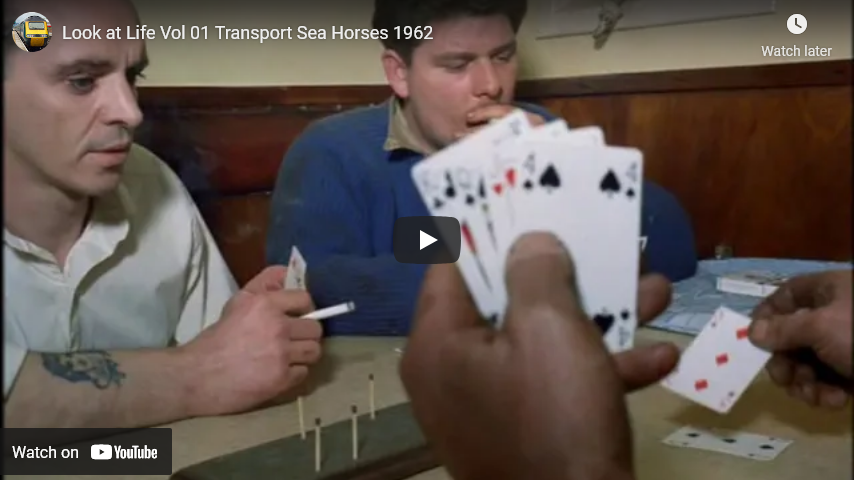
Look at Life – Sea Horses – Tugboats from the 1960sThe video is the latest Look at Life, Volume One – Transport called Sea Horses – Little Tugs, without which any big port would come to a standstill, are featured made in May 1962.
Several Tugs are featured in the video along with several ships, including Ocean Liners. Those with names that are recognisable are below. There are others which are not shown below because their names are not known.
Tugboats
William Ryan
Built 1908 – Re-engined 1956 – Sold in 2000 for £1 as a “non-commercial worker”. In 2005, spotted at Hoo Marina converted to a houseboat. In 2009 for sale priced £33k In 2010 – Engine Removed.Sun.X
Built in 1920 in Selby in Yorkshire. 196grt. Disposed 1969 and scrapped in 1969.Effleton Hall
Paddlewheel Tugboat built in 1914. In service until 1967 where she was sold to shipbreakers for scrap. She was left sitting on a mudbank in Dunston. As part of the scrapping process her wooden afterdeck and interior were destroyed by fire prior to being broken up. The tug remained there for 2 years, deck frames warped, wood burned or rotted, hull part flooded and engines rusty but intact. But she was bought by an American and rebuilt on the River Tyne during 1969, modified to enable her to cross the Atlantic Ocean under her own steam, requiring fitting of modern navigational aids, radio, an enclosed wheelhouse and conversion from coal to diesel oil firing. She set sail on 18 September 1969 and arrived late March 1970 at San Francisco. She was donated to the National Park Service in 1979 and is now berthed at Hyde Street Pier, San Francisco. She has been restored to resemble her condition post-War 1946. 166grt – Length – 100 feet; Beam 21 feet; Depth of hold 10.8 feet.Gladstone – Registered at Liverpool
Formby – Built 1951 Registered at Liverpool – 237grt Steam Engine
Canada – Registered at Liverpool
Marinia – Ocean going Tugboat
Poolzee – Dutch Smit Tug – Built 1942
Hestor – Could be Dutch
Ocean Liners
Queen Mary – 81,000 grt
In service between 1936 and 1967. She is now permanently moored as a tourist attraction, hotel, museum and event facility in Long Beach California.Queen Elizabeth – Largest Ocean Liner at the time at 83,000 grt. In service between 1939 and 1968. Caught fire in Hong Kong in 1972 and completely destroyed.
Cargo Ships
Northern Clipper – No info
Toula – Built in 1937 as Westralia as a passenger-cargo ship. Renamed Toula in 1959 and in 1970 broken up in Shanghai.
Allegrity – Built 1945 as a coastal tanker. In 1946 renamed Sobat. In 1951 renamed Allegrity and purchased by FT Everard. On 22 December 1961 she capsized after grounding near Falmouth. She was a total loss
798grt Length – 183 feet; Breadth – 28 feet; Depth – 13 feet
Speed – 9 knots.
Comments Off on Look at Life – Sea Horses – Tugboats from the 1960s
QotD: The cult of Napoleon
Other Europeans see him very differently. While French historians amplify the myth that Napoleon himself created by dictating his idealized Memoires on St. Helena, English, German, Russian and Spanish authors count up the massacres and the destruction of their cities and their civilization.
Napoleon began shaping his reputation while he was still alive. He commonly wrote reports of his victories before the battles had even begun, which makes him the founding father of fake news. Certain disasters, such as the Battle of Eylau (now in Poland) against the Russians and Prussians, for example, are still inscribed in the walls of the Arc de Triomphe in Paris as if they were victories, since that is how they were first announced.
Since France is now part of Europe — rather than Europe becoming part of France, as Napoleon wished — what should we commemorate? French victories, such as Austerlitz, were defeats for the Russians and Austrians. Waterloo, a day of mourning for the French, is a symbol of liberation for the British, Germans, and Dutch. In any case, since the return of Napoleon’s ashes, our view of history has changed; the fate of people concerns us more than the fate of armies. Napoleon’s stature does not benefit from this change of perspective. To finance his wars, he ruined Europe, banning international commerce (only smugglers got rich), conscripting peasants, ravaging harvests, and confiscating horses. How should we commemorate the Russian and German campaigns of 1812 and 1813, when the Grand Army left in its wake not the liberation of peoples, but famine and epidemic? Worst still, how should we commemorate the restoration of slavery in the French Antilles, Guadeloupe, and Santo Domingo (Haiti), where the deputies of France’s Revolutionary Convention had abolished it in 1794?
Guy Sorman, “Which Napoleon?”, City Journal, 2021-05-14.
Comments Off on QotD: The cult of Napoleon
September 14, 2021
“If life is a status game … The logic of the status game dictates that humiliation must be uniquely catastrophic”
In Quillette, Will Storr recounts some harrowing early life experiences for three young men ‐ that read like setups for bad horror novels — and how those early humiliations led to tragedy:

Elliot Rodger, Ed Kemper and Ted Kaczynski.
Photos from Quillette.
If life is a status game, what happens when all our status is taken from us? What happens when we’re made to feel like nothing, again and again and again? Humiliation can be seen as the opposite of status, the hell to its heaven. Like status, humiliation comes from other people. Like status, it involves their judgement of our place in the social rankings. Like status, the higher they sit in the rankings, and the more of them there are, the more powerful their judgement. And, like status, it matters. Humiliation has been described by researchers as “the nuclear bomb of the emotions” and has been shown to cause major depressions, suicidal states, psychosis, extreme rage, and severe anxiety, “including ones characteristic of post traumatic stress disorder.” Criminal violence expert Professor James Gilligan describes the experience of humiliation as an “annihilation of the self.” His decades of research in prisons and prison hospitals, seeking the causes of violence, led him to “a psychological truth exemplified by the fact that one after another of the most violent men I have worked with over the years have described to me how they had been humiliated repeatedly throughout their childhoods.”
The logic of the status game dictates that humiliation must be uniquely catastrophic. For psychologists Professor Raymond Bergner and Dr Walter Torres humiliation is an absolute purging of status and the ability to claim it. They propose four preconditions for an episode to count as humiliating. Firstly, we should believe, as most of us do, that we’re deserving of status. Secondly, humiliating incidents are public. Thirdly, the person doing the degrading must themselves have some modicum of status. And finally, the stinger: the “rejection of the status to claim status.” Or, from our perspective, rejection from the status game entirely.
In severe states of humiliation, we tumble so spectacularly down the rankings that we’re no longer considered a useful co-player. So we’re gone, exiled, cancelled. Connection to our kin is severed. “The critical nature of this element is hard to overstate,” they write. “When humiliation annuls the status of individuals to claim status, they are in essence denied eligibility to recover the status they have lost.” If humans are players, programmed to seek connection and status, humiliation insults both our deepest needs. And there’s nothing we can do about it. “They have effectively lost the voice to make claims within the relevant community and especially to make counterclaims on their own behalf to remove their humiliation.” The only way to recover is to find a new game even if that means rebuilding an entire life and self. “Many humiliated individuals find it necessary to move to another community to recover their status, or more broadly, to reconstruct their lives.”
But there is one other option. An African proverb says, “the child who is not embraced by the village will burn it down to feel its warmth.” If the game rejects you, you can return in dominance as a vengeful god, using deadly violence to force the game to attend to you in humility. The life’s work of Professor Gilligan led him to conclude the fundamental cause of most human violence is the “wish to ward off or eliminate the feeling of shame and humiliation and replace it with its opposite, the feeling of pride.”
Of course, it would be naive to claim Ed, Ted, and Elliot were triggered solely as a response to humiliation. If the cauterisation of status was a simple mass killing switch, such crimes would be common. Various further contributory factors are possible. All three were men, which dramatically increases the likelihood they’d seek to restore their lost status with violence. Elliot Rodger was said to be on the autism spectrum, which might’ve impacted his ability to make friends and girlfriends; a court psychiatrist claimed Ed Kemper had paranoid schizophrenia (although this remains contested); and Kaczynski’s brother said Ted once “showed indications of schizophrenia.” But none of these conditions are answers in themselves, because the vast majority of those that have them don’t burn down their villages.
The ordeal endured by Kaczynski as a teen at Harvard beggars the imagination and could easily provide conspiracy theorists with copious confirmations of their fears: “What Ted didn’t know was that Murray had a history of working on behalf of secretive government agencies. This would be a study of harsh interrogation techniques, specifically the ‘effects of emotional and psychological trauma on unwitting human subjects.’ Once he’d detailed his secrets and philosophies, Ted was led into a brightly lit room, had wires and probes attached to him, and was sat in front of a one way mirror. There began a series of what Murray called ‘vehement, sweeping, and personally abusive’ attacks on his personal history and the rules and symbols by which he lived and hoped to live. ‘Every week for three years, someone met with him to verbally abuse him and humiliate him,’ Ted’s brother said. ‘He never told us about the experiments, but we noticed how he changed.’ Ted himself described the humiliation experiments as ‘the worst experience of my life.'”
Comments Off on “If life is a status game … The logic of the status game dictates that humiliation must be uniquely catastrophic”
Stalingrad, Hitler’s Obsession – WW2 – 159B – September 13, 1942
World War Two
Published 13 Sep 2021Here’s an extra weekly episode for you. The suburbs of Stalingrad have fallen and the fight for the city proper is about to begin, but before it does, three conferences take place that will decide the scope, the tactics, and the strategy of this battle.
(more…)
Comments Off on Stalingrad, Hitler’s Obsession – WW2 – 159B – September 13, 1942
The Line‘s She-lection Bullshit Bulletin No. 4 … don’t bother questioning the timing
The latest installment of The Line‘s campaign bullshit tracker looks at the attempts by Liberal partisans to gin up some faux outrage over the timing of former Trudeau cabinet minister Jody Wilson-Raybould’s tell-all book:
First of all, we would like to specifically invite our Conservative and Liberal friends to take a few deep calming breaths and settle the fuck down about Jody Wilson-Raybould’s forthcoming book, Indian in the Cabinet, which will be out on Tuesday — but was splashed early in the Globe and Mail. The book will recount, among other things, JWR’s memories of the SNC-Lavalin scandal. The excerpt the Globe ran certainly doesn’t paint Justin Trudeau in a particularly flattering light.
But it doesn’t matter.
Seriously, our Conservative friends need to rein it in. The SNC-Lavalin affair was an example of the Liberals at their very worst; so utterly self-assured and self-righteous that any ethical or normative breach can be justified to themselves so completely that they’re genuinely shocked and offended that not everyone else buys the official story. However, alas, there’s no remaining life in this scandal. The very best-case scenario for the Conservatives is that the topic bubbling up again reminds some voters that they don’t love Trudeau, and why. But any big damage this was gonna do to Brand JT, it did literally years ago, and before the last election campaign. There are no remaining undecided voters who’ll swing based on a new book that dishes on a pre-COVID scandal.
But now to our Liberal friends, good Lord, people, chill out. We’ve seen quite a few of you, including some who ought to know better, muttering darkly about the “timing” of JWR’s book, landing as it is right before the election.
The book was announced in March, people. We all knew it was coming — so did the Liberals when they called the election. Was the book’s publication timed for maximum impact? Well, no shit Sherlocks. What, was JWR obligated to delay out of deference to the guy who kicked her out of caucus for defying him? Here’s some sage wisdom for the Libs out there: if you make enemies in politics, those enemies will eventually try to fuck you. It’s real deep stuff, we know. You’re welcome.
Meanwhile, JWR is selling books. This is what book selling is: her publisher accelerated the book’s publication date by a few weeks to land when it would have maximum public interest, and the greatest potential for earned media. JWR gets to stick it it to JT and maximize her sales before hitting the speaking circuit, where the real bucks get made.
Also, so what?
Stop gargling your own bathwater, people. We’ll read the book when it’s out, but it won’t swing the election.

Comments Off on The Line‘s She-lection Bullshit Bulletin No. 4 … don’t bother questioning the timing
Sturmgewehr MP-44 Part II: History & Implementation
Forgotten Weapons
Published 27 Sep 2016Cool Forgotten Weapons Merch! http://shop.bbtv.com/collections/forg…
The Sturmgewehr was the result of a German intermediate cartridge development program that began in the mid-1930s. It was sidelined for a period as the focus of German Ordnance shifted to full-power rifles in 8x57mm with telescopic sights, but as the German fighting in Russia became more desperate, many Ordnance officers realized that the greater firepower offered by the Sturmgewehr concept was one of the few options that might be able to allow depleted German units to effectively hold ground against Russian attacks.
To this end, the guns were issued primarily in the East, with whole companies being equipped in order to focus a maximum amount of firepower, rather than spreading the new rifles piecemeal across all units. Ultimately, of course, this was insufficient to prevent the growing Soviet advance — but for the individual German soldier, an MP-43/44/StG-44 would have been a much more comforting weapon than a Kar98k Mauser!

Comments Off on Sturmgewehr MP-44 Part II: History & Implementation
QotD: “In 1918 it was statistically safer for a British soldier to fight in the trenches of the Western Front than be a prisoner in Germany”
On and on the German outrages went: the sinking of the Lusitania, the execution of Nurse Cavell. Of course, the Allies were not saints, but the fashionable fallacy of moral equivalence — that all sides in the Great War were as bad as each other — founders on the rocks of Germany’s treatment of prisoners of war, who became slave labourers.
This was the main substance of the British agenda at Leipzig. Almost 165,000 British soldiers were taken prisoner on the Western Front between 1914-18; by the end of 1916, almost 80% were forced into labour for the Second Reich. Prisoners were literally worked to death in salt mines. And conditions in many camps were inhuman: in Wittenberg, two water taps served 17,000 Allied PoWs. When typhus struck the camp, the German staff abandoned it and left the prisoners to die. Some 13,000 Brits perished in the Kaiser’s camps — the vast majority because of brutality, disease, malnutrition or exhaustion. But 500 British soldiers were summarily shot or beaten to death at the Kaiser’s pleasure during their detention.
Of all the German PoWs held in Britain during the Great War, 3% died; of the British PoWs held in Germany, more than 10% perished. In 1918 it was statistically safer for a British soldier to fight in the trenches of the Western Front than be a prisoner in Germany. That year, 5.8% of British PoWs in Germany died, compared to 4% of British soldiers on the battlefield.
John Lewis Stempel, “Germany’s First World War Guilt”, UnHerd, 2021-05-25.
Comments Off on QotD: “In 1918 it was statistically safer for a British soldier to fight in the trenches of the Western Front than be a prisoner in Germany”
September 13, 2021
Early Rome, Part IV: Plutarch’s Life of Numa Pompilius
Thersites the Historian
Published 5 Sep 2021In this video, we look at how the philosopher Plutarch dealt with early Rome when he covered the life and times of Numa Pompilius, the most significant of Rome’s cultural heroes.
Patreon link: https://www.patreon.com/thersites
PayPal link: paypal.me/thersites
Discord: https://discord.gg/QCaXXFr
Brave Browser: https://brave.com/noa557
Twitter link: https://twitter.com/ThersitesAthens
Minds.com link: https://www.minds.com/ThersitestheHis…
Steemit/dtube link: https://steemit.com/@thersites/feed
BitChute: https://www.bitchute.com/channel/jbyg…

Comments Off on Early Rome, Part IV: Plutarch’s Life of Numa Pompilius
“Only the most fanatical Justin Trudeau partisans will begrudge Jody Wilson-Raybould for her moment of revenge”
Howard Anglin responds to an early excerpt from former Trudeau cabinet minister Jody Wilson-Raybould:

Jody Wilson-Raybould, 30 January, 2014.
Photo by Erich Saide via Wikimedia Commons.
Reading the first excerpt of her book, I did find myself occasionally cocking an eyebrow at the portrayal of a wide-eyed innocent who somehow awoke to find herself in a den of partisan thieves.
It was, after all, the Liberal Party she had joined — the most ruthless and successful vote-winning machine in Western politics this side of Mexico’s PRI — not the parish altar guild.
But setting aside questions of systemic hypocrisy and looking only at the SNC-Lavalin imbroglio, it is as clear today as it was in 2019 that Wilson-Raybould was right and Trudeau was wrong.
She was right as attorney general to rebuff political pressure to offer SNC-Lavalin a deferred prosecution agreement — a slap on the wrist that would have seen the engineering and construction company avoid criminal conviction and remain eligible for more federal contracts — and Trudeau and his office were wrong to pressure her to consider it.
Now, she is fully justified in reminding us of that fact. And if the book’s self-righteousness message is belied by the calculated timing of its release, well, she has earned the right to say “I told you so” at the time of her choosing.
As far as the election goes, the most important revelations are about Trudeau’s character.
To constitutional law nerds like me, however, the highlight is Wilson-Raybould’s disagreement with the prime minister over the role of the Attorney Genereal, including her description of a freshly briefed Trudeau expatiating scholastically on the nuances of the Shawcross doctrine before she drily punctures his condescension with the comment: “You have been talking to a lawyer.”
Coming from someone who was until a few weeks earlier “his” lawyer, at least in his capacity as head of government, the comment is doubly ironic.
Wilson-Raybould had, by her account, explained the doctrine and its implications at length to Trudeau, as well as to his principal secretary, Gerry Butts, and the Clerk, neither of whom is a lawyer but both of whom were nevertheless dispatched to try to explain their version of it to her and her lawyer chief of staff.
Comments Off on “Only the most fanatical Justin Trudeau partisans will begrudge Jody Wilson-Raybould for her moment of revenge”
How Is Worcestershire Sauce Made? | How Do They Do It?
DCODE by Discovery
Published 25 Sep 2018Worcestershire Sauce was invented in 1835 when a posh army officer went to India to help run the British Empire. He fell in love, not with a woman, but with a fish sauce. DCODE how the iconic sauce is made in England today.
#DCODE, #HowDoTheyDoIt, #WorcestershireSauce

Comments Off on How Is Worcestershire Sauce Made? | How Do They Do It?
QotD: Those classic British children’s stories
In a boarding school near the Kentish coast, a ruffian sneaks along the corridor, hunting for the rare stamp that will make him rich. In a Home Counties village, a tousled-haired schoolboy lies awake, putting the finishing touches to his scheme that will win the war for the Allies. Many miles to the north, a boat pulls away from Wildcat Island, bound for fortune and glory. And far across the oceans, a group of schoolboys tremble in terror, as their South Sea captors prepare to sacrifice them to their idol …
Such is the world of the classic British children’s story: the world of Billy Bunter and his Greyfriars chums, William Brown and his fellow Outlaws, Titty, Roger and the rest of the Swallows and Amazons, Jennings, Molesworth and the Secret Seven. For more than half a century, such stories dominated the imagination of millions of readers. You can still buy second-hand editions of Richmal Crompton’s Guillermo el Detective, and wonder what on earth readers in General Franco’s Spain made of them.
When I was growing up, the books of Frank Richards, Arthur Ransome and Richmal Crompton were still everywhere, just about. Our local library groaned with stories in which middle-class British children spent their weekends in the barn across the fields and their weeknights sneaking out of the dormitory for some stolen tuck. Raised on the virtues of teamwork and courage, the boys grew up to become hunters, naval commanders and Spitfire pilots. I never found out what happened to the girls. For a boy in the early Eighties, to have been caught reading Mallory Towers would have been social suicide.
Dominic Sandbrook, “Children don’t need woke stories”, UnHerd, 2021-05-17.
Comments Off on QotD: Those classic British children’s stories


