
The most recent Chinese communist brainstorm involves the “Social Credit” (shehui xinyong) system, which has no connection whatsoever to the utopian early 20th-century economic proposal of that name. Under the Chinese system, citizens are issued 1,000 “credits” and then monitored cybernetically, electronically, and socially. Any “anti-social” or anti-party activity results in credits being taken away. It’s impossible to add points. After points drop to a certain level (it’s unclear exactly what this actually is; it’s also unclear how many points each offense costs, along with other details), penalties kick in. These range from being banned from airline travel and expelled from high-ranking schools to cutting down internet access and taking your dog away.
The China lobby excuses the policy by comparing it to Western customer loyalty programs and asserting that it’s not in place around the whole country yet. In truth, it’s a typical aspect of Chinese communism, which loosens the reins for a period before tightening them again. Mao instituted the “Thousand Flowers” campaign in the ’50s that encouraged criticism of the party, following up a few years later with the Great Cultural Revolution, in which those critics were shot or sent to the Gobi.
Like it or not, progress of any sort – social, scientific, artistic – is propelled by the mavericks. Beethoven, Tesla, Einstein, Patton, Kubrick, Trump … all individualists – cantankerous, arrogant, belligerent – who pushed against social inertia, no matter what the consequences. Their story, from Socrates on, is the story of the West. With the “Social Credit” program, China is returning to its immemorial preference for stasis, which has led to disaster time and again. The end result will be a society that is stratified, ossified, and petrified. There is evidence that this is occurring right now.
J.R. Dunn, “The Myth of China as Superpower”, American Thinker, 2019-01-09.
October 9, 2021
October 8, 2021
Critical Race Studies go international — “what was once considered an American eccentricity has gone global, and Britain’s curriculum engineers are doing their utmost to make up for lost time”
In The Critic, Frank Furedi looks at how quickly American elite fascination with the various incarnations of Critical Theory has spread beyond the US:

“My child has been told in a series of assemblies that she ‘has white privilege’, that she ‘subconsciously perpetuates it’, may even ‘consciously enjoy it’ and that she ought to be ‘starting to address it’. She has been shown slides of white BLM protesters holding placards that say ‘I will never understand’, told she needs to listen and educate herself and that intersectional theory shows that ‘whiteness will always insulate and protect her from racism’.”
Ten years ago, this mother’s story would likely be considered a joke; a parody of the culture wars that were starting to simmer across the Atlantic. But a lot can happen in a decade: the child whose mother recently reported the above attends an academy in London. Indeed, what was once considered an American eccentricity has gone global, and Britain’s curriculum engineers are doing their utmost to make up for lost time.
In the UK, curriculum engineers have embraced the approach of their American colleagues and are now busy targeting what they describe as outdated views and ideals. The term “outdated” serves as a euphemism for describing ideas and sentiments that do not accord with their project of distancing children from the traditions and way of life of their parents and grandparents. Under the banner of “relevance”, they wish to cancel the classics of literature and replace them with stories written by contemporary writers. Even the works of Shakespeare have been denounced for their outdated racist, antisemitic and misogynist views.
One of the most important and unremarked feature of recent developments in British classrooms is the uncritical and slavish manner with which curriculum experts imitate the cultural crusade of their American colleagues. Earlier this year it was reported that numerous American schools (including the prestigious $45,000-a-year Brentwood School in Los Angeles) were scrapping the apparently outdated To Kill a Mockingbird.
Evidently, some British curriculum leaders swiftly got the message. For example, the James Gillespie High School in Edinburgh decided that it no longer wants to teach classics like Of Mice and Men or to To Kill A Mockingbird in its English classes. The school claims that the “dated” approach to race of these wonderful novels disqualifies them from a place in the English literature curriculum.
Advocates of the project of decolonising schools target what they perceive as outdated views on issues as diverse as gender, trans culture, race and what it means to be British. School subjects as diverse as history, literature, geography and religious education are now used as vehicles for countering what they describe as “white privilege”. They encourage pupils to acknowledge their whiteness and perceive Britain as a society defined by its systemic racism.
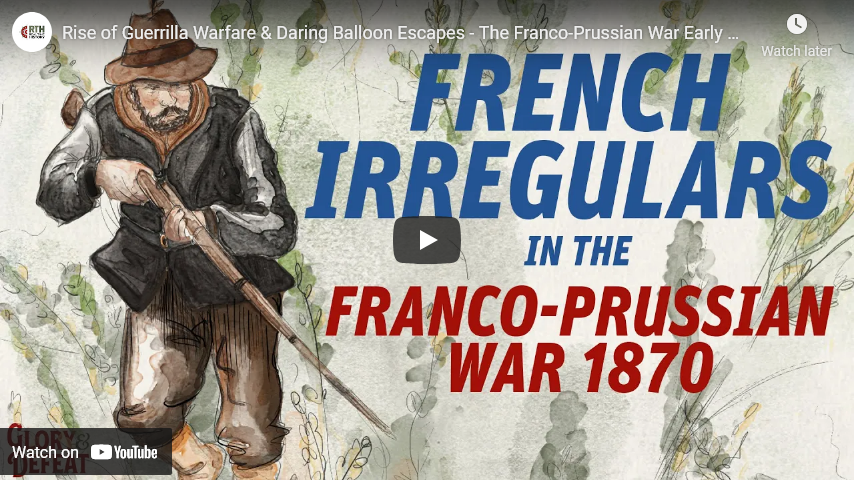
Rise of Guerrilla Warfare & Daring Balloon Escapes – The Franco-Prussian War Early October 1870
Real Time History
Published 7 Oct 2021Sign up for Curiosity Stream and get Nebula bundled in and SAVE 26%: https://curiositystream.com/realtimehistory
In early October 1870, the German states are still confident the Franco-Prussian War is as good as over. But two events might cross their plans: One of the leaders of the new French Republic, Leon Gambetta, escapes the Siege of Paris in a hot-air balloon to coordinate the French Armies outside of Paris. And in Ablis, French guerrilla fighters, the so-called Franc-Tireurs, ambush a German patrol in their sleep — with swift German retribution.
» THANK YOU TO OUR CO-PRODUCERS
John Ozment
James Darcangelo
Jacob Carter Landt
Thomas Brendan» OUR PODCAST
https://realtimehistory.net/podcast – interviews with historians and background info for the show.» LITERATURE
Arand, Tobias: 1870/71. Die Geschichte des Deutsch-Französische Krieg erzählt in Einzelschicksalen. Hamburg 2018Arand, Tobias: Gestorben für “Vaterland” und “Patrie” – Die toten Krieger aus dem Feldzug von 1870/71 auf dem “Alten Friedhof” in Ludwigsburg. Ludwigsburg 2012
Hahn, Joachim: Jüdisches Leben in Ludwigsburg. Geschichte, Quellen, Dokumentation. Karlsruhe 1998
Schneider, Fernand Thiébaut: “Der Krieg in französischer Sicht”, in: Entscheidung 1870. Der deutsch-französische Krieg, hrsg. v. Wolfgang von Groote und Ursula von Gersdorff. Stuttgart 1970. S. 165-203
» SOURCES
Engels, Friedrich: Der Deutsch-Französische Krieg. Sechzig Artikel aus der “Pall Mall Gazette”. Berlin (Ost) 1957Huber, Rudolf (Hrsg.): Dokumente zur deutschen Verfassungsgeschichte. Bd. 2. 1851-1900. Stuttgart 1964
Kürschner, Joseph (Hrsg.): Der große Krieg 1870-71 in Zeitzeugenberichten. Leipzig o.J. (1895)
N.N. (Hrsg.): Bismarcks Briefe an seine Gattin aus dem Kriege 1870/71. Stuttgart, Berlin 1903
Philippson, G.: “Jom Kippur 1870 vor Metz”, in: Wegweiser für die Jugendliteratur, Heft 4, 6 (1910). S. 26-27
Steenackers, François-Frédéric/Le Goff, F.: Histoire du gouvernement de la Défense nationale en province, 4 Septembre 1870 – 8 Février 1871. Bd. II. Paris 1884
Tissandier, Gaston: Souvenirs et récits d’un aérostier militaire de l’armée de la Loire. Paris 1891
» OUR STORE
Website: https://realtimehistory.net»CREDITS
Presented by: Jesse Alexander
Written by: Cathérine Pfauth, Prof. Dr. Tobias Arand, Jesse Alexander
Director: Toni Steller & Florian Wittig
Director of Photography: Toni Steller
Sound: Above Zero
Editing: Toni Steller
Motion Design: Philipp Appelt
Mixing, Mastering & Sound Design: http://above-zero.com
Maps: Battlefield Design
Research by: Cathérine Pfauth, Prof. Dr. Tobias Arand
Fact checking: Cathérine Pfauth, Prof. Dr. Tobias ArandChannel Design: Battlefield Design
Contains licensed material by getty images
All rights reserved – Real Time History GmbH 2021
The case for defending Taiwan
Roberto White explains why the west should help protect the Republic of China from the People’s Republic of China:
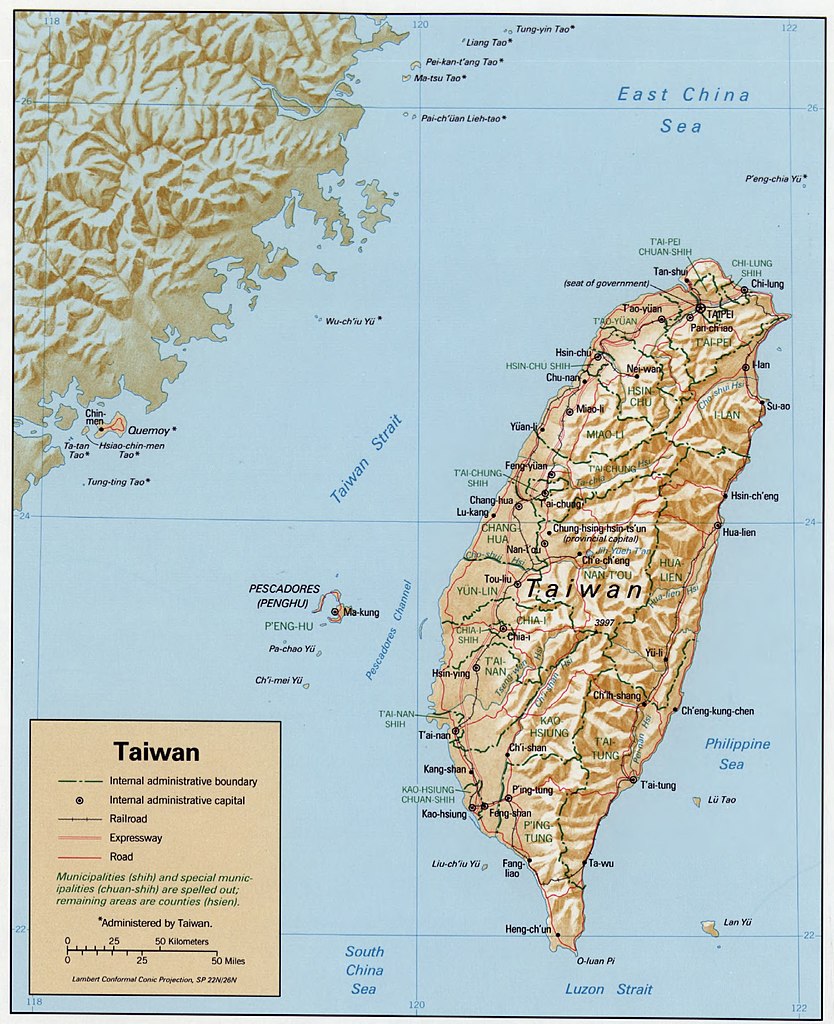
Taiwan relief map.
Library of Congress Geography & Map Division via Wikimedia Commons.
The past few days have seen Taiwan subjected to another wave of continuous harassment by China. Of course this is nothing new; China has violated Taiwan’s airspace since at least 2014. But, on Monday, a record 34 fighter jets were dispatched to Taiwan. Beijing’s increasingly erratic behaviour towards Taiwan brings to the fore why the West must defend them.
Taiwan is a free-market democracy that, despite its overbearing northern neighbour, has managed to create a vibrant economy that ranks as the sixth freest economy in the world. Crucially, it is a major producer of semiconductors (a device that helps power everything from cars to satellites), accounting for 92 per cent of all production of the world’s most sophisticated and important chips. Thus, from both an ideological and strategic standpoint, defending Taiwan is a mutually beneficial move.
The case for Taiwan’s defence is further strengthened when we look at what could happen in Asia should China take Taiwan by force.
With Taiwan’s ports and air bases, the People’s Liberation Army (PLA) could extend its maritime militia northwards through the Ryukyu (the chain of islands between Taiwan and Japan) and the Senkaku Islands (disputed by China and Japan). This would give China increased leverage over Japan in a time of crisis by, for example, restricting its maritime commerce.
The CCP could further use Taiwan as a base for tighter control of the South China Sea by blocking the Luzon Strait (between Taiwan and the Philippines) and the Balintang channel, which would cut off the traditional route used by the US Navy to navigate regional waters. In essence, China would immediately become the foremost power in the Indo-Pacific that could eventually kick the US and its allies out of the region. Unfortunately, the threat of a Chinese invasion is not a distant reality. In March of this year Admiral Philip Davidson, the United States’ top military officer in the Asia-Pacific, warned that China could invade Taiwan by 2027.
Given the perilous scenario that would emerge from a Chinese invasion of Taiwan, it is vital that, should an invasion happen, the West comes to Taiwan’s defence. However, until such a time, Western allies should aim to help Taiwan by promoting its participation in international forums. The first step would be to allow diplomats and other officials with Taiwanese passports to enter UN buildings, which they currently cannot do. This would most likely provoke a backlash from China, yet it would also confer Taiwan the dignity and respect that officials from every other state have.
The West should also stand firm against Chinese attempts to exclude Taiwan from international organisations. Between 2008-2016, Taiwan was invited to be an observer at the World Health Organization (WHO) under the name “Chinese Taipei”. In 2016, after Tsai Ing-Wen was elected Taiwan’s President, Beijing rescinded the invitation and Taiwan has not been allowed to participate since.
ARA General Belgrano – Guide 047
Drachinifel
Published 18 Dec 2019The ARA Belgrano of the Argentine Navy is today’s ship.
Want to support the channel? – https://www.patreon.com/Drachinifel
Want a shirt/mug/hoodie – https://shop.spreadshirt.com/drachini…
Want a medal? – https://www.etsy.com/uk/shop/Drachinifel
Want to talk about ships? https://discord.gg/TYu88mt
Want to get some books? www.amazon.co.uk/shop/drachinifel
Drydock Episodes in podcast format – https://soundcloud.com/user-21912004

QotD: Coping with the Karens
So then I changed tactics. Even the most draconian jurisdictions had mask exemptions for certain kinds of disability, so I became “disabled”. When Karen started shouting at me, I simply replied, calmly and quietly: “I have a disability; I’m exempt.” That worked 95% of the time. But for the hardcore Karens, I had to break out the big guns. Some of them were bitchy enough to actually ask me “what disability?”, and that’s when it was time to take sweet, sweet revenge.
See, as Martinian notes, the coin of the realm with Karen is attention. She wants fawning adulation, of course, but she’ll happily take negative attention, because as I’ve written many times re: The BCG, having “h8rz” on social media just confirms how awesome and fascinating you are. The only kind of attention Karen can’t stand is the kind that cuts her off from the group. “Disability” is the perfect way to flip that on her. For your information, I have PTSD. I watched my buddies die in my arms at Chung King and Chow Mein and Al-Kahaliq and Fuckaduckabad. How dare you dishonor my sacrifice, Karen? How dare you?!?
It’s grossly undignified on both sides, but all’s fair in civil war.
Severian, “R-E-S-P-E-C-T”, Rotten Chestnuts, 2021-06-23.
October 7, 2021
Alberta’s pantomime election to nominate a Senate candidate that Trudeau can ignore with great relish
In the latest NP Platformed newsletter, Colby Cosh discusses the apparently ongoing non-binding election for Alberta’s next Senate seat:
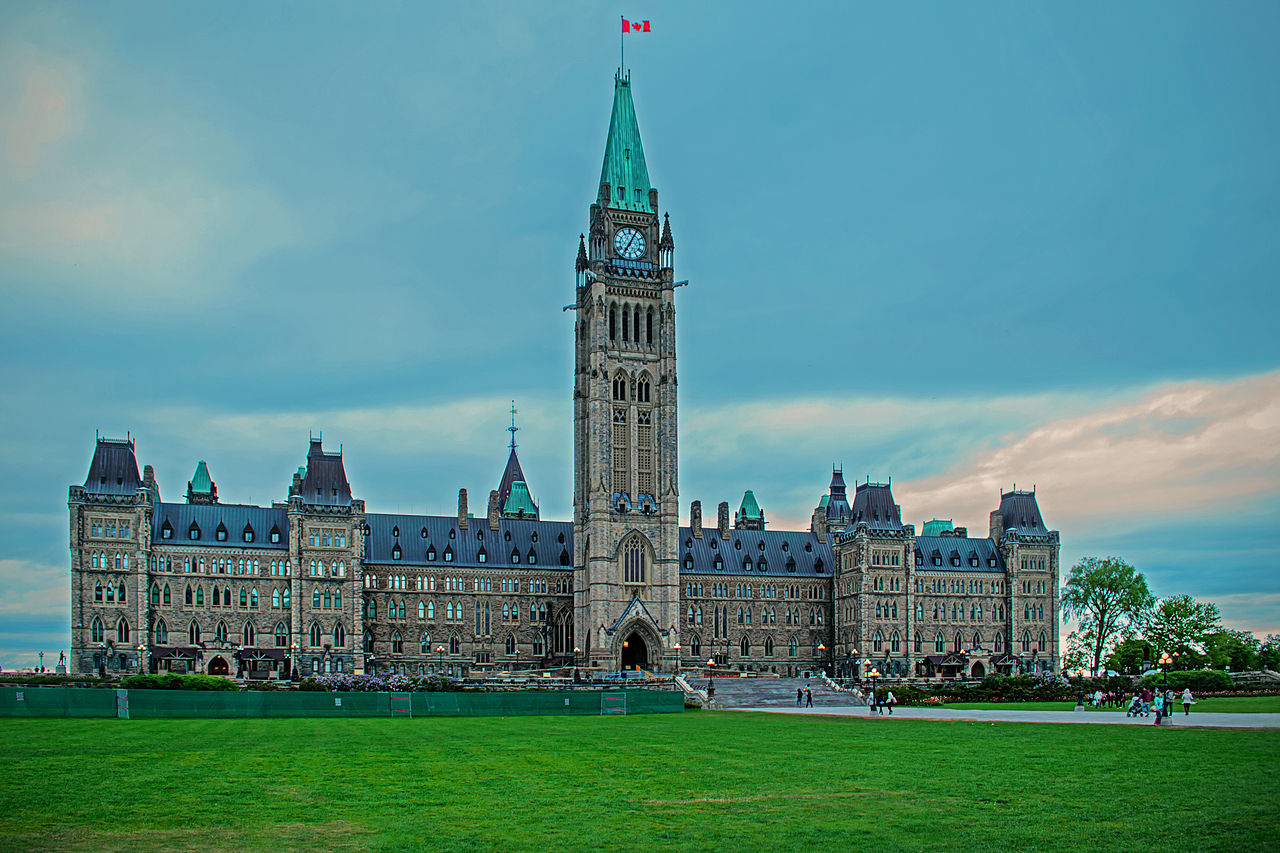
Parliament Hill in Ottawa.
Photo by S. Nameirakpam via Wikimedia Commons.
The prestige of Trudeau’s Independent Advisory Board for Senate Appointments must be maintained at all hazards, which is why the Prime Minister’s Office undertook, a little surprisingly, to provide our Ryan Tumilty with an official response to Alberta’s Senate election. The board, says the voice of the PMO, “evaluates candidates based on public, merit-based criteria”; it was not deemed necessary to finish the sentence with “… unlike the demented, bloodthirsty populace of Alberta, who will presumably just vote for the candidate who can devour the most tar sand at a COVID party.”
For our part, NP Platformed has always been a tad frustrated that smaller political groupings don’t welcome Alberta Senate elections as a chance for a low-stakes, low-cost electoral push toward the limelight. Now that federal and provincial Conservative parties are united, for the moment, 2021’s Senate election has not been accompanied even by the quiet campaigning or the minuscule media attention that the first four elections involved. It is probably to be expected that the three Conservative Party of Canada candidates on the Senate ballot will accumulate enough semi-automatic votes to be nominated.
The Liberals and New Democrats, on an official level, stayed further away from the Senate election process than ever. Duncan Kinney, a totally-independent-from-the-NDP left-wing journalist and fellow of the Broadbent Institute, is appearing on the ballot as part of a sort of none-of-the-above campaign. His entire platform is “this Senate election is illegitimate and stupid, but wouldn’t it be amusing if I won anyhow?” (We’ll take the bait: yes, it would!)
And the People’s party has taken the opportunity to pick three official nominees. If you ask us, the Mad Max party absolutely ought to have hung onto some of what it spent on the federal election and devoted the funds to making a big splash in this one. The TV networks and newspapers would ululate with helpful rage if some PPC creature topped the Senate ballot. Heck, Maxime Bernier has always been able to personally attract big crowds in Alberta. If he had planned ahead and squatted here for six months to meet the residency requirement, he could have run in the Senate election himself.
His proxies probably won’t get anywhere, but we’ll see. There really is an opportunity for a bit of chaos here, since anyone who can break into the top three on this ballot would become an Alberta “senator-in-waiting”. Some of the independent candidates, including former Slave Lake mayor Karina Pillay and former Alberta finance minister Doug Horner, have name recognition that could count for a lot in a low-turnout vote.
Houses and Herms: Private Life in Classical Athens
Thersites the Historian
Published 6 Oct 2021In this video, I look private life in classical Athens with a focus on material culture.
Patreon link: https://www.patreon.com/thersites
PayPal link: paypal.me/thersites
Discord: https://discord.gg/QCaXXFr
Brave Browser: https://brave.com/noa557
Twitter link: https://twitter.com/ThersitesAthens
Minds.com link: https://www.minds.com/ThersitestheHis…
Steemit/dtube link: https://steemit.com/@thersites/feed
BitChute: https://www.bitchute.com/channel/jbyg…

Understatement alert – “… many Canadians are less than confident in our prime minister’s ability to defend Canadian interests when up against Xi Jinping”
In The Line, Jaclyn Victor discusses Canada’s longstanding military freeloading habits and how Chinese interest in the Arctic are only the latest concerns pushing the government to start taking national sovereignty seriously:
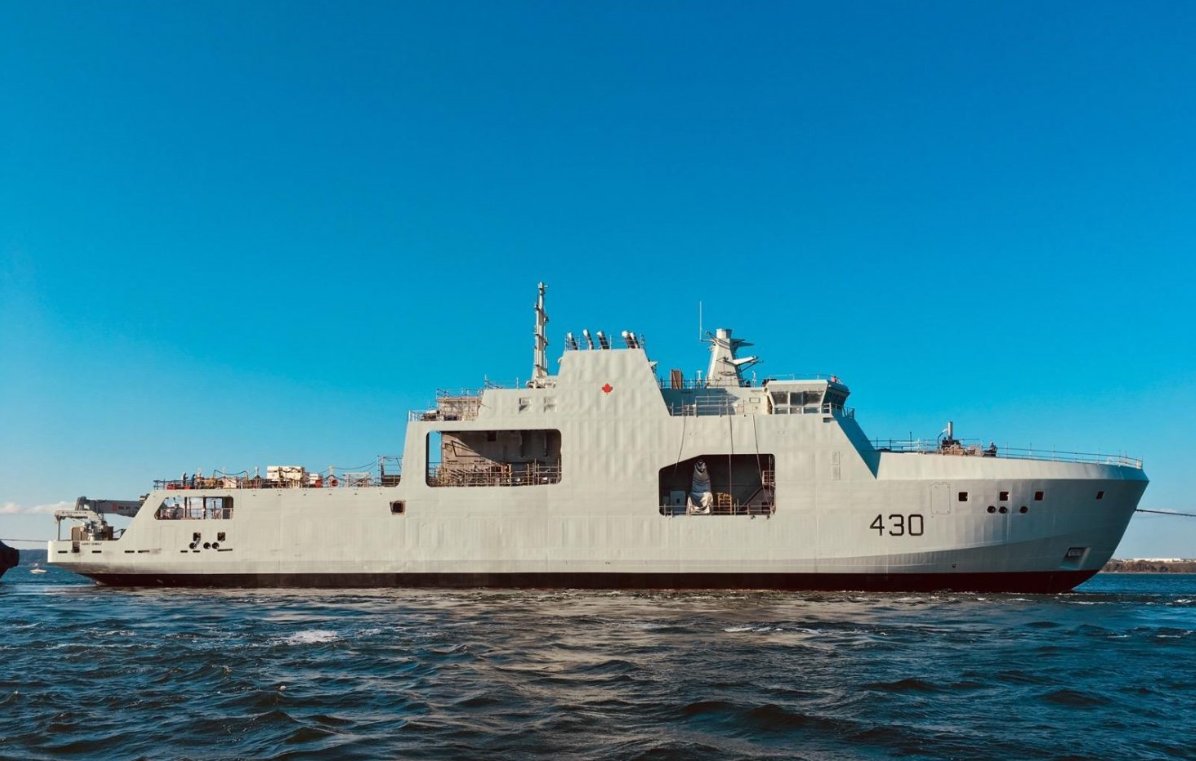
Arctic Offshore Patrol Ship HMCS Harry DeWolf shortly after launch in 2018. The ship was commissioned into the Royal Canadian Navy in June, 2021.
If the West has learned anything about China in recent years, it’s that its leaders will stop at nothing to advance their interests, and will often do so in unpredictable ways. For Canada, the most obvious lesson here was the brazen hostage diplomacy that saw “the two Michaels”, Kovrig and Spavor, imprisoned for nearly three years in retaliation for Canada’s detention of Huawei executive Meng Wanzhou. But there’s another area in which China is flexing its muscles that is much closer to home: the Arctic.
Despite being nearly 1,500 kms from the Arctic Circle, China claims to be a “near-Arctic” state. This alone might not be concerning if it weren’t also for China’s efforts to increase its Arctic presence while simultaneously undermining that of legitimate Arctic states. Although Canada staunchly claims to have sovereignty over the Northwest Passage, China hasn’t accepted this, yet has (concerningly) demonstrated an increased interest in the Arctic. Canada’s periodic military exercises and lack of assertion in the North are clearly not effective in dissuading Chinese interest in the region. As the world recognizes the importance of the Arctic we must do more if we want to maintain our influence.
From claims that Trudeau has personal ties to the Chinese Communist Party to the general belief that he has no backbone in Chinese foreign policy matters, it is clear that many Canadians are less than confident in our prime minister’s ability to defend Canadian interests when up against Xi Jinping. Perhaps the most relevant example of this is the release of the Two Michaels after nearly three years in Chinese captivity — a momentous occasion that filled many Canadians with a renewed hope — but only happened thanks to support from President Biden. And what about China’s alleged election interference, which was aimed at supporting the Trudeau Liberals at the expense of the more hawkish Erin O’Toole? Simply put, China wouldn’t want Trudeau in power if they thought he’d put a damper on their interests.
Our allies, unfortunately, also recognize that our inaction is no match for China’s “coercive diplomacy” and military preparedness. Canada could have contributed to, and hugely benefited from, the recently signed AUKUS pact. The agreement was largely intended to provide Australia with nuclear submarines to fend off Chinese aggression, but it also committed the partners to collaborate on AI and other technologies. Canada seems to have been deliberately excluded. We’re skilled in many of the information-sharing focus areas specified in the agreement, and we clearly need increased submarine capabilities in order to help maintain the Arctic sovereignty we claim to have. On top of this, many of our closest allies have outright denied Canadian claims to the NWP, leaving us with limited defence partnerships as they relate to the Arctic.
In the meantime, China has been establishing itself in the Arctic in an effort to get a foothold. In 2018, China’s Arctic Policy was published — the first of its kind for an Asian state. The policy, which discusses Chinese interest in Arctic resource extraction, brings light to Chinese efforts to develop industry in the region. China currently controls about 90 per cent of the global trade of rare minerals, and they want to maintain this dominance. As Arctic ice melts and additional resources become accessible, one can bet that China will want a piece of the pie. China already has a robust starting point for strategic investments, with US $19 billion invested in Canadian Arctic mining projects. Until the NWP (or “golden waterway” as it’s been called) becomes ice-free in the summers, China will likely continue seeking additional investment opportunities to increase its hold and resulting influence. Once the strait inevitably becomes easy to transit, China will already have a legitimate reason to do so.

Tank Chats #127 | Thornycroft Bison Concrete Armoured Lorry | The Tank Museum
The Tank Museum
Published 28 May 2021David Fletcher looks at the eccentric Thornycroft Bison, a concrete armoured lorry, created by the British to defend airfields in the early years of the Second World War.
(more…)
QotD: Music as a career choice
James Lileks, The Bleat, 2005-06-03.
October 6, 2021
Did Penicillin Win World War Two? – WW2 Special
World War Two
Published 5 Oct 2021We all know that penicillin is a wonder drug, it shortened the war, and assured Allied victory. Or did it, is that just a myth? The Allies are certainly much further ahead than the Axis, but even with accelerated wartime development, will it come into service quick enough to make a difference?
(more…)
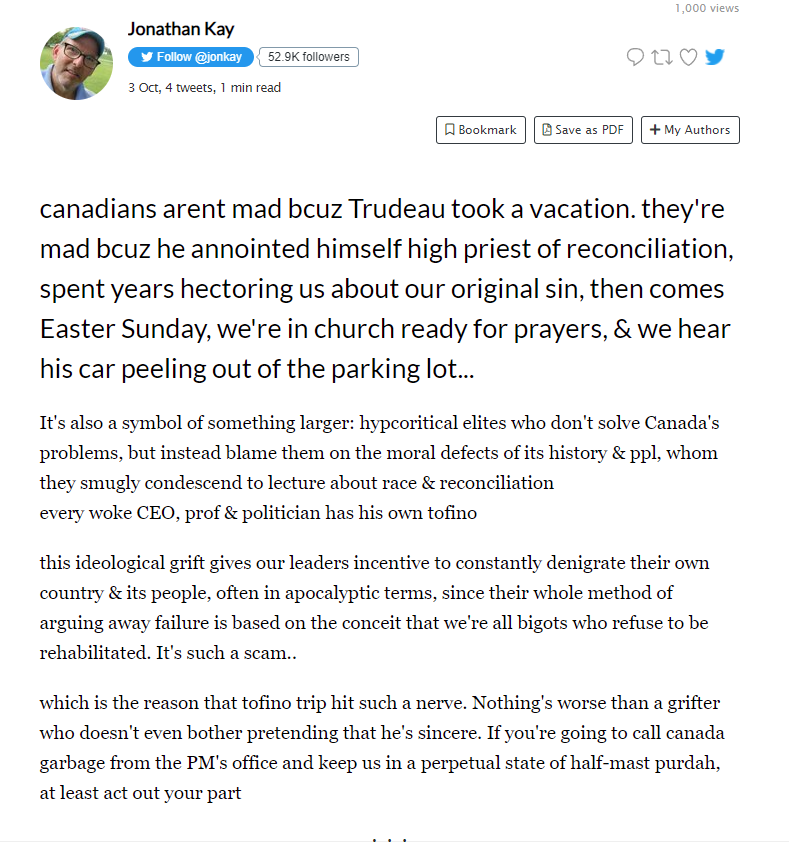
Jonathan Kay explains why Justin Trudeau’s no-show got a lot of Canadians mad
Linked from Small Dead Animals, Jonathan Kay took to the twits to summarize why this particular Justin Trudeau flake-out seems to have impacted his reputation so much more than all the other flake-outs he’s pulled over the years (screencapped for those who find Threadreader links objectionable):
Let’s Visit Finland (1935) – Helsinki Liinakhamari Lapland Arctic Ocean Highway
PeriscopeFilm
Published 2 Aug 2020Love our channel? Help us save and post more orphaned films! Support us on Patreon: https://www.patreon.com/PeriscopeFilm Even a really tiny contribution can make a difference.
This travelogue film shows Finland in the 1930’s. It was presented by Joseph Harris and Martin Ross. Finland is in northern Europe bordering Sweden, Norway and Russia. The capital city of Helsinki as well as the Arctic Ocean Highway running to the port of Liinakhamari which once touched the Arctic Ocean will be shown. It refers to Helsinki as Helsingfors which is the former Swedish name of the capital. The Arctic Ocean Highway was rerouted after WW2. Finland had long been a battleground due to the imperial ambitions and growing pains of Sweden and Russia. Finland was absorbed by the Russian Empire in 1807 (:32). A 1917 revolution overthrew the Czarist regime (:38). Due to wars and fires, few remnants existed of historical value in Helsinki (:47). Some of the old wooden houses have managed to remain (:53). Granite columns and entryways of the city point to early architects’ desire to use the country’s reserve of granite (1:14). Russian influence is exemplified in a Russian style church (1:35) and the cathedral of St. Nicholas (1:38). Architects sought to stray from the influences of foreign domination (1:45). The red granite railway station in the Market Square (1:59), the parliament building (2:05) and white factory buildings show no allegiance to former occupiers (2:08). A newly erected suburb consisting of flats constructed with reinforced steel (2:26) lay encircled by forests and lakes. Roads are lined with trees and intermittent flower beds (2:49). Helsinki harbor follows (2:59). Town parks and gardens were erected with artistic sculptures throughout showing Finland’s growing appreciation for the arts (3:22). The capital is also the terminus of the road leading northward for over a thousand miles to the port of Liinakhamari (3:34). A map is provided which still has USSR on it as this was before the fall of Soviet Russia (3:35). The port of Liinakhamari lay about 300 miles beyond the polar circle (3:43). The film follows this road which remains concrete for 20 miles after leaving the capitol (3:58). Land alongside had been cleared for agriculture (4:06). A farmer reaps hay with a scythe as modern farm machinery had not yet reached the area (4:34). A striking feature of the Finnish countryside are the impaled corn husks on wooden poles for drying (5:03). A double arched bridge of granite follows crossing one of the waterways along the route (5:09). A close up shot of the farm houses show they are crudely erected structures reminiscent of the middle ages (5:28). Corn fields dissipate and the countryside becomes hilly and wooded (6:03). Finland is known as the land of a thousand lakes, though it should be known as the land of 60,000 lakes (6:11). The route continues on for 300 miles until hitting another agricultural district (6:44) sprinkled with one-story windmills. It continues around the Gulf of Bothnia (6:54). The only important town along the way is Oluu where the Oulujoki River cuts the city into three (7:28). Uneven cobblestone roads (7:38) and wooden buildings with elaborate ornate facades. Rivers float timber out from the forests (8:18). Finland’s timber industry racks in 80 million pounds annually (8:28). The timber is sent to sawmills along the coast (9:35). Stacks along the road await trucks (9:40). A car heads to be taken across a river by ferry as bridges become less frequent (10:27). The pulley system is operated by the ferryman, his young daughter and by the passengers (10:45). The government auctioned the ferries to those who would operate them at the lowest cost (11:02). Further on, another farm area appears with small white wooden churches (11:33). Most of the water for homes are sourced by well (11:49). The road then re-enters the wilderness (12:03). A sign with “Arctic Circle” in four different languages (12:05) follows as the road crosses the imaginary line marking the Arctic circle. Cattle are wandering through the road (12:31), hay farms (13:08), and stacks of wood to heat the homes in the winter (13:24). A housewife washes her clothes using water from a brook (13:32). The road hits Lapland (13:54) and turns into a dirt road (14:01). Reindeer feed on the lichen in winter (15:05). A log hut has reindeer antlers placed on top (15:22). Laplanders with their colorful handcrafted headdresses and pointed toe tall boots (15:43). Vegetation becomes stunted while approaching the northern coastline (16:29). The film wraps up as the road reaches the deep-water port of Liinakhamari (16:40).
This film is part of the Periscope Film LLC archive, one of the largest historic military, transportation, and aviation stock footage collections in the USA. Entirely film backed, this material is available for licensing in 24p HD, 2k and 4k. For more information visit http://www.PeriscopeFilm.com

QotD: British military incompetence
It must be admitted that so long as things were peaceful the methods of the British ruling class served them well enough. Their own people manifestly tolerated them. However unjustly England might be organized, it was at any rate not torn by class warfare or haunted by secret police. The Empire was peaceful as no area of comparable size has ever been. Throughout its vast extent, nearly a quarter of the earth, there were fewer armed men than would be found necessary by a minor Balkan state. As people to live under, and looking at them merely from a liberal, negative standpoint, the British ruling class had their points. They were preferable to the truly modern men, the Nazis and Fascists. But it had long been obvious that they would be helpless against any serious attack from the outside.
George Orwell, “The Lion And The Unicorn: Socialism and the English Genius”, 1941-02-19.


