Quotulatiousness

January 11, 2024

Pushing back against the Colonialism Narrative

Filed under: Africa, Books, Britain, History, India — Tags: , , , , — Nicholas @ 04:00

At Samizdata, Brendan Westbridge praises Nigel Biggar’s 2023 book Colonialism: A Moral Reckoning:

He examines the various claims that the “de-colonisers” make: Amritsar, slavery, Benin, Boer War, Irish famine. In all cases he finds that their claims are either entirely ungrounded or lack vital information that would cast events in a very different light. Amritsar? Dyer was dealing with political violence that had led to murder. Some victims had been set alight. Anyway, he was condemned for his actions by the British authorities and, indeed, his own standing orders. Slavery? Everyone had it and Britain was the first to get rid of it. Benin? They had killed unarmed ambassadors. Irish famine? They tried to relieve it but they were quite unequal to the size of the task. In the case of Benin he comes very close to accusing the leading de-coloniser of knowingly lying. The only one of these where I don’t think he is so convincing is the Boer War. He claims that Britain was concerned about the future of the Cape and especially the Simonstown naval base and also black rights. I think it was the pursuit of gold even if it does mean agreeing with the communist Eric Hobsbawm.

He is far too polite about the “de-colonisers”. They are desperate to hammer the square peg of reality into their round-hole of a theory. To this end they claim knowledge they don’t have, gloss over inconvenient facts, erect theories that don’t bear scrutiny and when all else fails: lie. Biggar tackles all of these offences against objectivity with a calmness and a politeness that you can bet his detractors would never return.

The communists – because they are obsessed with such things and are past masters at projection – like to claim that there was an “ideology” of Empire. Biggar thinks this is nonsense. As he says:

    There was no essential motive or set of motives that drove the British Empire. The reasons why the British built an empire were many and various. They differed between trader, migrant, soldier, missionary, entrepreneur, financier, government official and statesman. They sometimes differed between London, Cairo, Cape Town and Calcutta. And all of the motives I have unearthed in this chapter were, in themselves, innocent: the aversion to poverty and persecution, the yearning for a better life, the desire to make one’s way in the world, the duty to satisfy shareholders, the lure of adventure, cultural curiosity, the need to make peace and keep it, the concomitant need to maintain martial prestige, the imperative of gaining military or political advantage over enemies and rivals, and the vocation to lift oppression and establish stable self-government. There is nothing morally wrong with any of these. Indeed, the last one is morally admirable.

One of the benefits of the British Empire is that it tended to put a stop to local wars. How many people lived because of that? But that leads us on to another aspect. Almost no one ever considers what went on before the Empire arrived. Was it better or worse than went before it? Given that places like Benin indulged in human sacrifice, I would say that in many cases the British Empire was an improvement. And if we are going to talk about what went before what about afterwards? He has little to say about what newly-independent countries have done with their independence. The United States, the “white” (for want of a better term) Commonwealth and Singapore have done reasonably well. Ireland is sub-par but OK. Africa, the Caribbean and the Indian sub-continent have very little to show for themselves. This may explain why Britain needed very few people to maintain the Empire. At one point he points out that at the height of the Raj the ratio of Briton to native was 1 to 1000. That implies a lot of consent. Tyrannies need a lot more people.

The truth of the matter is that talk of reparations is rooted in the failure of de-colonisation. If Jamaica were a nicer place to live than the UK, if Jamaica had a small boats crisis rather than the UK then no one would be breathing a word about reparations or colonial guilt. All this talk is pure deflection from the failure of local despots to make the lives of their subjects better.

Biggar has nothing to say about what came after the empire and he also has little to say about how it came about in the first place – so I’ll fill in that gap. Britain acquired an empire because it could. Britain was able to acquire an Empire because it mastered the technologies needed to do it to a higher level and on a greater scale than anyone else. Britain mastered technology because it made it possible to prosper by creating wealth. That in itself was a moral achievement.
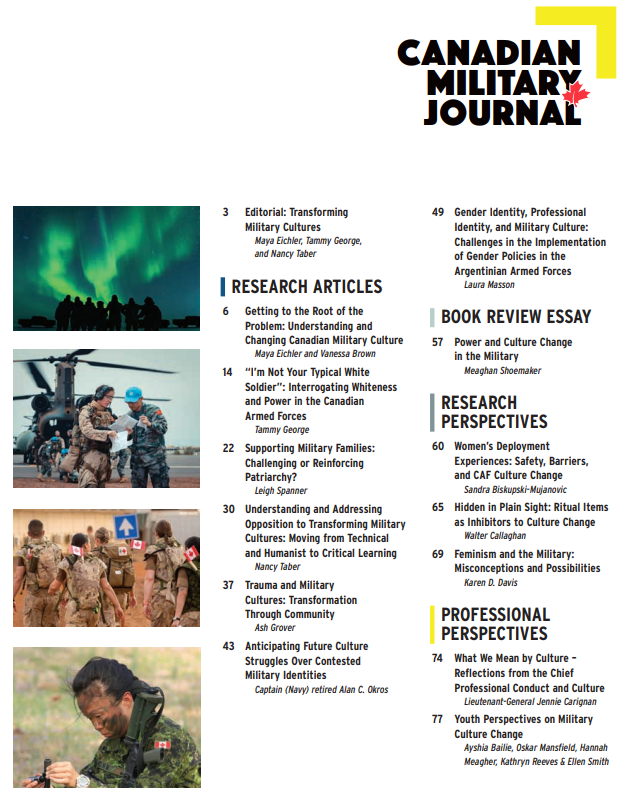

The Canadian Armed Forces believe “that they – and the country they serve – are irredeemably racist and oppressive”

The official journal of the Canadian Armed Forces has a … woke … view of themselves and the nation:

… the latest edition — which was just posted online — contains little to no mention of strategy, geopolitics or the avalanche of contemporary problems facing the Canadian Armed Forces. There’s not a single reference to the recruiting crisis, which has left vacancies of up to 40 per cent in some departments. No mention of the plummeting maintenance standards that recently prompted the commander of the Royal Canadian Navy to declare that his fleet was in a “storm” with no end in sight. No discussion of why Canada is slashing its military budget even as its peer countries do the exact opposite.

Instead — in a signal of just how far the Canadian Armed Forces has embraced far-left “anti-racist” ideology — the entire issue is devoted to how the Canadian military is a racist, patriarchal den of colonialist oppression that needs to be torn down and remade from scratch.

After devoting extended paragraphs to each cultural infraction, Eichler concludes that the Canadian Armed Forces must be remade via an “anti-oppression framework” of “feminist, decolonial, critical race, queer, critical disability, and critical political economy theories”.

Eichler notes this is “not an easy task, but a necessary one if DND/CAF wants to move the yardstick on culture change.”

Another feature, by York University psychotherapist Tammy George, frames the Canadian Armed Forces as being poisoned by “institutional whiteness”.

“In order for meaningful, sustained culture change to occur, there must be a recognition by the white majority of the way in which whiteness organizes lives,” she writes.

Leigh Spanner, a feminist postdoctoral research fellow, wrote that the CAF’s system of supporting military families was anti-feminist and patriarchal.

Ash Grover, a researcher in “feminist anti-militarism”, argues that the military might have fewer instances of post-traumatic stress disorder if they paid closer attention to “anti-oppressive theory” and how “acts of ‘othering’ can result in responses typically associated with post-traumatic stress disorder”.

Art Deco Architecture

Filed under: Architecture, History, USA — Tags: , , , , , , , — Nicholas @ 02:00

Prof. Lynne Porter
Published 22 Apr 2021

Lecture for Fairfield University class called “What We Leave Behind: the History of Fashion & Decor”.

QotD: Slavery in the United States

Of all the tragic facts about the history of slavery, the most astonishing to an American today is that, although slavery was a worldwide institution for thousands of years, nowhere in the world was slavery a controversial issue prior to the 18th century. People of every race and color were enslaved – and enslaved others. White people were still being bought and sold as slaves in the Ottoman Empire, decades after American blacks were freed.

Everyone hated the idea of being a slave but few had any qualms about enslaving others. Slavery was just not an issue, not even among intellectuals, much less among political leaders, until the 18th century – and then it was an issue only in Western civilization. Among those who turned against slavery in the 18th century were George Washington, Thomas Jefferson, Patrick Henry and other American leaders. You could research all of the 18th century Africa or Asia or the Middle East without finding any comparable rejection of slavery there. But who is singled out for scathing criticism today? American leaders of the 18th century.

Deciding that slavery was wrong was much easier than deciding what to do with millions of people from another continent, of another race, and without any historical preparation for living as free citizens in a society like that of the United States, where they were 20 percent of the population.

It is clear from the private correspondence of Washington, Jefferson, and many others that their moral rejection of slavery was unambiguous, but the practical question of what to do now had them baffled. That would remain so for more than half a century.

In 1862, a ship carrying slaves from Africa to Cuba, in violation of a ban on the international slave trade, was captured on the high seas by the U.S. Navy. The crew were imprisoned and the captain was hanged in the United States – despite the fact that slavery itself was still legal at the time in Africa, Cuba, and in the United States. What does this tell us? That enslaving people was considered an abomination. But what to do with millions of people who were already enslaved was not equally clear.

That question was finally answered by a war in which one life was lost [620,000 Civil War casualties] for every six people freed [3.9 million]. Maybe that was the only answer. But don’t pretend today that it was an easy answer – or that those who grappled with the dilemma in the 18th century were some special villains when most leaders and most people around the world saw nothing wrong with slavery.

Incidentally, the September 2003 issue of National Geographic had an article about the millions of people still enslaved around the world right now. But where is the moral indignation about that?

Thomas Sowell, The Thomas Sowell Reader, 2011.

January 10, 2024

“[T]he prime minister is either three spins into a profound self-destructive spiral: or he really just does not care”

Filed under: Cancon, Media, Politics — Tags: , , , — Nicholas @ 05:00

The Line returns from the holidays with a solid betting pool on what the hell Prime Minstrel Justin Trudeau is thinking:

We at The Line have two theories, each championed by its respective editor; the prime minister is either three spins into a profound self-destructive spiral: or he really just does not care.

Theory 1: Trudeau is constitutionally incapable of stepping away from his current role. There are no viable leadership alternatives, and his party has been so centralized into a cult of personality that the Liberals may not not be able to recover from his departure.

At the same time, Trudeau is neither particularly capable as a prime minister, nor does he actually enjoy the role very much. After almost a decade in power, he’s been unable to champion a real vision for the country and he struggles to get anything done — long gone are the days of bold promises, replaced now by time extensions granted by the epically borked NDP. This has left him grasping for legacy policy changes that are largely superficial (and sometimes unconstitutional), if well meaning.

Most of Trudeau’s term has been reactionary, in the value-neutral sense that he has been forced to react to events and crises beyond his control or making, from the election of Trump and COVID, to the Trucker Convoy. Clearly, this job has taken a toll on him and his family and, at least subconsciously, he doesn’t actually want to do it anymore. But he just can’t bring himself to step aside and appear the coward before Pierre Poilievre.

So, essentially, this theory goes — he’s engaging in self sabotage. Consciously or otherwise, he’s replaying his previous poor judgment and ethical lapses because, deep in his heart, he wants to be fired.

If that’s a little too much pop psych for you all, the second theory is that Trudeau simply DGAF. He got away with all of those previous fancy holidays. Why not get away with this one? The usual partisans will scream and whine for a few days and we’ll all move on. He’ll get a nice vacation, and if it pleases the ex and makes the kids happy, well, all the better. Trudeau doesn’t care about optics or ethics because he doesn’t have to care; his critics don’t matter, and his supporters have clearly signalled that they are along for the ride no matter what he does.

Both of these theories may be true or wrong, but it will be interesting to ponder as 2024 plays out whether Trudeau’s greatest bane proves to be self-sabotage or indifference.

Your Line editors are opening the betting table now.

The unexpected rise in “Unknown Cause”

Filed under: Cancon, Health, Media, USA — Tags: , , , , , — Nicholas @ 04:00

Mark Steyn rounds up some interesting details on that long-forgotten-by-the-media pandemic and corresponding heavy-handed government interventions that made things so much worse:

The obvious problem with appeals to authority, at least for anyone more sentient than an earthworm, is that across the western world the last four years have been one giant appeal to authority – and the result of mortgaging the entirety of human existence to the expert class is the rubble all around. Just for starters:

US scientists held secret talks with Covid ‘Batwoman’ amid drive to make coronaviruses more deadly

You don’t say! When would that have been? Oh:

…just before pandemic

Well, there’s a surprise!

    A new cache of documents, obtained by Freedom of Information campaigners and seen by The Mail on Sunday, reveal the extent to which the controversial work at the Wuhan Institute of Virology was supported, and often funded, by America.

You got that right. Wuhan is the virological equivalent of a CIA black site in Pakistan: it’s where the Deep State goes to do the stuff it can’t do in suburban Virginia.

So how’s that working out for the planet? Way back in 2022, The Mark Steyn Show reported that “Unknown Cause” was now the leading cause of death in Alberta. According to the somewhat lethargic lads at Statistics Canada, taking eighteen month to catch up with yours truly, that same year it was the fourth leading cause of death across the entire country. “Unknown Cause” is rampaging from Nunavut igloos to the Hamas branch office in Montreal: Between 2019 and 2022, it was up almost five hundred per cent.

Does “Unknown Cause” have an awareness-raising ribbon like Aids or breast cancer? Are there any celebs who’d like to headline a gala fundraiser or do an all-star pop anthem?

Apparently not. Gee, it’s almost as if taking too great an interest in “Unknown Cause” can lead to a bad case of cancer of the career. Nevertheless, the official StatsCan numbers are, to put it at its mildest, odd. By the end of 2022, Canada was one of the most jabbed nations on earth, with a Covid vaccination rate of ninety-one per cent, the highest in the G7, by some distance (UK and US both at eighty per cent).

And yet, if these government numbers are to be believed, something very strange happened. In the most jabbed member of the G7, Covid deaths went up. As The Western Standard‘s Joseph Fournier noticed, while almost nobody else did, Covid deaths per annum across the Deathbed Dominion shot up 25 per cent from the days of curfews, and arrests for playing open-air hockey:

    2020 15,890

    2021 14,466

    2022 19,716

So, in Jabba Jabba Central, more people died of Covid in the most recent annual round-up than at the height of the pandemic. In fact, on those numbers, Canada has yet to reach “the height of the pandemic”. Here’s another striking feature – again, direct from Statistics Canada:

    During the first year of the pandemic, older Canadians (65 years of age and older) accounted for 94.1% of COVID-19 deaths, while those aged 45 to 64 years accounted for 5.3%. In 2021, while the number of COVID-19 deaths among individuals aged 65 years and older (82.0%) remained high, the proportion of deaths among those aged 45 to 64 years nearly tripled to 15.5%.

So, in the most vaxxed nation of the G7, middle-aged persons account for three times the proportion of Covid deaths than they did at “the height of the pandemic”.

Like I said: odd.

Canadian life expectancy? Down. Oh, just by four months or so. But that’s three times the size of last year’s drop.

Excess mortality? Indeed: In 2019 the age-standardised death rate was 830.5 per 100,000 people. In 2022 it was 972.5. As I’ve pointed out a gazillion times on telly, that’s the opposite of what’s meant to happen post-pandemic: After the Spanish Flu, the mortality rate fell because people who would otherwise have died in 1924 had already died in 1919. That phenomenon is visible in Eastern Europe, but nowhere in the Dominion of Death.

Last year I mentioned en passant to my friend Naomi Wolf that the Covid vaccines were beginning to remind me of the scandals of her old chum Bill Clinton: one such can do a politician in, but, if you have (as Slick Willy did) a multitude of ’em, who can follow it all? If Pfizer, Moderna and AstraZeneca just caused, say, myocarditis, maybe people would find it easier to focus on. Instead, it causes myocarditis in men and infertility in women and, if you manage to dodge the latter, the mRNA shows up in newborn babies; it brings on Guillain–Barré syndrome and Ramsay Hunt syndrome and lightning-speed turbo-cancers. Alternatively, you could get a dose of the SADS and drop dead on stage or on the footie pitch, or at home watching the telly. It’s a lot to keep track of.

Or maybe, as in Alberta, you just die of … whatever. And nobody cares to find out.

The problem of engaging with “the great classical works”

Filed under: Books, Education, History, Middle East — Tags: , , , — Nicholas @ 03:00

The first book review for 2024 at Mr. and Mrs. Psmith’s Bookshelf is a look at Xenophon’s Education of Cyrus by John Psmith:

    It is easier, given his nature, for a human being to rule all the other kinds of animals than to rule human beings. But when we reflected that there was Cyrus, a Persian, who acquired very many people, very many cities, and very many nations, all obedient to himself, we were thus compelled to change our mind to the view that ruling human beings does not belong among those tasks that are impossible … We know that Cyrus, at any rate, was willingly obeyed by some, even though they were distant from him by a journey of many days; by others, distant by a journey even of months; by others, who had never yet seen him; and by others, who knew quite well that they would never see him. Nevertheless, they were willing to submit to him.

I am not well-read in the classics. My excuse ultimately boils down to the same argument that all the classicists give for why you should be well-read in the classics: reading a book that has been widely admired for a very long time isn’t just reading a book, it’s entering into a “great conversation” taking place across the aeons. I feel awkward reading a book like that without knowing something about the commentaries on the book, all the people it has influenced, all the people who influenced it, the commentaries on the commentaries, and so on. It’s exhausting and overwhelming, and when I ignore all that and plunge ahead, I often don’t enjoy the book and then I feel dumb. A “great conversation” sounds nice, but only if you’re one of the participants and you actually get the inside jokes and references. Otherwise it’s as alienating and isolating as showing up to a party where you don’t know anybody, and where everybody else has already been chatting for a few thousand years.

I don’t remember who recommended Xenophon’s Cyropaedia to me or how it wound up on my reading list, but when it finally made its way to the top of my stack, I saw it and shuddered. How could I possibly appreciate this semi-fictionalized biography of the founder of the Persian Empire without first being familiar with Xenophon’s work as a mercenary for one of Cyrus the Great’s distant descendants? Or with all the ways he was riffing on and responding to the political philosophy of his frenemy Socrates? Or with the complicated politics of the Peloponnesian War, and the way that Xenophon, an Athenian exile and the original Sparta-boo, was actually writing PR for King Agesilaus II, but concealing it within a story about the exotic Persians?1 Or with how this book led to the creation of an entire major genre of books in the Middle Ages? Or with the most famous and subversive instance of that genre, Machiavelli’s The Prince, and with all the hundreds of subsequent works reacting and responding to that one?

You see the problem? One could very easily conclude that it would be impossible for me to appreciate this book. Fortunately, I ignored all that and read it anyway. No doubt I missed all kinds of subtle layers of meaning and nuance, but even read on a totally superficial level by an ignoramus, this book rocks.

The title has the word “education” in it, but the book covers Cyrus’s entire life and reign, and only the first section concerns his education in the literal sense. That first section is very important to what comes next, though, so I’m going to dwell on it a bit. Cyrus, along with the other Persian boys of his social class, is being trained to lead. And so their education is centered around having lots of opportunities to judge, instruct, and coerce others; but also opportunities to serve and obey. If you’re old enough, you might remember when the education of the American leadership class worked this way too, but even those of you who are younger have seen vestiges of it in the bizarrely disproportionate weight given to extracurriculars in US college admissions.


    1. If you’re an American, then you’re already familiar with this trick. Most of our debates about the virtues and vices of other nations are just thinly-veiled attempts to “own” domestic political opponents.

How to Sharpen and Set up a No.80 Scraper | Paul Sellers

Filed under: Tools, Woodworking — Tags: , , , — Nicholas @ 02:00

Paul Sellers
Published 6 Oct 2023

The #80 cabinet scraper handles the wildest grain, but because of its name, it is also one of those misunderstood tools with misunderstood sharpening.

In this video, I walk you through the most unique sharpening method there is for any woodworking hand tool. Once you learn how to sharpen and set up this tool, you’ll be able to refine any hard and dense-grained wood surface you will ever encounter, bar none.

Where the hand plane might fail you, the #80 cabinet scraper takes over.
——————–
(more…)

QotD: The root of leftism is envy

Filed under: Books, Economics, Politics, Quotations — Tags: , , , — Nicholas @ 01:00

    “Social justice” is sacralized envy.

Which fits a lot better on a Pepe the Frog meme, you must admit.

Note also the slight, but important, change in emphasis — from “hate” to “envy”. Recall that [Economics in One Lesson author Henry] Hazlitt was writing in 1946, when material deprivation was still a thing, even for Americans. Back then it was assumed that the hate sprang from the envy, which meant that the hatred could eventually be dissipated. It implied an endpoint. Hazlitt, like seemingly everyone else on the Right, took Lefties at their word — that some level of “equality”, by which they meant material prosperity, would cause the Left to finally hang up their jocks and hit the showers.

Three quarters of a century later, we know that’s not true. There’s nothing you could give them that would ever satisfy them. Go ahead, do it Jesus-style — turn the other cheek, give them your coat and your cloak, walk with them two miles, all that jazz. You know as well as I do what will happen — they’ll still hate you. It doesn’t matter what the “reasons” are. Before, they hated you because they didn’t have a coat and cloak. Now they’ve got yours, but they still hate you, because you’re right-handed, or blonde, or have webbed toes. Or because you don’t have webbed toes.

Whatever, something, anything. I won’t bother repeating the O’Brien quote from 1984; you’ve heard it enough by now to know what I mean when I say that for the Left, the point of envy is envy. They don’t envy you for what you have. They don’t even envy you for what you are. They just envy. The mere fact that you exist, a separate entity from them, means that they’re not all there is in the world. In other words — French judges, take note — we’re down to three words:

    Leftism is solipsism.

They envy your mere existence, since you are the walking, talking proof that not everything in this world is as shriveled and petty and miserable as they are.

Severian, “Crossing the Bar”, Rotten Chestnuts, 2021-04-06.

January 9, 2024

Matt Gurney on what he learned from Geddy Lee

Filed under: Books, Cancon, Media — Tags: , , — Nicholas @ 04:00

The Line went into holiday mode during the Christmas season and into the first week of the new year. To fill in, the editors invited contributions on things the contributors were grateful for. Matt Gurney included his own piece, encouraged by Geddy Lee’s recent book My Effin’ Life (which I haven’t read, but hope to at some point):

Most Line readers probably know that I am an unrepentant Trekkie. Many of you will not know, but will not be surprised to discover, that I’m also a huge fan of Canadian rock band Rush. (These two things do often seem to go together, I’ve noted.) Last year, Rush bassist and lead singer Geddy Lee published a memoir, playfully titled My Effin’ Life.

Lee began to work on the memoir during the pandemic lockdowns, when we all suddenly found ourselves with a lot of time on our hands. Lee has been very open, both in his memoir and in his public comments, about the sad series of life events that led him to decide to begin writing his memoir in the first place.

The first, of course, was the effective end of Rush, back in 2015. Lee was eager to continue making music and touring. Rush lyricist and drummer Neil Peart, afflicted with some health issues and worried he could no longer perform at the standard he expected of himself, was eager to retire and spend more time with his new, young family. (Rush fans will know the awful story of what happened to Peart’s first family; it’s not necessary to recap it here, but I have absolutely kept it in mind when counting my own blessings.) Lee has been honest about being frustrated and even bitter about the end of Rush’s active career, but the news got worse, when, early in what was supposed to be the second act of Peart’s family life, the drummer was diagnosed with a cruel, terminal cancer. He died in 2020, almost four years ago to this day, after a long, private struggle, a struggle that Lee did his part to keep private. As if that wasn’t enough, not long after the death of his long-time friend and bandmate, Lee lost his mother, Mary Weinrib, a Holocaust survivor and a huge and active presence in Lee’s life until the very end. Weinrib died in 2021.

That’s a lot of loss packed into a short period, and the timing was awful. As COVID hit North America and began to rack up its victims, Lee, like so many of us, retreated inside his own home. While there, he had many ghosts and sorrows to keep him company, and it clearly weighed on him. So he began writing.

And what resulted was, perhaps to the surprise of even Lee, a happy memoir. A story of gratitude and laughter. A memoir full of funny stories, jokes, and things for which he was thankful.

As 2023 was drawing to a close, my father gifted me a ticket to a book reading at Toronto’s Massey Hall, featuring none other than Geddy Lee. The special surprise interviewer and cohost for the evening — though not really that much of a surprise — was Lee’s surviving Rush bandmate and friend of decades, guitarist Alex Lifeson. The two men, both now 70, sat down on the stage and spent the next couple of hours swapping stories, jokes and memories, happy and sad. They strongly hinted, but did not promise, that some version of Rush may reunite and perform again.

And that would be great. I would spend an unwise amount of money to go see that. But it wasn’t my excitement about possible opportunities to see some version of my favourite band perform again that began changing my perspective on 2023. It was just seeing the two of them on that stage. I’m sure these guys have had to deal with all the creeping aches and pains and a need for new contact lens prescriptions that I catalogued above. And I can guarantee you that they’ve both endured more personal loss than I have. But what I saw that evening was simply two old buddies, with 30 years on me, sitting on a stage and having a blast. And I realized that to these guys, something that happened when they were 40 would have seemed like a long time ago. Because they’d lived a lot since then.

“[P]olitical violence is never ever acceptable in the United States political system”

Filed under: Cancon, Media, Politics, USA — Tags: , , , , , , , — Nicholas @ 03:00

Mark Steyn gets the message:

~I’m glad to see I wasn’t the only one who got a mordant laugh out of this line in Joe Biden’s Feast of the Insurrection sermon:

So “political violence is never ever acceptable in the United States political system. Never, never, never. It has no place in a democracy. None.”

An odd thing to say about a “political system” in which Lieutenant Michael Byrd was able to kill Ashli Babbitt in cold blood as his Capitol Police colleagues were able to do likewise to another defenceless woman, Mariam Carey. I would hope to be wrong, but I would be surprised if America gets through this year without more “political violence” — because one side seems to be fomenting it as a pretext for intensifying what Mr Kelly calls their “monopoly” on it.

That monopoly is part of a broader problem in the United States: the abolition of equality before the law. If you can avoid getting dispatched as swiftly as Ms Babbitt, you will nevertheless have what remains of your life ruined by detention without trial, solitary confinement, double-digit years of prison with no possibility of parole … Americans have gotten the message. Do you recall, after the Canadian truckers’ heroic Covid protests inspired the world, there was talk of a similar American Freedom Convoy?

Oh, you don’t remember? Me neither. That’s because it all fizzled out, as its proponents figured that the dirty stinkin’ rotten corrupt US Department of Justice would just treat it as January 6th on wheels.

~Of course, it didn’t work out too great for the Canadian truckers, either: Frozen bank accounts, protracted prosecution … Small potatoes by US DOJ standards, and Lieutenant Byrd wasn’t around to shoot them dead, but it has certainly been fierce and targeted by Canadian standards. Why? Because in Ottawa the “traffic disruption impacted residents’ lives in many ways”.

On the other hand, “pro-Palestinian” groups are currently disrupting traffic in Toronto. For over a week they’ve shut down the Avenue Road bridge over the 401. Why?

Well, it’s a key artery into Toronto’s and Canada’s most Jewish neighbourhood. But, relax: they’re not anti-Jew, they’re just anti-Zionist. After all, many of these Jews in Armour Heights and Bathurst Manor are out every night bombing Gaza daycare centres. It’s part of the same expansive definition of “pro-Palestinian” that has seen International Delicatessen Foods attacked because it has the same acronym as the Israeli Defence Force. But don’t worry, they’re not anti-Semites, just acro-Semites. If I were the famous Japanese tea master Takeno Jōō, I would hire additional security. But fortunately he died in 1555 …

Yet, as I said, it all comes down to equality before the law. The Canadian truckers handed out coffee and doughnuts to locals and are still in the dock two years on. Whereas on the blockaded Avenue Road overpass the Toronto Police deliver coffee and doughnuts to the pro-Hamas lads:

Roll up the Jews to win! In the old days, the German coppers pleaded that they were just obeying orders, but, as Kate MacMillan points out, the Toronto constables are just taking orders. Did you hear the way that fellow put it? “The police are now becoming our little messengers.”

AMX-13 | Tank Chats #174

Filed under: France, History, Military, Weapons — Tags: , , , — Nicholas @ 02:00

The Tank Museum
Published 6 Oct 2023

With over 7,700 units built and still in service today, this French light tank stands as a testament to its enduring legacy and historical significance. David Willey gives us an in-depth analysis of the development and history of the AMX-13.
(more…)

QotD: Women versus PUAs

Filed under: Health, Quotations — Tags: , , , — Nicholas @ 01:00

I don’t think the PUA crowd has any solution to the problem of how men and women can stop treating each other like shit. Nor do they claim to; the PUA attitude is that you just have to play your cards as best you can under a set of constraints that is intrinsically tragic. But I think the spotlight glare they’re putting on actual mating behavior — as opposed to the lies we tell ourselves about how we behave, or how we think we ought to behave — is a valuable first step.

The truth hurts, but it also helps. Understanding that you’re being yanked around in unhelpful ways by your instincts is the necessary first step to gaining more control of your choices. This is why I think the people who should be paying most attention to PUA theory are women — and not for the most obvious defensive reasons, either.

If you are female, you may be thinking “OK, I should learn game so jerks won’t be able to play me”. Well, that’s nice, but almost completely irrelevant. Because what both evolutionary psych and PUA tell us is that in cold fact you want to be played by an alpha – and failing that, at least someone a bit taller, a bit older, a bit smarter, and a bit higher-status than you. The fact that you want to be better at detecting imitation alphas changes nothing essential; women have been polishing that counter-game as long as men have been practicing theirs.

No. The reason women need be paying attention to PUA goes much deeper than just notching up another escalation in the jerk-vs.-bitch arms race. It’s because until women stop lying to themselves about their actual behavior, they won’t have any prayer of becoming self-aware enough to change the sexual reward pattern they present to men. In pervasive female self-honesty begins the only hope of not training up more generations of jerks. And it’s there that the pitiless, revealing glare of the PUA spotlight might help.

Yes, I know what kind of reflexive screaming that last paragraph is going to trigger. Feminists will lash at me for suggesting that this is womens’ problem to solve; shouldn’t at least half the burden of self-awareness and change fall on men?

In fact, it can’t be that way, and it can’t be for a brutally simple reason. If you are reading this, you are almost certainly a member of a culture in which women have far more power to control mens’ sexual experience than the reverse. The only exceptions to this rule have been barbaric hellholes in which women were treated as chattel.

Ladies, with having more power over sexual outcomes there comes more responsibility. And there’s this, too; just suppose the great mass of men stopped thinking with their dicks and 99% of them suddenly became sensitive New Age guys eager to commit. Until most women stopped being cruel to betas and rewarding men who behave like dominating jerks with sex, nothing … nothing would change. PUA game would still work. The tragedy to which it is a minimax response would still be in motion.

I don’t have any final answers either. But, gentle reader … if you’re a beta male and not a natural, learning some PUA game might sound icky but it would sure beat masturbating to porn for the rest of your life. And if you’re female, think hard about the last guy you slept with and the last guy you friend-zoned. Maybe you owe yourself a rethink and friend-zone guy an apology, of the kind best delivered naked.

Eric S. Raymond, “A natural contemplates game”, Armed and Dangerous, 2011-03-03.

January 8, 2024

Royal Navy to retire their only two LPDs?

Filed under: Britain, Military — Tags: , , , — Nicholas @ 05:00

Sir Humphrey comments on the recently reported “leak” about several Royal Navy ships:

In an “inspired” leak that seems to fit the Yes Minister definition of a “Confidential Security Briefing”, the Daily Telegraph is reporting that the Royal Navy is to pay off two Type 23 frigates, HMS Argyll and Westminster early in order to find crew for the Type 26 frigates. Assuming this is true, this means that since 2010 the Royal Navy escort fleet will have been cut by 40%. Meanwhile the Times is reporting that the Royal Navy will mothball both LPD’s and no longer have an active amphibious assault ship command platform. This represents a 100% cut to the active assault ship force. The reasons given in both cases seem to boil down to the line that this is about providing sailors to crew the Type 26 frigate. It doesn’t seem to be linked to the rumoured huge budgetary challenges facing the MOD this financial year, which could equally be responsible for this decision.

There are different ways that this information can be interpreted depending on how you look at it. For starters we need to ask the question, why these two ships? The Type 23 force is elderly, with the ships intended for an original 18-year life span, worked hard in the North Atlantic and replaced quickly. They have all been extended in service for up to twice their original design life, while repeated delays to order the Type 26 has meant they are working far harder, and far longer than ever anticipated.

HMS Albion docked at Portsmouth, 26 July 2029.
Detail of a photo by David Crochet via Wikimedia Commons.

These are ships designed 40 years ago, with the original Type 23 design dating back to the early 1980s. It is no exaggeration to say that there is almost certainly no one left in active regular service who was serving when the Type 23 design was first conceived. This means the design reflects the 1980s equipment and capabilities and standards – be it in the structure of the messes (large mess decks for junior sailors) or the internal wiring and machinery. While still capable, be in no doubt that these are elderly ships with all the many challenges that this brings. To make up for the many and varied delays to the Type 26, the RN has funded life extension work to the force for some years, fitting new missiles, guns and sonar equipment over time. The modern Type 23 is a far cry from its original design in equipment and capability, but it is still at its heart a 1980s warship.

Westminster had gone into refit in 2022 to begin the process of extending her life out to the late 2020s. The refit for Westminster would have cost around £100m to provide a further 4-5 years of service. while HMS Argyll had undergone the life extension process which would have seen a planned decommissioning in the late 2020s (the precise dates are not clear anymore due to the “odd” MOD decision to currently no longer provide this information on the grounds of operational security).

The LPD force by contrast is in a different position. The two ships Albion and Bulwark were built to replace the venerable Fearless class in the mid 2000s. For most of their career one has been in reserve while the other has been active, the same pattern as occurred with Fearless and Intrepid, where the latter spent years in increasingly poor state in reserve. The timing for this decision makes sense operationally as Albion has come to the end of her commission and was due to pay off into reserve, while Bulwark is still being regenerated in refit and hasn’t yet gone to sea. It would be possible to put both ships in reserve and free up a reasonable amount of sailors in the process.

The question is what is the impact on the fleet itself? Currently the RN probably has a requirement for 19 escort ships – “probably” is used as the MOD has refused to provide a statement on target force numbers in the two most recent Defence Reviews, so this is an assessment based on the 2015 Defence Review. That we have to rely on a near decade old defence review to guess how many escorts the RN plans to have speaks volumes for the manner in which the MOD engages with the taxpayer.

HMS Westminster (foreground) and HMS Iron Duke, Type 23 frigates of the Royal Navy, in the naval base of Portsmouth, August, 2000.
Image via Wikimedia Commons.

Vivek Ramaswamy versus the HR team

Filed under: Media, Politics, USA — Tags: , , , — Nicholas @ 04:00

Chris Bray finds the humour in Vivek Ramaswamy’s most recent viral video moment:

I’m not sure which part of the employee handbook he violated, but Vivek Ramaswamy was obviously called into a conference with HR.

“Mr. Ramaswamy, security will now escort you to your desk to collect your personal belongings.”

Federal debt has now passed $34 trillion, is well over 100% of GDP, and is on track to top $40 trillion in maybe two years. What are we going to do about that? We’re going to spend over a trillion dollars a year in the foreseeable future to cover the interest on that debt. Worth noticing?

The United States fought the Taliban for twenty years, accomplished nothing, and then let them take all of Afghanistan instead of just the half they controlled when we invaded. How did that happen? How did we spend thousands of lives and trillions of dollars on literally nothing? We trained and funded the Afghan National Army, which then turned out to not actually exist at the very first moment it was expected to function without us. Should we work to understand that failure? Should we maybe ask where the money went?

And so on. Pick your own top ten things that need to be discussed and examined. Covid policy, the emerging disaster of learning loss from school closures, the failure and increasingly obvious danger of the mRNA injections, our long history of remarkably unwise foreign interventions, the Frankenstein’s monster of our corporate-state merger and revolving door regulatory capture, the ideological rigidity of academic culture, whatever. There are crushingly obvious and disturbingly consequential failures all over our recent national record.

So our presidential candidates are facing persistent and aggressive questioning about … their willingness to denounce white supremacy. Is racism bad? Is racism bad? Is racism bad? Will you denounce it? Will you denounce it? Will you denounce it, denounce it, denounce it?

« Newer PostsOlder Posts »

Powered by WordPress