Quotulatiousness

January 8, 2024

“[A]ll philosophers, insofar as they were dogmatic, have been very inexpert about women”

Filed under: Health, Media, Politics — Tags: , , — Nicholas @ 03:00

Theodore Dalrymple on the food police and the linguistic distortions forced on traditionally technical and scientific journalism:

The world, said James Boswell, is not to be made a great hospital; but to a hammer everything is a nail, and to doctors and medical journals everything is either a medical problem or a medical solution.

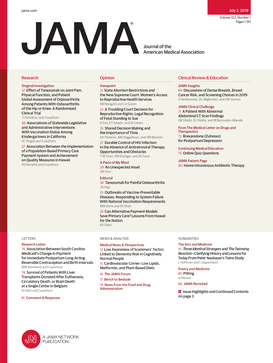
Looking at the website of the Journal of the American Medical Association today, I came across a paper with the title “Effect of an Intensive Food-as-Medicine Program on Health and Health Care Use”. It was published just above “A Young Pregnant Person With Old Myocardial Infarction”.

Could that pregnant person possibly be a woman? Heaven forfend that so prejudiced a thought should occur to us! If it occurred to you, dear reader, I suggest that your brain still needs washing. The word woman is here abjured by JAMA as completely as, say, it would abjure (rightly) the word bitch with reference to a woman. In other words, the word woman is now treated as if it were in itself an insult, a rather strange result of pro-feminist indoctrination.

The paper begins, “A patient in their 30s presented to the hospital …” No doubt I am deeply reactionary, almost a dinosaur in a world of mammals, but is not their the plural possessive adjective, and is not “a patient” singular? If the authors of the paper were really not sure whether the pregnant person was a man or a woman, surely they should have written “A pregnant person in his or her 30s …”? That would have been a step too absurd (so far) even for the editors of JAMA, assuming that the paper in question was published with some kind of editorial oversight. I anticipate further linguistic absurdity in JAMA with a mixture of amusement and irritation; that there will be one is a racing certainty (a Dutch friend of mine was going to write a book about Dutch social policy titled Creative Appeasement).

The paper, by the way, gives new meaning to the first two sentences of Nietzsche’s book Beyond Good and Evil: “Suppose truth to be a woman — what then? Are there not grounds for the suspicion that all philosophers, insofar as they were dogmatic, have been very inexpert about women?”

Crispy Hashbrowns – You Suck at Cooking (episode 161)

Filed under: Food, Humour — Tags: , — Nicholas @ 02:00

You Suck At Cooking
Published 7 Oct 2023

Hashbrowns. Also known as fried potato shreds. Also known as 2D potatoes. Also known as even greasier potato chips. Also known as hashbrowns.

If you’ve never fried before or you want to brush up on the details, check this out
https://food52.com/blog/18669-the-do-…

This deep fry safety page is also very good
https://www.bbcgoodfood.com/howto/gui…

Basically hot oil can get out of control so you need to monitor your temperature and not let it get too hot. Electric stoves are deceptive in that they can get the oil very hot even at a lower settings, there’s just a longer delay.

RECIPE

Capture potatoes
Apologize to potatoes
Remove outer thermal membrane
Disintegrate potatoes
Rinse potato smithereens or soak them if you want them less starchy
Wrap them in some cheesecloth or a clean dish towel and squeeze the hell out of them (but mainly the water and leave some of the hell)
Cook them in a non stick pan with a tablespoon of oil for around ten minutes so they won’t be medium rare
Let them cool off a bit
Put them in a bowl
For each potato add
1 teaspoon corn starch
1 teaspoon garlic powder
1 teaspoon onion powder
some pepper pepper pepper
Wangjangle
Form into patties or triangles but NO OTHER SHAPES
Heat your oil in a cast iron skillet but not so hot that you burn your house down
Most recipes recommend around 350 degrees Fahrenheit but as long as you get a sizzle going when you put them in it’s hot enough
Fry until the first size is golden brown. Somewhere between 4-8 minutes
Fry the other side until golden brown which is gonna happen faster, probably 5 minutes max
Lay them down on a paper towel and tell them they did a good job
Let them cool or spray a heat resistant gel inside your mouth and eat immediately
(more…)

QotD: Nomadic cultures’ territorial needs

Filed under: Americas, Asia, History, Quotations — Tags: , , , — Nicholas @ 01:00

This bears little resemblance to the strategic concerns of historical nomads. As a direct consequence of failing to understand the subsistence systems that nomads relied on, [George R.R.] Martin [in his descriptions of the Dothraki nomad culture] has also rendered their patterns of warfare functionally unintelligible.

The chief thing that nomads, both Great Plains Native Americans and Eurasian Steppe Nomads used violence to secure control of is the one thing the Dothraki never do: territory. To agrarian elites (who write most of our sources) and modern viewers, the vast expanses of grassland that nomads live on often look “empty” and “unused” (and thus not requiring protection), but that’s not correct at all. Those “empty” grasslands are very much in use; the nomads know this and are abundantly willing to defend those expanses of grass with lethal force to keep out interlopers. Remember: the knife’s edge of subsistence for nomads is very thin indeed, so it takes only a small disruption of the subsistence system to push the community into privation.

For the Eurasian Steppe nomad, the grass that isn’t near their encampment is in the process of regrowth for the season or year when it will be near their encampment and need to support their herds. Allowing some rival nomadic group to move their sheep and their horses over your grassland – eating the essential grass along the way – means that grass won’t be there for your sheep and your horses when you need it; and when the sheep starve, so will you. So if you are stronger than the foreign interloper, you will gather up all of your warriors and confront them directly. If you are weaker, you will gather your warriors and raid the interloper, trying to catch members of their group when they’re alone, to steal horses and sheep (we’ll come back to that); you are trying to inflict a cost for being on your territory so that they will go away and not come back.

The calculus for nomadic hunters like the Great Plains Native Americans is actually fairly similar. Land supports bison, bison support tribal groupings, so tribal groups defend access to land with violent reprisals against groups that stray into their territory or hunt “their” bison. And of course the reverse is true – these groups aren’t merely looking to hold on to their own territory, but to expand their subsistence base by taking new territory. Remember: the large tribe is the safe tribe; becoming the large tribe means having a larger subsistence base. And on either the plains or the steppe, the subsistence base is fundamentally measured in grass and the animals – be they herded sheep or wild bison – that grass supports. Both Secoy and McGinnis (op. cit.) are full of wars of these sorts on the Great Plains, where one group, gaining a momentary advantage, violently pushes others to gain greater territory (and thus food) for itself. For instance, Secoy (op. cit., 6-32) discusses how access to horses allowed the Plains Apache to rapidly violently expand over the southern Plains in the late 17th century, before being swept off of them by the fully nomadic Ute and Comanche in the first third of the 18th. As McGinnis notes (op. cit., 16ff), on the Northern Plains, prior to 1800 it initially was the Shoshone who were dominant and expanding, but around 1800 began to be pushed out by the Blackfoot, who in turn would, decades later, be pushed by the expanding Sioux.

This kind of warfare is different from the way that settled, agrarian armies take territory. Generally, the armies of agrarian states seek to seize (farm-) land with its population of farmers mostly intact and exert control both over the land and the people subsequently in order to extract the agricultural surplus. But generally (obviously there are notable exceptions) nomads both lack the administrative structures to exert that kind of control and are also very able to effectively resist that sort of control themselves (it is hard for even nomads to tax nomads), making “empire building” along agrarian lines difficult or undesirable (unless you are the Mongols). So instead, polities are trying to inflict losses (typically more through raiding and ambush than battle). Since rivals will tend to avoid areas that become unsafe due to frequent raiding, the successful tribe can essentially push back an opposing tribe with frequent raids. In extreme circumstances, a group may feel threatened enough to get up and move entirely – which of course creates conflict wherever they go, since their plan is to disposess the next group along the way of their territory.

Within that security context, larger scale groupings – alliances, confederations, and super-tribal “nations” – are common. On the Eurasian Steppe, such alliances tended to be personal, although there was a broad expectation that a given ethnic grouping would work together against other ethnic groupings (an expectation that Chinggis actually worked very hard, once he became the Great Khan of a multi-ethnic “Mongol” army, to break up through the decimal organization system; this reorganization is part of what made the Mongol Empire so much more successful than previous Steppe confederations). Likewise, even a cursory look at the Native Americans of the Great Plains produces both a set of standard enmities (the Sioux and the Crow, for instance) but also webs of peace agreements, treaties, alliances, confederations and so on. The presence of British, French, Spanish and American forces (both traders and military forces) fit naturally into that system; the Plains Apache allied with the Spanish against the Comanche, the Crow with the United States against the Sioux and so on. Such allies might not only help out in a conflict, but also deter war and raiding because their strength and friendship made lethal retaliation likely (don’t attack someone allied to Chinggis Khan and expect to survive the experience …).

Exactly none of that complexity appears with the Dothraki, who have no alliances, no peace agreements, no confederations and no territory to attack or defend. Instead, the Dothraki simply sail around the grass sea, fighting whenever they should chance to meet.

Bret Devereaux, “Collections: That Dothraki Horde, Part IV: Screamers and Howlers”, A Collection of Unmitigated Pedantry, 2021-01-08.

January 7, 2024

Evelyn Waugh’s horrible family

Filed under: Books, Britain, History — Tags: , , , , — Nicholas @ 05:00

In the latest SHuSH newsletter, Ken Whyte explains why Evelyn Waugh drank:

Happy New Year! How were your holidays? Were you as festive as undergraduate Evelyn Waugh kicking off his Christmas break in 1924?

    Then I went to Oxford. Drove to 31 St Aldates where I found an enormous orgy in progress. Billy and I unearthed a strap and whipped Tony. Everyone was hideously drunk except, strangely enough, myself. After a quiet day in cinemas, I had a dinner party of Claude, Elmley, Terence, Roger Hollis and a poor drunk called MacGregor. I arrived quite blind after a great number of cocktails at the George with Claude. Eventually the dinner broke up and Claude, Rogers Hollis and I went off for a pub crawl which after sundry indecorous adventures ended up at the Hypocrites where another blind was going on. Poor Mr McGregor turned up after having lain with a woman but almost immediately fell backwards downstairs. I think he was killed. Next day I drank all morning from pub to pub and invited to lunch with me at the New Reform John Sutro, Roger Hollis, Claude and Alfred Duggan. I ate no lunch but drank solidly and was soon in the middle of a bitter quarrel with the President — a preposterous person called Cotts — who expelled me from the club. Alfred and I then drank double brandies until I could not walk. He carried me to Worcester where I fell out of the window then relapsed into unconsciousness punctuated with severe but well directed vomitings. On Wednesday I lunched with Robert Byran at the New Reform and the man Cotts tried to throw me out again. Next day I lunched with Hugh and drank with him all the afternoon and sallied out with him fighting drunk at tea time when we drank at the New Reform till dinner… Next day, feeling deathly ill, I returned to London having spent two months’ wages. I had to dine with Alex, Richard Greene, Julia Strachey … and then back to Richard’s home for a drink. …

[…]

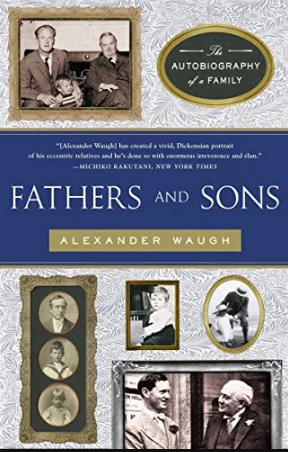
I picked up Alexander Waugh’s Fathers and Sons: The Autobiography of a Family (2004), several weeks ago. I’ve been enjoying it so much that I’m rationing it, reading about ten pages at a time to make it last.

Alexander Waugh is a music writer and biographer, former opera critic at the Evening Standard, son of novelist and Private Eye diarist Auberon Waugh, grandson of the aforementioned Evelyn, the titan of English letters whose brother, Alec, and father, Arthur, were also reasonably famous writers. The book is about the interpersonal relations of these three generations of men who produced about 180 books among them. And it’s wild. These are hugely and incorrigibly flawed people. Often horrible to one another (also to outsiders but they save their best for kin). They are in equal parts perverse and hilarious, and often brilliant, especially Evelyn. I can’t believe people ever behaved this way.

Undergraduates have never required reasons to binge drink, but you can’t read the opening chapters of Fathers and Sons without thinking Evelyn had special motivation. He was the second son of Arthur. His older brother, Alec, was “the firstling”, the “future head of the family”, their parents’ “darling lamb”, and mom and pop didn’t care who knew it, least of all Evelyn.

Arthur and his missus, Kate, had an “unbounded fascination for Alec”, who won all his school honours and was star of the cricket team. Arthur considered the boy a literal gift from God and believed that they could communicate telepathically. He would write him notes like: “I simply go about thinking of your love for me all the time”. Their relationship, writes Alexander, was “hot, clammy and compulsive”, and to the “objective eye their behavior might have resembled a pair of star-crossed teenage lovers”. Indeed, it was romantic in all but the physical sense — Arthur saved his sexual depredations for girls of tender age with whom he played “tickling games” (he also had a fetish involving young women and bicycles).

In addition to being second born, Evelyn made the mistake of being male. His parents had wanted a daughter; they consoled themselves by giving him an effeminate name and dressing him in bonnets and frills long beyond the standard of the day. He was said to be a “warm, bright. sweet-natured and affectionate child”, at least until an awareness of the family dynamic dawned. In Edwardian terms, he was treated as a bastard child by his legitimate parents. His possessions were hand-me-downs. He attended the less expensive school. When eleven-year-old Evelyn asked for a bicycle, his parents bought a bigger and better one for Alec. When Alec asked for a billiard table, space was found for it in Evelyn’s room. Despite winning prizes and becoming head of his house in school, and president of the debating society, and editor of the school magazine, Evelyn remained an afterthought and something of a nuisance in the minds of his Alec-obsessed parents.

Evelyn responded to his circumstances in a clever and self-protective fashion, defining himself against his brother and father. By adolescence, he had an inkling that he was smarter and funnier than both. They could keep their mawkish outpourings of emotion toward one another; he would be hard of head and sharp of tongue. By his early teen years, he was confiding to his diary that Arthur was a fat and “ineffably silly” Victorian sentimentalist. He considered both Alec and Arthur philistines. “Terrible man, my father”, Evelyn said to a schoolmaster. “He likes Kipling.”

To the extent that his parents thought about Evelyn, they were disturbed by his dark moods and lassitude, and intimidated by his cynical wit. Both Alec and Arthur were threatened by Evelyn as a potential literary rival. When Evelyn, in what was becoming a typical act of rebellion, ran up an expensive restaurant tab and had it sent to an outraged Arthur, Alec said: “You know father, if Evelyn turns out to be a genius, you and I might be made to look very foolish by making a fuss over ten pounds, seventeen and ninepence.”

So you can perhaps see how young Evelyn Waugh developed an enthusiasm for drink remarkable even in an undergrad, and why the rare characters killed in gruesome fashion in his fiction tended to be fathers.

1945 Begins! – WW2 – Week 280 – January 6, 1945

World War Two
Published 6 Jan 2024

The Germans launch a new offensive, Operation Nordwind, in Alsace, even as their offensive in the Ardennes is stalled. The Allies in the west don’t just have to fight these, they are also having serious issues amongst themselves in High Command that threaten their unity. The siege of Budapest is in full swing and is a hard, fought, bloody battle, and the Soviets and the Americans have big plans for new offensives soon to kick off in Eastern Europe and the Philippines (respectively).

00:00 INTRO
01:20 The Siege of Budapest
04:51 German defense plans in the East
06:38 Montgomery versus Eisenhower
08:32 Eisenhower versus the French
10:35 New German Offensive in Alsace
13:49 Monty’s plans for the press
15:04 The Battle of the Bulge
17:45 Preparations for the Luzon Landings
20:56 Notes to end the week
21:51 Summary and conclusion
(more…)

“Of course, you know that you Eeenglish invented modern people smuggling?”

In The Critic, Peter Caddick-Adams talks about the huge problems faced by European nations in combatting people smuggling:

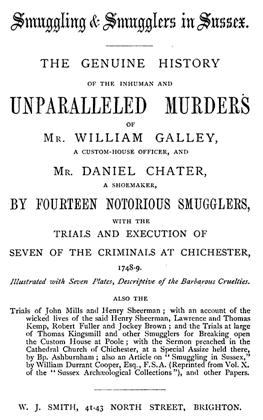
Title page of a book covering the trial of seven smugglers for the murder of two revenue officers. In the preface the author says “I do assure the Public that I took down the facts in writing from the mouths of the witnesses, that I frequently conversed with the prisoners, both before and after condemnation; by which I had an opportunity of procuring those letters which are herein after inserted, and other intelligence of some secret transactions among them, which were never communicated to any other person.”
W.J. Smith, Smuggling and Smugglers in Sussex, 1749, via Wikimedia Commons.

The Prime Minister has nailed his colours to his mast and decided we should “stop the boats”. The slogan is everywhere. What Mr Sunak means is the vessels crossing the Channel laden with bedraggled folk seeking succour on the shores of Albion. I attended a conference recently to see how this was to be done. As the perpetrators are highly organised transnational criminals, the response must be a multi-national one. Delegates were given some historical context. Ours is not a unique era. Since pre-recorded history, mankind has been inclined to see the grass as always greener on the other side of the fence. Hollow out a log to cross a river, invade an island, a coastline, Troy, the Euphrates, the Tigris, the Nile. Anywhere, for trade, for adventure, for sanctuary. Leap the Channel by longship to escape overcrowding, poor crops, for plunder, to claim a crown.

However, we were reminded — for the conference was hosted by several coastal nations studying security and crime — that most of Europe’s maritime problems with criminality and smuggling, be it booze, tobacco, narcotics, fake branded goods, or people, involve rivers, not the open sea. An old friend from the Gendarmerie Maritime observed that the great rivers of the world are not only frontiers, but also highways; earlier versions of today’s motorways, as logistically familiar to the Romans as to our own times. Those long gaggles of barges which still shuffle along the Rhine or Danube are a happenstance of trade we Brits tend to overlook, as our canals and rivers have long been consigned to pleasure-boating.

Based in Messina, the gendarme’s opposite number from the Servizio navale of the Italian Carabinieri, wearing the most resplendent braid-laden uniform of anyone at our gathering, then fixed me with his gimlet eye. “Of course, you know that you Eeenglish invented modern people smuggling?” By this he went on to explain that many of the tricks of shifting people covertly through the Mediterranean, along the Dalmatian coast, by patrol boat about the Baltic, trawler braving the North Sea, MTB across the Channel, caïque over the Aegean, among the Ionian islands, and along the Adriatic, were devised by Britain’s Special Operation’s Executive (SOE) during the Second World War.

My Belgian and French friends observed that such smuggling had honourable roots. From 1789 and post-1917, many nations had aided middle class and aristocratic refugees to flee Revolutionary France and Russia. Subsequently, their descendants helped Jewish families quit the Third Reich. Others aided the British to move vast numbers of manpower by small boat in 1940 from Dunkirk, which emboldened fishermen to repeat the manoeuvre on a smaller scale to confound their German foes. Female Greek, Turkish and Croatian officers chipped in with their knowledge of various rat-lines established during World War Two to support partisans with personnel and weapons, and extract downed airmen, spies and important scientists. Post-war, as a Spanish policeman I knew from my days in Gibraltar observed, the same systems exported Nazi war criminals, and imported drugs and guns.

The modus operandi created in those heady days of derring-do were continued for spies during the Cold War, often by the same families, using the same craft. This applied as much to jaunts and japes up and down the Danube, Rhine, Meuse and Elbe waterways as it did to the open seas. Our Danish representative observed that “boat people” were a distraction. Their numbers were vastly overshadowed by far greater numbers of religious refugees and assorted shady characters, then and now, who used stolen genuine, or expertly forged papers; another legacy from the even more distant times that preceded World War Two. The man from Interpol revealed that today’s Italian and Albanian crime families have such advanced facilities for reproducing many of the world’s passports, ID cards, work permits and driving licences, that they will pass muster even at most European electronic frontier posts and airport controls. Our Albanian colonel shifted uncomfortably.

With the fall of the Iron Curtain, espionage went out of business and, casting about for new business, these latter-day privateers and licenced black marketeers started smuggling industrial quantities of things and people, to replace the nocturnal movement of atomic secrets by night over water. A dinghy full of people in mid-Ocean is merely the tip of a giant iceberg of organisation and logistics that started on 22 July 1940 by direct order of Winston Churchill, but has continued in various legal, semi-legal and illegal forms ever since.

Every Type of Railcar Explained in 15 Minutes

Filed under: Cancon, Railways, USA — Tags: , , — Nicholas @ 02:00

Practical Engineering
Published 19 Sept 2023

How many of these cars have you spotted before?

Trains are one of the most fascinating engineered systems in the world, and they’re out there, right in the open for anyone to have a look! Once you start paying attention, it’s pretty satisfying to look for all the different types of railcars that show up on the tracks.
(more…)

QotD: The US Army between 1945 and 1950

Filed under: Asia, History, Military, Quotations, USA, WW2 — Tags: , , , , — Nicholas @ 01:00

One aftermath of the Korean War has been the passionate attempt in some military quarters to prove the softness and decadence of American society as a whole, because in the first six months of that war there were wholesale failures. It has been a pervasive and persuasive argument, and it has raised its own counterargument, equally passionate.

The trouble is, different men live by different myths.

There are men who would have a society pointed wholly to fighting and resistance to Communism, and this would be a very different society from the one Americans now enjoy. It might succeed on the battlefield, but its other failures can be predicted.

But the infantry battlefield also cannot be remade to the order of the prevailing midcentury opinion of American sociologists.

The recommendations of the so-called Doolittle Board of 1945-1946, which destroyed so much of the will — if not the actual power — of the military traditionalists, and left them bitter, and confused as to how to act, was based on experience in World War II. In that war, as in all others, millions of civilians were fitted arbitrarily into a military pattern already centuries old. It had once fitted Western society; it now coincided with American customs and thinking no longer.

What the Doolittle Board tried to do, in small measure, was to bring the professional Army back into the new society. What it could not do, in 1946, was to gauge the future.

By 1947 the United States Army had returned, in large measure, to the pattern it had known prior to 1939. The new teen-agers who now joined it were much the same stripe of men who had joined in the old days. They were not intellectuals, they were not completely fired with patriotism, or motivated by the draft; nor was an aroused public, eager to win a war, breathing down their necks.

A great many of them signed up for three squares and a sack.

Over several thousand years of history, man has found a way to make soldiers out of this kind of man, as he comes, basically unformed, to the colors. It is a way with great stresses and great strains. It cannot be said it is wholly good. Regimentation is not good, completely, for any man.

But no successful army has been able to avoid it. It is an unpleasant necessity, seemingly likely to go on forever, as long as men fight in fields and mud.

One thing should be made clear.

The Army could have fought World War III, just as it could have fought World War II, under the new rules. During 1941-1945 the average age of the United States soldier was in the late twenties, and the ranks were seasoned with maturity from every rank of life, as well as intelligence.

In World War III, or any war with national emotional support, this would have again been true. Soldiers would have brought their motivation with them, firmed by understanding and maturity.

The Army could have fought World War III in 1950, but it could not fight Korea.

T.R. Fehrenbach, This Kind of War: A Study in Unpreparedness, 1963.

January 6, 2024

Inside Mark I: The First Fighting Tank

Filed under: Britain, History, Military, Weapons, WW1 — Tags: , , , , — Nicholas @ 02:00

The Tank Museum
Published 15 Sept 2023

The first ever use of the tank in battle happened during the Battle of the Somme in 1916. In this video we look inside a unique survivor – the last British Mark I Heavy Tank in existence and examine the first tank action at Flers, an event that changed the face of warfare.
(more…)

QotD: “Computer people are just people”

Filed under: Humour, Quotations, Technology — Tags: , , — Nicholas @ 01:00

Not being a computer person myself, I keep forgetting that computer people are just people, meaning they’re no less silly, cliquish, and fad-chasing than the rest of us. Meyers-Briggs seems like a very short step above astrology to me — do I really need a long questionnaire to tell me I’m an extrovert? — but I shouldn’t be surprised that computer people like it. In my experience, “psychology” is to computer people what “computers” are to psych majors — randomly blinking ooga booga boxes that do some cool things, but are mostly a terrifying mystery. Liberal Arts people (of which Psych Majors are the most liberal) love Apple products not least because they promise to bury all that blinky ooga-booga stuff under “the user experience”; thus it shouldn’t surprise me that a quick-and-easy “test” that promises to unlock the secrets of the psyche appeals to the other sort.

Severian, “For Future Historians’ Benefit…”, Rotten Chestnuts, 2021-02-21.

January 5, 2024

The value of college degrees

Filed under: Economics, Education, USA — Tags: — Nicholas @ 04:00

Ted Gioia isn’t a college dropout, but he’s seen enough to realize that given how his career has gone, he might well have saved himself a lot of time and money by not going to university in the first place:

I spent almost a decade and huge sums of money — much of it borrowed in the form of student loans — to earn multiple degrees from elite institutions.

But I don’t have a degree in music — the field that became my vocation. And I never took a single course or lesson in jazz (my specialty) during my entire life.

I wasn’t a dropout, not even close. But it’s sobering to consider my life in retrospect, and see how much it relied on what I taught myself outside of the classroom. So I now have a very different view of college than I did back when I was a student.

My more mature view is as follows:

(1) A college degree is more about signaling your worth than about learning.
This is hardly a brilliant insight — many are now saying this. But when you’ve lived it yourself, it changes your perspective on everything.

[…]

(2) College provides inspiring role models — but they also exist in other settings.
I was blessed with a small number of teachers and mentors who taught me by example — and most of this happened at high school and college. There is no substitute for seeing greatness in the flesh at close hand.

But this can happen outside of college — my wife, for example, had those experiences working as a dancer and choreographer in New York. She learned more from her mentor Erick Hawkins than from any college professor.

[…]

(3) Dropping out is a real option with genuine upside, but it’s not for everybody.
Let me put it as simply as possible: Many successes are dropouts, but few dropouts are successes.

I would advise against abandoning your education for simple reasons of avoidance — because classes are a hassle, tests are a bummer, etc. But if you have a genuine vision of your life and the skills to achieve it, college is purely optional. And perhaps even hazardous.

(4) As the college experience becomes more expensive and close-minded, the appeal of alternatives increases exponentially.
At what price does college become a bad deal? I don’t have an answer to that, but we must be close to a tipping point.

If I tried to replicate my formal education today, it would cost ten times as much. I would have student loans as large as the national debt of a mid-sized country. That’s just ridiculous.

But this kind of irrational endpoint results when a bloated bureaucracy increases tuition at more than the inflation rate every year — and continues doing so for a half century. The people running our major universities think they can get away with this because customers want impressive diplomas, and can be squeezed to an infinite degree.

But infinity doesn’t actually exist in human affairs. And unsustainable trends eventually prove just that, namely that they are unsustainable.

(5) The smartest people will increasingly bypass the system.
I can’t emphasize this enough. My advice to young people today is very different from what I would have said just 5 years ago.

I now tell them to find ways to work outside of bureaucratic legacy institutions.

[…]

(6) Dropouts really do change society.
As someone who invested so much time and money in big-ticket credentials, that’s painful to admit. But I’ve seen too much to ignore the facts. I now grasp that people who are genuine visionaries know at an early stage that they can teach themselves, think for themselves, and manage themselves. Those are more valuable skills than any degree.

So maybe I didn’t drop out like my friend’s buddy at Harvard, back in the mid-1970s. But I wouldn’t laugh at the idea nowadays, the way I did back then. And if I had everything to do over again, I might drop out myself.

Qatar’s Aggies

Filed under: Education, Middle East, USA — Tags: , , , , — Nicholas @ 03:00

In The Free Press, Eli Lake discusses the deal between Texas A&M and the Qatari government that gives the Qatar Foundation — run by the Qatari royal family — full ownership of any intellectual property developed at the Qatari campus of the university:

Texas A&M’s Nuclear Engineering and Science Center in College Station, Texas.
Photo via Texas A&M

What does Qatar get for its investment in U.S. universities? The answer may surprise you. In addition to the prestige and the influence of affiliating one’s national philanthropy with elite schools, Qatar is also accumulating the kind of technical research that was once the prize of American universities.

Consider Texas A&M University, one of the best places in the country to study nuclear engineering. Last month, The Free Press obtained exclusive access to a copy of the latest contract between Texas A&M and the Qatar Foundation that shows all of the intellectual property developed at the university’s campus in Doha belongs to the Qatar Foundation, a national philanthropy owned by the country’s royal family.

“The Qatar Foundation shall own the entire right, title, and interest in all Technology and Intellectual Property developed at (Texas A&M University Qatar) or under the auspices of its Research Program, other than those developed by non-TAMUQ employees and without financial support from the Qatar Foundation or any of its affiliates,” says the contract, dated May 25, 2021.

This kind of arrangement is common for large research universities in America. But TAMUQ is not your ordinary university. It is entirely funded by the Qatar Foundation. Kelly Brown, a spokeswoman for Texas A&M, told me that Qatar “pays for all faculty and staff salaries” as well as the physical campus, labs and equipment, housing, transportation, and travel allowances for professors.

It’s no small matter. The intellectual property generated by Texas A&M University in Qatar, or TAMUQ, includes highly sensitive research in a variety of fields ranging from computer science to bioengineering. Last year, TAMUQ inked an agreement to develop projects with a subsidiary of Barzan Holdings, Qatar’s largest arms manufacturer.

Andre Conradie, the CEO of the joint venture between Barzan and Germany’s Rheinmetall, said at the time, “This partnership will encourage the development of technological and operational capabilities to enhance military protection.”

As one of the country’s premier schools in nuclear engineering, Texas A&M has access to two nuclear reactors in Texas not affiliated with the U.S. government. In December, the National Nuclear Security Administration renewed a contract for the university, along with the University of California and Battelle Memorial Institute, to manage the Los Alamos National Laboratory, which involves oversight of teams who design and maintain nuclear weapons for the U.S. government.

Pacific Theater USMC-Modified Johnson M1941 Rifle

Filed under: History, Military, Pacific, USA, Weapons, WW2 — Tags: , , , , — Nicholas @ 02:00

Forgotten Weapons
Published 25 Aug 2023

Johnson M1941 rifles were used in limited numbers by the US Marine Corps in the Pacific theater of World War Two, but they were used — and generally well liked. Interestingly, there was a fairly common field modification done by the Marines, and that was to cut off the front sight wings, and sometimes cut the rear aperture into a deep V-notch or a flat U-notch style. This particular ex-Marine rifle shows both of these modifications.
(more…)

QotD: Hong Kong and the “league table” of world economic freedom

Filed under: China, Economics, Liberty, Quotations — Tags: , , — Nicholas @ 01:00

The Fraser Institute issued its annual Economic Freedom of the World report last week. It didn’t get much attention; it never does these days. Considered as a league table, the report is very boring and static, and makes poor copy.

The same countries typically appear at the top from year to year, and are separated mostly by microscopic, irrelevant differences. For 2017, whence the data in the new report come, Canada sat in eighth place just a hair above Australia and a hair below the U.K. Ascending to the top, we meet other siblings of the English-speaking world, Ireland and the U.S.; the Swiss Republic stands in its typical fourth; the relatively wild child of the Commonwealth, New Zealand, remains third; and then, in the top two places, you have the twin beacons of radical economic freedom, Singapore and Hong Kong.

Ah, yes, Hong Kong. The Special Administrative Region seems, for now, to have won a short-term victory in its struggle to preserve the conditions of its reunion with mainland China. This has not, ostensively, been a struggle over economic freedom per se, but it is not a coincidence that the rioting ultimately originated in a conflict over bookstores. It is mighty hard to draw a line where “economic” freedom stops and purely personal or civil freedoms begin, and the design of the index reflects this. It has a large basic rule-of-law component, includes mobility rights under the free trade factor, and takes points away for imposing military conscription. (This is surely a tiny tribute to the shade of Milton Friedman, who was one of the originators of the index.)

Even if Hong Kong’s immediate quarrel with China has been resolved for now, it is only a manifestation of what is likely to be a longer game. Clever columnists always like exoticizing talk about how the Chinese think in generations, but when it comes to Hong Kong, the cliché has weight. The 2019 riots, in showing how attached young HKers are to their distinct identity and to the English-speaking world, have revealed a nightmarish, even delegitimizing failure by the Chinese Communists. Mainland influence on Hong Kong education and politics has been used with the intention of prolonging and deepening the spirit of ’97; China, so often deemed the super-country of the future by admiring or fearful intellectuals, has tested the results of this effort in the eyes of the world and been made a laughingstock.

Colby Cosh, “Hong Kong’s still king in economic freedom rankings … for now”, National Post, 2019-09-17.

January 4, 2024

“Missing from Gay’s note was some important … context”

Filed under: Education, Politics, USA — Tags: , , , — Nicholas @ 04:00

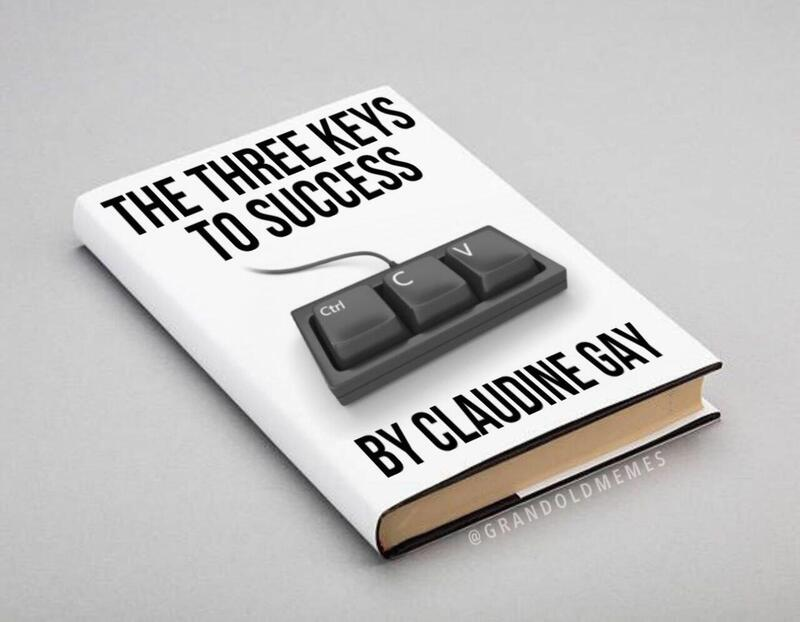
Oliver Wiseman and Bari Weiss consider the resignation-under-pressure of Harvard President Claudine Gay:

Why did Claudine Gay step down yesterday as president of Harvard? In a letter announcing the bombshell decision, Gay wrote that it was in “the best interests of Harvard for me to resign so that our community can navigate this moment of extraordinary challenge with a focus on the institution rather than any individual.”

She also blamed racism: “It has been distressing to have doubt cast on my commitments to confronting hate and to upholding scholarly rigor — two bedrock values that are fundamental to who I am — and frightening to be subjected to personal attacks and threats fueled by racial animus,” Gay wrote in her email Tuesday.

Missing from Gay’s note was some important … context.

In particular, there was no mention of the twin scandals that have plagued Gay and captured the attention of the country in recent weeks. The first: her handling of antisemitism and free expression on Harvard’s campus since October 7, including her appalling appearance before Congress in December.

The second: the ever-growing list of plagiarism allegations against Gay. On Monday night, the dogged journalists over at The Washington Free Beacon reported six more charges of plagiarism. That brought the number of allegations against Gay close to 50 and implicated half of her published works in the scandal. The next day, Gay was gone, making her the shortest-serving president in Harvard’s history: the Kevin McCarthy of higher ed.

Within minutes the crowing began. Major props went to Bill Ackman, the billionaire investor who has relentlessly criticized his alma mater since the attacks of October 7; to Chris Rufo, the Manhattan Institute senior fellow who was early on the story of plagiarism allegations against Gay; and to Free Beacon reporter Aaron Sibarium (more about him in a minute).

But does Gay’s resignation — and apparently she will remain on the faculty — actually change things?

Our sense — and recent events have only reinforced it — is that Claudine Gay is only the symptom of a deeper rot, both at Harvard and across higher education more generally.

One of the people who has been outspoken about that deeper crisis is Jeffrey Flier, who was the dean of Harvard Medical School from 2007 to 2016 and is a member of the Council on Academic Freedom at Harvard, a group founded by Harvard academics last year to fight the free speech crisis on their campus. (Harvard ranks dead last with a score of 0.00 in FIRE’s college free speech rankings.)

We spoke to Flier hours after Claudine Gay’s resignation. He said he sees the present crisis as a chance for the university to fix itself. “Her departure may have been necessary. But the university needs to do more than appoint a new president,” he explained.

“Before October 7, few people thought fixing problems at Harvard was a really urgent need. I am with a group that wanted real change, but relatively few people were listening. But now there is real opportunity for change,” explains Flier.

« Newer PostsOlder Posts »

Powered by WordPress