Quotulatiousness

September 6, 2024

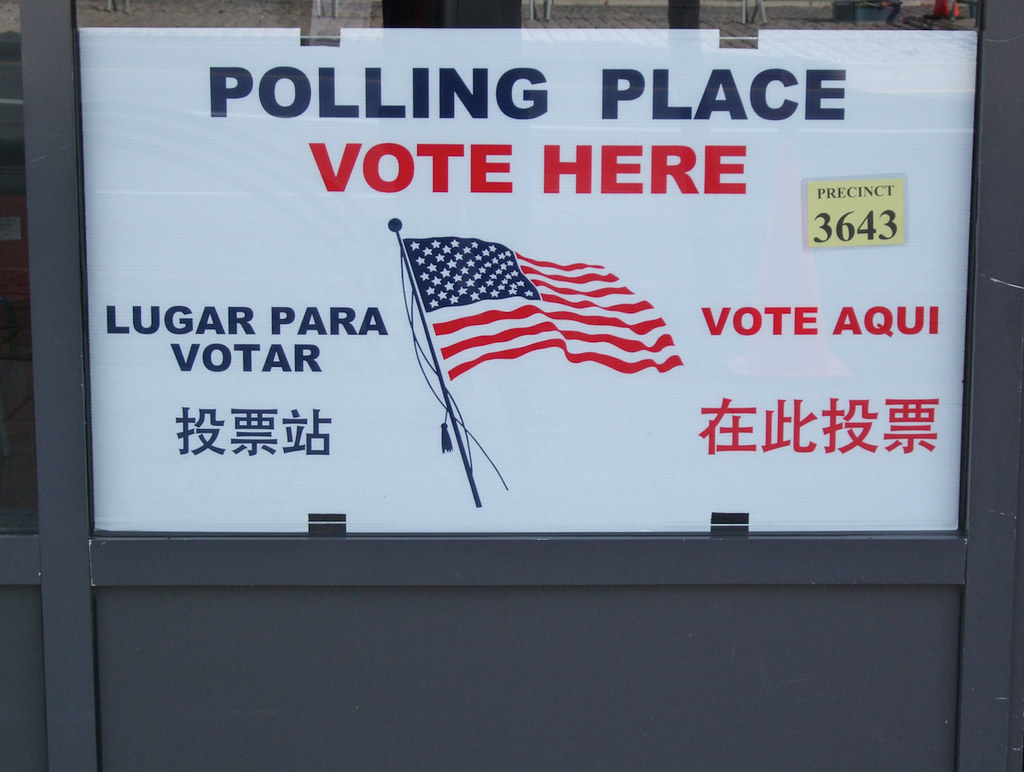
“I support Jagmeet Singh’s right to terminate his half pregnancy”

Filed under: Cancon, Media, Politics — Tags: , , , , — Nicholas @ 03:00

Matt Gurney on NDP Leader Jagmeet Singh’s decision to pull the plug on the Confidence and Supply Agreement that had propped up Justin Trudeau’s government, long after it became clear that the Liberals were garnering all the benefits and the NDP were losing core supporters over the arrangement:

Let us start with words of affirmation and support: I support Jagmeet Singh’s right to terminate his half pregnancy. How could anyone not? His constant daily humiliation was getting uncomfortable to observe.

I know you might be expecting some kind of political analysis here. What will the end of the Confidence and Supply Agreement — or Supply and Confidence Agreement (we probably should’ve settled on one before the thing collapsed)—mean for Canadian politics, the upcoming elections, and the next general federal election? But the truth is, I don’t know. No one does. All we can say with any particular certainty is that our minority government situation has become more complicated. The Conservatives will keep trying to bring the government down. Don’t be surprised if they try to make everything a confidence motion, if only to further embarrass Singh. The NDP, for their part, will face some brutal decisions. Most polls show them heading for a wipeout, with half of their seats looking likely to flip to someone else. They’d need a huge spike in the polls just to break even. So, that’s going to be fun for them to navigate. Then, of course, there’s Justin Trudeau and the Liberals. Their prospects look awfully bleak, too. But it’s entirely possible they might decide to rip the Band-Aid off and call an election at some point in the reasonably near future.

Am I predicting any of these things? No. Like I said, I have no idea what’s going to happen. If I had to guess, I’d say the NDP will continue to support the government unofficially for the foreseeable future while all the parties reassess the new reality on the ground. But that guess is entirely subject to revision as events unfold. Time will tell. What more can I offer you?

So, in terms of political commentary on yesterday’s news, that’s about it. I don’t expect any immediate changes, and we’ll see where things shake out. Thanks for reading.

But there is a related point I’d like to make. And though it may sound snarky, I mean it with total sincerity. I am so, so happy for Jagmeet Singh. Since the deal was announced, he’s had to keep Trudeau in office while also acting like he was as disgusted with the PM as the typical Canadian voter seems to be. It was, truly, cringe-inducing, a real-life manifestation of the first half of the Hot Dog Car sketch (the back half gets weird).

I wasn’t kidding when I said it was painful to watch. And it wasn’t just me who noticed — a few podcasts ago, Jen and I had a laugh at Singh getting hit by Twitter’s Community Notes fact-checking service. After one of his regular tweets attacking Trudeau, a note was added to it, reminding readers that Singh was officially, as per a signed agreement, responsible for keeping Trudeau in power. It was laugh out loud funny, and, alas for the NDP leader, we were very much laughing at him, not with him.

That’s finished now. His nightmare is over. He can stop looking so goddamn ridiculous every day now. The deal is dead.

And now that it is, we can finally take a long look back at it and wonder how the hell Singh ever decided that the deal, or at least how he behaved during the deal, was a good idea.

In the National Post, Chris Selley seems a bit less charitable toward Singh, for largely the same reason … the pain and humiliation was almost entirely self-inflicted:

So, the deal is off. NDP leader Jagmeet Singh apparently located a few scraps of dignity in some long-forgotten kitchen drawer or closet. Just minutes before Prime Minister Justin Trudeau was set for a press conference to give himself yet more credit for the NDP’s national school-lunch program, Singh announced he was calling off the NDP’s two-and-a-half-year-old confidence-and-supply agreement with the governing Liberals.

“Canadians are fighting a battle … for the future of the middle class,” Singh pronounced. “Justin Trudeau has proven again and again he will always cave to corporate greed.” Reports suggest it was the Liberals last month ordering the railway unions back to work and into binding arbitration with their employers that finally soured the milk in Dipperland.

“In the next federal election, Canadians will choose between Pierre Poilievre’s callous cuts or hope” Singh continued, casting himself as the Barack Obama figure in the forthcoming contest — “hope,” he specified, “that when we stand united, we win; that Canada’s middle class will once again thrive together.”

Because a Canadian political announcement must come with some impenetrable bafflegab, Singh added the following: “It’s always impossible until it isn’t. It can’t be done until someone does it.”

Up is left. Forward is up. United we dance. The future.

All the reasons for the NDP to cut the Liberals loose on Wednesday were so myriad and obvious that it’s difficult to remember what on earth the point of this agreement was supposed to be. Singh got no cabinet seats out of it, maybe just a few “thanks for your contribution” pats on the back from Trudeau and his ministers along the way. But the NDP essentially gave away any policy wins to the Liberals.

New Democrats understand better than anyone else the fundamentally amoral nature of the Liberal Party of Canada. They understand the Liberals’ all but total conflation of the party’s best interests with the country’s, and therefore its utter lack of shame. Anything the Liberal party does, anything it says, even if it’s completely the opposite of it did and said yesterday, is precisely the medicine Canada needs. And the NDP understands as well as the Conservatives do how mainstream Canadian media privileges the Liberals in that regard.

Saw Straight Every Time with These Simple Tricks

Filed under: Tools, Woodworking — Tags: , — Nicholas @ 02:00

Rex Krueger
Published May 29, 2024

Learn to use layout and body mechanics to saw straight and square.

QotD: “Discount” airlines

Filed under: Business, Economics, Quotations — Tags: — Nicholas @ 01:00

Some thoughts on discount airlines. The ticket price sounds good, yes, but the discount is eaten away by overweight baggage charges and the price of rail/coach tickets each way to and from your destination city and hinterland airport. Big savings for the inconvenience and expense are retained by the airline are while each souvenir of your visit jacks up your fare to exactly where it would be had you flown with a proper carrier. At least, such is the guesstimate of the travelling book collector. If stamps and other light-weight antiquities are your game you may not face the same problem.

Ghost of a Flea, Sic transit gloria mundi“, Ghost of a Flea, 2005-05-23.

September 5, 2024

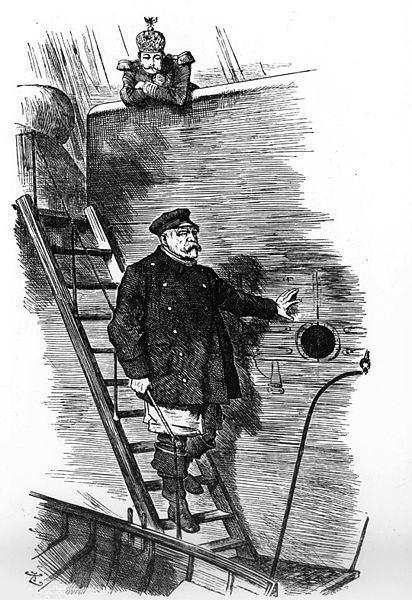
CASA doloroso, or Jagmeet finally locates a pair

Filed under: Cancon, Media, Politics — Tags: , , , , , — Nicholas @ 04:00

Ding, dong! The long-running deal between the New Democrats and Justin Trudeau’s Liberals has finally been terminated. It was Jagmeet Singh’s support that kept Trudeau in power and had been intended to run until next summer, but Singh announced he was no longer going to provide confidence and supply votes in Parliament. The editors at The Line warn us that this doesn’t automatically mean we can start heating up the tar and ripping open the feather pillows quite yet:

Federal NDP leader Jagmeet Singh in happier days at a 2017 Pride parade.
Photo via Wikimedia.

On Wednesday, Jagmeet Singh finally took longstanding criticism to heart, and announced he would be tearing up the Confidence and Supply Agreement, the deal that allows the Liberals to hold the confidence of the house.

That said, don’t expect an election just yet.

CASA has been an unmitigated disaster for the little sister of the non-alliance alliance between the two parties. As we’ve previously noted here at The Line, Singh proved to be a weak negotiator, agreeing to support Justin Trudeau with nary a cabinet seat nor a concrete spending promise. To date, the only real concessions the NDP have landed amount to, essentially, half-baked Pharmacare and dental programs that are little more than targeted subsidies to the poor. The merits of these programs in and of themselves is a debate for another day; however, what benefits they do bring have not benefited the NDP one whit.

That’s because the Liberals will — and have — taken full credit for these programs, while Singh has been left in the unenviable position of having to criticize a sitting government that he continues to buttress through the CASA. In other words, for virtually no spending concessions, the NDP has fatally undermined its position as a credible critic of the government.

Meanwhile, the Conservative Party — still strong in the polls — can lean on the NDP’s hypocrisy in order to gather up traditional blue collar and even union workers into the bosom of its culturally cozy embrace.

Obviously, this position is untenable. However, we at The Line admit to being surprised that Singh is actually ripping it up ahead of the deal’s natural expiry in June of 2025. Rather, we expected the Liberals to rag the puck on this government for as long as constitutionally possible — and, to be honest, we thought the NDP would stay in step because the party is, at its heart, weak.

Lo! We were surprised.

By ending CASA, the party has time to restore some of its spent credibility, bashing Trudeau hard to drum up fundraising ahead of the next election. Without the NDP’s support, the Liberals can carry on only until they are required to pass a confidence motion — likely the Spring budget. This gives the NDP a few months to generate support. Of course Singh won’t win that election, but he can now leave his party in a stronger position to live to fight another day.

That is … unless Trudeau decides to respond to the collapse of CASA by simply dropping the writ now, catching his opponents on the left off guard and unprepared to run a full election campaign.

Is the DEI tide finally receding from corporate boardrooms?

Filed under: Business, Media, Politics, USA — Tags: , , — Nicholas @ 03:00

At the Foundation for Economic Education, Jon Miltimore explains why many major US corporations are reconsidering their earlier “all in” approach to lecturing their customers about progressive causes:

Bud Light’s brand ambassador, Dylan Mulvaney, whose antics triggered a consumer boycott that cost the company over a billion in lost revenue.

DEI is just one form of corporate social activism, which comes in various forms and includes its cousin Environmental, Social, and Governance (ESG). Both ideas fall under, to some degree, Corporate Social Responsibility (CSR), the idea that corporations have a duty to take social and environmental actions into consideration in their business models.

If you’re wondering why Burger King has commercials on climate change and cow farts, and why Bud Light’s commercials went from featuring Rodney Dangerfield and Bob Uecker to trans activist Dylan Mulvaney, it’s because of CSR.

The idea that corporations should fight for social causes has skyrocketed in recent years to such an extent that activism is inhibiting companies in their primary mission: generating profits by serving customers.

“Firms leveraging situations and social issues is not new, but showcasing their moral authority despite a disinterested consumer base is,” Kimberlee Josephson, an Associate Professor of Business at Lebanon Valley College in Annville, Pennsylvania, has observed.

Bud Light’s decision to feature Mulvaney cost them an estimated $1.4 billion in sales, and it revealed the danger of corporations leaning into social activism, particularly campaigns and policies that alienate their own consumer bases.

Not very long ago, companies like Chick-fil-A faced backlash from progressive activists for supporting traditional marriage. Culture war advocates on the right have responded in similar fashion.

Conservative influencers have made a point of raising awareness around “woke” corporate initiatives — white privilege campaigns, climate change goals, LGBTQ events, etc. The most successful ones, such as Robby Starbuck who pioneered the campaign against Tractor Supply and John Deere, made a point of targeting corporations with conservative consumer bases.

“If I started a boycott against Starbucks right now, I know that it wouldn’t get anywhere near the same result,” Starbuck recently told the Wall Street Journal.

One can support Robby Starbuck’s tactics or oppose them. What’s clear is that corporations increasingly face risks for participating in social activism campaigns, and the threats now come from both sides of the political aisle.

Respectful neutrality on cultural issues used to be the default way for companies to avoid insulting the general public and potentially alienating customers. Under the influence of DEI/ESG/CSR advocates, corporations were persuaded that they could offend half of the population without suffering any meaningful financial losses. That turned out to be untrue.

Matilda I – The Little Tank That Did | Tank Chat #176

Filed under: Britain, History, Military, Weapons, WW2 — Tags: , , , , — Nicholas @ 02:00

The Tank Museum
Published May 24, 2024

In 1940, this small but well armoured tank was pretty much all that stood between the German Blitzkrieg and a battered British Army that was retreating to the coast.

Slow, small, and armed only with a machine gun, the A11 Infantry Tank (Matilda I) would achieve great things in its only significant battlefield action – effectively saving the British Expeditionary Force from annihilation.

At Arras on 21st May 1940, Matilda Is and IIs of 4th and 7th Royal Tank Regiment counterattacked the rapidly advancing 7th Panzer Division. In doing so, they successfully halted the German advance and unnerved Hitler so much that he issued an order forbidding further advances — thus giving the British and French chance to organize the Dunkirk evacuation.

In this video, David Willey covers the history of this diminutive and often ridiculed little tank which altered the course of history by saving an entire army.

This video features archive footage courtesy of British Pathé.

QotD: Common misunderstandings about the title of “Dictator” in the Roman Republic

Filed under: Europe, Government, History, Quotations — Tags: , , — Nicholas @ 01:00

The first important clarification we need to make is that there are, in a sense, two Roman dictatorships. Between 501 and 202 BC, the Romans appointed roughly 70 different men as dictator for about 85 terms (some dictators served more than once) through a regular customary process. Then, between 201 and 83 BC, a period of 118 years, the Romans appoint no dictators; the office dies out. Then, from 82-79 and from 49 to 44, two dictators are appointed, decidedly not in keeping with the old customary process (but taking the old customary name of dictator) and exercising a level of power not traditionally associated with the older dictators. It is effectively a new office, wearing the name of an old office.

The nearest equivalent to this I can think of would be if Olaf Scholz suddenly announced that he was reviving the position of Deutscher Kaiser (German Emperor) for himself, except without the legal structure of that title (e.g. the Prussian crown acting as the permanent president of a federation of monarchs) or the constitutional limits it used to have. We would rightly regard that as a new office, using the title of the old one.

This point is often missed in teaching Roman history because Roman history is very long and so gets very compressed in a classroom environment. Even in a college course focused entirely on the history of Rome, the gap between the end of the old dictatorship and the start of the new one might just be a couple of weeks, so it is easy for students to accept the new dictators as direct continuations of the old ones, unless the instructor goes out of their way to stress the century-long discontinuity. This is, of course, all the more true if the treatment is in a broader European History (or “Western Civ”) course or in a High school World History course – which might be able to give the Roman Republic as a whole only a week of class time, if even that much. In that kind of compressed space, everything gets mushed together. Which in turn leads to a popular view of the Roman dictatorship that this office was always a time-bomb, ready to inevitably “go off” as soon as it fell into the hands of someone suitably ambitious, because the differences and chronological gap between the old, customary dictatorship and the new irregular one are blurred out of vision by the speed of the treatment.

Just as a side note, this is generally a problem with the Roman Republic. Popular treatments of how the Republic worked – much less pop-culture representations of it – are almost always badly flawed […] The opening minutes, for instance, of the Crash Course video on the Romans is a series of clear errors, one after another, in describing how the Republic functioned as a matter of law and practice. If for some reason you want to not be wrong about the structure of Roman government, the book to read – though it is more than a bit dry and quite pricey – is A. Lintott, The Constitution of the Roman Republic (1999). I keep thinking that, as a future series, I might take a look at the basic structures of Greek and Roman civic government (“How to Polis, 101″ and “How to Res Publica, 101″) – especially if I can talk a colleague into providing a companion treatment of medieval Italian commune government – both as a historical exercise but also for the world builders out there who want to design more realistic-feeling fictional pre-modern governments that aren’t vassalage/manorialism systems.

Bret Devereaux, “Collections: The Roman Dictatorship: How Did It Work? Did It Work?”, A Collection of Unmitigated Pedantry, 2022-03-18.

September 4, 2024

There’s always been “BC weird”, but today’s BC politics is weirder than ever

Filed under: Cancon, Media, Politics — Tags: , , , , — Nicholas @ 05:00

Although I can technically say I’ve been to British Columbia, a couple of hours driving around just west of the BC/Alberta border in 1988 doesn’t give me any real understanding of Lotusland’s, uh, unique political landscape. Fortunately, here’s Rob Shaw in The Line to give a somewhat better-informed view of BC politics today:

British Columbia politics has always been weird.

This is a province in which an obese Taiwanese billionaire once bought a premier’s personal amusement park using envelopes stuffed with cash in his underwear; where the clerk of the legislature was convicted of fraud; where the Speaker claimed the legislature’s ceremonial mace was bugged by spies; and an MLA stole from a children’s charity for the disabled.

In short, the province has a bit of a reputation. So it might be tempting to view the most recent headlines about the implosion of the former dominant B.C. Liberal party — and the meteoric rise of the B.C. Conservatives — as keeping with British Columbia’s unique brand of zaniness.

Except, it isn’t.

B.C.’s political realignment mirrors one that’s already occurred in several other provinces and is playing out federally, as well, as a tired, middle-road centrist party is squeezed out by a harder-right, hungrier, more-energetic conservative movement.

At the leading edge of it all is an unlikely figure — a 61-year-old former Liberal cabinet minister with a low profile, who was booted from the B.C. Liberal caucus in 2022 by leader Kevin Falcon for sharing a social media post questioning the role of CO2 in climate change. Rather than retire quietly, John Rustad took the ejection, pivoted and joined the moribund B.C. Conservative party, which had clocked only 1.9 per cent of the popular vote in 2020. He gave the party a seat in the legislature, and a profile to grow. Since then, it has skyrocketed.

“Of course nobody thought you could do this in a year, take a political party from two to three per cent to challenge to form government,” Rustad told me. “Lots of people ask me about it and I put it down simply to people are really desperate and looking for change.” Last week — two years and 10 days after he was fired — Rustad stood in a Vancouver hotel ballroom to accept Falcon’s political surrender. The leader of the B.C. Liberal dynasty, a party that ruled the province from 2001 to 2017 under premiers Gordon Campbell and Christy Clark, announced that he was disbanding B.C. United ahead of the next election. Supporters were encouraged to flock to the Conservatives.

“This is the right thing to do for the province,” Falcon said at the Aug. 28 press conference. “I said to John: I may only agree with about 75 per cent of what you might believe in, but I do know this, that on his very worst day John Rustad would be a far better premier than (B.C. NDP premier) David Eby on his very best day. And I’ve never lost sight of that bigger picture.” The Conservatives have been within striking distance of the governing NDP for months, according to polling done by almost every firm in the country.

The Korean War Week 011 – Destroy the Perimeter! – September 3, 1950

Filed under: Asia, Britain, History, Military, USA — Tags: , , , , , — Nicholas @ 04:00

The Korean War by Indy Neidell
Published 3 Sep 2024

The North Korean forces launch a huge new offensive against the entire Pusan Perimeter, hoping to break through at least somewhere along the line. They are aware that time is of the essence, for the UN forces grow in number daily, while they are losing a battle of attrition. Some new UN arrivals this week are the first British ground troops in Korea for the fight. Meanwhile, Douglas MacArthur’s plans for his upcoming surprise counteroffensive hit all sorts of snags thanks to Korean geography.

Chapters
00:51 Recap
01:26 The British Arrive
03:47 New KPA Strategy
06:49 The New KPA Offensive
12:26 More Incheon Issues
15:16 The US and China
17:12 Summary
(more…)

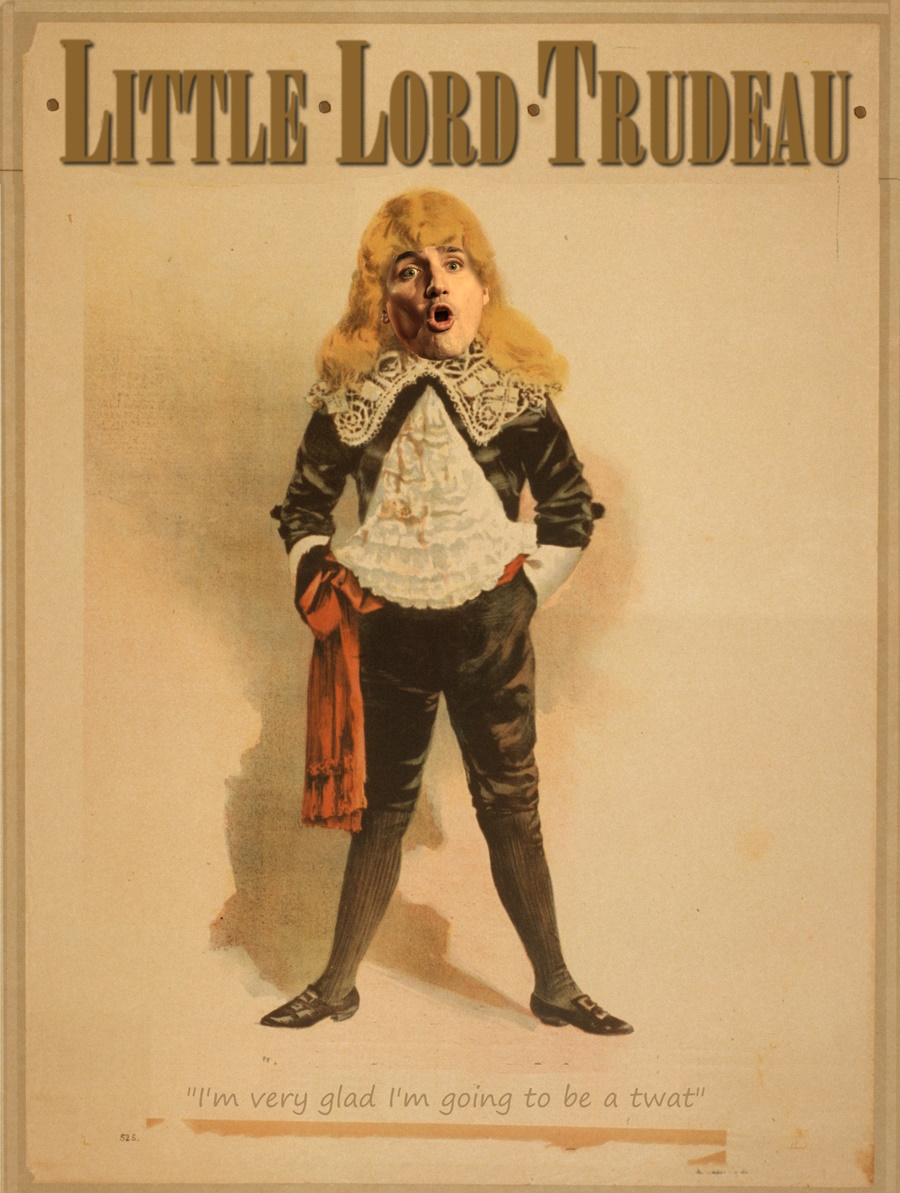
British Foreign Secretary David Lammy indulges himself with a Trudeau-esque bit of geopolitical posturing

In Spiked, Brendan O’Neill outlines the British government’s odd choice of timing to announce suspension of (some) arms shipments to Israel:

Bereft of vision, the modern politician is obsessed with “optics”. Which makes foreign secretary David Lammy’s announcement this week that the UK will be suspending some arms exports to Israel all the more surreal. The optics of withholding weapons from the Jewish State the day after we discovered that its enemy is so ruthless it will happily murder young Jews in cold blood are atrocious. Did not one functionary in the Foreign Office think to raise his or her hand and say: “Sir, should we at least wait until the bodies of those six Israeli hostages are cold before we shame and punish the nation they came from?”

This goes way beyond optics, of course. It is more than a failure of spin. It is a failure – a colossal, unforgivable one – of morality. As the bodies of the six slain Jews found in one of Hamas’s hellish lairs in Rafah were being transported back to a grief-stricken Israel, our government took action not against the Islamist extremists who carried out this unutterable atrocity, but against the nation that suffered it. Mere hours after the discovery of an act of fascistic savagery, our government handed a propaganda victory to the fascists by dragging Israel’s name through the mud. What were they thinking? Shameful doesn’t cover it.

Mr Lammy has said around 10 per cent of arms sales to Israel will be suspended. Thirty out of 350 arms-exports licences will be cancelled, primarily affecting parts for fighter jets, helicopters and drones. The reason for this smug, haughty smackdown of the Jewish State? Because there’s a “clear risk”, said Lammy, that such equipment will be used to “commit or facilitate a serious violation of international humanitarian law”. Big talk from a politician who noisily supported the West’s imperial bombardment of Iraq that led to the deaths of hundreds of thousands of civilians and the widescale torture and rape of prisoners.

Many are damning Lammy’s partial embargo as gesture politics. “What is the point?”, headlines wonder. Denying Israel a few parts for planes won’t make much difference, some moan. For the frothing Israelophobes of the iffy left, nothing less than a complete arms embargo will do. They want not one gun to go to crazy Israel. If only there was a word to describe people who agitate morning, noon and night for the disarming of a Jewish nation that recently suffered the worst act of anti-Semitic violence since the Holocaust.

The obsession with the partial nature of Lammy’s reprimanding of Israel misses the point. What the Foreign Office has just done is huge – and profoundly troubling. Sure, it won’t make much of a dent in Israel’s ability to fight Hamas, but it will cast aspersions on Israel’s fight against Hamas. It won’t militarily weaken Israel’s war on the pogromists that slaughtered more than a thousand of its people on 7 October, but it might morally weaken that war with its sly implication that there’s a criminal element to this crusade against Hamas’s army of anti-Semites. The partial arms embargo is indicative of something far more unsettling: a solidarity embargo as Britain slowly but surely turns its back on the Jewish nation.

The History of Barbecue

Filed under: Americas, Food, History, USA — Tags: , , , , , , — Nicholas @ 02:00

Tasting History with Max Miller
Published May 28, 2024

Slow-cooked molasses barbecued pork with a vinegary sauce

City/Region: United States of America
Time Period: 1839 | 1879

“Barbecue” the cooking technique has been around for a lot longer than “barbecue” the word, but it has always been a delicious way to prepare meat. This is the earliest recipe I could find for something called barbecue, and I paired it with a sauce from 40 years later that seems to me to be a precursor to vinegar-based Carolina style barbecue sauces.

The meat is super tender and falls apart. I ended up needing to cook mine for about 12 hours, but it was worth it. You really don’t need anything besides a bit of salt to go with it, but the sauce is a delicious pairing. It packs a spicy, flavorful punch, but it’s surprisingly not too vinegary.

    To Barbecue Shoat.
    Take either a hind or fore quarter, rub it well with salt, pepper, and a small portion of molasses, and if practicable, let it lie for a few hours; then rinse it clean, and wipe it dry with a cloth, and place it on a large gridiron, over a bed of clear coals. Do not barbecue it hastily, but let it cool slowly for several hours, turning it over occasionally, and basting it with nothing but a little salt-water and pepper, merely to season and moisten it a little. When it is well done, serve it without a garnish …”
    The Kentucky Housewife by Lettice Bryan, 1839.

    As the housekeeper is sometimes hurried in preparing a dish, it will save time and trouble for her to keep on hand a bottle of meat-flavoring compounded of the following ingredients.
    2 chopped onions. 3 pods of red pepper (chopped). 2 tablespoonfuls brown sugar. 1 tablespoonful celery seed. 1 tablespoonful ground mustard. 1 teaspoonful turmeric. 1 teaspoonful black pepper. 1 teaspoonful salt. Put it all in a quart bottle and fill it up with cider vinegar.
    Housekeeping in Old Virginia edited by Marion Cabell Tyree, 1879.

(more…)

QotD: The modern tribal divide – the “Somewheres” versus the “Anywheres”

Filed under: Britain, Europe, Politics, Quotations — Tags: , , — Nicholas @ 01:00

In his book The Road to Somewhere, my colleague David Goodhart identified two broad political tribes – those who see the world from Anywhere and those who see the world from Somewhere.

Boris Johnson’s election victory has once again brought this divide to the surface.

Anywheres tend to be younger and place more value on career and education – that is, they see themselves in terms of what they have achieved. They are also more comfortable with ethnic diversity and mass immigration, precisely because their identities are less rooted to place and group.

Somewheres, by contrast, are older and place greater value on the communities in which they live. This is not to say that Anywheres do not care about their community. Rather, Anywheres can see themselves prospering in any community.

Goodhart estimates that around 50 per cent of the population are Somewheres, 25 per cent are Anywheres, and the remainder occupy the grey area between the two camps. Both worldviews are perfectly legitimate, but the problem is that they can conflict.

From sitting in seminar after seminar, packed with policymakers, politicians, journalists and academics, Goodhart became painfully aware of how much the Anywhere view dominates public discussion, despite being a minority view.

Richard Norrie, “The revenge of the Somewheres”, Spiked, 2020-01-13.

September 3, 2024

The End of World War Two – WW2 – Week 314B – September 2, 1945

Filed under: China, France, History, Japan, Military, Pacific, Russia, USA, WW2 — Tags: , , , , , , , — Nicholas @ 04:00

World War Two
Published 2 Sep 2024

The Japanese sign the official document of surrender and the Second World War is over. There are still some Japanese garrisons yet to surrender, but they begin doing so one after the other. However, war is not over — and there is serious foreboding for future events in places like Vietnam and China — where Mao Zedong is meeting with Chiang Kai-Shek, even as Josef Stalin lurks in the background to secure Soviet interests no matter which Chinese regime comes out on top.

00:00 Intro
00:59 Vietnam Declares Independence
04:04 The Importance Of Manchuria
06:28 Japan’s Surrender
11:22 The Final Surrenders
13:18 Casualties
15:50 The End
(more…)

Second Amendment case involving switchblades in Massachusetts

Filed under: Government, Law, Liberty, USA, Weapons — Tags: , , — Nicholas @ 03:00

J.D. Tuccille summarizes a (surprising) court decision in Massachusetts which struck down a state law banning switchblade knives:

“IMGA0174_tijuana” by gregor_y is licensed under CC BY-SA 2.0 .

The Second Amendment to the United States Constitution undisputedly protects the individual right to own and carry firearms for self-defense, sport, and other uses. But the amendment actually says nothing about guns; it refers to “the right of the people to keep and bear Arms”, of which firearms are just one example of what dictionaries define as “a means (such as a weapon) of offense or defense”. In Massachusetts, last week, that resulted in a decision by the state’s highest court striking down a law against switchblade knives.

Protected by the Second Amendment

“We conclude switchblades are not ‘dangerous and unusual’ weapons falling outside the protection of the Second Amendment,” wrote Justice Serge Georges Jr. for the court in an opinion in Commonwealth v. Canjura that drew heavily on two landmark U.S. Supreme Court cases: Bruen (2022) and Heller (2008). The decision found the state’s ban on switchblade knives unconstitutional and dismissed charges against the defendant.

The case involved a 2020 dispute between David E. Canjura and his girlfriend, during which Boston police officers found a switchblade knife on Canjura while searching him. As is often noted, “everything is illegal in Massachusetts” and “a switch knife, or any knife having an automatic spring release device” is only one of a long list of weapons proscribed under state law. Canjura was accordingly charged.

Such absolute prohibitions on arms aren’t permitted in the wake of the Heller decision, so Canjura and his public defender, Kaitlyn Gerber, challenged the ban on switchblades, citing the federal decisions. They also relied on Jorge Ramirez v. Commonwealth (2018) in which the Massachusetts Supreme Judicial Court overturned a similar prohibition on stun guns on Second Amendment grounds.

“We now conclude that stun guns are ‘arms’ within the protection of the Second Amendment. Therefore, under the Second Amendment, the possession of stun guns may be regulated, but not absolutely banned,” the court found in that case.

Canjura required similar analysis based on the same earlier decisions, this time with Ramirez in the mix.

The Second Amendment Protects All “Bearable Arms”

Citing Heller, Justice Georges pointed out, “the Second Amendment extends, prima facie, to all instruments that constitute bearable arms, even those that were not in existence at the time of the founding”. Importantly, though, knives and other bladed weapons have a long history, extending back well before the birth of the country.

“A review of the history of the American colonies reveals that knives were ubiquitous among colonists, who used them to defend their lives, obtain or produce food, and fashion articles from raw materials,” commented Georges. Folding knives, in particular, grew in popularity to the point they became “almost universal”. The court saw no significant difference between the many types of folding knives used over the centuries and spring-assisted varieties developed somewhat more recently, finding “the most apt historical analogue of a modern-day switchblade is the folding pocketknife”.

Sten MkII: Just When You Thought It Couldn’t Get Simpler

Forgotten Weapons
Published May 29, 2024

The Sten MkI had barely been approved for production when the Sten MkII was born. Initially requested to produce a version of the gun suitable for paratroopers, in March 1941 Harold Turpin redesigned the front end of the Sten to have a quickly detachable barrel and a rotating magazine well (for compact storage). This new model was tests in late June and early July, approved for use, and contracts for it were issued in August 1941.

Named the MkII, this model of the Sten would quickly become the standard, and it was ultimately produced by six major factories (with the assistance of hundreds of subcontractors) on three continents to the tune of 2.6 million examples made. In addition to the barrel removal, the new model has a simpler front sight, simpler stock, and a revised bolt locking notch (upward, instead of downward like on the MkI).
(more…)

« Newer PostsOlder Posts »

Powered by WordPress