Quotulatiousness

April 11, 2020

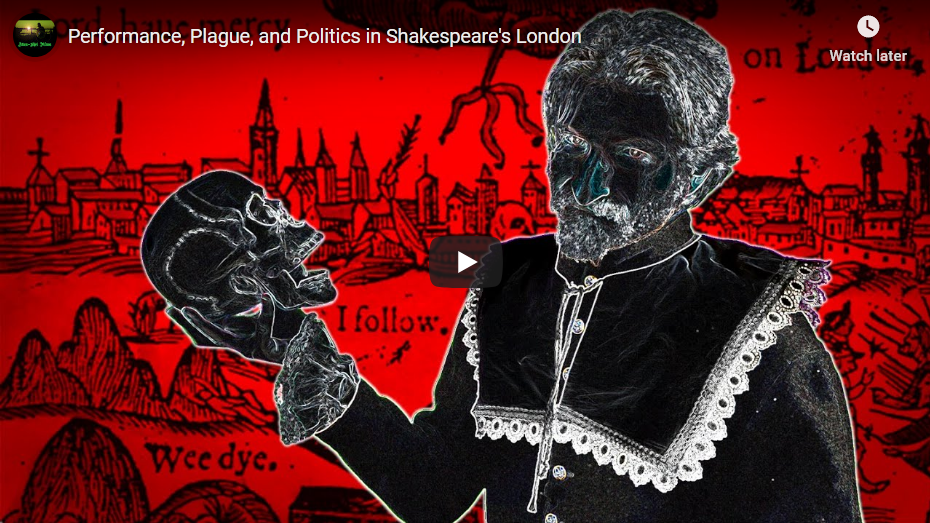
Pandemics Economically Worse than War – The First Pandemic – Pandemic History 01

Filed under: Europe, Health, History, Science — Tags: , , , , — Nicholas @ 04:00

TimeGhost History
Published 10 Apr 2020

There is much we can learn from past pandemics, like how Emperor Justinian ruined the Eastern Roman Empire’s economy and made the first plague pandemic even worse.

Join us on Patreon: https://www.patreon.com/TimeGhostHistory

Hosted by: Indy Neidell and Spartacus Olsson
Written by: Spartacus Olsson
Directed by: Astrid Deinhard
Executive Producers: Bodo Rittenauer, Astrid Deinhard, Indy Neidell, Spartacus Olsson
Creative Producer: Joram Appel
Post-Production Director: Wieke Kapteijns

Research by: Spartacus Olsson
Edited by: Spartacus Olsson

Archive by Reuters/Screenocean http://screenocean.com
A TimeGhost chronological documentary produced by OnLion Entertainment GmbH.

From the comments:

TimeGhost History
3 minutes ago
As announced, here is the first instalment of our impromptu series on the history of pandemics. Now, as you will see in the video this is not just a reaction to the current COVID-19 pandemic, but very much back to the roots for us. Indy studied the pandemics extensively back in university times, and to study history in general requires a somewhat morbid fascination with human disaster in general. So we have spent many, many years looking intently at the worst disasters that have befallen humanity — and there is nothing worse than disease, especially on a pandemic scale. Hopefully this is the time when we can share a bit of that amassed knowledge to add a little timely understanding of the greater effects of pandemics, beyond the immediate tragic medical ones, like how they have impacted society, the economy, and human life in general throughout history. While we cannot give you fixed schedule for this series (we have the regular programming to take care of) we will try to come out with the next one very soon.

A note on a statement I make in the video: when I say COVID-19 might be the first time we successfully fight back a pandemic, I am saying that fully aware of the eradication of small pox and the near eradication of polio, the flu vaccine successes and so on — but that is avoidance of recurring pandemics of a specific kind and we have made more progress there than actually handling pandemics of a new disease when they break out for the first time. On that note, take care, stay safe, and may you be healthy despite these trying times.

Spartacus

April 9, 2020

You know you’re entering a police state when the police can just make up new “laws” to enforce

Filed under: Cancon, Health, Law, Liberty — Tags: , , , , , — Nicholas @ 03:00

I was surprised to see the name of someone I used to work with pop up in a story about over-enthusiastic enforcement of imaginary “laws” in the Ottawa area:

On Tuesday, the City of Ottawa’s bylaw enforcement team tweeted out an important clarification to a recent news report: An Orléans man had not been and would not be issued a $700 ticket for “playing soccer with his son in an empty field.” Rather, the city maintains, he had only been issued a “verbal warning” for playing soccer with his son in an empty field.

One can understand the Orléans man’s confusion. As David Martinek told it to the Ottawa Citizen, he was kicking around a ball with his four-year-old son William, who has autism and “more energy than needed to power the City of Ottawa,” when a bylaw officer arrived, took note of his licence plate and mentioned the $700 figure. He quite logically expected a summons in the mail.

The good news, such as it is, is that Martinek is no poorer to the tune of $700 (though he could have crowdfunded that in about 90 seconds). The remarkable thing about the city’s clarification, however, is that it actually paints a more offensive picture. A ticket is something you can fight — and such a ticket would deserve to be fought unto its demise, because Martinek doesn’t seem to have been doing anything illegal. As such, the “verbal warning” serves only as intimidation against a harmless, indeed beneficial activity.

The City of Ottawa’s website lays out the “rules and restrictions” in force due to COVID-19. It notes that bylaw officers have been empowered to enforce Ontario’s Emergency Management and Civil Protection Act. Regulation 104/20, made under said act, orders the closure of “outdoor recreational amenities that are intended for use by more than one family.”

It defines “outdoor recreational amenities” as off-leash dog parks, community and allotment gardens, “all portions of park and recreational areas containing outdoor fitness equipment,” “all outdoor playgrounds, play structures and equipment,” “all outdoor picnic sites, benches and shelters in park and recreational areas,” and “all outdoor sports facilities and multi-use fields, including baseball diamonds; soccer fields; frisbee golf locations; tennis, platform tennis, table tennis and pickleball courts; basketball courts; BMX parks; and skate parks.”

Considerable thought went into those very thorough prohibitions, you will agree. Yet they conspicuously do not prohibit two members of the same household kicking a ball around. Martinek says he questioned the bylaw officer as to whether they were on city parkland, but there’s nothing in the act prohibiting intra-household kick-arounds in parks or anywhere else. “Nothing in this order precludes individuals from walking through or using portions of park and recreational areas that are not otherwise closed and that do not contain an outdoor recreational amenity described,” the regulation reads.

QotD: Collective narcissism

Filed under: Health, Media, Politics, Quotations — Tags: , , — Nicholas @ 01:00

[P]eople who score high on the collective narcissism scale are particularly sensitive to even the smallest offences to their group’s image. As opposed to individuals with narcissistic personality, who maintain inflated views of themselves, collective narcissists exaggerate offences to their group‘s image, and respond to them aggressively. Collective narcissists believe that their group’s importance and worth are not sufficiently recognised by others. They feel that their group merits special treatment, and insist that it gets the recognition and respect it deserves. In other words, collective narcissism amounts to a belief in the exaggerated greatness of one’s group, and demands external validation.

Collective narcissists are not simply content to be members of a valuable group. They don’t devote their energy to contributing to the group’s betterment and value. Rather, they engage in monitoring whether everybody around, particularly other groups, recognise and acknowledge the great value and special worth of their group. To be sure, collective narcissists demand privileged treatment, not equal rights. And the need for continuous external validation of the group’s inflated image (a negative attribute) is what differentiates collective narcissists from those who simply hold positive feelings about their group.

[…]

When their own group is involved, collective narcissists have no sense of humour. They are disproportionately punitive in responding to what they perceive as an insult to their group, even when the insult is debatable, not perceived by others, or not intended by the other group. Unlike individual narcissists, collective narcissists cannot dissociate themselves from an unpopular or criticised group. Once their self-worth is invested in the greatness of their group, collective narcissists are motivated by enhancing their group rather than themselves.

My team researched collective narcissism as a characteristic that pertains to an individual. We believe that there will always be a proportion of people in any given population who meet the criteria. But collective narcissism can also seize an entire group, resulting in seemingly sudden and unprovoked outbursts of intergroup rage or prejudiced reactions towards minority groups. We believe that collective narcissism is most dangerous as a group syndrome – when the belief that the righteous group is not given its due acknowledgement becomes shared by the majority of group members and becomes a dominant narrative about the group’s past and present.

Agnieszka Golec de Zavala, “Why collective narcissists are so politically volatile”, Aeon, 2018-01-18.

April 8, 2020

If the Wuhan Coronavirus panic feels oddly familiar … there’s a good reason for it

Warren Meyer explains why his skepticism about the dangers of the Wuhan Coronavirus epidemic kicked in quickly because it followed a very familiar pattern:

I have been skeptical about extreme global warming and climate change forecasts, but those were informed by my knowledge of physics and dynamic systems (e.g. feedback mechanics). I have been immensely skeptical of Elon Musk, but again that skepticism has been informed by domain knowledge (e.g. engineering in the case of the hyperloop and business strategy in the case of SolarCity and Tesla). But I have no domain knowledge that is at all relevant to disease transfer and pathology. So why was I immediately skeptical when, for example, the governor of Texas was told by “experts” that a million persons would die in Texas if a lock-down order was not issued?

I think the reason for my skepticism was pattern recognition — I saw a lot of elements in COVID-19 modelling and responses that appeared really similar to what I thought were the most questionable aspects of climate science. For example:

  • We seem to have a sorting process of “experts” that selects for only the most extreme. We start any such question, such as forecasting disease death rates or global temperature increases, with a wide range of opinion among people with domain knowledge. When presented with a range of possible outcomes, the media’s incentives generally push it to present the most extreme. So if five folks say 100,000 might die and one person says a million, the media will feature the latter person as their “expert” and tell the public “up to a million expected to die.” After this new “expert” is repetitively featured in the media, that person becomes the go-to expert for politicians, as politicians want to be seen by the public to be using “experts” the public recognizes as “experts.”
  • Computer models are converted from tools to project out the implications of a certain set of starting hypotheses and assumptions into “facts” in and of themselves. They are treated as having a reality, and a certainty, that actually exceeds that of their inputs (a scientific absurdity but a media reality I have observed so many times I gave it the name “data-washing”). Never are the key assumptions that drive the model’s behavior ever disclosed along with the model results. Rather than go on forever on this topic, I will refer you to my earlier article.
  • Defenders of alarmist projections cloak themselves in a mantle of being pro-science. Their discussions of the topic tend to by science-y without being scientific. They tend to understand one aspect of the science — exponential growth in viruses or tipping points in systems dominated by positive feedback. But they don’t really understand it — for example, what is interesting about exponential growth is not the math of its growth, but what stops the growth from being infinite. Why doesn’t a bacteria culture grow to the mass of the Earth, or nuclear fission continue until all the fuel is used up? We are going to have a lot of problem with this after COVID-19. People will want to attribute the end of the exponential growth to lock-downs and distancing, but it’s hard to really make this analysis without understanding at what point — and there is a point — the virus’s growth would have turned down anyway.
  • Alarmists who claim to be anti-science have a tendency to insist on “solutions” that have absolutely no basis in science, or even ones that science has proven to be utterly bankrupt. Ethanol and wind power likely do little to reduce CO2 emissions and may make them worse, yet we spend billions on them as taxpayers. And don’t get me started on plastic bag and straw bans. I am willing to cut COVID-19 responses a little more slack because we don’t have the time to do elaborate studies. But just don’t tell me lockdown orders are science — they are guesses as to the correct response. I live in Phoenix where it was sunny and 80F this weekend. We are on lockdown in our houses. I could argue that ordering everyone out into the natural disinfectant of heat and sunlight for 2 hours a day is as effective a response as forcing families into their houses (initial data, though it is sketchy, of limited transfer of the virus in summertime Australia is interesting — only a small portion of cases are from community transfer. By comparison less than a half percent of US cases from travel).

Debunking the claim that “80% of America’s drugs come from China”

Filed under: Business, China, Health, Media, USA — Tags: , , , , — Nicholas @ 03:00

Eric Boehm tries to sort out where the startling claim came from … because it’s not true:

While reading about the COVID-19 outbreak, you’ve probably encountered this particularly shocking statistic at one time or another: 80 percent of America’s pharmaceutical drug supply comes from China.

It’s a statistic that has made the rounds in right-wing publications for a while — offered as proof that China-heavy global supply chains are putting Americans at risk — but it has also popped up in mainstream outlets, including in pieces published in Politico and The Atlantic. Wherever it is deployed, the stat carries an unstated implication: What if China decides to cut us off in the middle of a pandemic? Could America face a dramatic shortage of key pharmaceutical drugs at the moment when we are most in need? And that distorted claim that says America has been too reliant on China has been seized by politicians like Sen. Josh Hawley (R–Mo.) as evidence that globalization has undermined America’s pandemic response.

[…]

How much is a lot? “In all, 80 percent of the U.S. supply of antibiotics are made in China,” [Politico contributors Doug Palmer and Finbarr Bermingham] wrote, linking back to a press release from Sen. Chuck Grassley (R–Iowa).

But that’s not what the press release says.

Grassley’s statement was publicizing a letter Grassley sent on August 9 to the Department of Health and Human Services (HHS) and the FDA, asking them to conduct more inspections of foreign drug manufacturing facilities to make sure they meet American standards.

“Unbeknownst to many consumers … 80 percent of Active Pharmaceutical Ingredients are produced abroad, the majority in China and India,” Grassley wrote.

There’s the first bit of context collapse: the authors of the Politico piece merged Grassley’s “80 percent … are produced abroad” into “80 percent … are made in China.”

All of this also raises another question: Where is Grassley getting that information? His letter sources that claim to a 2016 Government Accountability Office report which itself cited FDA data on pharmaceutical manufacturers around the world. And that report makes it clear that the U.S. has a diverse supply chain for drugs that goes well beyond India and China.

“Nearly 40 percent of finished drugs and approximately 80 percent of active pharmaceutical ingredients (API) are manufactured in registered establishments in more than 150 countries,” is how the GAO summed up America’s pharmaceutical supply chain.

In two jumps, we’ve gone from “80 percent of American drugs are manufactured in more than 150 countries around the world” to “80 percent of drugs come from two countries” to “80 percent of drugs come from China.”

Now, a further complication. The FDA only tracks drug manufacturing facilities — not the supply chains of specific drugs.

That “lack of structural transparency and available supply chain data about drugs,” researchers at the University of Minnesota researchers wrote last month, is one of the reasons why making accurate assessments about potential drug shortages is difficult. Indeed, it was this same bit of missing information that Grassley was encouraging the FDA to address back in August.

Source: FDA; Safeguarding Pharmaceutical Supply Chains in a Global Economy, October 2019.

April 7, 2020

If you don’t have an [N95-equivalent mask] … dress up as a ninja

Filed under: Health, Humour — Tags: , — Nicholas @ 05:00

I first saw this years ago and thought it was amusing but probably useless. However, according to data at this site (which may or may not be authoritative), a cotton T-shirt is far better than nothing as far as DIY masks are concerned:

Cultural factors in the spread of the Wuhan Coronavirus

Filed under: Europe, Health, Italy, USA — Tags: , , , , , — Nicholas @ 03:00

Sarah Hoyt explains why any computer model involving actual human beings might as well begin with “Assume a Spherical Cow of Uniform Density in a Frictionless Vacuum“:

Image from https://worldbuilding.stackexchange.com/questions/96644/plausibility-of-floating-whales

What I do know is that — are you ready? — human societies, involving multiple nations or even our own culturally diverse, geographically spread out nation, are not now nor will they ever be a spherical cow of uniform density in friction-less vacuum.

So … why is it that even now that they admit the scary Imperial model is insane, our authorities, from federal on down are treating the US as though it were just that mythical cow, and on top of that exactly the same as the cow in Italy, Spain or France.

[…] but here’s the thing: Italy has a completely different culture. Yes, it also has a sclerotic, understaffed and just impoverished healthcare system. (Yes, every time I post that I have to spam a million comments telling me how well the WHO ranked Italy — which is great, except the WHO ranks a single payer system above everything else, including outcomes — and how Lombardy is the envy of Italy or something, which leads me to say “Sucks to be you.”)

However, that’s just a factor in the debacle. The other factor is culture and no one is taking it into account. Multi-generational families live together (I should throw stones, yes) or in the same house which becomes a sort of compound. (This is common to all Mediterranean cultures. I grew up in such a compound until the age of six.) which means that while Grandma isn’t abandoned to the tender mercies of Haitian health workers, it’s also really hard to isolate her when little Guido gets the never-get-well at school and cheerfully brings it home. Even when they don’t live together, extended families have a level of closeness that freaks out even the closest American families. If you and your relatives live within driving distance of each other and don’t see each other every other day, there’s something wrong.

Every house is a continuous cacophony of visiting relatives and friends. In safer times, we just left the back door unlocked because it was easier than answering the doorbell every five minutes. When I first got married, I had the TV on all day, because otherwise the house was so silent, it freaked me out. (I left Disney channel on all day, because it was less likely to startle me with explosions or evil laughter. This led my inlaws to believe I only understood “English for children” (rolls eyes.) I wasn’t even in the room with it. I just needed that noise, or I freaked out, because of the habit of a lifetime.

The freakiest thing in my exchange student years was that my family never had people drop by, several times a week, just because.

On top of that, of course, a lot of the younger people live in stack-a-prole apartments with shared air, and most people commute by train or bus or something.

Now, in Portugal at least most trains and buses aren’t as full as they were in my youth. You are rarely packed in like sardines. But it’s still public transport, and at rush hour every seat is taken and there are people standing.

As much as I get sick here, I got sick way more often there, and had a few really close calls, starting at about thirteen. Because you live in each other’s pockets.

And I understand that in Italy, as in Portugal, as in, for instance, France, people kiss a lot more. Adult men might not, unless they’re close(ish) relatives, but women and children get kissed by everyone from close kin to total strangers.

All of those create conditions for the virus to explode. In Italy, in France, in Spain. I understand it’s not exploded nearly as much in Portugal, but I also wonder how much of that is Portuguese reluctance to go to the doctor or the hospital. Because “the hospital is where you die.” (Yes, sue me. Some cultural assumptions remain. Which is why my husband is the one who normally drags me to the hospital.) Because, you see, we DO know for at least one of the clusters, the hospital was making it worse. Go to the hospital for any other reason, catch Winnie the Flu.

QotD: The universal plight of women in pre-modern times

Filed under: Health, History, Quotations — Tags: , , , — Nicholas @ 01:00

Because giving birth was such a high-risk enterprise, and because so many of the products of that enterprise died before payback of the [pun intended, I think] labor involved in bringing them to the world, it was THE most important work of society. Those members able to do it had to be kept in such a situation that it allowed them to maximize that one thing they could do.

As for “the property of their husbands, etc, etc, blah blah blah” work was so brutal and hard, and providing for a family so difficult, that yes, a man wanted to make sure the children he supported were his own.

Also, because of very early (many women married before even 18) death in childbirth, etc, most women skewed younger than men as a population, which would encourage a certain degree of paternalism. On top of that, hate to tell you, but women while hormonal are often not fully rational. We can sort of compensate for it, but one of the pregnancy hormones is SUPPOSED to make you fat, dumb and happy.

I don’t know if most women need a minder while pregnant, but from both personal experience and watching friends go through it, I imagine many women do.

It is therefore only natural that in a society where most women are pregnant most of the time, men would view it was their duty to look after the puir confused things.

When feminists assume that back in a time with no contraceptive, high child mortality and an horrendous death toll of pregnancy, women should have been recognized as the equals of men, and that men were being evil villains for not doing that, they are demonstrating an astonishingly blind and ideological view of history.

In fact, even back in the middle ages and before SOME women were considered the intellectual equals of men. (And sometimes the military equals.) There are very few of them, again, not because The Man was keeping them down, but because the women attracted to intellectual or military pursuits are (like men) a minority and on top of that they tended to be either unmarried, childless, or the percentage of women not much affected by pregnancy. I.e. a minority of minorities.

Women started making advances in what was considered, traditionally, male realms, like science or scholarship, (the others … well … there is a problem with upper body strength. Sure. Some women. Again a minority of a minority) or being able to vote when two twin advances occurred: the first was the curbing of infant mortality. When it became obvious (after a generation or so) that most of your babies would survive, it was possible for women to spend only a tiny minority of their lives pregnant.

The second was contraception that was cheap, easily available, and safe. Yeah, okay, I have certain issues with the pill, because the medical issues of using it long term are only now showing up in the population at large. That’s fine.

It remains that even the early “horse-dose” pill was safer than anything else anyone else had ever come up with for women to avoid getting pregnant all the time.

Sarah Hoyt, “Wrong Battle, Insane Tactics”, According to Hoyt, 2018-01-15.

April 4, 2020

Eighteenth century health improvements through “ventilators”

Filed under: Britain, Health, History, Technology — Tags: , , , , — Nicholas @ 03:00

In the latest Age of Invention newsletter, Anton Howes relates how a mistaken belief still led to a significant improvement in health:

The west view of Newgate Prison, circa 1810, by George Shepherd (1784-1862).
Wikimedia Commons.

One of the most worrying diseases of the mid-eighteenth century was typhus. We now know that it is spread by lice or fleas, but at the time, like so many other diseases, it was thought to be caused by noxious air — “malaria”, for example, literally means “bad air”. This was not a silly theory. It was based on empirical observation, which perhaps explains why the belief in such noxious miasmas persisted for so long — well into the late nineteenth century, if not the early twentieth, before finally being ousted by germ theory. Our ancestors were not stupid, no matter how strange their beliefs might appear in hindsight. (Also take alchemy, or the belief that some animals spontaneously generated.)

The Central Tower of the Palace of Westminster is actually a disguised ventilator.
Photo by Cary Bass via Wikimedia Commons.

Typhus fit the miasma theory especially well because it frequently appeared in confined spaces, like ships’ holds, prisons, mines, workhouses, and hospitals. The disease was thus often called “gaol fever”, or “hospital fever”. And there was the fact that at least one of the solutions designed to combat miasmas, the ventilator, actually seemed to work. This ventilator was not the kind that is in such high demand right now, used to help feed oxygen into patients’ lungs, but instead a machine used to get the air flowing in and out of confined spaces — like a 1740s air-conditioning unit.

At first glance, removing the stale air from a space shouldn’t do anything against typhus. But mortality declined drastically in the prisons and ships to which the ventilator was introduced. It halved the number of deaths per year in Newgate prison, where the bellows-like machinery was powered by a windmill, and the inmates of the Savoy prison fared even better. On ships, too, mortality declined among mariners, passengers, soldiers, and especially among the group that suffered most from long voyages across the eighteenth-century Atlantic: slaves.

But it’s not clear exactly why. After all, the ventilator did not kill the typhus-ridden lice or fleas. I have a few theories as to what must have been going on. Perhaps, by improving the supply of oxygen to confined spaces, people’s bodies were simply better served to deal with all manner of diseases. Surgeons aboard slave ships sometimes noted that, without proper ventilation, many slaves would simply die in the night of suffocation. Or perhaps the ventilator’s effectiveness had something to do with its drying effect. The machine was used to prevent grain stores from becoming humid, thus staving off damp-loving weevils. The ventilators might thus have staved off typhus through a similar means: although I’m not so certain about body lice, humid conditions are preferred by fleas. Regardless of the real reasons, the ventilators worked, and even when they did not reduce mortality, they made confined spaces more bearable for those who had to endure them. Ship captains reported that they did not even have to force their sailors to pump the ventilator’s bellows, because they liked the cool air so much. Ventilators were soon installed in the House of Commons, and in many of London’s theatres.

From the Wikipedia entry on architectural ventilation:

The development of forced ventilation was spurred by the common belief in the late 18th and early 19th century in the miasma theory of disease, where stagnant ‘airs’ were thought to spread illness. An early method of ventilation was the use of a ventilating fire near an air vent which would forcibly cause the air in the building to circulate. English engineer John Theophilus Desaguliers provided an early example of this, when he installed ventilating fires in the air tubes on the roof of the House of Commons. Starting with the Covent Garden Theatre, gas burning chandeliers on the ceiling were often specially designed to perform a ventilating role.

Mechanical systems
A more sophisticated system involving the use of mechanical equipment to circulate the air was developed in the mid 19th century. A basic system of bellows was put in place to ventilate Newgate Prison and outlying buildings, by the engineer Stephen Hales in the mid-1700s. The problem with these early devices was that they required constant human labour to operate. David Boswell Reid was called to testify before a Parliamentary committee on proposed architectural designs for the new House of Commons, after the old one burned down in a fire in 1834. In January 1840 Reid was appointed by the committee for the House of Lords dealing with the construction of the replacement for the Houses of Parliament. The post was in the capacity of ventilation engineer, in effect; and with its creation there began a long series of quarrels between Reid and Charles Barry, the architect.

Reid advocated the installation of a very advanced ventilation system in the new House. His design had air being drawn into an underground chamber, where it would undergo either heating or cooling. It would then ascend into the chamber through thousands of small holes drilled into the floor, and would be extracted through the ceiling by a special ventilation fire within a great stack.

Reid’s reputation was made by his work in Westminster.

March 29, 2020

For dedicated progressives, the answer to every question is always “more government”

Arthur Chrenkoff on the constant demand from the left for expanding the role of government in, basically, everything:

But even in more developed and democratic countries of Europe, while not leading to the overthrow of the political and economic system, World War One had contributed to a significant increase in the size and the power of the state. Even more so World War Two, where the war experience translated into post-war Keynesian-inspired social democratic welfare states, ironically nowhere more so than in the United Kingdom where the Tories won the war but the Labour won the peace. In some ways, the mobilisation of the state to fight a total war was merely the continuation of the mobilisation to fight the Great Depression, an economic upheaval like none before, which helped bring national socialism to power in Germany and realigned the American politics for the next half a century around a New Deal consensus. The GFC did not leave as extensive a legacy, except perhaps in the right’s surrender on government spending, budget deficits and public debt. If you are no longer restricted by the existing revenue, there is really no limit how big the government can grow.

Over the last two decades the left has been trying to use climate change as another crisis not be wasted. If the problem was CO2, bigger state and smaller market were always the answers if you listened to Bernie Sanders and AOC with their Green New Deal or to Extinction Rebellion, or Greta Thunberg or any number of other high profile individuals and groups. By and large, this has not worked because the threat of a hotter planet and a more extreme weather has never been immediate enough, despite all the 10 and 12 year deadlines until a “point of no return” and all the overheated, panic-mongering rhetoric about the end of the world.

Enter stage left Coronavirus. What opportunities have been missed or simply impossible to seize as a result of the GFC (because the economic crisis wasn’t in the end deep enough) or the “climate emergency” (because the threat was never urgent enough) are here to be seized during the pandemic, even more so if the pandemic (or the responses to) leads to a genuine global economic depression, perhaps worse than the one 90 years ago. No sane person wishes deadly pandemics on the world, but since it’s already here might as well act. The pretty sober and comfortably elite Economist calls what has already occurred around the world “the most dramatic extension of state power since the second world war.”

It has been noticeable to me, as I’m sure it has been to many others, how large sections of the left seem to be salivating at the prospect of complete and prolonged lock-downs and martial law-type situations. Such measures might possibly be in the end necessary to finally halt and contain the spread of the contagion (or, then again, they might not be), but the sheer rush towards them and enthusiasm by people, many of whom have spent the last five years decrying Donald Trumps of the world as dictators-in-waiting, leads me to believe that for many progressive and radical people authoritarianism is like rape: the public fear of it often masks the secret fantasies about it. It’s not a question of what, and not even of who’s in charge, even though they would prefer to be the ones at the helm, as long as it actually happens, because the state, being the left’s domain, will be the ultimate beneficiary and in time so will they. The left loves power, no matter how much they protest it’s all for the greater good. That’s why everyone wants to be a commissar and no one actually wants to be the proletarian.

But never mind COVID martial law; even if it were to last a few months, people need to be let out of their houses eventually and life has to return to some semblance of normality. What the left is more interested and more passionate about are the long lasting consequences, the fruit of power shifts in the world upended by a bat virus. The current crisis presents an almost unparalleled opportunity to expand the scope of governments at the expense of the private sector and the peoples and institute far-reaching changes to just about every aspect of life.

March 27, 2020

The Wuhan Coronavirus sucks, our data on it sucks … but our media suck most of all

Filed under: China, Government, Health, Media, USA — Tags: , , , , , — Nicholas @ 05:00

The all-hysteria, all the time media will have much to regret once the worst of the Wuhan Coronavirus epidemic has run its course:

  • The data we have sucks, and thus any conclusions we are drawing mostly suck too. The data is worse than just being incomplete or bad — if it was randomly distributed, we could live with that. But the lack of test kits and how we have deployed the few we have means that the data is severely biased. We are only testing people who are strongly symptomatic. If there is a normal distribution of outcomes from this disease, we are only testing on the right side of the distribution. We have no idea where the median is or how long the tail is to the left side of asymptomatic outcomes. The only thing we absolutely know about the disease is its not as deadly as the media is portraying as we are missing hundreds of thousands of cases in the denominator of the mortality rates. The media has also been terrible about reporting on risk factors of those who died. When a bunch of people died suddenly in Seattle, one had to read down 5 paragraphs into the story to find that they were all over 70 in an old-age home. Or when prime-of-life people die, facts such as their being type 1 diabetics — a known severe risk factor for this virus (and one that makes it different from the flu) are left out.
  • The media is constantly confusing changes in measurement technique and intensity with changes in the underlying progress of the virus itself. Changes in case numbers have as much to do with testing patterns and availability than they do with the real spread of the disease.
  • While COVID-19 is likely worse than the normal flu, our perceptions of how much worse are strongly affected by observer bias. Frankly, if every news broadcast every night spent 15 minutes reciting flu deaths each day, we would all be hiding in our homes away from flu. They present a healthy man in his thirties dying clearly as the tragedy it is, but the spoken or unspoken subtext is, “this is abnormal so this thing is much worse.” But it seems abnormal because we do not report on the very real stories of healthy young people who die of the flu. My nephew who was 25 years old and totally healthy with no pre-existing conditions died of the flu last month — and no one featured this tragedy on the national news.
  • The data we are getting sucks worse because the media has decided, as one big group, that for our own good they are going to limit all facts about the virus to only the bad ones. There is a strong sense — you see it on Twitter both in Twitter’s policies as well as Twitter group attacks — that saying anything that might in any way reduce one’s fear of the disease should be banned for our own good. One of the more prominent examples was Medium removing an article NOT because it was proven wrong but because it took one side of a very open question and it was obviously decided it was “unsafe” to allow that side to even be aired.

Sensible risk management is not compatible with the “precautionary principle”

Filed under: Government, Health — Tags: , , , , , — Nicholas @ 03:00

David Zaruk wrote last week for Science 2.0 Europe:

Two decades of the precautionary principle as the key policy tool for managing uncertainties has neutered risk management capacities by offering, as the only approach, the systematic removal of any exposure to any hazard. As the risk-averse precautionary mindset cements itself, more and more of us have become passive docilians waiting to be nannied. We no longer trust and are no longer trusted with risk-benefit choices as we are channelled down over-engineered preventative paths. While it is important to reduce exposure to risks, our excessively-protective risk managers have, in their zeal, removed our capacity to manage risks ourselves. Precaution over information, safety over autonomy, dictation over accountability.

  • Whatever happened to “Keep out of reach of children”? Now we cannot be trusted and all products must be child-safe.
  • Whatever happened to “Handle with care”? Now safety by design has removed the need for individuals to exercise common sense or risk reduction measures.
  • Whatever happened to trust? Now individuals are no longer left with the capacity to make their own decisions in managing personal risks.

These are good things” precaution advocates would retort “since people often make mistakes and bad things can better be prevented!”. While continuous improvement of safety systems has its value, the bigger the fences, the less autonomously the individuals will react (creating a society of docile followers). The precautionary approach implies a lack of trust in individuals’ capacities to make their own (rational) choices. The over-engineered risk-management process would remove any situation where choices could be made. Fine for cases where there are no trade-offs, disruptions or loss of benefits (when the sheep have plenty of grass in their field), but in times of crisis (exposure to hazards), when precaution is your only tool, then sacrifice is the only solution.

[…]

When the public now sees everything of modern life (work, school, public events …) cancelled in a knee-jerk precautionary impulse, is it any wonder they are panicking? Enter the opportunist to sell you the silver solution or the naturopath detox remedy to put your mind at ease. Enter the quack to tell you to drink bleach. Enter the racist who will use the fear to mobilise outrage. Exit rationality and risk management.

With no bullets left in the risk-management gun, the only thing left to do is run … or as it is more commonly called: apply the precautionary principle. Precaution should only be applied after other risk management measures have failed but given how horribly inadequate our capacities to govern have become, it is the only strategy our regulators have come to know.

Slide from a presentation by Patti Gettinger, 2011-07-11.
Original slideshow at https://fr.slideshare.net/regsgridlock/the-precautionary-principle-8656034

H/T to Johnathan Pearce for the link.

March 23, 2020

QotD: Men’s blindness toward women

Filed under: Health, Politics, Quotations, USA — Tags: , , , , , , — Nicholas @ 01:00

There is a lot of talk about Toxic Masculinity. No one ever talks about Toxic Femininity. Though every woman who is a functional human being knows about it, as does anyone who has ever lived or worked in a predominantly female environment.

So, why does no one talk about it? Well, mostly because the left believes that “designated victims”™ are sacred and must never be called on their own bullshit, no matter how smelly. Hence also the bizarre idea of racial “privilege” that tells you holocaust survivors should be attacked for “white privilege” but the Obama girls raised as the creme de la creme, and never facing a day of privation in their lives don’t have any privilege and are victims.

But there’s also other stuff going into it. To an extent — to the extent that historically for biological reasons men dominated public life — the fact that no one talks about the bad side of female modes of being in society is the result of patriarchy.

Men are ridiculously, idiotically, insanely blinkered about women. They don’t really see women as they see other men, but through rosy glasses as much better than men. The “oh so smart” former president with the depth of a rain puddle in Colorado told us that women are so much better than men and that the world would be better under women. Which means he’s basically a bog standard male who has never given the matter a thought, and is going on what “everybody knows.” (It occurs to me this man, if he’d been born to an ultra conservative Arab family in one of the ultra conservative Muslim countries would also be telling us that women’s hair emits seductive rays. He’s a suit that speaks. Or an empty chair, if you prefer.)

Of course it is right evolutionarilly that men should feel that way about women. It keeps the species going. It is also bizarre though, and leaves men curiously defenseless now that women view themselves as an aggrieved class and are trying to take over public life and exclude men.

In fact it leaves as the only defense in society that most women — even the feminists who pretend otherwise — unless completely and extensively broken and indoctrinated know what other women are and therefore will not trust any of them. As they shouldn’t. I can’t imagine a worse hell than what Obama is proposing.

Sarah Hoyt, “Toxic Femininity”, According to Hoyt, 2019-12-18.

March 18, 2020

What is really driving the Wuhan Coronavirus panic

Filed under: China, Europe, Health, Media, Politics, USA — Tags: , , , , , — Nicholas @ 05:00

… besides the wall-to-wall hysteria in the mainstream media, I mean. Severian discusses the insights of “perverted old cokehead” Sigmund Freud on anxiety and its effects, then segues to our current, shared, plight:

Photographic portrait of Sigmund Freud, signed by the sitter (“Prof. Sigmund Freud”) by Max Halberstadt (c. 1921)
Wikimedia Commons

Everyone who has thought about it for five minutes knows that something’s not right. […] As y’all have noted, actual hard information on the coronavirus is hard to come by. Is it fully air-transmissible? What are the infection rates? Hell, what are the death totals? And speaking of the death totals, even if you trust China’s figures (which no reasonable person can possibly do), they seem … low. Like, really low. I actually trust Italy’s government to deliver some vague approximation of the truth, and even there, where they’re in full-blown freakout mode, it seems to kill off old folks with compromised immune systems and lung problems at a fractionally higher rate than your garden-variety flu.

So, you know … it’s the flu. Not great by any means, and more infectious (possibly) than some other flus in our recent past, but for all that just the flu. The ongoing sky-is-falling global freakout has next to nothing to do with the actual bug. We live in a deeply anxious age, and that anxiety has to discharge somehow. It’s global hysteria — classic hysteria, Freudian hysteria, an excess of stress that must be discharged by “converting” it into behavior.

The people who are freaking out about it aren’t worried about dying from it. No, really, they’re not. Nor should they be — no reasonably healthy person under age 70 has any reason to be worried about that. Instead, what they’re worried about is powerlessness. We’ve all long suspected that we’re ruled by idiots and grifters. We’ve all long sensed that our “leaders” hold us in deep contempt. And we’ve long known that none of our problems are worth anything to the global pirate capitalist class. The only reason those bastards care if we all drop dead from the plague is that they can’t sell enough iCrap to each other to keep the company stock price up.

We know this. But we can’t say it, and we can’t act on it, because doing so goes against our self-image. Our media, our education system, our “culture” (such as it is) has spent the last half-century telling us what special and unique snowflakes we all are, even as it’s forcing us into ever-greater conformity. We’ve broken all the taboos, transgressed all the boundaries, liberated all the oppressed. If there ever were to be such a thing as “social justice,” then truly we’ve achieved it, here in this best of all possible worlds where you can lose your job for not addressing your co-worker as a wingless golden-skinned dragonkin and 6’2″ dudes with beards down to their collarbones can go wee-wee in the little girls’ room …

… and yet. And yet. And yet feminists (just to stick with a theme), despite running everything for the last 30 years, still can’t get that lousy 25 cent raise. Seven out of every five college girls are sexually assaulted the minute they step on campus, despite boys being as rare as sasquatches on most campuses (and despite the ever-growing clamor for free college for everyone). You’re free to — hell, you’re practically required to — make up your own pronouns, but you’re not allowed to ask just how a degree in “gender studies” could be worth even one dollar in student loan debt, let alone one hundred thousand dollars. We keep agitating for change, keep voting for it, keep tweeting about it … and nothing happens.

That profound sense of powerlessness is exactly, and I do mean exactly, what screwed up Anna O. She hated her father for not allowing her any personal agency. In her heart of hearts she wanted him dead. And yet she knew herself to be a loving daughter, so that overwhelming sense of relief — indeed, of joy — she felt when he kicked the bucket sent her around the bend.

A classic “dirty book” of the late Middle Ages

Filed under: Books, Health, History — Tags: , , , — Nicholas @ 03:00

I’m not well read in the classics, being much more of a history reader myself, so I didn’t know anything about The Decameron. Arthur Chrenkoff provides a helpful thumbnail of the book:

“A Tale from the Decameron” by John William Waterhouse (1916).
Image from the Lady Lever Art Gallery via Wikimedia Commons.

Giovanni Boccaccio had written The Decameron in the aftermath of the Black Death pandemic of 1348, which carried away somewhere around one third of the European population. The book is set in a monastery, where seven young women and three young men, the Millennials of the day, self-quarantine themselves for ten days to avoid the plague and while away their days (there was no internet in those days, you see) telling each other stories, ten each day, all based around a chosen theme, such as love that ends happily or the tricks that women play on men. Many of the stories are a bit dirty, which is why The Decameron was put on the Catholic Church’s index of prohibited books; more interestingly, it was also banned in Australia until 1973, on pretty similar grounds.

« Newer PostsOlder Posts »

Powered by WordPress