Quotulatiousness

March 16, 2020

Cognitive dissonance, family style

Severian has some fun discussing current events with a nephew:

Image from Castle of Chaos – https://castleofchaos.com/blog/5-tips-for-surviving-a-zombie-apocalypse/

Just recently I had some fun with one of my nephews, who’s unexpectedly home for “Spring Break.”

Let’s take this Wuhan Flu thing seriously, I said. But since that hits a little too close to home, let’s pretend it’s a zombie outbreak. I want you to take it 100% seriously. The zombie virus has made it to our shores. It’s not too bad yet, but there’s definitely a walking dead situation. So … what do you want the government to do?

Nephew of course starts rattling off all the Chuck Norris fantasies young college guys have. Close the ports, call out the army, firebomb the streets wherever infected are sighted, yadda yadda. All of this is translated from the teenager, but you get the gist of it:

Me: Ok. Now, since we’ve stipulated that we’re taking this 100% seriously: Do you really want to give the government the power to do all that?

Nephew: Of course!

Me: Ok. Well then, do you really want to give Donald Trump the power to do that?

Nephew: Oh my god no!!! Orange Man bad!!!

Me: Now wait a minute, Nephew. You just said you’re taking this 100% seriously. You just said you want the government to have the power to set up flamethrower checkpoints on all major roads. Well, who is the current head of the government?

Nephew: But … but … but … Orange Man BAD!!!!

Me: Remember, Nephew, you promised to take this 100% seriously. So are you seriously telling me that the first thing you’d do, in the event of the zombie outbreak, is call an emergency presidential election, in the hopes that someone — Joe Biden, Bernie Sanders, Tulsi Gabbard, somebody — would win, so that the right kind of person could take all those measures you said were so very, very, very immediately necessary?

Nephew: Uhhhh … no, I guess not.

Me: So you do want to give Donald Trump that power, since he is, in fact, the current head of the United States government?

Nephew: Oh my god no! Orange Man BAAAAAAADDDD!!!!

Me: Well then I guess you’re just not serious about this zombie outbreak, are you?

March 15, 2020

QotD: The latest breakthrough in psychological therapy

Filed under: Books, Health, Humour, Quotations — Tags: , , , , — Nicholas @ 01:00

All therapy books start with a claim that their form of therapy will change everything. Previous forms of therapy have required years or even decades to produce ambiguous results. Our form of therapy can produce total transformation in five to ten sessions! Previous forms of therapy have only helped ameliorate the stress of symptoms. Our form of therapy destroys symptoms at the root!

All psychotherapy books bring up the Dodo Bird Verdict – the observation, confirmed in study after study, that all psychotherapies are about equally good, and the only things that matters are “nonspecific factors” like how much patients like their therapist. Some people might think this suggests our form of therapy will only be about as good as other forms. This, all therapy books agree, would be a foolish and perverse interpretation of these findings. The correct interpretation is that all previous forms of therapy must be equally wrong. The only reason they ever produce good results at all is because sometimes therapists accidentally stumble into using our form of therapy, without even knowing it. Since every form of therapy is about equally likely to stumble into using our form of therapy, every other form is equally good. But now that our form of therapy has been formalized and written up, there is no longer any need to stumble blindly! Everyone can just use our form of therapy all the time, for everything! Nobody has ever done a study of our form of therapy. But when they do, it’s going to be amazing! Nobody has even invented numbers high enough to express how big the effect size of our form of therapy is going to be!

Consider the case of Bob. Bob had some standard-issue psychological problem. He had been in and out of therapy for years, tried dozens of different medications, none of them had helped at all. Then he decided to try our form of therapy. In his first session, the therapist asked him “Have you ever considered that your problems might be because of [the kind of thing our form of therapy says all problems are because of]?” Bob started laughing and crying simultaneously, eventually breaking into a convulsive fit. After three minutes, he recovered and proceeded to tell a story of how [everything in his life was exactly in accordance with our form of therapy’s predictions] and he had always reacted by [doing exactly the kind of thing our form of therapy predicts that he would]. Now that all of this was out in consciousness, he no longer felt any desire to have psychological problems. In a followup session two weeks later, the therapist confirmed that he no longer had any psychological problems, and had become the CEO of a Fortune 500 company and a renowned pentathlete.

Not every case goes this smoothly. Consider the case of Sarah. Sarah also has some standard-issue psychological problem. She had also been in and out of therapy for years, tried dozens of different medications, none of them had helped at all. Then she decided to try our form of therapy. In her first session, the therapist asked her “Have you ever considered that your problems might be because of [the kind of thing our form of therapy says all problems are because of]?” Sarah said “No, I don’t think they are.” The therapist asked “Are you sure you’re not just repressing the fact that they totally definitely are, for sure?” As soon as Sarah heard this, she gasped, and her eyes seemed to light up with an inner fire. Then she proceeded to tell a story of how [everything in her life was exactly in accordance with our form of therapy’s predictions] and she had always reacted by [doing exactly the kind of thing our form of therapy predicts that she would], only she was repressing this because she was scared of how powerful she would be if she recovered. Now that all of this was out in consciousness, she no longer felt any desire to have psychological problems. In a followup session two weeks later, the therapist confirmed that she no longer had any psychological problems, and had become the hand-picked successor to the Dalai Lama and the mother of five healthy children.

Previous forms of therapy have failed because they were ungrounded. They were ridiculous mental castles built in the clouds by armchair speculators. But our form of therapy is based on hard science! For example, it probably acts on synapses or the hippocampus or something. Here are three neuroscience papers which vaguely remind us of our form of therapy. One day, neuroscience will catch up to us and realize that the principles of our form of therapy are the principles that govern the organization of the entire brain – if not all of multicellular life.

Scott Alexander, “Book Review: All Therapy Books”, Slate Star Codex, 2019-11-21.

March 11, 2020

QotD: Orthorexia

Filed under: Business, Food, Health, Media, Quotations, Science, USA — Tags: , , , , — Nicholas @ 01:00

The American media and our popular culture both celebrate a fear of safe, nutritious food if it is not labeled “organic.” To be consistent then, why don’t we also celebrate anti-vaxxers’ fear of safe vaccines, which are also not “organic?” To be clear, I am not an anti-vaxxer. I am strongly pro-vaccine. Everyone in my house is vaccinated, and I am appalled at the outbreaks of contagious diseases due to anti-vaxxers. But let’s be clear, a Venn diagram of those who obsess about organic food and anti-vaxxers will reveal a major overlap. If you know an anti-vaxxer, he is most likely committed to an organic diet.

Our culture accepts as a scientific fact that organic food is healthier than non-organic food. You can watch TV, read popular magazines, or listen to healthy-living gurus, and overwhelmingly you will be told that organic food is healthier than non-organic food. Recipes tend to call for organic produce and ingredients. And it goes beyond organic foods. Genetically-modified foods are slandered as “frankenfoods” concocted by mad scientists in a laboratory. Further, we are admonished to avoid anything that is not “natural.”

OK then. Vaccines are genetically modified, lab-made, and certainly not natural. Being anti-vax seems a logical extension of the natural, organic lifestyle.

I know several people — including family members — who have so completely bought into the natural-organic hype that they genuinely believe GMO and non-organic foods are poisonous. They would rather starve themselves and their children to death than ingest a gram of non-organic food. They look at the shelves of a regular grocery store and see rows and rows of poison. There is a medical term for this fear of safe healthy food — it’s called “orthorexia.” I am not shocked that some of these individuals are anti-vaxxers. Instead, I am shocked (and relieved) that some of the orthorexics I know actually do vaccinate themselves and their children.

Buck Throckmorton, “Organic Food & Anti-Vaxxers – Does The Fear of Safe Food Lead to Fear of Safe Vaccines”, Ace of Spades H.Q., 2019-12-08.

March 9, 2020

One of the economic effects of the Coronavirus outbreak might actually be bottom-line positive

Filed under: Britain, Business, Europe, Health, USA — Tags: , , , — Nicholas @ 03:00

Tim Worstall explains:

“Trade Show Portfolio – Guy Lewis Photography” by Guy Lewis is licensed under CC BY-NC 4.0

One notable thing about tech events is that they tend to be in interesting places like Amsterdam and Barcelona, and you don’t get many self-employed attending. Because someone self-employed loses days of paid hours, has to pay for the flights and the tickets. And they can get the same stuff from YouTube or various learning sites like Lynda.com. Tech events are mostly a jolly for employees in bloated companies. You get 3 days out of the office, have some fun and the boss picks up the tab. Losing this will probably improve the bottom line. And “business conferences” are mostly the same.

For people working more from home, that’s a good thing. Reduced travel costs (time and petrol), less tiredness. This is gradually happening anyway, but Coronavirus has given it a boost.

And maybe everyone realises that a system of education inherited from the time before Gutenberg, when books were a scarce resource, is perhaps in need of reform. OK, you probably need to be at a university for cutting up cadavers in medicine, but for history or computer science you can probably do most of it from your parent’s spare room.

One thing about the way people work is that they often fall into habits. Change often comes from startups and small businesses because they don’t have habits. Sometimes, they’re even anti-habit. Someone in a large company sees something as wasteful and scraps it in the new company. Microsoft let their people wear what they wanted for work, rather than suits. And gradually, those new businesses replace the old. But there’s also sometimes crises that break habits. Someone is forced to do something and gets their eyes opened. They perhaps realise that the alternative works fine, or maybe better.

March 5, 2020

“Maybe … Trump’s victory caused an unusual number of spontaneous abortions in Ontario”

Filed under: Cancon, Health, Politics, USA — Tags: , , , , , — Nicholas @ 05:00

Colby Cosh on the recently published findings of a p-hacking conspiracy study on how the election of President Donald Trump was reflected in the birth ratio of liberals in Ontario:

Front view of Toronto General Hospital in 2005. The new wing, as shown in the photograph, was completed in 2002.
Photo via Wikimedia Commons.

On Monday there came a surprising piece of science news from BMJ Open, an open-access title affiliated with the British Medical Journal. It seems two researchers from Mount Sinai Hospital in Toronto, an endocrinologist and a statistician, have convinced themselves that the election of Donald Trump to the American presidency in November 2016 had a nerve-shattering effect on Ontario. The province of Ontario, that is, not the Los Angeles suburb.

Trump’s victory, according to the researchers, was so awful that, like a war or a disaster, it briefly altered the sex ratio in live births in the province. This is, I should say, a fairly well-established effect of extreme social traumas. When mothers experience physiological stress, the uterine environment becomes less hospitable, and male fetuses, more vulnerable to such changes, become less likely to survive pregnancy. (This makes sense from a Darwinian standpoint, because girls are more valuable than boys in replacing population after a calamity.)

In 2020 nobody should need me to say that a cute, counterintuitive scientific “result” like this, appearing in the newspapers on literally the day of its publication, should be greeted with extreme skepticism. The sex ratio at birth, always expressed in medical literature as a ratio of boys to girls, tends to hover around 1.06 under natural circumstances. (Even in an advanced civilization, things even out within the age cohort over the next 20 years as the lads explore dirt bikes, rock fights, and roofs.)

The Mount Sinai researchers, Ravi Retnakaran and Chang Ye, had records of the sexes of all children born in Ontario from April 2010 to October 2017. Even in a place as large as Ontario, the ratio naturally bounces around randomly between 1.1 and 1.0, and there are seasonal effects that the duo corrected for.

There is no obvious signature of a Trump effect in a scatterplot of the adjusted data, which serves as a warning that the effect being claimed may be an artifact of analysis. But when you apply “segmented regression” using the same parameters as Retnakaran and Ye, you find that the (unadjusted) ratio dipped to 1.03 in March 2017, the fifth month after Trump’s win, and then climbed to 1.08 in June and July before reverting to the long-term norm.

March 3, 2020

The bottled water and toilet paper hoarders of 2020

Filed under: Economics, Health, Media — Tags: , , — Nicholas @ 03:00

Arthur Chrenkoff on one of the oddest features of the current infectious disease panic:

“sold out of bottled water?” by Klara Kim is licensed under CC BY-NC-SA 2.0

This is happening alright, and it’s not some isolated incidents; on my Facebook news feed, at least half a dozen posts from friends in Sydney and Brisbane display photos of Venezuela-style empty shelves at their local supermarkets. The fear is real, and so is the hoarding.

OK, I can understand face masks and hand sanitisers walking off the shelves, as these are the crucial tools in containing the spread of the pandemic. Most face masks – as with so many other products in our shops – are made in China and in the current crisis conditions any new and additional supplies won’t make it out of the country, so whatever is already here is it. And it isn’t, as masks have been the first item to disappear from retail outlets from your local pharmacy to a Bunnings store.

I can also understand the non-perishable food supplies. Even though Australia could be quite self-sufficient if need be (minus the out of season imported fruit and veg), possibly people are stocking up not so much in fear the food will run out but out of reluctance to go out in the public in a few weeks’ time should the situation really turn into a zombie apocalypse. In any case, there is nothing wrong with having a well stocked pantry.

Where I start to no longer understand the consumers is bottled water. We are fortunate to live in a developed country where one can safely drink from a tap. There won’t be shortages of drinkable water under any circumstances – except for a complete societal collapse – and coronavirus is not a water-borne pathogen like those causing cholera or typhoid. If you are still paranoid, you can boil your water before ingesting (just make sure you cool it down).

But it’s the toilet paper that really gets me. Trust me, if things go really belly up, toilet paper is the least of your worries. Humanity has survived for tens of millennia without sanitary tissues, and in their absence any paper or rag or even running water will substitute nicely. Food, water, medicines, electricity, to name just four, are much more crucial in a time of crisis or emergency. Again, it’s true that a lot of toilet paper is manufactured in China or generally overseas and so potentially susceptible to shortages if manufacturing and international transport are affected as they are already. But how much toilet paper does your household require to function? Are you expecting you might need the iron rations of your favourite rolls to last for at least a few months? And if you think that you might not be able to restock on toilet paper until later this year, then – let me repeat myself – don’t you think you will have much bigger problems with ensuring your continuing survival to worry about?

As Norman Lewis points out, the worst hysterics are among the “elites”, not us lumpenproles:

Last week, the world stock markets suffered their worst week since the financial crisis in 2008, with $6 trillion wiped from shares and, in some markets, a sell-off at a rate not seen since the Great Depression almost a century ago. Why? Because global investors are in a panic about the potential economic fallout from the coronavirus epidemic.

Many commentators are making the point that this is mad. Ross Clark argues convincingly in the Spectator that the “most dangerous thing about coronavirus is the hysteria”. Philip Aldrick, economics editor of The Times, agrees. He says it is the “panic we should fear more than the virus itself”.

Our appetite for doom and fear of the unknown are offered as explanations for this behaviour. Risk culture and a predisposition to overreacting to threats are also certainly components of what is happening. But there is another equally important element linked to these that is not being raised – that this madness is not being driven by the “low-information”, knuckle-dragging, gullible ignorant masses, but by the information-rich, university-educated and refined global business and government elites.

The contrast between the responses to coronavirus from the elites and ordinary people has been stark. Even as the level of panic in the mainstream reporting around coronavirus has risen, ordinary people have just gotten on with their lives. The supposedly well-informed elites, who often accuse the “dumb” masses of being vulnerable to hysteria and “fake news”, have themselves been prodded into panic. Meanwhile, where they are not in lockdowns, ordinary people are still going to work, commuting, going to bars … They’re simply getting on with their lives, while taking note of the potential risks.

The elites are in free-falling panic; like a herd of wildebeest, panicked by the sight of a predator and rushing blindly across crocodile-infested waters, they have sparked a potential global economic meltdown. Meanwhile, we see stoic common sense, simple but profound wisdom, on the part of the “great unwashed”.

March 1, 2020

The Black Death of the 14th Century

Filed under: Europe, Health, History — Tags: , , , , , , — Nicholas @ 05:00

Ed West looks at what we know of the spread of the worst plague to hit western Europe in the 1300s:

Map showing the spread of the Black Death in Europe between 1346 and 1353.
Map by Flappiefh via Wikimedia Commons.

There had never been a terror like it, and the “Great Mortality” as it was known — and much later, the “Black Death” — has seared itself in the European imagination. It changed the culture and tested the institutions of the time, and as we anxiously await the arrival of another — thankfully far less deadly — contagion from Italy its legacy and impact are worth remembering.

Epidemics have been around as long as civilization. Plaga — from the Greek for “strike” or “hit” — devastated classical Athens in the 5th century BC, when the historian Thucydides nursed sufferers; the Antonine Plague — probably smallpox or measles — killed as many as five million Romans at the empire’s peak. Far more deadly was the Plague of Justinian in the sixth century, which had a toll of 25 million and emptied whole regions of the eastern (Byzantine) Empire. Only in the 21st century did researchers confirm that this was the same illness that would appear eight centuries later — the Bubonic Plague.

Empires were particularly affected by these horrific epidemics, because empires are a form of globalisation — bringing different people into contact with each other and, more dangerously, into contact with other mammals, who act as disease vectors.

Another danger is climate change, which might turn a mild virus into a deadly one, or cause disease-carrying animals to migrate. This is what happened during the 14th century when the northern hemisphere became considerably cooler, soon after the Mongols had created the largest contiguous empire in history.

Genghis Khan’s people have generally received a historical bad press — people are more likely to recall the pyramid of skulls and the Tigris flowing black and red — yet their rule had opened up trade routes, allowing goods and people to cross Asia. Whether brought at the point of a sword or a trade deal, globalisation always brings the new: new cultures, new ideas, new languages and new pathogens.

Yersinia pestis had been living on gerbils and other rodents in central Asia, but unstable climate conditions in 1330s caused the disease to jump onto the rat flea. It was killing people by 1339, and in the mid-1340s Christians first heard of a disease raging in the Islamic world, which some at least took as divine punishment for the crusades.

After two centuries of Holy War this was understandable, yet hatred was not universal and during these conflicts Italian merchants had continually done business with Muslims, much to the Church’s fury. Now this trade, once the source of prosperity and peace, proved deadly: plague reached Europe via the Genovese colony of Caffa on the Black Sea (now Feodosiya, in the Ukraine). In October 1347, four ships escaping the diseased city had turned up in Sicily, condemning Italy to its fate.

QotD: Women who “drag home strangers for a little nail-and-bail”

Filed under: Health, Quotations — Tags: , , , — Nicholas @ 01:00

There are those women who, in bringing some himbo home for a hookup, really go that extra mile — taking a lot of turns on the way so he’ll never again find his way back to their apartment.

So, no, Sex and the City‘s Samantha isn’t a completely fictional character in how, after sex, she brushes men off herself like large, penis-equipped crumbs. […] I referenced research from anthropologist John Marshall Townsend, who discovered that Samantha’s post-sex detachment is pretty atypical — that many women who intend to use and lose a guy often find themselves going all clingypants the next morning.

Understanding what allows the Samantha type to escape this takes separating the women who have casual sex from those who feel okay about it afterward.

Women have casual sex for various reasons. For some, it seems the feminist thing to do — to prove they can do anything a man can do, whether it’s working on an oil rig or dragging home strangers for a little nail-and-bail. Townsend notes that women hook up because they aren’t ready for a relationship, because they’re trying to punch up their sex skills, or — as with rock groupies — to get some small piece of a guy they know is out of their league. Other women see hookups as the “free candy!” they can use to lure some unsuspecting man into the relationship van.

There’s a widespread belief, even held by some researchers, that higher testosterone levels in women mean a higher libido, but testosterone’s role in female desire is like that Facebook relationship status: “It’s complicated.” Research by clinical psychologist Nora Charles, among others, suggests that “factors other than … hormones” are behind which women become the Princess Shag-a-lots.

Personality seems to be one of those factors. In looking at what’s called “sociosexuality” — what sort of person has casual sex — psychologist Jeffrey A. Simpson finds that extraversion (being outgoing, exhibitionistic, and adventure-seeking), aggressiveness, and impulsivity are associated with greater willingness to have an uncommitted tumble.

However, once again, all the reasons a woman’s more likely to have casual sex don’t stop her from getting tangled up in feelings afterward. The deciding factor seems to be where she falls on what the late British psychiatrist John Bowlby called our “attachment system.” According to Bowlby, how you relate in close relationships — “securely,” “anxiously,” or “avoidantly” — appears to stem from how well your mother (or other primary caregiver) sussed out and responded to your needs and freakouts as an infant.

If she was consistently responsive (but not overprotective), you’re probably “securely attached,” meaning you have a solid emotional base and feel you can count on others to be there for you. This allows you to be both independent and interdependent.

Being “anxiously attached” comes out of having a caregiver who was inconsistently there for you (perhaps because they were worn thin) or who was overprotective. This leads to fear and clinginess in relationships (the human barnacle approach to love).

And finally, being “avoidantly attached” is a response to a cold, rejecting caregiver — one who just wasn’t all that interested in showing up for you. Not surprisingly, perhaps to avoid risking all-out rejection by being too demanding, the avoidantly attached tend to adapt by becoming people who push other people away.

It’s avoidantly attached women who social psychologist Phillip Shaver and his colleagues find can have casual sex without emotional intimacy — and, in fact, tend to see their “discard after using” attitude as a point of pride. (It sounds better to be a “sexual shopaholic” than a person with unresolved psychological problems.)

Amy Alkon, “Shaggedy Ann”, Advice Goddess, 2016-09-27.

February 29, 2020

QotD: Perceived causes of madness during the Renaissance

Filed under: Books, Europe, France, Health, History, Quotations — Tags: , , , — Nicholas @ 01:00

Eventually the Renaissance became less of an impending threat and more of a fait accompli, and people’s worries died down a bit. Madness began to be treated more as ordinary immorality. This didn’t necessarily mean people freely chose to be mad – the classical age didn’t think in exactly the same “it’s your fault” vs. “it’s biological” terms we do – but it was considered due to a weakness of character in the same way as other failures.

In some cases, it was the result of an excess of passions, flightiness, or imagination: the most famous example is Don Quixote, who went crazy after reading too many fiction books. This was actually considered a very serious risk by practically all classical authorities, especially for women. Foucault quotes Edme-Pierre Beauchesne:

    In the earliest epochs of French gallantry and manners, the less perfected minds of women were content with facts and events as marvelous as they were unbelievable; now they demand believable facts yet sentiments so marvelous that their own minds are disturbed and confounded by them; they then seek, in all that surrounds them, to realize the marvels by which they are enchanted; but everything seems to them without sentiment and without life, because they are trying to find what does not exist in nature.

And a newspaper of the time:

    The existence of so many authors has produced a host of readers, and continued reading generates every nervous complaint; perhaps of all the causes that have harmed women’s health, the principal one has been the infinite multiplication of novels in the last hundred years … a girl who at ten reads instead of running will, at twenty, be a woman with the vapors and not a good nurse.

Novels weren’t the only danger, of course. There were other hazards to watch for, like waking up too late:

    The moment at which our women rise in Paris is far removed from that which nature has indicated; the best hours of the day have slipped away; the purest air has disappeared; no one has benefited from it. The vapors, the harmful exhalations, attracted by the sun’s heat, are already rising in the atmosphere.

Also, freedom:

    For a long time, certain forms of melancholia were considered specifically English; this was a fact in medicine and a constant in literature … Spurzheim made a synthesis of all these analyses in one of the last texts devoted to them. Madness, “more frequent in England than anywhere else,” is merely the penalty of the liberty that reigns there, and of the wealth universally enjoyed. Freedom of conscience entails more dangers than authority and despotism. “Religious sentiments exist without restriction; every individual is entitled to preach to anyone who will listen to him”, and by listening to such different opinions, “minds are disturbed in the search for truth.”

These are a very selective sampling of quotes from just one of Foucault’s many chapters, and some of them are separated by centuries from others, but the overall impression I got was that conformity/wholesomeness/clean living was salubrious, and deviations from these likely to cause madness. Essentially, if you deviate from your humanity a little bit of the way – by failing to be a godly, sober-living, and industrious person – then that can compound on itself and make you lose practically all of your humanity. You will end up a feral madman, little different from a beast.

Scott Alexander, “Book review: Madness and Civilization”, Slate Star Codex, 2018-01-04.

February 23, 2020

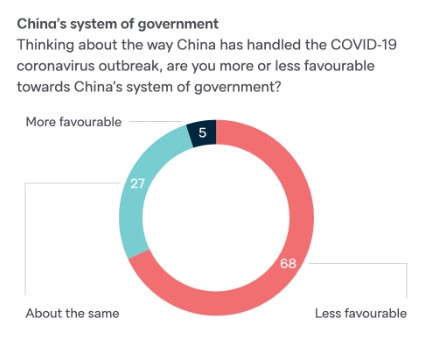
China’s government and the coronavirus epidemic

In Quillette, Aaron Sarin shows how the Chinese government has systematically failed to respond adequately to the epidemic which broke out late in 2019in Wuhan and risks “losing the Mandate of Heaven”:

As of this writing, the epidemic’s death toll is still rising, and many of these deaths can ultimately be traced to the paranoid rigidity of the Xi Jinping administration. By late December 2019, doctors in Wuhan were already sounding the alarm over cases of what appeared to them to be SARS. Instead of listening to their warnings, the authorities summoned eight of these doctors for a dressing-down. They were warned of the punishments they could face for “rumour-mongering.” News of their detention was broadcast to tens of millions: a clear message to anyone else who might have been thinking about discussing viruses in public.

The Party’s leaders actually knew enough to be worried by this point — they alerted the World Health Organisation on December 31st — and yet still they hid the truth from the public. This neurotic obsession with secrecy has certainly cost lives. If the medical community had been informed of the outbreak back in December, hospitals could have stockpiled the necessary supplies. But now there are drastic shortages, and patients are dying in hallways and waiting rooms.

Even the critics of authoritarian dictatorship will usually agree that the system beats democracy for sheer efficiency, but the coronavirus debacle has turned that old wisdom on its head. Where we might have expected cold and methodical governance, we have found dithering bureaucrats, unable to take a step in any direction, paralysed by what Xu Zhangrun calls “systemic impotence.” Weeks went by and citizens swarmed in and out of Wuhan, picking up the virus and transporting it to the far corners of the country. Local government officials stayed quiet, wary of the heavy hand of Xi Jinping. On January 23rd, a citywide quarantine was finally announced, but eight long hours passed before it was enacted — time enough for a million or more to flee the city.

The Wuhan lockdown was repeated in other parts of the country (most recently the southern megacity of Guangzhou), and some observers praised the speed with which new hospitals were constructed from scratch. These very visible displays of its power aside, the Party has moved far too slowly at every stage of the crisis. Diagnostic testing required samples to be sent all the way to a laboratory in Beijing, and this delayed the distribution of testing kits to many of the hospitals in Wuhan. Even when testing kits were available, patients still found themselves trapped in a Kafka-esque web of bureaucracy. According to Reuters, the tests have been refused to people who fail to make it through a complex reporting system involving hospital authorities, district authorities, city health authorities, and disease control officials.

None of this should come as a surprise. The cliché about the efficiency of authoritarian systems was always, on closer analysis, something of a low-resolution image. In the old days of the Soviet Union, speedy industrial growth obscured the reality of a fragile system largely devoid of autonomous decision making. During the 1920s, the Communist Party’s state planning committee Gosplan was established with the impressive-sounding mission of creating a series of five-year plans to govern the economy. But over the next 70 years, the vast majority of these plans were radically revised and rewritten, or more frequently ignored altogether in favour of Joseph Stalin’s arbitrary dictates. Indeed, Gosplan actively tried to avoid making decisions at all, because committee members knew Stalin would have them shot and replaced if their ideas produced unwelcome results. In the end, fear saps the efficiency of all authoritarian regimes, and the Chinese Communist Party is no exception.

Li Wenliang has emerged as the most vivid symbol of the Party’s latest failure. Li was one of the Wuhan doctors disgraced for discussing the coronavirus on social media. A few days after his police warning, he contracted the virus himself, and on February 6th he died. It was during the period of Li’s short illness that the Party apparently realised its error and decided to absolve the doctors, but still the central government would accept no blame for the tragedy. Instead, the Supreme Court (which is controlled by the CCP) scolded the local government in Wuhan — an unusual move, no doubt designed to create a scapegoat for surging public anger. The truth is that the city’s officials had been faced with an impossible job. They obediently followed orders, and now they will be punished for it.

QotD: Go eat bugs, plebs!

Filed under: Environment, Food, Health, Media, Quotations — Tags: , , , , — Nicholas @ 01:00

What is this creepy obsession with the elite telling us to eat bugs? Every few weeks, some mainstream media outlet has one of its gooey writers go off on how delicious and nutritious insects supposedly are, and it’s downright bizarre. The latest piece of pro-pillbug propaganda is from the formerly prestigious Economist, “Why Eating Bugs Is So Popular In Congo,” where the author assures us that “The creepy superfood is rich in protein and magnesium.” Thanks, but I think I’ll get my protein and magnesium in a manner that does not involve gobbling grubs.

What is with these people?

This bug bingeing is a running theme in the mainstream media. The New York Times, taking a break from passively aggressively correcting its garbage takes, asks “Why Aren’t We Eating More Insects?” The answer is, of course, “Because they are insects, you weirdos.”

CNN goes on about “Bugs: The Food That Can Feed, And Maybe Save, The Planet,” as if Brian “Tater” Stelter is going to give up stuffing Cheetos in his talk-hole in exchange for caterpillars.

And National Geographic manages to do the impossible and make us hate the United Nations even more by informing us that the “U.N. Urges Eating Insects,” and offering us “8 Popular Bugs to Try.” Popular with whom?

The Economist is talking about people munching millipedes in Congo, and you have to wonder why we would take Congo’s lead in anything. It’s the Congo – you should carefully examine what the Congo does, then do the opposite. That goes for other strange countries too. Frankly, foreign countries are generally terrible and there is not a lot that other countries have to teach us – I lived on two other continents and this bizarre notion liberal Americans have about other countries being better than us is grossly misplaced. Other countries are mostly terrible.

Exhibit A: They eat bugs.

Do you think the people of Congo are saying, “Beef? Pass. Hand me that plate of maggots!” You don’t eat grasshoppers because you have other options. No one’s first choice is fruit flies.

Kurt Schlicter, “Tell The Nags To Go Pound Sand”, Townhall.com, 2019-11-19.

February 8, 2020

ESR on the Wuhan coronavirus

Filed under: China, Government, Health, Media — Tags: , — Nicholas @ 05:00

He’s backing away from his — to me unfathomable — earlier belief in the accuracy of official Chinese government statistics:

My willingness to believe the official line didn’t stem from any credulity about what the Chinese government would do if it believed the truth wouldn’t serve. As Communists they are lying evil scum pretty much by definition, and denial would have been politically attractive for as long as they thought they could nip the pandemic in the bud. I thought their incentives had flipped and they would now be honest as a way of assisting their own countermeasures and seeking international help.

My first clue that I was wrong about that came from a friend who is plugged into the diaspora Chinese community. According to him, there is terrifying video being sent from Chinese clans to the overseas branches they planted in the West to prepare a soft landing in case they have to bail out of China. Video of streets littered with corpses. And of living victims exhibiting symptoms like St. Vitus’s Dance (aka Sydenham’s chorea), which means the virus is attacking central nervous systems.

My second clue was the Tencent leak. […] the takeaway is that there is now reason to believe that as of Feb 1st the actual coronavirus toll looked like this: confirmed cases 154023, suspected cases 79808, cured 269, deaths 24589.

Compare that with the Johns Hopkins tracker numbers for today, a week later: Confirmed cases 31207, cured 1733, deaths 638. Allowing for the Tencent leak being roughly one doubling period earlier, the official statistics have been lowballing the confirmed case number by a factor of about 8 and the deaths by a factor of about 80. And then inflating cures by a factor of about 12.

Even given what I’d heard about the video, I might have remained skeptical about the leak numbers if someone (don’t remember who or where) hadn’t pointed out that the ratio between reported cases and deaths has been suspiciously constant in the official Chinese statistics. In uncooked statistics one would expect more noise in that ratio, if only because of reporting problems.

So my present judgment, subject to change on further evidence, is that the Tencent-leak numbers are the PRC’s actual statistics. And that has a lot of grim implications.

January 30, 2020

QotD: Nutrition and aging from the middle ages to the 20th century

Filed under: Europe, Food, Health, History, Quotations — Tags: , , , — Nicholas @ 01:00

Those of us who didn’t grow up in the first world (second and a half at best!) know d*mn well how people lived in the 20th century, with nominal indoor plumbing, but without a lot of changes of clothing, washers and dryers, heated houses, etc. (The trains from the mountains, where it was colder, in winter, smelled like a mix of VERY unwashed bodies and wood smoke. You never forget that smell.) The particular etc. I have in mind in this case is the lack of refrigeration.

Look Portugal is fertile enough that a careful planner can feed a family on less than an acre of land (particularly the area I come from, apparently one of the oldest inhabited in Europe and whose name in Indo European translated as wet and fertile valley.) I’m sure the food available to us in the 20th century when you could buy improved seeds, etc. was way better than the one available to people in the middle ages.

But … yeah, no. We didn’t eat like people do now. Not even close. For one, meat was fairly scarce. We mostly ate fish (thanks to the coasts!) and vegetables. Oh, and we were relatively lucky. A lot of people got almost no protein. The most common lunch among the people was the “isca” that is a bit of fried flour which might or might not have a couple of shreds of codfish in it. The very poor ate a lot of vegetable soup.

And again this was in the 20th century. In winter vegetables more or less vanished and the only fruit available were the wrinkled, flour-like apples.

Christmas treats were dried fruit, not cookies. It tells you all you need to know. (Yes, it was healthy too except for the scarce protein for most people, but no one said the way we eat is particularly healthy.)

I’m not complaining, but I know that we ate massively better than my parents did in the mid 20th century. And they ate better than their parents. So, kindly, do not tell me some serf on a medieval estate got his choice of however many flavors of ice-cream.

Sure the very rich ate well, if sometimes oddly. But the average person, not so much.

And as for living as long? Yeah, no.

I still remember vividly — as do many our age — when 60 was old, 70 VERY old.

Yes, I’m concerned for my parents in their late eighties. And that’s, as my dad puts it “after 80, that’s old”. But it would surprise no one is they lived another 10 years. Because a lot of people do now. And now one makes a big deal of people who turn 100. (Even though 114 seems to be, a little inexplicably, our hard drop-off limit.)

And besides we KNOW. Shakespeare at 58 — two years older than I’m now — was “very old.”

So kindly take your “people lived about as long,” fold it all in corners and put it where the sun don’t shine, even if people in the arctic in winter will be a little puzzled by it.

Sarah Hoyt, “What if I Told You?”, According to Hoyt, 2019-11-05.

January 21, 2020

The United States Goes Dry – Alcohol Prohibition I THE GREAT WAR

Filed under: Britain, Health, History, Law, Liberty, Russia, USA — Tags: , , , , , — Nicholas @ 04:00

The Great War
Published 20 Jan 2020

In January 1920, after one year of preparation, the 18th Amendment to the US Constitution went into effect. From now on alcohol prohibition was the law.

» SUPPORT THE CHANNEL
Patreon: https://www.patreon.com/thegreatwar
Merchandise: https://shop.spreadshirt.de/thegreatwar/

» SOURCES
Ehmer, K. and Hindermann, B. (2015). The School of Sophisticated Drinking. New York: Greystone Books.
Miron and Zwiebel, “Alcohol Consumption During Prohibition”. In the American Economic Review, Vol. 81, No. 2, pp. 242-247, (May 1991).
Darrow, Clarence, and John Haynes Holmes. Debate On Prohibition. Haldeman-Julius Co., 1924.
Iorizzo, Luciano J. Al Capone. Greenwood Press, 2003.
Nemtsov, Aleksandr. A Contemporary History of Alcohol in Russia. Stockholm, 2011.
Sullivan, Edward D. Rattling the Cup on Chicago Crime. New York: The Vangaurd Press, 1929.
United States Government, “Codification of Internal Revenue Laws, … Published Pursuant to Section 1203(c) Revenue Act of 1926”.
18th Amendment to the Constitution of the United States. https://www.loc.gov/rr/program/bib/ou…
United States Department of Agriculture. “Crop Production Historical Track Records, 2018”. https://www.nass.usda.gov/Publication…
Kamieński, Łukasz: “Drugs”, in: 1914-1918-online. International Encyclopedia of the First World War, ed. by Ute Daniel, Peter Gatrell, Oliver Janz, Heather Jones, Jennifer Keene, Alan Kramer, and Bill Nasson, issued by Freie Universität Berlin, Berlin 2019-03-07
Blocker, Jack S Jr. “Did prohibition really work? Alcohol prohibition as a public health innovation.” American Journal of Public Health vol. 96,2 (2006): 233-43.

» SOCIAL MEDIA
Instagram: https://instagram.com/the_great_war
Twitter: https://twitter.com/WW1_Series
Reddit: https://reddit.com/r/TheGreatWarChannel

»CREDITS
Presented by: Jesse Alexander
Written by: Mark Newton
Director: Toni Steller & Florian Wittig
Director of Photography: Toni Steller
Sound: Toni Steller
Editing: Toni Steller
Mixing, Mastering & Sound Design: http://above-zero.com
Maps: Daniel Kogosov (https://www.patreon.com/Zalezsky)
Research by: Jesse Alexander
Fact checking: Florian Wittig

Channel Design: Alexander Clark
Original Logo: David van Stephold

A Mediakraft Networks Original Channel

Contains licensed material by getty images
All rights reserved – Real Time History GmbH 2020

January 20, 2020

A Drag Queen speaks out against Drag Queen Story Hour for kids

Filed under: Books, Education, Health, Politics, USA — Tags: , , , — Nicholas @ 03:00

Libby Emmons reports on a rare bird indeed — a Drag Queen who doesn’t think it’s appropriate to have other Drag Queens visit schools and libraries to read to pre-teen kids:

Drag Queen Kitty Demure has taken to Twitter to speak out against the sexualization of children by woke people co-opting drag culture and rebranding it as an educational tool.

“I have absolutely no idea why you would want [drag queens] to influence your child. Would you want a stripper or porn star to influence your child?”

Demure notes that just as you wouldn’t take your kids out to see porn stars or strippers read stories while in full dress and makeup, you shouldn’t take them to see drag. There’s an effort to introduce kids earlier and earlier to adult sexuality. The idea is that this will help kids be more open-minded and understanding about the difference. What it really does is normalize deviant adult behaviour in children’s minds and override their own instincts. Giving children access to sexual content makes them think this kind of thing is for them, it opens doors that should stay closed until a child is of age.

Demure says here what all of us know: drag culture is adult entertainment. The look is sexualized. The names are sexualized. In fact, the entire concept of drag is a send-up of beauty queen culture. Beauty queen culture is sexualized as well, and while that is sometimes subsumed beneath the surface, it’s obviously fully part of it. That’s what drag plays on. Drag can be lots of fun, but it’s grown-up fun, not for kids.

« Newer PostsOlder Posts »

Powered by WordPress