Quotulatiousness

October 25, 2012

Follow-up – Argentine flagship’s crew to fly home after three week delay

Filed under: Africa, Americas, Government, Military — Tags: , , , , , — Nicholas @ 00:01

I originally found this story at the beginning of the month, and after all this time, the bulk of the Argentinian crew finally fly home. BBC News has the update:

Almost 300 sailors left on an Air France plane chartered by the Argentine government.

A skeleton crew is staying on board the three-masted Libertad to maintain it.

The tall ship was prevented from leaving Ghana after a local court ruled in favour of a US fund.

The fund, NML Capital, argued it was owed $370m (£231m) by Argentina’s government as a result of its debt default a decade ago.

[. . .]

An earlier plan for the sailors to fly back on an Argentine plane was scrapped because of fears that the aircraft might itself be impounded as part of the debt dispute.

On Tuesday, Argentine President Cristina Fernandez de Kirchner condemned the Libertad’s seizure and made it clear there would be no negotiations with creditors.


Photo by Martín Otero, 7 April, 2007

October 24, 2012

How to betray your country in one easy walk into a foreign embassy

Filed under: Cancon, Military, Russia — Tags: , , , , — Nicholas @ 14:58

The story of how a Canadian officer decided to turn traitor and pass secret intelligence to Russia:

When news first broke that the RCMP had arrested a low-ranked Canadian naval officer for providing intelligence to a foreign power, the press was quick to focus on the fact that the officer, Jeffrey Paul Delisle, had previously gone bankrupt. That was exactly the sort of thing a foreign country would look to exploit in a potential recruit. But we know now that Delisle didn’t need to be recruited. Heartbroken and contemplating suicide, he walked into the Russian Embassy in Ottawa and volunteered his services.

[. . .]

Over and over, the RCMP agent returns to one question: Why? He offers friendly comments, assuring Delisle that he knows how much pain, so much pain, he would have been feeling after his divorce. Delisle breaks down. He shares the story of how he found his wife, whom he’d loved since high school, cheating on him. She only married him, Delisle claims she told him, for security. She left him and hooked up with a new man, and was pregnant with the new partner’s child shortly thereafter. Delisle bitterly recalls hosting his ex-wife and her boyfriend at a Christmas Eve party, because his daughter wanted him to. And he wanted to make her happy.

Delisle’s love for his children shines though his statements. He clearly adores them. He says they were the only thing that prevented him from indulging his wish to commit suicide, to steer his car into oncoming traffic. He decided that he’d live for them. Indeed, he was caring for them, his ex-wife apparently being out of the picture — another source of bitterness. Having decided that he was dead inside, but obligated to live, Delisle says he decided to commit “professional suicide.” So he walked into the Russian Embassy and offered to become a spy.

Indonesia turns to India for help with their Russian-built aircraft

Filed under: India, Military, Russia, Technology — Tags: , , — Nicholas @ 08:02

Strategy Page on the odd post-sales attitude of Russian aviation manufacturers:

Indonesia knows that India has learned how to deal with shabby Russian support. For example, earlier this year India went public with yet another complaint about the Su-30 fighters it buys from Russia. This time it was an unspecified “design flaw” in the electronic flight control system. This bit of information was made public because India has found that more discreet communications about these matters results in little or no action from the Russians. For example, India has been pressuring Russia for several years to do something about component failures in the Russian designed AL-31 engines that power the Indian Su-30MKI jet fighters. There have been several AL-31 failures because of this in both Indian and Russian Su-30s.

[. . .]

India buys bare bones fighters from Russia and equips these Su-30MKIs with Israeli sensors and communications gear. In many respects, the Indian made Su-30s, the Su-30MKI, is the most capable version available, due to its Israeli and European electronics and the well trained Indian pilots. The 38 ton SU-30MKI is most similar to the two seat American F-15E fighter-bomber. Even though equipped with Western electronics, the aircraft cost less than $40 million each, about half what an equivalent F-15 costs. The Su-30MKI can carry more than eight tons of bombs and hit targets over 1,500 kilometers away.

Indonesia has already become disenchanted with its Su-30s and announced last August the six Su-30 jet fighters it ordered from Russia earlier this year (for $78 million each) would be the last Russian fighters purchased. Indonesia already has ten Su-27s and Su-30s, and wanted at least 16 of these modern aircraft so they will have a full squadron.

October 21, 2012

Inducing take-off, Fireball XL5 style

Filed under: Military, Technology — Tags: , , , — Nicholas @ 11:32

The Economist looks at a back-of-the-envelope proposal from engineers at Airbus that adapts aircraft carrier technology to civil use:

Mindful that many passengers are already nervous about the whole process of getting a plane airborne, the engineers prefer to call their proposal “Eco-climb”. But the idea is straight out of “Fireball”. The aircraft to be launched would sit on a platform that ran along a track where the runway would otherwise be. The platform would accelerate to take-off speed, at which point the plane would lift into the air powered by its own engines.

[. . .]

Altogether, according to Airbus’s back-of-the-envelope calculations, Eco-climb would reduce fuel consumption by 3% on a typical 900km (560-mile) flight, even with existing aircraft designs. But it would also allow for the design of lighter aircraft, with smaller engines, which would cut fuel consumption, noise and emissions further.

Nor is the idea complete fantasy. General Atomics, an American military contractor, has already built and tested a linear-induction-motor-based system of this sort at an airbase at Lakehurst, New Jersey. The General Atomics system is now being scaled up to be fitted on a new generation of aircraft carriers for the American navy.

Animated map of the Battle of Trafalgar, 21 October, 1805

Filed under: Britain, France, History, Military — Tags: , — Nicholas @ 10:51

The BBC created an animated map you can view either with interpretations or non-stop, showing the tactics of Vice Admiral Nelson and Vice Admiral Villeneuve at the Battle of Trafalgar.

On 21 October 1805, the Royal Navy clashed with the Combined French and Spanish fleet at Cape Trafalgar, off the coast of Spain. The battle had massive repercussions for Napoleon’s France and the future of the British Empire.

October 20, 2012

The Himalayan fault line of 1962

Filed under: China, History, India, Military — Tags: , , , , — Nicholas @ 00:02

In a brief but bloody altercation high up in the Himalayan mountains, Chinese forces attacked and defeated Indian troops along part of the extensive border between the two nations. In History Today, Gyanesh Kudaisya looks back at the events of 50 years ago:

China and India share the longest disputed frontier in the world, extending over 4,000 km, with a contentious Line of Actual Control across the Himalayas. Fifty years ago, on October 19th, 1962, border skirmishes between China and India escalated into a full-scale war across the mountainous border. Hostilities continued for over a month, during which China wrestled 23,200 sq kms of territory from India and inflicted heavy casualties. The Indian government acknowledged the loss of over 7,000 personnel, with 1,383 dead, 1,696 missing in action and 3,968 captured by the enemy. The Chinese also conceded ‘very heavy’ losses. Then, quite suddenly, on November 21st, China announced a unilateral ceasefire and a return to border posts held by its army prior to the conflict, while retaining some 4,023 sq km of territory in the Ladakh region.

This brief war has come to define relations between Asia’s two largest countries and the border issue remains unresolved. Beijing still claims over 92,000 sq km of territory, mainly in the northeastern Indian state of Arunachal Pradesh.

The war was a dramatic turning point for India. Most Indians saw it as a ‘stab in the back’, a grave act of betrayal by the Chinese leadership, whom Jawaharlal Nehru, India’s first prime minister (1947-64), had lauded as brothers in the heyday of a friendly relationship in the mid-1950s. This was reflected in Panchsheel, ‘Five Principles of Peaceful Coexistence’, upon which in 1954 China and India inked a bilateral treaty, and the 1955 Bandung conference, where Nehru had personally introduced Chinese premier Zhou Enlai to Afro-Asian delegates in order to minimise China’s isolation.

October 19, 2012

F-35 delays mean extended life for the F-16

Filed under: Military, Technology, USA — Tags: , , , — Nicholas @ 08:14

Strategy Page looks at the F-16, the “cheap and cheerful” alternative for many countries who are watching and waiting as the F-35 program staggers on.

Many air forces are finding that it’s more cost-effective to upgrade via new electronics and missiles and, as needed, refurbishing engines and airframes on elderly existing fighters, rather than buying new aircraft. This is especially the case if the new electronics enable the use of smart bombs. One of the more frequently upgraded older fighters is the American F-16. Even the U.S. Air Force, the first and still largest user of F-16s is doing this with some of its F-16s.

The U.S. Air Force is currently refurbishing several hundred of its 22 ton F-16 fighters, because their replacement, the 31 ton F-35 is not arriving in time. This is the same reason for many nations to upgrade their F-16s. Some of these nations are holding off on ordering F-35s (or cancelling existing orders), either because of the high price or doubts about how good it will be. Aircraft manufacturing and maintenance companies see a huge market for such upgrades. Half or more of the 3,000 F-16s currently in service could be refurbished and upgraded to one degree or another. That’s over $25 billion in business over the next decade or so.

The F-35 began development in the 1990s and was supposed to enter service in 2011. That has since slipped to 2017, or the end of the decade, depending on who you believe. Whichever date proves accurate, many F-16 users have a problem. Their F-16s are old, and by 2016 many will be too old to operate. Some other nations have even older F-16s in service.

[. . .]

Although the F-35 is designed to replace the F-16, many current users will probably keep their F-16s in service for a decade or more. The F-16 gets the job done, reliably and inexpensively. Why pay more for new F-35s if your potential enemies can be deterred with F-16s. This becomes even more likely as the F-35 is delayed again and again. Finally, the upgrade is a lot cheaper, costing less than $20 million, compared to over $100 million for a new F-35. If your potential enemies aren’t upgrading to something like that, a refurbed F-16 will do.

October 14, 2012

Germany’s ambivalent relationship with their modern armed forces

Filed under: Europe, Germany, History, Military — Tags: , , — Nicholas @ 11:09

October 13, 2012

Chinese shipyards adapt to slower international sales

Filed under: Business, China, Military — Tags: , , — Nicholas @ 11:17

Strategy Page on one of the ways Chinese ship builders are adapting to a tougher market for new ships:

Recent photos from China show three 1,500 ton coastal patrol ships (“cutters” in American parlance.) being built simultaneously, next to each other. This is part of a 36 ship order, in part to help the domestic ship building industry, for the China Marine Surveillance (CMS). Seven of the new ships are the size of corvettes (1,500 tons), while the rest are smaller (15 are 1,000 ton ships and 14 are 600 tons). The global economic recession has hit shipbuilding particularly hard over the last four years, and China is one of the top three shipbuilding nations in the world. For a long time coastal patrol was carried out by navy cast-offs. But in the last decade the coastal patrol force has been getting more and more new ships (as well as more retired navy small ships). Delivery of all 36 CMS ships is to be completed in the next two years.

The CMS service is one of five Chinese organizations responsible for law enforcement along the coast. The others are the Coast Guard, which is a military force that constantly patrols the coasts. The Maritime Safety Administration handles search and rescue along the coast. The Fisheries Law Enforcement Command polices fishing grounds. The Customs Service polices smuggling. China has multiple coastal patrol organizations because it is the custom in communist dictatorships to have more than one security organization doing the same task, so each outfit can keep an eye on the other.

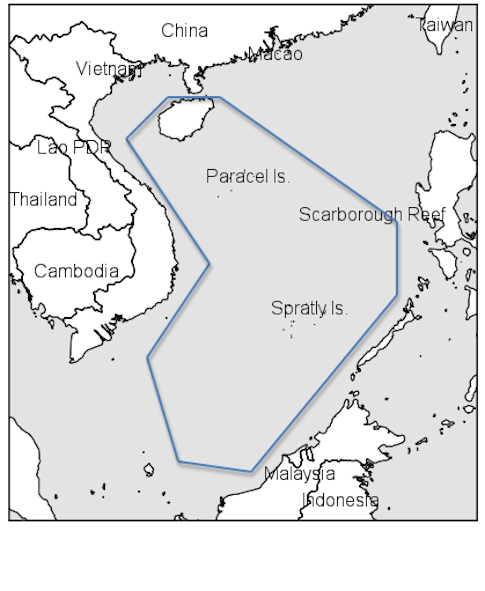
CMS is the most recent of these agencies, having been established in 1998. It is actually the police force for the Chinese Oceanic Administration, which is responsible for surveying non-territorial waters that China has economic control over (the exclusive economic zones, or EEZ) and for enforcing environmental laws in its coastal waters. The new program will expand the CMS strength from 9,000 to 10,000 personnel. CMS already has 300 boats and ten aircraft. In addition, CMS collects and coordinates data from marine surveillance activities in ten large coastal cities and 170 coastal counties. When there is an armed confrontation over contested islands in the South China Sea, it’s usually CMS patrol boats that are frequently described as “Chinese warships.”

HMS Conqueror and “Operation Barmaid”

Filed under: Britain, History, Military — Tags: , , , , — Nicholas @ 00:01

In spite of the name, it had nothing to do with a crew booze-up in town:

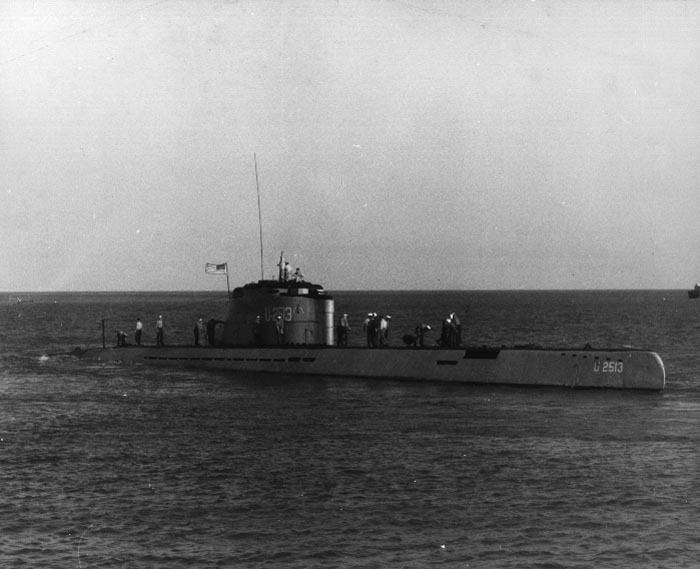
HMS Conqueror is famous, some would say notorious, for sinking the Argentinian cruiser General Belgrano. The nuclear-powered attack submarine, a type also known menacingly as a hunter-killer, that year became the first of her kind to fire in anger. The Belgrano was sent to bottom in short order, her ancient hull rent by two torpedoes: 323 men, many of them young conscripts, died. The Falklands war began in earnest that day, May 2 1982.

But the ship now in the crosswires was not the Belgrano. This was August, almost two months after the liberation of the Falklands, and on the other side of the world, in the Barents Sea, backyard of the mighty Soviet Northern Fleet. Conqueror was sailing as close to Russian territorial waters as was legally allowed — or maybe closer. Submariners, a tight-knit community, politely disdainful of their surface counterparts, joke that there are two types of naval vessel: submarines and targets. Wreford-Brown’s target was a spy trawler — an AGI in Nato parlance, meaning Auxiliary General Intelligence. Crammed with interception and detection equipment, they were a ubiquitous presence during the Cold War, shadowing Nato exercises or loitering off naval bases.

This one was special: Polish-flagged, she was pulling a device long coveted by the British and Americans, a two-mile string of hydrophones known as a towed-array sonar. It was the latest thing in Soviet submarine-detection technology and Conqueror’s job was to steal it. To do so, the bow was equipped with electronically controlled pincers, provided by the Americans, to gnaw through the three-inch-thick steel cable connecting it to the trawler. The name of this audacious exercise in piracy? Operation Barmaid.

October 10, 2012

Macdonell on the Heights

Filed under: Cancon, History, Military — Tags: , , , — Nicholas @ 16:50

One of my favourite Stan Rogers songs is “Macdonell on the Heights”. Here’s the history behind the song, courtesy of the Niagara 1812 Legacy Council:

John Macdonell was born in April 1785 in Scotland. At the age of seven he came with his family to Canada where at the age of 23 he became a lawyer. He later earned a seat in the legislature and in September 1811 he was appointed attorney-general.

Macdonell was not loved by all, especially William Baldwin who duelled with the attorney-general, but his position brought him closer to Isaac Brock, who asked Macdonell to serve as his aide. Macdonell was a lieutenant-colonel in the York Militia where he served as Brock’s aide with energy and poise.

During the Battle of Queenston Heights Macdonell was not far behind Brock, who had left in the early hours from Fort George to the site of the American invasion. It was not long after Brock’s failed advance up the heights that Macdonell led his own desperate charge to retake the redan battery. Macdonell’s small force did push the Americans back briefly, but a musket ball hit Macdonell’s horse, which reared up as a second musket ball struck Macdonell’s back. Macdonell was shot four times but it did not prevent him from attempting to stand and continue the attack. Fellow officers pulled the lieutenant-colonel from the battlefield as the attack failed to capture the redan battery.

October 7, 2012

Russian intelligence agencies and the Soviet inheritance

Filed under: Europe, Military, Russia — Tags: , , — Nicholas @ 10:19

Strategy Page looks at the two main Russian intelligence organizations:

Now there are two foreign intelligence services: SVR and GRU. The first one is the Russian Foreign Intelligence Service. It is the former First Chief Directorate of the Soviet era KGB, which has managed most foreign intelligence operations for decades. Its activities are well known throughout the world.

The second one is the GRU, Russian military intelligence. It is a part of the Defense Ministry. Its full name is much longer (The Chief Intelligence Directorate of the General Staff of the Russian Army). GRU has retained its Soviet era name, and just about everything else. GRU is seen as a living relic of the Soviet times. That is why GRU is so much more secretive than the “Westernized” SVR. GRU officers are considered more patriotic (and old school) than those of the SVR. During the Cold War, there were fewer GRU defectors, still a point of pride in the GRU. GRU prefers to stay in the shadows. Western writers have not written many books about GRU, compared to the KGB. This is largely because GRU keeps its secrets better, and, in the West, is considered an obscure part of Russian intelligence. It’s possible that the GRU activated these sleepers, but for the moment the Germans aren’t talking.

Both GRU (Russian Military Intelligence) and SVR (Russian Foreign Intelligence Service) perform the same functions: Political Intelligence, Scientific and Technical Intelligence (industrial espionage) and Illegal Intelligence. Because of this, the two agencies have a very real rivalry going.

But there was, and remains, one area where only the SVR (and its predecessor, the KGB) participates; running counter-intelligence abroad. This was long a KGB monopoly because it was the KGB’s job to make sure the armed forces remained loyal, and GRU was, and is, very much a part of the armed forces.

Thus when the GRU officers are working abroad, they are monitored by Directorate “K” (counter-intelligence) of the SVR. Those who serve inside Russia are watched by the Directorate of Military Counter-Intelligence (The Third Directorate) of the FSB (Federal Security Service, inheritor to the KGB). Interestingly, in the Soviet period, it was also called the Third Directorate. It is not a coincidence but a continuation of the Soviet tradition. The Third Directorate of the FSB is still assigned to monitor the Defense Ministry, of which the GRU is a part. The head of GRU does not even report directly to the Russian President. GRU reports have to go through the Head of the General Staff and the Defense Minister before reaching the top man. Thus GRU is very much number two in the Russian foreign intelligence business. As Number 2, they tend to try harder, and consider themselves more elite than those wimps over at SVR.

On the other hand, there also is one function monopolized by the GRU; battlefield intelligence. The battlefield intelligence is run in peacetime as well. For example, in preparation for future wars, the GRU sets up illegal weapon and ammunition dumps in the territory of many foreign countries. This is a risky operation. It usually involves groups of junior Russian diplomats secretly going into rural areas to bury rifles, machine-guns and other weapons. They have to do this discreetly and in a hurry, to avoid detection by the local counterintelligence service. It is considered a hard job.

Flagship of Argentinian Navy seized for unpaid government debt in Ghana

Filed under: Africa, Americas, Government, Military — Tags: , , , , , — Nicholas @ 09:38

If I were you, I’d avoid investing in any Argentinian business (or businesses which have significant operations in Argentina), as the government is doing everything it can to prevent the flight of capital. Some of the debt holders are getting quite creative about finding ways to put pressure on Argentina to pay its debts:

If pirating didn’t work out, Capt. Jack Sparrow would perhaps have made a savvy hedge fund manager.

A New York hedge fund boss is being dubbed a real pirate of the Caribbean after seizing the flagship of the Argentinian navy in an attempt to settle some of the country’s huge debt.

Billionaire Paul Singer took control of the tall ship the A.R.A. Libertad with a court order in Ghana this week.

The triple-mast frigate, which stopped in the African country as it trained naval cadets, is valued at $10 million and is the ceremonial flagship of the Argentine fleet.


Photo by Martín Otero, 7 April, 2007

October 2, 2012

Warship spending then and now

Filed under: History, Military, Technology — Tags: — Nicholas @ 08:39

An article at Strategy Page looks at the much-higher cost of modern weapons systems and compares a few modern items to their historical predecessors. An eye-opening example is the comparison of a battleship to a modern US Navy destroyer:

A new U.S. destroyer design, the DDG-1000, displaces 14,000 tons, is 193.5 meters (600 feet) long and 25.5 meters (79 feet) wide. A crew of 150 sailors operates a variety of weapons, including two 155mm guns, two 40mm automatic cannon for close in defense, 80 Vertical Launch Tubes (containing either anti-ship, cruise or anti-aircraft missiles), six torpedo tubes, a helicopter and three helicopter UAVs. The DDG-1000 was to cost $2 billion each, but it has been cut back to just three ships, which drives the cost up to $6 billion each.

A century ago, a Mississippi class battleship displaced 14,400 tons, was 123.2 meters (382 feet) long and 24.8 meters (77 feet) wide. Adjusted for inflation, it cost $150 million. A crew of 800 operated a variety of weapons, including four 12 inch (300mm), eight 8 inch (200mm), eight 7 inch (177mm), twelve 3 inch (76mm), twelve 47mm and four 37mm guns, plus four 7.62mm machine-guns. There were also four torpedo tubes. The Mississippi had a top speed of 31 kilometers an hour, versus 54 for DDG-1000. But the Mississippi had one thing DDG-1000 lacked, armor. Along the side there was a belt of 226mm (9 inch) armor and the main turrets had 300mm (12 inch) thick armor. The Mississippi had radio, but the DDG-1000 has radio, GPS, sonar, radar and electronic warfare equipment.

Each of the three DDG-1000’s being built cost 40 times more than the two Mississippi class battleships. Is the DDG-1000 40 times more effective? The DDG-1000 would make quick work of the Mississippi, spotting the slower battleship by radar or helicopter, and dispatching her with a few missiles. The Mississippi’s 12 inch guns had a maximum range of 18 kilometers, versus 130 kilometers for the Harpoon anti-ship missile. There has always been some debate if modern anti-ship missiles could really take down a battleship, what with all that armor and plenty of sailors for damage control work. The USS Mississippi ended its career in the Greek navy, and was sunk by German aircraft in 1941. Many battleships have been sunk, usually by bombs and torpedoes delivered by aircraft.

Although the last two American World War II era battleships were only sold off six years ago, battleship advocates keep coming with ways to revive these massive (45,000 ton) armored ships. The boldest proposals had most of the World War II era mechanical equipment and replaced with gas turbine engines and modern generators and electronics. This would reduce crew size from 2,700 to 600. But what really killed the battleship was the smart bomb, especially the GPS guided ones. The 16 inch battleship guns could not match this accuracy, unless a GPS guided shell were developed (a major cost). What really killed the battleship was massive innovation.

The DDG-1000 is still “pre” whatever the next dominant type of warship will be. But it’s ironic that a hundred years later, the descendent of the 14,000 ton Mississippi is a 14,000 ton surface ship that has more firepower, a longer reach and the ability to see targets hundreds of kilometers away, and is called a destroyer. And what kind of destroyers escorted the Mississippi? They were ships of under a thousand tons displacement, with crews of about a hundred sailors. Armed with a few 3 inch guns and some torpedoes, no one at the time expected them to evolve into a 14,000 ton warship.


USS Mississippi (BB-23), from the Wikipedia entry


Artist’s conception of the DDG-1000 class lead ship USS Zumwalt. Full-size image at Defence Industry Daily.

September 27, 2012

Duelling reading lists for military science

Filed under: Books, History, Media, Military — Tags: — Nicholas @ 12:46

Foreign Policy listed the “Top 10” books as recommended by the US Military Academy at West Point:

  • On War, Carl von Clausewitz, 1832. I’ve read this, but perhaps it’s better in the original than in translation.
  • Some Principles of Maritime Strategy, Julian Stafford Corbett, 1911.
  • History of the Art of War Within the Framework of Political History (4 volumes), Hans Delbruck, 1920. I’ve read the first three volumes, and keep meaning to dig out the fourth to finish the series.
  • The Command of the Air, Giulio Douhet, 1921.
  • Battle Studies, Ardant Du Picq (Du Picq died in 1870 with the book incomplete: it was finished after his death based on his notes.)
  • The Art of War, Antoine Henri Jomini, 1838.
  • The Art of War, Niccolo Machiavelli, 1521.
  • The Influence of Sea Power Upon History 1660-1783, Alfred Thayer Mahan, 1890. I started reading this one several years back and never got back to it. Another one I should dig up and finish.
  • The Art of War, Sun Tzu, 4th century BC. I never read this, partly because it was pushed relentlessly as a “business book” in the 1980s, so I just avoided it. The excerpts I’ve seen quoted do seem to show its value for pulling out vague aphorisms…
  • The Peloponnesian War, Thucydides, 4th century BC. Thucydides did not complete the work, with the last several years of the war still to be fought. Xenophon’s Hellenika picks up the thread (literally the first words of the book are “And after this”.

John Arquilla comments on the list and adds some recommendations of his own:

For those drawn to West Point’s recommendation to read Thucydides, I suggest taking a look also at Sallust’s The Jugurthine War. Jugurtha of Numidia (today’s northern Algeria) fought a bitter guerrilla war against Rome, some 50 years before Julius Caesar’s great campaigns, that Sallust captured with verve. He also spoke to the corruption of Roman character that came with protracted exposure to this kind of fighting.

Hans Delbrück, whose four-volume history of ancient, medieval and early modern warfare that West Point selected, can be nicely complemented by Lt. Gen. John Bagot Glubb’s The Great Arab Conquests. His survey of the sweeping seventh-century victories of Muslim warriors is of the highest analytic and literary quality, a principal observation being that much of the world of that time was shaped by the irregular “pirate strategy” the Arabs adopted. That is, they used the desert as an ocean and came raiding from it, again and again, with startling success.

[. . .]

I’ll conclude with recommendations that reflect an important debate. Robert Taber’s War of the Flea argues that little can stop the weak from wearing down the strong with insurgent warfare; Lewis Gann’s Guerrillas in History is a brief but thorough survey that shows how often irregulars have been beaten in the past. Both books were written over 40 years ago, and both remain exceptionally timely. Indeed, Abu Musab al-Suri, al Qaida’s deepest strategic thinker, lectured on Taber at the “university of terror” that used to operate in Afghanistan.

I can second the recommendation for Taber’s War of the Flea, but most of the others he recommends are new to me … more to add to the reading list.

« Newer PostsOlder Posts »

Powered by WordPress