
The Great War
Published on 30 Jul 2018German-Ottoman military cooperation predated World War 1 by a few decades. But their alliance during the First World War meant that German (and Austrian) troops would actually fight in and with the Ottoman Empire.
July 31, 2018
German Asia Corps In The Ottoman Empire During WW1 I THE GREAT WAR Special
Comments Off on German Asia Corps In The Ottoman Empire During WW1 I THE GREAT WAR Special
The Utah Navy: Clearfield Navy Supply Depot, updated
The History Guy: Five Minutes of History
Published on 5 Aug 2017The History Guy examines the unique role of Utah and the Clearfield Navy Supply Depot in the war in the Pacific. Episode one of History Guy: Five Minutes of History is now available in HD.
Comments Off on The Utah Navy: Clearfield Navy Supply Depot, updated
July 30, 2018
Pour Le Merite – Persia – Polish Legions I OUT OF THE TRENCHES
The Great War
Published on 28 Jul 2018Chair of Wisdom Time!
Comments Off on Pour Le Merite – Persia – Polish Legions I OUT OF THE TRENCHES
Auditor General to look at the RCAF’s “capability gap” claim
Ted Campbell reports on the news that the Auditor General will investigate the Trudeau government’s claim that the RCAF would be unable to meet its obligations due to a newly discovered lack of airframes:
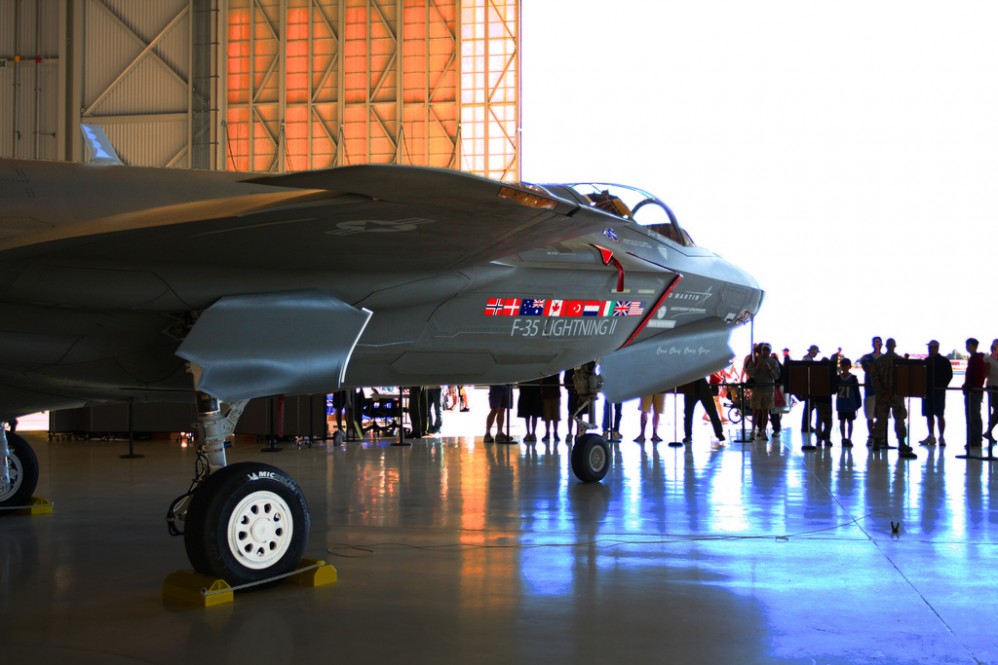
I see in a Canadian Press report published in the Globe and Mail that “Canada’s auditor general has started to dig into one of the Trudeau government’s most contentious claims, upon which rests the fate of hundreds of millions of taxpayer dollars: that the country is facing an urgent shortage of fighter jets … [and] … The claim was first made in November, 2016, when the Liberals announced that Canada didn’t have enough fighter jets to defend North America and simultaneously meet the country’s NATO commitments, and that a stopgap was urgently needed until the entire CF-18 fleet could be replaced.“
You’ll remember, I hope, that back in 1997 Canada’s government (Jean Chrétien was our Liberal prime minister) decided to join the US (but soon multi-national) F-35 Lightening II programme with the implicit intention of buying the aircraft and the explicit goal of sharing in the work, profits and jobs that the project might create. In 2010 the Government of Canada (Stephen Harper was the Conservative prime minister) committed to buying the aircraft for the Royal Canadian Air Force. There ensued an almighty public row over costs ~ partially because some generals and some DND officials tried to ‘low ball‘ the actual costs, partially because almost no one in government can agree on how to define ‘life cycle costs,‘ partially because most Canadian journalists are nearly innumerate and partially because the Liberal ‘war room‘ launched a disinformation campaign ~ and that rocked the Harper government back on its heels and made it a campaign issue. In 2015 the Liberal Party promised that Canada would not buy the F-35 but would, instead, hold “an open and transparent competition to replace the CF-18 fighter aircraft.”
Then, when in power the Liberal “government originally planned to buy 18 interim Super Hornets from Boeing for $6.4-billion before the deal was scuttled late last year in favour of buying 25 used jets from Australia for $500-million … [but] … critics, including opposition parties and former air force commanders, accuse the government of fabricating an urgent “capability gap” – as the shortfall is known – by changing the military’s requirements to avoid having to buy the F-35 stealth fighter.” The rumour ~ and that’s all it ever amounted to, as far as i know ~ floating around Ottawa was that the Liberals saw the Boeing Super Hornet fighter as a “cheap and dirty,” readily available solution and they felt confident that they could, easily back away from the promise to hold a competition, thus avoiding the dilemma of having an “open and transparent competition” while already having decided that the F-35 could not win.
Comments Off on Auditor General to look at the RCAF’s “capability gap” claim
Forgotten History: World’s Biggest Black Powder Cannon – a 100-Ton Gun
Forgotten Weapons
Published on 10 Jul 2018http://www.patreon.com/ForgottenWeapons
The largest muzzleloading black powder cannons ever built were the Armstrong 100-ton guns which saw service with the Italian Navy and with British coastal fortifications on Malta and Gibraltar. They were purchased by the Italians first, to outfit a pair of new super battleships, each vessel having two turrets with two of these guns in each. To avoid being outclassed, the British ordered two guns for installation to protect the Grand Harbor of Malta and two more to protect Gibraltar. Today one survives at each location, and we are visiting the Rinella Battery in Malta, which was built to house one of the Maltese guns.
These guns had a maximum range of 8 miles, and was capable of piercing 15 inches of iron armor at 3 miles. It had a 17.7 inch (45cm) bore fired a 2000 pound (900 kg) shell with a 450 pound (200kg) charge of black powder. The gun itself weighed approximately 102 tons, and with its cradle and a shell the whole assembly came in at 150 tons.
Aside from the massive scale of the piece, the most interesting part of its design is actually the loading machinery. Because of the titanic size of the gun and ammunition, Armstrong designed a fascinating hydraulic reloading facility which makes up the body of the fortress in which the gun is set. A pair of steam engines drove a pair of hydraulic accumulators, which provided hydraulic pressure to move the gun on its carriage, to douse the barrel after firing, to hoist ammunition into position for loading and power a 60-foot (18m) ramrod to mechanically ram the charge and shell into place. Two mirror-image reloading galleries under the fortification operated in turn, giving the gun a sustained rate of fire of 1 round every 6 minutes – at least until its 120-round barrel life was exhausted.
I am grateful for the Malta Tourism Authority’s assistance in helping to make this visit and video possible, and would also like to give special thanks to Simon, our awesome reenactor guide!
If you enjoy Forgotten Weapons, check out its sister channel, InRangeTV! http://www.youtube.com/InRangeTVShow
Comments Off on Forgotten History: World’s Biggest Black Powder Cannon – a 100-Ton Gun
July 29, 2018
A poor tank, a useless tank, and the worst tank in the world
Lindybeige
Published on 10 Jul 2018Tigers? Why talk about Tigers when one can talk about tanks that were even worse? More tank banter with The Chieftain.
Support me on Patreon: https://www.patreon.com/LindybeigeA low-tech tank with fragile armour, a tank that never saw the enemy, and the tank used to teach how not to build tanks. Thanks to Nicholas Moran (AKA The Chieftain) and Matt Sampson, the cameraman at Bovington Tank Museum.
The third of these three segments was shot with my new camera, and it really shows.
Lindybeige: a channel of archaeology, ancient and medieval warfare, rants, swing dance, travelogues, evolution, and whatever else occurs to me to make.
▼ Follow me…
Twitter: https://twitter.com/Lindybeige I may have some drivel to contribute to the Twittersphere, plus you get notice of uploads.
Facebook: https://www.facebook.com/Lindybeige (it’s a ‘page’ and now seems to be working).
Google+: “google.com/+lindybeige”
website: http://www.LloydianAspects.co.uk
Comments Off on A poor tank, a useless tank, and the worst tank in the world
July 27, 2018
Ludendorff’s Last Swing I THE GREAT WAR Week 209
The Great War
Published on 26 Jul 2018All of Germany’s recent offensives have been building up to Operation Hagen: An offensive in Flanders that was to divide the Allies and drive the British off the continent. But this week German High Command realizes that they don’t have the manpower left to even start the offensive.
Comments Off on Ludendorff’s Last Swing I THE GREAT WAR Week 209
Urban Combat – Room Breaching & Clearing – US Army (2011)
Military History Visualized
Published on 10 Mar 2017This video gives a brief overview on room breaching and clearing techniques based on the US Army Field Manual FM 3-06.11 from June 2011.
Military History Visualized provides a series of short narrative and visual presentations like documentaries based on academic literature or sometimes primary sources. Videos are intended as introduction to military history, but also contain a lot of details for history buffs. Since the aim is to keep the episodes short and comprehensive some details are often cut.
» SOURCES «
Headquarters, Department of the Army: ATTP 3-06.11 (FM 3-06.11) – Combined Arms Operations in Urban Terrain (June 2011)
Headquarters, Department of the Army: FM 3-21.8 – The Infantry Rifle Platoon and Squad (March 2007)
Comments Off on Urban Combat – Room Breaching & Clearing – US Army (2011)
July 26, 2018
Forgotten History: The Capture of Fort Douaumont
Forgotten Weapons
Published on 26 Jun 2018http://www.patreon.com/ForgottenWeapons
Welcome to out first episode of Forgotten History! This will be an occasional series looking at interesting events and places in military history. We will begin with the capture of Fort Douaumont on February 25, 1916…
This video was made possible by Military History Tours, and it is the first of a bunch you will be seeing from their Spring 2018 tour of American WW1 battlefields in France. If you are interested in seeing places like this (or WW2, or Korea, or many others) firsthand yourself with a guided tour, check them out:
Comments Off on Forgotten History: The Capture of Fort Douaumont
July 25, 2018
Forgotten History: The Underground Hell of Fort Vaux
Forgotten Weapons
Published on 24 Jul 2018http://www.patreon.com/ForgottenWeapons
With the surprise capture of Fort Douaumont in February 1916, the French reinforced all the remaining forts around the city of Verdun, and would hold them all successfully for many months. In fact, the only other fort in the area to fall would be Fort Vaux, in June of 1916.
In the chaos of the early battle, orders had actually gone out to evacuate Vaux and destroy it, but these were countermanded, and the fort remained a major lynchpin of French defenses in the sector. Critically, before they could be removed, demolition charges set in the fort’s main gun turret were detonated by a massive German shell, destroying the weapon.
In May, German advances seriously threatened the fort, and a new commander was assigned – Major Sylvain Eugene Raynal. Upon arrival, he found the fort in a terrible condition – heavily damaged by German bombardments and hugely overcrowded with as many as 500 soldiers, most of them wounded and sheltering in the fort (it had been designed to garrison 150 men). Shelling had broken through the fort’s walls in several places, and unbeknownst to Raynal or his men, the water cistern had been damaged and was nearly empty despite its gauge reading substantial levels of water.
The climactic German assault began on June 1st 1916, and by the end of the day only 71 French soldiers remained in unwounded inside. On June 2nd, the cistern damage was discovered – at that point it held just 8 gallons of putrid dregs. Intense fighting would continue for nearly another week, without any relief forces or supplies able to reach the fort. On the 5th, a bit of water was collected from rain, but not much. A relief force attempted to reinforce the fort, but was virtually obliterated, with only 37 men reaching its walls.
The Germans would storm the fort on June 5th, and the most horrific of combat would rage for two days inside its tunnels and galleries. Raynal ordered barricades erected inside the fort, and the French forces fought from one to the next, with only a few dozen men remaining. The battle would include machine gun and hand grenades in these tight passageways, and eventually a German attempt to burn out the defenders with flamethrowers.
Finally on the morning of June 7th, the combination of casualties and a complete lack of water meant the end of the resistance. Raynal and his surviving men surrendered, and Germans soldiers finally occupied the fort they had spent months attempting to conquer. In recognition of his valiant defense, Raynal’s sword was returned to him by German Crown Prince Wilhelm.
The German occupation of the fort would last only a few months – by late October it was abandoned quietly, and a French scouting force would find it empty and retake it on November 2nd, 1916.
If you enjoy Forgotten Weapons, check out its sister channel, InRangeTV! http://www.youtube.com/InRangeTVShow
Comments Off on Forgotten History: The Underground Hell of Fort Vaux
July 24, 2018
A Farewell to Arms – Ernest Hemingway I WHO DID WHAT IN WW1?
The Great War
Published on 23 Jul 2018He is regarded as one of the greatest writers of the 20th century, but before that, he was an ambulance driver on the Italian Front in the Great War and also took part in the Spanish Civil War and World War Two.
Comments Off on A Farewell to Arms – Ernest Hemingway I WHO DID WHAT IN WW1?
The Amazing Life of Ulysses S. Grant
PragerU
Published on 2 Jul 2018No American led a more eventful life than Ulysses S. Grant, the 18th President of the United States and the Union Army’s most celebrated general. Garry Adelman, director of history and education at the Civil War Trust, tells Grant’s amazing story in this inspiring video.
Donate today to PragerU! http://l.prageru.com/2eB2p0hThis video was made in partnership with the American Battlefield Trust. Learn more about the Civil War and America’s Battlefields at: https://goo.gl/mmJMPk
Comments Off on The Amazing Life of Ulysses S. Grant
July 23, 2018
1918 Flu Pandemic – Order More Coffins – Extra History – #3
Extra Credits
Published on 21 Jul 2018Dr. Welch, Dr. Avery, Dr. Park, and Dr. Williams are on the hunt now to correctly identify this new pathogen and make a vaccine. But public officials are in denial. In Philadelphia, the mayor and his health officials are telling the press that the outbreak is nearly over. They continue doing so, day after day, as the death toll mounts and hospital wards fill.
Comments Off on 1918 Flu Pandemic – Order More Coffins – Extra History – #3
July 22, 2018
Austro-Hungarian Artillery – Choctaw Code Talkers I OUT OF THE TRENCHES
The Great War
Published on 21 Jul 2018
Comments Off on Austro-Hungarian Artillery – Choctaw Code Talkers I OUT OF THE TRENCHES
July 20, 2018
2nd Battle Of The Marne – Turning Point On The Western Front I THE GREAT WAR Week 208
The Great War
Published on 19 Jul 2018The German Army launches an diversionary attack from the Rheims-Soisson salient and increases the pressure on Paris. But the Allies knew about the attack and for the first time, they effectively counter the German Stormtrooper tactics and even counter-attack along the line.
Comments Off on 2nd Battle Of The Marne – Turning Point On The Western Front I THE GREAT WAR Week 208


