The Mighty Jingles
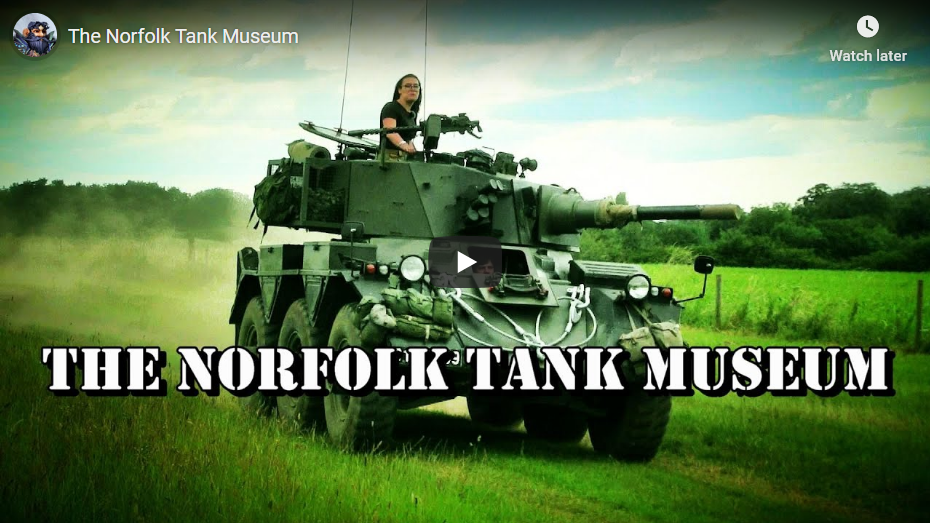
Published on 7 Jul 2019So this week Rita and I went to a tiny little tank museum in deepest, darkest Norfolk. Luckily, the natives were friendly.
http://norfolktankmuseum.co.uk/
https://www.youtube.com/watch?v=G0ryV…

The Mighty Jingles
Published on 7 Jul 2019So this week Rita and I went to a tiny little tank museum in deepest, darkest Norfolk. Luckily, the natives were friendly.
http://norfolktankmuseum.co.uk/
https://www.youtube.com/watch?v=G0ryV…
Rafe Champion linked to this interesting thumbnail-sketch history of the decline and fall of Boeing:

“Boeing 521 427”by pmbell64 is licensed under CC BY-SA 2.0


Let’s start by admiring the company that was Boeing, so we can know what has been lost. As one journalist put it in 2000, “Boeing has always been less a business than an association of engineers devoted to building amazing flying machines.”
For the bulk of the 20th century, Boeing made miracles. Its engineers designed the B-52 in a weekend, bet the company on the 707, and built the 747 despite deep observer skepticism. The 737 started coming off the assembly line in 1967, and it was such a good design it was still the company’s top moneymaker thirty years later.
How did Boeing make miracles in civilian aircraft? In short, the the civilian engineers were in charge. And it fell apart because the company, due to a merger, killed its engineering-first culture.
What Happened?
In 1993, Clinton’s Deputy Secretary of Defense, Bill Perry, called defense contractor CEOs to a dinner, nicknamed “the last supper.” He told them to merge with each other so as, in the classic excuse used by monopolists, to find efficiencies in their businesses. The rationale was that post-Cold War era military spending reductions demanded a leaner defense base. In reality, Perry had been a long-time mergers and acquisitions investment banker working with industry ally Norm Augustine, the eventual CEO of Lockheed Martin.
Perry was so aggressive about encouraging mergers that he put together an accounting scheme to have the Pentagon itself pay merger costs, which resulted in a bevy of consolidation among contractors and subcontractors. In 1997, Boeing, with both a commercial and military division, ended up buying McDonnell Douglas, a major aerospace company and competitor. With this purchase, the airline market radically consolidated.
Unlike Boeing, McDonnell Douglas was run by financiers rather than engineers. And though Boeing was the buyer, McDonnell Douglas executives somehow took power in what analysts started calling a “reverse takeover.” The joke in Seattle was, “McDonnell Douglas bought Boeing with Boeing’s money.”
[…]
The key corporate protection that had protected Boeing engineering culture was a wall inside the company between the civilian division and military divisions. This wall was designed to prevent the military procurement process from corrupting civilian aviation. As aerospace engineers Pierre Sprey and Chuck Spinney noted, military procurement and engineering created a corrupt design process, with unnecessary complexity, poor safety standards, “wishful thinking projections” on performance, and so forth. Military contractors subcontract based on political concerns, not engineering ones. If contractors need to influence a Senator from Montana, they will place production of a component in Montana, even if no one in the state can do the work.
Extra Credits
Published on 3 Aug 2019Join us on Patreon! http://bit.ly/EHPatreon
Joan had been sold out to the English. Bishop Pierre Cauchon was determined to prove the inaccuracy of her visions and her motivations so that Charles could have no claim to the throne. But Joan held on till the bitter end.

World War Two
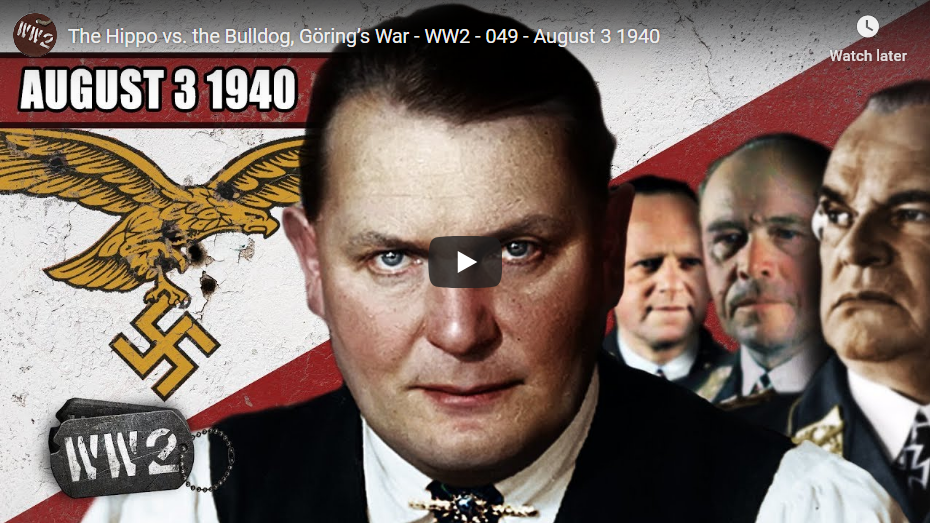
Published on 3 Aug 2019As the Kanalkampf comes to a close, the Battle of Britain heats up. Hitler wants Britain out of the war. But before the Germans can invade Britain, it will have to deal with the Royal Air Force and the Royal Navy.
Join us on Patreon: https://www.patreon.com/TimeGhostHistory
Or join The TimeGhost Army directly at: https://timeghost.tvFollow WW2 day by day on Instagram @World_war_two_realtime https://www.instagram.com/world_war_t…
Join our Discord Server: https://discord.gg/D6D2aYN.
Between 2 Wars: https://www.youtube.com/playlist?list…
Source list: http://bit.ly/WW2sourcesWritten and Hosted by: Indy Neidell
Produced and Directed by: Spartacus Olsson and Astrid Deinhard
Executive Producers: Bodo Rittenauer, Astrid Deinhard, Indy Neidell, Spartacus Olsson
Creative Producer: Joram Appel
Post-Production Director: Wieke Kapteijns
Research by: Indy Neidell
Edited by: Iryna Dulka
Map animations: EastoryColorisations by Norman Stewart and Julius Jääskeläinen https://www.facebook.com/JJcolorization/
Eastory’s channel: https://www.youtube.com/channel/UCEly…
Archive by Screenocean/Reuters https://www.screenocean.com.Sources:
Colored portrait of Hugo Sperrle by Ruffneck88
Narodowe Archiwum Cyfrowe
IWM: HU 93055, CH 1535, CH 1533, A 18881, HU 76020
301 squadron insignia by Jakub Mikita
303 squadron insignia by MrozoA TimeGhost chronological documentary produced by OnLion Entertainment GmbH.
The men of the Inmun Gun and the CCF were peasant boys, tough, inured to hunger and hardship. One-third of them had been in battle and knew what battle meant. They had been indoctrinated in Communism, but no high percentage of them were fanatic. Most of them, after all, were conscripts, and unskilled.
They were not half so good soldiers as the bronzed men who followed Rommel in the desert, or the veterans who slashed down toward Bastogne.
They were well armed, but their weapons were no better than those of United States design, if as good.
But the American soldier of 1950, though the same breed of man, was not half so good as the battalions that had absorbed Rommel’s bloody lessons, or stood like steel in the Ardennes.
The weapons his nation had were not in his hands, and those that were were old and worn.
Since the end of World War II ground weapons had been developed, but none had been procured. There were plenty of the old arms around, and it has always been a Yankee habit to make do. The Army was told to make do.
In 1950 its vehicles in many cases would not run. Radiators were clogged, engines gone. When ordered to Korea, some units towed their transport down to the LST’s, because there was no other way to get it to the boat. Tires and tubes had a few miles left in them, and were kept — until they came apart on Korean roads.
In Japan, where the divisions were supposedly guarding our former enemies, most of the small arms had been reported combat unserviceable. Rifle barrels were worn smooth. Mortar mounts were broken, and there were no longer any spare barrels for machine guns.
Radios were short, and those that were available would not work.
Ammunition, except small arms, was “hava-no.”
These things had been reported. The Senate knew them; the people heard them. But usually the Army was told, “Next year.”
Even a rich society cannot afford nuclear bombs, supercarriers, foreign aid, five million new cars a year, long-range bombers, the highest standard of living in the world, and a million new rifles.
Admittedly, somewhere you have to cut and choose.
But guns are hardware, and man, not hardware, is the ultimate weapon. In 1950 there were not enough men, either — less than 600,000 to carry worldwide responsibilities, including recruiting; for service in the ranks has never been on the Metropolitan Life Insurance Company’s preferred list of occupations.
T.R. Fehrenbach, This Kind of War: A Study in Unpreparedness, 1963.
Extra Credits
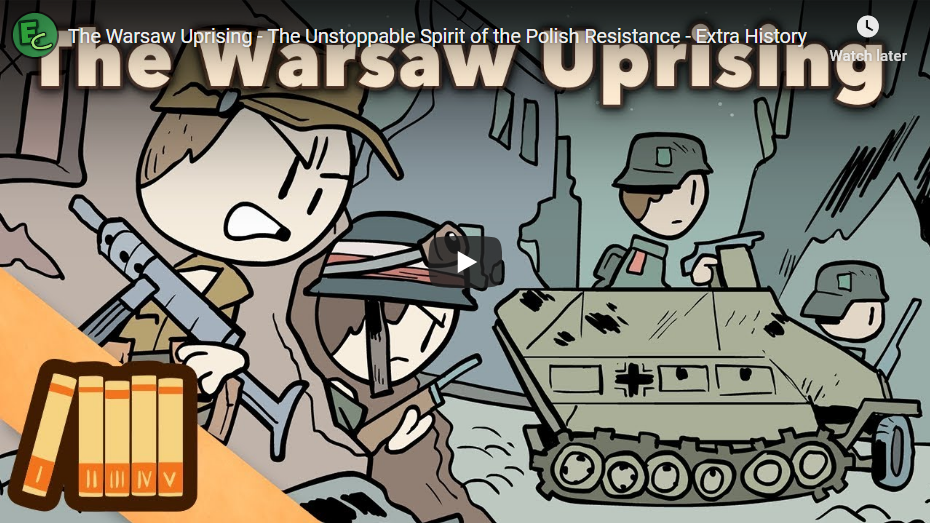
Published on 1 Aug 2019Thanks to the Polish National Foundation for sponsoring this video. https://www.pfn.org.pl/
The Polish are determined to make Poland matter on the world stage, and they will not wait for whatever mercies may come from the Russians. So the Home Army stages their own uprising to liberate Warsaw, and for some 60-odd days, their strongest members, the Grey Ranks, tragically held steadfast.
Join us on Patreon! http://bit.ly/EHPatreon
Forgotten Weapons
Published on 8 Jun 2019http://www.patreon.com/ForgottenWeapons
Cool Forgotten Weapons merch! http://shop.bbtv.com/collections/forg…
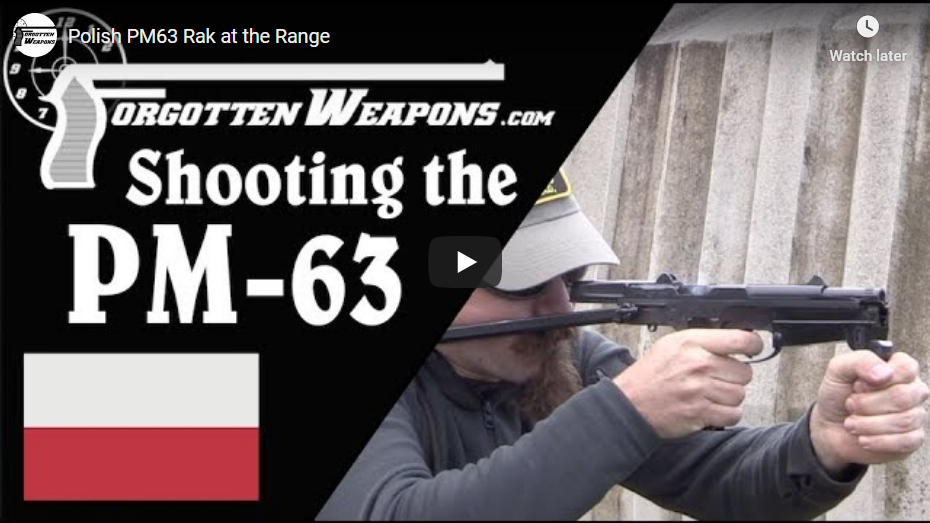
Whether it is described as a machine pistol, a submachine gun, or a personal defense weapon, the PM63 Rak is really not the best examples of this sort of thing to actually shoot. The open-bolt/slide mechanism is very cool from an engineering and design perspective, but does in fact have a tendency to hit one in the face, as inadvertently demonstrated by my high-speed video shooting volunteer. Even if it doesn’t do that, the sights reciprocating on the slide make it a difficult gun to shoot accurately.
Thanks to Movie Armament Group in Toronto for giving me the opportunity to take this to the range! Check out MAG on Instagram: https://instagram.com/moviearmamentsg…
Contact:
Forgotten Weapons
PO Box 87647
Tucson, AZ 85754
The Great War
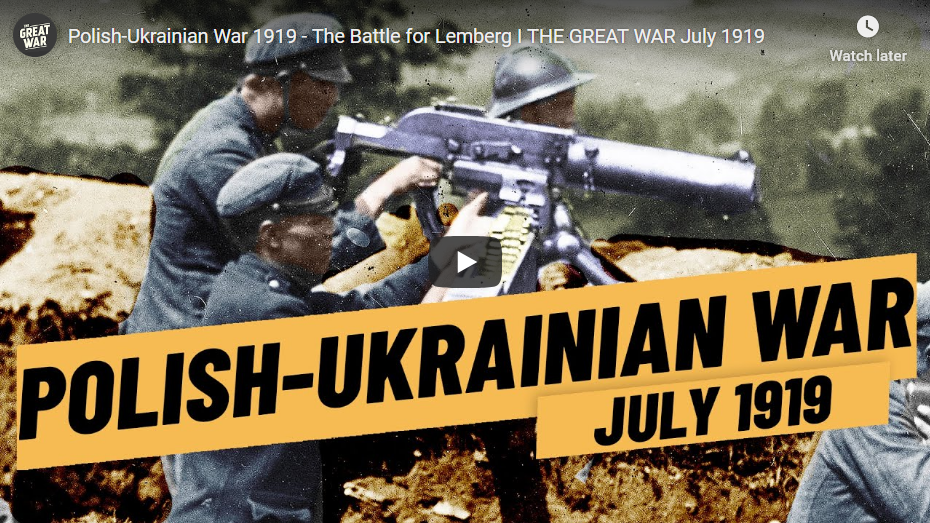
Published on 1 Aug 2019Lviv or Lwów are two names for the same city that was known as Lemberg until 1919. The Poles considered it as one of their most important cultural and political centers, the Ukrainians too. And so, in the aftermath of the dissolution of the Austro-Hungarian Empire, the question of who would control this city led to conflict: The Polish-Ukrainian War.
» SUPPORT THE CHANNEL
Patreon: https://www.patreon.com/thegreatwar
Merchandise: https://shop.spreadshirt.de/thegreatwar/» SOURCES
Smele, Jonathan. The “Russian” Civil Wars 1916-1926 (London: Hurst, 2015).Mawdsley, Evan. The Russian Civil War (New York: Pegasus Books, 2005).
Leonhard, Jörn. Der überforderte Frieden. Versailles und die Welt 1918-1923 (CH Beck, 2018).
Macmillan, Margaret. The Peacemakers: Six Months That Changed the World (London: John Murray, 2001)
Dudko, Oksana: “Polish-Ukrainian Conflict over Eastern Galicia”, in: 1914-1918-online. International Encyclopedia of the First World War, ed. by Ute Daniel, Peter Gatrell, Oliver Janz, Heather Jones, Jennifer Keene, Alan Kramer, and Bill Nasson, issued by Freie Universität Berlin, Berlin 2014-10-08 https://encyclopedia.1914-1918-online…
Kutschabsky, W. Die Westukraine im Kampfe mit Polen und dem Bolschewismus in den Jahren 1918–1923 (Berlin, 1934)
Davies, Norman. White Eagle Red Star (Random House, 2003 (1972))
Sharp, Alan. The Versailles Settlement. Peacemaking and the First World War, 1919-1923 (Basingstoke: Palgrave Macmillan, 2008)
Judson, Pieter. The Habsburg Empire: A New History (Belknap Press, 2016)
Böhler, Jochen. Civil War in Central Europe, 1918-1921 (Oxford University Press, 2019)
Timothy Snyder. The Reconstruction of Nations. (New Haven: Yale University Press, 2003)
»CREDITS
Presented by: Jesse Alexander
Written by: Jesse Alexander
Director: Toni Steller & Florian Wittig
Director of Photography: Toni Steller
Sound: Toni Steller
Editing: Toni Steller
Mixing, Mastering & Sound Design: http://above-zero.com
Motion Design: Christian Graef – GRAEFX
Maps: Daniel Kogosov (https://www.patreon.com/Zalezsky)
Research by: Jesse Alexander
Fact checking: Florian WittigChannel Design: Alexander Clark
Original Logo: David van StepholdA Mediakraft Networks Original Channel
Contains licensed material by getty images
All rights reserved – Real Time History GmbH 2019
Sabaton History
Published on 1 Aug 2019When the Germans launched their last western offensive through the Belgian Ardennes in the winter of 1944, it was up to the American 101st Airborne Division to defend the key city of Bastogne. Surrounded by camouflaged German soldiers and endless artillery bombardments, the 101st, a.k.a the Screaming Eagles, endured.
Support Sabaton History on Patreon: https://www.patreon.com/sabatonhistory
Listen to Coat of Arms (where “Screaming Eagles” is featured):
CD: http://bit.ly/CoatOfArmsStore
Spotify: http://bit.ly/CoatOfArmsSpotify
Apple Music: http://bit.ly/CoatOfArmsAppleMusic
iTunes: http://bit.ly/CoatOfArmsiTunes
Amazon: http://bit.ly/CoatOfArmsAmzn
Google Play: http://bit.ly/CoatOfArmsGooglePlayWatch the Official Lyric Video of “Screaming Eagles” here: https://www.youtube.com/watch?v=kJVkE…
Watch more videos on the Sabaton YouTube channel: https://www.youtube.com/user/Sabaton?…
Listen to Sabaton on Spotify: http://smarturl.it/SabatonSpotify
Official Sabaton Merchandise Shop: http://bit.ly/SabatonOfficialShopHosted by: Indy Neidell
Written by: Markus Linke and Indy Neidell
Directed by: Astrid Deinhard and Wieke Kapteijns
Produced by: Pär Sundström, Astrid Deinhard and Spartacus Olsson
Creative Producer: Joram Appel
Executive Producers: Pär Sundström, Joakim Broden, Tomas Sunmo, Indy Neidell, Astrid Deinhard, and Spartacus Olsson
Maps by: Eastory
Edited by: Iryna Dulka
Sound Editing by: Marek KaminskiEastory YouTube Channel: https://www.youtube.com/channel/UCEly…
Archive by: Reuters/Screenocean https://www.screenocean.com
Music by Sabaton.Sources:
IWM: EA 49214An OnLion Entertainment GmbH and Raging Beaver Publishing AB co-Production.
© Raging Beaver Publishing AB, 2019 – all rights reserved.

Forgotten Weapons
Published on 7 Jun 2019http://www.patreon.com/ForgottenWeapons
Cool Forgotten Weapons merch! http://shop.bbtv.com/collections/forg…
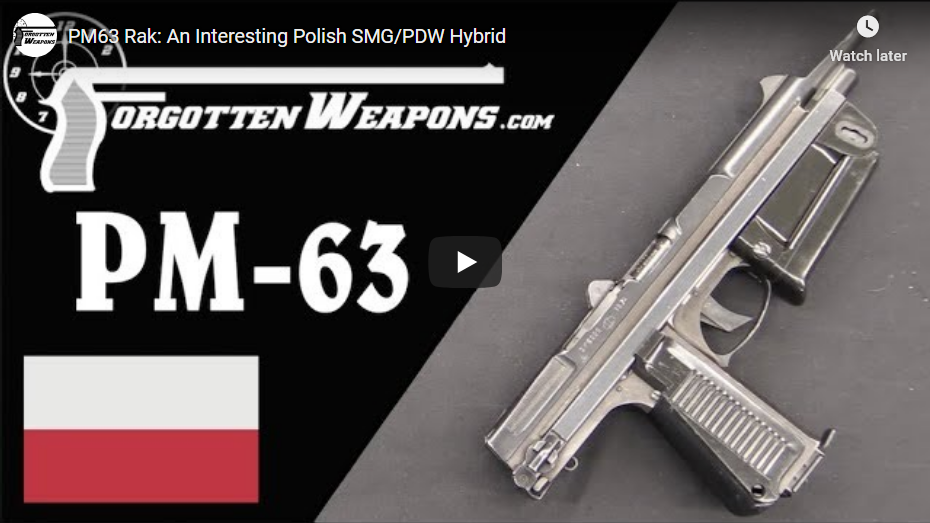
The PM-63 Rak is a pretty interesting Polish Cold War machine pistol or personal defense weapon. It fires from an open bolt, but uses a slide like a pistol rather than a bolt in an enclosed receiver like a typical SMG. There are several other interesting elements to the design, so let’s take a closer look…
Thanks to Movie Armament Group in Toronto for giving me the opportunity to bring you this video! Check out MAG on Instagram: https://instagram.com/moviearmamentsg…
Contact:
Forgotten Weapons
PO Box 87647
Tucson, AZ 85754
Forgotten Weapons
Published on 31 Jul 2019http://www.patreon.com/ForgottenWeapons
Cool Forgotten Weapons merch! http://shop.bbtv.com/collections/forg…
Hiram Maxim was the first person to create a truly practical and functional machine gun, based on a patent he filed in 1883. He pioneered the recoil operating system – the concept of harnessing the recoil generated by a firearm to perform the actions of reloading that firearm. His patent was based on a lever action rifle, but his intent was to create a machine gun, complete with belt feed and water cooling. After a testbed “forerunner” gun, he built this model which he called the “Prototype”. It was meant as a proof of concept, and used in many public exhibitions and demonstrations.
The Prototype used a hydraulic rate of fire control system which could be set as high as 500 rounds/minute and as low as just one round per minute. The gun did not have a trigger as we would recognize it today, but rather a single lever like a vehicle accelerator which acted as both trigger and fire rate control. Only three of these Prototypes exist today, with one belonging to the USMC, one on public display at the Royal Armouries museum in Leeds, and this one in the NFC reserve collection at Leeds.
For a fantastic exploded view of all this guns working parts, check out this work by YouTube channel vbbsmyt:
Many thanks to the Royal Armouries for allowing me to film this tremendously important artifact! The NFC collection there — perhaps the best military small arms collection in Western Europe — is available by appointment to researchers:
https://royalarmouries.org/research/n…
You can browse the various Armouries collections online here:
https://royalarmouries.org/collection/
Contact:
Forgotten Weapons
PO Box 87647
Tucson, AZ 85754

Invicta
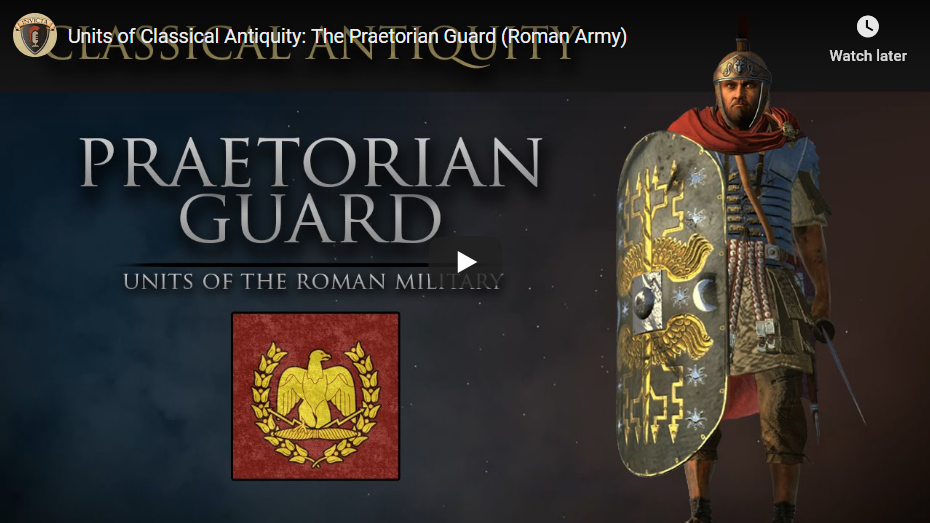
Published on 18 Mar 2016Who were the Praetorian Guard? Special Forces, dictatorial musclemen, or ceremonial relics? In this documentary episode we dive deep into the history of this feared unit of the Roman empire!
Sir Humphrey is not amused at the stories in the British press about pregnant Royal Navy sailors needing to be flown back to the UK from some of Her Majesty’s deployed ships:
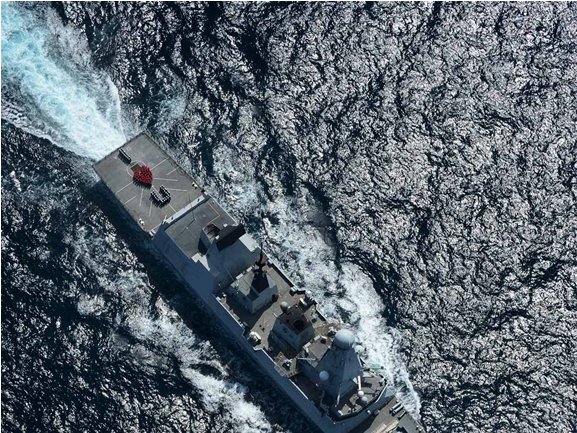
Life in the Royal Navy is less about preparing for war, and more like spending time on the loveboat. That seems to be the gist of quite a few stories in the media today which breathlessly relate to the news that since 2005 35 women sailors from 18 different ships have been airlifted to shore as a result of becoming pregnant and discovering this while they were at sea.
This news has been met with shock and horror by some commentators online, some of whom give the distinct impression that they are not intimately familiar with the process by which babies are made. At least one Daily Mail reader suggested that Chasity belts should form part of naval uniform for female members of the naval service (presumably in the RN kit record book it would be recorded as a “Torpedo Protection Belt”?).
Is the nation being let down by a bunch of serial shaggers in uniform or is perhaps the truth of the matter a little more complex than originally conceived?
The specific FOI that was referred to in the article, which looks like it originated in the Daily Star (alongside another story suggesting that the 2003 Iraq war occurred due to Saddam possessing “stargate” technology and the US and allies wanting to prevent various aliens attacking the Earth) asked for the total number of females aeromedically evacuated between 2005 and 2019. Confusingly though there is also some suggestion that the Sun also got the story as an exclusive – to be honest, its rather hard to tell.
To start with, a sense of context is perhaps useful. This FOI is a well worn question which seems to have been asked quite a few times over the years. Humphrey has found similar articles from 2015 and 2017 and 2018, so its not exactly breaking news that the RN has had to occasionally return sailors ashore when they find out they are pregnant.
The numbers involved sound dramatic – a whole 35 women flown at public expense due to getting pregnant. In 2015 the number was 25, so in the last four years a whole 10 additional women sailors have discovered they were pregnant while onboard a ship.
Given that the Royal Navy consists of about 3,000 women at any one time (roughly 10% of the Naval Service) and that each year roughly 3000 people join the Royal Navy (lets assume 300 women based on the above figure), then in very big handfuls between 2005 and 2019 roughly 7500 women have served in the Royal Navy at different times. The figure is likely to be even higher still, but it’s a useful, albeit very rough, “guesstimate”.
This means that of the 7500 women, a total of 35 have discovered they were pregnant while at sea during this period. That works out at, roughly, 0.5% of the total force spread over 14 years. This doesn’t sound quite as dramatic as first made out to be.
Forgotten Weapons
Published on 5 Jun 2019http://www.patreon.com/ForgottenWeapons
Cool Forgotten Weapons merch! http://shop.bbtv.com/collections/forg…
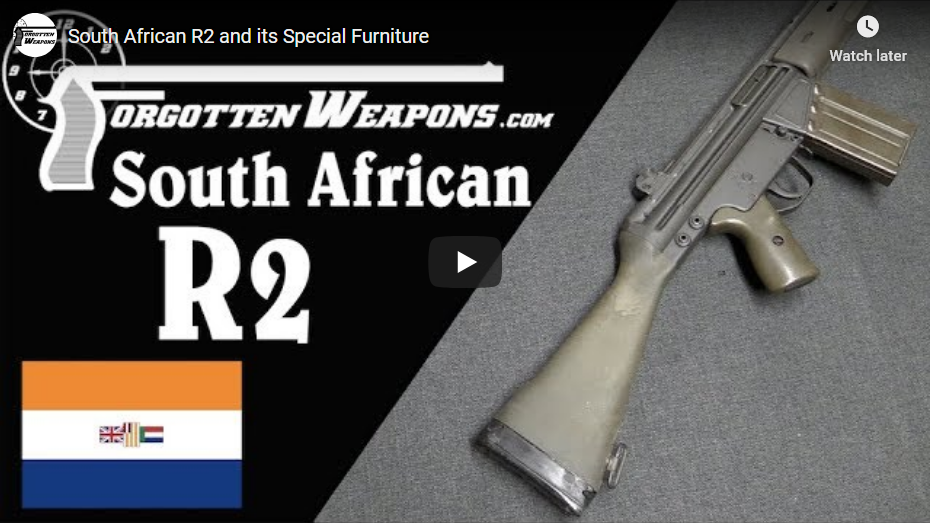
In South African military service, the R1 was the FN FAL and was the preferred infantry combat rifle until the adoption of the Galil as the R4 rifle. So what were the guns in between? Well, the R2 was a South African adaptation of the G3. A large number of rifles were needed as a reserve, and also to equip second echelon units like the Air Force, Cape Corps, and South West Africa Territorial Force. To reduce the expense of this, South Africa purchased something like 100,000 G3 rifles from Portugal and designated them R2.
The Portuguese hand guards and buttstocks were found to be unsatisfactory, however. In the heat and harsh ultraviolet radiation of South West Africa (now Namibia) in particular, the plastic would shrink and lose its fit, leading to the guns being called “rattlers” by the SADF troops. The fix this, the American firm of Choate Machine & Tool was contracted to make new hand guards based on the H&K export pattern — wider and longer and with fittings for a bipod. New stocks were also made, duplicating the shape of the R1/FAL stock.
Contact:
Forgotten Weapons
PO Box 87647
Tucson, AZ 85754
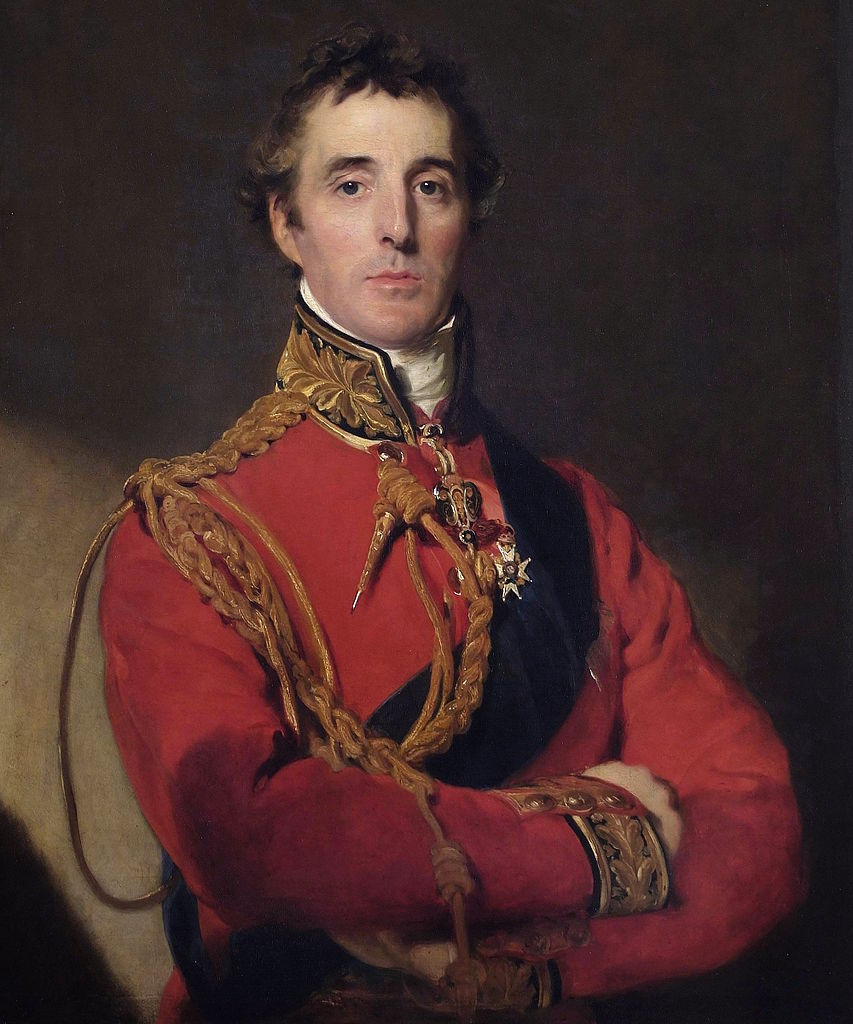
Arthur Wellesley, 1st Duke of Wellington (1769–1852) by Thomas Lawrence, circa 1815-1816.
Wikimedia Commons.The phrase “duke it out”, meaning “fight”, appears to derive ultimately from a nickname of one of the Great Captains, the Duke of Wellington (1769-1852).
It seems that the Duke had a rather prominent nose, so distinctive, in fact, that his troops often referred to him as “Old Nosey”. So the word “duke” soon became a synonym for “nose” in working class English slang, attested during Wellington’s own lifetime. That, in turn, led to the rise of the threat “bust your duke”, meaning “punch your nose”, and thus to “duke buster” as slang for “fist”, which was soon shortened to “duke”.
By further evolution, the phrase “put up your dukes” developed as an invitation to fight and “duke it out” became slang for “fight”.
While some etymologists apparently do not agree with this derivation, it’s worth noting that there is in London a mini-monument to the ducal proboscis, suggesting how notable it was.
Al Nofi, “Al Nofi’s CIC, Issue 472”, Strategy Page, 2019-06-01.



Powered by WordPress