
World War Two
Published 29 May 2022Arthur Harris and the RAF set another record in bombing Germany, and the outnumbered Yugoslav Partisans show the Axis that numbers mean little when you’re clever.
(more…)
May 30, 2022
The Deadliest Job in World War Two – WAH 062 – May 29, 1943
Comments Off on The Deadliest Job in World War Two – WAH 062 – May 29, 1943
May 29, 2022
Black May, Nazi Subs Defeated – WW2 – 196 – May 28, 1943
World War Two
Published 28 May 2021German Grand Admiral Karl Dönitz orders the U-Boats to leave the Atlantic this week; the losses lately have just been too great for their patrols to continue there. There is active fighting in China, the Aleutians, and the Kuban, and there are special weapons tests in the skies over Germany.
(more…)
Comments Off on Black May, Nazi Subs Defeated – WW2 – 196 – May 28, 1943
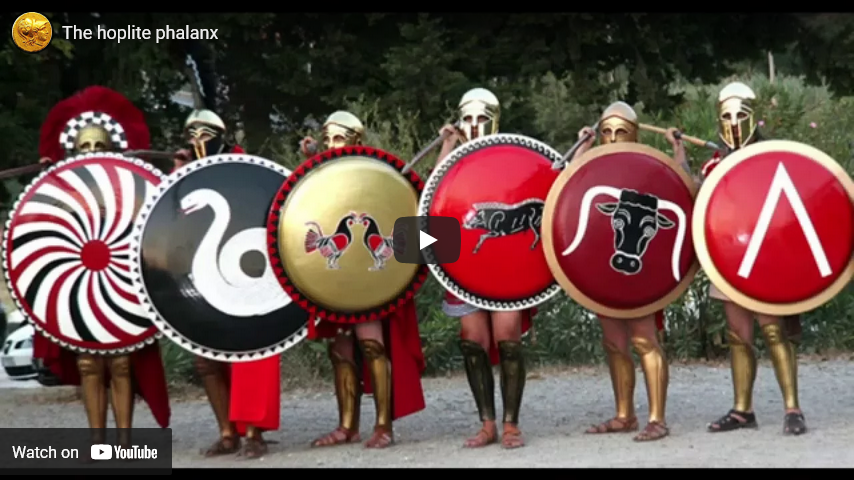
The hoplite phalanx
HistoryMatters
Published 5 Jan 2016A short introductory video about on ancient Greek hoplite and phalanx.
Music: Wet by Michett
Comments Off on The hoplite phalanx
QotD: Was Biden’s Afghan evacuation driven by Twitter “optics”?
Take the Afghanistan bugout. As Z Man pointed out in his column today, it was gonna happen. And it was going to be a cock up; that’s just the nature of these things. A halfway competent Apparat would’ve let Bad Orange Man own it. They could’ve milked it for years. Hell, decades — it was 2012 before we were finally allowed to stop talking about who did or didn’t do what in Vietnam.
But the Apparat didn’t do that, and the reason was: Twitter.
All the Blue Checkmarks on Twatter agreed that “letting” Bad Orange Man pull out of Afghanistan would be “handing him a win”. After all, he said he was going to do it! And if he somehow got out before the 20th anniversary, that’d be an even bigger win. Obviously, then, they had to “let” Biden do it, because that’s a “win”. And of course he had to do it in August, so that he could “spike the football” on 9/11/2021.
So the withdrawal had to be pushed into 2021, and it had to be slapdash. Indeed, it had to be the exact opposite of whatever Bad Orange Man was planning to do, so that there was no possible way Bad Orange Man could claim a “win”. It had to be all Biden …
… and so it was. With results that anyone smarter than a concussed goldfish — which of course excludes everyone with a Blue Checkmark — could’ve predicted.
If the Blue Checkmark Borg on Twatter, then, decides that Brandon needs to look tough by nuking Moscow, then it’s go time. And since the social dynamic on Twitter is ever-spiraling lunacy — the only way to “win” Twitter is by being more screechingly insane about everything than everyone else — then whoever gets there fustest with the mostest is going to drive the “decision”.
Severian, “Ukraine”, Founding Questions, 2022-02-24.
Comments Off on QotD: Was Biden’s Afghan evacuation driven by Twitter “optics”?
May 28, 2022
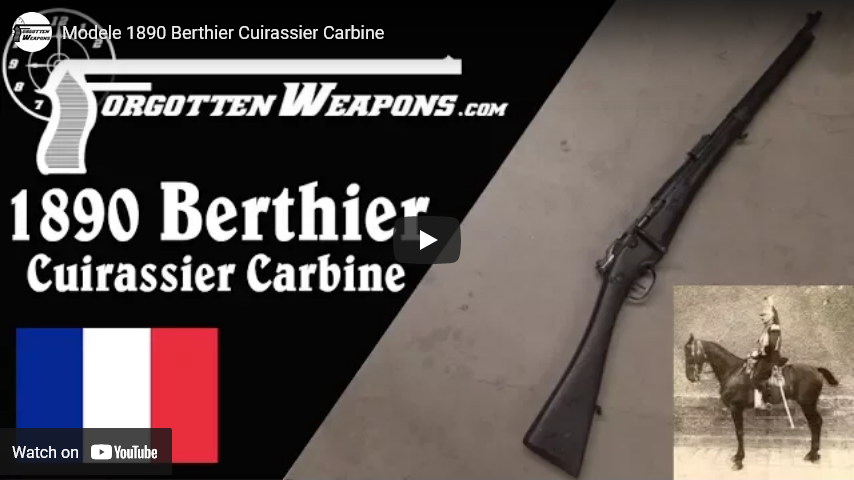
Modele 1890 Berthier Cuirassier Carbine
Forgotten Weapons
Published 17 Jul 2017http://www.patreon.com/ForgottenWeapons
When the Modele 1890 Berthier carbine was adopted for the French cavalry, the decision was made to produce a special version for the Cuirassier troops. These were the elite heavy cavalry, equipped with steel breastplates and elaborate plumed helmets. They existed in that very brief window where the worlds of Napoleon and the smokeless-powder rifle coexisted.
The armor worn by the Cuirassier required some special adaptations to their firearms, specifically to the stocks. The scaled chinstrap of the helmet interfered with a normal cheek weld to the carbine, so the comb was removed from the stock. The metal buttplate also was a poor match for the metal cuirass, as it was difficult to hold the gun in position to aim. To account for this, a leather buttplate was used on these carbine, which would be much less slippery on armor.
Aside from these changes to the stock, the carbine was identical to the standard 1890 cavalry carbine. A total of 20,000 Cuirassier carbines were made in 1891 at the Chatellerault arsenal, and few survived World War One. By fairly early in 1915 the cavalry units had been repurposed as infantry, and the Cuirassier went into the trenches with the armor and carbines — perhaps better equipped, ironically, than the infantry in the greatcoats, kepis, and with Lebel rifles.
Thanks to Justin for finding this rifle for me!
If you enjoy Forgotten Weapons, check out its sister channel, InRangeTV! http://www.youtube.com/InRangeTVShow
Comments Off on Modele 1890 Berthier Cuirassier Carbine
QotD: Breaking the trench stalemate with tactical air power
But how much airpower does it take to really move a division out of position? In 1944, at the start of Operation Cobra as part of the Normandy breakout, it was necessary for US forces to move the powerful armored division Panzer Lehr out of its prepared positions outside of St. Lo. Over the course of an hour and a half, the U.S. Eighth Air Force hit Panzer Lehr with approximately three thousand aircraft, including 1,800 heavy bombers (each of which might have had bomb-loads of c. 2-3,500kg; the attack would have been the equivalent of about 13,000 Farman F.50s (of which only a hundred or so were built!)). By this point, even medium bombers carried bomb loads in the thousands of pounds, like the B-25 Mitchell medium bomber, with a bomb load of 3000lbs (1360kg). This was followed by a hurricane artillery barrage! Despite this almost absurdly awesome amount of firepower (which, to be clear, inflicted tremendous damage; by the end of Operation Cobra, Panzer Lehr – the heaviest and most powerful Panzer division in the west – had effectively ceased to exist), Panzer Lehr, badly weakened was still very capable of resisting and had to be pushed out of position by ground attack over the next three days.
Needless to say, nothing on offer in 1918 or for a decade or more after, was prepared to offer that kind of offensive potential from the air. That kind of assault would have required many thousands of aircraft with capabilities far exceeding what even the best late-war WWI bombers could do. Once again, while close air support doctrine was developed with one eye on the trench stalemate and the role airpower could play in facilitating a breakthrough and restoring maneuver (either by blasting the breakthrough or – as in Soviet Deep Battle doctrine – engaging enemy rear echelon units to bog down reinforcements). But the technology wasn’t anywhere near the decisive point by 1918. Instead, the most important thing aircraft could do was spot for the artillery, which is mostly what aircraft continued to do, even in late 1918.
Bret Devereaux, “Collections: No Man’s Land, Part II: Breaking the Stalemate”, A Collection of Unmitigated Pedantry, 2021-09-24.
Comments Off on QotD: Breaking the trench stalemate with tactical air power
May 27, 2022
The Crusades: Part 8 – The Rise of Venice
seangabb
Published 12 Mar 2021The Crusades are the defining event of the Middle Ages. They brought the very different civilisations of Western Europe, Byzantium and Islam into an extended period of both conflict and peaceful co-existence. Between January and March 2021, Sean Gabb explored this long encounter with his students. Here is one of his lectures. All student contributions have been removed.
(more…)
Comments Off on The Crusades: Part 8 – The Rise of Venice
May 26, 2022
Why Napoleon’s Invasion of Russia Imploded in Moscow
Real Time History
Published 25 May 2022Sign up for the CuriosityStream + Nebula Bundle: https://curiositystream.com/realtimeh…
When Napoleon took Moscow, he expected victory over Russia was just a matter of time. But six weeks later he has to flee the city as his entire Russia campaign collapses. The strengthened Russian Army is attacking from three sides, winter is coming and in far away Paris a coup is underway.
» SUPPORT US ON PATREON
https://patreon.com/realtimehistory» THANK YOU TO OUR CO-PRODUCERS
John Ozment, James Darcangelo, Jacob Carter Landt, Thomas Brendan, Kurt Gillies, Scott Deederly, John Belland, Adam Smith, Taylor Allen, Rustem Sharipov, Christoph Wolf, Simen Røste, Marcus Bondura, Ramon Rijkhoek, Theodore Patrick Shannon, Philip Schoffman, Avi Woolf,» SOURCES
Boudon, Jacques-Olivier. Napoléon et la campagne de Russie en 1812. 2021.
Chandler, David. The Campaigns of Napoleon, Volume 1, New York 1966.
Lieven, Dominic. Russia Against Napoleon. 2010.
Maag, Albert. Die Schicksale der Schweizerregimente in Napoleons I. Feldzug nach Russland 1812. 1900.
Rey, Marie-Pierre. L’effroyable tragédie: une nouvelle histoire de la campagne de Russie. 2012.
Zamoyski, Adam. 1812: Napoleon’s Fatal March on Moscow. 2005.» OUR STORE
Website: https://realtimehistory.net»CREDITS
Presented by: Jesse Alexander
Written by: Jesse Alexander
Director: Toni Steller & Florian Wittig
Director of Photography: Toni Steller
Sound: Above Zero
Editing: Toni Steller
Motion Design: Toni Steller
Mixing, Mastering & Sound Design: http://above-zero.com
Digital Maps: Canadian Research and Mapping Association (CRMA)
Research by: Jesse Alexander
Fact checking: Florian WittigChannel Design: Simon Buckmaster
Contains licensed material by getty images
Maps: MapTiler/OpenStreetMap Contributors & GEOlayers3
All rights reserved – Real Time History GmbH 2022
Comments Off on Why Napoleon’s Invasion of Russia Imploded in Moscow
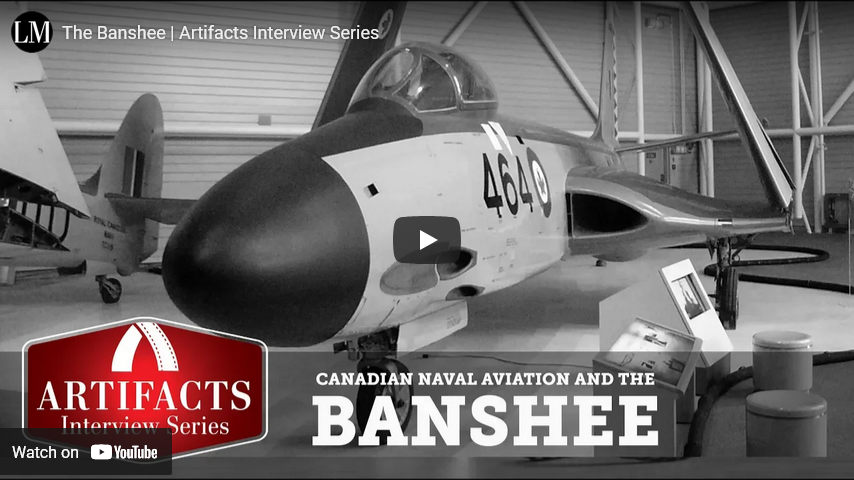
The Banshee | Artifacts Interview Series
Legion Magazine
Published 15 Mar 2019Legion Magazine‘s Stephen J. Thorne sat down with Andrew Burtch, the Post-1945 historian at the Canadian War Museum, to discuss what was the crown jewel of the Royal Canadian Navy’s air fleet – the Banshee. Video edited by Adam Tindal.
For more information, visit: www.legionmagazine.com/artifacts
Comments Off on The Banshee | Artifacts Interview Series
May 25, 2022
The Spy Game That Killed Yamamoto – WW2 – Spies & Ties 17
World War Two
Published 24 May 2022We’ve already seen the power of signals intelligence. Churchill loves being fed information from MI6’s Ultra. Now it brings a vengeance for his American allies. They manage to bag the scourge of Pearl Harbor, C-in-C of the Imperial Japanese Navy, Admiral Isoroku Yamamoto.
(more…)
Comments Off on The Spy Game That Killed Yamamoto – WW2 – Spies & Ties 17
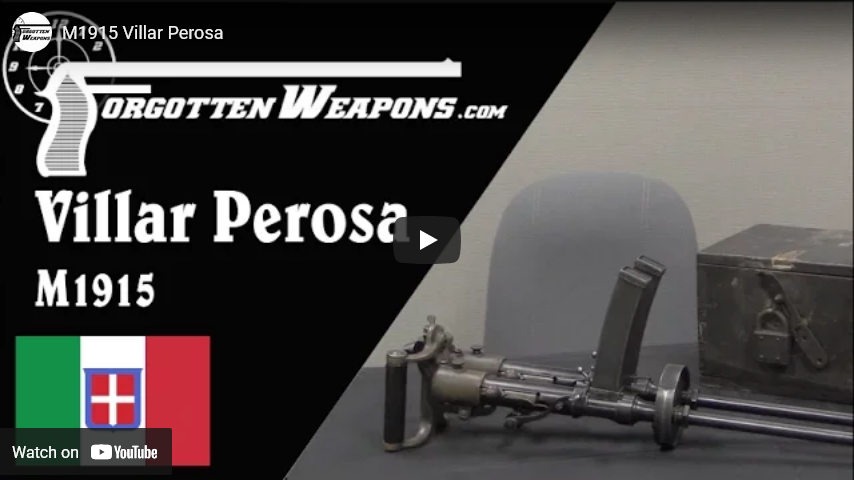
M1915 Villar Perosa
Forgotten Weapons
Published 5 Aug 2016http://www.patreon.com/ForgottenWeapons
The Villar Perosa is one of the first small machine guns developed and used by a military force. It was designed in Italy and introduced in 1915 as an aircraft weapon, to be used in a flexible mount by an airplane’s observer. The gun consists of two independent firing actions mounted together. Each fires from an open bolt as a rate of 1200-1500 rounds/minute, feeding from a 25 round magazine of 9mm Glisenti cartridges. This allowed the maximum possible volume of fire in an aerial combat situation, where in 1915 ballistic power was not particularly important.
As aircraft armaments improved and synchronized, belt-fed machine guns became practical, the Villar Perosa was quickly made obsolete in aerial use. The Italian military experimented with several applications of the weapon in ground combat, including slings and belt fittings for walking fire, tripods, mounts with integral armor shields, and bicycle mounts. None of these proved particularly successful, as the elements that made the gun well adapted to early aerial use (high rate of fire with a small cartridge) made it relatively ineffective for infantry use.
Ultimately, the best use of the Villar Perosa was to break them up and convert the actions into shoulder-fired submachine guns. Designs to do this were developed by both the Beretta company and Villar Perosa themselves, and in 1918 these guns entered service in the same approximate period as the first German MP-18 submachine guns. Because of this recycling, intact M1915 Villar Perosa guns are quite rare today.
Comments Off on M1915 Villar Perosa
May 24, 2022
History of Rome in 15 Buildings 10. Santa Sabina
toldinstone
Published 2 Oct 2018Through some combination of military disasters, barbarian migrations, social change, and dynastic bad luck, the Western Roman Empire collapsed in the fifth century. In this tenth episode of our History of Rome, focused on the church of Santa Sabina, we will consider some of the implications of this crisis.
If you enjoyed this video, you might be interested in my book Naked Statues, Fat Gladiators, and War Elephants: Frequently Asked Questions about the Ancient Greeks and Romans. You can find a preview of the book here:
https://toldinstone.com/naked-statues…
If you’re so inclined, you can follow me elsewhere on the web:
https://www.reddit.com/r/AskHistorian…
https://www.instagram.com/toldinstone/To see the story and photo essay associated with this video, go to:
https://toldinstone.com/santa-sabina/Thanks for watching!

Comments Off on History of Rome in 15 Buildings 10. Santa Sabina
May 23, 2022
Drowning Germans, Burning Jews – WAH 061 – May 22, 1943
World War Two
Published 22 May 2022When Air Marshal Arthur Harris and Reichspropagandaminister Joseph Goebbels agree that a lot of death and destruction is not enough death and destruction, the world is in trouble.
(more…)
Comments Off on Drowning Germans, Burning Jews – WAH 061 – May 22, 1943
May 22, 2022
Axis Prisoners Face French Wrath – WW2 – 195 – May 21 1943
World War Two
Published 21 May 2022The Allies have won the battle for Africa, but now they have nearly 250,000 POWs to care for, and do not have the facilities to do so. The Trident Conference continues in Washington to try and decide the direction of the Allied war effort, but they launch the Dambuster Raids this week in Germany to try and cripple German water power — and thus, industry — with a new type of bomb.
(more…)
Comments Off on Axis Prisoners Face French Wrath – WW2 – 195 – May 21 1943
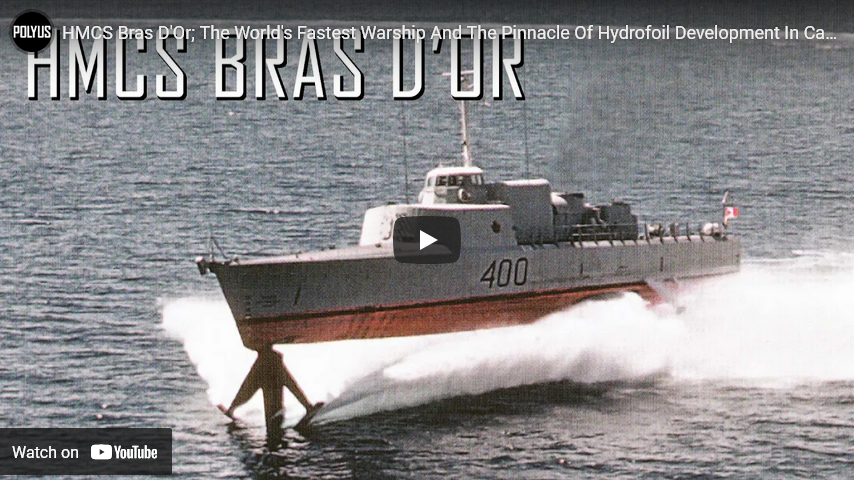
HMCS Bras D’Or; The world’s fastest warship and the pinnacle of hydrofoil development in Canada
Polyus Studios
Published 3 Feb 2022Don’t forget to like the video and subscribe to my channel!
Support me on Patreon – https://www.patreon.com/polyusstudiosHMCS Bras D’Or was the pinnacle of over 100 years of hydrofoil development in Canada. Starting with Alexander Graham Bell and ending with the Proteus, hydrofoils held the promise of faster travel over the waves. Unfortunately the technology never found a comfortable fit in either military or civil fleets. It was designed to be an ASW hunter but by the time she was ready, the Navy was settled on using the now familiar Destroyer/Helicopter combos.
0:00 Introduction
0:29 Alexander Graham Bell and Casey Baldwin
2:28 The R-100 Massawippi
5:46 The R-103 Baddeck
7:15 The Rx
8:48 Anti-submarine warfare hydrofoil concept
12:24 FHE-400 Bras D’Or
17:23 Testing and refinement
19:25 Cancellation
20:18 Proteus
20:45 ConclusionMusic:
“Denmark” – Portland Cello Project
“Your Suggestions” – Unicorn Heads#BrasDor #CanadianAerospace #PolyusStudios
Comments Off on HMCS Bras D’Or; The world’s fastest warship and the pinnacle of hydrofoil development in Canada


