
World War Two
Published 5 Jun 2022Despair in Germany, more death in the Jewish ghettos, and Dr. Mengele tales command in Auschwitz-Birkenau.
(more…)
June 6, 2022
Dr. Mengele Takes Command – WAH 063 – June 5, 1943
Comments Off on Dr. Mengele Takes Command – WAH 063 – June 5, 1943
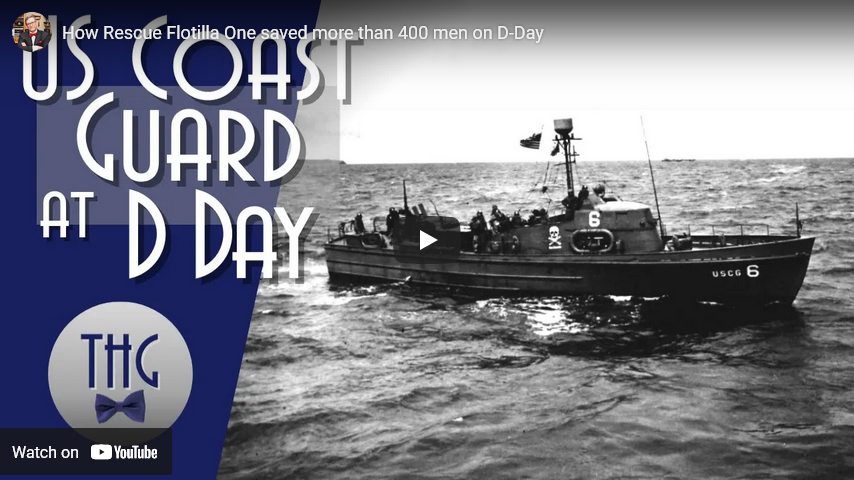
How Rescue Flotilla One saved more than 400 men on D-Day
The History Guy: History Deserves to Be Remembered
Published 2 Jun 2018The History Guy remembers the heroic service of Rescue Flotilla 1 of the United States Coast Guard during D-Day. It is history that deserves to be remembered.
The History Guy uses images that are in the Public Domain. As photos of actual events are sometimes not available, I will often use photographs of similar events and objects for illustration.
Patreon: https://www.patreon.com/TheHistoryGuy
The History Guy: Five Minutes of History is the place to find short snippets of forgotten history from five to fifteen minutes long. If you like history too, this is the channel for you.
Awesome The History Guy merchandise is available at:
teespring.com/stores/the-history-guyThe episode is intended for educational purposes. All events are presented in historical context.
#ushistory #militaryhistory #thehistoryguy
Comments Off on How Rescue Flotilla One saved more than 400 men on D-Day
QotD: Eisenhower’s D-Day speech to the troops
[The near-perfect formulaic general’s speech before battle] has a few basic parts: I) an opening that focuses on the valor of the men rather than the impact of the speech (the common trope here is to note how “brave men require few words”) II) a description of the dangers arrayed against them, III) the profits to be gained by victory and the dire consequences of defeat IV) the basis on which the general pins his hope of success and finally V) a moving peroration; the big emotional conclusion of the speech. You can read through Catiline’s speech yourself; it’s not long and it follows the formula precisely. That order of elements is not rigid; they can be moved around and emphasis shifted. But I don’t just want to show that this trope existed in the ancient past, I want to show that it is projected through military tradition to the present. So let’s look at another very standard and somewhat more recent example, appropriate for June:
Soldiers, Sailors and Airmen of the Allied Expeditionary Force!
You are about to embark upon the Great Crusade, toward which we have striven these many months. The eyes of the world are upon you. The hopes and prayers of liberty-loving people everywhere march with you. In company with our brave Allies and brothers-in-arms on other Fronts, you will bring about the destruction of the German war machine, the elimination of Nazi tyranny over the oppressed peoples of Europe, and security for ourselves in a free world.
Your task will not be an easy one. Your enemy is well trained, well equipped and battle-hardened. He will fight savagely.
But this is the year 1944! Much has happened since the Nazi triumphs of 1940-1. The United Nations have inflicted upon the Germans great defeats, in open battle, man to man. Our air offensive has seriously reduced their strength in the air and their capacity to wage war on the ground. Our Home Fronts have given us an overwhelming superiority in weapons and munitions of war, and placed at our disposal great reserves of trained fighting men. The tide has turned! The free men of the world are marching together to Victory!
I have full confidence in your courage, devotion to duty and skill in battle. We will accept nothing less than full Victory!
Good Luck! And let us all beseech the blessing of Almighty God upon this great and noble undertaking.
Dwight D. Eisenhower, June 6th, 1944
I’ve highlighted an image of the signed document itself to show the various components of the ancient battle speech (following my numbering above): [https://acoupdotblog.files.wordpress.com/2020/06/breaking-down-the-speech.png?w=689]
Apart from a slight alteration of the order, it is not hard to assign this speech to the same genre as Sallust’s Catiline speech or even Thucydides’ speeches at Delium (Thuc. 4.92-95). As we’ll see, it is certainly not the case that there is no other way to structure a pre-battle exhortation (although, I should note that the standard text of the other famous pre-D-Day General’s speech, Patton’s speech to the Third Army, hits the same notes, but with more words – mostly profanity). But this is the standard structure of a battle speech in the Western literary canon, and speeches with this standard structure, or variations of it, appear frequently.
I think a reader might particularly be caught by the emphasis on a section stressing how formidable the enemy is and how great the danger is (“He will fight savagely”). That seems an odd thing to stress! But it is an important part of the structure of these speeches; it is almost never left out. When paired with the general’s own cause for hope, acknowledging the fearsome nature of the enemy and the general terror of battle is a way to inoculate the soldiers against the seizing fear of battle. The Greeks saw the fear of battle as two distinct elements, deimos (δεῖμος) – the creeping dread before a battle, and phobos (φόβος) – the sudden paralyzing panic in combat, the sharp fear that causes men to flee. If the encouragement of the speech (and the general’s presence) is meant to defuse deimos, openly discussing the fearfulness of the enemy (but couching it in terms of how it may be overcome) is meant to rob phobos of his sting. You do your soldiers no favors by concealing from them the terror they will experience regardless.
Now the bulk of Eisenhower’s D-Day order is dedicated to the fourth part, stating the ground for encouragement, generally framed by the reasons the general is confident despite how fearsome the enemy is. One form of encouragement is a recounting of the noble deeds of the soldiers themselves. One of the marks of good generalship for the Romans was if a general could go up and down the line, calling out individual soldiers and reminding them of great deeds they had performed (Caesar does this, for instance; note Catiline’s opponent, Marcus Petreius encourages his soldiers this way, calling out each one – his is an army of veterans – by name, 59.4). Alternately – especially for a fairly green army where no one has done any great deeds yet – the general might stress the great valor of their forefathers, or the honor of their city or state. The emotion being touched here is pretty clearly pride, tapping into a desire not to let one’s self, one’s community or one’s comrades down. That’s an effective rhetorical tactic; as we’ve discussed, the fear of shame is an effective combat motivator (where so many other motivations fail). Appealing to pride is a good way to arouse that fear of shame, as the two emotions are deeply connected. Alternately, a general may not a superiority in numbers, materiel, tactical position; he may discuss his battle-plan and how it is likely to bring victory. For forces defending on their own ground, the home-field advantage may be stressed.
You want to understand the “fearsome enemy” motif and the “grounds for encouragement” motif working best as a pair.
Consider it this way: you are about to take a very important test. If I, having already taken the test, tell you “oh, don’t worry, the test is easy,” that will help dispel your dread (deimos) before it, but when you sit down with the test paper and read the (quite difficult) questions, the seizing fear (phobos) hits you, and your overall performance is reduced. That seizing panic clouds your thoughts and costs you vital time; in a battle, it might cause you to flee or get you killed. But if I tell you “the test is hard, but (you’ve studied effectively/you can pick up points on XYZ section/etc.)” it not only diminishes the dread before the test, but serves to mentally prepare you for the shock of seeing the real thing. Indeed, I turn your fearful mind into my friend – when the real thing fails to live up to your worst nightmares, you’ll draw confidence from that. When the test turns out to be exactly like I said, the encouragement carries more weight because of the reliability of the warning. I am not dispelling your fear – because this is battle and everyone is afraid and no words can take that away – I am mentally preparing you for your fear. There’s an element of CBT in this: validate the emotion, suggest more helpful ways to think about it, and direct the mind towards behavioral solutions.
Finally, I think it is worth noting what is not generally here. While the speaker is likely to reflect on glorious deeds of the soldiers, or other soldiers like them, or their ancestors, there is generally not a focus on how fearsome or scary or strong they are because no one feels scary or strong when they are terrified. “You’ve done this before” is a good line (so is “our people have always beaten their people”) but “Remember, we are lions” is not. No one feels like a lion when they are receiving indirect fire and cannot fire back; no one feels like a lion when their buddy just went down next to them and there’s nothing they can do about it. Remember: the purpose of the speech isn’t to pump someone up before the charge, it is to emotionally prepare them for the moment when the emotional momentum of the charge is spent and the fear of death comes crashing in to replace it.
Likewise, while “the cause” often figures into such speeches, it does so as a subordinate element; some kind of group membership – the nation, the polis, the legion, comrades-in-arms – is often more prominent (note how Eisenhower’s speech crafts concentric circles of groups that the listener belongs to, watching and depending on the listener; “liberty-loving people everywhere” -> “the United Nations” and “our Allies” -> “our homefront” -> finally “us” and “we”). While it took until the late 1940s for group-cohesion-theory to really emerge on its own, these sorts of speeches show an awareness of what seems to be a timeless truth: the cause may get you to the battle, but only comrades will hold you in it when the dying starts (on this, note especially J. McPherson, For Cause and Comrades (1997)).
Bret Devereaux, “Collections: The Battle of Helm’s Deep, Part VII: Hanging by a Thread”, A Collection of Unmitigated Pedantry, 2020-06-12.
Comments Off on QotD: Eisenhower’s D-Day speech to the troops
June 5, 2022
Banzai Charges in Alaska – WW2 – 197 – June 4, 1943
World War Two
Published 4 Jun 2022The Chinese defeat the Japanese at Shipai Fortress and the Americans maul the Japanese in the Aleutians. The Japanese are also worried about the possibility of the USSR joining the war against them. Meanwhile the Allies still plan to invade Sicily, but have no idea what they’ll do after that.
(more…)
Comments Off on Banzai Charges in Alaska – WW2 – 197 – June 4, 1943
Winchester G30M
Forgotten Weapons
Published 27 Jul 2016http://www.patreon.com/ForgottenWeapons
With the death of Jonathan “Ed” Browning in 1939, development of the Winchester G30 rifle was passed into the hands of a new employee at Winchester by the name of David Marshall Williams. Williams would become widely known as “Carbine” Williams in later years thanks to Jimmy Stewart and Hollywood, but we will get to that part of the story later.
What Williams did to the G30 was to replace Browning’s annular gas piston with his own short stroke tappet system (this being the first rifle to use that system of Williams’). This substantially improved the gun’s reliability, and Winchester was able to submit it to Marine Corps trials in 1940 alongside the Garand and Pedersen rifles under the designation G30M. The Marine Corps was legitimately interested in the G30M, as it was expected to be both faster and cheaper to manufacture than the Garand.
Ultimately the trials were won by the Garand, with the G30M placing third in total malfunctions and broken parts. This had involved 37 different tests and more than 12,000 rounds through each rifle. The Garand had 1,480 total malfunctions and 49 parts broken, replaced, or repaired. The Johnson had 1,547 and 72 respectively, and the G30M 2,864 and 97 (roughly double the number of problems as the Garand).
Despite this failure, Winchester was encouraged to continue working on the rifle, if for no other reason than the possibility of foreign purchasers. Williams’ next step would be to replace the Browning tilting bolt with a Garand-type rotating bolt, which would result in a rifle Winchester would call the M2, or “the seven and a half pound rifle”. We will examine that rifle in the next video …

Comments Off on Winchester G30M
June 4, 2022
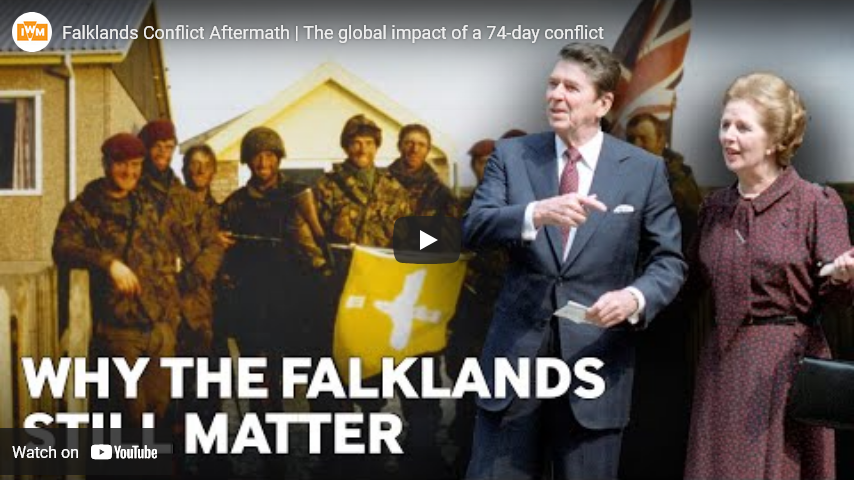
Falklands Conflict Aftermath | The global impact of a 74-day conflict
Imperial War Museums
Published 1 Jun 2022The Falklands Conflict of 1982 only lasted for 74 days, but it had lasting consequences which continue to be felt today. Prior to 1982, Margaret Thatcher’s government was planning major defence cuts including withdrawing the military from the South Atlantic. Instead, they spent nearly £3 billion defending British sovereignty of the Falkland Islands, and to this day maintain a garrison there. What was the effect of this short conflict for Argentina, Britain and the Falkland Islands, and what impact did it have around the world?
Correction: The video states that Port Stanley was granted city status in 2002, this should be 2022.
Thanks for watching IWM’s 5 part series on the Falklands Conflict. Please like and subscribe for more, and let us know in the comments below what you’d like to see next.
Explore and licence the archive films in this video: https://film.iwmcollections.org.uk/c/…
CREDITS
Mount Pleasant images, Crown copyright, April 2022
Margaret Thatcher images © University of Salford Press Office
Landmine clearance photos via Safe Lane Global
Sound effects via ZapSplat
June 3, 2022
The Crusades: Part 10 – The End of the Crusader Kingdoms
seangabb
Published 27 Mar 2021The Crusades are the defining event of the Middle Ages. They brought the very different civilisations of Western Europe, Byzantium and Islam into an extended period of both conflict and peaceful co-existence. Between January and March 2021, Sean Gabb explored this long encounter with his students. Here is one of his lectures. All student contributions have been removed.
(more…)
Comments Off on The Crusades: Part 10 – The End of the Crusader Kingdoms
Chat Tanks #148 M548 | The Tank Museum
The Tank Museum
Published 18 Feb 2022► JOIN OUR PATREON: Our Patreons have already enjoyed Early Access and AD free viewing of our weekly YouTube video! Consider becoming a Patreon Supporter today: https://www.patreon.com/tankmuseum
► TIMESTAMP:
00:00 – INTRO
00:28 – FEATURES
(more…)
Comments Off on Chat Tanks #148 M548 | The Tank Museum
June 2, 2022
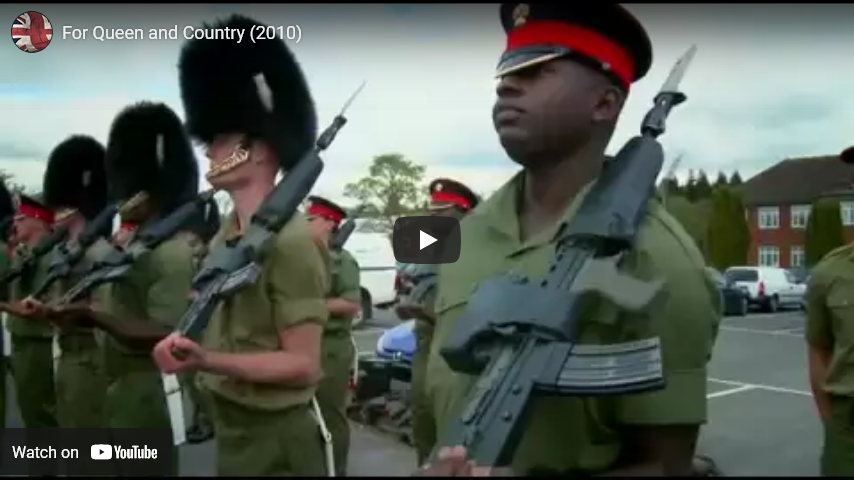
For Queen and Country (2010)
emptyangel
Published 14 Jun 2011“Documentary following the Grenadier Guards as they prepare to lead the 2010 Trooping the Colour. But these men have had precious little time to prepare; as fighting soldiers, they have just spent six months on the front line in Afghanistan’s Helmand Province. This is the story of how one and a half thousand men and women join together to create one of the greatest military ceremonies on earth. It is a ceremony with just one standard: Excellence.”
Comments Off on For Queen and Country (2010)
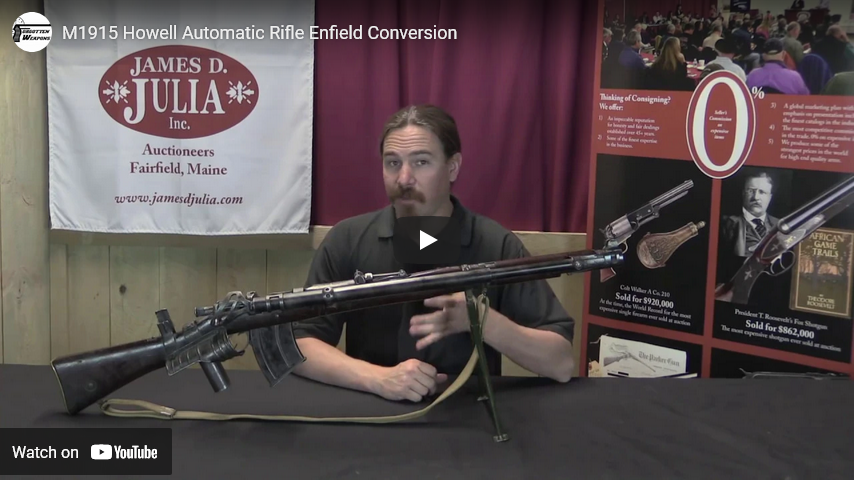
M1915 Howell Automatic Rifle Enfield Conversion
Forgotten Weapons
Published 28 Mar 2017The M1915 Howell Automatic Rifle is a conversion of a standard No1 MkIII Lee Enfield rifle into a semi-automatic, through the addition of a gas piston onto the right side of the barrel. Despite its very steampunk appearance, the Howell is actually a quite simple conversion mechanically. The rifle action had not been modified at all, and a curved plate on the end of the gas piston is used to cycle the bolt up, back, forward, and down just as it would be done manually.
The additional metal elements added to the gun are there to prevent the shooter from inadvertently getting their hand or face in the path of the bolt. The crude tubular pistol grip is necessary because the shooter’s hand on the wrist of the stock would normally be in the path of the bolt’s travel. Note that the Parker-Hale bipod on this example is a non-military addition from its time in private ownership.
In addition to these elements, the Howell has been fitted with a 20-round extended magazine to better exploit its rate of fire. However, the Howell was made as a semiautomatic rifle only, and not fully automatic. It was offered to the British military circa 1915, but never put into service. Instead, the British would significantly increase production and deployment of Lewis light machine guns. Howell would offer his conversion in basically the same form to the military again at the onset of World War 2, but was again turned down.
Shooting the Howell was remarkably successful — I had expected it to be very malfunction-prone, but in fact it ran almost completely without fault. In retrospect, I would attribute this to the simplicity of its conversion, which made no changes to the feeding and extraction/ejection elements of the SMLE. The gun was a bit awkward to hold, and the offset sights left one with really no cheek weld at all, but recoil was gentle thanks to the gas system’s function and added weight. Quite a remarkable gun, and one I am very glad to have been able to shoot.
http://www.patreon.com/ForgottenWeapons
Cool Forgotten Weapons merch, including this shirt specifically about the Howell! https://shop.bbtv.com/collections/for…
If you enjoy Forgotten Weapons, check out its sister channel, InRangeTV! http://www.youtube.com/InRangeTVShow
Comments Off on M1915 Howell Automatic Rifle Enfield Conversion
June 1, 2022
Vintage Russian T62 tanks reported in Ukraine
As with all discussions of the ongoing fighting between Russian and Ukrainian troops, it’s very difficult to be sure that what is being reported is in any way accurate — both sides pulled out all the stops on the PR/propaganda/disinformation machinery months ago. At Thin Pinstriped Line, Sir Humphrey seems to be convinced that the reports that the Russians have been dis-interring mothballed Soviet-era T62 tanks to send into combat in Ukrane are believable enough:
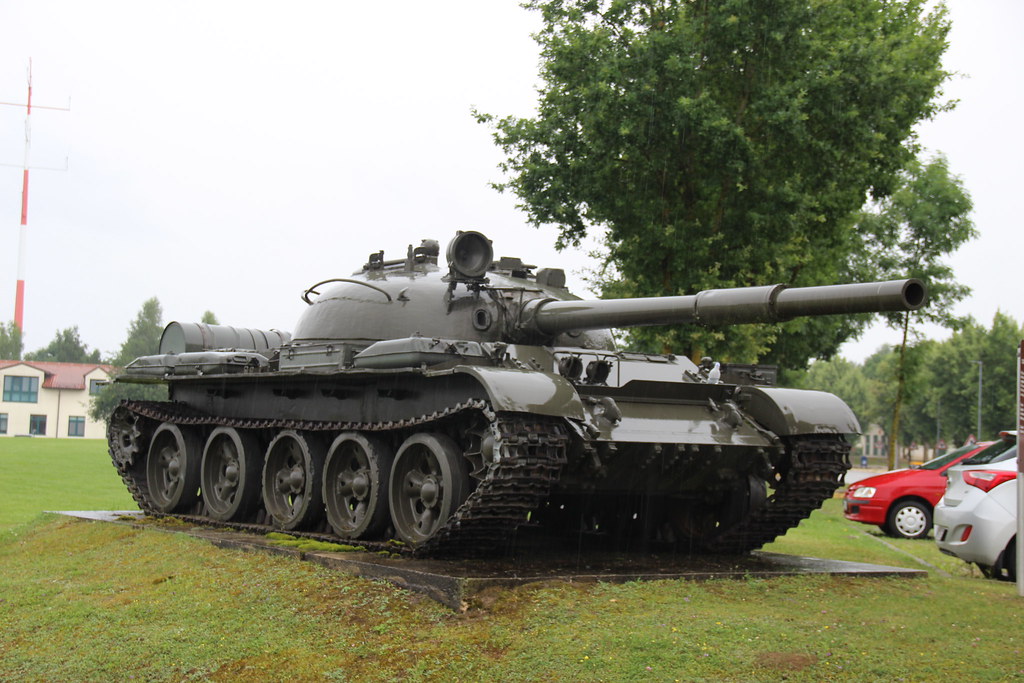
“Soviet T-62M MBT Standard Battle Tank” by Gary Lee Todd, Ph.D. is marked with CC0 1.0. To view the terms, visit https://creativecommons.org/publicdomain/zero/1.0/?ref=openverse.
The Russian Army has taken such significant losses of materiel that it has been forced to pull vintage T62 tanks from reserve, and commit them to front line operations. This statement makes plain just how costly the Russian advances have been in the Donbas area, and raises questions about what, if any, value, there is from retaining a war reserve of vehicles and equipment.
It is difficult to get an accurate picture on just how disastrous the Russian losses have been so far in the war, but most estimates suggest that at least 700 tanks have been destroyed, with many more damaged or captured. Each loss represents not only a small reduction in combat capability to Russia, but usually a far more valuable, and irreplaceable crew.
Russia is not a nation that likes to throw military equipment away, far from it. Their equipment is designed to be simple, reliable and last a very long time. As the outstandingly good website WW2 after WW2, which keeps track of what happened to military equipment after the war, lovingly documents, Soviet era equipment from WW2 just kept going (note, do not click on the link unless you wish to be sucked into a very big time sink!).
With huge reserves of people, no constraints on space or spending, and a mentality of “stores are for storing, not scrapping”, Russia has long kept ancient and utterly obsolete equipment in storage depots long past the point of being of any meaningful value. It is almost certain that there are still Russian Army depots out there with WW2 era equipment waiting for a recall to the colours if required.
The challenge facing Russia though is that due to the rampant corruption, the inability to hold units to account and ensure that readiness is tested, and just the sheer scale of the stockpile, most of the vehicles in their arsenal are probably not combat ready, and have probably been cannibalized beyond repair. Despite having thousands of T72 and T80 in service and storage, it seems that they are not deployable.
This poses a real challenge for Russia on two fronts – firstly, to bring the T62 out of retirement and into front line service as attrition reserves poses a significant support challenge. The vehicle is not compatible with later models of Russian tanks, so will require bespoke logistics support – placing further pressure on the already creaking supply chain.
Additionally, although simple to operate, it still requires crew to use it – with four, instead of three crew needed, this poses an additional headache for the Russian Army, which will have to find 25% uplift in tank crews to operate them properly. At a time when the Russians are low on people, and have churned through a significant proportion of their main army, it will require extraordinary efforts to find bodies to crew these tanks.
Bodies is perhaps the operative word here, for this is likely to be the fate of the crew in these vehicles. The T62 is utterly outclassed and completely obsolete for the environment in which it is operating. It may be good for gunning down demonstrators or strangling democratic protests in third world nations (the joy of socialist dictatorships), but against a highly experienced army, fighting with advanced equipment to defend its homeland, it is utterly hopeless. While it can still have some effect, the T62 units going into action are certain to be outclassed, outgunned and out of time when they face the Ukrainian Armed Forces.
Update: After I scheduled this post for publication, I saw that Berhard Kast (Military History Visualized) had posted a video analyzing the evidence, which you can check out here.
Update, 1 June: Apparently it helps when you include the link to the original post. Who knew?
Comments Off on Vintage Russian T62 tanks reported in Ukraine
How To Kill A U-Boat – WW2 Special
World War Two
Published 31 May 2022How to kill a U-Boat? The threat of the illusive and nearly undetectable submarines had been on the mind of every Allied naval planner since the Great War. As the Kriegsmarine once more unleashed its wolfpacks to the high seas, it became a race against time to find a way to stop the deadly stalkers from beneath the surface.
(more…)
Comments Off on How To Kill A U-Boat – WW2 Special
The Battle of The Glorious First of June 1794
MaritimeGB
Published 17 Feb 20131794 — After the failed harvest, France organises for a desperately needed grain convoy to cross the Atlantic. British Admiral Lord Howe is sent to intercept the French and although the British win the fight, the tactical victory goes to France.
Comments Off on The Battle of The Glorious First of June 1794
May 31, 2022
The Crusades: Part 9 – The Other Crusades
seangabb
Published 18 Mar 2021The Crusades are the defining event of the Middle Ages. They brought the very different civilisations of Western Europe, Byzantium and Islam into an extended period of both conflict and peaceful co-existence. Between January and March 2021, Sean Gabb explored this long encounter with his students. Here is one of his lectures. All student contributions have been removed.
(more…)
Comments Off on The Crusades: Part 9 – The Other Crusades
A new history of the evil empire. No, not that one. Not that one either. The other evil empire!
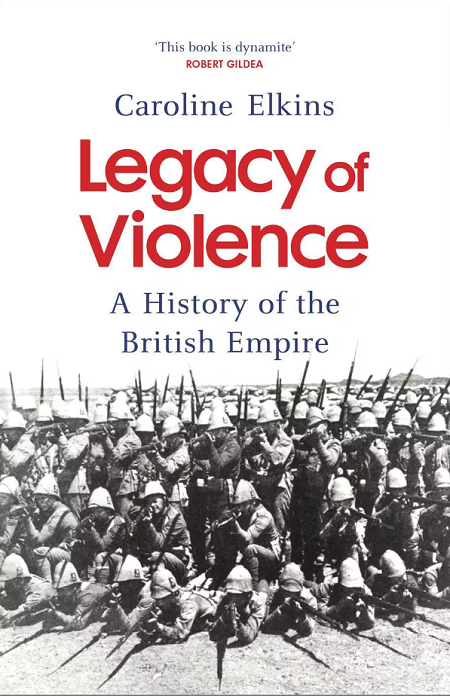
In The Critic, Barnaby Crowcroft reviews Caroline Elkins’ new history of the British empire, Legacy of Violence:
Elkins is correct that British decolonisation after the end of the war — if not “white-washed” — has got off lightly among historians, often via a contrast with the dreadful behaviour of the French. We remain far too influenced by the impression that Britain willingly and amicably handed over power (as Harold Macmillan put it) to Asian and African representatives of “agreeable, educated, Liberal, North Oxford society”.
There is a single map in this book which should definitively dispose of such ideas, showing all the colonial conflicts and states of emergency Britain was engaged in around the world after 1945. There are the well-known counterinsurgencies in Palestine, Malaya, Kenya, Cyprus and Aden. Alongside other, less well-known ones, however — British Guiana, Malaysia, Belize, Oman and the New Hebrides — bring us pretty much into the 1980s without a single year of global colonial peace.
In Kenya and Malaya, the British carried out massive coercive interventions in the 1950s, including the forcible resettlement of over a million people into closely monitored “new villages”, which, if they cannot be likened to concentration camps, certainly resemble the kinds of things the French were doing in Algeria. Difficult though it is to believe today, until very recently the British were a “warlike” and patriotic people, and their agents could be ruthless in the pursuit of imperial interest overseas.
Unfortunately, it is not possible to take seriously the more grandiose claims of Legacy of Violence, including Elkins’ presumption to have uncovered the Key to All Mythologies of British imperial wickedness in the form of Liberalism and Racism. The prose is part of the problem. Her introductory statement of the book’s bombastic aims reads more like something written by a professional satirist, than a professional historian.
“To study the British empire,” she writes, “is to unlock memory’s gate using the key of historical enquiry. But once inside, history’s fortress is bewildering … Unlike mythical fire-breathing monsters, however, the creatures inhabiting the annals of Britain’s imperial past are not illusions [but] monstrosities [which] inflicted untold suffering …”
Much of the book is given over to a plodding chronicle of nineteenth- and twentieth-century British history, in which events are construed — and often misconstrued — to give the meanest possible interpretation. British “arch-imperialists” resemble cartoon villains, who wear “Hitleresque moustaches” and “racist coattails” and are awarded MBEs and OBEs according to how much harm they inflict upon colonial subjects. There is even an imaginative reconstruction of British pilots all but laughing as they machine-gun “defenceless women and children”; readers are invited to listen to their “screams of pain”.
To determine whether Britain’s empire was uniquely violent invites the question: compared to what? Niall Ferguson earned opprobrium for suggesting in 2003 that alongside the rival empires which arose to challenge it in the middle of the twentieth century, Britain’s looked pretty attractive.
To her credit, Elkins does not disagree with this. Her treatment of Malaya’s communist insurgency suggests that she is not particularly exercised by violence when it is committed by ideological confrères. The only thing we get in the way of any broader comparison, however, is the notably wishy-washy one implied between the “East and the West”, which she describes as the contrast between “humanity and inhumanity”.
Comments Off on A new history of the evil empire. No, not that one. Not that one either. The other evil empire!


