Quotulatiousness

May 26, 2011

Charles Stross on Buckminster Fuller’s “Dymaxion House”

Filed under: Architecture, Economics, History, Technology — Tags: , — Nicholas @ 12:07

I remember something about Fuller’s potentially revolutionary design for housing from a few mentions in Robert Heinlein’s work, but I’d never followed up those hints. Charles Stross did:

. . . the Dymaxion House was probably the most fascinating of his failures, because it was nothing short of an attempt to revolutionize how we live.

Modernist architects of the 20th century generally designed two types of house: those for rich architects and other members of the upper classes to enjoy, and grimly regimented concrete cookie-cutter apartment blocks for factory workers. Fuller’s approach to housing was cookie-cutter-esque, insofar as he planned to mass-produce Dymaxion Houses on converted B-29 Superfortress production lines after the second world war, and ship them to their owners in freight containers, but as far as I know it was radically different in conception, purpose, and design from any of the other modular homes of the period. For one thing, he was interested in portability and nomadism; while a concrete foundation with utility connections was necessary, Fuller’s idea of moving house was that you could pack your house down into a container that would fit on a truck, drive it to your new neighbourhood, and deploy it again — the design influences of the traditional Mongolian yurt should be obvious. The Dymaxion House used aluminium sheeting for floors and structures, suspended by wires from a central steel structural shaft: saving weight was a priority. As he famously asked an architect on one occasion, “why are your houses so heavy?”

For another thing, he took an early interest in minimizing the human impact on the environment. The Dymaxion House had passive air temperature control and a pressure-triggered roof vent to survive near-misses from tornados (by releasing over-pressure inside the building so that it didn’t rupture). It had a then-unique mist-spray shower and a grey-water system to reduce water usage; Fuller was also interested in non-flush toilets.

Finally, it was intended to be mass produced for $6,500 per house in 1946 money — the cost of a high-end automobile — with a design life of 30-50 years. Early development was funded by the Pentagon, for reasons that should be obvious: WWII generated unprecedented demand for accommodation on bases overseas and, later, demand for housing in war-ravaged regions.

The story of why we aren’t all living in Dymaxion houses today is a convoluted epic of business failure (for one thing, starting up a production line for houses using cutting-edge aerospace technology was something that had never been done before; for another, Bucky’s business sense was not, sadly, as good as his design sense) that has been recounted in numerous biographies. What interests me about it is that it’s a far more humane approach to the problem of providing housing for the masses than his Brutalist contemporaries, whose designs tended to be fixed, immovable, made cheaply out of low-end materials, and built with high density mass housing in mind rather than low impact customizability. It was also way ahead of the field in terms of awareness of environmental constraints; while we could design better today, we’d be making incremental tweaks, whereas Bucky came up with the original idea of modular, lightweight, mobile low-impact housing ab initio.

Image detail from Tim O’Reilly’s Flikr photostream.

More, including a few photos at Wikipedia. And Rivet-head has a picture of the house while it was in use.

May 25, 2011

How to analyze bubbles and crashes

Filed under: Books, China, Economics, History, Media — Tags: , , — Nicholas @ 07:06

Warren C. Gibson reviews Boombustology by Vikram Mansharamani, which looks at the boom and bust pattern frequently seen in economics, with special emphasis on China:

The author’s macro lens includes Austrian business cycle theory. That theory says inflation of the money supply causes a drop in interest rates, which is misinterpreted as an increased aggregate preference for saving over consumption, leading to investments in more roundabout means of production. When it becomes clear that there has been no such preference shift, these undertakings are seen to be at least partial mistakes, requiring write-offs and retrenchment — a bust. The boom is the problem, not the bust, which is the market’s attempt to realign itself to the realities of time preference. Austrian business cycle theory has great merit but leaves some things unexplained.

Mansharamani’s micro lens includes the concept of reflexivity. Market participants don’t just observe prices but also influence them. Reflexive dynamics occasionally give rise to instabilities in which rising prices lead to increased demand. A simpler term would be a “bandwagon effect.” I recall an office party in 1980 where one of the secretaries asked about buying gold — precisely at the peak, as it turned out. All she knew about gold was that it was way up and therefore must be going higher. I should have realized that when you see financially unsophisticated people like her climbing on a bandwagon, you can be pretty sure there’s no one left to sell to and nowhere for prices to go but down, which is where gold and silver prices went in 1980, and in a big hurry.

From psychology Dr. M. borrows ideas and data about cognitive biases. For example, subjects asked to guess some bland statistic, like the number of African countries that belong to the UN, are influenced by the spin of a wheel of fortune: When the wheel lands on a high number, they guess higher. He translates this and a dozen other cognitive biases into irrational market behavior that can foster booms and busts.

He introduces his biology lens with an analogy to the spread of an infectious disease. When the prevalence of a disease reaches a high level, the infection rate necessarily slows and the disease begins to wane, just like the 1980 gold market. But it is devilishly difficult to “inoculate” oneself against infectious ideas. Individual investors who can do so have a decent chance to beat the market averages over time, I believe. (Those who would pursue these ideas in greater depth would do well to find James Dines’s quirky and expensive but worthwhile book, Mass Psychology.)

Governments don’t have the power to prevent booms and busts — but they sure do have the ability (and too often, the will) to extend booms as long as possible, which only makes the necessary correction that much more painful.

How to cope with rapidly changing technology, Victorian style

Filed under: Britain, History, Military, Technology, Weapons — Tags: , , , — Nicholas @ 00:04

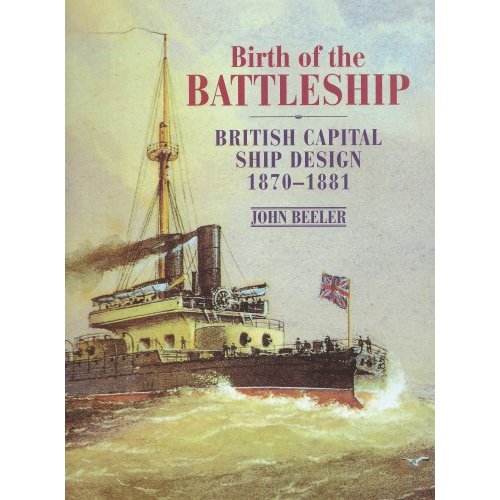
I just finished reading John Beeler’s Birth of the Battleship: British Capital Ship Design 1870-1881, which looks at a time where all the accepted norms of the previous three hundred years were all upset overnight.

In 1815, the Royal Navy was the unchallenged Mistress of the Seas: the most powerful navy in the world. France, the greatest threat to England and her trading empire, had just been destroyed as a military and naval power. The United States had survived the war, but had effectively been neutralized on the sea through much hard fighting. No other rival appeared close to challenging England’s primacy.

Fifty years later, the stasis is being broken technologically. Wind power is giving way to steam. Solid shell cannon are starting to give way to both larger and more complex weapons. Iron is starting to supplant oak as the material of choice for shipbuilding. The renowned duel between USS Monitor and CSS Virginia (formerly the USS Merrimac) sets all the major navies of the world busy considering how to protect their existing fleets and merchant vessels against the new threat of the ironclad.

The English government is suddenly faced with the stark reality that their entire fleet has become or is about to become obsolete. Neither Monitor nor Virginia are ocean-going ships, but the message is clear that no wooden vessel has a prayer of survival against the modern steam-powered ironclad. And even the greatest economic power in the world can’t replace an entire fleet overnight.

The Admiralty couldn’t depend on past experience for guidance, as everything they’d done for hundreds of years was now undecided: what kind of ships do you need to build? How will they be armed? How will they be armoured? How will they be propelled? Bureaucracies are, by nature, not well equipped to face challenges like this. The Royal Navy, from the late 1860’s until the late 1880’s struggled with finding the correct answer, or combination of answers, to meet the needs of the day.

I admit that my interest in British Imperial history fades very quickly after 1815 and only starts to pick up again in the 1870’s, and what little I’d retained of the reading I’d done left me with much disdain for the obvious pattern of muddle and stop-gap planning that clearly defined the Royal Navy’s approach to maintaining the fleet during that time period. I was very wrong in my assumptions, but I was far from alone.

To start with, I assumed that the retention of full sailing rig on steam-powered ships proved the raw incompetence of the Admiralty and their ship designers. What I failed to understand was that there were really two different navies operating under the same flag: the home fleet — close to home port with easy access to coal, drydock, and re-supply — and the colonial fleet which had none of those advantages. Merchant vessels of the 1850-1870 era could depend on refuelling at each end of their scheduled journeys (between fully equipped ports), while the Royal Navy could not. The steam engines of that time period were very inefficient and prone to breakdown: lose your engine in the Indian Ocean or the South Atlantic and you were almost certain to be lost. Sail was essential for Royal Navy ships outside home waters.

Iron as armour was a major step forward, but not without costs: it is far heavier than wood and because you needed it to protect the above-the-waterline essentials of the ship, it made it much harder to ensure that the ship would be stable and sufficiently buoyant in heavy seas (see the story of HMS Captain for an example of what could happen otherwise). It’s always been a rule of thumb in military affairs that you can’t protect everything: by trying to protect everything, you spread your forces (or your armour) too thin and you end up being too weak everywhere. This holds true especially for ship’s armour.

At the same time that you need to add armour to protect the ship, you also need to mount heavier, larger guns. Between placing your order with the shipyard for a new ship, the metallurgical wizards may have (and frequently did) come up with bigger, better guns that could defeat the armour on your not-yet-launched ship. Oh, and you now needed to revise the design of the ship to carry the newer, heavier guns, too.

The ship designers were in a race with the gun designers to see who could defeat the latest design by the other group. It’s no wonder that ships could become obsolete between ordering and coming into service: sometimes, they could become obsolete before launch.

The weapons themselves were undergoing change at a relatively unprecedented rate. As late at the mid-1870’s, a good case could be made for muzzle-loading cannon being mounted on warships: until the gas seal of the breech-loader could be made safe, muzzle-loaders had an advantage of not killing their own crews at distressingly high frequency. Once that technological handicap had been overcome, then the argument came down to the best way to mount the weapons: turrets or barbettes.

To the modern eye, the answer is obvious, but to the men responsible for making the decisions, it was far from obvious that the turret was the better answer. Turrets are heavier than barbettes and required clearer fields of fire (few masted-and-rigged ships could also carry turrets), and also generally required the turret to be mounted higher on the superstructure, which made the ship more top-heavy than an equivalent barbette vessel.

The other weapon controversy at the time was what the primary weapons of the battlefleet would be: gun, torpedo, or ram. The argument for the ram was the weakest, although CSS Virginia had done more damage to the Union fleet with her ram than with her guns. The torpedo was still in the transition stage from something that had to be physically pushed against an enemy ship (like a ram with an explosive charge) and the more modern notion of a self-propelled, unmanned weapon. Perhaps the argument was sealed by the accidental sinking of the HMS Victoria less than a decade later (a less-than-charitable interpretation of the event was fictionalized in Kind Hearts and Coronets in 1949).

In some ways it’s remarkable that the hidebound bureaucrats could keep up in the world’s first real arms race . . . and not only keep up, but stay (slightly) ahead. Each new class of battleship had to be equal to or better than the latest French, German, or Italian ships, yet also stay within fairly strict length, breadth, and displacement limits without going (too far) over budget. Oh, and also be capable of adaptation to whatever new naval gun had been introduced in the time between the ships being laid down and being brought into commission.

To the modern eye, even of someone who followed the general trend of naval technology, the Royal Navy of the early 1880’s looks like a random collection of misfit ships. What isn’t apparent is how much worse the picture could have been. Aside from the bombardment of Alexandria, the Royal Navy of Victoria’s reign exercised a policing rather than a strictly military role: they didn’t need to fight too often because they were clearly stronger than any potential adversaries.


May 13, 2011

Will China’s rise eclipse the United States?

Filed under: China, Economics, History, USA — Tags: , — Nicholas @ 09:49

Jon sent me this link, suggesting that it was good “hobby horse bedding”. It starts with the notion that the pattern (and method) of China’s rise to economic superpower status actually follows that of the United States:

The last time a rising power came bursting onto the international scene and successfully supplanted the existing dominant power was when the United States was a boisterous upstart with a stampeding economy. Back then, America employed its own ruthless political machinations to advantage economic production — slavery and Andrew Jackson’s Indian removal policies made cotton king, while the three-fifths compromise ensured southern political control of Congress.

Meanwhile, we stole designs of British factories for replication here, jump-starting our own industrial revolution. And we forced Britain into a two-front war in the midst of its cataclysmic fight with Napoleon. To outside appearances, America orchestrated political, military, and economic power in ways that shrewdly upended existing rules to our advantage.

Just enough historical parallels to make an interesting story. But the Chinese are not (yet) in a position to actually supplant the Americans, and much of the reason for that isn’t so much economic as it is political:

America is the democracy that those people living under authoritarian regimes choose whenever they get the opportunity. It is a democracy often mistaken in the short run, with the best means of correcting itself, and by its sheer existence, a reminder to others of what they might make for and of themselves. The international order is genuinely different because of the rise of an economically and politically liberal American polity. The Chinese model doesn’t have the kind of advantages that make for success competing against the American one. There’s no reason to believe Chinese citizens aren’t yearning for what Americans get to take for granted. To the contrary, there are many signs that the Chinese are increasingly agitating for it.

American power is robust and enduring because it is built on the strength of ideals that foster our advantage. China is banking on prosperity reducing the desire for political rights, on centralized control by elites that will make “better” choices than individuals would make for themselves, on nationalism and grievance to trump the appeal of values we claim to be universal, on mercantilist foreign policies and the threat of force making them preferred allies. It didn’t work for Palmerston in a much more conducive age and it is unlikely to work for China’s leaders.

A quick search of the blog will come up with lots of posts on China and its economy. This is what Jon refers to as my “hobby horse”.

April 28, 2011

Just for you efficiency fans

Filed under: History, Humour, Technology — Tags: , , — Nicholas @ 11:42

The world’s least efficient machine:

More information about this modern day wonder here.

April 26, 2011

Archaeology as a form of collectivism

Filed under: Americas, History, Media — Tags: , , , , , — Nicholas @ 09:19

L. Neil Smith was watching an old archaeology show on Netflix the other day:

What this otherwise interesting and enjoyable documentary on the early Mayans whined about — even more than Third World agricultural techniques — was the fact that descendants of these ancient people were venturing out in the thulies without government approval or, more importantly, academic sanction, finding pyramids and other structures abandoned by their ancestors before tenured treasure-hunters could, burrowing into them and laying claim to their inheritance, which they then used to supplement the crappy income that comes of subsistence farming.

These people were constantly referred to as “looters” by the documentary’s writers and the featured academics, who, unbelievably, begrudge them — and their hungry children — what Indiana Jones’ girlfriend Marian Ravenwood accurately called “little bits of junk”, a phrase that I firmly believe should be tattooed across every academic archaeologist’s torso simply to remind him of the proper priorities in life.

Backwards, so he can see it in the bathroom mirror.

Or upside-down, across his stomach.

Robert Bakker of hotblooded dinosaur fame has criticized proposed laws that make amateur paleontology a crime, pointing out that most good finds begin with non-professionals stumbling across interesting new materials. Unfortunately, many such laws are already in place for archaeology, with government, in effect, preclaiming everything under the topsoil before it’s discovered, a clear-cut case of underground Marxism.

You often hear supporters of such laws snort, “That ought to be in a museum!” when they spot some desirable something on a collector’s mantlepiece. But isn’t it infinitely better off there, than hidden in a museum basement where most “nationalized” artifacts and fossils end up? And given the miserable track record socialism has earned in every other field of human endeavor, isn’t it socialists who belong in a museum?

Believe me when I attest that archaeology is important to me for many reasons and has been since I was about five years old. Much like paleontology, it tells us where we are by showing us where we’ve been. Sometimes it explains how we got this way and warns us of mistakes we shouldn’t make again. And it’s just plain splendiferously mysterious and interesting — like an old adventure radio serial. My very lovely and talented wife is preparing herself even now for a second career in archaeology. She’d like to be curator of a private museum in the Southwest.

What fun we’re going to have!

But not only is there nothing under the ground worth depriving some poor farmer’s family of a meal, of arresting, jailing, possibly killing him over, there is yet another extremely important ethical consideration.

Or two.

What, precisely, is the moral distinction between a pot-hunting farmer, on the one hand, digging into a hill and extracting something for profit that will improve his life and the lives of his kids, and a college professor, on the other hand, from some faraway country, doing exactly the same thing for profit in the form of tenure and scientific prestige?

April 23, 2011

Is this where the “ponygirl” fetish got started?

Filed under: History, Humour, Randomness — Tags: — Nicholas @ 12:32

One of a series of “WTF?” postings at How to be a Retronaut may show the origin of the “ponygirl” fetish. (I would advise you not to Google Image Search for that . . . unless that’s what you are interested in):

April 22, 2011

Houston loses space shuttle sweepstakes

Filed under: History, Space, USA — Tags: , , — Nicholas @ 16:26

Houston has a problem with the allocation of the soon-to-be retired space shuttles:

Which city, in the whole of the United States, would the average person associate most clearly with America’s towering achievements, and no few sorrows, over the past half century of sending men and women into space? Why, Houston, of course — home of the Johnson Space Centre, where NASA’s mission control is located. We know this from all that has been said and done in the past. The first words Neil Armstrong uttered as Apollo 11 touched down on the Moon in 1969 were: “Houston, Tranquility base here — the Eagle has landed.”

The name of Houston will forever be associated with the manned exploration of space. No astronaut ever radioed laconically back from a crippled spaceship, “Manhattan, we have a problem”. Yet, in NASA’s recent selection of the final destinations for its four extant space shuttles, now that the last operational ones are about to be pensioned off, New York City will get Enterprise, the first of the shuttles that was rolled out in 1976, while Houston gets snubbed.

A score or more of museums and other institutions around the country competed for the honour of having a shuttle in their permanent collection. Apart from offering an appealing display, each had to be ready to stump up $28.8m to cover the cost of preparing and transporting the winged spacecraft to its new location. Of the three other remaining shuttles, Discovery is destined for the Smithsonian’s National Air and Space Museum annexe outside Washington, DC. After the launch in late June of the 135th (and last) mission in the shuttle programme, Atlantis will remain in Florida to be exhibited at the Kennedy Space Centre’s visitor centre.

Meanwhile, after its own final mission later this month, Endeavour, the youngest of the shuttles, will be ferried to Los Angeles to end its days in the California Science Centre, alongside existing exhibits of the Mercury, Gemini and Apollo spacecraft, and close to the old Rockwell plant in Palmdale where the shuttle was developed. Meanwhile, just up the road, at Edwards Air Force Base, is the runway where nearly half of all shuttle flights touched down.

April 21, 2011

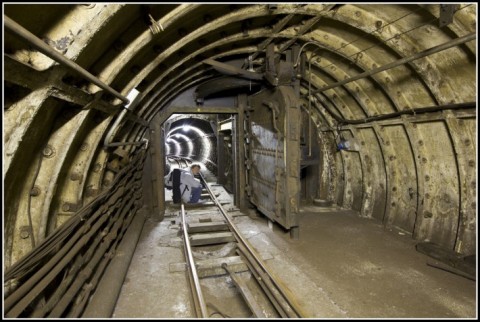
Exploring an abandoned underground mail railway line

Filed under: Britain, History, Railways — Tags: , — Nicholas @ 07:49

The Royal Mail system had a dedicated subway line of their own. It was eventually abandoned, but not destroyed, as some trespassers were able to discover:

Construction of the tunnels began on February 1915, from a series of shaft located along the route. The tunnels were primarily dug in clay using the Greathead shield system, although the connecting tunnels in and around the stations were mined by hand. Construction was suspended due to the outbreak of WW1, but was allowed to continue until completion for safety reasons. Further setbacks halted the construction of the stations during 1917 due to the shortage of labour and materials.

It wasn’t until June 1924, that workers began laying the track using 1000 tons of running rail and 160 tons of conductor rail. The remaining electrical installation took place in 1925 with the section between Paddington and the West Central District Office being ready for training. The line was eventually finished in 1927 with the first letter through the system running on February 1928.

In 1954, due to problems with access at the Western District Office and the Western Central District Office plans were drawn up to construct a new Western District Office at Rathbone Place. This meant the construction of a diversion to the line to the station which was completed in 1958, although the station was not opened until the 3rd August, 1965.

H/T to Cory Doctorow for the link.

April 20, 2011

Michael Ignatieff as a modern Kaiser Wilhelm II?

Filed under: Cancon, Germany, History, Politics, WW1 — Tags: , — Nicholas @ 13:00

This is a fascinating article. I’m not sure I agree, although we’ll find out in less than two weeks if this is the “Black Day of the German Army Liberal Party”:

The Liberal party, like the Kaiser’s Germany, is stuck in the middle. (An analogy I do not expect any Liberal to use in public, ever.) To the right is the Conservative party. To the left, the NDP. Every election campaign is a two-front war.

To deal with this mortal peril, the Liberals have traditionally followed their own Schlieffen Plan.

In the event of electoral war, the Liberals move swiftly to the left. Taking ground from the NDP ensures vote splits go their way but also creates the perception that the NDP is out of the fight. Voters whose primary concern is stopping the barbarians in the East — the Conservatives, naturally — are thus forced to support the Liberals.

Now, here comes the part of the column Michael Ignatieff won’t like.

“British private schools are really good. But they’re the only institutions left in Britain that are really world class”

Filed under: Britain, Bureaucracy, Education, History — Tags: , — Nicholas @ 07:39

Niall Ferguson tries to find some nice things to say about Britain, as he packs up to head back to Harvard:

The first thing everyone always says about Niall Ferguson is that he’s far too glamorous to be an academic. So the surprise, when we meet, is his miserable little office — a bleak sliver of the London School of Economics, surely nowhere near sumptuous enough for the dashing professor. Lined with rows of empty bookshelves, it looks semi-vacated — but that’s because it sort of is. “I’ll be out of here in July,” Ferguson says quickly, with the air of a man for whom July cannot come soon enough. “This has been great fun, but . . . well, you know . . .”

The historian has been living back in the UK for almost a year, the first time since leaving for the US in 2002, where he now teaches at Harvard. From the outside, it’s looked like quite a successful stay; his Channel 4 series, Civilization, was broadly well-received, and the accompanying book is another dollop of vintage Ferguson history, devoted to the superiority of western civilisation. While here he’s also been advising Michael Gove on the history curriculum in secondary schools, and now that the Tories, of whom he approves, are back in charge of the country, he must have found the political climate more to his tastes. But when I ask him for the single biggest change he’s observed since leaving Britain, he replies with a kind of theatrical despair,

“I think the situation in British universities has gone from being parlous to being catastrophic. When you look at where British universities are going, and where Harvard’s going, you’d have to really love other things about England to take the hit.”

April 19, 2011

The “super-organism” that is eating the Titanic

Filed under: History, Science — Tags: , , — Nicholas @ 00:17

This is absolutely fascinating:

In 2000, Roy Cullimore, a microbial ecologist and Charles Pellegrino, scientist and author of Ghosts of the Titanic discovered that the Titanic — which sank in the Atlantic Ocean 97 years ago — was being devoured by a monster microbial industrial complex of extremophiles as alien we might expect to find on Jupiter’s ocean-bound Europa. What they discovered is the largest, strangest cooperative microorganism on Earth.

Scientists believe that this strange super-organism is using a common microbial language that could be either chemical or electrical — a phenomenon called “quorum sensing” by which whole communities “sense” each other’s presence and activities aiding and abetting the organization, cooperation, and growth.

The microbes are consuming the wreck’s metal, creating mats of rust bigger than a dozen four-story brownstones that are creeping slowly along the hull harvesting iron from the rivets and burrowing into layers of steel plating. The creatures also leave behind “rusticles,” 30-foot icicle-like deposits of rust dangling from the sides of the ship’s bow. Structurally, rusticles contain channels to allow water to flow through, and they seem to be built up in a ring structure similar to the growth rings of a tree. They are very delicate and can easily disintegrate into fine powder on even the slightest touch.

April 15, 2011

How not to celebrate Anzac Day

Filed under: Australia, History, Military, Pacific — Tags: , , — Nicholas @ 12:59

An elderly driver of a retired military vehicle either lost control of his vehicle or (as the article implies) took his hands off the wheel to take a photo just before the crash:

A 64-year-old man who drove his World War II truck into a group of veterans marching in Melbourne’s Anzac Day parade last year has been charged with dangerous driving causing serious injury.

Eight members of the Ceylon Ex-Serviceman’s Association were injured, two critically, when the vintage truck lurched forward into them on Saint Kilda Road.

All the veterans survived but some are still recovering from injuries ranging from broken bones to internal injuries.

A picture obtained by the ABC in May last year allegedly showed the driver using both hands to take a photograph moments before the accident.

H/T to Chris Greaves for the link, and for the explanatory material he provided to give some context on the story:

Two things you may not realize as background to this:

(1) Australia is HUGE on Anzac day; My indoctrination started as a 10-year old in Southern Cross WA. A large portion of the town’s population was drunk by the start of the dawn service at the war memorial, and it just got worse after that. Every year. I mean, every year, the DAY just got worse.

Anzac day is the day when old diggers get maudlin about their mates who fell in The Great War, even though the maudlin diggers are too young to have HAD mates in The Great War.

(2) I feel deeply about the origins of The Third Balkan War, read up on it frequently, have 6 bookcases (not bookshelves) of books on the subject, and am deeply moved by the stories. I see 19-year old kids in the elevator and think “You died for us”, for that was most probably the average age of the soldier, sailor and airman.
So I don’t resent “dwelling on the past”; I do it daily.

See also here and here.

April 14, 2011

“We have engineered a massive, unstoppable Essex. We should all be in jail”

Filed under: Britain, History, Humour — Nicholas @ 16:26

In this time of abject apologies of all sorts for historic wrongs, it’s time for England — East Anglia in particular — to acknowledge the sins of their past:

As David Cameron told Pakistan that its current balls-out craziness was actually the fault of the British empire, experts pointed to the giant, stupid, disgusting country founded by some people from East Anglia.

Julian Cook, author of America: What the Fuck Were We Thinking?, said: “When Harwich-born Christopher Jones captained the Mayflower in 1620 he began a process that would lead ultimately to genocide, the Ku Klux Klan and Grey’s Anatomy.

“Thanks to him and his insane passengers, the way was paved for a nation of heavily armed toddlers led around by an ever-changing roll-call of religious maniacs, grubby conmen and dead-eyed celebrities.

“It doesn’t understand anything more than 15 minutes old — except creationism — and is littered with strip malls and heavily branded cheese pumps.

“We have engineered a massive, unstoppable Essex. We should all be in jail.”

H/T to Johnathan Pearce for the link.

April 10, 2011

A world always at war

Filed under: Africa, Americas, Asia, Europe, History, Military, Pacific — Tags: , , , — Nicholas @ 10:38

This is an interesting site:

The screencap above shows the significant sites in the Mäntsälä rebellion in Finland in 1932 (no, I’d never heard of it either). Use the slider at the bottom of the screen to choose the time in history, and the map will show you the known conflicts for that period.

« Newer PostsOlder Posts »

Powered by WordPress