Quotulatiousness

August 3, 2019

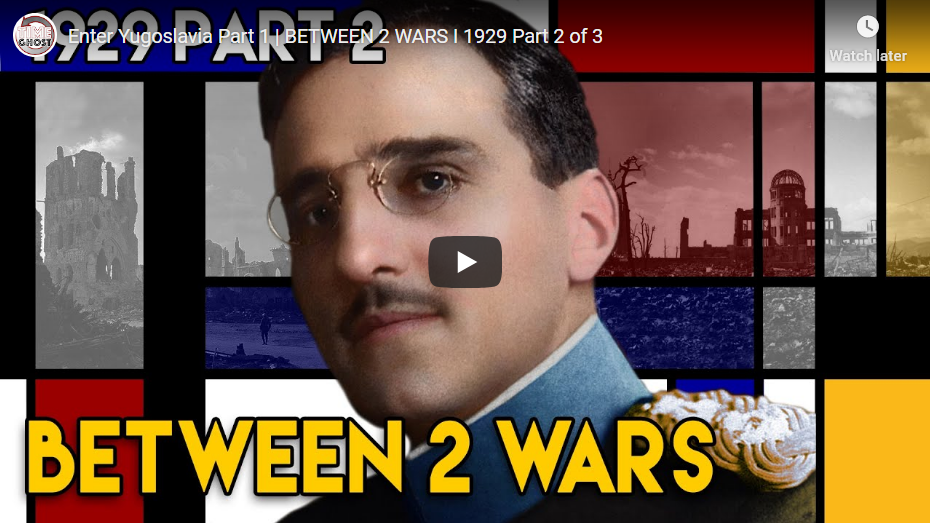
Enter Yugoslavia Part 1 | BETWEEN 2 WARS I 1929 Part 2 of 3

Filed under: Europe, History — Tags: , , , , , — Nicholas @ 04:00

TimeGhost History
Published on 1 Aug 2019

Formed in the ashes of the Great War, the Kingdom of Serbs, Croats, and Slovenes is already facing some pretty difficult birth pangs.

Join us on Patreon: https://www.patreon.com/TimeGhostHistory

Hosted by: Indy Neidell
Written by: Francis van Berkel and Spartacus Olsson
Directed by: Spartacus Olsson and Astrid Deinhard
Executive Producers: Bodo Rittenauer, Astrid Deinhard, Indy Neidell, Spartacus Olsson
Creative Producer: Joram Appel
Post-Production Director: Wieke Kapteijns
Research by: Francis van Berkel
Edited by: Wieke Kapteijns
Sound design: Marek Kaminski

Sources:
– Colorization by Klimbim and Normansteward

A TimeGhost chronological documentary produced by OnLion Entertainment GmbH.

From the comments:

TimeGhost History
6 hours ago
We don’t delete or ban any opinions which disagree with other opinions. We delete comments that contain historical fallacies and political propaganda by antidemocratic organisations, irrespective of political leaning. This means that we do not tolerate any lies or propaganda that forward the agenda of, for instance, Nazis, Fascists, Stalinists, Leninists, other ultra-Marxists or Anarchists. That is within our responsibility according to the laws in our territory which forbids the dissemination of false flag information, propaganda, and symbols connected to organizations that have been found to be unconstitutional and an immediate danger to a democratic, free society by the German courts, in accordance with §86 and §86a of the German Penal Code. The law specifically mentions NDSDAP in §86 and the KPD in §86a (NSDAP is the Nazi Party and KPD the Communist party). Moreover we do not tolerate hate speech, racism, xenophobia, and the denial of proven crimes against humanity. This is in perfect agreement with the opinion forwarded by The US Supreme Court on society’s responsibility to fight against that kind of speech and it is in agreement with numerous EU and EU member state laws against same said speech.

Polish PM63 Rak at the Range

Filed under: Europe, History, Military, Technology, Weapons — Tags: , , , , , , — Nicholas @ 02:00

Forgotten Weapons
Published on 8 Jun 2019

http://www.patreon.com/ForgottenWeapons

Cool Forgotten Weapons merch! http://shop.bbtv.com/collections/forg…

Whether it is described as a machine pistol, a submachine gun, or a personal defense weapon, the PM63 Rak is really not the best examples of this sort of thing to actually shoot. The open-bolt/slide mechanism is very cool from an engineering and design perspective, but does in fact have a tendency to hit one in the face, as inadvertently demonstrated by my high-speed video shooting volunteer. Even if it doesn’t do that, the sights reciprocating on the slide make it a difficult gun to shoot accurately.

Thanks to Movie Armament Group in Toronto for giving me the opportunity to take this to the range! Check out MAG on Instagram: https://instagram.com/moviearmamentsg…

http://www.moviearms.com

Contact:
Forgotten Weapons
PO Box 87647
Tucson, AZ 85754

QotD: The 1968 election and the schizoid break of the American media

… in hindsight 1968 was obviously the country’s schizoid break. The Democratic Party didn’t go completely off the rails — cf. all the candidates they ran, 1972-2004, who were the definition of anodyne — but The Media sure as hell did. 1968 was also the year of the Tet Offensive, you’ll recall, with Walter Cronkite proclaiming the war unwinnable. It doesn’t matter if Cronkite was right or not (of course he wasn’t); nor does it matter if his proclamation actually made everyday Americans lose faith in the war. What matters is that The Media believed it, with all their hearts and souls. No profession is dumber, or more addicted to singing hosannas to itself, than journalism. And then they “got” Richard Nixon, and that’s all she wrote — from there on out, The Media decided they were the country’s real rulers, and what they want, they get.

Fortunately for the Democrats, what The Media wanted and what the Democratic Party wanted were in the same ballpark for most of the next three decades. But then Bill Clinton happened, as my students would write. He played The Media’s Messiah fantasies for all they were worth, such that every bobblehead in the country was still defending him as Liberalism’s avatar even as he was governing (in the few odd moments he bothered) as Newt Gingrich’s mini-me and acting like a frat boy on nickel beer night at the strip club.

You just don’t get over something like that.

Which brings us to the elections of 2000 and 2004. Boy do these look different in hindsight! […] I knew The Media was all-in on the Democrat, like they always are. But at the time, I thought that was a tactical decision. That is, I really believed that their attacks on W. were calculated political moves, designed to drag Gore and especially Kerry over the finish line. I thought that only the Mother Jones types were delusional, Iranian mullah-style fanatics.

Nope. The Media — ALL of them — really did see W. as the antichrist, the Twelfth Invisible Hitler (as the Z Man likes to put it) come to destroy the world. So when despite all their sacrifices to Moloch the Chimperor won, The Media went full retard. Like UFO cultists who keep the faith by telling themselves only their fervent prayers staved off the apocalypse, The Media convinced themselves that only more Social Justice would do …

Severian, “The Spirit of ’68”, Rotten Chestnuts, 2019-07-01.

August 2, 2019

Polish-Ukrainian War 1919 – The Battle for Lemberg I The Great War July 1919

Filed under: Europe, History, Military — Tags: , , , , , — Nicholas @ 06:00

The Great War
Published on 1 Aug 2019

Lviv or Lwów are two names for the same city that was known as Lemberg until 1919. The Poles considered it as one of their most important cultural and political centers, the Ukrainians too. And so, in the aftermath of the dissolution of the Austro-Hungarian Empire, the question of who would control this city led to conflict: The Polish-Ukrainian War.

» SUPPORT THE CHANNEL
Patreon: https://www.patreon.com/thegreatwar
Merchandise: https://shop.spreadshirt.de/thegreatwar/

» SOURCES
Smele, Jonathan. The “Russian” Civil Wars 1916-1926 (London: Hurst, 2015).

Mawdsley, Evan. The Russian Civil War (New York: Pegasus Books, 2005).

Leonhard, Jörn. Der überforderte Frieden. Versailles und die Welt 1918-1923 (CH Beck, 2018).

Macmillan, Margaret. The Peacemakers: Six Months That Changed the World (London: John Murray, 2001)

Dudko, Oksana: “Polish-Ukrainian Conflict over Eastern Galicia”, in: 1914-1918-online. International Encyclopedia of the First World War, ed. by Ute Daniel, Peter Gatrell, Oliver Janz, Heather Jones, Jennifer Keene, Alan Kramer, and Bill Nasson, issued by Freie Universität Berlin, Berlin 2014-10-08 https://encyclopedia.1914-1918-online…

Kutschabsky, W. Die Westukraine im Kampfe mit Polen und dem Bolschewismus in den Jahren 1918–1923 (Berlin, 1934)

Davies, Norman. White Eagle Red Star (Random House, 2003 (1972))

Sharp, Alan. The Versailles Settlement. Peacemaking and the First World War, 1919-1923 (Basingstoke: Palgrave Macmillan, 2008)

Judson, Pieter. The Habsburg Empire: A New History (Belknap Press, 2016)

Böhler, Jochen. Civil War in Central Europe, 1918-1921 (Oxford University Press, 2019)

Timothy Snyder. The Reconstruction of Nations. (New Haven: Yale University Press, 2003)

»CREDITS
Presented by: Jesse Alexander
Written by: Jesse Alexander
Director: Toni Steller & Florian Wittig
Director of Photography: Toni Steller
Sound: Toni Steller
Editing: Toni Steller
Mixing, Mastering & Sound Design: http://above-zero.com
Motion Design: Christian Graef – GRAEFX
Maps: Daniel Kogosov (https://www.patreon.com/Zalezsky)
Research by: Jesse Alexander
Fact checking: Florian Wittig

Channel Design: Alexander Clark
Original Logo: David van Stephold

A Mediakraft Networks Original Channel

Contains licensed material by getty images
All rights reserved – Real Time History GmbH 2019

“Screaming Eagles” – Battle of the Bulge – Sabaton History 026 [Official]

Filed under: Germany, History, Media, Military, USA, WW2 — Tags: , , — Nicholas @ 04:00

Sabaton History
Published on 1 Aug 2019

When the Germans launched their last western offensive through the Belgian Ardennes in the winter of 1944, it was up to the American 101st Airborne Division to defend the key city of Bastogne. Surrounded by camouflaged German soldiers and endless artillery bombardments, the 101st, a.k.a the Screaming Eagles, endured.

Support Sabaton History on Patreon: https://www.patreon.com/sabatonhistory

Listen to Coat of Arms (where “Screaming Eagles” is featured):
CD: http://bit.ly/CoatOfArmsStore
Spotify: http://bit.ly/CoatOfArmsSpotify
Apple Music: http://bit.ly/CoatOfArmsAppleMusic
iTunes: http://bit.ly/CoatOfArmsiTunes
Amazon: http://bit.ly/CoatOfArmsAmzn
Google Play: http://bit.ly/CoatOfArmsGooglePlay

Watch the Official Lyric Video of “Screaming Eagles” here: https://www.youtube.com/watch?v=kJVkE…

Watch more videos on the Sabaton YouTube channel: https://www.youtube.com/user/Sabaton?…
Listen to Sabaton on Spotify: http://smarturl.it/SabatonSpotify
Official Sabaton Merchandise Shop: http://bit.ly/SabatonOfficialShop

Hosted by: Indy Neidell
Written by: Markus Linke and Indy Neidell
Directed by: Astrid Deinhard and Wieke Kapteijns
Produced by: Pär Sundström, Astrid Deinhard and Spartacus Olsson
Creative Producer: Joram Appel
Executive Producers: Pär Sundström, Joakim Broden, Tomas Sunmo, Indy Neidell, Astrid Deinhard, and Spartacus Olsson
Maps by: Eastory
Edited by: Iryna Dulka
Sound Editing by: Marek Kaminski

Eastory YouTube Channel: https://www.youtube.com/channel/UCEly…
Archive by: Reuters/Screenocean https://www.screenocean.com
Music by Sabaton.

Sources:
IWM: EA 49214

An OnLion Entertainment GmbH and Raging Beaver Publishing AB co-Production.

© Raging Beaver Publishing AB, 2019 – all rights reserved.

PM63 Rak: An Interesting Polish SMG/PDW Hybrid

Filed under: Europe, History, Military, Technology, Weapons — Tags: , , , , , , — Nicholas @ 02:00

Forgotten Weapons
Published on 7 Jun 2019

http://www.patreon.com/ForgottenWeapons

Cool Forgotten Weapons merch! http://shop.bbtv.com/collections/forg…

The PM-63 Rak is a pretty interesting Polish Cold War machine pistol or personal defense weapon. It fires from an open bolt, but uses a slide like a pistol rather than a bolt in an enclosed receiver like a typical SMG. There are several other interesting elements to the design, so let’s take a closer look…

Thanks to Movie Armament Group in Toronto for giving me the opportunity to bring you this video! Check out MAG on Instagram: https://instagram.com/moviearmamentsg…

http://www.moviearms.com

Contact:
Forgotten Weapons
PO Box 87647
Tucson, AZ 85754

QotD: What we mean by “civilization”

Filed under: Books, History, Quotations — Tags: , , , , , — Nicholas @ 01:00

… I floated that there might have been “civilizations” between the emergence of anatomically modern humans, and ya’ll objected because no signs of dentistry, no extensive mining operations and even the crab bucket, I thought “Well, absence of evidence is not evidence of absence.” It wasn’t till yesterday morning that I stopped and went “waitaminut, Czar Nicholas’ skeleton showed signs of prolonged and horrific abscesses. We only found out how extensive the Roman mining operation in the village was when it rained for a month and roads collapsed under cars. And even with the crab bucket and no Judeo-Christian ethic, ancient Asia had a lot of very advanced, flourishing civilizations.”

Which is when the dime dropped and I realized you guys immediately translated civilization to “as good as we have or better.” Which, of course, made me giggle. Because I’d have liked you to tell a Roman, with their world-bestriding empire that they weren’t civilized. Or, before that a classical Greek.

Understand I am not imagining others before us had the internal combustion engine, or steam, or trains, or … Sure, they might have, but that’s a heck of a coincidence, since those things usually come about by an individual stroke of genius, and even when they do they often aren’t used the way we did (Romans and their mechanical toys.)

To imagine other civilizations of which we’ve forgotten every trace followed exactly the same route we did to the same place we’re at requires believing that inventing steam and the internal combustion engine and harnessing electricity is as natural to humans as dams to beavers.

Now, maybe that’s true. It would certainly make for a very good science fiction story. (Short story, I think. Too much of a punchline thing for a novel.) BUT the odds defy rationality.

I was imagining, you know “builds houses of wood or stone. Domesticated SOME animals. Has villages and cities. Might have trade over long routes. MIGHT have had wheeled vehicles.” (The last, as we know, one can have quite sophisticated civilizations without.)

Look, it’s not your fault. Since the seventies, we’ve been bombarded by crazy BS about superior aliens or superior lost civilizations. (And before that, there was a trickle of it, too, going back I think to the eighteenth century, just couched in different terms.) You’ll get stuff about how the pyramids were built of stones that floated at the sound of a certain note. (A C note, or the equivalent, I bet. “Listen, Mac, you take this stone to the top of the pyramid, I give you a C Note. A hundred Amontheps in your pocket, bucko. Buys a lot of fish and falafel.”)

Part of this, and part of the reason it intensified since the seventies were the “unilateral disarmament people.” You know, those jokers who wanted us to get rid of our own nukes and stand disarmed in front of the USSR, who would then realize we were peaceful, and not attack, and everyone would live in peace and harmony with rainbows and farting unicorns. Yes, it was a stupid and crazy idea since the continued survival of the USSR depended on plunder and conquest. But I’ll remind you our last president still believes that bag of moonshine. All of it, including the unicorn farts.

Sarah Hoyt, “We Are The Superior Civilization”, According to Hoyt, 2017-05-15.

August 1, 2019

Maxim “Prototype”: The First Practical Machine Gun

Filed under: History, Military, Technology, Weapons — Tags: , , , , , , — Nicholas @ 04:00

Forgotten Weapons
Published on 31 Jul 2019

http://www.patreon.com/ForgottenWeapons

Cool Forgotten Weapons merch! http://shop.bbtv.com/collections/forg…

Hiram Maxim was the first person to create a truly practical and functional machine gun, based on a patent he filed in 1883. He pioneered the recoil operating system – the concept of harnessing the recoil generated by a firearm to perform the actions of reloading that firearm. His patent was based on a lever action rifle, but his intent was to create a machine gun, complete with belt feed and water cooling. After a testbed “forerunner” gun, he built this model which he called the “Prototype”. It was meant as a proof of concept, and used in many public exhibitions and demonstrations.

The Prototype used a hydraulic rate of fire control system which could be set as high as 500 rounds/minute and as low as just one round per minute. The gun did not have a trigger as we would recognize it today, but rather a single lever like a vehicle accelerator which acted as both trigger and fire rate control. Only three of these Prototypes exist today, with one belonging to the USMC, one on public display at the Royal Armouries museum in Leeds, and this one in the NFC reserve collection at Leeds.

For a fantastic exploded view of all this guns working parts, check out this work by YouTube channel vbbsmyt:

https://youtu.be/P1SbcZQ0N5A

Many thanks to the Royal Armouries for allowing me to film this tremendously important artifact! The NFC collection there — perhaps the best military small arms collection in Western Europe — is available by appointment to researchers:

https://royalarmouries.org/research/n…

You can browse the various Armouries collections online here:

https://royalarmouries.org/collection/

Contact:
Forgotten Weapons
PO Box 87647
Tucson, AZ 85754

July 31, 2019

All Art Is Propaganda: Christopher Hitchens on George Orwell – George Packer Interview (2009)

Filed under: Books, Britain, History, Liberty, Politics — Tags: , , , , — Nicholas @ 04:00

The Film Archives
Published on 27 Jan 2014

George Packer (born August 13, 1960) is an American journalist, novelist, and playwright.

He is perhaps best known for his writings for The New Yorker about U.S. foreign policy and for his related book The Assassins’ Gate: America in Iraq.

Packer was born in Santa Clara, California. Packer’s parents, Nancy (née Huddleston) and Herbert Packer, were both academics at Stanford University; his maternal grandfather was George Huddleston, a congressman from Alabama. His sister, Ann Packer, is also a writer. His father was Jewish and his mother was from a Christian background. Packer graduated from Yale College, where he lived in Calhoun College, in 1982, and served in the Peace Corps in Togo. His essays and articles have appeared in Boston Review, The Nation, World Affairs, Harper’s, The New York Times, and The New Yorker, among other publications. Packer was a columnist for Mother Jones and has been a staff writer for The New Yorker since May 2003.

Packer was a Holtzbrinck Fellow Class of Fall 2009 at the American Academy in Berlin.

His book The Assassins’ Gate: America in Iraq analyzes the events that led to the 2003 invasion of Iraq and reports on subsequent developments in that country, largely based on interviews with ordinary Iraqis. He was a supporter of the Iraq war. He was a finalist for the 2004 Michael Kelly Award.

He is married to Laura Secor and was previously married to Michele Millon.

Books

The Village of Waiting (1988). New York: Farrar, Straus and Giroux (1st Farrar edition, 2001). Pb. ISBN 0-374-52780-6
The Half Man (1991). Random House ISBN 0-394-58192-X
Central Square (1998). Graywolf Press ISBN 1-55597-277-2
Blood of the Liberals (2000). Farrar, Straus and Giroux ISBN 0-374-25142-8
The Fight is for Democracy: Winning the War of Ideas in America and the World (2003, as editor). Harper Perennial. Pb. ISBN 0-06-053249-1
The Assassins’ Gate: America in Iraq (2005) Farrar, Straus and Giroux 2005 ISBN 0-374-29963-3
Betrayed: A Play (2008) Faber & Faber
Interesting Times: Writings from a Turbulent Decade (2009). ISBN 978-0-374-17572-6
The Unwinding: An Inner History of the New America (2013). ISBN 978-0-374-10241-8

Articles

Packer, George (28 September 2009). “A Reporter at Large: The Last Mission”. The New Yorker 85 (30): 38-55. [Richard Holbrooke’s plan to avoid the mistakes of Vietnam in Afghanistan].
Packer, George (15 March 2010). “A Reporter at Large: Obama’s Lost Year”. The New Yorker 86 (4): 40-51.
Packer, George (12 September 2011). “A Reporter at Large: Coming Apart”. The New Yorker. [An assessment of the post 9/11 decade]
Packer, George (27 May 2013). “A Reporter at Large: Change the World”. The New Yorker.

http://en.wikipedia.org/wiki/George_P…

The Jaguar E-Type / XK-E Story

Filed under: Britain, Business, History, Technology — Tags: , , — Nicholas @ 02:00

Big Car
Published on 10 May 2019

To help me continue producing great content, please consider supporting me: https://www.patreon.com/bigcar

The Jaguar XK-E or E-Type may be the most beautiful car in history. It’s certainly one of the most sought after, with cars fetching crazy prices at auction. It’s a car born out of a Le Mans-winning heritage, delivering looks with speed and handling to match, all at an affordable price. Yet somehow it had a top speed over 150mph, while also not having a top speed over 150mph!

#JaguarEType #JaguarXKE #EType

QotD: Foreshadowing Nuremberg

Filed under: Europe, Germany, History, Italy, Law, Quotations, WW2 — Tags: , , , , , — Nicholas @ 01:00

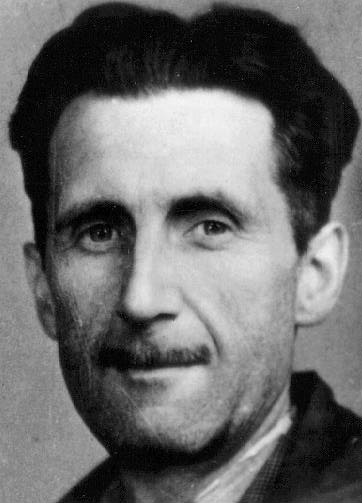
Orwell’s press card portrait, 1943

Mussolini, in “Cassius’s” book, after calling his witnesses, enters the box himself. He sticks to his Machiavellian creed: Might is Right, vae victis! He is guilty of the only crime that matters, the crime of failure, and he admits that his adversaries have a right to kill him — but not, he insists, a right to blame him. Their conduct has been similar to his own, and their moral condemnations are all hypocrisy. But thereafter come the other three witnesses, the Abyssinian, the Spaniard and the Italian, who are morally upon a different plane, since they have never temporized with Fascism nor had a chance to play at power politics; and all three of them demand the death penalty.

Would they demand it in real life? Will any such thing ever happen? It is not very likely, even if the people who have a real right to try Mussolini should somehow get him into their hands. The Tories, of course, though they would shrink from a real inquest into the origins of the war, are not sorry to have the chance of pushing the whole blame onto a few notorious individuals like Mussolini and Hitler. In this way the Darlan-Badoglio manoeuvre is made easier. Mussolini is a good scapegoat while he is at large, though he would be an awkward one in captivity. But how about the common people? Would they kill their tyrants, in cold blood and with the forms of law if they had the chance?

It is a fact that there have been very few such executions in history. At the end of the last war an election was won partly on the slogan “Hang the Kaiser”, and yet if any such thing had been attempted the conscience of the nation would probably have revolted. When tyrants are put to death, it should be by their own subjects; those who are punished by a foreign authority, like Napoleon, are simply made into martyrs and legends.

What is important is not that these political gangsters should be made to suffer, but that they should be made to discredit themselves. Fortunately they do do so in many cases, for to a surprising extent the war-lords in shining armour, the apostles of the martial virtues, tend not to die fighting when the time comes. History is full of ignominious getaways by the great and famous. Napoleon surrendered to the English in order to get protection from the Prussians, the Empress Eugénie fled in a hansom cab with an American dentist, Ludendorff resorted to blue spectacles, one of the more unprintable Roman emperors tried to escape assassination by locking himself in the lavatory, and during the early days of the Spanish Civil War one leading Fascist made his escape from Barcelona, with exquisite fitness, through a sewer.

It is some such exit that one would wish for Mussolini, and if he is left to himself perhaps he will achieve it. Possibly Hitler also. It used to be said of Hitler that when his time came he would never fly or surrender, but would perish in some operatic manner, by suicide at the very least. But that was when Hitler was successful; during the last year, since things began to go wrong, it is difficult to feel that he has behaved with dignity or courage. “Cassius” ends his book with the judge’s summing-up, and leaves the verdict open, seeming to invite a decision from his readers. Well, if it were left to me, my verdict on both Hitler and Mussolini would be: not death, unless in is inflicted in some hurried unspectacular way. If the Germans and Italians feel like giving them a summary court-martial and then a firing-squad, let them do it. Or better still, let the pair of them escape with a suitcaseful of bearer securities and settle down as the accredited bores of some Swiss pension. But no martyrizing, no St Helena business. And, above all, no solemn hypocritical “trial of war criminals”, with all the slow cruel pageantry of the law, which after a lapse of time has so strange a way of focusing a romantic light on the accused and turning a scoundrel into a hero.

George Orwell, “Who are the War Criminals?”, Tribune, 1943-10-22.

July 30, 2019

Units of Classical Antiquity: The Praetorian Guard (Roman Army)

Filed under: Europe, History, Military — Tags: , , — Nicholas @ 04:00

Invicta
Published on 18 Mar 2016

Who were the Praetorian Guard? Special Forces, dictatorial musclemen, or ceremonial relics? In this documentary episode we dive deep into the history of this feared unit of the Roman empire!

Woodturning a spiked mace

Filed under: History, Tools, Woodworking — Tags: , , , — Nicholas @ 02:00

Rex Krueger
Premiered on 5 Jun 2019

More video and exclusive content: http://www.patreon.com/rexkrueger
(more…)

July 29, 2019

Erasing the past, statue by statue, plaque by plaque

Alexander Adams on the deliberate sabotage of historical monuments in pursuit of a more perfect (i.e., imaginary) past:

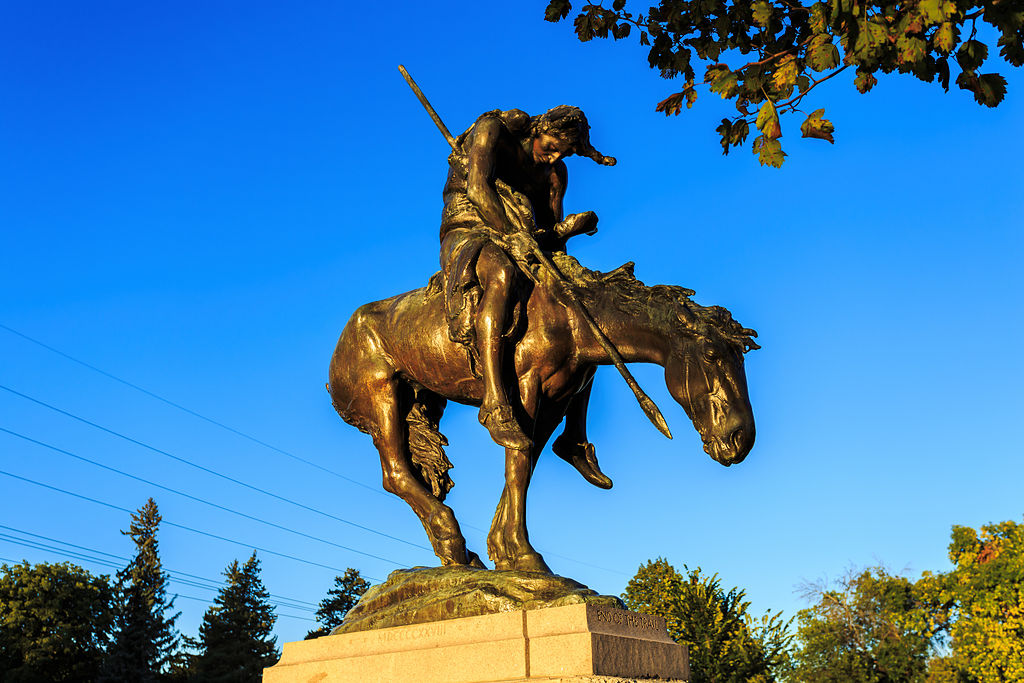
End of the Trail by James Earle Fraser, located in Waupun, Wisconsin.
Photo by Shawn Conrad via Wikimedia Commons.

In the wake of recent attempts – some successful – to have Confederate statues removed from the US south, what is the future of colonialist statues in the US west? In Pioneer Mother Monuments: Constructing Cultural Memory, Cynthia Culver Prescott, a professor of history at the University of North Dakota, senses a reluctance to apply to pioneer monuments the ideological zeal that was turned on Confederate memorials. “We resist applying the insights of settler colonial studies to American pioneer narratives because to do so would call into question foundational myths of Jeffersonian agrarianism and American exceptionalism, and lay bare white conquest of native lands and peoples.” She outlines the cases against statues of colonialists, and particularly against female settlers, who took part in the drive to colonise the American west in the 19th century.

Statues depicting women have been criticised by academics and campaigners for being idealising, inaccurate, generalising and stereotypical. There is a sense that campaigners direct such ire at statues of women settlers not just because they embody sexism and colonialism but because they show women as complicit in the act of dispossessing native peoples. There is a residual resentment that – in intersectional terms – a political minority took part in a project to oppress another minority.

The creation of monuments honouring white settlers of the west began in earnest in the 1890s. As the American western frontier was closed and territories became part of the United States, a chapter of national history had been definitively closed, too. Just under 190 monuments have been erected in the US since the 1880s marking pioneer achievements. It was a way of fixing in collective memory the achievements of forebears just at the moment their stories were becoming history. The western territories had been spared the scourge of the Civil War, and its new states had a history that involved war with Mexico, the persecution and flight of the Mormons and the Indian Wars.

In the statuary, common types emerged. Women were the prairie Madonna, the protective mother, the Indian guide leading the way, the nuclear family. Men were resolute fathers, the epitome of bravery and stoic defiance. Competitions, touring exhibitions, newspaper features and book publications circulated them, encouraging other communities to commission similar statues. Alexander Phimister Proctor’s statue of a male pioneer was an acceptable manifestation of the conquering of the west. Bearded and dressed in buckskin clothing, the pioneer wears European boots and carries a rifle. He straddles the wisdom of the natives and the technological superiority of settlers, explaining how the west was won through a combination of old knowledge and new materials.

Culver Prescott notes the example of James Earle Fraser’s sculpture The End of the Trail (1890s), which depicted an exhausted American Indian on a tired pony. Fraser had apparently developed a deep sympathy for native peoples after witnessing an army eviction. It seems the sculptor intended to elicit sympathy for evicted Indians, yet it was interpreted by contemporary observers as a scene of the sad but necessary extinction of a primitive indigenous people, conforming to the social Darwinist reading of history, in which advanced people defeat and displace inferior peoples. This is an object lesson in the variety of interpretations an artwork can elicit, regardless of artistic intent. It should alert today’s social-justice warriors to the dangers of misinterpreting public art and the risk of suppressing art on the basis of misapprehension.

South African R2 and its Special Furniture

Filed under: Africa, History, Military, Technology, Weapons — Tags: , , , — Nicholas @ 02:00

Forgotten Weapons
Published on 5 Jun 2019

http://www.patreon.com/ForgottenWeapons

Cool Forgotten Weapons merch! http://shop.bbtv.com/collections/forg…

In South African military service, the R1 was the FN FAL and was the preferred infantry combat rifle until the adoption of the Galil as the R4 rifle. So what were the guns in between? Well, the R2 was a South African adaptation of the G3. A large number of rifles were needed as a reserve, and also to equip second echelon units like the Air Force, Cape Corps, and South West Africa Territorial Force. To reduce the expense of this, South Africa purchased something like 100,000 G3 rifles from Portugal and designated them R2.

The Portuguese hand guards and buttstocks were found to be unsatisfactory, however. In the heat and harsh ultraviolet radiation of South West Africa (now Namibia) in particular, the plastic would shrink and lose its fit, leading to the guns being called “rattlers” by the SADF troops. The fix this, the American firm of Choate Machine & Tool was contracted to make new hand guards based on the H&K export pattern — wider and longer and with fittings for a bipod. New stocks were also made, duplicating the shape of the R1/FAL stock.

Contact:
Forgotten Weapons
PO Box 87647
Tucson, AZ 85754

« Newer PostsOlder Posts »

Powered by WordPress