
InRangeTV
Published on 23 Jan 2018One of the major initiatives of the Ministry of Food was ensuring the availability of bread and the supply of wheat to the British Isles. To help stretch the use of wheat, a national bread recipe was instituted, using minimally processed brown flour. This was not a particularly appealing item to most of the British populace, used to highly refined fluffy white bread – but they accepted it as a necessity of war. Interestingly, the National Loaf was not that unlike today’s whole wheat breads which are so popular for their better nutritional value than WonderBread.
Day 4 Menu:
Breakfast: Cheese toast, tea
Lunch: Cheese and Tomato Sandwich, pickle, leftover split pea soup
Tea: Beetroot pudding, tea
Dinner: Leek and Hamburger Gravy over toastInRange is entirely viewer supported:
https://www.patreon.com/InRangeTV
April 21, 2019
British Ration Week Episode 4: The National Loaf
April 20, 2019
British Ration Week Episode 3: Creative Cooking
InRangeTV
Published on 22 Jan 2018Much of the popular media about wartime rationing spends a lot of time looking at the crazy examples of weird and frightening recipes that appeared during this time – because that’s what attracts audience attention. In reality, the strange recipes are not attempts to make terrible foods palatable, but rather attempts to make repetitive ingredients more interesting. Today’s Welsh Eggs, for instance, are a way to use powdered eggs in a way that hides their lack of texture.
Day 3 Menu:
Breakfast: Potato, Bacon and Green Onion hash, tea
Lunch: Split Pea Soup (made with Spam instead of bacon)
Tea: Peach Clafouti, tea
Dinner: Welsh Eggs on toast, sauteed kaleInRange is entirely viewer supported:
https://www.patreon.com/InRangeTV
April 19, 2019
British Ration Week Episode 2: Food for the Week
InRangeTV
Published on 21 Jan 2018What does a week’s worth of food for two people in World War Two London look like? We bought the whole week’s groceries and we will explain what the rations entailed and what we have to work with (this episode was actually filmed the day before the experiment began).
Of course, the typical British family during the war did not have a refrigerator, and the wife would have been shopping for groceries on a daily basis.
Day 2 Menu:
Breakfast: Whole Grain Pancakes, tea
Lunch: Split Pea Soup, bread
Tea: Pumpkin Spice Cookies, tea
Dinner: Spam, Vegetable Mash, aleInRange is entirely viewer supported:
https://www.patreon.com/InRangeTV
April 18, 2019
British Ration Week Episode 1: Introduction
InRangeTV
Published on 20 Jan 2018Did you know that under World War II rationing, the health of the British public improved by virtually every objective measure? Caloric intake increased, lifespan increased, and infant mortality decreased. Despite being an island nation under severe submarine blockade, the United Kingdom managed to not just provide food for its millions of inhabitants, but actually build and maintain the public trust in government rationing. How did this happen? We will explore the question all week, while Ian eats a diet of only what a typical British family would have eaten during the dark days of the Blitz.
Day 1 Menu:
Breakfast: Oatmeal Porridge, tea
Lunch: Leek & Potato Soup, bread & margarine, water
Tea: Vanilla Depression Cake, tea
Dinner: Cottage Pie, aleFor the recipes for today’s dishes – and lots of other details about the experiment – please see our data page at InRange.tv:
http://www.inrange.tv/british-rationi…
InRange is entirely viewer supported:
https://www.patreon.com/InRangeTV
April 17, 2019
QotD: “[E]valuating food by its calorie count is like evaluating literature by the number of pages in a book”
… calorie-counting is an ineffective approach to eating. Calories are a crude metric that takes into account nothing about the properties of foods other than the total energy they contain. The value of activities can’t be reduced to a number, and nor can foods. Still calories are listed everywhere, enumerated in enormous fonts on food packaging and across menus and ads for packaged products with nothing to recommend them but a lack of calories.
A calorie is the amount of energy required to raise the temperature of a gram of water by one degree Celsius. The “calories” we talk about in food are the amount of energy released when that food is burned. Of course the first law of thermodynamics applies to humans, so if you take in less energy than you use, it’s impossible to store that energy (as body fat). But the factors that go into energy balance are many. The body burns and stores energy from different foods in different forms at different times in different people in different ways.
That crudity leads to mistakes, like the idea that 200 calories of Skittles are in any way equivalent to 200 calories of salad. In that way, calories have been weaponized by marketers to claim their ingestible products are innocuous. As Coca-Cola has advertised, for one, drinking soda is fine as long as you exercise enough to burn off those calories. That’s reasonable if it weren’t also true that constant exposure to high-sugar foods changes the way our bodies store energy. It’s like saying it’s fine to insult someone as long as you follow it with a compliment.
Worse still are the loudly advertised “100-calorie” packs of sugar-based edible products. They cause insulin levels to surge, affecting nutrient absorption and subsequent hunger in ways fundamentally different from eating 100 calories of almonds or spinach. That’s so much spinach. It would fill your stomach and please the microbes of your bowel.
James Hamblin, “It’s True, Hot Baths Burn Calories: Why calorie counting is almost useless and often misleading”, The Atlantic, 2017-04-13.
April 16, 2019
‘Tis Eastertide, and so the professional miserablists are going after Easter Eggs, of course
In the Continental Telegraph, Tim Worstall tells the worried environmentalists that no, it does not make sense to ban Easter eggs — for their “wasteful” packaging — on environmental grounds:
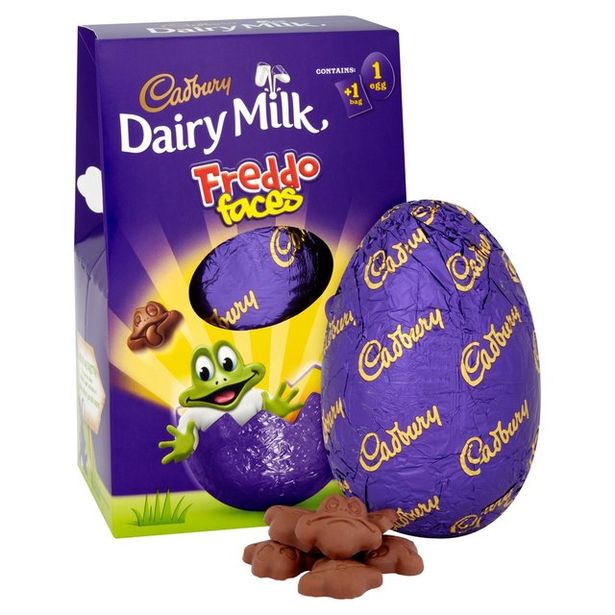
One of the more silly of the current environmental concerns is the worrying about the quantity of packaging that goes into – or around – Easter eggs. There’s an underlying mistake being made here, one which none of the proponents of action have bothered to recognise, let alone think about. Which is, well, what’s the purpose? The point of all this human activity we call an economy?
As any economist could and would tell you we’re after the maximisation of human utility. Given the constraints placed upon us by reality – the availability of stuff with which to do things, technologies we know about to do things to stuff with – we want humans to be as happy as they can be. We want, in short to maximise the amount of joy in the world.
At which point, packaging. Sure, no doubt there’s a certain harm that befalls us all from the creation of packaging and its disposal. Why not? There are costs and benefits to everything of course. But that’s the point, while there may be costs there are also benefits. So, yes, OK, there are costs to packaging.
[…]
At no point is even consideration given to the idea that the packaged egg might produce that joy. Which, given that we do indeed go buy these things each year to give to each other, is odd, isn’t it? Why are we giving each other expensive – as opposed to cheap – chocolate? Because, obviously enough, the dressing of the chocolate is something that produces that joy.
We can even have a stab at quantifying matters.
The cost is 3,000 tonnes of packaging. We know what that costs us, the value of the landfill tax. Around £80 a tonne. So, call it quarter of a million pounds. Spending upon Easter eggs is some £400 million a year. The joy produced must be of greater value than that £400 million otherwise we’d not be spending it in the first place. And yes, £400 million is more than £250,000.
We thus have our answer to the prodnoses worrying about the cost of Easter egg packaging. Piss off matey, you’ve missed the point entirely.
April 10, 2019
Theodore Dalrymple on obesity
His latest in the New English Review:
It hardly requires me to point out that obesity has become a greater threat to the health of the human population in most parts of the world than famine. There was a wonderful cartoon recently in the British magazine, The Oldie, which captured this perfectly. A mother is taking a plate of food away from her child, who is protesting. “Think of the obese millions!” she says to him. When I was young, of course, we were told to finish what was on our plate and to think of the starving millions. Being a precocious little brat, I used to ask how eating what I did not want would help them. Let us just say that the reply was seldom well-reasoned, either in form or content.
It has now become an almost unassailable orthodoxy, at least in medical journals, that obesity is an illness in and of itself: that is to say, it does not merely have medical consequences, but — even without those consequences — is a disease. To be fat is, ipso facto, to be ill, in the same sense as to have Parkinson’s disease is to be ill.
Nor, according to the modern orthodoxy, is obesity to be considered the natural consequence of bad or foolish individual choices, a lack of self-control. That would be to blame the victim. The fat person is in effect the vector of forces that play upon him or her, without any contribution on his or her part.
This is an idea of long gestation. Reading an old text on obesity, published in 1975, and edited by one of my medical mentors, I came across the following quote from a paper written in 1962:
I wish to propose that obesity is an inherited disorder and due to a genetically determined defect in an enzyme: in other words that people who are fat are born fat, and nothing much can be done about it.
This is like saying that addicted people are born to be addicted, and until doctors discover a technical means of stopping their addiction, they might as well make no efforts on their own behalf. No doubt the people who adhere to this view – that obesity and addiction are illnesses simpliciter – think they are being generous but in fact they are forging psychological manacles. No doubt the fat woman in the bakery was at some level trying to prove to herself that obesity was a fatality and not under any possible individual control.
But is the theory in accord with the scene I have described above? In fact, the scene might lead us to a more nuanced or less categorical view of the problem of obesity (and, by extension, of other social problems) than we might at first adopt.
April 5, 2019
QotD: Debunking the “MSG is harmful” myth
The story of MSG is a true tragedy. The negativity associated with this delicious amino acid is due to a spurious study from 1968 that linked MSG with the “Chinese Restaurant Syndrome.” This study connected that gut-bomb feeling you sometimes get after eating Chinese food to MSG, despite the fact that the typically cheap Chinese food prepared in American restaurants is fatty and served in large portions, and (like any restaurant), the food can be spoiled. My mom theorizes that lots of MSG was used to cover up the fact that, say, shrimp was a day past its prime, and that the sick feeling was due to the food but got blamed on the MSG. There’s never been a scientifically rigorous study that’s linked MSG with any negative effects. MSG should be used frequently and added to anything that needs the flavor drawn out, especially soups. But it enhances virtually anything it touches: Once, eating pizza at home, a friend scanned my spice rack and saw a jar with white powder whose label, in my grandfather’s messy scrawl, read what looked like “MS6.” He sprinkled it on his pizza and came to find me, telling me that whatever MS6 was, it was the most amazing thing he’d ever tasted. Yes, MSG makes even pizza better.
Caitlin PenzeyMoog, “Salt grinders are bullshit, and other lessons from growing up in the spice trade”, The A.V. Club, 2017-04-06.
April 3, 2019
QotD: Veganism has its drawbacks
Evangelical vegans will tell you that following a purely ‘plant-based’ diet is not only morally commendable, it’s also much better for your health. But if my experience is anything to go by, the opposite is true.
I felt absolutely fine for the first few days. I didn’t miss meat at all, certainly not in terms of taste or flavour. The only thing I really felt an absence of was eggs. Since I embarked on my mammoth weight-loss project, eggs have become a dietary staple for me: nothing fills me up as well or gives me quite as much long-lasting energy as an egg.
I also found I had to eat larger portions to feel full — and I felt hungry again after a shorter period of time. But even that didn’t bother me, since what I was eating was so wholesome.
No, the real issue became apparent after the third or fourth day. Not to put too fine a point on it: wind.
My stomach was, quite literally, in ferment. All those legumes and pulses and generalised vegetable matter appeared to have turned into a giant internal compost heap. It wasn’t too bad in the mornings; but by early afternoon I was like a cow who had overdosed on clover.
At first, I palmed the outcome off on our three dogs. But after a while the problem became so severe that even they could not be expected to account for the frequency and potency of aromas emerging from my lower digestive tract.
One of the key arguments of vegans against livestock farming is the harm animals cause to the planet through the amount of methane they produce; if my experience was anything to go by, a vegan human is capable of producing just as much, if not more. I was a one-woman global warming hazard.
My children, of course, thought it was hilarious. But from my point of view, it was not only unpleasant and occasionally embarrassing, it was also incredibly uncomfortable. I felt bloated, soggy and sluggish, and began to dread meal times.
Following the advice of the nutritionist, I took to soaking nuts, oats and seeds overnight. But it made no difference. If anything, the problem began to get worse. The more healthy vegan food I put into my body, the worse my stomach problems became.
As for the much-vaunted ‘vegan glow’, no sign. Instead, my skin felt dry and dehydrated, and there was a distinctly greyish tinge to my complexion. But still, I persisted.
Sarah Vine, “Going vegan sent me off my trolley! Exhausted, irritable and don’t even start of the tummy troubles – SARAH VINE’s bid to join the health revolution left her VERY green around the gills”, Daily Mail, 2019-02-22.
March 31, 2019
Irish Potato Famine – Lies – Extra History
Extra Credits
Published on 30 Mar 2019Writer Rob Rath talks about all the cool stories and facts we didn’t get to cover in the Irish Potato Famine series.
Join us on Patreon! http://bit.ly/EHPatreon
From the comments:
Extra Credits
1 day agoRecommended reading:
The Great Hunger, by Cecil Woodham-Smith
The Graves Are Walking: The Great Famine and the Saga of the Irish People, by John Kelly
Podcast: Irish History PodcastSay hi to Rob’s newest family member!
4:43 – what exactly was the blight?
7:35 – flags, flags, flags
9:20 – difference between “British” and “English”
10:26 – the psychology behind low-balling numbers
18:52 – we couldn’t do an episode on the Battle of Mrs. McCormick’s Cabbage Patch 🙁
22:57 – what’s next on Extra History!
23:27 – Walpole fact!
March 30, 2019
QotD: Organic spices are a racket
There’s a whole other piece to be written about organic spices, but the short version is that demanding organic spices is never going to be good for the farmers growing them. The U.S. standards for organic products amounts to ridiculously expensive and oftentimes unnecessary practices for small farmers who just don’t have the resources to do it. There are plenty of ways to arrive at ethical treatment of animals and land that are not part of our complicated organic laws. And that’s not to mention the people who demand organic products but will also freak out at the sight of a bug or won’t buy something that’s even a little bit misshapen or with a tiny brown spot on it. You can have pesticides or you can have pests.
Caitlin PenzeyMoog, “Salt grinders are bullshit, and other lessons from growing up in the spice trade”, The A.V. Club, 2017-04-06.
March 26, 2019
Food Rationing – How to Make Woolton Pie – WW2 Homefront 001 – April 1940
World War Two
Published on 24 Mar 2019Rationing of goods in Europe started immediately when the war broke out. Lord Woolton, British Minister of Food came up with one of the first substitute dishes… a vegetable pie that was promptly named after him. Our team chef Joram shows you how to do it. To find out how it tasted go here: https://youtu.be/quB0yH8Qhlo
Recipe can be found here: https://the1940sexperiment.com/2016/0…
Join us on Patreon: https://www.patreon.com/TimeGhostHistory
Or join The TimeGhost Army directly at: https://timeghost.tvHosted by Joram Appel and created by Wieke Kapteijns
Archive by Screenocean/Reuters https://www.screenocean.com
A TimeGhost chronological documentary produced by OnLion Entertainment GmbH
In about a month’s time (yes, I have my 1:00am and 2:00am posts lined up that far in advance), there’s an eight-part video series from Ian at InRangeTV on British rationing in WW2 that includes a slightly different Woolton Pie recipe.
QotD: Salt
My grandfather used to say this all the time, and it’s true. Salt brings out the flavor of the food, full stop. There are a great variety of salts, but the reality is they’re all the same mineral. Coloration in salt comes from the minerals near the salt as it forms. There’s nothing inherently better about colored salts, but the marketers selling you that stuff will try to convince you otherwise. I’ve seen pink salt promoted as an “alternative” salt that doesn’t cause blood pressure issues. That’s a lie. My advice is to buy kosher salt or the chunkier white salt if you like the crunchiness. If you really like the mild flavoring of gray salt, that’s fine, just know that it’s sold at a higher cost for what comes down to the same thing as my box of salt I can get for a couple bucks. And one more thing: All salt is sea salt.
Salt grinders are bullshit
I’m not done with salt yet: Don’t put your salt in a grinder. All you’re doing is making your salt smaller than it was before. Unlike pepper, which is actually processed in the grinder, salt does not need to be ground and is not fresher after coming out of a grinder. It’s just smaller. Use a shaker.
Caitlin PenzeyMoog, “Salt grinders are bullshit, and other lessons from growing up in the spice trade”, The A.V. Club, 2017-04-06.
March 21, 2019
QotD: Pie language
Even in their early days, pies served different purposes for the rich and poor: as show-off delicacies for the former and portable food for the latter. So while wealthy feasts might include pies containing anything from game birds to mussels, the less well-off used simpler pies as a way to have food while doing outdoor work or travelling – the crust both carried and preserved the tasty filling.
Take, for example, the Bedfordshire Clanger: a British classic which cleverly combines main course and dessert, with savoury ingredients like pork at one end and sweet ingredients like pear at the other. The name comes from a local slang word, “clang”, which means to eat voraciously. However, cramming two courses into a pie makes a clanger rather unwieldy – and all too easy to drop, inspiring the English phrase “dropping a clanger” for a careless mistake.
Pies have been adding rich flavour to the English language for centuries. Even Shakespeare got in on the act, writing in his 1613 play Henry VIII that “No man’s pie is freed from his ambitious finger”, giving English the phrase “a finger in every pie”.
Meanwhile, the description of a drunken state as “pie-eyed” likely takes its cue from someone who, thanks to having over-imbibed, has eyes as wide and blank as the top of a pie. “As easy as pie” – first recorded as “like eating pie” in the horse-racing newspaper Sporting Life in 1886 – springs from pies’ historical role as convenience food.
“Eating humble pie”, meanwhile, comes from medieval deer hunting, when meat from a successful hunt was shared out on the basis of social status. While the finest cuts of venison went to the rich and powerful, the lower orders made do with the “nombles“: a Norman French word for deer offal. Anglicisation saw “nombles” pie become “humble” pie.
Norman Miller, “How a pocket-sized snack changed the English language”, BBC Travel, 2017-03-29.
March 17, 2019
Irish Potato Famine – The Young and the Old – Extra History – #5
Extra Credits
Published on 16 Mar 2019Irish leaders entered the picture when the 1847 Poor Laws backfired, leading landowners to mass-evict their starving tenants. Daniel O’Connell tried to maintain an alliance with the Whigs, and failed. The Young Irelanders split off from the Repeal Association, and as a result, both the rebellious and the moderate minds of the country lost significant traction, unable to fight the famine alone.


