Quotulatiousness

August 9, 2011

We have a saying in Britain … we call it ‘shitting on your own doorstep’

Filed under: Britain, Government, Law — Tags: , , , , — Nicholas @ 12:11

Brendan O’Neill refutes some of the theories on what underlying causes are motivating the London riots:

Many commentators are on a mission to contextualise the riots that have swept parts of urban London and other British cities. ‘It’s very naive to look at these riots without the context’, says one journalist, who says the reason the violence kicked off in the London suburb of Tottenham is because ‘that area is getting 75% cuts [in public services]’. Others have said that the political context for the rioting is youth unemployment or working-class anger at David Cameron’s cuts agenda. ‘There is a context to London’s riots that can’t be ignored’, said a writer for the Guardian, and it is the ‘backdrop of brutal cuts and enforced austerity measures’. The ‘mass unrest’ is a protest against unhinged capitalism, apparently.

These observers are right that there is a political context to the riots. They are right to argue that while the police shooting of young black man Mark Duggan may ostensibly have been the trigger for the street violence, there is a broader context to the disturbances. But they are wrong about what the political context is. Painting these riots as some kind of action replay of historic political streetfights against capitalist bosses or racist cops might allow armchair radicals to get their intellectual rocks off, as they lift their noses from dusty tomes about the Levellers or the Suffragettes and fantasise that a political upheaval of equal worth is now occurring outside their windows. But such shameless projection misses what is new and peculiar and deeply worrying about these riots. The political context is not the cuts agenda or racist policing — it is the welfare state, which, it is now clear, has nurtured a new generation that has absolutely no sense of community spirit or social solidarity.

What we have on the streets of London and elsewhere are welfare-state mobs. The youth who are ‘rising up’ — actually they are simply shattering their own communities — represent a generation that has been more suckled by the state than any generation before it. They live in those urban territories where the sharp-elbowed intrusion of the welfare state over the past 30 years has pushed aside older ideals of self-reliance and community spirit. The march of the welfare state into every aspect of less well-off urban people’s existences, from their financial wellbeing to their childrearing habits and even into their emotional lives, with the rise of therapeutic welfarism designed to ensure that the poor remain ‘mentally fit’, has helped to undermine such things as individual resourcefulness and social bonding. The anti-social youthful rioters look to me like the end product of such an anti-social system of state intervention.
To every action, there’s a reaction

Filed under: Britain, Law, Media — Tags: , , , , — Nicholas @ 09:34

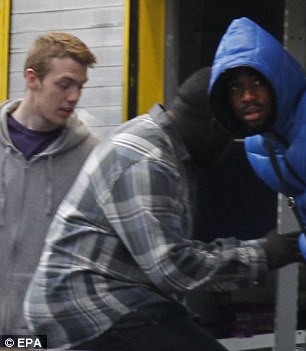
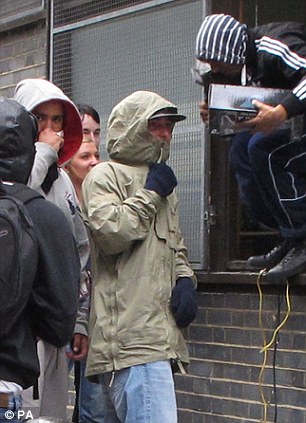
The rioters in Toronto and Vancouver were frequently caught on camera, and the photos were posted on the various photoblogging sites. Many people were identified this way, and some of them were charged as a result. Londoners are responding in the same way, with sites like http://catchalooter.tumblr.com/ where photos are being posted from the last few nights’ mayhem.


Every action does have a reaction, though, as rioters and even “innocent bystanders” are becoming more likely to attack anyone with a camera. This means a much greater risk for would-be citizen journalists (and professional journalists), as the police generally try to surround and contain mobs (when they don’t just evacuate altogether, of course). If someone in the mob decides that you’re “the enemy”, you won’t have much support — don’t risk your life just to get a “good shot”.

Update: Speaking of police unwillingness to protect civilians, there’s this account:

Cypran Asota, who has run the Boots opticians for 25 years, told the London Evening Standard how he watched as the shop was destroyed.

He said police stood by yards away, adding: ‘White boys ripped off the shutters, then a group of around eight or nine children went in and stole the day’s takings.

‘I ran back over the road to plead with them, this is my livelihood and I have to protect it, but they kept coming back in. They must have got away with £15,000 worth of frames. My insurance doesn’t cover acts of terrorism.

‘All the time the police were about 15 yards away, just watching. They didn’t do anything to stop it. They looked more scared of those kids than I was.’

Shopkeeper Shiva Kadih, 39, told the Standard he had ‘nothing left’ as witnesses said they prevented an attempt to burn down the shop as police watched nearby.

“Mobs rule as police surrender streets”

Filed under: Britain, Law — Tags: , , — Nicholas @ 09:21

The rioting in London has gotten worse, and more widespread. The media are having trouble coming up with ways to explain why it’s happening, with the most common being pent-up anger at the police:

The politicians are lucky, though, for the greater share of anger is being directed at the Metropolitan Police. The accusation, also voiced after the riots (ostensibly against public spending cuts) that took place in central London in the spring, is that the Met’s approach to civil disorder amounts to standing by for fear of provoking even more vicious rioting, with a view to catching culprits afterwards through the use of CCTV footage. The front-page headline in today’s Times, “Mobs rule as police surrender streets”, captures the mood, though the Met, alternately accused of brutality and laxity in recent years, are in an invidious position.

[. . .]

Second, policing will become a much hotter topic of political discourse. It is curious that it is not already. The theology of academic selection and university funding obsesses the political and media classes but the polling evidence is clear: crime is a bigger worry for voters than education. So expect much tardy reflection among politicians about the police. They will grapple, in particular, with the question of whether successive, well-intentioned efforts to check and soften the Met (such as the Scarman report in the 1980s, the McPherson report in the 1990s, the rebranding of the force as a “service”, the proliferation of “community support officers” and the like) have resulted in an unduly tentative approach to policing the streets. Whatever the answer, the debate will no longer take place at the margins of politics.

I’m sure it’s not the only reason, but if the way opinions about the police soured after the bungled response to the G20 protests in Toronto are a guide, it’s going to be an awful August for the Metropolitan Police. Being a cop on the street can be a tough job, but if you lose the support of the people, you’re more like a soldier in an occupied zone than an ordinary police officer. Toronto’s police lost a lot of respect — and a lot of quiet support — for their schizophrenic actions during the G20. London’s police may lose more than that.

Update: When I wrote that the rioting had become more widespread, I wasn’t exaggerating:

August 7, 2011

“When I used to do this I broke my hand 14 times, and I’m a banjo player”

Filed under: Europe, History, Russia — Tags: , , , — Nicholas @ 17:13

Poland’s answer to the Society for Creative Anachronism, Knights’ Brotherhoods stage their own form of medieval recreation:

Compering and judging the hand-to-hand combat is Krzysztof Ptasinski, the son of a Polish diplomat who learnt English from an American teacher in Addis Ababa and insists I call him “Redneck Chris”.

His hooded robe and summer gear make him look like a monk in flip-flops.

“Whoa dude! Ouch! In your face!” he hollers as two knights wearing full body-plate armour weighing 35kg (77lb) lay into each other with double-handed swords.

To progress, a knight has to reach five points, each earned by laying a clean blow on an opponent above the knee.

The swords are blunt, of course, but that does not mean it is completely harmless.

“When I used to do this I broke my hand 14 times, and I’m a banjo player,” he says.

“I’ve got two screws in this finger. I had a cracked skull.

“When we were fighting the Belarusian guys, I had my kidney displaced.”

I ask him what the appeal is.

“Whenever you get hit in the helmet you almost lose consciousness because it’s so loud. It’s a thrill,” he says.

I used to work with a guy from St. Petersburg who told me all about the replica medieval armour and weapons he had to leave behind when he came to Canada. It sounds like this is a similar group.

From this description, the group doesn’t have quite the same concerns about participant safety that the SCA and other North American re-creationist/re-enactor groups have generally adopted.

July 28, 2011

Is Breivik sane enough to prosecute?

Filed under: Europe, Law, Media — Tags: , , , , — Nicholas @ 12:20

Douglas Murray points out that Breivik’s actions even before the attacks would have marked him as insane:

Anders Behring Breivik believed himself a Knight Templar and awarded himself various military ranks accordingly. He also believed that he and other self-described Islamophobic racists had common cause with jihadis and that the USA has a Jewish problem. So even before he planted a car bomb in a civilian area and gunned down scores of young people, it would have been clear to anyone who bothered to question him that Breivik was insane.

Of course, no discussion of the Oslo massacre is complete without considering the media reaction:

But in the coverage since his atrocities first broke on to the world, two troubling tendencies have converged. The first is the search for reason in a mind that was clearly a stranger to it. The second is the tendency — particularly strong on the left — to use any horrific act as a megaphone for existing prejudices. In the aftermath of the shooting of Congresswoman Gabrielle Gifford in January, the left-wing media and politicians hunted for the right-wingers who they claimed had inspired the attack. That the gunman was not only a loner but a psychotic maniac was largely ignored as they rushed off excitedly to attack their ideological enemies. And so it is with Breivik.

For the past decade and more, every time an Islamist has blown something up, a chorus of voices — mainly from the left — has rightly said that ‘we shouldn’t jump to any conclusions’. But this time it was different. The Labour MP Tom Harris observed, with great frankness, that a ‘palpable relief that swept through the left when the identity of the terrorist was made known… Here, thank God, was a terrorist we can all hate without equivocation: white, Christian and far right-wing. Phew.’ So never mind not jumping to conclusions. When it seemed to emerge that, among many other things, the killer also claimed to be opposed to immigration and was fearful of Islam, that jump became a great leap towards group blame.

July 25, 2011

Mark Steyn responds to accusations that he “inspired” the attack in Oslo

Filed under: Europe, Media, Politics — Tags: , , , — Nicholas @ 20:30

Mark Steyn is quoted in Norwegian terrorist Breivik’s “manifesto”, and this is being used to paint him and others as “inspiration” for the attacks. He responds:

I have been away from the Internet for the weekend, and return to find myself being fitted out for a supporting role in Friday’s evil slaughter in Norway. The mass murderer Breivik published a 1,500-page “manifesto.” It quotes me, as well as several friends of NR — Theodore Dalrymple, Daniel Pipes, Roger Scruton, Melanie Phillips, Daniel Hannan (plus various pieces from NR by Rod Dreher and others) — and many other people, including Churchill, Gandhi, Orwell, Jefferson, John Locke, Edmund Burke, Bernard Shaw, Mark Twain, not to mention the U.S. Declaration of Independence.* Those new “hate speech” codes the Left is already clamoring for might find it easier just to list the authors Europeans will still be allowed to read.

It is unclear how seriously this “manifesto” should be taken. Parts of it simply cut and paste chunks of the last big killer “manifesto” by Ted Kaczynski, with the occasional [insert-your-cause-here] word substitute replacing the Unabomber’s obsessions with Breivik’s. This would seem an odd technique to use for a sincerely meant political statement. The entire document is strangely anglocentric — in among the citations of NR and The Washington Times, there’s not a lot about Norway.

[. . .]

Any of us who write are obliged to weigh our words, and accept the consequences of them. But, when a Norwegian man is citing Locke and Burke as a prelude to gunning down dozens of Norwegian teenagers, he is lost in his own psychoses. Free societies can survive the occasional Breivik. If Norway responds to this as the Left appears to wish, by shriveling even further the bounds of public discourse, freedom will have a tougher time.

Reaction to the attacks in Norway

Filed under: Europe, Media, Politics — Tags: , , — Nicholas @ 10:37

Brendan O’Neill looks at the media reaction to the Oslo and Utoya terror attacks:

When it was reported on Friday that there had been an explosion and an horrific mass shooting in Norway, many observers assumed that al-Qaeda or some other radical Islamist group had struck at the heart of peaceful Scandinavia. ‘Norway’s 9/11’, said the front page of the Sun on Saturday, with the subheading: ‘“Al-Qaeda” massacre.’ Yet when it was revealed that the alleged bomber and shooter is a Norway-born, blonde-haired, farm-owning Aryan, observers quickly bought into the idea that we were faced with something very different from an al-Qaeda attack. This wasn’t ‘Norway’s 9/11’ after all, but something more akin to Columbine-on-steroids, a right-wing madman letting off steam in a most barbaric fashion. As one Norwegian police official put it: this was ‘probably more Norway’s Oklahoma than its World Trade Centre’.

Yet this simplistic categorisation of contemporary terror assaults — where violent outbursts get slotted into files marked ‘Radical Islamist Fury’ or ‘Right-Wing Anger’ — makes too fine a distinction between acts that are actually very similar. Just because something like 7/7 in London was executed by men with dark hair and brown skin who claimed to be fighting on behalf of the Muslim ummah, while the bombing of Oslo and massacre on Utoya were carried out by a white guy who claimed to be protecting European Christian culture, that doesn’t mean these are diametrically different actions. What they have in common is far more important than what separates them. And, stripped of their pseudo-political garb, what unites today’s various terror tantrums, what makes these kind of people possible in the first place, is a very powerful culture of estrangement in modern society.

In much of the media, particularly amongst the respectable broadsheet press, there was a palpable sense of relief when it was revealed that the alleged killer is white with far-right tendencies. This means he is the kind of person we can unambiguously hate. Where Islamist terror attacks, from 9/11 to 7/7, induce in some liberal observers torn and tortured feelings, where they want to condemn the violence but also feel the need to explain it as a natural reaction to evil Western foreign policy, Anders Behring Breivik is someone they can despise in an uncomplicated way. This means that while the attacks may not be ‘Norway’s 9/11’, they could well be the cultural elite’s 9/11 — in the sense that this is an act which the influential liberal classes may seek to politicise in an opportunistic fashion, to make moral mileage out of, in the same way that the right did after 11 September 2001.

July 24, 2011

Bank of Ireland “suffered a restructuring credit event”

Filed under: Economics, Europe — Tags: , , — Nicholas @ 10:46

I’m not fluent in banker . . . does this Reuters report really say that the Bank of Ireland is in default?

The ISDA said a restructuring credit event occurred after Bank of Ireland closed an offer to buy back about 2.6 billion euros of Tier 1 and Tier 2 subordinated debt at a discount of up to 90 percent earlier this month.

A credit event is financial industry jargon for default on payment, breach of bond covenants or other event that casts doubt on an issuer’s ability to service its debt.

If it does mean the bank is in default, how come it hasn’t received much attention in the media? (Aside from the focus being on Norway right now for other reasons, of course.)

H/T to Karl Denninger for the link.

July 22, 2011

The wine industry’s nemesis, Phylloxera vastatrix

Filed under: Environment, Europe, France, History, Wine — Tags: — Nicholas @ 09:49

The Economist reviews a new book about the devastation to Europe’s wine makers caused by a tiny American invader:

These varieties are a reminder of the battle against phylloxera, a small, root-munching aphid that did incalculable damage to the wine business in the last 35 years of the 19th century. What George Gale, a philosophy professor at the University of Missouri-Kansas City, calls “the worst of all known invasive species disasters” swept across the viticultural landscape like a biblical plague. It destroyed vineyards from Rioja to Rheingau, Stellenbosch to Sicily. With good reason, Jules-Emile Planchon, the French botanist who helped to subdue the insect, dubbed it Phylloxera vastatrix.

[. . .]

In Europe, Gale’s research is no less assiduous. His coverage of the war between the largely Parisian scientific establishment, which believed that phylloxera was the effect, rather than the cause, of the devastation, and the so-called Américainistes of Montpellier and Bordeaux, who believed the opposite, is commendably detailed. The squabbling between the two sides stretched on into the 1880s, delaying the search for a solution.

Various remedies were proposed: flooding, planting on sandy soils and the use of carbon disulphide (a flammable, toxic chemical that was costly as well as tricky to apply). Growers then tried planting lower-quality American grapes, including Clinton and Noah, before switching, finally, to grafted vines combining phylloxera-resistant American rootstocks with European scions. This is still the practice in most of the world’s vineyards today.

July 21, 2011

This is why the British media is wall-to-wall Murdochmania

Filed under: Britain, Law, Media — Tags: , , — Nicholas @ 09:28

Andrew Orlowski explains how the show trial of Rupert Murdoch has sucked the oxygen out of every other story in the British media:

For the past fortnight, TV and newspaper editors in the UK have pushed aside stories of famine and the European financial crisis — which is greater now than the credit crunch three years ago — in favour of saturation coverage of the troubles of a rival media company.

This rival has real troubles, to be sure, which I will not attempt to diminish. But the volume and intensity of coverage is defined by the real size and reach of News Corporation. And this is not reality, but a myth. Just as children want a Santa, so too do editors and Prime Ministers want a “Murdoch” that resembles the omniscient movie villain/myth Keyser Soze. They’ve defined themselves by this myth.

“Never again should we let a media group get too powerful,” PM David Cameron said today, tuning in to the editors’ mood music. But like so many politicians before him, and specifically the past two Prime Ministers, he has done everything he could to bolster the Murdoch Myth himself. For most of the past two decades, politicians have tugged their forelocks at the Aussie-born tycoon, increasing his perceived influence with each pull.

Haven’t they got the memo about Old Media being dead? Why are they so worried?

July 20, 2011

Here’s a bold proposal for Greece

Filed under: Economics, Europe, Government, Greece — Tags: , — Nicholas @ 10:09

Bill Frezza has an idea of what Greece really needs:

what is the purpose of casting Greece into some selective temporary financial purgatory where the irrelevant Greek economy can continue embarrassing anyone foolish enough to lend their dysfunctional government a dime? Why not go all the way and give the country what many of its people have been violently demanding for almost a century?

Let them have Communism.

[. . .]

What the world needs, lest we forget, is a contemporary example of Communism in action. What better candidate than Greece? They’ve been pining for it for years, exhibiting a level of anti-capitalist vitriol unmatched in any developed country. They are temperamentally attuned to it, having driven all hard working Greeks abroad in search of opportunity. They pose no military threat to their neighbors, unless you quake at the sight of soldiers marching around in white skirts. And they have all the trappings of a modern Western nation, making them an uncompromised test bed for Marxist theories. Just toss them out of the European Union, cut off the flow of free Euros, and hand them back the printing plates for their old drachmas. Then stand back for a generation and watch.

The land that invented democracy used it to perfect the art of living at the expense of others, an example all Western democracies appear intent on emulating. Being the first to run out of other people’s money makes Greece truly ripe to take the next logical step beyond socialism.

H/T to Jon, my former virtual landlord, for the link. As he suggests “this probably would be kinda fun to watch”. After all, retro-kitsch “Soviet theme parks” are a going concern, why not a country-sized version?

July 19, 2011

Murdochphobia

Filed under: Britain, Media, Politics — Tags: , , — Nicholas @ 10:06

Brendan O’Neill says that the current Murdoch-bashing spree appears to be the only game in town for politicians and journalists right now:

Judging from recent comments made by politicians and journalists, you could be forgiven for thinking that Britain had liberated itself from foreign occupation. ‘Like political prisoners after a tyrant has been condemned to death by a people’s tribunal, [our politicians] are at last free’, gushed one commentator. A Lib Dem spokesman described MPs emerging ‘into the sunlight like the freed prisoners in Beethoven’s opera, Fidelio’. Labour leader Ed Miliband says the whole ‘psyche of British politics has changed’.

Wow. Was a secret Nazi cabal exposed and expelled? Did a brave Mili-band of brothers see off an invading army at Dover? Not quite. What happened is that some journalists and the Twittertariat had a pop at Rupert Murdoch. And, under intense pressure, Murdoch closed his Sunday tabloid, the News of the World, and sacked some people. That’s about it. The ‘people’s tribunal’ is actually the Guardian editorial board, and the ‘political tyrant’ who was ‘condemned to death’ is an octogenarian Aussie who was forced to give up his BSkyB bid. Britain freed from tyranny? Sticking with the wartime rhetoric: never in the history of mankind has so much BS been spouted by so many journos.

The notion that the cultural harrying of Murdoch has made British politicians ‘free at last’ — thank God almighty, free at last! — is based on two problematic ideas. First, that British politics was, until last week, dominated by Murdoch. And second, that the muddying of Murdoch’s name will allow our politicians finally to speak honestly and with conviction once more. Neither of these things is true. The fact that so many commentators believe they are reveals a great deal about the parlous state of public debate.

July 18, 2011

“We used to talk to career criminals all the time. They were our sources”

Filed under: Britain, Media — Tags: , , , — Nicholas @ 10:15

A look inside the News of the World newsroom before the closure:

“It was the kind of place you get out of and you never want to go back again.” That’s how one former reporter describes the News of the World newsroom under editor Rebekah Brooks, the ferociously ambitious titian-haired executive who ran Britain’s top-selling Sunday tabloid from 2000 to 2003.

Journalists who worked there in that period describe an industrialized operation of dubious information-gathering, reporters under intense pressure attempting to land exclusive stories by whatever means necessary, and a culture of fear, cynicism, gallows humor and fierce internal competition.

“We used to talk to career criminals all the time. They were our sources,” says another former reporter from the paper who also worked for Murdoch’s daily tabloid, the Sun. “It was a macho thing: ‘My contact is scummier than your contact.’ It was a case of: ‘Mine’s a murderer!’ On the plus side, we always had a resident pet nutter around in case anything went wrong.”

Soviet tank battles

Filed under: Europe, Germany, History, Military, Russia, WW2 — Tags: , , , — Nicholas @ 00:06

I just picked up a copy of The Battle of Kursk by David M. Glantz and Jonathan M. House, based on a recommendation by Jim Dunnigan in his World War II Bookshelf. While any attempt to pick the top books about the Second World War is doomed to perpetual nit-picking by second-guessers and Monday Morning Quarterbacks, I’ve generally found the works he recommended to be worth reading.

Although I’ve read much about World War II, I haven’t read much about arguably the most critical part of the entire war: the gargantuan battles pitting the Soviet Red Army against Hitler’s Wehrmacht. Some of that is just sheer pig-headedness: I used to work for the biggest wargame store in Toronto, back when wargames meant cardboard counters, vast paper hexagonal maps, and charts and tables galore. The hardest of the hard-core gamers seemed to be either Napoleonic grognards (down to the secret stash of sabres and shakos in the gaming room) or even more dedicated junkies of the “Great Patriotic War”/”Operation Barbarossa”. Some of the latter were genuinely crazy, right down to the barely contained hints that “Hitler was just misunderstood”.

On the assumption that certain forms of craziness are contagious, I avoided most of the latter as much as I could, consistent with my duty to sell them the latest and greatest game involving their particular passion.

One day, perhaps in a fit of weakness, I allowed myself to get lectured by one of the fanatics about the details of the Battle of Kursk. The fan who felt the need to bend my ear was eager to impart information about some “famous battle” that turned out to have been a serious tactical miscalculation by a Soviet officer. The story, as he told it, had a very large formation of Soviet tanks “taking a shortcut” through a major minefield, resulting in many disabled/destroyed tanks and wounded or dead men. In the telling, this kind of thing could not be admitted as having happened without some enemy contact, so it was propagandized as being a major tank battle involving significant formations of German panzer troops and/or SS units (of whom, of course, the glorious defenders of the Motherland took a greater toll than they suffered themselves).

I’d heard a couple of variations of this story by this point, but none of them could name the general who led the formation, the location of the event, or the “battle” that was supposedly re-written for propaganda purposes.

Does this story ring a bell for anyone? I’d imagine if it had really happened in a way close to the way it was told to me, it would have been documented in great detail (especially after the fall of the Soviet Union, in that brief period that both the Soviet and the Nazi records were available to western researchers without direct censorship).

July 17, 2011

Saudi Arabia upgrades their armoured forces

Filed under: Germany, Middle East, Military, Technology — Tags: , , , — Nicholas @ 10:49

Saudi Arabia will add a few hundred of the most up-to-date panzers to their defence forces:

Saudi Arabia is buying 244 Leopard 2A7+ tanks from Germany. Saudi Arabia is believed to have already ordered 44, and now has increased that order. It was only a year ago that German tank manufacturer KMW has revealed this, the latest version of its Leopard 2.

Two years ago, the German Army announced that it was going to upgrade 150 of its Leopard 2A6 tanks to the A7 standard. That would include more armor on the sides and rear (especially to protect against RPGs), more external cameras (so the crew inside could see anything in any direction, day or night), a remote control machine-gun station on top of the turret, better fire control and combat control computers and displays, more powerful auxiliary power unit and better air conditioning, and numerous other minor improvements. This would increase the weight of the tank to nearly 70 tons.

[. . .]

Saudi Arabia is concerned about Iran, which has a force of 1,500 much older tanks (most of them Russian T-72s and T-54/55s). Saudi Arabia has 1,300 tanks, most of them older American M-60s and French AMX-30s. But the Saudis also have 370 U.S. M-1s and 150 Russian T-90s. The 244 Leopards will increase the Saudi edge. The Saudis also have the money to buy spare parts for their modern tanks, and Western instructors to provide the best training. But the Iranians are better soldiers, so they might have an edge there.

« Newer PostsOlder Posts »

Powered by WordPress