
Published on 26 Jun 2017
Check out Military History Visualized and his video on armoured trains: https://www.youtube.com/watch?v=dvHTR-5n2_E
Armoured Trains were heavily armed and armored trains operating the vast rail networks of Europe, especially on the Eastern Front of World War 1. Their tactics and design evolved considerably during the First World War and the later Russian Civil War. From rather improvised locomotives to sophisticated designs specially built for combat purposes.
June 27, 2017
Armoured Trains of World War 1 I THE GREAT WAR Special feat. Military History Visualized
Setting the wrong tone
Brendan O’Neill on the way Corbyn’s supporters seem to be harking back to Stalinist rhetoric (and belief):
I’m starting to feel a little disturbed by the Stalinist streak in the Corbynista movement. The anti-democratic sense of entitlement behind the cry of “Jeremy Corbyn is the Prime Minister”; the cult of personality growing around Corbyn, which emphasises the man and his goodness far more than his policies; the censorious branding of anyone who doesn’t have the correct Corbynista outlook as “Tory” or “far right”, which comes straight from the Stalinist handbook of denouncing everyone from Trotskyists in the Spanish Civil War to the Hungarian revolutionaries of 1956 as “fascists”; the culture war (cultural revolution?) against those generations that don’t share the worldview of the caring, meme-making, Jez-loving Glasto set…. the largely youthful bourgeoisie that make up the backbone of the Corbynista campaign look set to have a quite chilling, backward impact on political debate and public life, I think.
On the other hand, Dr. Sean Gabb seems to be softening in his attitude to Corbyn, if only due to rising disgust with Theresa May and her “conservative” government:
I’ve been thinking about Jeremy Corbyn. Is he really so awful as we are told? In particular, is he worse on things like immigration and political correctness than the Fake Conservatives have been in practice? They have kept the borders open. They haven’t shut down a single Cultural Marxist project.
For the avoidance of doubt, I’m not a socialist. However, the Conservatives have been in power for years now, and have hardly shown themselves to be friends of anything remotely describable as free enterprise. Privatisation and outsourcing have been a gigantic scam on ordinary people. Vast amounts of the taxpayers’ money are being poured into the hands of crony capitalists.
He is also against dropping bombs all over the Middle East, and is against a renewed Cold War with Russia.
Would be abolish a single civil liberty we currently enjoy? Would he be any worse than the present lot at negotiating our exit from the European Union?
If there were an election tomorrow, I’d have great trouble actually voting Labour. At the same time, I don’t feel I’d regard a Corbyn Government with the same visceral loathing I felt of Tony Blair and Gordon Brown.
Is my brain softening with age? Or are my eyes beginning to open?
I look forward to enlightenment.
Comments Off on Setting the wrong tone
June 26, 2017
What Latin Sounded Like – and how we know
Published on 12 Aug 2016
Classical Latin went extinct, yet we still know how to pronounce it. Proof!
Take a trip with me back to Catholic school, then back even further to old Rome. We’ll see what Latin pronunciation did – and did NOT – sound like in the mouths of the Romans. Thanks to ancient authors and modern Romance languages, we’ll even glimpse a range of evidence for the speech of Caesar and pauper alike!
SERMO VULGARIS ALL DAY LONG, am I right? 😉
Comments Off on What Latin Sounded Like – and how we know
Tank Chats #11 Valentine
Published on 24 Nov 2015
The eleventh in a series of short films about some of the vehicles in our collection presented by The Tank Museum’s historian David Fletcher MBE.
The Valentine – A popular and reliable British tank. It was designed and built by Vickers-Armstrongs Ltd., in 1938 and offered to the Army who accepted it for production shortly before the outbreak of war in 1939.
It made quite a name for itself in the North African campaign and also served with New Zealand forces in the Pacific and with Soviet troops on the Russian front.
http://tankmuseum.org/museum-online/vehicles/object-e1949-344
Comments Off on Tank Chats #11 Valentine
June 25, 2017
Spain and the Spanish Arms Industry in WW1 I THE GREAT WAR Special feat. C&Rsenal
Published on 24 Jun 2017
Spain was one of the neutral nations of World War 1. A deep social divide and a decline from world power meant that they stayed out of the global conflict. Still, the war affected Spain in many ways. One of the consequences was the establishment of a huge arms industry that supported France and other fighting nations.
Comments Off on Spain and the Spanish Arms Industry in WW1 I THE GREAT WAR Special feat. C&Rsenal
Sometimes, the workman is right to blame his tools
Paul Sellers recently bought and tested a new Two Cherries brand “Gent’s saw” and was very unhappy with the tool:
This week I picked up a brand new gent’s saw straight from the pack made by the famous German tool makers Two Cherries. I noticed the unusual tooth shape, which strangely resembled the edge of a tin can when we used to open it with a multipurpose survival knife. I wondered how it would work and whether it was just a miscut. I examined several others and realised it was actually intentional as they were indeed manufactured that way. I offered the saw to the wood and the very middle cut with the dovetailed angle and the broken off section was the results of ten strokes.
“The long saw cut on the left is how the saw cuts by a man who has used such saws every day, six days a week for 53 years. The two to the right are how it cuts after sharpening and redefining the teeth.”
Could this truly be the end product of the once highly acclaimed Two Cherries of German tool manufacturing? I looked at the packet and, well, there it was; Made in Germany. So here is my perspective on the saw. Nice beechwood handle–nicely shaped (but it is unfinished), nice brass back, good quality steel plate, not too soft, not too hard. Two Cherries, the materials leave you no excuse for making such a poor grade product. YOU should be very ASHAMED of your product and yourselves. It is the very worst saw of any and all saws ever, ever, ever manufactured. I have never seen anything worse.
[…]
If you bought this saw and you thought the outcome was a result of your inexperience. It’s not. Blame the tool maker. It’s his pure arrogance to think he can pass something off to you like this and call it a dovetail saw. Shame on you Two Cherries, shame on you!
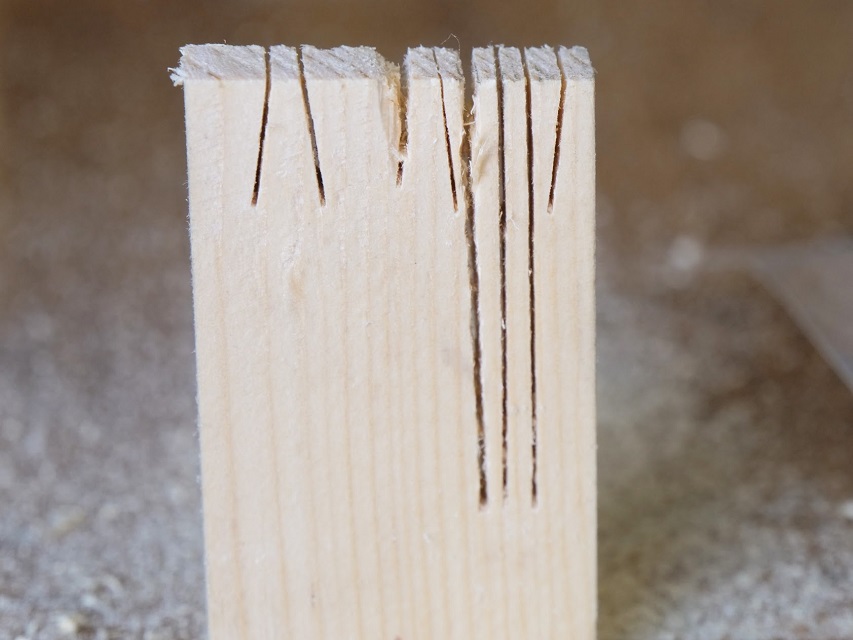
Comments Off on Sometimes, the workman is right to blame his tools
June 24, 2017
The Articles of Confederation – Lies – Extra History
Published on Jun 17, 2017
The Articles of Confederation gave the United States their name, but even beyond that, they exposed many of the issues that would underlie this new nation for the rest of its history. James Portnow interviews series writer Soraya Een Hajji about the Articles of Confederation!
How To Insult Like the British – Anglophenia Ep 12
Published on 8 Sep 2014
If you ever get into an argument with a British person, you’ll wish you’d have watched this video. Siobhan Thompson gives you the tools to sling insults like a Brit.
Here are a few other insults via the Anglophenia blog: http://www.bbcamerica.com/anglophenia/2012/08/the-brit-list-10-stinging-british-insults/
Comments Off on How To Insult Like the British – Anglophenia Ep 12
June 23, 2017
The Disillusionment of Lawrence of Arabia I THE GREAT WAR Week 152
Published on 22 Jun 2017
Almost a year after the secret signing of the Sykes-Picot-Agreement, British intelligence officer and guerrilla fighter T.E. Lawrence learns about the deal. He learns how the French, British and Russians are carving up the Middle East while officially supporting the Arab Revolt. Lawrence is increasingly frustrated with this double crossing behaviour and warns his superiors about the consequences.
Comments Off on The Disillusionment of Lawrence of Arabia I THE GREAT WAR Week 152
Patrick MacNee of The Avengers on alcoholism and his life
Published on Apr 30, 2017
Patrick talks about his mother began to identify as a lesbian. His father moved to India, and his mother began to live with her wealthy partner, Evelyn Spottswood, whose money came from the Dewar’s whisky business. He called her Uncle Evelyn and he despised her.
He talks about his battle with Alcohol, being a Grandfather, working with Diana Rigg and his book Blind In One Ear. He has a delicious sense of humor and such a fun interview.
He was best known for his role as the secret agent John Steed in the British television series The Avengers. Patrick died in June of 2015 at age 93.
Comments Off on Patrick MacNee of The Avengers on alcoholism and his life
British and Irish Iron Age hill forts and settlements mapped in new online atlas
In the Guardian, Steven Morris talks about a new online resource for archaeological information on over 4,000 Iron Age sites:

Maiden Castle in Dorset. View of the west gate and ramparts (English Heritage)
Some soar out of the landscape and have impressed tourists and inspired historians and artists for centuries, while others are tiny gems, tucked away on mountain or moor and are rarely visited.
For the first time, a detailed online atlas has drawn together the locations and particulars of the UK and Ireland’s hill forts and come to the conclusion that there are more than 4,000 of them, mostly dating from the iron age.
The project has been long and not without challenges. Scores of researchers – experts and volunteer hill fort hunters – have spent five years pinpointing the sites and collating information on them.
[…]
Sites such as Maiden Castle, which stretches for 900 metres along a saddle-backed hilltop in Dorset, are obvious. But some that have made the cut are little more than a couple of roundhouses with a ditch and bank. Certain hill forts in Northumbria are tiny and probably would not have got into the atlas if they were in Wessex, where the sites tend to be grander.
Many hill forts will be familiar, such as the one on Little Solsbury Hill, which overlooks Bath. But there are others, such as a chain of forts in the Clwydian Range in north-east Wales, that are not so well known. Many are in lovely, remote locations but there are also urban ones surrounded by roads and housing.
The online atlas and database will be accessible on smartphones and tablets and can be used while visiting a hill fort.
H/T to Jessica Brisbane for the link.
Comments Off on British and Irish Iron Age hill forts and settlements mapped in new online atlas
Kate Bush – Hounds of Love – Official Music Video
Uploaded on 1 Mar 2011
Official music video for the single “Hounds of Love” — which is the title track of the Hounds of Love album by Kate Bush. It was also the third of the album’s four singles. The single was released on 24 February 1986, and reached number 18 in the UK Singles Chart.
The music video was directed by Kate Bush herself.
The versions worldwide differ slightly: the US single mix included an additional chorus just after the second chorus.
Comments Off on Kate Bush – Hounds of Love – Official Music Video
June 22, 2017
Hunting the Bismarck – II: The Mighty HMS Hood – Extra History
Published on May 18, 2017
Sponsored by Wargaming! New players: Download World of Warships and use the code EXTRA1 for free goodies! http://cpm.wargaming.net/i3v7c6uu/?pub_id=2017_Video_2
The Bismarck had been sighted, and the British fleet raced to intercept it with their own flagship: the mighty HMS Hood. As Hood and her escort caught up, a harrowing battle between four giant ships ensued.
Comments Off on Hunting the Bismarck – II: The Mighty HMS Hood – Extra History
The EU regulators want to get rid of a Belgian food tradition
Carol Off reports for CBC Radio’s As It Happens:

Belgian Fries, traditionally served with mayonnaise
(photo by vokimberly at Flickr)
Belgium’s government says a new proposal by the European Union could spell disaster for the country’s world-famous fries.
“We adore our fries the way we make them, so just let us do so for the next 100 years, because the last hundred years it wasn’t a problem, so why should it be a problem now?” Flemish Tourism Minister Ben Weyts told Carol Off, host of CBC Radio’s As It Happens.
Traditionally, Belgian fries, are twice fried in fat. First, they go in raw to generate a soft, fluffy interior. Then they are refried at a higher temperature to create a crispy, golden exterior.
This process sets Belgian fries apart from soft and chunky British chips, or the sleek and thin fries preferred by the French.
But the European Commission is proposing that all potatoes be blanched — briefly cooked in boiling water — before they hit the fat.
It’s part of an EU effort to curb exposure to acrylamide, a chemical that can form in foods cooked at high temperatures, and has been linked to cancer in animal tests.
[…]
On the heels of the Belgian backlash, the European Commission has insisted the proposal is a suggestion, not a ban.
“The commission has no intention whatsoever to ban Belgian frites — or any other frites, for that matter,” spokesperson Margaritis Schinas said on Tuesday.
“Instead, the commission is preparing a new regulatory measure to oblige food business operators to apply a code of practice to reduce acrylamide in food, as it is carcinogenic.
“We are all very attached to the rich culinary heritage we find in our member states.”
For more information on Belgian Fries, see The One and Only Original Belgian Fries Website (which hadn’t been updated with this latest existential threat when I checked it).
H/T to Chris Myrick for the link.
Comments Off on The EU regulators want to get rid of a Belgian food tradition
QotD: “The culture war has come to the ballot box”
The message we’ve been bombarded with since Brexit and the Corbyn surge is that when the old vote, everything goes to shit, and the sooner these selfish, nostalgic bastards die, the better; but when the young vote, it’s all milk and honey and roses and light, and the sooner this fresh, caring generation takes over society, the better. The old are demonised, the young sacralised, giving rise to what must surely be one of the nastiest divides in our society right now. I can’t get behind the enthusiasm for the youth vote, I’m afraid, because much of it seems to me to be driven by a culture-war sense of entitlement against the apparently unfeeling, uneducated elderly. The culture war has come to the ballot box.
Brendan O’Neill, Facebook, 2017-06-11.
Comments Off on QotD: “The culture war has come to the ballot box”


