
The Great War
Published on 23 Sep 2017
Ask your questions here: http://outofthetrenches.thegreatwar.tvIn this week’s OOTT episode we talk about Douglas Haig, the trenches on the British Islands and silencers.
September 24, 2017
Why Was Haig Still in Command? I OUT OF THE TRENCHES
Comments Off on Why Was Haig Still in Command? I OUT OF THE TRENCHES
Brilliant job on the Kalashnikov statue, Tovarisch, but what’s that weapon right there?
The Guardian reports on some emergency fix-ups required to a brand new statue honouring Mikhail Kalashnikov:
Workers have removed part of a new monument to Mikhail Kalashnikov, the inventor of the Soviet Union’s AK-47 assault rifle, after eagle-eyed Russians noticed that it mistakenly depicted a German second world war weapon.
The monument to the creator of one of Russia’s best known export brands was unveiled in central Moscow three days ago to much fanfare.
A metal bas-relief behind a statue of Kalashnikov depicts the AK-47 and other weapons all supposedly designed by the engineer, who died in 2013.
But embarrassed sculptor Salavat Shcherbakov had to admit that among them was the Sturmgewehr 44 (StG 44) assault rifle used by Nazi troops.
“We will rectify this,” Shcherbakov said in comments broadcast by state-run Rossiya 24 channel. “It looks like this [mistake] sneaked in from the internet.”
By Friday evening a square hole gaped where the German rifle had been depicted in the bas-relief.
Kalashnikov’s weapon, created in 1947, does have a striking resemblance to German arms designer Hugo Schmeisser’s StG 44 rifle, created in 1942, although they have major design differences.

MP44 (Sturmgewehr 44), Germany. Caliber 8x33mm Kurz- From the collections of Armémuseum (Swedish Army Museum), Stockholm. (via Wikimedia)
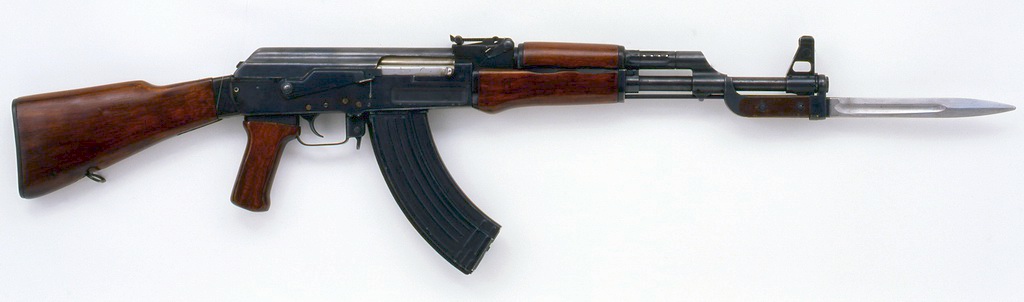
Kalashnikov АК-47 with bayonet attached (via Wikimedia)
Comments Off on Brilliant job on the Kalashnikov statue, Tovarisch, but what’s that weapon right there?
September 23, 2017
Roger Scruton – On ‘Harry Potter’
Conservatism Archive
Published on Sep 4, 2017
Comments Off on Roger Scruton – On ‘Harry Potter’
The Very First Troop Trials SMLE Rifles
Published on 4 Apr 2017
1902 A Pattern: Sold for $31,625 – http://jamesdjulia.com/item/1647-396/
1902 B Pattern: Sold for $31,625 – http://jamesdjulia.com/item/1648-396/One of the British lessons from the Boer War was that the distinction between infantry rifles and cavalry carbines was becoming obsolete. In 1902, they would initiate troop trials on a new short rifle pattern, intermediate in length between the old rifles and carbines, and intended to be issued universally to all troops. This would become the much-loved SMLE – Short, Magazine, Lee Enfield rifle – but first a few choices had to be made.
The 1902 trials rifles were a bit remarkable in being widely liked by the different troops that used them – only a few changes were to be made before formal adoption took place. However, there were two different patterns of the trials rifles, with different models of rear sight. The B pattern used a friction-locked range adjuster, which was found to migrate during firing (not good). The A pattern had a much more secure set of spring loaded locking notched, and would be chosen as the better of the two.
Despite a thousand of these rifles being produced for the trials, these two are the only known surviving examples. The remainder were converted to .22 caliber training guns around 1907, as their non-standard nature made them unsuitable for issue after the formal adoption of the SMLE MkI (later to be retroactively redesignated the Rifle No1 MkI.
Comments Off on The Very First Troop Trials SMLE Rifles
September 22, 2017
British Advance At Passchendaele I THE GREAT WAR Week 165
The Great War
Published on 21 Sep 2017Herbert Plumer had a cunning plan to crack the German defences at Passchendaele, he would “bite and hold” only small pieces of the German Hindenburg Line instead of aiming for the big breakthrough. It was still a costly tactic but it achieved results and the Germans under Ruprecht, Crown Prince of Bavaria, were worried.
Comments Off on British Advance At Passchendaele I THE GREAT WAR Week 165
September 20, 2017
Tiger Day VIII at The Tank Museum
The Mighty Jingles
Published on 19 Sep 2017It’s Tiger Day once again at The Tank Museum in deepest, darkest Bovington! This time I actually managed to get there and I wasn’t disappointed…
The Tank museum: http://www.tankmuseum.org/home
Comments Off on Tiger Day VIII at The Tank Museum
September 19, 2017
The Merchant of Death – Basil Zaharoff I WHO DID WHAT IN WW1?
The Great War
Published on 18 Sep 2017For arms dealers like Basil Zaharoff, the late 19th and early 20th century was a time of never ending business opportunities, the great European powers modernised their armies drastically and conflicts like the Russo-Japanese War or the Balkan Wars meant that weapons of all kinds were always in demand. But no other man knew how to influence and profit from the warring nations like “The Merchant of Death” – Basil Zaharoff.
Comments Off on The Merchant of Death – Basil Zaharoff I WHO DID WHAT IN WW1?
In praise of ancient Greece
In the latest Libertarian Enterprise, Sean Gabb explains why we owe so much today to ancient and classical Greek culture:
The Greeks gave us virtually all our philosophy, and the foundation of all our sciences. Their historians were the finest. Their poetry was second only to that of Homer – and it was they who put together all that we have of Homer, and Homer was himself an early Greek. They gave us ideals of beauty, the fading of which has always been a warning sign of decadence; and they gave us the technical means of recording that beauty. They had no examples to imitate. They did everything entirely by themselves. In a world that had always been at the midnight point of barbarism and superstition, they went off like a flashbulb; and everything good in our own world is part of their afterglow. Every renaissance and enlightenment we have had since then has begun with a rediscovery of the Ancient Greeks.
For the avoidance of doubt, I will not say that the Greeks were perfect. Though remarkable human beings – though the most remarkable human beings – they were still human beings, with all the vices and other failings that come with this. But, if you commit your life to staring into that flood of intense light that was Greece, you will not have lived in vain. And, though I do not despise translations, and would never discourage someone from approaching the Greeks only through translation, I will add that the light is most intense when seen directly, through the medium in which the Greeks themselves thought and spoke and wrote.
There are many reasons for learning Greek. A full discussion of them would amount to an advertisement for my services, and would take longer than I have available for this speech. But I will mention three.
The first is that Greek is inherently a beautiful language, and worth studying for itself alone. There is certainly a thrill to speaking it. Take this line from Homer:
τὸν δ’ ἀπαμειβόμενος προσέφη πολύμητις Ὀδυσσεύς
To him in answer spake the ever-resourceful OdysseusFor any number of reasons, my pronunciation is corrupt, and no Greek, ancient or modern, would think me other than a barbarian. But say these words, and you are making sounds that were first made when our own ancestors were tattooing their faces and smearing butter into their hair, before perhaps the building of Stonehenge, and when even Rome was no more than a collection of huts not far removed from the stone age.
The second main reason for learning Greek is that we know far less about the Greeks than we would like. So much has been carried away by the ravages of time. For the past six hundred years, a continuous line of scholars in Western Europe, and more recently in America, has laboured to gather and understand all that can be found about the Greeks. Every surviving Greek text has been pressed harder than olives for one of the supermarket chains to give up every possible meaning. Archaeology and all the natural sciences have been put to similar uses. In every century since the fourteenth, we have been able to say at its end that we knew more than at the beginning. But our knowledge remains imperfect. We look on the Greeks as we might on a landscape covered in mist. Here and there, the mist is absent or thinner, and we can be astonished by what we see; and we can hope to extrapolate from what we see to what remains covered.
If you come to the Greeks through translations, it is as if you are looking at that misty landscape though a sheet of coloured glass. Our word translate in Latin, and by extension in French, is traduco. This can mean translate. It can also mean dishonour, degrade or betray. Most translations, whether deliberately or by accident, do all these things to their original. Until very recently, English translators of the classics would labour to conceal the sexual tastes of the Ancients. Many translators labour still, though now to conceal the ancient taste for mood-altering substances. Even otherwise, a translation will not carry over the whole of the original meaning, but will impose on a reader the translator’s view of its meaning. Compare, if you like, my translation of Thucydides with other translations. The basic idea is the same: the choice of words and the balance and even the structure of the statement are different.
This brings me to my third main reason – and here I turn to Latin. If you take individual stories from Homer and put them into translation, they can sometimes work almost as well as they do in Greek. The story of Odysseus in the Cave of Polyphemus is wonderful in itself. So too the story of how Achilles tied the dead body of Hector to his chariot and dragged it about the walls of Troy, and how Priam came out to buy back the body. These stories thrilled me as a child, or moved me to tears. So they can in in any good retelling.
If we turn, however, to Vergil, any translation seems to involve a perceptible loss of impact. Last Easter, I taught some revision courses for A Level Classical Civilisation. One of the modules I covered was Vergil’s The Aeneid in several good English translations. Except for John Dryden’s version, this was my first experience of Vergil in translation. I have said that the translations used were good. They were made by men whose Latin was far better than mine. Compared with the original, however, they were disappointingly flat. Again and again, I would skim the text, looking for the equivalent of some line or phrase that had stamped itself into my memory. Again and again, I was disappointed by the mediocrity of what I made the students read aloud to me.
Comments Off on In praise of ancient Greece
How Millennials Worship The Establishment
Published on 3 Sep 2017
Brendan O’Neill http://brendanoneill.co.uk/
Comments Off on How Millennials Worship The Establishment
QotD: A Nice Cup of Tea
When I look through my own recipe for the perfect cup of tea, I find no fewer than eleven outstanding points. On perhaps two of them there would be pretty general agreement, but at least four others are acutely controversial. Here are my own eleven rules, every one of which I regard as golden:
First of all, one should use Indian or Ceylonese tea. China tea has virtues which are not to be despised nowadays — it is economical, and one can drink it without milk — but there is not much stimulation in it. One does not feel wiser, braver or more optimistic after drinking it. Anyone who has used that comforting phrase ‘a nice cup of tea’ invariably means Indian tea. Secondly, tea should be made in small quantities — that is, in a teapot. Tea out of an urn is always tasteless, while army tea, made in a cauldron, tastes of grease and whitewash. The teapot should be made of china or earthenware. Silver or Britanniaware teapots produce inferior tea and enamel pots are worse; though curiously enough a pewter teapot (a rarity nowadays) is not so bad. Thirdly, the pot should be warmed beforehand. This is better done by placing it on the hob than by the usual method of swilling it out with hot water. Fourthly, the tea should be strong. For a pot holding a quart, if you are going to fill it nearly to the brim, six heaped teaspoons would be about right. In a time of rationing, this is not an idea that can be realized on every day of the week, but I maintain that one strong cup of tea is better than twenty weak ones. All true tea lovers not only like their tea strong, but like it a little stronger with each year that passes — a fact which is recognized in the extra ration issued to old-age pensioners. Fifthly, the tea should be put straight into the pot. No strainers, muslin bags or other devices to imprison the tea. In some countries teapots are fitted with little dangling baskets under the spout to catch the stray leaves, which are supposed to be harmful. Actually one can swallow tea-leaves in considerable quantities without ill effect, and if the tea is not loose in the pot it never infuses properly. Sixthly, one should take the teapot to the kettle and not the other way about. The water should be actually boiling at the moment of impact, which means that one should keep it on the flame while one pours. Some people add that one should only use water that has been freshly brought to the boil, but I have never noticed that it makes any difference. Seventhly, after making the tea, one should stir it, or better, give the pot a good shake, afterwards allowing the leaves to settle. Eighthly, one should drink out of a good breakfast cup — that is, the cylindrical type of cup, not the flat, shallow type. The breakfast cup holds more, and with the other kind one’s tea is always half cold — before one has well started on it. Ninthly, one should pour the cream off the milk before using it for tea. Milk that is too creamy always gives tea a sickly taste. Tenthly, one should pour tea into the cup first. This is one of the most controversial points of all; indeed in every family in Britain there are probably two schools of thought on the subject. The milk-first school can bring forward some fairly strong arguments, but I maintain that my own argument is unanswerable. This is that, by putting the tea in first and stirring as one pours, one can exactly regulate the amount of milk whereas one is liable to put in too much milk if one does it the other way round.
Lastly, tea — unless one is drinking it in the Russian style — should be drunk WITHOUT SUGAR. I know very well that I am in a minority here. But still, how can you call yourself a true tea-lover if you destroy the flavour of your tea by putting sugar in it? It would be equally reasonable to put in pepper or salt. Tea is meant to be bitter, just as beer is meant to be bitter. If you sweeten it, you are no longer tasting the tea, you are merely tasting the sugar; you could make a very similar drink by dissolving sugar in plain hot water.
Some people would answer that they don’t like tea in itself, that they only drink it in order to be warmed and stimulated, and they need sugar to take the taste away. To those misguided people I would say: Try drinking tea without sugar for, say, a fortnight and it is very unlikely that you will ever want to ruin your tea by sweetening it again.
George Orwell, “A Nice Cup of Tea”, 1946.
Comments Off on QotD: A Nice Cup of Tea
September 18, 2017
Great Northern War – IV: Clash of Kings – Extra History
Extra Credits
Published on 16 Sep 2017Charles XII had gone to the Ukraine hoping for supplies and reinforcements, especially from the cossacks led by Ivan Mazeppa. But Peter the Great was hot on his trail, and had no intention of letting him off that easy.
Comments Off on Great Northern War – IV: Clash of Kings – Extra History
5 Medieval Dynasties That Still Exist Today
Published on 18 Aug 2017
The medieval period produced a lot of powerful dynasties which fought for influence and wealth in Europe. These families where once the most powerful people on the planet, but who and where are they today? Here are 5 Medieval dynasties that still exist today.
Comments Off on 5 Medieval Dynasties That Still Exist Today
QotD: …of (some of) the people, by (some of) the people…
… it IS possible to have a Res Publica – by the people – government, but only as long as it is by the ‘deserving’ few. The worst excesses of these proto-democracies can be undercut by an extreme limiting of the franchise – preferably to an effective oligarchy of voters narrow enough to be more self-interested in keeping control against the uneducated and undisciplined rule of the genuine majority, but this is hard to achieve. The Serene Republic of Venice achieved it for almost a thousand years by limiting the franchise to the great and the good families, and the early United States managed to hold it together for about 90 years by limiting it by racial profiling as well as property franchise… but note that both were, like all the Greek and Roman republics, slave based societies: so their claims to be genuine democracies are hopelessly confused to anyone with a consistent or comprehensible ideological viewpoint. In their case ‘the people’ simply meant, the deserving few that we will allow to vote.
This limiting of the franchise to the deserving actually continues in very successful – one could even say the ONLY successful – republics of the modern world. The ancient Greek and Roman franchises were honestly based on ‘those who contribute get a say’. Contribution a that time being buying the expensive armour yourself, putting in the training time, and taking the risk in the front lines of battle: to prove you put the good of the state and your fellow citizens above your own interests. (Though it is notable that their Republics almost instantly graduated to imperialistic and aggressive expansion, which pretty quickly made republican government unworkable, and inevitably led to such champions of democracy as Alexander the Great and Julius Caesar.)
The only long term successful modern Republic – Switzerland – still has compulsory military service; as does Israel, the only successful democracy ever established in the Middle East.
The other ways to limit the franchise – Like the first (1770’s), second (1860’s) and third (1880’s) American attempts of a franchise limited by race/property; or the first (1790’s), second (1820’s) or third (1860’s) French attempts at a property based franchise (which often saw as few as 20% of people with a vote): were actually much less successful than the equivalent slow Westminster style expansions of the franchise under a developing constitutional monarchy. (No Western Westminster system state has ever had a coup, let alone a civil war.) France has had 5 republics, 3 monarchies and 2 emperors in less than 200 years; and the United States has similarly run through several major reformations of their race/property franchise system since their – 600,000 dead – little debate about their system.
(The American comparison with France is amusing. The first American republic was smashed by the Confederate Defection; the second was an anti-democratic imposition on the South – with no voting rights for Confederate ‘activists’ – after the Confederacy War of Independence was crushed; the third ‘republic’ was when the white southerners were re-enfranchised and promptly disenfranchised the blacks who had been the only voters in the south for the previous 20 years – and whose elected black representatives had not been allowed in the front door or the dining rooms of Congress; the fourth republic… well you get the idea. The US system, with all its defections, jumps and retreats, simply can’t be called a continuously expanding development the way Westminster systems are.)
Nigel Davies, “The ‘Arab Spring’, 1848, and the 30 Years War/s”, Rethinking History, 2015-09-19.
Comments Off on QotD: …of (some of) the people, by (some of) the people…
September 17, 2017
Mercenaries – War of the Pacific – Russian WW1 Remembrance I OUT OF THE TRENCHES
The Great War
Published on 16 Sep 2017It’s time for another episodes from the chair of wisdom, this week we talk about mercenaries in the war, the influence of the War of the Pacific and Russian WW1 war graves.
Comments Off on Mercenaries – War of the Pacific – Russian WW1 Remembrance I OUT OF THE TRENCHES
But is it full of eels? If not, feel free to visit the British Hovercraft Museum
In their continuing series of “Geeks’ Guide to Britain”, The Register takes a trip to the former HMS Daedalus, a Fleet Air Arm seaplane training base that is now home to the Hovercraft Museum:
Did you know that the word “hovercraft” was once patented? And did you know that Great Britain is a world leader in the design and manufacture of the floaty transporters, and has been for half a century?
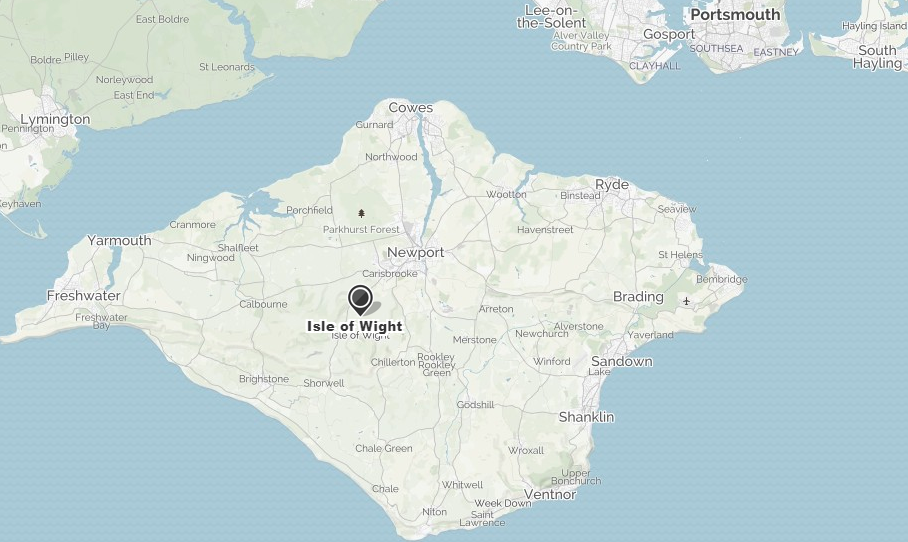
These and other surprising facts – including that some of the largest commercial hovercraft ever to be used in revenue service spent their lives shuttling booze cruisers back and forth across the English Channel – can be found at the Hovercraft Museum, at Lee-on-Solent in the south of England.
A century ago, what is now the site of the museum was known as HMS Daedalus and used as a Fleet Air Arm seaplane base. Back in the early days of aviation, and especially naval aviation, the station was at the forefront of naval and aviation technology alike. Seaplanes and skilled pilots were in great demand by the Royal Navy for anti-submarine patrols, and a new training base had to be set up to fill the service’s demand.
Thus came about the “temporary” Naval Seaplane Training School at Lee-on-Solent, with the new training school being based around a large local property, Westcliffe House. Slipways and hangars were duly erected, with the former leading down into the waters of the Solent itself; of the latter, one of the original J-class hangars, capable of being erected by just 15 men, survives to this day.
[…]
To truly appreciate the hovercraft, one should actually ride one of the things. This is easily done by a short journey along the coast from Lee-on-Solent to Britain’s only scheduled hovercraft service, which operates between Portsmouth and the Isle of Wight.
Operated by Hovertravel, whose sister company Griffon Hoverwork also builds the craft operated by the company, the service runs about every half an hour during the day, with more frequent services during the morning rush hour and a gradual winding-down into the evening.
Comments Off on But is it full of eels? If not, feel free to visit the British Hovercraft Museum


