
Sabaton History
Published on 21 Feb 2019In “Panzerkampf” on The Art of War album, Sabaton sings about the German offensive on the Kursk salient in the summer of 1943. We dive into the details of the Battle of Kursk and one of the biggest tank battles in world history, the Battle of Prokhorovka.
Support Sabaton History on Patreon: https://www.patreon.com/sabatonhistory
Hosted by: Indy Neidell
Written by: Markus Linke and Indy Neidell
Directed by: Astrid Deinhard and Wieke Kapteijns
Produced by: Pär Sundström, Astrid Deinhard and Spartacus Olsson
Creative Producer: Joram Appel
Executive Producers: Pär Sundström, Joakim Broden, Tomas Sunmo, Indy Neidell, Astrid Deinhard, and Spartacus Olsson
Maps by: Eastory
Edited by: Iryna Dulka
Sound Editing by: Marek KaminskiEastory YouTube Channel: https://www.youtube.com/channel/UCEly…
Archive by: Reuters/Screenocean https://www.screenocean.com
Music by Sabaton.
Photo of Bill Belichick: https://www.flickr.com/photos/2700360…
February 23, 2019
“Panzerkampf” – The Battle of Kursk – Sabaton History 003
February 22, 2019
Germany’s armed forces – from world class to laughing stock
Germany’s military has fallen on very hard times, and there’s so much wrong that it will be very difficult to fix even with all the goodwill in the world:

The German Navy training ship Gorch Fock (launched in 1958) under full sail (less the spanker topsail) in Kiel Fjord near the Laboe Naval Memorial in July 2006.
Photo by Felix Koenig via Wikimedia Commons.
Most Germans’ eyes glaze over at the mention of the Bundeswehr’s perpetual troubles, but an affair surrounding the Gorch Fock, the navy’s three-masted naval training ship, has caught their attention.
Launched in 1958 to school a new generation of West German naval recruits, the imposing 81-meter ship, which takes its name from a popular seafaring German author’s pseudonym, is more than just a training vessel; to many, the Gorch Fock — whose likeness was etched onto some Deutsche Mark bills — is a symbol of Germany’s postwar revival.
The ship’s iconic status is one reason why few objected when the Bundeswehr announced in 2015 that it needed a major overhaul. Until, that is, the price tag exploded from an initial projection of €10 million to €135 million, according to the latest estimate.
Bundeswehr officials claimed the depth of the ship’s troubles only became clear when it was in dry dock, but few are buying such explanations. “When the repairs cost more than a new ship, something is obviously amiss,” Bartels, the Bundeswehr’s parliamentary overseer, said in an interview.
The Gorch Fock “is a symptom of the Bundeswehr’s broader problems,” Bartels said. “Everything takes too long and costs too much money. It’s as if time and money were endless resources, and in the end no one takes responsibility.”
Almost overnight, the ship has gone from pride and joy to running gag. Last week, German weekly Der Spiegel pictured the Gorch Fock on its cover under the headline, “Ship of Fools.”
It’s an apt metaphor for Germany’s body politic as well. Given Germany’s size and economic might, Berlin’s attention to security is surprisingly shallow; citizens and politicians alike often seem oblivious to the challenges the country faces. Though Germany faces growing security threats from both Russia and China, one wouldn’t know it hanging around the German capital.
Much of the media now portrays the U.S. as a security threat on par with Russia. Public attitudes have moved in a similar direction. Security discussions are driven by a handful of like-minded think tank analysts who seem to spend most their time on Twitter, fretting about whether Trump will pull the plug on NATO.
More Germans believe China is a better partner for their country than the U.S., according to a survey published last week by Atlantik Brücke, a Berlin-based transatlantic lobbying group. About 80 percent of those surveyed consider U.S.-German relations to be “negative” or “very negative.”
H/T to Instapundit for the link.
February 21, 2019
Walther’s .45ACP MP (P38 Precursor)
Forgotten Weapons
Published on 21 Jan 2019http://www.patreon.com/ForgottenWeapons
Cool Forgotten Weapons merch! http://shop.bbtv.com/collections/forg…
During the process of developing the pistol which would become the German army’s P38, the Walther company was also interested in potential export contracts (like the one they actually did get from Sweden). One potential contract briefly explored was to the United States, and a few prototype MP pistols were made in .45 ACP caliber. These were larger in all dimensions than the standard MP, and shared the features of those other developmental guns (most distinctively the shrouded hammer and internal extractor). This pistol was almost certainly taken as a souvenir form the Walther plant in 1945 by an American GI. No records exist of any American trials of the guns, and it seems that the plan to offer them for sale was never followed through on, probably because of the (9mm) guns’ success in German military trials.
Contact:
Forgotten Weapons
PO Box 87647
Tucson, AZ 85754
February 20, 2019
History Summarized: Ancient Greece
Overly Sarcastic Productions
Published on 26 Jun 2017What’s that? Blue already did a video on the Athenian empire? Uh… well… um… LOOK, OVER THERE, A DISTRACTION!
For more Greek goodness, check out the following:
History Summarized: Alcibiades: https://youtu.be/kRLkjBUgB2o
History Summarized: Thebes: https://youtu.be/L1x9np5fys8
History Summarized: Athenian Empire: https://youtu.be/cNWDkFkcuP4This video was produced with assistance from the Boston University Undergraduate Research Opportunities Program.
PATREON: http://www.patreon.com/user?u=4664797
Find us on Twitter @OSPYouTube!
February 19, 2019
Irish Potato Famine – Isle of Blight – Extra History – #1
Extra Credits
Published on 16 Feb 2019The potato blight hit the United States first before it came to Ireland (and other countries). But what made it particularly devastating in Ireland was the factor of human influence — behind-the-scenes bureaucracy that prioritized economics over human lives.
The Irish Potato Famine ranks as one of Europe’s worst agricultural disasters — scattering a people to the winds.
Join us on Patreon! http://bit.ly/EHPatreon
February 18, 2019
Modernism as “architectural PTSD”
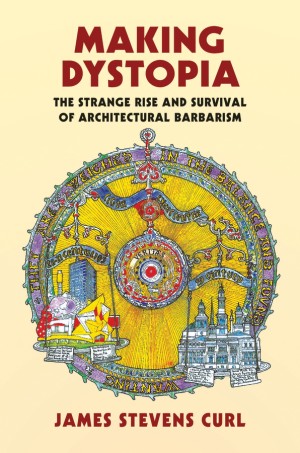
In Architect, the Journal of the American Institute of Architects, Witold Rybczynski reviews James Stevens Curl’s Making Dystopia: The Strange Rise and Survival of Architectural Barbarism:
The buildings in my neighborhood, Logan Square in downtown Philadelphia, fall roughly into two categories. There are those that offer visual pleasure, whether they are modest run-of-the-mill brick row houses or the rather grand Board of Education Building, an Art Deco-ish pile topped by busts of Sir Isaac Newton, Ben Franklin, and Alexander Graham Bell. “How nice that someone actually took the trouble,” I think as I walk by. And then there is the second category: utilitarian apartment slabs with unrelieved gridded façades, infill condo housing that looks as if it had been trucked in from the suburbs, a grim precast concrete retirement home that takes up a whole block. “I wish they hadn’t built that,” is my all too common reaction. The Board of Education Building dates from 1932. That’s the approximate cut-off date. Before the 1930s, the buildings are pretty good; after that, not so much. What happened?
The answer to that question is the subject of James Stevens Curl’s controversial new book, Making Dystopia: The Strange Rise and Survival of Architectural Barbarism (Oxford University Press, 2018). Curl is a British architectural historian, professor emeritus at De Montfort University in Leicester, and the author of more than 40 books, including the well-regarded The Victorian Celebration of Death (most recently updated in 2004) and The Oxford Dictionary of Architecture (1999). According to Curl, what happened was “architectural barbarism,” which is how he characterizes modern architecture. He does not mince words. Describing the emergence of the International Style in the 1920s, he writes: “It became apparent that something very strange had occurred: an aberration, something alien to the history of humanity, something destructive aesthetically and spiritually, something ugly and unpleasant, something that was inhumane and abnormal, yet something that was almost universally accepted in architectural circles, like some fundamentalist quasi-religious cult that demanded total allegiance, obedience, and subservience.”[…]
Buildings like PSFS were not the result of the First World War, of course, but it was the war that opened the door to radical change — whether it was political (Nazism), economic (the New Deal), or architectural (Modernism). This, rather than Curl’s theory of a quasi-religious cult, is a more convincing explanation for the “strange rise” of modern architecture. As the title of his book suggests, the author assumes malevolence on the part of Gropius, Le Corbusier, et al., but what if the International Style was instead the result of a sort of postwar architectural PTSD?
[…]
The ultimate failure of modern architecture is not that it was incapable of producing beautiful works of individual art. There have been plenty of those, pace Professor Curl. The real drawback is that while the Modern Movement effectively suppressed an architectural language that had taken hundreds of years to evolve, it proved incapable of developing a successful substitute, the weak-kneed antics of Postmodernism notwithstanding. The strength of pre-modern architecture was that it provided a rich variety of modes of expression. It permitted complicated things to be said in complicated ways, and simpler things in simpler ways, analogous to the spoken language, which can be used to write drama and poetry or instruction booklets.
Mis-measuring inequality
Tim Worstall explains why any protest in a western country about “inequality” is probably bogus from the get-go:
Their opening line, their justification:
We live in an age of astonishing inequality.
No, we don’t. We live in an age of astonishing and increasing equality. Thus any set of policies, any series of analysis, that flows from this misunderstanding of reality is going to be wrong.
And that’s all we really need to know about it all.
The problem is that their measurements – the ones they’re paying attention to – of inequality just aren’t the useful ones, the ones we’re interested in. They’re usually pre-tax, pre-benefits. They’re always pre-government supplied services. And they never, ever, look at the thing we’re actually interested in, inequality of living standards.
To give an example, the Trades Union Congress did a calculation a few years back looking at top 10% households in the UK and bottom 10%. They took the average of each decile – so, the average of the top 10% households, the average of the bottom. Then they looked at the ratio between them.
The top 10% gain some 12 times the market income of the bottom 10%. Now take account of taxes and benefits. Then add in the effects of the NHS, free education for all children and so on. Government services. We end up with a ratio of 4 to 1. Life as it’s actually lived gives the top 10% four times the final income – income being defined by consumption of course – of the bottom 10%.
That’s not a high level of inequality.
Forgotten history of India’s Thermopylae
The History Guy: History Deserves to Be Remembered
Published on 20 Jun 2017The History Guy tells the forgotten history of the World War II battle of Imphal also known as India’s Thermopylae.
The History Guy uses images that are in the Public Domain. As photographs of actual events are often not available, I will sometimes use photographs of similar events or objects for illustration.
Patreon: https://www.patreon.com/TheHistoryGuy
The History Guy: Five Minutes of History is the place to find short snippets of forgotten history from five to fifteen minutes long. If you like history too, this is the channel for you.
The episode is intended for educational purposes. All events are presented in historical context.
February 17, 2019
Finland’s Desperate Fight – WW2 – 025 – February 16 1940
World War Two
Published on 16 Feb 2019After more than a week of preliminary bombardments and attacks, the Red Army finally attacks the Finnish defensive positions on the Karelian Isthmus en masse. They throw thousands of troops at the Finns at the entire width of their lines, even exceeding them. The Finns defend the best as they can, but their winning streak seems to come to an end.
Join us on Patreon: https://www.patreon.com/TimeGhostHistory
Or join The TimeGhost Army directly at: https://timeghost.tvFollow WW2 day by day on Instagram @World_war_two_realtime https://www.instagram.com/world_war_t…
Between 2 Wars: https://www.youtube.com/playlist?list…
Source list: http://bit.ly/WW2sourcesWritten and Hosted by: Indy Neidell
Produced and Directed by: Spartacus Olsson and Astrid Deinhard
Executive Producers: Bodo Rittenauer, Astrid Deinhard, Indy Neidell, Spartacus Olsson
Creative Producer: Joram Appel
Research by: Indy Neidell
Edited by: Iryna Dulka
Map animations: EastoryColorizations by Norman Stewart.
Thumbnail Colorization by Julius Jääskeläinen: https://www.flickr.com/photos/juliusjaa/Photos of the Winter War are mostly from the Finnish Wartime Photograph Archive (SA-Kuva).
Eastory’s channel: https://www.youtube.com/channel/UCEly…
Archive by Screenocean/Reuters https://www.screenocean.comA TimeGhost chronological documentary produced by OnLion Entertainment GmbH.
From the comments:
World War Two
2 days agoMajor developments in the Winter War this week! The thumbnail (colorized by JuliusJaa – https://www.flickr.com/photos/juliusjaa/) depicts Aarne Juutilainen or the “The Terror of Morocco”. This particular photo was taken earlier in December 1939 during the battle of Kollaa, where he acquired a hero status. He owed his name to his service in the French Foreign Legion in Morocco, where he served from 1930 to 1935. By 1940, he commanded his own ‘Moroccan company’, a unit made out of decorated soldiers known for their superior skills.
We sincerely hope that you enjoy the videos we put out for you all! As Indy notes at the end of the video, especially important for today’s episode (there are 14 maps in this) is Eastory, who researches and animates our maps for us. Check out his channel as well! It’s really good -> https://www.youtube.com/channel/UCElybFZ60Hk1NSjgCf7I2sg
Please do consider supporting us on Patreon. That allows us to keep working with awesome people like Eastory and will help us create even more content for you all to enjoy.
Cheers,
Joram
Tank Chats #42 Elefant | The Tank Museum
The Tank Museum
Published on 18 Aug 2017Originally known as the Ferdinand, then later renamed Elefant, 90 of this heavily armed and armoured vehicle were built, seeing service in the Soviet Union, Italy and Germany.
Although deployed as a tank destroyer, the Elefant had its origins in Ferdinand Porsche’s attempt to build what became the Tiger tank.
This particular Elefant is part of The Tiger Collection at The Tank Museum, Bovington, on loan from the US Army Ordnance Training and Heritage Center, VA.
Support the work of The Tank Museum on Patreon: ► https://www.patreon.com/tankmuseum
Or donate http://tankmuseum.org/support-us/donateTwitter: ► https://twitter.com/TankMuseum
Tiger Tank Blog: ► http://blog.tiger-tank.com/
Tank 100 First World War Centenary Blog: ► http://tank100.com/ #tankmuseum #tanks #tigertank tiger tanks tank chat
February 15, 2019
“Blood of Bannockburn” – Sabaton History 002
Sabaton History
Published on 14 Feb 2019Sabaton’s song “Blood of Bannockburn” is about the First War of Scottish Independence and one of its key figures, Robert the Bruce. He fought the English King Edward who invaded Scotland when Bruce’s revolutionary force forced all Scottish nobles to join his cause or lose their lands. Edward moved on Bruce’s army while they were besieging Stirling Castle, but his plans to overwhelm the Scottish was opposed by Bruce.
Support Sabaton History on Patreon: https://www.patreon.com/sabatonhistory
Watch the official lyric video for Blood of Bannockburn here: https://www.youtube.com/watch?v=Xp-Rk…
Hosted by: Indy Neidell
Written by: Markus Linke and Indy Neidell
Directed by: Astrid Deinhard and Wieke Kapteijns
Produced by: Pär Sundström, Astrid Deinhard and Spartacus Olsson
Creative Producer: Joram Appel
Executive Producers: Pär Sundström, Joakim Broden, Tomas Sunmo, Indy Neidell, Astrid Deinhard, and Spartacus Olsson
Maps by: Eastory
Edited by: Wieke Kapteijns
Sound Editing by: Marek KaminskiEastory YouTube Channel: https://www.youtube.com/channel/UCEly…
Archive by: Reuters/Screenocean https://www.screenocean.com
Music by Sabaton‘Photo young Sabaton’ ©Dalarnas museum, foto: Susanne Nyhlén – The National Portrait Gallery https://www.npg.org.uk
An OnLion Entertainment GmbH and Raging Beaver Publishing AB co-Production.
© Raging Beaver Publishing AB, 2019 – all rights reserved.
From the comments:
Sabaton History
1 day ago (edited)Hey!! We’re leaving the modern times (which instantly that answers a frequently asked question about if we’re just sticking to WW2) and will enter the Medieval Era. The 3d animated maps are made and researched by Eastory (check his channel here: https://www.youtube.com/channel/UCElybFZ60Hk1NSjgCf7I2sg). As the battle took place long ago, there is little documentation about it and there are several possible reconstructions of the events of the battle available. We had to prefer one version and proponents of others may criticise it. The most risky decision was to add the effects of land rise and make the Forth river larger as a result. This is absent from most of reconstructions, but Eastory studied some old maps and according to them the sea level in 15th and 16th centuries was far higher in the region.
Enjoy and STAY AWESOME! 🤘🤘
European-style passenger railways don’t scale to North American distances
At PJ Media, Charlie Martin does a good job of showing why the fast, efficient passenger railways of Europe are not replicated in the US and Canada:
… the usual story is something like “the United States should have a world-class passenger train system, with high-speed rail like the French and Japanese have.” @AOC’s official-no-fake-no-just-a-draft-Republican-conspiracy-theory-why-are-you-all-being-mean? Green New Deal FAQ wanted one so good that air travel would become “unnecessary.”
Sounds great, and I love the covert “MAGA” aspect of the pitch, but it has one great big, pretty much insurmountable problem: America.
Not the country, the geography. People living on the coasts just don’t realize how big this country is. I was discussing it on Twitter with a Swiss who lives in Zürich who was telling me how great the Europeans trains are — and they really are comfortable, pretty fast, have great scenery to look at — but, well, let’s compare Colorado and Switzerland. Similar climate, mountains, pretty scenery, cranky natives who are suspicious of newcomers. But let’s go to the maps:
Colorado is 6.5 times as big, has 60 percent of the population — and, it happens, about two-thirds of the gross “national” product per capita.
Compare the lower 48 states with all of Western Europe:
The truth is, we’re in flyover country out here. The coastal clerisy don’t realize that on their five-hour flight from LAX to LGA they’re traveling 2,500 miles. Now, back in the days of the Super Chief and the 20th Century Limited, you could make that trip by train in only 76 hours, not counting changing trains in Chicago. (It takes longer on Amtrak.)
So, let’s say we could get high-speed trains for the whole trip that averaged 200 miles per hour, and could travel as the crow flies: that’s 12.5 hours.
Except of course you couldn’t because the crow is flying over some of the highest mountains in the country. You’re going to need rights of way, and you can’t use the rights of way that exist because they’re not suited for that kind of speed and they’re pretty full anyway. Also, it wouldn’t do to interrupt the existing freight lines, which actually are about as good as anywhere in the world.


Introducing the Baroque Theorbo
Orchestra of the Age of Enlightenment
Published on Jan 11, 2019“People complain a lot about the space that I take up”.
Lutenist Elizabeth Kenny explains how and why the theorbo was developed in the 17th century, what it was used for, and what it’s like to carry it around on the train.
Website: http://oae.co.uk
Twitter: https://twitter.com/theoae
February 14, 2019
Macedonian Wars | 3 Minute History
Jabzy
Published on 28 Mar 2015Roman-Macedonian Wars
I will gradually continue to make episodes on Rome somewhat chronologically.


