
Extra Credits
Published on 6 Apr 2019Mehmed IV wanted to live up to, and even surpass, the legacy of his forefather Mehmed II, who had secured the Ottomans’ inheritance to the Roman Empire through his conquest of Constantinople. So the current Mehmed decided to target Vienna — but Emperor Leopold dismissed these threats…
Over a hundred thousand Ottoman troops are heading for Vienna. Only 15,000 men defend the walls. They have only six days to prepare the city. How long can they hold?
Join us on Patreon! http://bit.ly/EHPatreon
April 9, 2019
Siege of Vienna – Opening Bombardment – Extra History – #1
Comments Off on Siege of Vienna – Opening Bombardment – Extra History – #1
Blue’s Dumb History Tales
Overly Sarcastic Productions
Published on 8 Mar 2019Please check out That Works for the best blacksmithing on YouTube: https://goo.gl/vXsuFt
What do you get when you cross a month that has 5 Fridays with a historian who can’t do math? This nonsense, apparently.
PATREON: https://www.patreon.com/OSP
Comments Off on Blue’s Dumb History Tales
April 8, 2019
April 7, 2019
Germans and British make their way to the North – WW2 – 032 – April 6 1940
World War Two
Published on 6 Apr 2019While China gets a new government, or at least in the eyes of Japan, the British are trying to cope with the rationing of meat and dairy products by trying out some new recipes. More importantly, Germany seems to be very serious about invading Norway. However, the British also plan to move closer to Norway.
Join us on Patreon: https://www.patreon.com/TimeGhostHistory
Or join The TimeGhost Army directly at: https://timeghost.tvFollow WW2 day by day on Instagram @World_war_two_realtime https://www.instagram.com/world_war_t…
Join our Discord Server: https://discord.gg/D6D2aYN.
Between 2 Wars: https://www.youtube.com/playlist?list…
Source list: http://bit.ly/WW2sourcesWritten and Hosted by: Indy Neidell
Produced and Directed by: Spartacus Olsson and Astrid Deinhard
Executive Producers: Bodo Rittenauer, Astrid Deinhard, Indy Neidell, Spartacus Olsson
Creative Producer: Joram Appel
Research by: Indy Neidell
Edited by: Iryna Dulka
Map animations: EastoryColorisations by Norman Stewart
Eastory’s channel: https://www.youtube.com/channel/UCEly…
Archive by Screenocean/Reuters https://www.screenocean.comA TimeGhost chronological documentary produced by OnLion Entertainment GmbH.
From the comments:
World War Two
2 days ago (edited)
The war seems to be heating up. As both the Germans and the Allies move towards Norway, the Soviets commit a big war crime in Katyn. We have made a ‘War Against Humanity’ episode in which we explain how Stalin and Beria ordered the mass murder. You can see that right here: https://www.youtube.com/watch?v=gd5YhhNcC44 And a friendly reminder for the existence of our own discord server: https://discord.gg/D6D2aYN.Cheers!
Comments Off on Germans and British make their way to the North – WW2 – 032 – April 6 1940
April 6, 2019
“The Prime Minister has repaid my loyalty with betrayal”
Despite the full applicability of the headline to Canadian politics, this isn’t about the Dauphin’s betrayal of cabinet ministers or the Canadian people, it’s actually Matt Ridley talking about Prime Minister Theresa May:
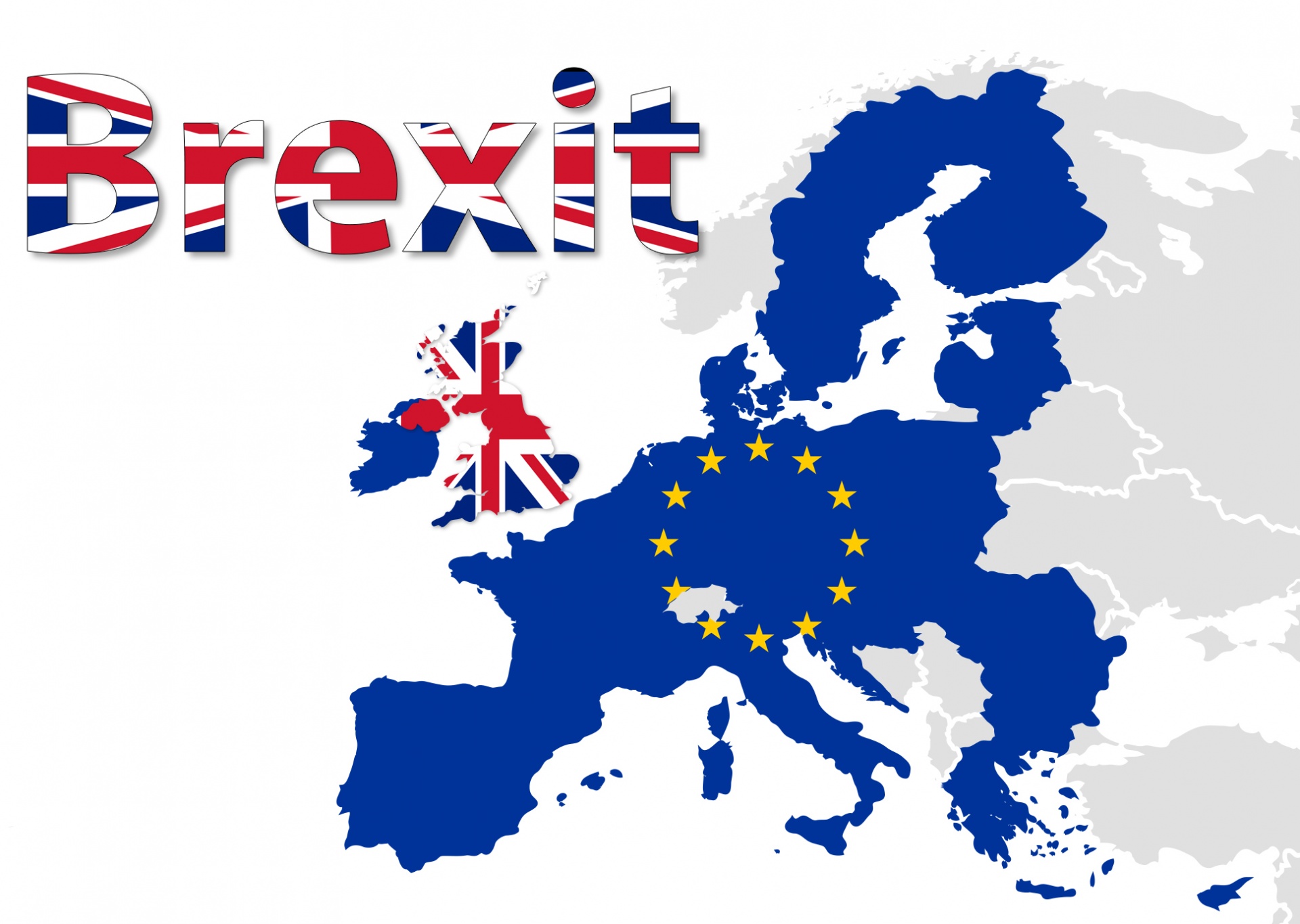
The Prime Minister has ignored the views of the majority of her Cabinet and ruled out No Deal. The reason, we are told, is that No Deal might lead to the re-imposition of direct rule over Northern Ireland, and might lead to a second Scottish independence referendum.
That either of these considerations should outweigh the independence of the United Kingdom from an increasingly decrepit but increasingly autocratic empire is bizarre. If No Deal causes a second referendum in Scotland – we were told that the vote itself would cause that too, remember, but it did not – then we will win that too.
But more bizarre is that these worries have existed all along. If the Prime Minister thinks the risk of direct rule in Northern Ireland (which is happening in practice anyway) trumps all other considerations, and rules out No Deal, then why did she not say so more than two years ago or at any time since? Instead, she said 108 times that we would leave the EU on 29th March, whatever happens; 50 times that she would not extend that date; and 32 times that No Deal is better than a bad deal. Not once did she say it was impossible.
[…]
Mrs May should have ruled out No Deal at the start of the negotiations, if that is what she thought, or she should have meant “No Deal is better than a bad deal” when she said it. As it is, the combination of threatening No Deal until the moment when it might actually matter in the negotiations, then dropping the threat on the feeblest of latest excuses, is about as foolish as one can imagine. And now rushing off to hand the initiative to an apologist for totalitarians, anti-Semites and terrorists instead. Thanks.
The Prime Minister and her allies are now chanting that it is all the fault of the European Research Group for rejecting her deal and are saying they have no alternative than the dismal choices of supporting her deal or no Brexit, as if amnesiac about the third option: their recent promises to leave with No Deal if necessary. Yet the truth is that ever since the debacle at Chequers in July, when everybody from half the Cabinet to the Democratic Unionists to the media to the people themselves told her quite clearly that she would never get the Chequers plan through Parliament, she has been the one at fault.
Comments Off on “The Prime Minister has repaid my loyalty with betrayal”
QotD: Truth and propaganda in the Spanish Civil War
The struggle for power between the Spanish Republican parties is an unhappy, far-off thing which I have no wish to revive at this date. I only mention it in order to say: believe nothing, or next to nothing, of what you read about internal affairs on the Government side. It is all, from whatever source, party propaganda — that is to say, lies. The broad truth about the war is simple enough. The Spanish bourgeoisie saw their chance of crushing the labour movement, and took it, aided by the Nazis and by the forces of reaction all over the world. It is doubtful whether more than that will ever be established.
I remember saying once to Arthur Koestler, ‘History stopped in 1936’, at which he nodded in immediate understanding. We were both thinking of totalitarianism in general, but more particularly of the Spanish civil war. Early in life I have noticed that no event is ever correctly reported in a newspaper, but in Spain, for the first time, I saw newspaper reports which did not bear any relation to the facts, not even the relationship which is implied in an ordinary lie. I saw great battles reported where there had been no fighting, and complete silence where hundreds of men had been killed. I saw troops who had fought bravely denounced as cowards and traitors, and others who had never seen a shot fired hailed as the heroes of imaginary victories; and I saw newspapers in London retailing these lies and eager intellectuals building emotional superstructures over events that had never happened. I saw, in fact, history being written not in terms of what happened but of what ought to have happened according to various ‘party lines’. Yet in a way, horrible as all this was, it was unimportant. It concerned secondary issues — namely, the struggle for power between the Comintern and the Spanish left-wing parties, and the efforts of the Russian Government to prevent revolution in Spain. But the broad picture of the war which the Spanish Government presented to the world was not untruthful. The main issues were what it said they were. But as for the Fascists and their backers, how could they come even as near to the truth as that? How could they possibly mention their real aims? Their version of the war was pure fantasy, and in the circumstances it could not have been otherwise.
The only propaganda line open to the Nazis and Fascists was to represent themselves as Christian patriots saving Spain from a Russian dictatorship. This involved pretending that life in Government Spain was just one long massacre (vide the Catholic Herald or the Daily Mail — but these were child’s play compared with the Continental Fascist press), and it involved immensely exaggerating the scale of Russian intervention. Out of the huge pyramid of lies which the Catholic and reactionary press all over the world built up, let me take just one point — the presence in Spain of a Russian army. Devout Franco partisans all believed in this; estimates of its strength went as high as half a million. Now, there was no Russian army in Spain. There may have been a handful of airmen and other technicians, a few hundred at the most, but an army there was not. Some thousands of foreigners who fought in Spain, not to mention millions of Spaniards, were witnesses of this. Well, their testimony made no impression at all upon the Franco propagandists, not one of whom had set foot in Government Spain. Simultaneously these people refused utterly to admit the fact of German or Italian intervention at the same time as the Germany and Italian press were openly boasting about the exploits of their’ legionaries’. I have chosen to mention only one point, but in fact the whole of Fascist propaganda about the war was on this level.
This kind of thing is frightening to me, because it often gives me the feeling that the very concept of objective truth is fading out of the world. After all, the chances are that those lies, or at any rate similar lies, will pass into history. How will the history of the Spanish war be written? If Franco remains in power his nominees will write the history books, and (to stick to my chosen point) that Russian army which never existed will become historical fact, and schoolchildren will learn about it generations hence. But suppose Fascism is finally defeated and some kind of democratic government restored in Spain in the fairly near future; even then, how is the history of the war to be written? What kind of records will Franco have left behind him? Suppose even that the records kept on the Government side are recoverable — even so, how is a true history of the war to be written? For, as I have pointed out already, the Government, also dealt extensively in lies. From the anti-Fascist angle one could write a broadly truthful history of the war, but it would be a partisan history, unreliable on every minor point. Yet, after all, some kind of history will be written, and after those who actually remember the war are dead, it will be universally accepted. So for all practical purposes the lie will have become truth.
George Orwell, “Looking back on the Spanish War”, New Road, 1943 (republished in England, Your England and Other Essays, 1953).
Comments Off on QotD: Truth and propaganda in the Spanish Civil War
April 5, 2019
The Carolean’s Prayer – Soldiers of the Swedish Kings – Sabaton History 009
Sabaton History
Published on 4 Apr 2019The Swedish Kings had to rely on the quality of their armies, often facing foes that had superior numbers. A special soldier class was created. Admired in Sweden and feared on the battlefield, the Caroleans were the secret weapon of the Swedish army. The Sabaton song “The Carolean’s Prayer” is about these remarkable soldiers and their heroic status.
Check out the trailer for Sabaton’s new album The Great War right here: https://www.youtube.com/watch?v=HCZP1…
Support Sabaton History on Patreon (and possibly get a special edition of The Great War): https://www.patreon.com/sabatonhistory
Listen to Sabaton on Spotify: http://smarturl.it/SabatonSpotify
Official Sabaton Merchandise Shop: http://bit.ly/SabatonOfficialShopHosted by: Indy Neidell
Written by: Markus Linke and Indy Neidell
Directed by: Astrid Deinhard and Wieke Kapteijns
Produced by: Pär Sundström, Astrid Deinhard and Spartacus Olsson
Creative Producer: Joram Appel
Executive Producers: Pär Sundström, Joakim Broden, Tomas Sunmo, Indy Neidell, Astrid Deinhard, and Spartacus Olsson
Maps by: Eastory
Edited by: Iryna Dulka
Sound Editing by: Marek KaminskiEastory YouTube Channel: https://www.youtube.com/channel/UCEly…
Archive by: Reuters/Screenocean https://www.screenocean.com
Music by Sabaton.An OnLion Entertainment GmbH and Raging Beaver Publishing AB co-Production.
© Raging Beaver Publishing AB, 2019 – all rights reserved.
Comments Off on The Carolean’s Prayer – Soldiers of the Swedish Kings – Sabaton History 009
The Brexit trainwreck is “revealing to the British public the extent of its political class’s incompetence”
Theodore Dalrymple in City Journal on the scale of political tomfoolery going on in the Brexit clusterfutz:
The imbroglio over Brexit has at least had the merit of revealing to the British public the extent of its political class’s incompetence. If it is accepted that people get the leadership that they deserve, however, thoughts unflattering to self-esteem ought to occur to the British population.
Theresa May did not emerge from a social vacuum. She is typical of the class that has gradually attained power in Britain, from the lowest levels of the administration to the highest: unoriginal, vacillating, humorless, prey to the latest bad ideas, intellectually mediocre, believing in nothing very much, mistaking obstinacy for strength, timid but nevertheless avid for power. Thousands of minor Mays populate our institutions, as thousands of minor Blairs did before them.
Avidity for power is not the same as leadership, and Brexit required leadership. There was none to be had, however, from the political class. From the very first, it overwhelmingly opposed Brexit — for some, the eventual prospect of a tax-free, expense-jewelled job in Brussels was deeply alluring — but found itself in a dilemma, since it could not openly deny the majority’s expressed wish. Many Members of Parliament sat for constituencies in which a solid majority had voted for Brexit. They feared that they would not win their next election.
The opposition Labour Party was as divided as the Conservatives. Irrespective of what its MPs actually believed about Brexit—its leader was, until recently, ardent for leaving the European Union, which he believed to be a capitalists’ club, changing his mind for reasons that he has so far not condescended to disclose — its main concern was to force an election that it believed it could win, a victory that would soon make Brexit seem like a minor episode on the road to ruin. The majority of the Labour MPs wanted first to bring about the downfall of a Conservative government and second to prevent Britain leaving the European Union without an agreement — what might be called the leaving-the-Union-without-leaving option. But they wanted the first more than they wanted the second, so under no circumstances could they accede to anything that Prime Minister May negotiated. Because of her tiny majority in Parliament, the hard-line Brexit members on her own side who want Britain to leave without a deal, and the refusal of her coalition partner, the Democratic Unionist Party, to back her, May needs the support of a considerable proportion of Labour MPs — which, so far, she has not received.
But the House of Commons as a whole, including the Conservatives, deprived May of leverage with which to renegotiate, because it voted that it would not accept leaving the Union without a deal. This deprived the European Union of any reason to renegotiate anything: it was a preemptive surrender to the demands of the E.U. that makes Neville Chamberlain look like a hard-bitten poker champion.
Comments Off on The Brexit trainwreck is “revealing to the British public the extent of its political class’s incompetence”
If Shakespearean Insults Were Used Today – Anglophenia Ep 13
Anglophenia
Published on 24 Sep 2014Siobhan Thompson reacts to everyday office frustrations with some barbs from the Bard. Check out the Shakespeare plays from which the insults originated here: http://www.bbcamerica.com/anglophenia…
Comments Off on If Shakespearean Insults Were Used Today – Anglophenia Ep 13
April 4, 2019
George Orwell BBC Arena Part 1 – Such, Such Were the Joys
Alan Ruben
Published on 4 Mar 2013Part 1 of an in-depth 5 part series about George Orwell made in 1983.
Comments Off on George Orwell BBC Arena Part 1 – Such, Such Were the Joys
April 3, 2019
Greater Poland Uprising – Book Picks – Veteran Care I BEYOND THE GREAT WAR
The Great War
Published on 2 Apr 2019It’s time for another episode of Beyond The Great War where we answer questions from the community. This time we take a look at the Greater Poland Uprising and the situation of Poland in early 1919, Jesse recommends a few of his favourite history books and we also talk about how veterans were treated after the 1918 armistice.
» SUPPORT THE CHANNEL
Patreon: https://www.patreon.com/thegreatwar
Merchandise: https://shop.spreadshirt.de/thegreatwar/» SOURCES
Boysen, Jens. “Polish-German Border Conflict”, in 1914-1918 online. International Encyclopedia of the First World War. https://encyclopedia.1914-1918-online…Davies, Norman. White Eagle, Red Star. The Polish-Soviet War 1919-1920 and the ‘Miracle on the Vistula’ (London: Pimlico, 2003 [1972]).
Gattrell, Peter. Russia’s First World War (Pearson, 2005).
Gerwarth, Robert. The Vanquished. Why the First World War Failed to End, 1917-1923 (Penguin, 2017).
Horne, John. “The Living,” in Jay Winter, ed. The Cambridge History of the First World War, vol. 3: Civil Society (Cambridge: Cambridge University Press, 2014): 592-617.
Leonhard, Jörn. Der überforderte Frieden. Versailles und die Welt 1918-1923 (CH Beck, 2018).
Pawlowsky, Verena/Wendelin, Harald. “Government Care of War Widows and Disabled Veterans after World War I,” in: Contemporary Austrian Studies, XIX: From Empire to Republic: Post-World War I Austria, eds. Bischof, Günter/Plasser, Fritz/Berger, Peter (2010): 171-191
Prost, Antoine. “Les anciens combattants”, in Stéphane Audoin-Rouzeau and Jean-Jacques Becker, eds. Encyclopédie de la Grande guerre 1914-1918 (Paris: Bayard, 2013): 1025-1036.
Snyder, Timothy. The Reconstruction of Nations. Poland, Ukraine, Lithuania, Belarus, 1569-1999 (Yale University Press, 2003).
Comments Off on Greater Poland Uprising – Book Picks – Veteran Care I BEYOND THE GREAT WAR
Tank Chats #45 Major General Sir Percy Hobart | The Funnies | The Tank Museum
The Tank Museum
Published on 10 Feb 2018Welcome to the first in the Tank Chat Funnies mini-series!
In Tank Chats #45 David begins a series on one of his personal interests, the Funnies of the 79th Armoured Division. However the 79th and its Funnies would have been nothing without its inspirational leader Major General Percy Hobart, so David starts with the man and we promise will follow very shortly with his machines.
Support the work of The Tank Museum on Patreon: ► https://www.patreon.com/tankmuseum
Or donate http://tankmuseum.org/support-us/donateVisit The Tank Museum SHOP: ►https://tankmuseumshop.org/
Press the little bell above to enable NOTIFICATIONS so you don’t miss the latest Tank Museum videos.
Twitter: ► https://twitter.com/TankMuseum
Tiger Tank Blog: ► http://blog.tiger-tank.com/
Tank 100 First World War Centenary Blog: ► http://tank100.com/ #tankmuseum #tanks
Comments Off on Tank Chats #45 Major General Sir Percy Hobart | The Funnies | The Tank Museum


