Quotulatiousness

December 4, 2019

The Twelve Labors of Hercules – Rules Lawyering – Extra Mythology – #2

Filed under: Europe, Greece, History, Humour — Tags: — Nicholas @ 04:00

Extra Credits
Published 2 Dec 2019

Hercules (or Herakles in the Greek) needs to finish the last five tasks on the list before he will have properly atoned for murdering his family, but it isn’t going to be so easy. The king, seeing that Hercules has completed the tasks declares that two of them are invalid since Hercules got outside help. And I guess that’s technically cheating? More sidequests abound and we meet a familiar face from an older Extra Mythology!

The flesh-eating horses might be the worst monsters we’ve had on Extra Mythology. Something about those eyes. D:

What Life Was Like for the Home Guard During WW2

Filed under: Britain, History, Military, WW2 — Tags: , , — Nicholas @ 02:00

Forces TV
Published 8 May 2014

Scrapbooks revealing what the Home Guard was really like during World War Two have been published online.

The collection of maps, photographs and secret documents were compiled by Lieutenant Colonel Sir Morgan Crofton.

Now they are available for all to see thanks to work by the New Forest Park Authority.

The scrapbooks can be viewed online here – http://www.newforestww2.org

QotD: French anti-Americanism

Filed under: Books, France, Quotations, USA — Tags: — Nicholas @ 01:00

The list of French anti-American writers is long: it is its own unique genre, one found nowhere else in such abundance. Already, in 1793, Talleyrand, in exile before he would become French foreign minister, wrote in Philadelphia that Americans possessed “neither conversation nor cuisine.” He also famously observed, “These Americans, they have 32 religions but only one dish, roast beef with potatoes.” The genealogy of contemporary anti-Americanism is traceable to the beginning of the nineteenth century, to a Catholic France arrayed against a Protestant America, and then to the twentieth century, when a socialist France confronted a capitalist America; always just beneath the surface is the idea of a civilized France set against a supposedly uncivilized America. French anti-American literature, which Jean-François Revel analyzed perceptively in Anti-Americanism, is faithful to an eternal code: our civilization versus their lack of culture; our spirituality versus their brutality. Beneath these changing ideological masks, we might perhaps discern a rivalry between two nations that claim to be “universalist.” Americans have seized the torch of human rights from France, or at least the claim to embody them.

Guy Sorman, “French Anti-Americanism, Rebooted”, City Journal, 2017-11-27.

December 3, 2019

The Hungarian Romanian War & The Downfall of the Hungarian Soviet Republic I THE GREAT WAR 1919

Filed under: Europe, History, Military — Tags: , , , , — Nicholas @ 06:00

The Great War
Published 2 Dec 2019

SPONSOR: Get 20% off of your first order at Mack Wheldon. Go to https://mackwheldon.com and use promocode “greatwar” at checkout.

In early 1919 Hungary was one of the European territories that saw a communist revolution. Bela Kun and his supporters established the Hungarian Soviet Republic while the country was in great turmoil and fighting against the Romanians, the Czechoslovaks, the Serbs and within Hungary itself.

» SUPPORT THE CHANNEL
Patreon: https://www.patreon.com/thegreatwar
Merchandise: https://shop.spreadshirt.de/thegreatwar/

» SOURCES
Balogh, Eva S. “István Friedrich and the Hungarian Coup d’État of 1919: A Reevaluation” in Slavic Review, 1 June 1976, Vol.35(2): 269-286.

Borodziej, Wlodzimierz and Maciej Gorny. Der Vergessene Weltkrieg. Europas Osten 1912-1923. Band II – Nationen 1917-1923 (wbg Theiss, 2018).

Gosztony, Peter. “The Collapse of the Hungarian Red Army,” in Pastor, Peter, ed. Revolutions and Interventions in Hungary and its Neighbor States, 1918-1919 (New York: Columbia University Press, 1988): 69-80.

Hetes, Tibor. “The Northern Campaign of the Hungarian Red Army,” in Pastor, Peter, ed. Revolutions and Interventions in Hungary and its Neighbor States, 1918-1919 (New York: Columbia University Press, 1988): 55-60.

Horthy, Admiral Nicholas. Admiral Nicholas Horthy Memoirs. Simon Publications LLC, (2000).

Macmillan, Margaret. The Peacemakers: Six Months that Changed the World (London: John Murray, 2001).

Nouzille, Jean. “The July Campaign of the Hungarian Red Army as seen by France,” in Pastor, Peter, ed. Revolutions and Interventions in Hungary and its Neighbor States, 1918-1919 (New York: Columbia University Press, 1988): 81-88.

Révész, Tamás: “Post-war Turmoil and Violence (Hungary)”, in: 1914-1918-online. International Encyclopedia of the First World War, ed. by Ute Daniel, Peter Gatrell, Oliver Janz, Heather Jones, Jennifer Keene, Alan Kramer, and Bill Nasson, issued by Freie Universität Berlin, Berlin 2019-08-05.
https://encyclopedia.1914-1918-online…

Torrey, Glenn. “The Romanian Intervention in Hungary, 1919,” in Pastor, Peter, ed. Revolutions and Interventions in Hungary and its Neighbor States, 1918-1919 (New York: Columbia University Press, 1988): 301-320.

»CREDITS
Presented by: Jesse Alexander
Written by: Jesse Alexander
Director: Toni Steller & Florian Wittig
Director of Photography: Toni Steller
Sound: Toni Steller
Editing: Toni Steller
Mixing, Mastering & Sound Design: http://above-zero.com
Maps: Daniel Kogosov (https://www.patreon.com/Zalezsky)
Research by: Jesse Alexander
Fact checking: Florian Wittig

Channel Design: Alexander Clark
Original Logo: David van Stephold

A Mediakraft Networks Original Channel

Contains licensed material by getty images
All rights reserved – Real Time History GmbH 2019

Czechoslovakia – the Last Bastion of Democracy | BETWEEN 2 WARS I 1935 Part 1 of 4

Filed under: Europe, Germany, History — Tags: , , , , , , — Nicholas @ 04:00

TimeGhost History
Published 2 Dec 2019

Czechoslovakia is holding on to democracy by a thread. It even looks like they might be able to integrate the German Czechoslovakians, but Hitler’s rise to power changes everything.

Join us on Patreon: https://www.patreon.com/TimeGhostHistory

Hosted by: Indy Neidell
Written by: Francis van Berkel
Directed by: Spartacus Olsson and Astrid Deinhard
Executive Producers: Bodo Rittenauer, Astrid Deinhard, Indy Neidell, Spartacus Olsson
Creative Producer: Joram Appel
Post-Production Director: Wieke Kapteijns
Research by: Francis van Berkel and Rune Væver Hartvig
Edited by: Daniel Weiss and Wieke Kapteijns
Sound design: Marek Kamiński

A TimeGhost chronological documentary produced by OnLion Entertainment GmbH.

From the comments:

TimeGhost History
2 days ago
The year is 1935 CE. Central Europe is entirely dominated by Authoritarians and Fascists. Well not entirely! One small country of indomitable Czechs and Slovaks still holds out for democracy. And life is not easy for the German Nazis who garrison the towns and villages in Bohemia and Moravia…

One thing in this episode might go unnoticed. It is how important it is to note that the term Sudeten German has only become widespread after WWI. It shows us how the delicate balance of ethnic groups had been upset after the Great War.

Before 1918, these same people felt comfortable called themselves Bohemian or Moravian. On the other side of the border that now divides Czechoslovakia from Germany, Austria, Poland and Hungary Czech and Slovak speakers felt comfortable calling themselves for instance Carpathian, Silesian, or Bavarian. In only 17 years this regional sense of unity has now been eradicated. It’s really easy to fall into the trap of the identity rhetoric of the time. To say that “Well, what did you expect? You forced people to be part of a country that wasn’t theirs” it’s an easy explanation for all of this conflict.

Well as we have often pointed out it wasn’t that simple. Fanned by identity politics on all sides, the borders have become fevering soars that are spreading infection into all of Europe. It is a disease that now threatens to develop into sepsis for the whole European continent. And think of this; borders are nothing but lines on maps, things invented arbitrarily in people’s minds… isn’t it remarkable how we as a species can invent our own demise?

“Useful idiots” during the Cold War

Robert Reilly reviews Judgement in Moscow: Soviet Crimes and Western Complicity by Vladimir Bukovsky, which has recently been republished in English:

Krushchev, Brezhnev and other Soviet leaders review the Revolution parade in Red Square, 1962.
LIFE magazine photo by Stan Wayman.

Judgment In Moscow contains autobiographical elements but is principally concerned with providing and analyzing documentary evidence for what should have been the USSR equivalent of what the Nuremberg Trials had been for Nazi Germany. In 1991, Bukovsky returned to the Soviet Union to take part in the “trial of the communist party” that was held in 1992. In an audacious move the Communist Party had sued then-President Boris Yeltsin to get its property back. To prepare a defense, Yeltsin ordered that the secret Central Committee archives be opened to Bukovsky. The order was obeyed, but only partially and for a short time. The trial fizzled, but Bukovsky, with the aid of a hand-held scanner, was able to gather many thousands of pages of top-secret Central Committee and Politburo documents and get them out of Russia. Some of these key documents are what we have in this priceless book. They are eye-opening.

During the Cold War, we had to speculate as to why, for instance, the Soviet Union invaded Afghanistan and how the decision was made. Now we know for certain. Bukovsky provides the minutes of the Politburo meetings in which the invasion was decided. The Reagan administration was highly skeptical of détente and was therefore criticized for war-mongering. The skepticism was well-placed because, as the documents reveal, détente was simply a façade for advancing Soviet power and manipulating Western publics and governments against the Reagan plan to place Pershing IIs and cruise missiles in Europe to defend it against burgeoning Soviet power, including the SS-20s.

The revelations of the extent to which the Soviet Union manipulated the “peace” movement in the West should be an embarrassment to its participants, who may have been too naïve at the time to know how they were being used. Others, of course, acceded to being used, or even cravenly sought to be used. The names of some of these useful idiots are in the documents.

Another thing these documents disclose, much to the embarrassment of many American Sovietologists, is that there were no “hawks” and “doves” in the Kremlin — a premise on which they had banked their academic careers. The unanimity of the Politburo decisions reveals that the senior Soviet leaders were all of one stripe. It was to their advantage to create the impression that there were hawks and doves so that they could game the policies of Western governments and the opinions of its publics. For instance, providing Western credits to the USSR — it was thought by many so-called Russian experts in the West — would strengthen the doves in the Kremlin, whereas denying credits would empower the hawks. By buying this line of thought, the West was induced to keep the Soviet Union on life-support for more than a decade past what would have been its earlier collapse, according to Bukovsky.

No one was a greater master of this deception than Mikael Gorbachev. The minutes from many Politburo meetings chaired by Gorbachev show that glasnost and perestroika were façades constructed to ensure the continued existence of the Soviet Union through even more Western subsidies. And it worked to the extent that credits and subsidies ballooned under the Western illusion that Gorbachev had to be supported to ensure his success — ignorant of the fact that Gorbachev conceived of success in ways inimical to Western freedom.

H/T to Blazing Cat Fur for the link.

Turkish Conehammer “Broomhandle” C96 Mauser

Filed under: Europe, Germany, History, Military, Weapons — Tags: , , , — Nicholas @ 02:00

Forgotten Weapons
Published 13 Oct 2019

This is Lot 2493 in the upcoming October Morphy Extraordinary auction.

The “cone hammer” was the first commercial version of the Mauser C96, so named for the stepped conical sides of its hammer. The C96 did not sell particularly well in the first few years after its introduction, and the only major bulk sale was to Sultan Abdul Hamid II of the Ottoman Empire, who bought 1,000 of the guns for his palace guard. These guns were numbered in Farsi in their own range from 1 to 1000, and were all sold with matching shoulder stocks. The order was signed in December of 1897 and the guns were shipped a few months later, in May of 1898.

Under the Sultan’s rule, there was significant concern over potential military coups, and most arms were locked away in armories, including many of the C96 pistols. After the revolution in 1908/9, guns were more liberally distributed to the military and police, and these C96 pistols were issued out to both groups for service use. Some were used in combat in World War One, and after the war they were considered surplus, available for purchase inexpensively by Army or police officers. This meant that they saw a lot of use, and as a result few survive today, with many of them in rather rough condition.

http://www.patreon.com/ForgottenWeapons

Cool Forgotten Weapons merch! http://shop.bbtv.com/collections/forg…

Contact:
Forgotten Weapons
6281 N. Oracle #36270
Tucson, AZ 85704

December 2, 2019

The Battle of the Granicus (334 B.C.E.)

Filed under: Europe, Greece, History, Middle East, Military — Tags: , , — Nicholas @ 06:00

Historia Civilis
Published 30 Nov 2019

Patreon | http://patreon.com/HistoriaCivilis
Donate | http://www.paypal.com/cgi-bin/webscr?…
Merch | http://teespring.com/stores/historiac…
Twitter | http://twitter.com/HistoriaCivilis
Website | http://historiacivilis.com

Sources:
Arrian, The Anabasis of Alexander, Book 1 | https://amzn.to/37F4qo3
Diodorus Siculus, “The Library of History,” Book 17 | https://amzn.to/2qPDP71
Plutarch, “Parallel Lives: The Life of Alexander” | https://amzn.to/2QUHXxu

Ernst Badin, “The Battle of the Granicus: A New Look,” from “Collected Papers on Alexander the Great” | https://amzn.to/37zeuyO
Peter Green, Alexander of Macedon | https://amzn.to/2OogimY
Robin Lane Fox, Alexander the Great | https://amzn.to/2OlzZvx
Philip Freeman, Alexander the Great | https://amzn.to/35wVtv4

Music:
“IMF,” by Dot
“Heliograph,” by Chris Zabriskie
“Infados,” by Kevin MacLeod
“The House Glows (With Almost No Help),” by Chris Zabriskie
“Hallon,” by Christian Bjoerklund

We are a participant in the Amazon Services LLC Associates Program, an affiliate advertising program designed to provide a means for us to earn fees by linking to Amazon.com and affiliated sites.

Policing London – The Thief-Taker General – Extra History – #1

Filed under: Britain, History, Law — Tags: , , , — Nicholas @ 04:00

Extra Credits
Published 30 Nov 2019

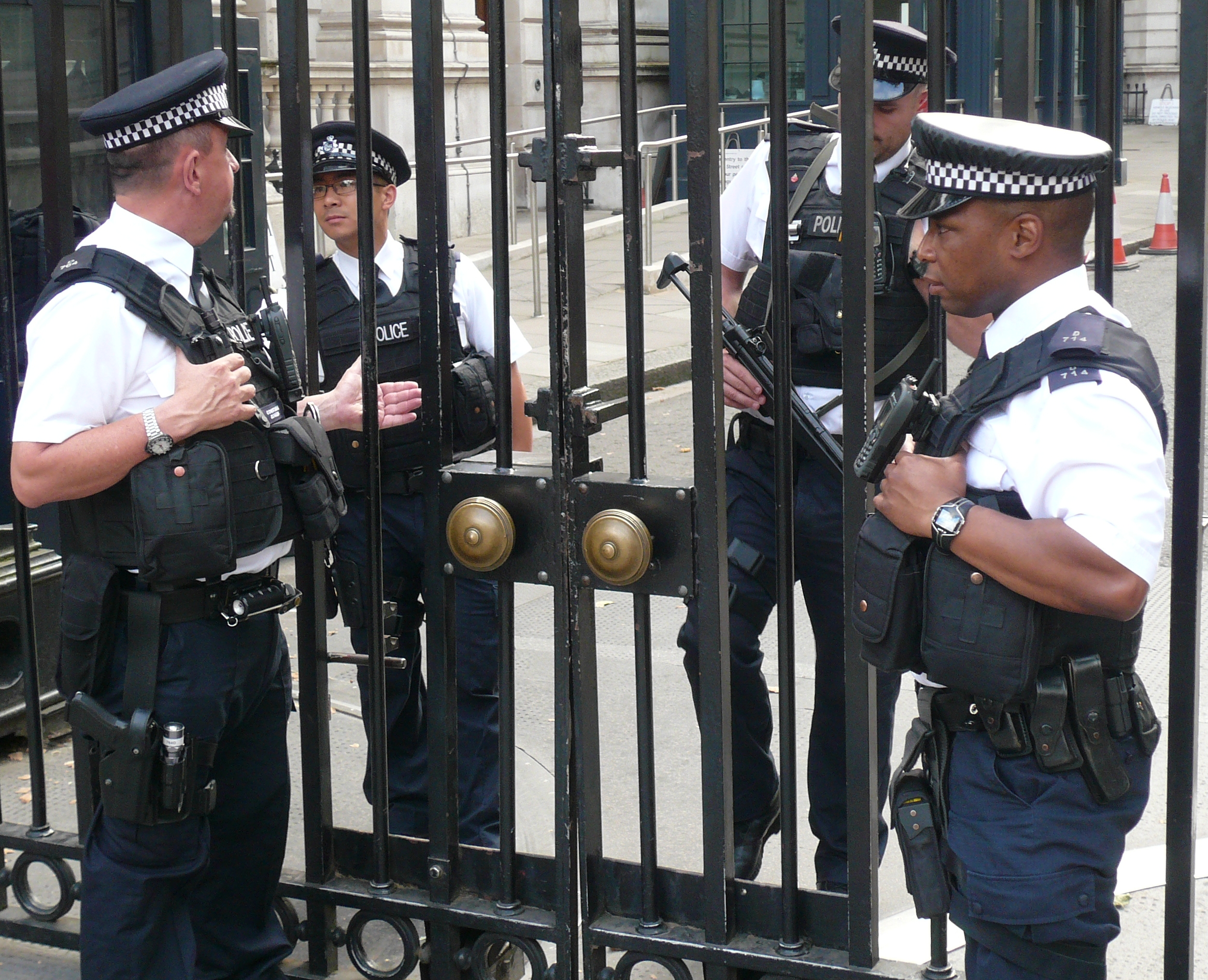
These days we kind of assume that police are a normal part of law and order. But that wasn’t always the case. In fact, it wasn’t the case for a lot of human history. So how did we start thinking of police as a natural part of a city? It all starts in London with the Thief-Taker General Jonathan Wilde, a man of two faces. Which one is real: valiant crime fighter or the puppet master of London’s underbelly?

Join us on Patreon! http://bit.ly/EHPatreon

QotD: Evidence of markets in classical civilizations

Filed under: Economics, Europe, Greece, History, Quotations — Tags: , , , , — Nicholas @ 01:00

If someone were to claim that market behaviour was peripheral to life in eighteenth century England, it would be easy to laugh at him. This is not to say the claim has not been or will not be made. But if it were made, it could be refuted with a mass of government and private statistics, of newspaper reports and law reports, of high literature, of sermons, speeches and letters, of descriptive and analytical surveys, of biographies and novels, and of physical remains. Ludicrous claims can always be based on selective and misread evidence. In this case, the weight of the evidence must be decisive.

If we turn, however, to the ancient world, the evidence must almost always be indecisive. Very few ancient writings have survived. Obviously, two thousand years are a long time; and ancient civilisation did collapse. Add to this that far fewer documents relating to economic matters were produced or could be preserved than has been the case with us. There was no printing: everything had to be copied by hand. The best writing material was papyrus, which was both expensive and fragile. The normal writing materials for accounts and administrative documents were waxed tablets, which were scraped and reused, and thin wooden sheets, which were thrown away once they had served their purpose.

The literary remains of Greece and Rome which have come down to us through generations of copying and recopying are the products of a rather snobbish culture, and contain little direct information about economic behaviour. The great writers, as Finley observes, do seem to have lacked the conceptual framework for intelligent discussion of finance and commerce. Even otherwise, these were matters they regarded as beneath the notice of history. Thucydides, for example, gives full discussion to the political causes of the Peloponnesian War, but says nothing of what we know from the archaeological evidence was the complete Athenian displacement of Corinth in the pottery markets of the Western Mediterranean world.

During the past century or so, the rubbish dumps of Egypt have revealed a mass of the everyday documentation we have for no other area of the ancient world. There are tax records, and commercial correspondence, and administrative commands, among much else. The problem here is that Egypt was always an exception. From its earliest history, its geography opened it to capture and exploitation by rent-seeking élites. The Pharaohs were worshipped as gods and given whatever they demanded. The Ptolemies organised the country into one gigantic state enterprise and used the proceeds for making a big noise in the Hellenistic world. The Roman Emperors kept up the monopolies and requisitions, treating Egypt as their personal property, and so far as possible isolating it from the rest of the Empire. The documentary evidence, therefore, we have from Egypt may not be representative of the ancient world as a whole.

But this, plus the material archaeology, is all we have. And if we want to know anything for economic motivations and behaviour, we must press the evidence we have as hard as we can. The history of the ancient world is, in many important respects like a mosaic that has been broken up with many of its tiles thrown away. The whole must be reconstructed from the parts remaining. It is a difficult enterprise, but it can be attempted.

If there is little direct, there is much indirect evidence. This is scattered through the surviving body of ancient literature. It consists of casual remarks, illustrations to arguments, even comments that are in themselves foolish. It is a question of looking for this evidence, and of knowing how to use it.

An interesting example of how evidence can be extracted and used comes not from our own ancient world, but from pre-Columbian South America. Deirdre McCloskey has looked at the geographical distribution of Mayan obsidian tools. She notes that, the farther from the sources of their obsidian, the smaller was the ratio of blade weight to cutting length. She comments:

    By taking more care with more costly obsidian the blade makers were earning better profits; as they did by taking less care with less costly obsidian.

What we have here, then, is evidence that illiterate, stone age toolmakers were at least as conscious of opportunity cost as any Victorian mill owner, and rather more so than the average socialist planner of the next century. So long, of course, as this is evidence — this is, so long as the tools are distributed as claimed — we have empirical reason for doubting the Polanyi claim that,

    previously to our time no economy has ever existed that, even in principle, was controlled by markets…. Gain and profit made on exchange never [before the nineteenth century] played an important part in human economy.

Sean Gabb, “Market Behaviour in the Ancient World: An Overview of the Debate”, 2008-05.

December 1, 2019

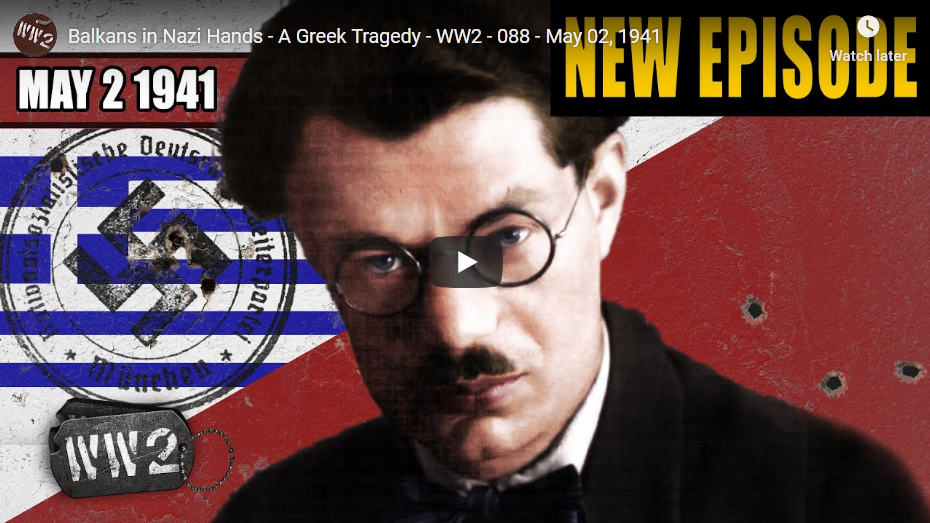
The German Plan to Destroy French Culture – The Occupation of France – WW2 – 066 – November 30, 1940

World War Two
Published 30 Nov 2019

While Hitler consolidates his power in occupied France, Japanese and Italian forces try to get an edge, but fail. The war is not looking too well for anyone at this point.

Join us on Patreon: https://www.patreon.com/TimeGhostHistory
Or join The TimeGhost Army directly at: https://timeghost.tv

Follow WW2 day by day on Instagram @World_war_two_realtime https://www.instagram.com/world_war_t…
Join our Discord Server: https://discord.gg/D6D2aYN.
Between 2 Wars: https://www.youtube.com/playlist?list…
Source list: http://bit.ly/WW2sources

Written and Hosted by: Indy Neidell
Produced and Directed by: Spartacus Olsson and Astrid Deinhard
Executive Producers: Bodo Rittenauer, Astrid Deinhard, Indy Neidell, Spartacus Olsson
Creative Producer: Joram Appel
Post-Production Director: Wieke Kapteijns
Research by: Indy Neidell
Edited by: Mikołaj Cackowski
Map animations: Eastory (https://www.youtube.com/c/eastory)

Colorizations by:
– Adrien Fillon (https://www.instagram.com/adrien.colo…)
– Dememorabilia (https://www.instagram.com/dememorabilia/)

Sources:
-Archiwum Cyfrowe

Archive by Screenocean/Reuters https://www.screenocean.com.

A TimeGhost chronological documentary produced by OnLion Entertainment GmbH.

Tank Chats #56 Sherman DD | The Funnies | The Tank Museum

Filed under: Britain, History, Military, Technology, USA, WW2 — Tags: , , , , — Nicholas @ 02:00

The Tank Museum
Published 7 Sep 2018

Another episode in the Tank Chats Funnies Specials, with David Fletcher looking at the weird and wonderful vehicles of 79th Armoured Division led by Major General Percy Hobart, known as “Hobart’s Funnies”.

The Sherman DD, or Duplex Drive, was a term applied to Sherman tanks modified for amphibious operations. DD tanks were used by American, British and Canadian forces in WW2 on D-Day, 6 June 1944; by the Americans again in the south of France and by the Americans and British during the Rhine crossing.

Support the work of The Tank Museum on Patreon: ► https://www.patreon.com/tankmuseum
Or donate http://tankmuseum.org/support-us/donate

Visit The Tank Museum SHOP: ► https://tankmuseumshop.org/

Twitter: ► https://twitter.com/TankMuseum
Tiger Tank Blog: ► http://blog.tiger-tank.com/
Tank 100 First World War Centenary Blog: ► http://tank100.com/ #tankmuseum #tanks #tankchats

November 30, 2019

WW1 Villar Perosa SMG at the Range

Filed under: History, Italy, Military, Weapons, WW1 — Tags: , , , — Nicholas @ 02:00

Forgotten Weapons
Published 28 Sep 2019

Courtesy of the Morphy Auction Company, I am out at the range today with a very rare Italian Villar Perosa machine gun from World War One. These are pretty unorthodox machine guns, as they were initially designed as aircraft armament and later repurposed as ground guns. The basic design is a pair of actions and barrel with a single rear trigger housing. The actions are (slightly) delayed blowback, feeding from 25-round magazines and firing at about 1500 rpm each. The grip has two separate thumb triggers, which fire the two barrels independently.

For an aircraft application, this allowed a very high volume of fire for a very short time; exactly what aerial combat called for. As an infantry gun, the design was much less practical. The bipod held the gun up, but did not have any firm stop that could be pushed into. Coupled with the lack of a buttstock, the gun was very difficult to keep on pattern with anything but the shortest burst. The small aperture sight certainly doesn’t help things either.

http://www.patreon.com/ForgottenWeapons

Cool Forgotten Weapons merch! http://shop.bbtv.com/collections/forg…

Contact:
Forgotten Weapons
6281 N. Oracle #36270
Tucson, AZ 85704

November 29, 2019

History of Space Travel – Red Star – Extra History – #4

Filed under: History, Military, Russia, Space, USA — Tags: , , , , , — Nicholas @ 06:00

Extra Credits
Published 28 Nov 2019

Start your Warframe journey now and prepare to face your personal nemesis, the Kuva Lich — an enemy that only grows stronger with every defeat. Take down this deadly foe, then get ready to take flight in Empyrean! Coming soon! http://bit.ly/EHWarframe

While rockets had been proven to be indispensable to the Second World War, the idea to send people up into orbit was still seen as fantasy. Space was important only as a method to further the range of missiles meant to land oceans away from their original launch point. But a man named Korolev will change all of that, with work so secretive, he will be referred to as Chief Designer for nearly his entire life. But we all know the name of his first project into space: Sputnik.

From the comments:

Extra Credits
1 day ago
We weren’t able to fit her into the episode, but the other famous first cosmonaut in space is Laika, the Soviet space dog. She was a stray who was taken in by the program to test the Sputnik 2 and some of its life support features (like a coolant fan). Unfortunately, Laika did not return from her mission alive but she’s still regarded highly in the history of space flight and has become a symbol for the space race and animal testing in general. Look her up!

I remember reading in Robert Heinlein’s Expanded Universe of the day on his tour of the Soviet Union in 1960 when he and his wife were told by a group of Red Army cadets of a Soviet rocket launch carrying a human into orbit for the first time. The story was officially denied and the capsule was said to be unmanned after all. Wikipedia says:

According to Gagarin’s biography, these rumours were likely started as a result of two Vostok missions equipped with dummies (Ivan Ivanovich) and human voice tape recordings (to test if the radio worked) that were made just prior to Gagarin’s flight.

In a U.S. press conference on February 23, 1962, colonel Barney Oldfield revealed that an uncrewed space capsule had indeed been orbiting the Earth since 1960, as it had become jammed into its booster rocket. According to the NASA NSSDC Master Catalog, Korabl Sputnik 1, designated at the time 1KP or Vostok 1P, did launch on May 15, 1960 (one year before Gagarin). It was a prototype of the later Zenit and Vostok launch vehicles. The onboard TDU (Braking Engine Unit) had ordered the retrorockets to fire to recover, but due to a malfunction of the attitude control system, the spacecraft was oriented upside-down, and the firing put the craft into a higher orbit. The re-entry capsule lacked a heat shield as there were no plans to recover it. Engineers had planned to use the vessel’s telemetry data to determine if the guidance system had functioned correctly, so recovery was unnecessary.

England’s early search for new markets

Filed under: Britain, History — Tags: , , , , , , — Nicholas @ 05:00

In the latest installment of Anton Howes’ Age of Invention, he looks at the multiple crises that afflicted England in the mid-sixteenth century and some of the reactions to those setbacks:

Ships from the period of John Cabot (Giovanni Caboto) and Jacques Cartier.
Illustration by Thomas Wesley McLean (1881-1951) via Wikimedia Commons.

From the 1540s through to the 1560s, [England] was beset by religious uproar, high inflation, hunger, rural and then urban unemployment, a fall-off in its major export trades, and widespread unrest. It was diplomatically isolated too. And I did not even mention the epidemics: the terrifying “sweating sickness” returned in 1551, deadly influenza swept the country in 1557, and in 1563 some 17,000 people in London were reportedly killed by the plague.

Yet, in the face of such problems, innovation in England began to pick up pace. The country, having once been a scientific and technological backwater, began to show signs of catching up. Why?

[…] The fall-off in trade with Europe, for example, seems to have had something to do with spurring the voyages of exploration in search of a north-west and north-east passage to the East Asia. Having lost Antwerp as a place to sell cloth in 1551, the English went in search of an arctic route to northern China and Japan. The expert geographers believed that those regions had a similar climate to that of Antwerp and the surrounding Netherlands, and so reasoned that the Japanese would therefore demand the same kinds of cloth. Although the English expeditions from 1553 onwards did not find a passage to Japan, they did establish trade routes with Russia via the White Sea, and they began to more actively consider the exploration and colonisation of North America. More importantly, with those voyages of exploration came greater experience of navigation, and it was not long before English ships were circumnavigating the globe (Francis Drake in 1577-80). Improvements to navigational techniques and instruments, as well as the ships themselves followed.

So it is tempting to think that necessity was initially the mother of invention, and that the many navigational and shipbuilding improvements of late-sixteenth-century England were its result. But I don’t think that this narrative quite works. I do not believe that necessity was the mother of invention.

For a start, voyages of navigation had already been attempted a number of times, long before the more successful ones in the early 1550s. The first explorers had reputedly gone west from Bristol in 1465, and certainly from 1480. And soon after the announcement of Columbus’s discoveries in the 1490s, the Venetian Zuan Chabotto (aka John Cabot), had sailed from Bristol with Henry VII’s blessing and claimed Newfoundland for both crown and Catholicism. Cabot had even hoped to found a penal colony on his second voyage in 1497, though for some reason the king did not provide the criminals. Throughout the early sixteenth century, the voyages continued. John Rastell, brother-in-law to Thomas More, the famous statesman and author of Utopia, in 1517 went in search of a north-west passage (though he never got beyond Ireland, because his crew decided it would be better to leave him there and sell the ship’s cargo in Bordeaux). Yet another voyage went west with Henry VIII’s support in 1527, but it mostly just found other Europeans — fishing fleets from Spain, Portugal, and France off the coast of Newfoundland (the English had made some catches there in the early 1500s, but apparently could not compete), and the Spanish everywhere else. The expedition made its way down to the Caribbean and then went home, with little to report. So people had already gone off exploring, long before the mid-sixteenth-century English commercial crisis. It suggests that there had already been both a latent supply and demand for such explorations.

« Newer PostsOlder Posts »

Powered by WordPress