
Lord Edmund Blackadder: I trust Christmas brings to you its traditional mix of good food and violent stomach cramp.
Lord Melchet: Greetings of the season to you, Blackadder! May the Yule log slip from your fire and burn your house down!Blackadder’s Christmas Carol, 1988.
December 25, 2021
QotD: Blackadder and Melchet exchange Christmas greetings
Comments Off on QotD: Blackadder and Melchet exchange Christmas greetings
December 24, 2021
How Hitler, Churchill, Roosevelt, and Stalin Spent Christmas – WW2 Special
World War Two
Published 23 Dec 2021They might be four of the most powerful politicians and/or military leaders on earth, but they are also citizens of their respective countries and today we take a look at what they do over the traditional Christmas holidays in 1942.
(more…)
Comments Off on How Hitler, Churchill, Roosevelt, and Stalin Spent Christmas – WW2 Special
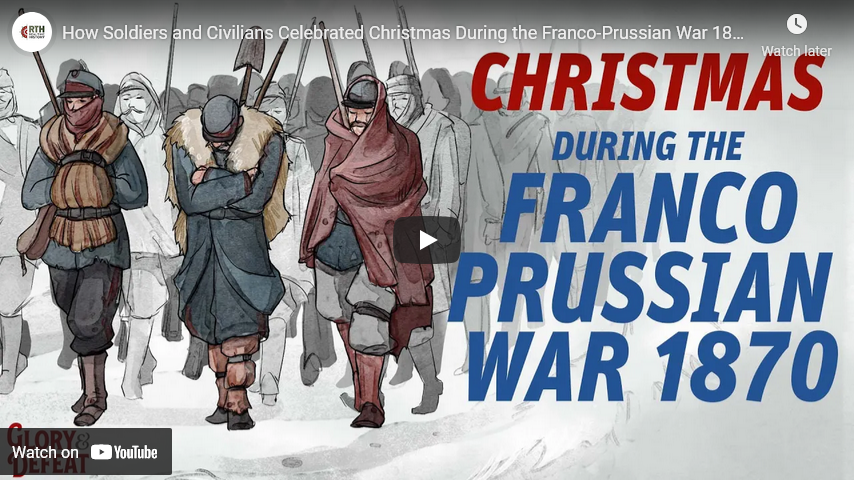
How Soldiers and Civilians Celebrated Christmas During the Franco-Prussian War 1870
Real Time History
Published 23 Dec 2021Support us on Patreon: https://patreon.com/realtimehistory
Christmas 1870 reminded the German and French alike that the Franco-Prussian War was going on for far too long. Soldiers and civilians on both sides tried to make the best of the situation but the grim nature of the last weeks of fighting and the ongoing Siege of Paris made this a memorable Christmas for all the wrong reason.
» THANK YOU TO OUR CO-PRODUCERS
John Ozment, James Darcangelo, Jacob Carter Landt, Thomas Brendan, Kurt Gillies, Scott Deederly, John Belland, Adam Smith, Taylor Allen, Rustem Sharipov, Christoph Wolf, Simen Røste, Marcus Bondura, Ramon Rijkhoek, Theodore Patrick Shannon, Philip Schoffman, Avi Woolf» OUR PODCAST
https://realtimehistory.net/podcast – interviews with historians and background info for the show.» LITERATURE
Arand, Tobias: 1870/71. Der Deutsch-Französische Krieg erzählt in Einzelschicksalen. Hamburg 2018Gouttman, Alain: La grande défaite. 1870-1871. Paris 2015
Hahn, Joachim: Jüdisches Leben in Ludwigsburg. Geschichte, Quellen, Dokumentation. Karlsruhe 1998
» SOURCES
Allorant, Salomé u.a. (Hrsg.): La République au défi de la guerre. Lettres et carnet de l’Année terrible (1870-1871). Amiens 2015Bernardt, Sarah: Ma double vie. Mémoires. Paris 1907
Fontane, Theodor: Der Krieg gegen Frankreich. Bd. 3. Berlin 1875
Fontane, Theodor: Kriegsgefangen. Erlebtes 1870. Briefe 1870/71. Berlin (Ost) 1984
Goncourt, Edmond de: Journals des Goncourt. Mémoires de la vie litteraire. Vol. 4. Paris 1890
Kriegsgeschichtliche Abteilung des Großen Generalstabs (Hrsg.): Der deutsch-französische Krieg 1870-71. 2.2. Berlin 1880
Meisner, Heinrich Otto (Hrsg.): Kaiser Friedrich III. Das Kriegstagebuch von 1870/71. Berlin, Leipzig 1926
Plitt, Franz: Rückerinnerungen eines Dreiundachtzigers. Kassel 1903
Russell, William Howard: My diary during the last great war. London 1874
Schikorsky, Isa (Hrsg.): “Wenn doch dies Elend ein Ende hätte”. Ein Briefwechsel aus dem Deutsch-Französischen Krieg 1870/71. Köln, Weimar, Wien 1999
Schmidt, Erna (Hrsg.): Briefe aus den Feldzügen 1866 und 1870/71. Berlin 1908
Speisekarte des Café Voisin Paris vom 25.12.1870
» OUR STORE
Website: https://realtimehistory.net» CREDITS
Presented by: Jesse Alexander
Written by: Cathérine Pfauth, Prof. Dr. Tobias Arand, Jesse Alexander
Director: Toni Steller & Florian Wittig
Director of Photography: Toni Steller
Sound: Above Zero
Editing: Toni Steller
Motion Design: Philipp Appelt
Mixing, Mastering & Sound Design: http://above-zero.com
Maps: Battlefield Design
Research by: Cathérine Pfauth, Prof. Dr. Tobias Arand
Fact checking: Cathérine Pfauth, Prof. Dr. Tobias ArandChannel Design: Battlefield Design
Contains licensed material by getty images
All rights reserved – Real Time History GmbH 2021
Comments Off on How Soldiers and Civilians Celebrated Christmas During the Franco-Prussian War 1870
December 23, 2021
Cheshire and Durham in the English Parliament
In his end-of-the-year Age of Invention newsletter, Anton Howes looks at two of the historic counties of England that lacked Parliamentary representation until surprisingly late dates:
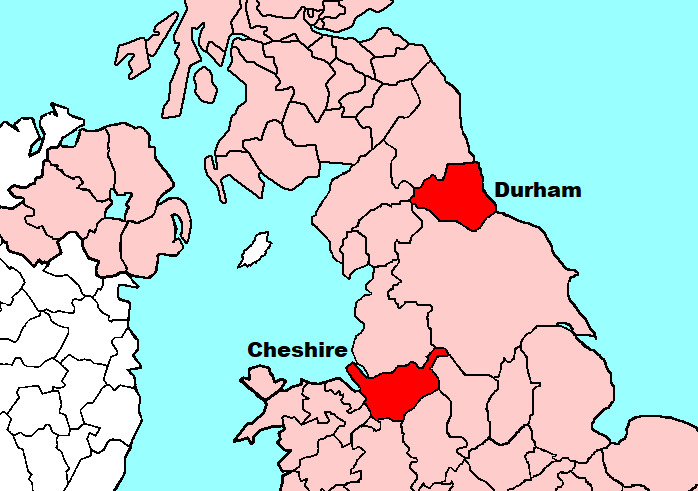
Cheshire and Durham (post-medieval boundaries: English county boundaries have varied wildly over the centuries).
Base map by Hogweard at Wikimedia Commons.
England, compared to other parts of Europe, is often said to have been remarkably centralised early on. France, for example, in the late eighteenth century had some thirteen or so regional parliaments, while Britain just had the one. Scotland’s separate parliament was famously dissolved in 1707, with the official union of Scotland with England. Wales gained representation at the English parliament at Westminster from 1536. So far so expected.
But less well-known is that the county of Cheshire — some of it now disappeared under Greater Manchester — used to have an entirely separate parliament of its own, and was not represented at Westminster until 1543. Arguably, it has about as much historical claim to a national assembly today as Wales. Rule of Cheshire was even, very briefly, included among the various titles of the monarch. Richard II, as well as being king of England, was in 1397-99 also styled “Prince of Chester”. He drew his personal bodyguard from among the men of Cheshire too. So whatever happened to Cheshire nationalism?
On a related note: the mantra “no taxation without representation” looms large in the history of American independence. But parts of England itself had gone unrepresented for decades too. County Durham, traditionally ruled by its prince-bishop, was not represented by any MPs in the House of Commons at all until 1654. And as it only gained representation under the revolutionary Protectorate, this was undone upon the restoration of the monarchy in 1660. The county would not be represented again until 1675.
Why? One might argue that the bishop of Durham, who sat in the House of Lords, could be considered its parliamentary representative. But he was not elected, and most importantly had little say over the matter of parliamentary taxation, which was controlled by the Commons. Before 1603 this was not much of an issue, as county Durham was exempt from various taxes because it was near the hostile Scottish border. But the accession of James VI of Scotland to become king of England meant that the hostile border suddenly disappeared. County Durham thus became subject to parliamentary taxation without having any say over those taxes at all — a situation that they then had to bear for over sixty years! Where were the Durham revolutionaries?
Comments Off on Cheshire and Durham in the English Parliament
December 22, 2021
The Nazi-Islam Alliance? – Amin al-Husseini – WW2 Biography Special
World War Two
Published 21 Dec 2021Amin al-Husseini is one of the leading figures in global Islam. He’s an Arab nationalist, an anti-Semite, and anti-Zionist. But he’s also willing to work with imperialist powers if it suits him. He’s been loyal to the Ottomans and the British. In 1941, he throws his lot in with Hitler and the Nazis.
(more…)
Comments Off on The Nazi-Islam Alliance? – Amin al-Husseini – WW2 Biography Special
December 21, 2021
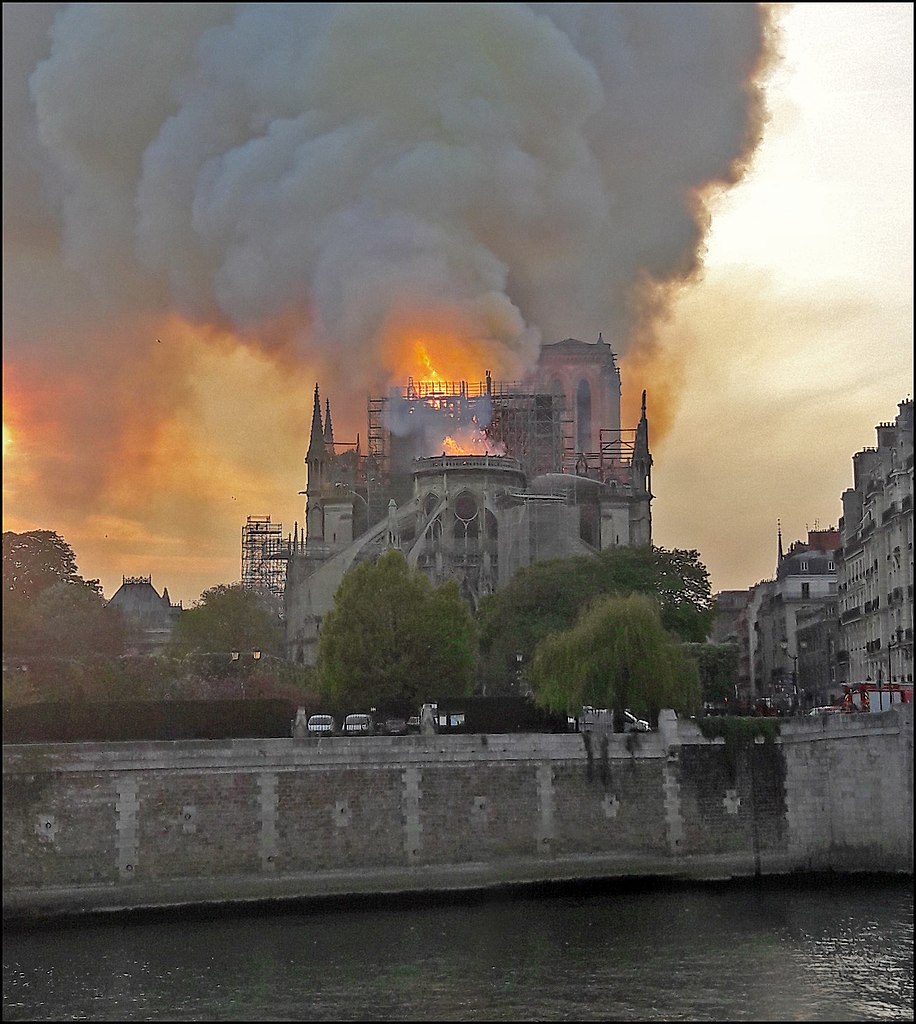
“Modernizing” Notre-Dame
The restoration plans for Notre-Dame Cathedral in Paris included some wild and whacky ideas for the exterior. Fortunately, the citizens of Paris persuaded the authorities to restore the outside of the building to as close as possible to the beautiful original. The fate of the interior — including the undamaged portions — is not yet settled:
All great art was contemporary once, but it would be a mistake to conclude from this that therefore some contemporary art must be great. The fact is that there are fallow periods in the history of art — the Golden Age of Dutch painting evaporated with astonishing swiftness — and we are going through just such a fallow period now.
Hence the idea that the refurbishment of the interior of Notre-Dame Cathedral in Paris after its terrible fire two and a half years ago should include contemporary art is, to say the least, contestable. It is difficult to think of ancient churches in which art of the last century has been a great adornment, and in general it is a relief to find that, when present, such art is not actually a terrible blot or assault on the interior of the church.
In fact, the plan to modernize the interior of Notre-Dame applies to that part of it that was undamaged by fire, so that the plan appears to be the seizing of a longed-for opportunity rather than a desire to restore the church to its former glory.
Given the state of French taste in such matters, at least among those with the power to decide anything, one trembles for the future of the church. All contemporary French public buildings are monstrosities, from the Opéra Bastille and the Ministry of Finance in Paris to the Musée de la Romanité in Nîmes. The more that is spent on them, they worse they get. They almost always desecrate their surroundings, as if their architects wanted to take their revenge on previous ages, as mediocrity revenges itself on genius.
Some of the plans that emerged for restoring the roof of Notre-Dame after the fire would have defied belief were it not that we are now so inured to architectural madness that such folly was more to be expected than it was surprising. The proposed plans included everything from a swimming pool to a greenhouse, probably with the intention for growing cannabis.
The public outcry was sufficient that the government decided that the roof should be restored as near as possible to its former state, thwarting those who said that every age should leave its mark on great monuments.
But the idea that every age should bring something of its own to the great monuments of the past is not French alone: the Soviets, for example, thought the same way about the Kremlin in Moscow, and built the Palace of Congresses, a standard monstrosity completely out of keeping with the rest of the buildings that composed it, in its very heart. How could the Soviets have claimed superiority to the pre-revolutionary regime, they thought, if they added nothing distinctly their own to the Kremlin?
Update: At First Things, Samuel Gregg is also viewing the prospect with some (justified) alarm:
Apart from the post-Vatican II liturgy wars, few topics are more likely to set off fierce disputes within Catholic dioceses than architecture — or, more precisely, proposals for renovating church structures and interiors.
One doesn’t have to be an enthusiast of Counter-Reformation baroque to recognize that, from the late 1950s onward, a contemporary stripping of the altars was carried out in many Western countries in the name of renewal. In The Spirit of the Liturgy, Joseph Ratzinger called it a “new iconoclasm” that “eliminated a lot of kitsch and unworthy art, but ultimately … left behind a void.” For decades, it seems, beauty was out, and a mixture of infantilism and neo-Stalinist brutalism was in.
[…]
Some of these tensions burst into public view recently, when plans for reconstructing the interior of Paris’s Notre-Dame Cathedral were leaked to the British press. The proposed redesign includes a “discovery trail” that will take visitors through fourteen themed chapels, each with a text projected upon the wall and a contemporary work of art, to “create a fecund dialogue between contemporary creation and the church” — whatever that means. The plan also proposes shunting aside many classical sculptures and most of the confessionals, using sound-and-light shows to create “emotional spaces” and explain basic Christian teachings in multiple languages, installing luminous “mobile benches” (which can be moved aside to make more room for tourists after Mass), and adding a stained-glass window and chapel wall overlain by a contemporary abstract painting of clouds.
The proposed changes were submitted to France’s Commission nationale du patrimoine et de l’architecture last week, as per an agreement between the archdiocese of Paris and the French government about who gets to decide what about the cathedral restoration. The commission approved the redesign with two exceptions: The statues must not be removed from the redesigned chapels, and the plan for mobile benches must be reviewed. The commission also offered verbal assurance that no object or painting that was inside Notre-Dame before the fire will be removed from the cathedral.
Catholic and non-Catholic designers and art critics alike have expressed dismay at the plans, denouncing them as, among other things, the equivalent of a “politically correct Disneyland” and a “woke theme park”. The man behind the plans, Fr. Gilles Drouin, has defended the redesign by arguing that we can’t assume the 12 million tourists who will wander through the cathedral each year will know much about Christianity in general or Catholicism in particular. The new interior, he asserts, will make Christian teaching more accessible to contemporary visitors.
Fr. Drouin is right that profound religious ignorance is the rule rather than the exception for contemporary Western Europeans. Furthermore, Catholic churches are not supposed to be forever frozen circa 1756. Every generation of Catholics can contribute to the ways that their churches give glory to God. But church architects and liturgists must realize that no matter how hard they try, they’ll never be able to “out-contemporary” their secular peers in attempts to make the faith speak to the so-called moment. And anyone seriously interested in evangelization through church design should consider that using electronic sound and light shows to disrupt the current architectural harmony of Notre-Dame, which has inspired both Mass-goers and visitors for centuries, is likely not the best way to communicate the transcendent beauty of the faith to tourists.
Comments Off on “Modernizing” Notre-Dame
Figgy Pudding | A Victorian Christmas Tradition
Tasting History with Max Miller
Published 1 Dec 2020Help Support the Channel with Patreon: https://www.patreon.com/tastinghistory
Tasting History Merchandise: https://bit.ly/3oLyAhWFollow Tasting History here:
Instagram: https://www.instagram.com/tastinghist…
Twitter: https://twitter.com/TastingHistory1
Reddit: r/TastingHistory
Discord: https://discord.gg/d7nbEpyLINKS TO INGREDIENTS & EQUIPMENT**
Canon EOS M50 Camera: https://amzn.to/3amjvwu
Canon EF 50mm Lens: https://amzn.to/3iCrkB8
Pudding Cloth: https://amzn.to/3nFIvnX
Beef Suet: https://amzn.to/3pN4Xx9
Currants: https://amzn.to/36Rh5ojLINKS TO SOURCES**
Modern Cookery by Eliza Acton: https://amzn.to/2HlVCLA
A Christmas Carol: https://amzn.to/3kNguJp
The Battle for Christmas by Stephen Nissenbaum: https://amzn.to/3kQZ7aq
Household Words: A Weekly Journal, Vol 2 – https://bit.ly/2IuJ2Ke
Good Housekeeping, Volumes 5-6: https://bit.ly/32F2SJS**Amazon offers a small commission on products sold through their affiliate links, so each purchase made from this link, whether this product or another, will help to support this channel with no additional cost to you.
Subtitles: Jose Mendoza
DISH NAME
ORIGINAL 1845 RECIPE (From Modern Cookery for Private Families)
The Author’s Christmas Pudding.
To three ounces of flour, and the same weight of fine, lightly-grated bread-crumbs, add six of beef kidney-suet, chopped small, six of raisins weighed after they are stoned, six of well-cleaned currants, four ounces of minced apples, five of sugar, two of candied orange-rind, half a teaspoonful of nutmeg mixed with pounded mace, a very little salt, a small glass of brandy, and three whole eggs. Mix and beat these ingredients well together, tie them tightly in a thickly floured cloth, and boil them for three hours and a half. We can recommend this as a remarkably light small rich pudding: it may be served with German wine, or punch sauce.MODERN RECIPE
INGREDIENTS
– 3 oz (85g) Flour
– 3 oz (85g) Bread Crumbs
– 6 oz (170g) Beef Suet (Lard or Crisco will work as well)
– 6 oz (170g) stoned Raisins
– 6 oz (170g) Currants
– 4 oz (113g) Minced Apples
– 5 oz (142g) Brown Sugar
– 2 oz (57g) Candied Peel
– ½ teaspoon Nutmeg and mace
– A few grains of Salt
– 3 oz (88ml) Brandy
– 3 EggsMETHOD
1. Boil the pudding cloth for 20 minutes. Then carefully remove it from the pot and lay it out flat. Spread suet, lard or butter across it and rub in a liberal amount of flour.
2. Combine all ingredients in a large bowl and mix. Then form into a ball and place in the middle of the pudding cloth. Gathering the cloth tightly around it, twist the cloth at the “neck” then wrap it with a string several times and tie tightly around it.
3. Boil a large pot of water with an upside down plate on the bottom of the pot. Set the pudding in the boiling water and let boil for 3 1/2 hours. Check often and add more boiling water when necessary.
4. Remove pudding from the water and allow to dry before unwrapping. This can be served right away or aged for several weeks/months.Punch sauce for Sweet Puddings
This may be served with custard, plain bread, and plum-puddings. With two ounces of sugar and a quarter of a pint of water, boil very gently the rind of half a small lemon, and somewhat less of orange-peel, from fifteen to twenty minutes; strain out the rinds, thicken the sauce with an ounce and a half of butter and nearly a teaspoonful of flour, add a half-glass of brandy, the same of white wine, two thirds of a glass of rum, with the juice of half an orange, and rather less of lemon-juice: serve the sauce very hot, but do not allow it to boil after the spirit is stirred in.
– 2oz Sugar
– ¼ pint Water
– Lemon & Orange Rind
– 1 ½ oz Butter
– 1 Teaspoon Flour
– ½ Wineglassful Brandy
– ½ Wineglassful White Wine
– ⅔ Wineglassful Rum
– Orange & Lemon JuiceMUSIC CREDITS
“We Wish You a Merry Christmas” by Twin Musicom is licensed under a Creative Commons Attribution 4.0 license. https://creativecommons.org/licenses/…
Artist: http://www.twinmusicom.org/“Angels We Have Heard – Christmas” by Kevin MacLeod is licensed under a Creative Commons Attribution 4.0 license. https://creativecommons.org/licenses/…
Source: http://incompetech.com/music/royalty-…
Artist: http://incompetech.com/“Rondo for harp” – Mike Harper
#tastinghistory #christmaspudding #figgypudding

Comments Off on Figgy Pudding | A Victorian Christmas Tradition
Tank Chat #136 | Schützenpanzer | The Tank Museum
The Tank Museum
Published 3 Sep 2021David Willey is back with another Tank Chat! This week’s episode is all about the Schützenpanzer. A West German infantry fighting vehicle developed from 1956 to 1958.
(more…)
QotD: The Royal Victimhood Olympics
It’s certainly been a bumpy old ride of a year, making Her Majesty’s annus horribilis look like a teddy bears’ picnic. But though I’m not a royalist, I’m counting on this most stiff-upper-lipped of ladies not to mention those two little words which were inescapable this year: “mental health”, or the Mental Elf, as I’ve come to think of him.
Remember our old friends Elf and Safety? They’ve been replaced by Mental Elf, and he’s even more annoying, a nasty little imp intent on making every single member of this once-stoic island race confess to hidden sorrows.
The Royal Victimhood Olympics are now an open-season event, like tennis. The Prince of Wails had a head start, moaning about being sent to boarding school by his “distant” mother who – shame on her! – was a young woman doing her very best in a role she had neither wanted nor expected. Meghan Markle famously fled Frogmore Cottage with the Mental Elf in hot pursuit. Prince William, who appeared to be the sensible one, revealed this week he felt as if “the whole world was dying” after he helped save the life of a child while working as a helicopter pilot for the air-ambulance service.
And of course Sarah Ferguson has referred to herself as “the most persecuted woman in the history of the royal family”. All we need now is for Duchess Kate to weigh in with a detailed account of, say, her PMS problems and we’ve collected the full set of Unhappy Royal Families!
Yes, I know Princess Diana started it. But neurosis was just a part of her emotional repertoire. She realised that one of the best guarantees of good mental health is helping others rather than contemplating one’s navel. Or in the case of the wretched Fergie, one’s novel. The writing of Her Heart for a Compass was reportedly “therapeutic” and boosted her “self-esteem”. Is the world big enough for a more self-loving Fergie?
Julie Burchill, “The Queen is the last sane royal standing”, Spiked, 2021-12-09.
Comments Off on QotD: The Royal Victimhood Olympics
December 20, 2021
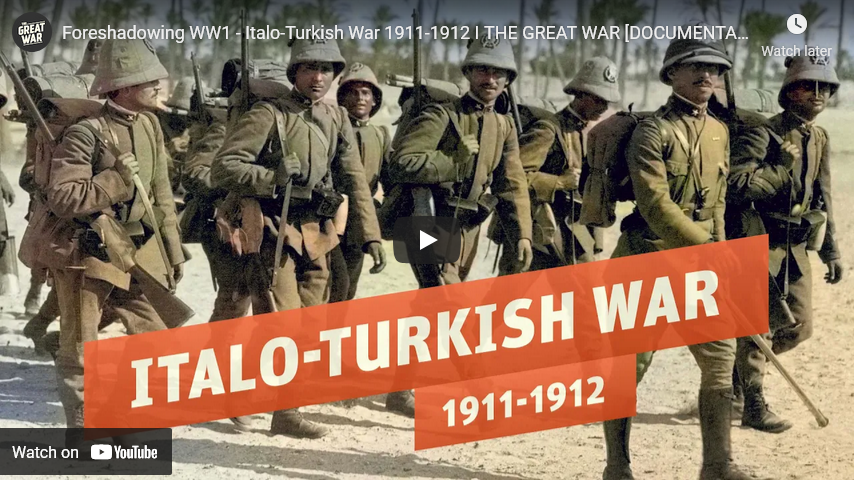
Foreshadowing WW1 – Italo-Turkish War 1911-1912 I THE GREAT WAR
The Great War
Published 17 Dec 2021Sign up for Audible and get 60% off your first three months: https://audible.com/greatwar or text
greatwarto 500-500The Italo-Turkish War 1911 was one of the last classic imperial wars over colonial processions between two great powers. But it was in many ways also a first glimpse into what would come during the First World War: trenches, artillery, combat aircraft, motorboat attacks. This war in Ottoman Libya was fought between the Italian Army and Ottoman-led local Senussi forces.
» SUPPORT THE CHANNEL
Patreon: https://www.patreon.com/thegreatwar» THANKS TO OUR CO-PRODUCERS
John Ozment, James Darcangelo, Jacob Carter Landt, Thomas Brendan, Kurt Gillies, Scott Deederly, John Belland, Adam Smith, Taylor Allen, Rustem Sharipov, Christoph Wolf, Simen Røste, Marcus Bondura, Ramon Rijkhoek, Theodore Patrick Shannon, Philip Schoffman, Avi Woolf,» SOURCES
Askew, William C., Europe and Italy’s Acquisition of Libya, 1911-1912, (Durham, NC: Duke University Press, 1942)Caccamo, Francesco, “Italy, Libya and the Balkans” in Geppert, Dominik; Mulligan, William & Rose, Andreas (eds.), The Wars before the Great War: Conflict and International Politics Before the Outbreak of the First World War, (Cambridge: Cambridge University Press, 2016)
Childs, Timothy W, Italo-Turkish Diplomacy and the War Over Libya, 1911–1912, (Leiden: Brill, 1990)
Griffin, Ernest H., Adventures in Tripoli: A Doctor in the Desert (London: Philip Allen & Co., 1924)
Hindmarsh. Albert E. & Wilson, George Grafton, “War Declared and the Use of Force”, Proceedings of the American Society of International Law at Its Annual Meeting (1921-1969) Vol. 32 (1938)
McCollum Jonathan, “Reimagining Mediterranean Spaces: Libya and the Italo-Turkish War, 1911-1912”, in Mediterraneo cosmopolita, 23 (3) 2015.
McMeekin, Sean, The Ottoman Endgame (Penguin, 2013).
Paris, Michael, “The First Air Wars – North Africa and the Balkans, 1911-13”, Journal of Contemporary History, Vol. 26, No. 1 (1991)
Stephenson, Charles, A Box of Sand: the Italo-Ottoman War 1911-1912: the First Land, Sea and Air War, (Ticehurst: Tattered Flag Press, 2014)
Tittoni, Renato, The Italo-Turkish War (1911-12). Translated and Compiled from the Reports of the Italian General Staff, (Kansas City, MO: Frank Hudson Publishing Company, 1914)
Uyar, Mesut, The Ottoman Army and the First World War, (Abingdon: Routledge, 2021)
Vandervort, Bruce, Wars of Imperial Conquest in Africa 1830-1914, (Bloomington, IN: Indiana University Press, 1998)
Wilcox, Vanda, Italy in the Era of the Great War, (Leiden: Brill, 2018)
Wilcox, Vanda, “The Italian Soldiers’ experience in Libya, 1911-12” in Geppert, Dominik; Mulligan, William & Rose, Andreas (eds.), The Wars before the Great War: Conflict and International Politics Before the Outbreak of the First World War, (Cambridge: Cambridge University Press, 2016)
»CREDITS
Presented by: Jesse Alexander
Written by: Mark Newton, Jesse Alexander
Director: Toni Steller & Florian Wittig
Director of Photography: Toni Steller
Sound: Toni Steller
Editing: Jose Gamez
Motion Design: Philipp Appelt
Mixing, Mastering & Sound Design: http://above-zero.com
Research by: Mark Newton
Fact checking: Florian WittigChannel Design: Yves Thimian
Contains licensed material by getty images
All rights reserved – Real Time History GmbH 2021
Comments Off on Foreshadowing WW1 – Italo-Turkish War 1911-1912 I THE GREAT WAR
December 19, 2021
Guadalcanal Life Expectancy: 30 Days- WW2 – 173 – December 18, 1942
World War Two
Published 18 Dec 2021Just a few weeks ago massive offensives were launched in North Africa and the Soviet Union, against the Axis. These operations and offensives have now morphed into fully fledged campaigns, and the nature of these theatres of the war has been transformed.
(more…)
Comments Off on Guadalcanal Life Expectancy: 30 Days- WW2 – 173 – December 18, 1942
December 18, 2021
History Summarized: Minoan Greece
Overly Sarcastic Productions
Published 17 Dec 2021The classical Greeks weren’t the first kids on the Aegean block. Long before Athens’ golden age, before Homer, and even before the Trojan War, there was a civilization on the island of Krete. The land of King Minos was home to beautiful palaces, a fascinatingly-complex economy, and something approximating Bull-Cthulu. It’s a fun time, let’s jump in.
SOURCES & Further Reading: The Greeks: An Illustrated History by Diane Cline for National Geographic, The Greeks: A Global History by Roderick Beaton, Lectures from The Great Courses Plus — “Being Minoan and Mycenaean” from The Other Side of History: Daily Life in the Ancient World by Robert Garland, and “Minoan Crete” & “Schliemann & Mycenae” from Ancient Greek Civilization by Jeremy McInerney. And I have a university degree in Classical Studies.
Our content is intended for teenage audiences and up.
PATREON: https://www.Patreon.com/OSP
PODCAST: https://overlysarcasticpodcast.transi…
DISCORD: https://discord.gg/osp
MERCH LINKS: http://rdbl.co/osp
OUR WEBSITE: https://www.OverlySarcasticProductions.com
Find us on Twitter https://www.Twitter.com/OSPYouTube
Find us on Reddit https://www.Reddit.com/r/OSP/

Comments Off on History Summarized: Minoan Greece
King James and the search for ready cash
In the latest Age of Invention newsletter, Anton Howes outlines how and why England’s new Stuart king found himself in desperate financial straits very early in his reign:
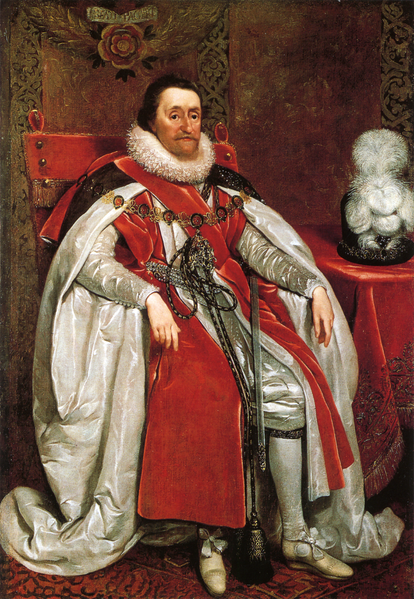
King James I (of England) and VI (of Scotland)
Portrait by Daniel Myrtens, 1621 from the National Portrait Gallery via Wikimedia Commons.
… after a generous honeymoon period of about a year, he and his government soon discovered that they were leaking cash. Despite eliminating the costly wars in Spain and in Ireland, James still had to pay off the debts that his predecessor Elizabeth I had incurred in fighting them. And he had a more extensive, and expensive, royal family to support. He traded the one-off expenses of war for the ongoing expenses of a profligate court.
This may sound like a good deal. James effectively stopped the English Crown splashing out money on really big but infrequent expenses, while increasing its ongoing expenditure — like refraining from buying a new car every few years, while spending a lot more each month eating out at restaurants.
But the Crown’s sources of revenue were ill-suited to this change. The funding for wars had been voted to Elizabeth by Parliament, usually as and when the need arose. Such expenditures were matters of national interest, and she otherwise just relied on other sources of income — ongoing taxes like customs duties, or simply the rent from her lands. When the one-off “subsidies” granted to her by Parliament had not quite been sufficient to cover the costs of the wars, Elizabeth had made up the difference by keeping her own ongoing expenses as low as possible, and took out loans to fill any gaps. It also helped that in the years before crises, Elizabeth had tried to run a surplus, building up a war-chest of cash to dip into.
So switching to the new pattern of expenditure was not straightforward. To increase the Crown’s ongoing expenses, it would have to find more sources of ongoing income, especially as it was already in deficit and had loans to pay off. It was politically impossible for James to ask Parliament for extra one-off subsidies to help him bridge the gap, as some of Elizabeth’s subsidies from 1601 had yet to even be collected. He did actually test the waters about what would happen if he did ask, just in case, but when the matter was raised by some would-be sycophants, it was met with outrage. As one member of Parliament angrily put it, “we have no sheep that yields two fleeces in the year.”
The country was already feeling over-taxed, there were no looming crises to justify such extra taxation, and even if there were, such one-off measures would be unsustainable. James needed to find revenue streams to match his spending leak — and ideally, to even exceed it. His ministers fretted about getting the Crown back into surplus again, to build up another war-chest. Who knew when the next war or rebellion might arise.
So when James called his first Parliament in 1604, it was not really to ask for one-off subsidies as Elizabeth had so often done. Instead, he and his ministers focused on outlining a series of financial deals.
Comments Off on King James and the search for ready cash
Saturnalia
Historia Civilis
Published 17 Dec 2016Io, Saturnalia!
Patreon | http://historiacivilis.com/patreon
Donate | http://historiacivilis.com/donate
Merch | http://historiacivilis.com/merch
Mailing List | http://historiacivilis.com/mailinglist
Twitter | http://historiacivilis.com/twitter
Website | http://historiacivilis.comMusic is:
“I //\\ I,” by Discount Fireworks

Comments Off on Saturnalia
December 17, 2021
German States Vote For Unity – Battle of Nuits-St. Georges 1870 I GLORY & DEFEAT Week 23
Real Time History
Published 16 Dec 2021Sign up for Curiosity Stream and get Nebula bundled in and SAVE 26%: https://curiositystream.com/realtimeh…
While the German delegations arrive in Versailles to set in motion the unification of the German states into a German Reich, the people in nearby Paris are starving and their army is still fighting in the countryside.
» THANK YOU TO OUR CO-PRODUCERS
John Ozment, James Darcangelo, Jacob Carter Landt, Thomas Brendan, Kurt Gillies, Scott Deederly, John Belland, Adam Smith, Taylor Allen, Rustem Sharipov, Christoph Wolf, Simen Røste, Marcus Bondura, Ramon Rijkhoek, Theodore Patrick Shannon, Philip Schoffman, Avi Woolf,» OUR PODCAST
https://realtimehistory.net/podcast – interviews with historians and background info for the show.» LITERATURE
Arand, Tobias: 1870/71. Der Deutsch-Französische Krieg erzählt in Einzelschicksalen. Hamburg 2018Gouttman, Alain: La grande défaite. 1870-1871. Paris 2015
» SOURCES
Hérisson, Maurice d’: Journal d’un officier d’ordonnance. Paris 1885Kriegsgeschichtliche Abteilung des Großen Generalstabs (Hrsg.): Der deutsch-französische Krieg 1870-71. 2.2. Berlin 1880
Kürschner, Joseph (Hrsg.): Der große Krieg 1870-71 in Zeitberichten. Leipzig o.J. (1895)
Meisner, Heinrich Otto (Hrsg.): Kaiser Friedrich III. Das Kriegstagebuch von 1870/71. Berlin, Leipzig 1926
Pietsch, Ludwig: Von Berlin nach Paris. Kriegsbilder 1870-71. Berlin 1871
Schikorsky, Isa (Hrsg.): “Wenn doch dies Elend ein Ende hätte”. Ein Briefwechsel aus dem Deutsch-Französischen Krieg 1870/71. Köln, Weimar, Wien 1999
» OUR STORE
Website: https://realtimehistory.net»CREDITS
Presented by: Jesse Alexander
Written by: Cathérine Pfauth, Prof. Dr. Tobias Arand, Jesse Alexander
Director: Toni Steller & Florian Wittig
Director of Photography: Toni Steller
Sound: Above Zero
Editing: Toni Steller
Motion Design: Philipp Appelt
Mixing, Mastering & Sound Design: http://above-zero.com
Maps: Battlefield Design
Research by: Cathérine Pfauth, Prof. Dr. Tobias Arand
Fact checking: Cathérine Pfauth, Prof. Dr. Tobias ArandChannel Design: Battlefield Design
Contains licensed material by getty images
All rights reserved – Real Time History GmbH 2021
Comments Off on German States Vote For Unity – Battle of Nuits-St. Georges 1870 I GLORY & DEFEAT Week 23


