
The first thing you learn on even the most cursory look at any secret police is: they aren’t. Secret, that is. Otherwise they wouldn’t be effective. Oh, they’d probably be a lot better at gathering certain kinds of intel, but intelligence gathering is really only their secondary function. Their primary function, of course, is intimidation. That’s why every Hans and Franz on the street in Nazi Germany could tell you exactly where the nearest Gestapo office was.
(The Romanian Securitate had public intimidation down to an art form. They’d follow random guys around using big, obvious details, the better to prove to the proletariat that everyone was suspect. It is to them, not Mafia dons or aspiring rappers, that we owe the now-standard Eurotrash track suit look).
Secret police goons suffer from two serious structural problems, though, that not even the guys in Stove’s book [The Unsleeping Eye] really ever solved. The first is the obvious one, that guys who know where the bodies are buried are always at risk of using that knowledge. Napoleon’s guy Joseph Fourche, and FDR’s main man J. Edgar, lived out their natural lives (as did Elizabeth’s spymaster Sir Francis Walsingham), but of them, only Fourche lived in anything approaching what we would call an ideologized society, and that was small beer.
The rest of those guys died in harness, because of course they did. Adolf Hitler was an especially stupid dictator, and Heinrich Himmler an especially servile little freak, but I have no doubt that if the Reich had gone on much longer [Himmler] would’ve shanked [Hitler]. If Heydrich hadn’t gotten perforated in Prague, he no doubt would’ve gone after [Himmler] even sooner. Lenin and especially Stalin burned through secret police chiefs on the regular, because they pretty much had to.
I don’t know about the goons in the Chinese etc. secret police, but I’d be shocked to find anyone with more than a few years’ tenure, because purges are simply a way of life in totally ideologized societies. For every Khrushchev who manages to hang on – n.b. he was a Red Army commissar during the war, i.e. a not-so-secret police goon — there are fifty guys who live fast and die hard, because that’s just how totalitarians rule.
The stoyaknik, of course, is well served to consider the current scene as if he were watching the Politburo of an exceptionally deluded Commie regime, one made up almost entirely of ruthless yet clueless retards … who still believe, for the most part, in Communism.
That was always the problem for Kremlinologists in evaluating the USSR — whatever the Boss of the moment decided would, of course, immediately be retconned into the Scriptures by the Academicians, but what did the Big Guy himself think about it? That constrained his choices. Stalin and Khrushchev were true Communists, there’s no question about that, but they came up in the school of the hardest possible knocks — if they needed to do something directly contrary to Leninism in order to hang on to power, then Comrade Ilych can suck it.
For anything short of mortal, though, they’d more often than not behave as stereotypical Commies, so the first thing any Kremlinologist had to do was determine the seriousness of the situation from the Politburo’s perspective. Not an easy task, as you might imagine, and what made it worse was: as the USSR gained stability and Communism matured, the old school hardasses all died off and were replaced by True Believers. Mikhail Gorbachev, for instance, didn’t start making his mark until after Stalin’s death, and he wasn’t a real up-and-comer until after Khrushchev — that is, he started rising through the ranks only after the hard boys were gone.
Thus, while Khrushchev was a true Commie, he still had some hard reality to constrain him. Gorby didn’t. He really believed all that Marxist-Leninist horseshit about democracy and etc.; he was far more doctrinaire than the earlier generation could possibly be. Thus Kremlinologists were forever baffled when he did stupid things that made no sense from the Realpolitik perspective, but were perfectly in keeping with the Scriptures. They thought Perestroika was some big 4D chess feint, for instance, instead of just a soft boy doing something noodle-headed.
Severian, “Book Review: The Unsleeping Eye by R.J. Stove”, Founding Questions, 2022-08-09.
November 12, 2022
QotD: The short careers of secret police chiefs
November 11, 2022
Mark Knopfler – “Remembrance Day”
Bob Oldfield
Published on 3 Nov 2011A Remembrance Day slideshow using Mark Knopfler’s wonderful “Remembrance Day” song from the album Get Lucky (2009). The early part of the song conveys many British images, but I have added some very Canadian images also which fit with many of the lyrics. The theme and message is universal… “we will remember them”.
In memoriam
A simple recognition of some of our family members who served in the First and Second World Wars:
The Great War
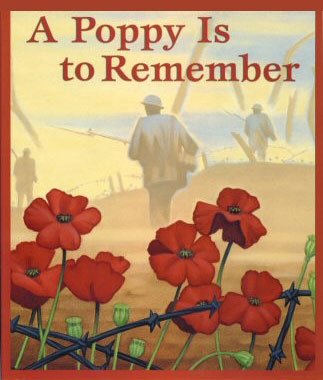 Private William Penman, Scots Guards, died 16 May, 1915 at Le Touret, age 25
(Elizabeth’s great uncle)- Private Archibald Turner Mulholland, Argyll & Sutherland Highlanders, mortally wounded 25 September, 1915 at Loos, age 27
(Elizabeth’s great uncle) - Private David Buller, Highland Light Infantry, died 21 October, 1915 at Loos, age 35
(Elizabeth’s great grandfather) - Private Harold Edgar Brand, East Yorkshire Regiment. died 4 June, 1917 at Tournai.
(My first cousin, three times removed) - Private Walter Porteous, Durham Light Infantry, died 4 October, 1917 at Passchendaele, age 18
(my great uncle) - Corporal John Mulholland, Argyll & Sutherland Highlanders, wounded 2 September, 1914 (shortly before the First Battle of the Aisne), wounded again 29 June, 1918, lived through the war.
(Elizabeth’s great uncle)
The Second World War
- Flying Officer Richard Porteous, Royal Air Force, survived the defeat in Malaya, was evacuated to India and lived through the war
(my great uncle) - Able Seaman John Penman, Royal Navy, served in the Defensively Equipped Merchant fleet on the Atlantic convoys, the Murmansk Run (he may have been on a ship in convoy PQ-17, as we know he spent a winter in Russia) and other convoy routes, was involved in firefighting and rescue efforts during the Bombay Docks explosion in 1944, lived through the war
(Elizabeth’s father) - Private Archie Black (commissioned after the war and retired as a Major), Gordon Highlanders, captured during the fall of Singapore (aged 15) and survived a Japanese POW camp (he had begun to write an autobiography shortly before he died)
(Elizabeth’s uncle) - Elizabeth Buller, “Lumberjill” in the Women’s Timber Corps, an offshoot of the Women’s Land Army in Scotland through the war.
(Elizabeth’s mother) - Trooper Leslie Taplan Russon, 3rd Royal Tank Regiment, died at Tobruk, 19 December, 1942 (aged 23).
Leslie was my father’s first cousin, once removed (and therefore my first cousin, twice removed).
My maternal grandfather, Matthew Kendrew Thornton, was in a reserved occupation during the war as a plater working at Smith’s Docks in Middlesbrough. The original design for the famous Flower-class corvettes came from Smith’s Docks and 16 (including four intended for the French Marine National) of the 196 built in the UK during the war (more were built in Canada).
For the curious, the Commonwealth War Graves Commission the Royal British Legion, and the Library and Archives Canada WW1 and WW2 records site provide search engines you can use to look up your family name. The RBL’s Every One Remembered site shows you everyone who died in the Great War in British or Empire service (Canadians, Australians, New Zealanders, South Africans and other Imperial countries). The CWGC site also includes those who died in the Second World War. Library and Archives Canada allows searches of the Canadian Expeditionary Force and the Royal Newfoundland Regiment for all who served during WW1, and including those who volunteered for the CEF but were not accepted.
In Flanders fields the poppies blow
Between the crosses row on row,
That mark our place; and in the sky
The larks, still bravely singing, fly
Scarce heard amid the guns below.We are the Dead. Short days ago
We lived, felt dawn, saw sunset glow,
Loved and were loved, and now we lie
In Flanders fields.Take up our quarrel with the foe:
To you from failing hands we throw
The torch; be yours to hold it high.
If ye break faith with us who die
We shall not sleep, though poppies grow
In Flanders fields.Lieutenant Colonel John McCrae, MD Canadian Army Medical Corps (1872-1918)
Canada, the Great War, and Flanders Fields
The History Guy: History Deserves to Be Remembered
Published 3 May 2021Canadians would distinguish themselves in the Great War, and the words of Canadian John McCrae would come to, perhaps more than any other, encapsulate the sacrifices of the soldiers of that war. The story of one of the most important poems about war ever written deserves to be remembered.
(more…)
November 9, 2022
The Big Mac’s “peacekeeping magic” is gone
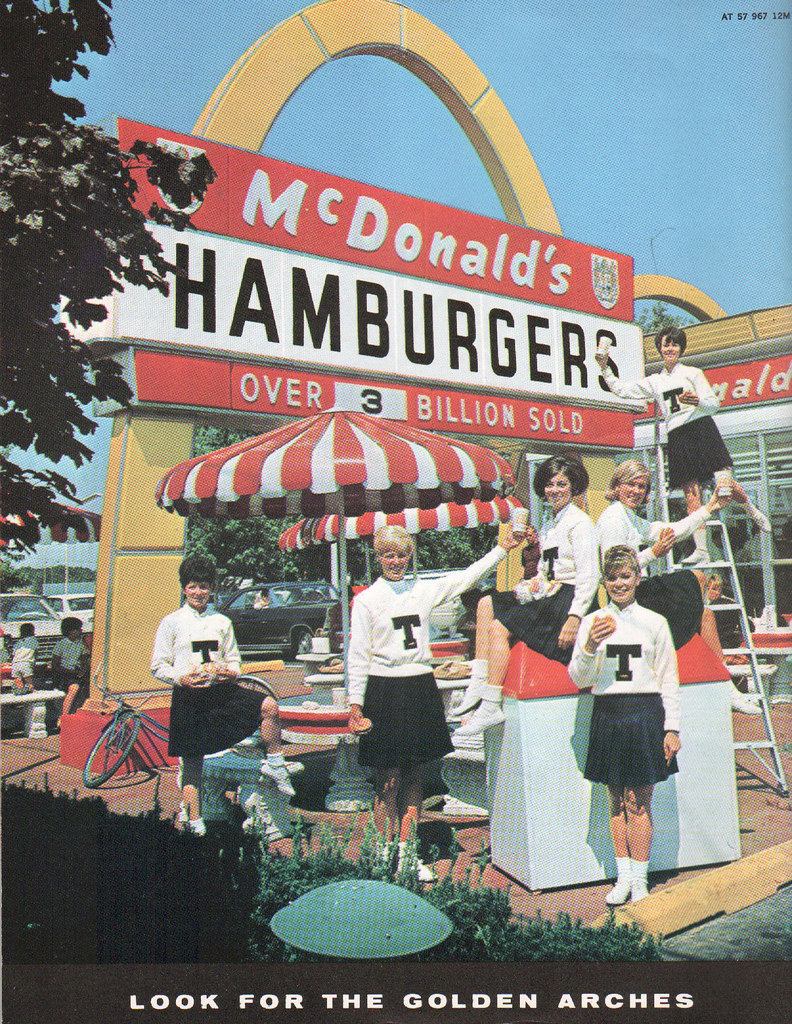
In The Critic, Christopher McCallion illustrates the irrational optimism that countries having McDonald’s restaurants wouldn’t go to war with one another:
“Toledo, McDonald’s, 1967” by DBduo Photography is licensed under CC BY-SA 2.0 

 .
.
In 1910, Norman Angell wrote his famous book The Great Illusion, which argued that it would be irrational for the European great powers to go to war with one another when their prosperity was so interconnected by mutual trade and investment. The subsequent outbreak of WWI confirmed for many observers that competition for relative power and security trumped the pacific pursuit of reciprocal gains in wealth.
Following the Cold War, however, the sheer scope and intensity of globalization convinced many that a new era of capitalist peace had arrived. Thomas Friedman famously proposed a “Golden Arches Theory of Conflict Prevention”, which claimed that no two countries with a McDonalds had ever gone to war. There were many propitious augurs for a new era of peace: the lines stretched for blocks when McDonalds first opened in Moscow, and even still-nominally Communist China proclaimed, “to get rich is glorious.”
Simply put, the “capitalist peace theory” says that mutual gains from trade reduce incentives for conflict between economically engaged states, making the prosperity of each dependent on the other and producing high opportunity costs for war.
Realists have long countered this theory by claiming that states prioritize relative gains over absolute gains. State X and State Y may both be made wealthier in absolute terms by trading with one another, but if Y’s wealth grows at a faster pace than X, X may fear that Y’s rapidly growing wealth could be translated into a surplus of military power putting X’s security at risk. Realists contend that states will ultimately prioritize security over all other goals for the simple reason that without security, no other goals can be assured, including the pursuit of prosperity. Realists tend to reverse the logic of interdependence, claiming that low barriers to the cross-border flow of goods and capital are effects, rather than causes, of peace.
It appears that the realists are being proven right. On the eve of the unveiling of the Nordstream-2 pipeline between Russia and Europe, Moscow decided to invade Ukraine, which (literally) blew up the multi-billion-dollar project and all its future returns. Even McDonald’s, the golden harbinger of perpetual peace, shuttered its operations in Russia.
An even more important example is provided in East Asia. The US and China, the two largest economies in the world, are engaged in a rapidly escalating economic, technological, and military rivalry. Not only did the US initiate a trade war against China, it has also launched an increasingly severe series of export restrictions on advanced technology to China, clearly designed to halt China’s economic growth and limit its growing military power. America’s attempts to cut China off at the knees are reminiscent of the measures taken early in the Cold War to contain the Soviet Union and isolate it from the other industrial centers of the world.
Macaroni & Cheese from 1845
Tasting History with Max Miller
Published 8 Nov 2022
(more…)
November 8, 2022
“Just Stop Oil” and other nihilistic doomsday cults
In Spiked, Tom Slater says we have to accurately label groups like the Extinction Rebellion spin-off “Just Stop Oil” rather than giving them the rather anodyne label of “protest groups”:

We need to stop calling Just Stop Oil a protest group. Protesters is far too positive a word to describe this strange assemblage of middle-class agitators, with their cut-glass accents and self-parodying bohemian names (shouts out to Indigo Rumbelow), who have been gluing themselves to roads and throwing soup at great works of art in an attempt to end oil and gas production. This thing is a doomsday cult, masquerading as a political campaign. There’s really no denying it any longer.
Take the case of that 24-year-old woman who climbed up one of the gantries over the M25 this morning, in order to bring all the ignorant, carbon-spewing plebs to a standstill. She posted an unnerving video online. In it, she is fighting back tears. She gives vent to a seemingly sincere apocalyptic terror. “I’m here because I don’t have a future!”, she says, in between sobs. She accuses the government of murder, of fuelling a “climate crisis” she seems to be convinced is killing millions, for having the temerity to exploit oil and gas to keep the UK’s lights on.
That what she’s saying is alarmist nonsense should be obvious to anyone. The truth is almost the inverse of what she is saying. Thanks to economic development, fuelled by cheap and reliable energy, annual deaths worldwide from climate-related disasters have plunged by more than 95 per cent over the past century. She also implies that the floods in Pakistan are the fault of fossil fuels, even though those feted IPCC reports say there is insufficient evidence to show that climate change is making floods more frequent, lengthy or intense. What would be considerably more murderous would be for our government to shun reliable oil and gas supplies as the nation’s pensioners head into a harsh winter, amid sky-high energy prices and talk of blackouts.
Such blithe disregard for the details reminds us that these people don’t really care about climate change. They’re hysterical about climate change. They’re apocalyptic about climate change. They aren’t taking to the streets, motorways and art galleries because they are convinced of a particular scientific view with regards to the environment and think something really ought to be done about it. They are in the grip of a fact-lite and doom-laden narrative that insists literally billions will die in short order, that the twentysomethings of today might not live to see their dotage, because of our damnable desire to live comfortable and free lives.
All of this is why environmental protest – with Just Stop Oil and the various other Extinction Rebellion offshoots to the fore – has become so much weirder in recent years. And that’s saying something. Beyond all the crying and talk of having no future, there’s also the setting of arms on fire, the pouring of human shit over memorials to Captain Sir Tom Moore, the throwing of soup over great works of art … it’s all become rather visceral, iconoclastic, scatological. In a word, it’s all become rather creepy. These are the acts not of future-oriented protesters keen to shape and change the world, but of cultists convinced that doomsday is almost upon us.
As someone else pointed out recently, there’s more than a bit of a resemblance between the kind of actions taken by protest groups like “Just Stop Oil” and the tantrums of very small children.
Look at Life — Underwater Menace (1969)
PauliosVids
Published 20 Nov 2018Dealing with the hazardous legacy of World War II.
November 7, 2022
Inside the Gulag System – WW2 Special
World War Two
Published 4 Nov 2022Even as the Allied powers condemn the German crimes against humanity, their recent victories are in part thanks to the massive system of forced labour built by Joseph Stalin’s Soviet Union. Over one million prisoners work in the Gulag to power the Soviet war economy.
(more…)
QotD: The rise of architectural modernism
Many ingenious lovely things are gone
That seemed sheer miracle to the multitude.Professor Curl’s book is particularly strong on the historiographical lies peddled by the apologists for modernism, and on the intellectual weakness of the arguments for the necessity of modernism. For example, architectural historians and theoreticians such as Sigfried Giedion, Arthur Korn, and Nikolaus Pevsner claimed to see in modernism the logical continuation of the European architectural tradition, and Pevsner even recruited such figures as William Morris and C.F.A. Voysey as progenitors of the movement. Pevsner was so enamored of Gropius and the Modernists that he wanted to claim a noble descent for them, as humble but ambitious people were once inclined to find a distant aristocratic forebear. Yet Voysey could hardly have been more hostile to the movement that co-opted him. The Modern Movement, he said,
was pitifully full of such faults as proportions that were vulgarly aggressive, mountebank eccentricities in detail, and windows built lying down on their sides. … This was false originality, the true originality having been for all time the spiritual something given to the development of traditional forms by the individual artist.
Pevsner (to whom, incidentally, Curl pays tribute for his past generosity to young scholars, including himself), with all the academic and moral prestige and authority that attached to his name, was able to incorporate Voysey — unable to speak for himself or protest after his death — into the direct ancestry of modernism, even though the merest glance at his work, or at that of William Morris, should have been sufficient to warn anyone that Pevsner’s historiography made a bed of Procrustes seem positively made to measure.
Theodore Dalrymple, “Crimes in Concrete”, First Things, 2019-06.
November 6, 2022
Allies Launch New Phase in Pacific War – WW2 – 219 – November 5, 1943
World War Two
Published 5 Nov 2022The Allies hit the beaches of Bougainville, largest and last of the Solomon Islands. They create and expand a beachhead there and also win battles there at sea and in the skies. In the USSSR, the Soviets are closing in on Kiev and in the south have isolated the Crimea, but in spite of that, Adolf Hitler issues a new directive that Germany’s focus for the future should be in the west and the threat of an Allied invasion there.
(more…)
QotD: Thatcher and the Falklands
And, even when Mrs Thatcher won her victory, the civilizational cringe of the west was so strong that all the experts immediately urged her to throw it away and reward the Argentine junta for its aggression. “We were prepared to negotiate before” she responded, “but not now. We have lost a lot of blood, and it’s the best blood.” Or as a British sergeant said of the Falklands: “If they’re worth fighting for, then they must be worth keeping.”
Mrs Thatcher thought Britain was worth fighting for, at a time when everyone else assumed decline was inevitable. Some years ago, I found myself standing next to her at dusk in the window of a country house in England’s East Midlands, not far from where she grew up. We stared through the lead diamond mullions at a perfect scene of ancient rural tranquility — lawns, the “ha-ha” (an English horticultural innovation), and the fields and hedgerows beyond, looking much as it would have done half a millennium earlier. Mrs T asked me about my corner of New Hampshire (90 per cent wooded and semi-wilderness) and then said that what she loved about the English countryside was that man had improved on nature: “England’s green and pleasant land” looked better because the English had been there. For anyone with a sense of history’s sweep, the strike-ridden socialist basket case of the British Seventies was not an economic downturn but a stain on national honor.
A generation on, the Thatcher era seems more and more like a magnificent but temporary interlude in a great nation’s bizarre, remorseless self-dissolution. She was right and they were wrong, and because of that they will never forgive her. “I have been waiting for that witch to die for 30 years,” said Julian Styles, 58, who was laid off from his factory job in 1984, when he was 29. “Tonight is party time. I am drinking one drink for every year I’ve been out of work.” And when they call last orders and the final chorus of “Ding Dong! The Witch Is Dead” dies away, who then will he blame?
During the Falklands War, the Prime Minister quoted Shakespeare, from the closing words of King John:
And we shall shock them: naught shall make us rue,
If England to itself do rest but true.For eleven tumultuous years, Margaret Thatcher did shock them. But the deep corrosion of a nation is hard to reverse: England to itself rests anything but true.
Mark Steyn, “The Uncowardly Lioness”, SteynOnline.com, 2019-05-05.
November 5, 2022
The Byzantine Empire: Part 8 – The Breakdown, 1025-1204
seangabb
Published 20 May 2022In this, the eighth video in the series, Sean Gabb explains how, having acquired the wrong sort of ruling class, the Byzantine Empire passed in just under half a century from the hegemonic power of the Near East to a declining hulk, fought over by Turks and Crusaders.
Subjects covered include:
The damage caused by a landed nobility
The deadweight cost of uncontrolled bureaucracy
The first rise of an insatiable and all-conquering West
The failure of the Andronicus Reaction
The sack of Constantinople in 1204Between 330 AD and 1453, Constantinople (modern Istanbul) was the capital of the Roman Empire, otherwise known as the Later Roman Empire, the Eastern Roman Empire, the Mediaeval Roman Empire, or The Byzantine Empire. For most of this time, it was the largest and richest city in Christendom. The territories of which it was the central capital enjoyed better protections of life, liberty and property, and a higher standard of living, than any other Christian territory, and usually compared favourably with the neighbouring and rival Islamic empires.
The purpose of this course is to give an overview of Byzantine history, from the refoundation of the City by Constantine the Great to its final capture by the Turks.
Here is a series of lectures given by Sean Gabb in late 2021, in which he discusses and tries to explain the history of Byzantium. For reasons of politeness and data protection, all student contributions have been removed.
(more…)
Repost: Remember, Remember the Fifth of November
Today is the anniversary of the Gunpowder Plot:
Everyone knows what the Gunpowder Plotters looked like. Thanks to one of the best-known etchings of the seventeenth century we see them “plotting”, broad brims of their hats over their noses, cloaks on their shoulders, mustachios and beards bristling — the archetypical band of desperados. Almost as well known are the broad outlines of the discovery of the “plot”: the mysterious warning sent to Lord Monteagle on October 26th, 1605, the investigation of the cellars under the Palace of Westminster on November 4th, the discovery of the gunpowder and Guy Fawkes, the flight of the other conspirators, the shoot-out at Holbeach in Staffordshire on November 8th in which four (Robert Catesby, Thomas Percy and the brothers Christopher and John Wright) were killed, and then the trial and execution of Fawkes and seven others in January 1606.
However, there was a more obscure sequel. Also implicated were the 9th Earl of Northumberland, three other peers (Viscount Montague and Lords Stourton and Mordaunt) and three members of the Society of Jesus. Two of the Jesuits, Fr Oswald Tesimond and Fr John Gerard, were able to escape abroad, but the third, the superior of the order in England, Fr Henry Garnet, was arrested just before the main trial. Garnet was tried separately on March 28th, 1606 and executed in May. The peers were tried in the court of Star Chamber: three were merely fined, but Northumberland was imprisoned in the Tower at pleasure and not released until 1621.
[. . .]
Thanks to the fact that nothing actually happened, it is not surprising that the plot has been the subject of running dispute since November 5th, 1605. James I’s privy council appears to have been genuinely unable to make any sense of it. The Attorney-General, Sir Edward Coke, observed at the trial that succeeding generations would wonder whether it was fact or fiction. There were claims from the start that the plot was a put-up job — if not a complete fabrication, then at least exaggerated for his own devious ends by Robert Cecil, Earl of Salisbury, James’s secretary of state. The government’s presentation of the case against the plotters had its awkward aspects, caused in part by the desire to shield Monteagle, now a national hero, from the exposure of his earlier association with them. The two official accounts published in 1606 were patently spins. One, The Discourse of the Manner, was intended to give James a more commanding role in the uncovering of the plot than he deserved. The other, A True and Perfect Relation, was intended to lay the blame on Garnet.
But Catesby had form. He and several of the plotters as well as Lord Monteagle had been implicated in the Earl of Essex’s rebellion in 1601. Subsequently he and the others (including Monteagle) had approached Philip III of Spain to support a rebellion to prevent James I’s accession. This raises the central question of what the plot was about. Was it the product of Catholic discontent with James I or was it the last episode in what the late Hugh Trevor-Roper and Professor John Bossy have termed “Elizabethan extremism”?
QotD: The use of chemical weapons after WW2
Both Cold War superpowers stockpiled chemical weapons, but seem to have retained considerable ambivalence about their use. In the United States, chemical weapons seem to have been primarily viewed not as part of tactical doctrine, but as a smaller step on a nuclear deterrence ladder (the idea being that the ability to retaliate in smaller but still dramatic steps to deter more dramatic escalations; the idea of an “escalation ladder” belongs to Herman Kahn); chemical weapons weren’t a tactical option but baby-steps on the road to tactical and then strategic nuclear devices (as an aside, I find the idea that “tactical” WMDs – nuclear or chemical – could somehow be used without triggering escalation to strategic use deeply misguided). At the same time, there was quite a bit of active research for a weapon-system that had an uncertain place in the doctrine – an effort to find a use for a weapon-system the United States already had, which never quite seems to have succeeded. The ambivalence seems to have been resolved decisively in 1969 when Nixon simply took chemical weapons off of the table with an open “no first use” policy.
Looking at Soviet doctrine is harder (both because I don’t read Russian and also, quite frankly because the current epidemic makes it hard for me to get German and English language resources on the topic) The USSR was more strongly interested in chemical weapons throughout the Cold War than the United States (note that while the linked article presents US intelligence on Soviet doctrine as uncomplicated, the actual intelligence was ambivalent – with the CIA and Army intelligence generally downgrading expectations of chemical use by the USSR, especially by the 1980s). The USSR does seem to have doctrine imagine their use at the tactical and operational level (specifically as stop-gap measures for when tactical nuclear weapons weren’t available – you’d use chemical weapons on targets when you ran out of tactical nuclear weapons), but then, that had been true in WWII but when push came to shove, the chemical munitions weren’t used. The Soviets appear to have used chemical weapons as a terror weapon in Afghanistan, but that was hardly a use against a peer modern system force. But it seems that, as the Cold War wound down, planners in the USSR came around to the same basic idea as American thinkers, with the role of chemical weapons – even as more and more effective chemicals were developed – being progressively downgraded before the program was abandoned altogether.
This certainly wasn’t because the USSR of the 1980s thought that a confrontation with NATO was less likely – the Able Archer exercise in 1983 could be argued to represent the absolute peak of Cold War tensions, rivaled only by the Cuban Missile Crisis. So this steady move away from chemical warfare wasn’t out of pacifism or utopianism; it stands to reason that it was instead motivated by a calculation as to the (limited) effectiveness of such weapons.
And I think it is worth noting that this sort of cycle – an effort to find a use for an existing weapon – is fairly common in modern military development. You can see similar efforts in the development of tactical nuclear weapons: developmental dead-ends like Davy Crockett or nuclear artillery. But the conclusion that was reached was not “chemical weapons are morally terrible” but rather “chemical weapons offer no real advantage”. In essence, the two big powers of the Cold War (and, as a side note, also the lesser components of the Warsaw Pact and NATO) spent the whole Cold War looking for an effective way to use chemical weapons against each other, and seem to have – by the end – concluded on the balance that there wasn’t one. Either conventional weapons get the job done, or you escalate to nuclear systems.
(Israel, as an aside, seems to have gone through this process in microcosm. Threatened by neighbors with active chemical weapons programs, the Israelis seem to have developed their own, but have never found a battlefield use for them, despite having been in no less than three conventional, existential wars (meaning the very existence of the state was threatened – the sort of war where moral qualms mean relatively little) since 1948.)
And I want to stress this point: it isn’t that chemical munitions do nothing, but rather they are less effective than an equivalent amount of conventional, high explosive munitions (or, at levels of extreme escalation, tactical and strategic nuclear weapons). This isn’t a value question, but a value-against-replacement question – why maintain, issue, store, and shoot expensive chemical munitions if cheap, easier to store, easier to manufacture high explosive munitions are both more obtainable and also better? When you add the geopolitical and morale impact on top of that – you sacrifice diplomatic capital using such weapons and potentially demoralize your own soldiers, who don’t want to see themselves as delivering inhumane weapons – it’s pretty clear why they wouldn’t bother. Nevertheless, the moral calculus isn’t the dominant factor: battlefield efficacy – or the relative lack thereof – is.
Bret Devereaux, “Collections: Why Don’t We Use Chemical Weapons Anymore?”, A Collection of Unmitigated Pedantry, 2020-03-20.


