
As for the concept of collective guilt, I personally think that it is totally unjustified to hold one person responsible for the behaviour of another person or a collective of persons. Since the end of World War Two I have not become weary of publicly arguing against the collective guilt concept. Sometimes, however, it takes a lot of didactic tricks to detach people from their supersitions. An American woman once confronted me with the reporach, “How can you still write some of your books in German, Adolf Hitler’s language?” In response, I asked her if she had knives in her kitchen, and when she answered that she did, I acted dismayed and shocked, exclaiming, “How can you still use knives after so many killers have used them to stab and murder their victims?” She stopped objecting to my writing books in German.
Viktor Frankl, Man’s Search for Meaning, 1946.
December 28, 2022
QotD: Collective guilt
December 27, 2022
Marcus Licinius Crassus, the richest man in Rome
In The Critic, Bijan Omrani reviews Crassus: The First Tycoon by Peter Stothard:
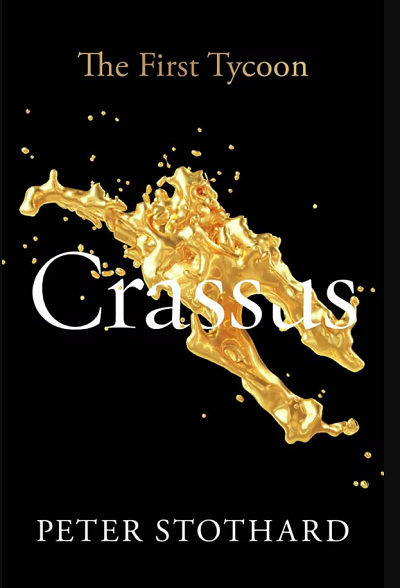
If you are feeling despondent about the dismal quality of the current generation of politicians, it may be some comfort to remember that even in the golden age of Rome such complaints were legion.
The poet Horace wrote at length about how the ruling class had gone downhill. Once, there had been paragons of virtue such as Cincinnatus, who after saving Rome as dictator laid down his power without demur and returned to live on his humble farm; or the consul Regulus, who refused to make any concessions after being captured by the Carthaginians, although he knew they would torture him to death. Instead of these titans, the modern age had brought forth a base generation. Marcus Licinius Crassus, the richest man in Rome and subject of this new biography, was foremost among them.
The formidable influence wielded by Crassus in the final years of the Roman Republic — he was an ally, and rival, of Julius Caesar and Pompey the Great — came not by way of old-fashioned heroics and victories on the battlefield. His methods were recognisably modern. Peter Stothard characterises him as a “disrupter of old rules, fixer and puller of the puppet strings of power”. His tools were money and the economy of favours. He employed them with a coldness, ruthlessness and level of calculation that makes him unappetising, but deeply compelling. Stothard’s description of him as “The First Tycoon” is apt. He is the sort of character one might expect to find wearing red braces in a New York boardroom, rather than a brocaded toga in the Roman Forum.
By origin, Crassus was a member of one of Rome’s blue-blooded families. His pursuit of political influence by means of business rather than military prowess would seem at first sight unexpected, given the traditional prohibition against the senatorial aristocracy engaging in trade. Yet, the turmoil of Crassus’s formative years overturned these niceties. The last sight he had of his father, who had served as a consul, was of his head on a spike in the Forum.
He was a victim of the perennial strife that plagued Rome at the beginning of the 1st century BC, caused by imbalances in wealth and tensions between Rome and wider Italy, not to mention discord over land, military and constitutional reforms. With the death of his father and two of his brothers, Crassus had to flee Rome and hide in a cave for eight months in Spain, where his family still had allies. It is doubtless these upheavals — similar to those of Julius Caesar, who lost his father young and had to go into hiding during this chaos — led Crassus to seek an inviolable security, regardless of whether he trampled on old Roman conventions and upset others to do so.
When the aristocratic faction seized power in the late 80s BC, Crassus was able to return to Rome. There, he pursued every commercial method, no matter how disreputable, to accumulate wealth. It satisfied not only his needs for security but, as Stothard argues, it was also a way of seeking revenge for the death of his father. He bought up the properties of those families allied to the earlier populist regime which had just been displaced.
These came at a knock-down price, as the families had been outlawed, with some executed and others sent into exile. Crassus appears to have been on a committee which determined the loyalty of citizens to the new government and appears not to have scrupled to condemn those whose property he coveted. His other prime method for enlarging his portfolio was to buy up cheaply buildings that were on fire, or else in the path of a fire. He organised his slaves along military lines, using them with relentless efficiency to acquire, rebuild and sell on property for a huge profit.
Smoking Bishop from A Christmas Carol
Tasting History with Max Miller
Published 10 Dec 2021
(more…)
December 26, 2022
The Battle of Ortona with Jayson Geroux
OTD Canadian Military History
Published 21 Dec 2022Join me as I welcome Jayson Geroux to the OTD channel to discuss the Battle of Ortona. We will be discussing the urban combat that took place in Ortona in December 1943. [The discussion of the actual battle begins around the 6 minute mark.]
(more…)
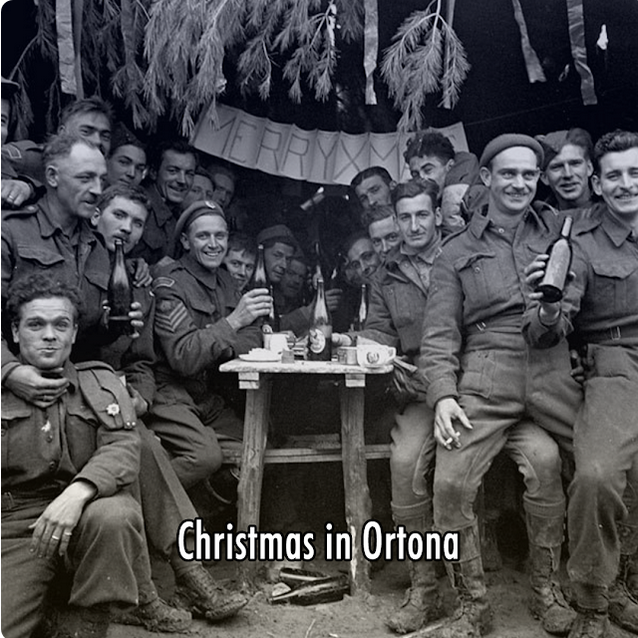
2nd Canadian Infantry Brigade Christmas celebrations in Ortona, 1943
The folks at the World War Two channel on YouTube posted this to their community page on Christmas Day:
On Christmas Day, 25 December 1943, the 1st Canadian Infantry Division is still engaged in brutal urban combat against the 1. Fallschirmjäger-Division for control over the town of Ortona. But among the rubble of the “Italian Stalingrad”, soldiers of the Seaforth Highlanders of Canada, along with other units [of the 2nd Canadian Infantry Brigade], manage to keep the Christmas spirit alive.
Colonel S. W. Thomson will recount this most unusual Christmas celebration many years later:
“I knew that we would be fully engaged with the enemy on Christmas day. However our most enterprising Quartermaster, Captain Bordon Cameron, was anxious to provide something special for the men at Christmas. Three companies were in the line with one in reserve, often the norm. We decided to feed the reserve company first and feed the remaining companies in relays. as one company finished it would go forward some 300 or 400 yards and relieve the next. Tables, linen, chinaware and candles were scrounged by the reserve company. The tables were set up in rows in our great church Santa Maria with four foot thick walls and my rear H.Q. What a picture, what an appropriate setting for a Christmas dinner on Dec. 25.
“Soup, roast pork, vegetables and Christmas pudding along with a bottle of beer for each of the tattered, scruffy, war weary soldiers was served by HQ and B echelon staff. The Q.M. boys excelled themselves, the impossible had happened. There was a spirit of good-fellowship throughout the church. The signals officer Lieutenant Wilf Gildersleeve played the organ, and our much loved padre Roy Durford led the carol singing. Pipe Major Esson played his pipes several times during the meals drowning out the odd enemy shell burst outside.
“Christmas in Ortona, the meal, yes, but the spirit of the occasion, the look on the faces of those exhausted, gutsy men on entering the church is with me to-day and will live forever.”
To all our followers, readers, and viewers: We wish you a Merry Christmas!
From: Canadian Military History, Vol. 2 (1993)
Picture: Canadian soldiers celebrate Christmas in Ortona, Italy
Source: Canadian Armed Forces
How to Make Christmas Gin Punch – The Victorian Way
English Heritage
Published 7 Dec 2016Mr Lincoln, the butler, is very busy with Christmas preparations, so Mrs Crocombe is making some Christmas gin punch for the servants in the kitchens of Audley End House.
INGREDIENTS
250g Brown Sugar
7 lemons
750ml Gin
750ml Ginger Wine
250g Honey
A Pinch of Cloves
1 tsp Cinnamon
1 tsp Nutmeg
Hot WaterMETHOD
In a large bowl, add the sugar, nutmeg, cinnamon, cloves, lemons, honey, gin and ginger wine. Add some hot water to your taste and give everything a good stir. You can then decant your punch into a decorative bowl and serve.
(more…)
QotD: Christmas gluttony
Brain: THERE’S STILL CHEESE LEFT, PUSSY!
Body: But I hurt.
Brain: EAT MORE CHOCOLATE NOW!
Body: *cries*
Brain: WASH IT DOWN WITH A PINT OF BAILEYS.
Body: I’m begging you. Please stop.
Body: SNORT THAT PURPLE QUALITY STREET, BITCH.Amanda (Pandamoanimum), Twitter, 2018-09-13.
December 25, 2022
What the heck is Wassail?
Tasting History with Max Miller
Published 16 Dec 2022
(more…)
Stalin’s Christmas Surprise – Major Offensives to Come – WW2 – 226 – December 24, 1943
World War Two
Published 24 Dec 2022Twas the night before Christmas and the war was grinding on. The Moro River Campaign continues in Italy with Canadian infantry pushing past the Gully and into “Little Stalingrad”. Generally, the Allied advance to Rome is turning into a stalemate though, but Winston Churchill still believes an amphibious landing is the way to break this. Joseph Stalin also has some pretty big plans to bring the USSR back to its pre-Barbarossa borders. In the Pacific, there is attrition over Rabaul and stalemate on Bougainville.
(more…)
Repost – “Fairytale of New York”
Time:
“Fairytale of New York” by The Pogues featuring Kirsty MacColl
This song came into being after Elvis Costello bet The Pogues’ lead singer Shane MacGowan that he couldn’t write a decent Christmas duet. The outcome: a call-and-response between a bickering couple that’s just as sweet as it is salty.
December 24, 2022
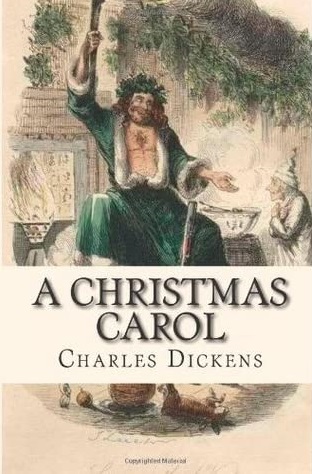
The abiding influence of A Christmas Carol by Charles Dickens
So many of our fading-but-still-fondly remembered Christmas traditions seem to come back to Victorian times, and especially those featured in Charles Dickens’ most famous Christmas story (certainly helped by the popularity of the Alistair Sim film adaptation):
Even in our supposedly rationalist secular era, we find one of these thin places or times in the unlikely guise of Christmas and its rich repository of ghost stories. The supernatural was not banished by the developments of modernity but rather it evolved and adapted, moving from enchanted woods to gothic houses to the streets and rooms of Victorian cities. Just as in earlier times, they found their place where it is dark, in the dead of winter, when the nights close in and fireside stories cause the mind to play tricks and shadows to seemingly change their forms.
Among the many writers who have tried their hand at yuletide ghost stories, none loom larger than Charles Dickens who, with A Christmas Carol (subtitled Being a Ghost Story of Christmas), fundamentally influenced the way we perceive and celebrate the festivity. To fully understand how and why Christmas became a thin place and remains so, we have to delve into a scourge at the very heart of Dickens’s story and our society still — loneliness.
Christmas is one of those times when, as a much earlier writer, Dante, put it: “There is no greater sorrow than to recall in misery the time when we were happy.” And what time is happier, or more melancholic when irretrievable, than a childhood Christmas? Victorian writers knew that when we are alone at Christmas, a time that seems intrinsically meant for loved ones congregating (the perpetual renewal of the Nativity scene), our ghosts, borne by memory, absence and regret, would instead arrive.
Dickens knew the power of myth, and how the beautiful lie might reveal the hidden truth. Determined to speak out about the horrors of child labour and poverty he had directly experienced and witnessed, Dickens first toyed with writing a strident but fairly unwieldly political jeremiad until he realised, correctly, that there was a much more seductive approach available, through the Trojan Horse of storytelling. It was all too easy to turn away from a lecture or respond with platitudes and fallacies, but a heart-stirring tale had the ability to get under one’s skin. His characters and settings were constructed not just from satirical observations of the powerful but from encounters Dickens had had with the powerless, during his lengthy night walks around London. He was also deeply inspired, and haunted, by macabre tales that his cockney nursemaid Mary Weller used to delight in telling him as a child — full of Faustian pacts, treacherous innkeepers, poisons “distilled from toads’ eyes and spiders’ knees”, the Black Cat and Captain Murderer. To add to the unease, Weller would claim the horrors were true and she had witnessed them herself or had heard them from relatives who were eyewitnesses. As Dickens later recounted, in The Uncommercial Traveller, she “took a fiendish enjoyment of my terrors, and used to begin, I remember — as a sort of introductory overture — by clawing the air with both hands, and uttering a long low hollow groan”.
A Christmas Carol has this oral tradition feel, albeit delivered in a short, and affordable, novella form. It also rebalances Dickens’s heavy lean towards sentimentality (the pitiable figure of Tiny Tim, for instance) with the resolutely unsentimental tactic of terrifying child readers. This was necessary for reasons of veracity — existence was unsentimental in those days — but also as a myth-making technique. There are few lessons that stay with us longer and deeper than those which strike mortal fear in us and then propose a way out.
At the heart of the story and its extraordinary legacy is loneliness. Rereading A Christmas Carol, its power initially comes from its status as a social tract and a fable. What is crucial, however, is its existential quality. It shows that the system then in place, and perhaps still, not only oppresses and squanders but it also alienates. Dickens takes the traditional Christmas theme of visitation (the announcing angel, the wandering star leading to the Christ child, the shepherds, the Magi) and makes it sinister. Salvation can come only through the painful process of facing the truth (“Without their visits,” said the Ghost, “you cannot hope to shun the path I tread”). It can only emerge from Scrooge seeing that he has betrayed and marginalised not only his fellow human beings but himself, acknowledging that he belongs to the Malthusian “surplus population” he castigates, that he is alone and bereft (“Will you not speak to me?” he begs the final phantom), and the only precious hope he has left is to be found through gratitude and selfless communion with others.
History-Makers: Saint Nicholas to Santa Claus
Overly Sarcastic Productions
Published 23 Dec 2022Merry Sinterklaasfeest to all, and to all a good night.
Our content is intended for teenage audiences and up.
(more…)
QotD: Auberon Waugh on Christmas shopping
Auberon Waugh, Diary, 1975-12-18.
December 23, 2022
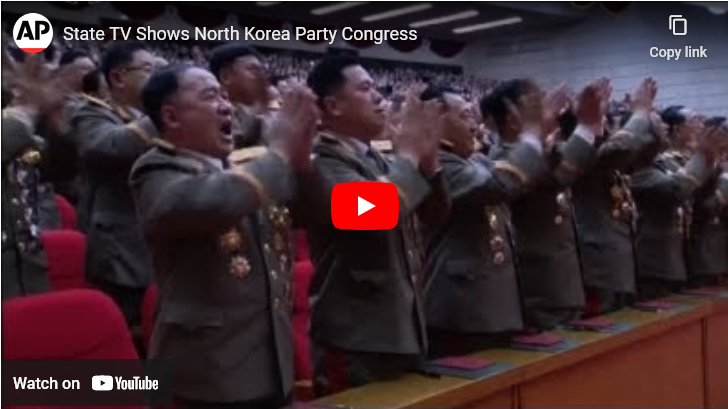
Never, ever be the first to stop clapping
Chris Bray on the echoes of Soviet-era mandatory celebrations expected of US elected politicians during a speech by Comrade Stalin to the Politburo state visit by the President of Ukraine:
I hesitate to say any of this, because it’s December 22 and none of us should be thinking about the grotesqueries of the political and media classes, but it’s been a busy week for them. I started writing here a little more than a year ago, and have argued since the beginning that our notional leadership classes have developed a set of ritual behaviors that are entirely severed from any form of reality you’ll ever see in your own daily life. (Dana Loesch: “You can’t run a country you’ve never been to.”)
And so here’s one of the least subtle court eunuchs with a message about ritual obedience:
I wish I could replicate the awkward burst of nervous laughter that came out of me at the moment that I saw this message. The policing of performative applause in a formal political setting is so obviously a theme of totalitarian societies that … well, that Chief Eunuch Michael Beschloss can be counted on to not notice what he’s just done. I didn’t get a harumph outta that guy, he said, from deep inside a cloud of obtuse self-regard.
“They insist on inflicting on us such bloated theater & they seem not to know how false it all appears.” The Ukrainian president made it all the way to the Capitol in his combat fatigues, doncha know, and was greeted with a rapturous standing ovation by members of Congress, seen here in this actual footage:
Are there any normal human beings who don’t taste bile when they see this performance? And, Thomas Massie and Rand Paul aside, are there any normal human beings left inside the Beltway?
“Squee! Squee! Squee!” they explained, shaking their pom poms in a dignified ritual of state.

A Jungle Miracle – War Against Humanity 092
World War Two
Published 22 Dec 2022Two escapes, one from the Nazis in Kovno (Kaunas) Lithuania, from the prison at Fort IX, and one from Japanese terror on Panay in the Philippines this week, will help to document the crimes of the Axis powers.
(more…)


