
There have been questions about my Rules of Politics around here in the last few days. Okay, not a lot of questions, but still. Here is the full list of rules. About a year after I came up with the original two, I added two more, which was probably a mistake. Sometimes I come up with candidates for additions to the list, and here today I will reveal one I considered adding, before deciding against it. But I think it’s time to show a little discipline, so the canonical list will stop at four. Four shall be the number thou shalt count, and the number of the counting shall be four. Ready?
1: For any given situation, Canadian politics will tend toward the least exciting possible outcome.
2: If everyone in Ottawa knows something, it’s not true.
3. The candidate in the best mood wins.
4. The guy who auditions for the role of opposition leader will get the job.
Paul Wells, “Wells’s Rules, annotated”, Maclean’s, 2009-05-21.
February 10, 2021
QotD: Wells’s Rules of Canadian Politics
February 8, 2021
QotD: The deeply rooted anti-Americanism in Canadian politics
Ben Woodfinden, “True North Patriotism and a Distinctly Canadian Conservatism”, The Dominion, 2020-10-20.
February 7, 2021
Former Liberal MP dishes on Justin Trudeau in her new book
When I moved out of Whitby, the local Member of Parliament was Liberal Celina Caesar-Chavannes. She was, we thought, a high-profile person who’d probably be quickly moved into a junior cabinet position, as Justin Trudeau sets a very high value on being seen to be supportive of women and minorities. As she quickly discovered, however, with Trudeau it’s very much the “being seen” part that matters to him and almost nothing in the way of actually being supportive:
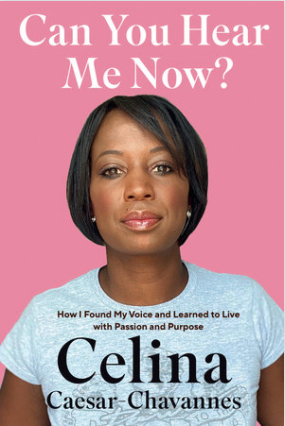
[After a kerfuffle with opposition MP Maxime Bernier] she said she didn’t hear from most of her Liberal colleagues or the prime minister until a #hereforCelina hashtag campaign started weeks later, in response to a column that accused her of “seeing racism everywhere.” When she later confronted Trudeau about the lack of support, she said he told her, “As a strong Black woman, I didn’t think you needed help.” She said Conservative MP Michelle Rempel Garner was more supportive to her during that period than Trudeau.
The incident is one of many allegations of racism, tokenizing, and microaggressions Caesar-Chavannes wrote about in her new memoir Can You Hear Me Now?, which came out February 2.
[…]
Caesar-Chavannes told VICE World News her experiences of being tokenized, excluded, and undervalued led her to resign from the Liberal caucus and not run again in the 2019 election. Her decision culminated in an explosive conversation with Trudeau in February 2019, during which she alleges he complained to her about being confronted about his privilege. She said he was angry that she wanted to resign on the same day then Minister of Veterans Affairs Jody Wilson-Raybould quit her cabinet role, in the midst of the SNC-Lavalin scandal, the biggest crisis the governing Liberals had faced since Trudeau’s election in 2015.
“I was met with an earful that I needed to appreciate him, that everybody talked to him about his privilege, that he’s so tired of everybody talking to him about this stuff, and that I cannot make this announcement right now,” she said. She alleges he told her “he couldn’t have two powerful women of colour leave at the same time.”
After listening to his “rant” for a while, Caesar-Chavannes said she cussed out the prime minister.
“I had to ask him, ‘Motherfucker, who the fuck do you think you’re talking to?'” she said. “I was so angry.”
She said she didn’t make out what Trudeau said after that, but it “sounded like he was crying.” She ended up delaying her resignation announcement until March 2019.
Caesar-Chavannes said the Liberal party’s treatment of Wilson-Raybould — an Indigenous woman and whistleblower — made her feel like many of her colleagues were “fake as fuck” and cemented her desire to sit as an independent.
February 1, 2021
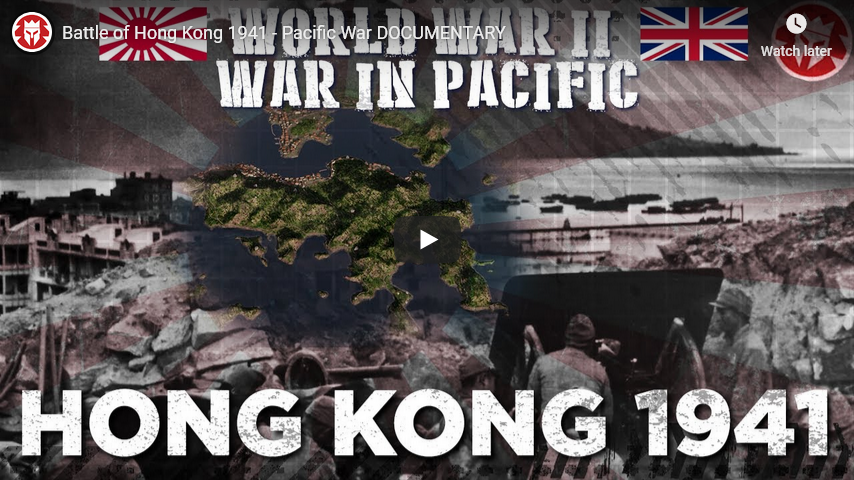
Battle of Hong Kong 1941 – Pacific War
Kings and Generals
Published 31 Jan 2021The first 100 people to go to https://www.blinkist.com/kingsandgenerals are going to get unlimited access for 1 week to try it out. You’ll also get 25% off if you want the full membership
Kings and Generals 3d animated historical documentary series on modern warfare continues with a video on the battle of Hong Kong of 1941. Japanese Empire is waging another Sino-Japanese war against China and decides that it is time to take over Hong Kong, as the British were using it to supply the Chinese. This battle is considered one of the first in the Pacific War within World War II.
Support us on Patreon: http://www.patreon.com/KingsandGenerals or Paypal: http://paypal.me/kingsandgenerals. We are grateful to our patrons and sponsors, who made this video possible: https://docs.google.com/document/d/1o…
The video was made by Leif Sick, while the script was developed by Ivan Moran. The video was narrated by Officially Devin (https://www.youtube.com/user/OfficiallyDevin)
✔ Merch store ► teespring.com/stores/kingsandgenerals
✔ Podcast ► http://www.kingsandgenerals.net/podcast/
✔ Twitter ► https://twitter.com/KingsGenerals
✔ Instagram ► http://www.instagram.com/Kings_GeneralsProduction Music courtesy of Epidemic Sound: http://www.epidemicsound.com
#Documentary #HongKong #PacificWar
January 24, 2021
QotD: The “returned ballot”
Here’s what you do. You go into the polling station, show your ID (in Canada voters must identify themselves). The officer crosses you off the voting list, and gives you a ballot. Then you say, “I wish to return this ballot.” He says, “Thank you, sir,” and takes out his returned ballot book. (It need be nothing special: a school exercise book will do.) He copies your name into that, along with your address. (It is the only way to get your preference recorded.) You thank him, then wander off through the boobs who came to vote for somebody.
One has oneself, in effect, just voted for “none of the above.” This is the theory.
In practice the officer, who may or may not speak English or French, but probably needed the money, looks puzzled and a little frightened. He has no idea what you are talking about. You dig in, to provide a patient lesson in elementary civics. He won’t have a book, but you have brought along a cahier with “Returned Ballots” written on the cover in large capitals with a felt pen, and some heraldry doodled above it. To be helpful, you have already written your name and address on the first line. He consults all the other polling staff then says, “Thank you, sir.”
When, later, you check the results, you will not find a single returned ballot mentioned. Perhaps you were counted among the spoilt ones.
Now if you had been counted, and had persuaded a plurality of your fellow citizens to do likewise in, say, the riding of Parkdale (about one-in-four would triumph in most Canadian ridings; one-in-six if the turnout were low enough), the election is annulled. A by-election must then be called, in which none of the previous candidates may stand.
David Warren, “Let’s be practical”, Essays in Idleness, 2018-09-15.
January 22, 2021
Canada’s Governor General resigns, avoiding dragging the Queen into another Canadian political drama
Colby Cosh notes in Thursday’s NP Platformed newsletter:

The Right Honourable Julie Payette, 29th Governor General of Canada (October 2, 2017 – January 21, 2021).
When NP Platformed saw Robert Fife’s Globe and Mail report this morning, our thought was that leaking the news of the report’s completion was an obvious political manoeuvre. (You know how a fife works: put some wind in it, and it will play a tune for you.)
Even a prime minister as callow as the current one would not want to try firing a governor general, which would require the personal intervention of the Queen. This would be a failure in itself, a blot on Canada’s copybook, even if the PM had the support of other parliamentary parties.
As hours passed, the thought naturally occurred to us: why should Payette be making anyone wait for some written report anyway? We know she has sometimes balked at most of the easily identifiable parts of her job, including travel to ceremonies and (for heaven’s sake) giving royal assent to legislation. Hired to be a dynamic female STEM mascot (for a Liberal government, sort of), she somehow degenerated, with unseemly speed, into an immured princess from a fairy tale, evidently driven half-mad by some faerie spell.
The main job, the essence of the governor general gig, is to be above suspicion, like Caesar’s wife in the proverb. The mere whisper of abusiveness or of clownish behaviour involving public funds ought to have been enough to settle things, possibly with a convenient health excuse. (If she offers one now, it can only provoke snide laughter.) The vicereine is, in our system of government, the passage through which national honours flow from the sovereign. The mention of “honour” in connection with this Governor General was becoming mighty awkward. She should have our thanks for doing the right thing today.
January 21, 2021
QotD: The Laurentian Elite and the “new Canada” of the 1960s
Because the Liberals were so successful in creating this new identity, conservatives, especially Western conservatives (understandably) felt alienated in this new Canada. Brimelow gave some intellectual heft and crafted a coherent theory around why conservatives felt this way.
The broader narrative Brimelow, and others, put forward is that Canada’s British heritage was central to our identity and sense of who we are, but that this identity was destroyed by the Liberals who then built a new one in their own image. In the 1960s, Canadian Liberalism became self-consciously post-British, and the 1960s really do represent an approximate decade in which the “old Canada” died and a “new Canada” was born. The 1960s weren’t just a time of social change, they marked the end of the British Empire, the start of the Quiet Revolution, and of course most symbolically saw the replacement of the Red Ensign with the Maple Leaf flag. The battles between Diefenbaker and Pearson (and Pierre Trudeau) work as a stand in for the divide between old British Canada and new Liberal Canada.
Ben Woodfinden, “True North Patriotism and a Distinctly Canadian Conservatism”, The Dominion, 2020-10-20.
January 20, 2021
“Canada Post … is not to act as the censor of mail or to determine the extent of freedom of expression in Canada”
Colby Cosh on a recent incident in Regina where a Canada Post employee took it upon himself to act as a local censor for people on his delivery route:

Today’s idiot of the day is not, perhaps surprisingly, the Regina postman who got suspended for refusing to deliver the Epoch Times, the oddball anti-communist newspaper that’s affiliated with China’s persecuted Falun Gong religious movement. Don’t get us wrong: Ramiro Sepulveda is clearly a bit of a nitwit. He seems to believe that a newspaper founded by commie-hating Chinese-Americans is designed to provoke hatred toward “Asian communities in North America.”
Sepulveda didn’t want to deliver free copies of the Times to non-soliciting customers because it “spits lies.” Perhaps regrettably, the strong reaction by Canada Post means that our junk mail, quite a lot of which consists of boastful missives from politicians, is not destined to be fact-checked and aggressively suppressed by the corporation’s rank and file.
Sepulveda was properly punished for not doing his job. And Canada Post used the opportunity to promote its content-neutrality as an agent of the state, although it did not quite dare to use the phrase “statutory monopoly.” In a statement to the broadcasters who reported on Sepulveda’s off-piste personal fact-checking, the agency said: “Canada Post is obligated to deliver any mail that is properly prepared and paid for, unless it is considered non-mailable matter. The courts have told Canada Post that its role is not to act as the censor of mail or to determine the extent of freedom of expression in Canada.”
They might have added that access to the mail has been denied to individuals for spreading hatred only a handful of times in the history of the country; this, too, is as it ought to be, and it is certainly not postal employees who ought to be improvising such bans. Ideally, all postmen would be doing their best not to create the suspicion that they are eyeballing what is sent to our homes with the intention of ringing up a reporter and causing a fuss. Say what you like about these poor toilers: most of them never give us any reason to doubt their discretion.
January 10, 2021
Has the United States reached the same tipping point Canada reached in 1982?
David Warren considers the 1982 tipping point in Canada to have been the implementation of Pierre Trudeau’s Constitution:
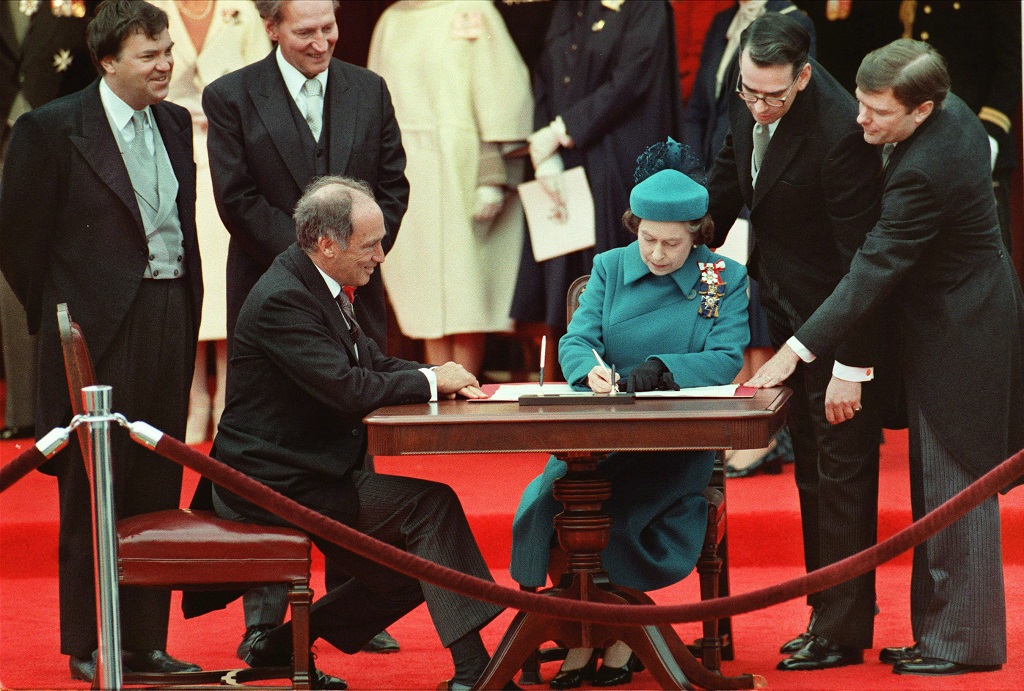
Queen Elizabeth II signs Canada’s constitutional proclamation in Ottawa on April 17, 1982 as Prime Minister Pierre Trudeau looks on.
There are two principal political parties in modern America (in which I include up here). In the Natted States, the population is divided roughly equally between those of “progressive” and “regressive” habits of mind; in the Canadas, the former have come to dominate.
The tipping point was reached much earlier up here, and the new “metapower” (Foucault’s term) was seized, politically, from within the Liberal Party. The strategy was to disenfranchise the “conservative” half of the electorate, by undermining all national institutions, and hosing down Canada’s previous identity. I’d count, say, 1982, as the point of no return. That identity was replaced, definitively, under a revised Trudeau constitution, with a new “multicultural” identity, in which citizens were themselves redefined, from free persons whose rights were inalienable, to interchangeable clients of an omnipotent State, which could dispense rights whenever it was in the mood — and withdraw them whenever the mood changed; however frequently.
This is the Democrat strategy in the larger, and still less amenable, country next door. As Andrew Breitbart and Antonio Gramsci might agree, this is an essentially cultural process. Politics are visible at the tip of the iceberg, but “progress” requires a more thorough “cleansing,” of old cultural norms. The cancer metastasized more from Hollywood, than from Washington DC. The takeover of the Democratic Party as the vanguard “agent of change” was only part of the institutional takeover of America. As important was the takeover of the mass media, and even corporate boardrooms. Those who weren’t “progressive” would now be “cancelled”: must cease to be.
All cultural change has a religious dimension. The Democrat representatives of the “powers and principalities” mentioned by Saint Paul, are characteristically godless, themselves. But they depend on a massive, core constituency of low-information, low-intelligence, easily manipulated urban voters.
Those who can still see the stars at night tend to remain in the ancient, God-fearing default. In the cities, where the masses may not grasp that milk comes from cows, let alone that someone must milk them, the belief that the economy is based on government cheques is more common. That is the god of the populous cities, and for most city-dwellers, not voting for their “godless god” of progress, seems a kind of heresy.
The idea that such heretics should be deprived of their freedom, starting with freedom of speech, does not appeal to the “rural” voter, including people like me — a “country hick” type who paradoxically lives in the city. The idea that laws and constitutions should be flexible, to accommodate the latest schemes of a progressive technocratic élite, doesn’t flourish among us country bumpkins. But to the efficiency experts in the city, what is our problem?
December 28, 2020
Another aircraft that’s about to become a political football in Canada
Ted Campbell discusses the need to replace the Royal Canadian Air Force long-haul VIP transport aircraft (the current CC-150 Polaris planes were built and first operated by Wardair in 1987 and obtained by the government in 1993). It’s traditional for the government to be assailed by the opposition and the media (at least when it’s a Conservative government in office) for wanting to spend far too many dollars for unnecessarily luxurious planes (Jean Chretien in opposition called the Polaris a “flying Taj Mahal”)*. The Polaris and its eventual replacement do a lot more than just fly junketing politicians around:

RCAF CC-150 Polaris at Zurich, Switzerland on 25 January, 2012.
Photo by Kambui via Wikimedia Commons
… let’s all remember please that the primary roles of this fleet of aircraft are to transport Canadian troops to wherever in the world they might need to go, for operations, and to refuel our jet fighters when they are deployed overseas, and to carry cargo, but smaller loads that do not require a big CC-130 Hercules or the mighty CC-177 Globemaster III. The Royal Canadian Air Force needs a fleet of specially modified aircraft for those roles. There are several more modern “tankers” available including the Boeing KC-46 which is used by the USA and Israel and the Airbus A330 Multi Role Tanker Transport (MRTT) which is used by several nations including Australia and the United Kingdom. […] Some commercial aircraft can be converted, easily and quickly, from carrying passengers in seats to carrying cargo in containers to carrying aircraft fuel in giant bladders with refuelling hoses attached. They are true multi-role aircraft. They can also be converted to VIP aircraft with special suites for sleeping, with showers, work spaces, secure telecommunications and regular conventional passenger seats for support staff and journalists.
The key bit of a real VIP aircraft is a secure (high-grade encryption) communications and information suite. The prime minister, ministers and senior officials, when en route to a meeting in a foreign capital may need to have discussions that are SECRET-CANADIAN EYES ONLY with senior staff back in Ottawa and they may then need to have a video conference call with, say, the Prime Ministers of e.g. Australia and the United Kingdom using a different security system that allows them to discuss SECRET-FIVE EYES ONLY materiel. You’re talking a reliable satellite communications system (with a back-up, too) and various cryptographic terminals and the people to operate and maintain them. The comm/IT suite is complex and expensive. Everything else is optional and, even in the case of a VIP shower stall, pretty cheap, too.
OK, I can already hear the objections, many from Conservatives: “Why doesn’t he fly commercial? He can even fly First Class,” some will say. Aside from some very real security concerns, suppose he has to attend a G-20 meeting in Brazil. There are no flights from Ottawa, there are no direct flights from Toronto. Even if there were he would need an entourage of security and telecommunications/cryptography specialists. I know the Pope charters an Alitalia jet when he travels but I’m afraid that even Air Canada, which has 400± aircraft and carries over 50,000,000 passengers a year, might find it too difficult to keep an aircraft on something close to “hot-standby,” as the RCAF does, for the prime minister. This problem was examined many times over the years and the range of factors ~ security, communications, availability ~ dictate that a dedicated VIP squadron in the Air Force is the best choice … maybe the only sensible choice.
* I rarely say much in favour of former PM Jean Chrétien, but in this particular case he was consistent in his opposition even after being elected: he refused to use the VIP transport during his time in office and attempted to find a buyer for that particular aircraft. Successor Paul Martin had no such aversion and used the aircraft during his premiership.
December 25, 2020
Bonus QotD: Modern services in church
Back then, you could still visit an average (Protestant) church and hear a pastor actually teach real doctrine and share authentic insights. You could hear his thoughts on how to live an upright Christian life, or on why bad things might happen to good people, or how Christian marriages might be improved. And you could hear it all supported by actual Bible passages.
After the sermon, you could hear the congregation sing hymns affirming the importance of obedience, humility, faith, courage, or some other Christian virtue. They were something, the old hymns: bold, clear, impactful, sometimes even militant, like “Onward, Christian Soldiers” or “God of Our Fathers, Whose Almighty Hand”, or particularly thoughtful, like “How Great Thou Art”.
Things are different now. Wander into a typical Christian church these days, and, far from hearing a sermon challenging you to live an upright life, you’re more likely to hear an unsuccessful attempt at a Jeff Foxworthy-style stand-up comedy routine, Hallmark-style stories of dubious veracity, and utterly vacuous “praise songs” which all sound like U2 album rejects from 1986. (They even feature the thumping eighth-note bass parts, echo-drenched guitar, and melodramatic vocal performances.)
Oh, and I forgot: At some point, you’re also going to see the pastor dutifully hand the mic over to his overly-assertive, overly-eager, overly-made-up wife (presumably on pain of divorce, or possibly even death), who will then speak loudly and rapturously — all about herself — for the next half hour.
Not all Christian churches are like this, of course. The problem is, too many are. As the years roll by, contemporary Christian churches increasingly abnegate their scripturally-prescribed role as fortified beacons of divine truth, and instead transform themselves into vehicles for a social justice pseudo-gospel completely incompatible with Christian (or Jewish, for that matter) scriptural teachings.
Tal Bachman, “Christians, Come Back”, Steyn Online, 2020-09-03.
December 15, 2020
Experimental Pre-WWI Ross .30-06 Machine Gun
Forgotten Weapons
Published 14 Dec 2020http://www.patreon.com/ForgottenWeapons
https://www.floatplane.com/channel/Fo…
Cool Forgotten Weapons merch! http://shop.bbtv.com/collections/forg…
In August 1913, the British War Office wrote to Sir Charles Ross requesting a sample automatic rifle for trials in the UK. Ross was able to submit a prototype in May 1914, which was tested at Enfield — but only fired 308 rounds before the test ended, suggesting that something important probably broke. The gun was a very strange looking contraption, whose Ross MkIII lineage is visible only in the bolt and front of the receiver forging. A long stroke gas pistol was added, and the action flipped upside-down. A large 25-round magazine was fitted, along with a thumbhole style stock that looks very similar to the grip of a Lewis gun. In addition to one example tested at Enfield in .303 caliber, one other model was send to the US for testing, chambered for .30-06. That is the gun we are looking at today, which came to the Canadian War Museum from the collection stored at Fort Knox in the 1970s and 80s.
Thanks to the Canadian War Museum for providing me access to film this extremely unusual Ross for you!
Contact:
Forgotten Weapons
6281 N. Oracle #36270
Tucson, AZ 85740

December 12, 2020
“Canada’s party system has long been an outlier that has baffled political scientists”
Ben Woodfinden emerges from a pre-winter hibernation to mull on how environmental issues intersect with regional and linguistic issues in a uniquely Canadian way that does not match how these issues play out in other countries:
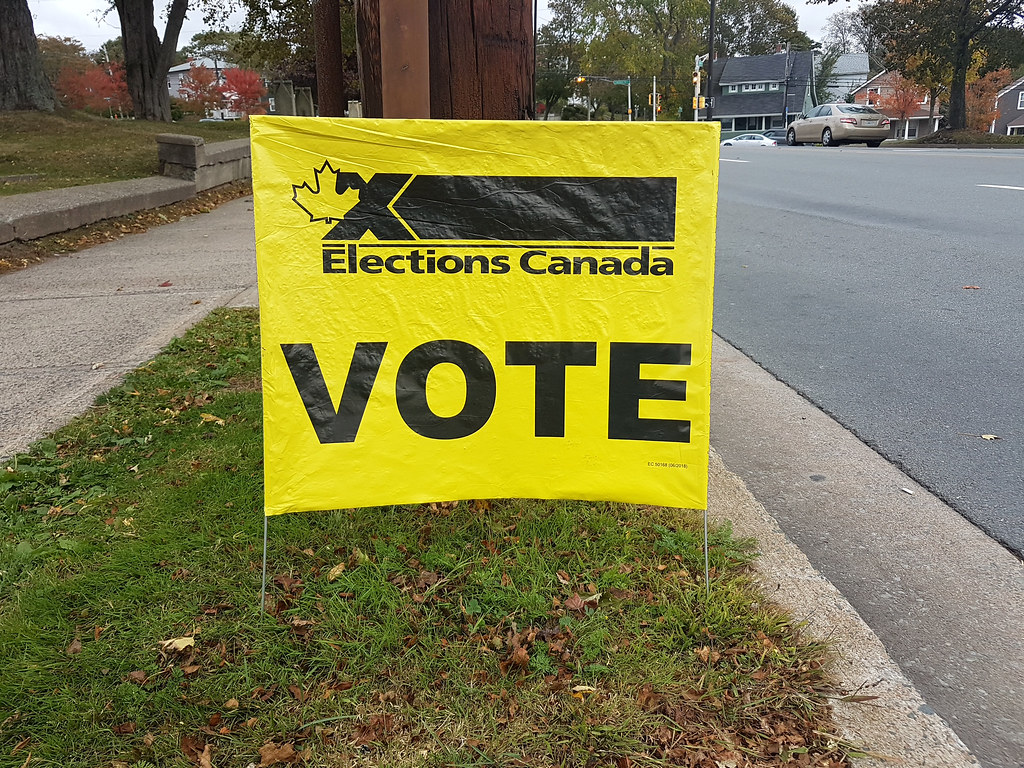
“2019 Canadian federal election – VOTE” by Indrid__Cold is licensed under CC BY-SA 2.0


… if you want to understand how democratic politics work, you have to begin with the premise that voters and electoral coalitions are made up of individuals with overlapping and complicated political identities, not just rationalistic voters who need to be convinced with some charts and data.
These identities and value divides coalesce and become the basis of the political cleavages around which competition in democratic regimes is built. There are many classic accounts of party system formation in political science, the one I think most plausible and still useful is the now classic account of cleavage politics posited by the political scientists Seymour Martin Lipset and Stein Rokkan.
This now classic account of the formation of party systems in Western Europe argues that long existing social conflicts and divides that existed prior to the gradually universal extension of voting across Western Europe helped to structure political competition. Specifically, industrialization and nation building generated four major cleavages that structured political conflict and party systems going forward: territorial cleavages defined by a centre-periphery divide, religious cleavages defined by a church versus state divide, an urban-rural cleavage, and a labour-capital cleavage.
Canada’s party system has long been an outlier that has baffled political scientists who study these things. If you’re looking for a good comprehensive overview of the history of the Canadian party system I’d recommend this recent book by Richard Johnston. Since the 1930’s Canada has defied what is perhaps the single most generalizable finding in comparative politics: Duverger’s Law. Canada also defies many of the expectations of the cleavage theory of party formation. But Canadian politics can still be broadly understood in terms of cleavages, albeit idiosyncratic Canadian cleavages (regional and linguistic cleavages especially).
I won’t bog you down with too much academic explanation. There is an enormous body of literature that builds on, tests, and modifies the cleavage thesis. Much of the talk in recent decades has been about an “unfreezing” of the traditional cleavages that have dominated party politics in western democracies, and the reorganizing of politics around new cleavages.
As traditional industrial, class, and religious cleavages have declined new cleavages have emerged and politics has been playing a catch up game. These new cleavages coalesce around educational, geographic, gendered, and age divides. This realignment, which has been in the making for decades has become the dominant political narrative since 2016, and as I’ve written in the newsletter recently these divides exist in Canada just as they do in Europe and America.
But the realignments these new cleavages produce often require singular events or defining figures to fully emerge. In the United Kingdom, the 2016 referendum produced a realignment because it scrambled the existing partisan and political arrangements so much that it gave rise to a hyper-polarized culture war around a remain/leave divide that people reoriented their own politics around this divide.
December 11, 2020
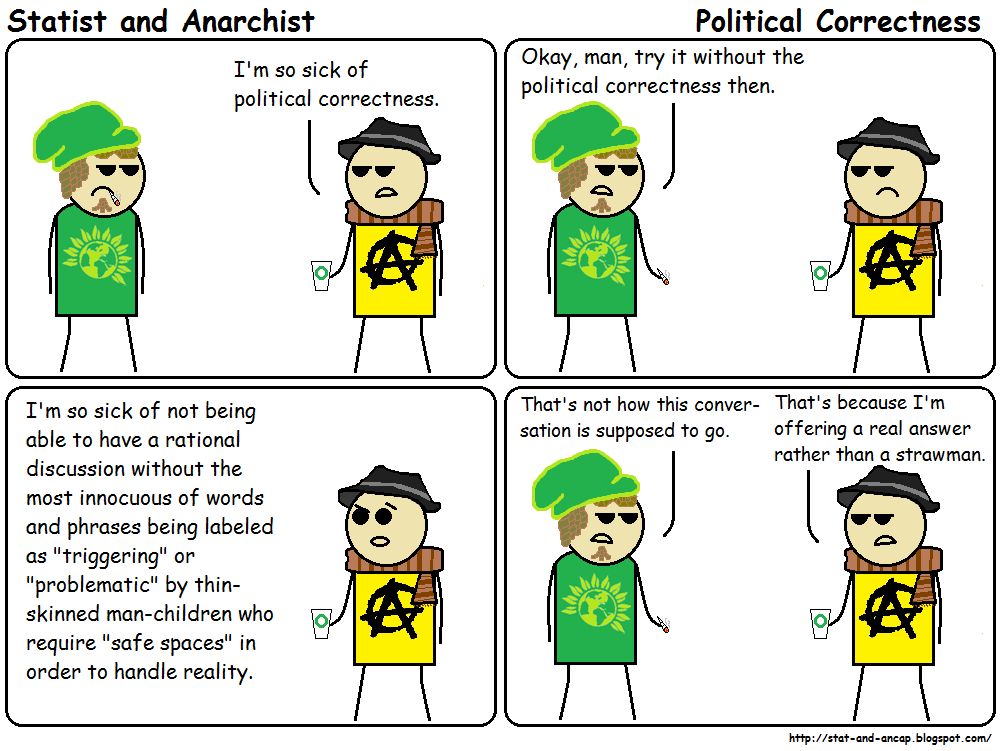
“Politically correct language … seemed like a nice, polite, and Canadian sort of thing to do”
Meaghie Champion discusses politically correct language in The Line:
Source: https://www.deviantart.com/blamethe1st/art/Statist-And-Anarchist-063-Political-Correctness-589944623
I grew up in the 1970s and ’80s. I have never lived in a world without what we now call “political correctness” — typically understood to mean using a kind of stilted and artificial language in order to atone for the disadvantages and slights suffered by marginalized groups and avoid inflicting new ones. Politically correct language required more effort to communicate, but it seemed like that effort was worth it to not offend people. It seemed like a nice, polite, and Canadian sort of thing to do.
I went along with political correctness out of a sincere desire to be accommodating to disadvantaged and dis-enfranchised groups. This became especially true after I learned about the “Sapir Whorf theory of psycho neurolinguistics.” The theory suggests that language shapes our perception of reality; that by altering the way we talk, we can shift the way we think — and, thus, collectively, we can shape reality itself. From this, it seemed logical to “de-gender” language or stop using stereotypes. It seemed like a small ask. Maybe I personally couldn’t solve big problems that concerned me as a good liberal … i.e. things like poverty or world hunger, but I could be nice in how I expressed myself and try to use language that everybody was using to be equitable and more fair.
What I didn’t understand, then, was that this precedent set a trap in which many good, well-intentioned liberals are finding themselves stuck. It’s no longer about ameliorating past sins: there is a project afoot to re-make the English language. The purpose of this project is to re-engineer how people think about certain subjects like gender, sex, and race, while skipping the necessary prerequisites of persuasion and logic. Conservative positions are declared off limits, even bigoted, simply by shaping the way we are allowed to talk about them.
Right now, even as I type this, there is a veritable army of academics hard at work on what they call “de-colonizing” and “de-gendering” language at many universities and colleges. There are tens of thousands of activists and academics in universities and online organizing and pushing for ever-changing rules to be enforced as it relates to the English language. It’s a multi-million-dollar industry in academia and woke corporatism. And it’s already starting to spill over into government regulations and enforcement.
I love the English language. I have been a voracious reader since childhood. I thrill at well-spoken and written prose and poetry. A finely turned witticism or fantastic mot juste can break my heart with its perfection. Further, I’m First Nations, and that love of the English language has also carried me into a love of the study of my tribal cradle tongue “Hul’qumi’num.” Shouldn’t I, as a First Nations person, be in favour of de-colonizing the English language? No. No, I do not think so. I have little patience or regard for any effort that makes language a less workable and functional tool of human endeavour. I identify strongly as a writer, and I take this assault upon the tool with which I conduct my craft very personally.
December 6, 2020
“As ever, our Liberal friends prefer to be judged by their pure intentions rather than their rather tattered record”
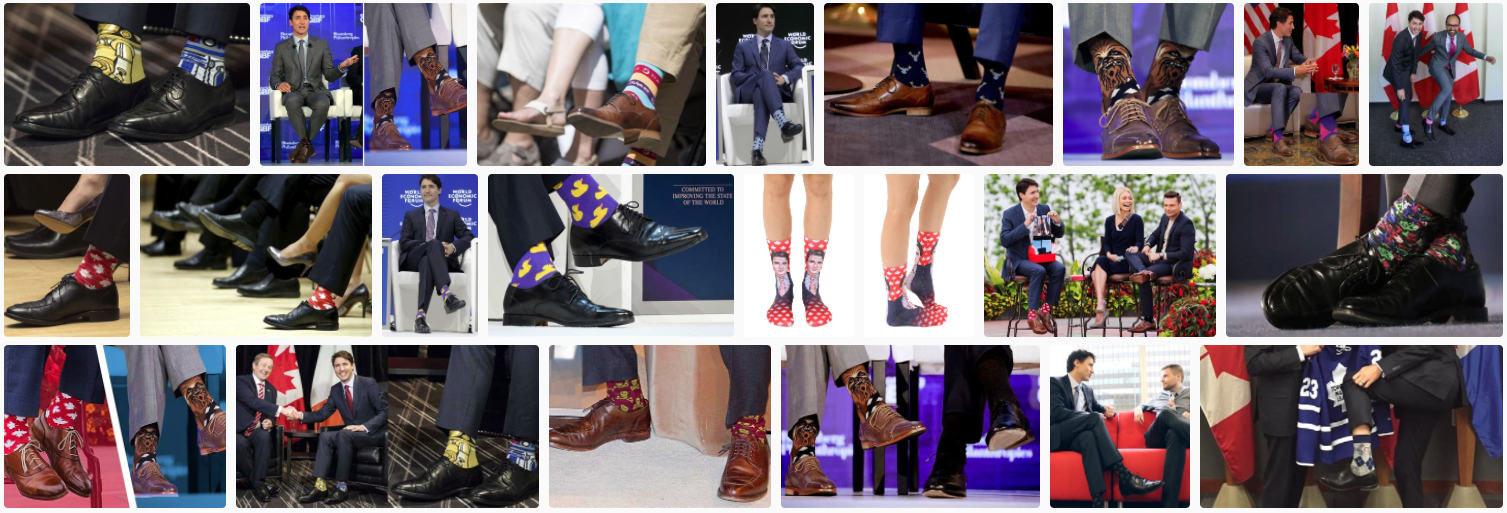
The good folks at The Line suggest that we monsters in the peanut gallery stop hurting poor Little Potato’s feeeeeeeeeelings:
Typical image search results for “Justin Trudeau socks”
What we can say is that supporters of our current government continue to insist that the prime minister and his cabinet be granted a level of benefit of the doubt that they simply have not earned. Declarations that the Liberals have botched the vaccine rollout are premature, but they are not preposterous. As ever, our Liberal friends prefer to be judged by their pure intentions rather than their rather tattered record. We at The Line have known enough true Grits in our time to believe that this isn’t an act. Liberals really do believe that so long as they mean well, they should be forgiven their failures. Indeed, the failures should be forgiven and forgotten.
And boy, can they get testy when someone declines to do them the courtesy of treating this five of a government like a nine. They’ll shriek about Harper and Ford and Kenney and American-style whatever, they’ll argue in bad faith, they’ll demand an audit of Andrew Scheer’s household expenses, they’ll shut parliament down in the middle of a national emergency to spare the boss from embarrassing questions about his latest ethical flub. In short, they’ll do anything to avoid admitting that this Liberal government has blown more than enough high-profile issues to have forfeited any right to be bummed out when someone dares wonder if they’ll do any better on vaccines.
Over the last five years, the Liberals have failed to hit their own targets on balancing the budget and cleaning up Indigenous water supplies. They failed to hit Harper’s targets on carbon reduction, failed to win a UN seat, failed to deliver promised military procurements, failed on electoral reform, failed to improve our decrepit transparency system, and failed to notice any number of outrageous policies and proposals so long as they were proffered en français, in which case they couldn’t avert their eyes fast enough.
We could go on, but the point is made. And they’ve done it all after daring to talk in their opening days of deliverology, a term that’s now a political punchline thanks to how badly Trudeau and the Gang failed to live up to the hype of their own managerial jargon.
The problem with all this failure is far bigger than the sum of its various sad parts. A government that routinely writes cheques its competence can’t cash may be in a hurry to forgive itself, but not all Canadians are as fond of Justin Trudeau as Justin Trudeau clearly is. A proven track record of failure by the state erodes public confidence in the state, and the sneering contempt Liberals have for anyone who notices the failure doesn’t help. We find it absolutely amazing how many Liberals (rightly!) decry the rise of populism without ever seeming to ponder for a New York minute what role their own manifest mediocrity has played in fuelling it. So we’ll kindly hear no more from the Liberals about the know-nothing idiocy of the woke left and the destructive buffoonery of the nationalist right until they stop doing such a shabby job with the goddamned centre.


