
The dramatic force of the New Atheist moral fable of the Great Library of Alexandria not only comes from the Library’s supposed size and unique nature, but also from its supposed cataclysmic and fiery end. The moral of this story has added impact if the Great Library ends in a violent catastrophe, so this is the story that tends to get told by those who use the tale as a stick with which to beat Christianity. The fact is, however, that libraries are delicate institutions and most decline slowly rather than ending in a sudden disaster, or – as in the Great Library’s case – decline slowly while suffering a series of disasters. Anyone who works in library services will tell you that the main enemy of a library’s continuation is a lack of funding. Ancient libraries in particular needed constant financial patronage from their founders and sponsors to survive. Papyrus scrolls decayed and fell apart from use, suffered damage from mice and other vermin and, in a period where artificial light tended to be from open oil lamps, were in constant danger from fires, great and small. The Mouseion, like all ancient libraries, needed a large staff to undertake the constant and unending task of repairing, replacing and recopying books and these staffs, even when made up of slaves, were expensive to maintain.
During the Mouseion‘s heyday in the third and second centuries BC the funding for this labour and the upkeep of the institution generally would have been regular and reliable. The Mouseion was, after all, one of the jewels in the crown of the Ptolemaic kingdom and it sat in the Broucheion or Royal Quarter where the Ptolemies themselves lived. By the first century BC, however, there is some indication that the prestige of the institution had begun to decline. In its first two centuries the Mouseion‘s directors were famous scholars, renowned for their intellects throughout the Greek-speaking world. By the time of the later Ptolemies, however, we find administrators, court favourites and even a former commander of the palace guard taking up the role, which seems to have become, as Lionel Casson puts it, “a political plum” to be awarded to flunkies rather than scholars. This continued under the Romans in the first century AD, with Tiberius Claudius Balbilus being awarded the post by Claudius, though he at least was something of a scholar if not a leading intellect. It is likely that the later Ptolemies began to neglect the institution and Roman imperial patronage of it was probably even less reliable.
But war has always been one of the main destroyers of libraries down the ages and the Great Library’s slow decline was marked by several sacks of the Broucheion which eventually led to the end of the Mouseion. The first and probably the most significant came in 47 BC when Julius Caesar took the side of Cleopatra in her claim on the Ptolemy’s throne and besieged her younger brother, the boy king Ptolemy XIII, in Alexandria. Caesar’s own account mentions that he burned a fleet in the docks of the city, but makes no mention of this fire destroying anything else (Civil Wars, III.11). His account was continued by his lieutenant Aulus Hirtius in his Alexandrine War and he too makes no mention of any fire damaging the city, but he does go out of his way to say “Alexandria is well-nigh fire-proof, because its buildings contain no wooden joinery and are held together by an arched construction and are roofed with rough-cast or tiling” (Alexandrine War, I.1) which could be read as an attempt at a defence against accusations of damage through fire, given his role in the siege. The earliest account of Caesar’s siege damaging Alexandria comes from a lost work by Livy via an epitome by Florus (Florus, II.13) which describes Caesar burning the area around the docks to deprive enemy archers of a position on which to fire on his troops, and this is echoed by Lucan (The Civil War, X.24). It is Plutarch who first depicts this fire destroying the Great Library in an almost casual mention that perhaps assumes this as common knowledge:
In this war, to begin with, Caesar encountered the peril of being shut off from water, since the canals were dammed up by the enemy; in the second place, when the enemy tried to cut off his fleet, he was forced to repel the danger by using fire, and this spread from the dockyards and destroyed the Great Library, and thirdly, when a battle arose at Pharos, he sprang from the mole into a small boat and tried to go to the aid of his men in their struggle, but the Egyptians sailed up against him from every side, so that he threw himself into the sea and with great difficulty escaped by swimming. (Plutarch, Caesar, 49)
Aulus Gellius’ mention of the Great Library says that the collection numbered “nearly seven hundred thousand volumes” and then adds “but these were all burned during the sack of the city in our first war with Alexandria”, referring to Caesar’s siege (Gellius, Attic Nights, VII.17). Dio Cassius gives a slightly longer account:
After this many battles occurred between the two forces both by day and by night, and many places were set on fire, with the result that the docks and the storehouses of grain among other buildings were burned, and also the library, whose volumes, it is said, were of the greatest number and excellence. (Dio Cassius, Roman History, XLII.36)
There is some debate about how literally we can take the reports that the whole Great Library was destroyed, especially given that the docks area of Alexandria were some distance from the Mouseion‘s likely location. The fact that so many writers agree that Caesar’s fire destroyed the Great Library simply can’t be ignored, however, and at the very least the fire seems to have destroyed a substantial portion of the book collection, probably stored in warehouses on the docks. It is clear that the losses were huge, as Plutarch also tells the (probably apocryphal) story of Mark Antony confiscating the whole collection of the Great Library of Pergamon and giving them to Cleopatra to replace the books lost in the fire (Plutarch, Antony, 58). While this was not the end of the Mouseion and not the end of its whole collection, writers from around the end of the reign of Caesar’s dynasty onwards tend to refer to the Great Library in the past tense and any surviving collection was probably greatly reduced after 47 BC.
Scholarship continued in the Mouseion, however, and the Roman emperors seem to have continued its funding under their patronage when the Ptolemaic dynasty came to an end with the death of Cleopatra. Claudius built a new wing or annex to the Mouseion, which was to house his works of history and see the public reading of them twice a year. But it was the calamitous third century AD that saw a succession of military disasters in Alexandria and seems to have seen the final end of the Mouseion.
In 215 AD Caracalla punished Alexandria for mockery of him with a wholesale massacre of its young men, after which his troops plundered parts of the city. It is not known if the Mouseion was sacked in this action, but John Malas records that its funding was stopped by Caracalla at this time (Delia, p. 1463). The real end probably came in 272 AD when Aurelian stormed the Broucheion with Ammianus noting “[Alexandria’s] walls were destroyed and she lost the greater part of the district called Bruchion.” (Ammianus, History, XII.15). If that sack didn’t mean the death blow for the institution, Diocletian probably finished the job when he too sacked the city in 295 AD, and it was later devastated by a major earthquake in 365 AD. The only mention of the Mouseion after this is found in a late source, the tenth century Byzantine encyclopaedia called the Suda, which describes the fourth century philosopher Theon as “the man from the Mouseion“, though it is hard to tell exactly what this means. Given that the Mouseion was most likely long gone by Theon’s time, it could be that some other successor “Mouseion” had been established and Theon studied there or it could be that “the man from the Mouseion” is stylised honorific or even a personal nickname – meaning “a scholar like one from the old days”.
The Mouseion and its library were almost certainly a memory by the late third century, destroyed in a series of calamities after a long period of decline. But what is missing from all this evidence is any howling, pyromaniacal Christian mob. If the Great Library ceased to exist in the century before Chrisitanity came to power in the Empire, how did Christians get stuck with the charge of destroying it? The answer lies not in the evidence about the Great Library, but in the history of its daughter library and annex in the Serapeum.
Tim O’Neill, “The Great Myths 5: The Destruction Of The Great Library Of Alexandria”, History for Atheists, 2017-07-02.
June 15, 2021
QotD: The destruction of the Great Library of Alexandria
June 14, 2021
Movies based on “classic literature”
Severian considers the relative glut of movies more-or-less based on the classics of literature from his formative years:
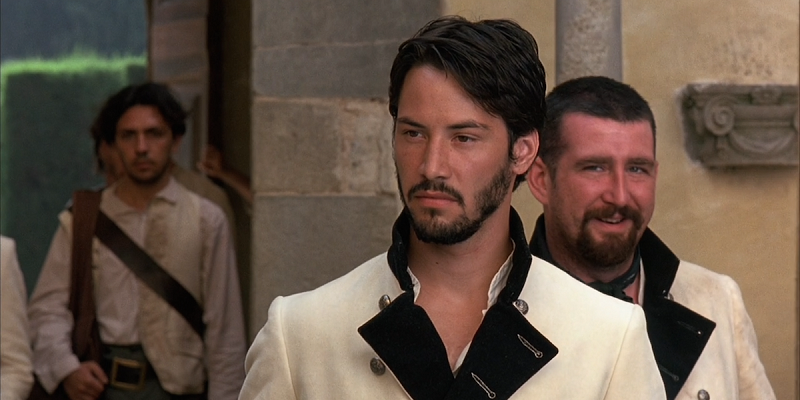
When I was a young buck, there was a fad for making movies out of “classic literature”. Scads of chick flicks, of course — Jane Austen’s complete works, the Brontës, and so on — but they also took a stab at Shakespeare. Mostly they stuck to the comedies — and trust me, watching Keanu Reeves trying to handle Much Ado About Nothing is hilarious, in all the wrong ways — but they’d occasionally give the tragedies a shot. Kenneth Branagh’s Hamlet is pretty good despite all the distracting cameos, his Othello is at least sincere (ye gods, imagine trying to make that today!), I think I’m forgetting a few. Mel Gibson gave Hamlet a go back in the early 1990s, and so on. Again, I’m pretty sure I’m forgetting a few.
It always struck me as odd. Unless they timed the theatrical releases to midterm and finals week, hoping to hoover up the dollars of desperate sophomores who didn’t do the homework, it didn’t make much sense, marketing-wise. We were a much more culturally literate people once, it’s true*, but there’s just not much of an audience for the Bard anymore. Nor was it a case of SJWs trying to destroy something good just on general principles. I’m sure Gwyneth Paltrow was bad as Emma, but the idea of retconning every single female in the Western Canon into a Strong, Confident Woman(TM) was still in its infancy. My only other guess was that, since college enrollments were skyrocketing, maybe the parents of all those first-gen college kids were feeling mal-educated and trying to catch up …? Lame, I know, but it was the best I could do.
Looking back on it now, I see my problem: I was looking at it from the demand side. Silly and naive as I was, I assumed that Hollywood’s primary concern was making money, so they went out and found what the people wanted to see, then gave it to them. For instance, I thought Titanic was going to be a huge flop. I mean, the boat sinks. We know that. How do you squeeze any dramatic tension out of it? I should’ve realized they’d be playing it as a doomed-lovers tragedy — girls love that shit, what with the big flouncy costumes and all. Once I realized that, I thought I had it all figured out — every girl I, personally, knew found the works of Jane Austen tedious, but that’s because (I reasoned) you have to supply the images for yourself. Put Hunky McBeef up there in breeches and a peruke, Waify Beecup in a Regency dress, and it’s chick crack …
Or so I thought. Looking back on it now, that’s as dumb as my opinion that Titanic would bomb. Hollywood doesn’t care what you want. I doubt if Hollywood has ever cared what you want, but if they ever did, that time probably ended in tandem with Clara Bow’s career. Hollywood wants what they want, and so will you, because whaddaya gonna do, not watch it? The reason they made all those “classic literature” films in the 1990s, then, wasn’t because they thought we wanted (or needed) some cultural uplift.
No, the reason was: By the 1990s, the last of the old guard in Hollywood was dying off, replaced by the new guard, the Baby Boomers. As we know, it’s not enough for Boomers to control everything while making a shitload of money. No no, for them everything has to be deep and meaningful. They thought of themselves as artistes, not entertainers, so they had to put out a bunch of highbrow stuff, and we had to watch it. This is the sole reason goofy-looking Kenneth Branagh and his horse-faced wife (at the time) were a big cultural force. They made Shakespeare sexy, by which I mean, they allowed the studio heads to think of themselves as the arbiters of culture, not the carny trash they were and are. That some decent movies got made because of it, is entirely incidental.**
*Last summer, during the worst of lockdown mania, I introduced my little nephews to Bugs Bunny. The real ones, from the 40s and 50s, not the crap they put out ten, twenty years ago. I am an educated man by modern standards, but a lot of that stuff flew over my head … and they used to show these in front of popular movies, on military bases, etc.! There’s the classic Wagner one, of course — kill da wabbit!! — but another one involves The Barber of Seville, which I haven’t seen performed and had to look up. Even the “throwaway” music was classical — they could assume, in other words, that your average workaday guy or GI had a fairly large repertoire of classical pieces in his head, enough to recognize bits from Strauss, Chopin, Schumann, etc.
**I do kinda regret bashing Sir Kenneth, as wiki tells me he now is. I enjoyed Hamlet (again, despite the annoying cameos), and some of his other work was pretty entertaining, even, in a limited way, visionary — a quirky little picture like Dead Again didn’t do much in 1991, but it would clean up now (a PoMo costume drama!). I’m one of the few people who liked Mary Shelley’s Frankenstein, which again despite terrible casting (Robert De Niro? Seriously?) was loads of fun. Shelley’s novel as written is ludicrous, therefore unfilmable, but Branagh admirably captured the spirit of it. It’s as Goth as can be, in the original sense of “Gothic”. Wonderful stuff.
June 12, 2021
Literate people who “never read books”
I recently added Kenneth Whyte’s SHuSH to my growing list of Substack blogs, and his latest entry considers people who can read but choose not to … and boast about it:
… I ran across a tweet by Neil Patel, a self-made marketing guru, explaining or, rather, bragging about how he doesn’t read books:
The only books I read are kids’ books and that’s to my daughter. People talk about reading books. You know what? I wrote a book and I was even a New York Times best-selling author, but here’s the thing: most books that you see in a book store, they’re written a year to two years before they were actually published and they go through this really long process. A lot of the times you’re reading outdated information. Even if the book has theories and strategies that aren’t outdated, heck, you can just go on YouTube and find that info in a five-minute clip. Why would you want to read 300 pages when you can just figure it out in five minutes. So I don’t spend my time reading books. Instead, I spend three hours a day reading blogs, Instagram, YouTube and all the other places where I can consume information faster, and you should, too.
It turns out Patel’s tweet was too dumb even for Twitter. Within hours, it had 87 retweets against 1,836 quoted retweets and 764 replies, indicating an extremely high ratio of people blasting him to people sharing his pensées.
Washington Post book critic Carlos Lozada had some of the best mockery: “Also do you realize that when you go in a bookstore, some of the books are so old that the authors are dead? How can you learn anything from a dead person? They can’t even tweet.”
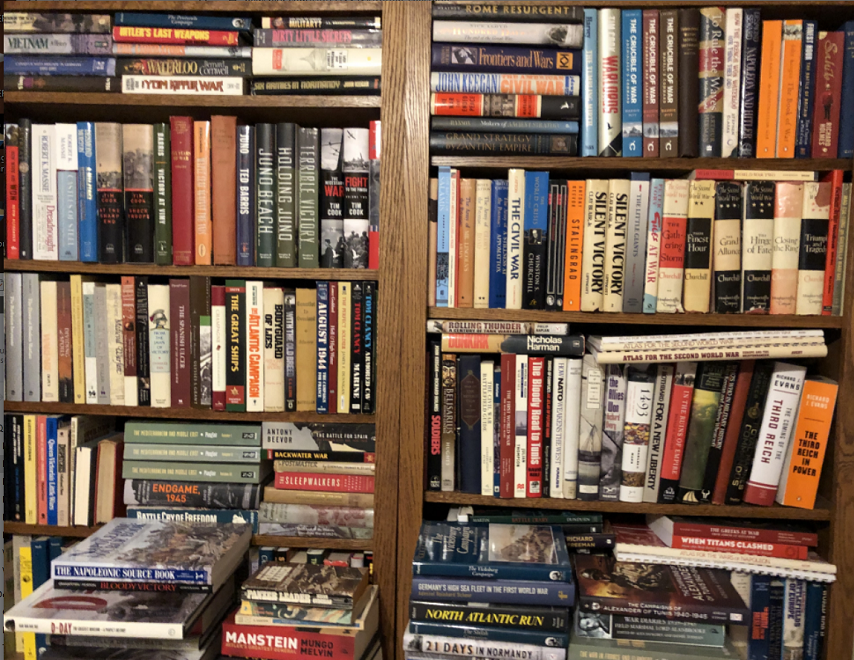
I’ve found over the last few years that I’m spending less time reading books, although I still treasure my quiet reading time in the late evening. My tastes have changed a lot over the years, and I read almost no fiction works at all except for a few “unwoke” science fiction authors, and aside from books on hand tool woodworking almost everything else is history — and not much recently published history (for the same reason I avoid most modern SF novels … they’re far too woke for boring old fuddy duddy readers like me).
You’ve probably seen those internet ads that claim the average CEO reads a book a week. That’s bullshit marketed by Blinkist to flog fifteen-minute book summaries. There is no data to support it. The average American reads twelve books a year, and high-earners read fifteen, which is probably the best-case scenario for the average CEO.
Sure, Bill Gates and Mark Zuckerberg and Warren Buffett read a lot of books. I’ve run across a few lesser mortals in big offices who were enthusiastic readers. I was even part of a Bay Street book club for several years (I loved it). But most businessmen, in my experience, read very little, or not at all. Trump, who also had his name on a bestseller but never reads books, is far closer to the norm than Gates.
I was once at a dinner retreat with a dozen executives, all of whom had good university educations and generous salaries. They’d been asked by a moderator to come to the dinner with an example of something they’d read, a book or a poem or an essay that really spoke to them. Only three of the twelve mentioned books (and each mentioned a business book). Several mentioned newspaper or magazine articles they’d read. The rest relied on song lyrics, with two citing the same line from “Hotel California” as a commentary on their careers: “You can check out any time you like, but you can never leave.” None of us knew whether to laugh or cry.
Another thing I learned at that retreat, which struck me as related, was that all of the executives complained of having no time to think about the big picture: they were so busy doing their work that they seldom stopped to consider if there wasn’t a better way to do it, or if it was worth doing at all. They complained at this lack of perspective, but all were senior enough to be able to delegate day-to-day chores to others, leaving themselves time to think. I don’t believe they wanted to.
June 9, 2021
Charles Stross on Robert Heinlein’s Starship Troopers
In his first blog post in nearly a month, Charlie Stross opines on one of Heinlein’s most polarizing novels:
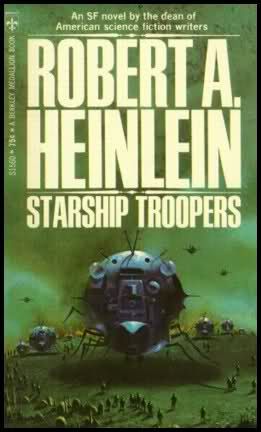
In the 1930s, Heinlein was a soft socialist — he was considered sufficiently left wing and “unreliable” that he was not recalled for active duty in the US Navy during the Second World War. After he married Virginia Gerstenfeld, his third and last wife, his views gradually shifted to the right — however he tended towards the libertarian right rather than the religious/paleoconservative right. (These distinctions do not mean in 2021 what they might have meant in 1971; today’s libertarian/neo-nazi nexus has mostly emerged in the 21st century, and Heinlein was a vehement opponent of Nazism.) So the surface picture is your stereotype of a socially liberal centrist/soft leftist who moved to the right as he grew older.
But to muddy the waters, Heinlein was always happy to pick up a bonkers ideological shibboleth and run with it in his fiction. He was sufficiently flexible to write from the first person viewpoint of unreliable/misguided narrators, to juxtapose their beliefs against a background that highlighted their weaknesses, and even to end the story with the narrator — but not the reader — unaware of this.
In Starship Troopers Heinlein was again playing unreliable narrator games. On the surface, ST appears to be a war novel loosely based on WW2 (“bugs” are Nazis; “skinnies” are either Italian or Japanese Axis forces), but each element of the subtext relates to the ideological awakening of his protagonist, everyman Johnny Rico (note: not many white American SF writers would have picked a Filipino hero for a novel in the 1950s). And the moral impetus is a discussion of how to exist in a universe populated by existential threats with which peaceful coexistence is impossible. The political framework Heinlein dreamed up for his human population — voting rights as a quid pro quo for military (or civilian public) service — isn’t that far from the early Roman Republic, although in Rico’s eyes it’s presented as something new, a post-war settlement. Heinlein, as opposed to his protagonist, is demonstrating it as a solution to how to run a polity in a state of total war without losing democratic accountability. (Even his presentation of corporal and capital punishment is consistent with the early Roman Republic as a model.) The totalizing nature of the war in ST isn’t at odds with the Roman interpretation: Carthago delenda est, anyone?
It seems to me that using the Roman Republic as a model is exactly the sort of cheat that Heinlein would employ. But then Starship Troopers became the type specimen for an entire subgenre of SF, namely Military-SF. It’s not that MilSF wasn’t written prior to Starship Troopers: merely that ST was compellingly written by the standards of SF circa 1959. And it was published against the creeping onset of the US involvement in the Vietnam War, and the early days of the New Wave in SF, so it was wildly influential beyond its author’s expectations.
The annoying right wing Heinlein Mil-SF stans that came along in later decades — mostly from the 1970s onwards — embraced Starship Troopers as an idealized fascist utopia with the permanent war of All against All that is fundamental to fascist thought. In doing so they missed the point completely. It’s no accident that fascist movements from Mussolini onwards appropriated Roman iconography (such as the Fasces): insecure imperialists often claim legitimacy by claiming they’re restoring an imagined golden age of empire. Indeed, this was the common design language of the British Empire’s architecture, and just about every other European imperialist program of the past millennium. By picking the Roman Republic as a model for a beleagured polity, Heinlein plugged into the underlying mythos of western imperialism. But by doing so he inadvertently obscured the moral lesson he was trying to deliver.
QotD: Failing to account for mere “women’s work”
Elli Quinn quirked an eyebrow. “How odd. On other worlds, people seem to come in floods, and they’re not necessarily impoverished, either.”
Ethan, diverted, said, “Really? I don’t see how that can be. Why, the labor costs alone of bringing a child to maturity are astronomical. There must be something wrong with your accounting.”
Her eyes screwed up in an expression of sudden ironic insight. “Ah, but on other worlds the labor costs aren’t added in. They’re counted as free.”
Ethan stared. “What an absurd bit of double thinking! Athosians would never sit still for such a hidden labor tax! Don’t the primary nurturers even get social duty credits?”
“I believe,” her voice was edged with a peculiar dryness, “they call it women’s work.”
Lois McMaster Bujold, Ethan of Athos, 1986.
June 7, 2021
Dude, where’s my (flying) car?
The latest of the reader-contributed book reviews at Scott Alexander’s Astral Codex Ten looks at Where is my Flying Car? by J. Storrs Hall:

What went wrong in the 1970s? Since then, growth and productivity have slowed, average wages are stagnant, visible progress in the world of “atoms” has practically stopped — the Great Stagnation. About the only thing that has gone well are computers. How is it that we went from the typewriter to the smartphone, but we’re still using practically the same cars and airplanes?
Where is my Flying Car? by J. Storrs Hall, is an attempt to answer that question. His answer is: the Great Stagnation was caused by energy usage flatlining, which was caused by our failure to switch to nuclear energy, which was caused by excessive regulation, which was caused by “green fundamentalism”.
Three hundred years ago, we burned wood for energy. Then there was coal and the steam engine, which gave us the Industrial Revolution. Then there was oil and gas, giving us cars and airplanes. Then there should have been nuclear fission and nanotech, letting you fit a lifetime’s worth of energy in your pocket. Instead, we still drive much the same cars and airplanes, and climate change threatens to boil the Earth.
I initially thought the title was a metaphor — the “flying car” as a standin for all the missing technological progress in the world of “atoms” — but in fact much of the book is devoted to the particular question of flying cars. So look at the issue from the lens of transportation:
Hans Rosling was a world health economist and an indefatigable campaigner for a deeper understanding of the world’s state of development. He is famous for his TED talks and the Gapminder web site. He classifies the wealthiness of the world’s population into four levels:
1. Barefoot. Unable even to afford shoes, they must walk everywhere they go. Income $1 per day. One billion people are at Level 1.
2. Bicycle (and shoes). The $4 per day they make doesn’t sound like much to you and me but it is a huge step up from Level 1. There are three billion people at level 2.
3. The two billion people at Level 3 make $16 a day; a motorbike is within their reach.
4. At $64 per day, the one billion people at Level 4 own a car.
The miracle of the Industrial Revolution is now easily stated: In 1800, 85% of the world’s population was at Level 1. Today, only 9% is. Over the past half century, the bulk of humanity moved up out of Level 1 to erase the rich-poor gap and make the world wealth distribution roughly bell-shaped. The average American moved from Level 2 in 1800, to level 3 in 1900, to Level 4 in 2000. We can state the Great Stagnation story nearly as simply: There is no level 5.
Level 5, in transportation, is a flying car. Flying cars are to airplanes as cars are to trains. Airplanes are fast, but getting to the airport, waiting for your flight, and getting to your final destination is a big hassle. Imagine if you had to bike to a train station to get anywhere (not such a leap of imagination for me in New York City! But it wouldn’t work in the suburbs). What if you had one vehicle that could drive on the road and fly in the sky at hundreds of miles an hour?
Before reading this book, I thought flying cars were just technologically infeasible, because flying takes too much energy. But Hall says we can and have built them ever since the 1930s. They got interrupted by the Great Depression (people were too poor to buy private airplanes), then WWII (airplanes were directed towards the war effort, not the market), then regulation mostly killed the private aviation industry. But technical feasibility was never the problem.
Hall spends a huge fraction of the book on pretty detailed technical discussion of flying cars. For example: the key technical issue is takeoff and landing, and there is a tough tradeoff between convenient takeoff/landing and airspeed (and cost, and ease of operation). It’s interesting reading. But let’s return to the larger issue of nuclear power.
June 5, 2021
Pssst! Wanna try some Stephen Leacock? Three bucks, and cheap at twice the price!
Colby Cosh from the Friday edition of the NP Platformed newsletter:
In his Substack newsletter this morning, the editor/historian Ken Whyte shares a neat discovery: a publisher called Delphi Classics has made the complete works of Stephen Leacock available in a Kindle edition for the exquisitely reasonable price of $3 (Canadian!).
Leacock’s oeuvre is in the public domain, so technically you could save the money for a down payment on a coffee. But Delphi is said to take professional care in collating and editing public-domain works of past masters, and it would have to do a pretty poor job not to make it worth the $3 to have 10,000-plus pages in readable condition and in one file.
The collection includes Leacock’s non-fiction, which appears to make up about half its volume. I am just old enough to have run across the humorous fiction that made Leacock a global celebrity, one who influenced artists ranging from F. Scott Fitzgerald to Groucho Marx. I know next to nothing of him as an economist, which was his everyday trade (his thesis supervisor was Thorstein Veblen). He also wrote history books about early Canada, and one’s instinct is that these must be lively presentations of material that Canadians ordinarily meet in the worst possible circumstances, and yes, I do mean “a classroom.”
I have to doff the editorial “we” here to confess that I have not plumbed very deeply into the many aspects of Stephen Leacock, even as someone who regards him, on the basis of Sunshine Sketches of a Little Town and other much-anthologized stories, as easily the greatest prose artist in Canada’s history. Leacock is our Mark Twain, and it’s a small miracle that we have someone who could be described this way, without any hint of exaggeration or partiality. (Commercially, at his peak, Leacock enjoyed nearly the same level of renown: the joke was that he was better known than Canada itself.)
His humorous short stories, like Mark Twain’s, overflow with cynicism and masked darkness, matched with an equal quantity of sympathy. His ability to find just the right off-kilter adjective to make a sentence’s logic explode or capsize was just as strong. And, in his day, the small-town Canadian life he satirized was nearly the entirety of Canadian life, period. You can learn things about early 20th-century Canada from Leacock, and maybe some things about your own forebears, that nobody could insert into a serious book.
Despite having spent most of my school years in Canada, I can only think of one or two Leacock stories that I had to read in that time … and I’m afraid like most things we’re forced to read, I resented the hell out of the teacher, the school board, and the author so if I actually did read them, I instantly forgot them as soon as the quiz or test was over and had no intention of ever picking up the author’s work again. This general pattern has been handy for me in that the Canadian authors I’ve read in the decades since then I’ve been able to evaluate on their own merits rather than through the “I already hate you” filter that got applied to assigned texts in school. My friend and former co-worker Jon — who used to comment on the blog occasionally — was a big fan of Leacock and regularly encouraged me to get past the ancient resentments … it worked to the point that I bought a copy of Sunshine Sketches, but I still haven’t gotten around to reading it.
June 3, 2021
The Supernatural Adventures of Arthur Conan Doyle | B2W:ZEITGEIST! I E.19 Spring – 1923
TimeGhost History
Published 2 Jun 2021Being the creator of the legendary Sherlock Holmes has made Arthur Conan Doyle famous for his scientific rationality. But Doyle also has a deeply held belief in the existence of the spirit universe. In a world still reeling from the shock of the Great War, he is not alone.
(more…)
June 2, 2021
Media Fearmongering
Laura Dodsworth on how the BBC and other British media outlets turned all the dials to 11 to ramp up fear over the spread of the Wuhan Coronavirus:
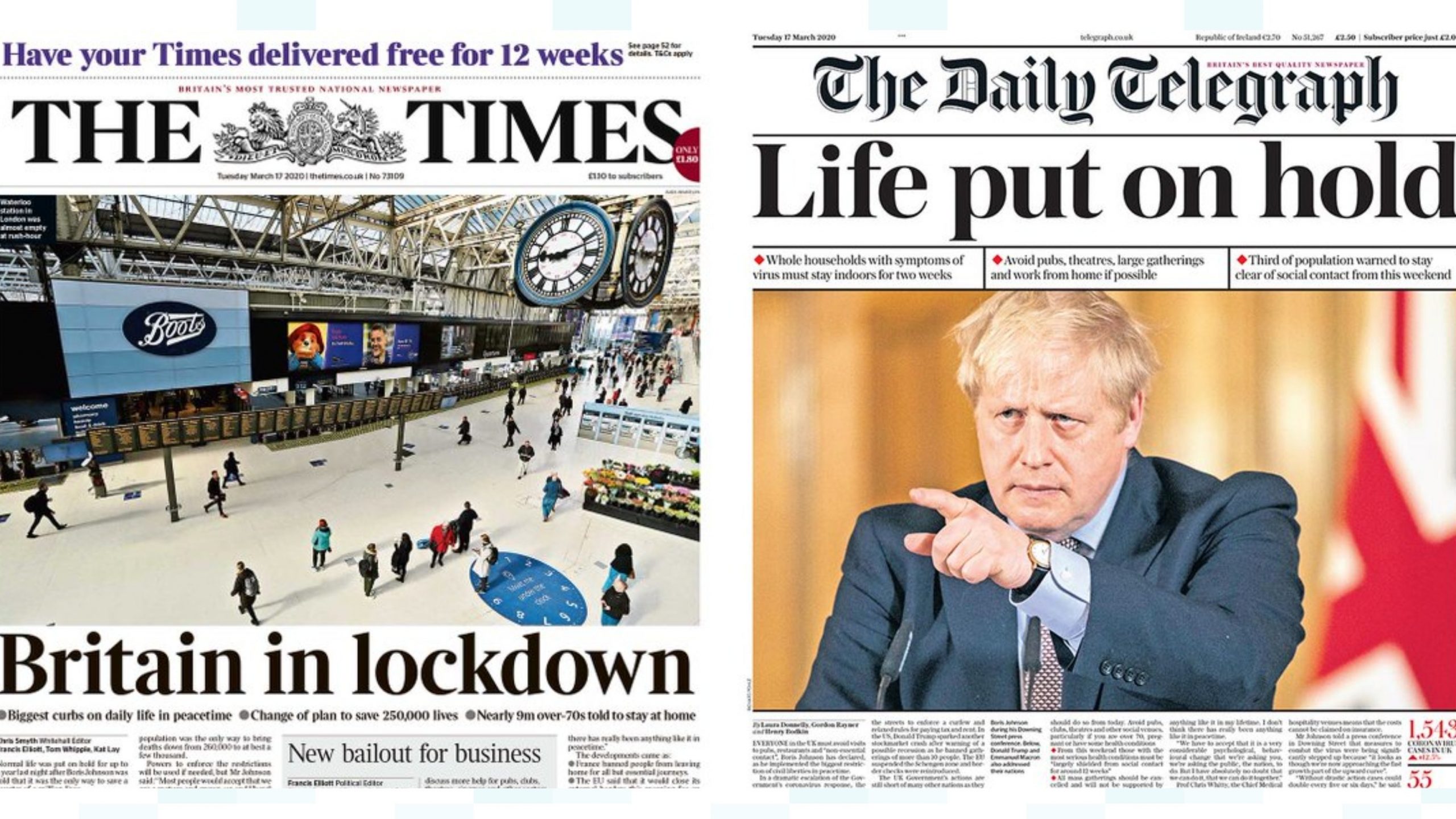
The media have served us a cornucopia of frightening articles and news items about Covid-19 in 2020 and 2021. While writing my new book, A State of Fear: How the UK Government Weaponised Fear During the Covid-19 Pandemic, I encountered a panoply of doom-mongering headlines. These were an indication of the significant role the media have played in creating our state of fear.
Of course, news media should not shy away from reporting frightening news during a pandemic. They should make us aware of the numbers of deaths, the policies being implemented to tackle the pandemic and the latest scientific developments. But during Covid, the media went beyond reporting on the pandemic. Instead, they appeared beholden to the old commercial imperatives, “If it scares, it airs”, and “If it bleeds, it leads”. It seems fear does sell.
The anxious, frightened climate this has helped to create has been suffocating. Death tolls were constantly brandished without the context of how many people die every day in the UK, and hospital admissions were reported while recoveries were not. As a result, Covid often appeared as a death sentence, an illness you did not recover from – even though it was known from the outset that Covid was a mild illness for the majority of people.
Given the wall-to-wall doom, it is therefore no surprise that the British were one of the most frightened populations in the world. Various studies showed that we were more concerned than other countries about the spread of Covid and less confident in the ability of our government to deal with it. One survey in July 2020 showed that the British public thought between six and seven per cent of the population had died from Covid – which was around 100 times the actual death rate at the time. Indeed, if six or seven per cent of Brits had died from Covid, that would have amounted to about 4,500,000 bodies – we’d have noticed, don’t you think?
While researching A State of Fear, I interviewed members of the general public about how they were impacted by the “campaign of fear” during the epidemic. Many talked of how the media had elevated their alarm.
“There wasn’t much to do”, Darren told me, “so we’d watch TV and we saw programmes about disinfecting your shopping when it arrives, and having a safezone in the kitchen. The nightly bulletins on the TV about death tolls, the big graphs with huge spikes on them, came at us ‘boom, boom, boom!’. It was a constant barrage of doom and gloom. My fear of the virus went through the roof.”
Sarah told me she had to stop watching the BBC. As her daughter put it, “If you just watched or listened to the BBC every day, what hope would you have had?”. Jane, meanwhile, described the “gruesome headlines” that came at her “thick and fast”.
The fearmongering about Covid began even before the pandemic hit the UK. We were primed by videos from Wuhan in China, which were then widely circulated by UK-based media outlets. These painted an apocalyptic picture, featuring collapsed citizens, medics in Hazmat suits, concerned bystanders and a city grinding to a halt. In one memorable video, which went viral, so to speak, a woman fell, stiff as a board, flat on her face, on a pavement. The split second where she falters is a giveaway – this was a set-up. If the rest of the world had Covid, China had “Stunt Covid”.
June 1, 2021
What Orwell wrote about in The Road to Wigan Pier applies just as well to the modern Labour Party
David Starkey points out that while the best contemporary analysis of the collapse of the Labour vote may come from Rod Liddle, he is in many ways just echoing the words of George Orwell in The Road To Wigan Pier:

“The first thing that must strike any outside observer,” Orwell’s analysis begins, “is that Socialism in its developed form is a theory confined entirely to the middle classes.” “The typical Socialist is not”, he explains, “a ferocious-looking working man with greasy overalls and a raucous voice. He is either a youthful snob-Bolshevik … or, still more typically, a prim little man with a white-collar job … [and] a social position which he has no intention of forfeiting.”
He — and even more it must be said she — is also likely to be odd. Here Orwell is unsparing. And spot on. “There is,” Orwell declares, “the horrible — the really disquieting — prevalence of cranks wherever Socialists are gathered together.” “One sometimes get the impression,” he continues, “that the mere words ‘Socialism’ and ‘Communism’ draw towards them with magnetic force every fruit-juice drinker, nudist, sandal-wearer, sex-maniac, Quaker, ‘Nature Cure’ quack, pacifist, and feminist in England.”
Oh and vegetarians. And beards. And “high-minded women”. And homosexuals, like the two “dreadful-looking old men”, clad “in pistachio-coloured shirts and khaki shorts into which their huge bottoms were crammed so tightly that you could study every dimple”, whom Orwell encountered on a bus in Letchworth. And so — effortlessly out-Liddling Liddle — on.
Above all, Orwell identified the same disdain for the working class. “Are these mingy little beasts,” he reflected after attending one Socialist conventicle, “the champions of the working class?”
“For every person there”, he recalled, “bore the worst stigmata of snobbish middle-class superiority. If a real working man, a miner dirty from the pit, for instance, had suddenly walked into their midst, they would have been embarrassed, angry and disgusted; some, I should think, would have fled holding their noses”.
“The truth is,” Orwell concludes, “that to many people calling themselves Socialists, revolution does not mean a movement of the masses with which they hope to associate themselves; it means a set of reforms which ‘we’, the clever ones, are going to impose upon ‘them’, the Lower Orders.”
But Orwell was writing in 1937. Not 2021. So how on earth did the Labour party, with even then such a freakish, repellent cadre at its core, survive and thrive as the great mass movement that, for a time, it became and whose passing Liddle laments?
May 30, 2021
The Stanford Prison “Experiment”
In another of the anonymous book reviews at Scott Alexander’s Astral Codex Ten, a look at the infamous Stanford Prison Experiment:

The second most famous psychology experiment in history is the Stanford Prison experiment. Philip Zimbardo split a group of undergrads at random into prisoners and guards. The guards were left free to choose how they would manage the prisoners, and within days the whole thing had to be called off as it had descended into a sadistic torture camp. At least that’s how Zimbardo has described it for the last 50 years. In fact, everything I just said is completely false. The undergrads were not split at random — the scheme had actually been dreamt up by an undergrad called David Jaffe who had run a previous experiment himself on abusing prisoners in a fake jail. He was carefully placed into the guards group. Nor were the guards left to choose their methods, instead they were briefed by Zimbardo and Jaffe that the purpose of the experiment (for which they were being well renumerated) was to see how people cracked under pressure. The experiment would be a failure unless they could put the prisoners under terrible stress. Even Douglas Korpi’s prisoner breakdown on day two, which, captured on camera, became the cinematic face of the experiment, was a fake he put on after discovering he wouldn’t be able to spend the time in jail revising, and being told he would only be allowed to quit if he suffered some sort of serious mental or physical breakdown.
Despite the pressure from Zimbardo and Jaffe, two thirds of the guards refused to take part in sadistic games, and much to their frustration a third continued to treat the prisoners with kindness. Nonetheless when Zimbardo came to write up the experiment about the effects on the prisoners, he realised it would be a much more compelling story if he turned it on its head, and made it about the guards instead. The truth of guards carefully drilled to be sadistic was swept away with a lie of ordinary people spontaneously becoming cruel when dressed in a uniform and given a position of power.
For years no one replicated the experiment — given the results first time round it was thought unethical, but in 2001 the BBC in search of new reality television commissioned a repeat (turns out reality television runs to different ethics than the average psychology department). Now unlike normal reality TV they didn’t bother manipulating the participants to be at each other’s throats — there was no need, in days it was going to be a bloodbath.
The result is the four most boring hours of television ever recorded. Nothing happens. The guards sit around chatting. When tensions arise with the prisoners, they defuse them by talking to them nicely. On day 6 some prisoners escaped. They headed over to the guards’ canteen and all had a smoke together. On day 7 they voted in favour of turning the whole thing into a commune.
May 27, 2021
Charles Darwin “was 19th century euro upper class. It’d be stranger if he WASN’T ‘problematic’ by today’s standards”
Robert Wright argues that Charles Darwin is not guilty of the most recent set of sins alleged in an editorial in the journal Science:
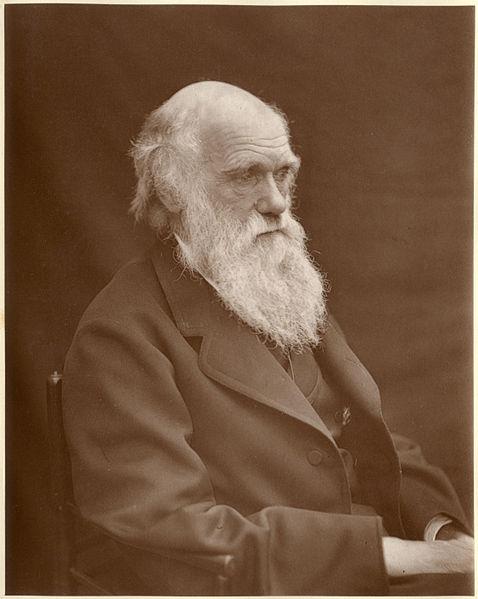
Charles Darwin, circa 1874.
Photo by Leonard Darwin via Wikipedia Commons.
The author of the Science piece (which ran under the heading “editorial”) was Agustin Fuentes, an anthropologist at Princeton. He contended that Darwin’s 1871 book The Descent of Man “offers a racist and sexist view of humanity” and is “often problematic, prejudiced, and injurious”. So students who are taught that Darwin was a great scientist “should also be taught Darwin as an English man with injurious and unfounded prejudices that warped his view of data and experience”.
There are things about this essay I like. For example: I understood it, which distinguishes it from many things written by contemporary anthropologists. Also, it’s hard to argue with its claim that Darwin said things about race and gender that would get a guy canceled today. (As one person put it on Twitter, Darwin, “was 19th century euro upper class. It’d be stranger if he WASN’T ‘problematic’ by today’s standards”.)
Still, Fuentes does seem to have gotten one important thing about Darwin wrong. And in the process he demonstrated a kind of confusion I consider so pernicious that I’ve decided to add it to my list of “existential psychological threats”, along with such cognitive biases as attribution error and confirmation bias (“existential” in the sense of grave threats to Planet Earth, a subject pondered often in this newsletter).
Here’s the confusion: In reading Darwin, Fuentes fails to distinguish between an explanation of something and a justification of something.
I want to emphasize that, though Fuentes seems to be on the left, this conflation of explanation and justification is common on both sides of the political spectrum. If you suggest that some terrorist act committed in America was a response to America’s bombing of majority-Muslim countries, someone on the right may respond to this attempt to explain why the terrorism happened by saying, “Oh, so you’re justifying the slaughter of Americans? You’re excusing the terrorists?”
The fact that I’m often on the receiving end of this kind of question may be one reason I’ve come to see this conflation — let’s call it the “explain/excuse conflation” — as something whose extinction would be a wonderful thing. But there’s another reason: I believe this conflation is a genuine impediment to solving some of the world’s biggest problems. If people get shouted down every time they start a sentence with, “I think the reason bad thing X happened is …” then we’ll have trouble understanding enough about bad things to reduce their frequency.
Here’s the assertion by Fuentes that, so far as I can tell, is flat-out wrong. After (accurately) writing that Darwin “asserted evolutionary differences between races,” he adds: “He went beyond simple racial rankings, offering justification of empire and colonialism, and genocide, through ‘survival of the fittest.'”
H/T to Colby Cosh for the link.
QotD: Billy Clinter and the Philosophers Stoned
The result was Billy Clinter and the Philosophers Stoned, in which young Billy attends a party at Oxford and discovers his amazing ability to smoke but not inhale. With that first fantastic adventure of the shy misunderstood boy blessed — and burdened — with the awesome power to feel your pain with just one touch, young Billy Clinter became the world’s most popular schoolboy.
Then came Billy Clinter and the Gusset of Fire, in which the vast right-wing conspiracy led by the sinister Lord Newt and Doleful Bob plant a hogtail disguised as a house elf in his hotel room in Little Hangleton. The elf tricks Billy into revealing his pocket sneakoscope and she glimpses its remarkable distinguishing characteristics, the strange lightning bolt along the side that signals the tremendous potency of his Slytherin Beaubaton. After this narrow escape, the young wizard gets into yet more scrapes in Billy Clinter and the Prisoner of Azkansas, in which Rodham tells the story of how young Billy and his much brainier friend, Hillary Granger, finally escape the hideous swamp of Azkansas after being trapped there for far longer than Hillary had expected to be.
But in the fourth volume events take a grim turn, as the careless schoolboy becomes aware that Professor Starr has in his laboratory a magic dress that could destroy all his and Hillary’s plans. In Billy Clinter and the Chamber of Semen, Billy realises that he splinched while he was apparating, which had never happened before. This is all the fault of Moaning Monica, the intern who haunts the anteroom at Housewhites and has the rare power of Parcelmouth, the ability to look into the eye of the Basilisk, the world’s smallest snake, without being petrified. Is she a Niffler or a Death Eater? Billy cannot be sure. He looks to Housewhites’ giant shambling groundskeeper Reno to protect him, but she’s busy raining down fire on strange cults. As the book ends, their old friend Albus Bumblegore fails to become Headmaster of Housewhites after insufficient chads are found in his sorting hat.
With each new adventure, critics have predicted that the eternal schoolboy has run his course. But he keeps coming back. None the less, there were strange rumours this time that J.K. Rodham was preparing to kill off the most popular character. It’s been known for a while that she sees the series’ future depending more on the much brainier though somewhat unlikeable Hillary Granger and the four female ghosts who write all her words.
Mark Steyn, “Splinching while you’re apparating”, The [Un]documented Mark Steyn, 2014.
May 26, 2021
The not-so-hidden subtext of One Thousand And One Nights
At least, that’s how Scott Alexander at Astral Codex Ten opens this review of (an abridged version) of One Thousand And One Nights:
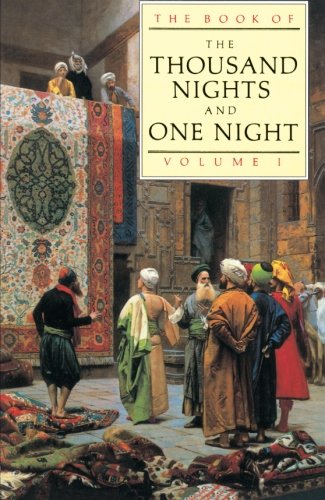
One of many different covers of various editions of this book, but almost certainly not the edition reviewed here.
One Thousand And One Nights is a book about love, wonder, magic, and morality. About genies, ape-people, and rhinoceroses who run around with elephants impaled on their horns. About how to use indexical uncertainty to hack the simulation running the universe to return the outcome you want. But most of all, it’s a book about how your wife is cheating on you with a black man.
Nights stretches from Morocco to China, across at least four centuries — and throughout that whole panoply of times and places, your wife is always cheating on you with a black man (if you’re black, don’t worry; she is cheating on you with a different black man). It’s a weird constant. Maybe it’s the author’s fetish. I realize that Nights includes folktales written over centuries by dozens of different people — from legends passed along in caravanserais, to stories getting collected and written down, to manuscripts brought to Europe, to Richard Burton writing the classic English translation, to the abridged and updated version of Burton I read. But somewhere in that process, probably multiple places, someone had a fetish about their wife cheating on them with a black man, and boy did they insert it into the story.
Our tale begins in Samarkand. One day the king, Shah Zaman, comes home unexpectedly and sees his wife cheating on him with a black man. He kills her in a rage, then falls sick with grief, and is taken to the palace of his brother, King Shahryar of Persia. While there, he sees King Shahryar’s wife cheat on him with a black man. He tells King Shahryar, who kills his wife in a rage too, then also falls sick with grief. The two grief-stricken kings decide to wander the world, expecting that maybe this will help in some way.
They come across a mighty king of the genies, and the brothers hide lest he see them and kill them. The genie falls asleep, and the genie’s wife finds them and demands they have sex with her or she’ll kill them. They have sex, and all the while, the genie’s wife is boasting about how even the king of the genies can’t prevent his wife from cheating. The two kings find this experience salutary — apparently the problem isn’t specific to them, it’s just an issue with the female sex in general. So they go back to the palace and everyone lives happily ever … no, actually, King Shahryar vows that he will bed a new woman every night, then kill her the following morning, thus ensuring nobody can ever cheat on him again.
So for however many years, King Shahryar beds a new woman every night, then kills her in the morning. After a while the kingdom begins to run dangerously low on women. The vizier frets over this, and his daughter Scheherazade hears him fretting. She develops a plan, and volunteers to be the king’s victim that night. After having sex, she tells the king a story. At the end, she says it’s too bad she’s going to die the next morning, because she knows other stories which are even better. Perhaps if the king spared her life for one night she could tell some of those too.
(I’d always heard that she leaves him at a cliff-hanger and makes him spare her to find out how it ends, which I think makes a better story, but this isn’t how the real Arabian Nights works).
Scheherazade’s stories are set in an idealized Middle East. The sultans are always wise and just, the princes are always strong and handsome, and almost a full half of viziers are non-evil. Named characters are always so beautiful and skilled and virtuous that it sometimes gets used it as a plot device — a character is separated from his family member or lover, so he wanders into a caravanserai and asks for news of someone who is excessively beautiful and skilled and virtuous. “Oh yes,” says one of the merchants, “I talked to a traveler from Cairo who said he encountered the most beautiful and skilled and virtuous person he’d ever seen in a garden there, he couldn’t shut up about them for days” — and now you know your long-lost brother must be in Cairo. In one case, a woman went searching for her long-lost son, tasted some pomegranate jam in Damascus, and immediately (and correctly!) concluded that only her son could make pomegranate jam that good. She demanded to know where the merchant had gotten the jam, and the trail led to a happy reunion.
The most common jobs in Idealized Middle East are sultan, merchant, poor-but-pious tailor, fisherman, merchant, evil vizier, sorcerer, merchant, thief, person who gets hired to assist a sorcerer because they have the exact right astrological chart to perform some otherwise-impossible ritual, and merchant. Of these, merchant is number one. Whatever else you’re doing — sailing, stealing, using your perfect astrological chart to enter a giant glowing door in the desert mysteriously invisible to everyone else — you’re probably also dealing goods on the side. The only exceptions are Moroccans (who are all sorcerers), Zoroastrians (who are all demonic cannibals), and Jews (who are all super-double merchants scamming everyone else). Also maybe the 5 – 10% of the Middle Eastern population who witches have turned into animals at any given time.
May 25, 2021
John McWhorter’s new book announced
Following on to his Nine Nasty Words, which just became a New York Times best-seller (somewhat to his surprise), John McWhorter’s next book will be Woke Racism: How a New Religion Has Betrayed Black America from Random Penguin:
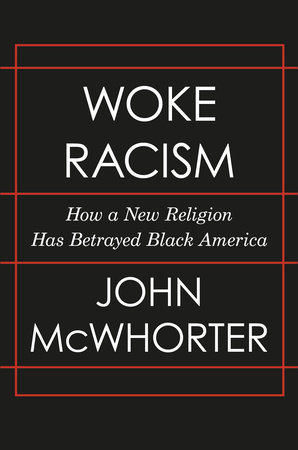
That manuscript will be released as a book by Portfolio (also a Penguin Random House imprint) in October. It will be published under a new title: Woke Racism: How a New Religion Has Betrayed Black America.
I should mention that the often sharp and insightful subscriber comments, as well as the brilliant editorial counsel of Bria Sandford at Portfolio, have already made Woke Racism significantly different from the The Elect excerpts. Woke Racism will express what the Substack excerpts did and then some. It will still analyze Third-Wave Antiracism as a religion. It will still make legions of black people see me as a race traitor. It will still make legions of white people see me as a tragically deluded white supremacist with brown skin who merits dismissal and ostracization.
And amidst all of that, it will still represent what I consider the most pro-black book I have ever written.
But this does mean that from now on, my Substack “newsletter” will be exactly that. I am glad many of you have enjoyed my posts here beyond the The Elect excepts, and they will continue, at the rate of once or twice (and I hope, more often, twice) a week. I have loved communicating to you as well as the feedback I get. Let’s keep this going.
Only: get “The Elect” as a real book, Woke Racism, around Halloween. Here, get my take on things as they happen, unfiltered.


