Quotulatiousness

September 20, 2021

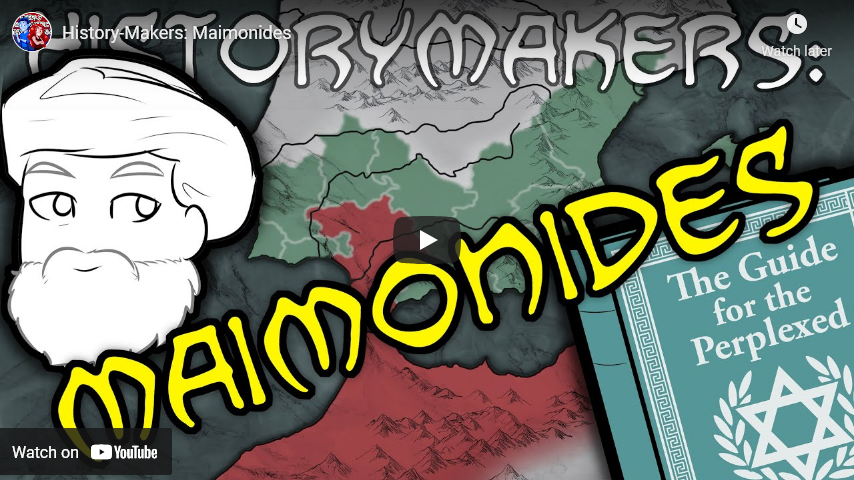
History-Makers: Maimonides

Overly Sarcastic Productions
Published 17 Sep 2021

“From Moses to Moses, there was none like Moses.” Jump into 1100s Cordoba & Cairo as we take a look at the life of one of the Medieval world’s most boundary-breaking History-Makers: Moses Maimonides!

SOURCES & Further Reading: Great Courses lectures “Jewish Scholar in Cairo: Moses Maimonides” from The History and Achievements of the Islamic Golden Age by Eamonn Gearon and “Maimonides and Jewish Law” from Great Minds of the Medieval World by Dorsey Armstrong. Britannica “Maimonides” https://www.britannica.com/biography/…, Stanford Encyclopedia of Philosophy “Maimonides” https://plato.stanford.edu/entries/ma…, The Guide For The Perplexed, Mishne Torah and Commentary on the Mishnah by Maimonides

Special thanks to Yellow/LudoHistory for his assistance in checking over my script. You can check out his livestreams playing historically-inspired videogames over at https://www.twitch.tv/ludohistory
Our content is intended for teenage audiences and up.

PATREON: https://www.Patreon.com/OSP

PODCAST: https://overlysarcasticpodcast.transi…

DISCORD: https://discord.gg/osp

MERCH LINKS: http://rdbl.co/osp

OUR WEBSITE: https://www.OverlySarcasticProductions.com
Find us on Twitter https://www.Twitter.com/OSPYouTube
Find us on Reddit https://www.Reddit.com/r/OSP/

September 18, 2021

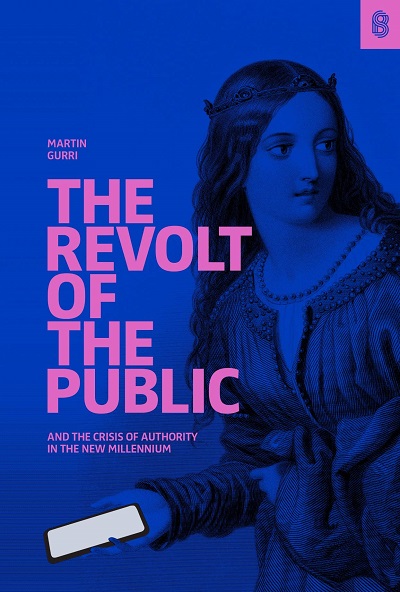
“Martin Gurri’s The Revolt Of The Public is from 2014, which means you might as well read the Epic of Gilgamesh

Filed under: Books, Media, Politics — Tags: , , , , , — Nicholas @ 03:00

In another of his interesting series of book reviews, Scott Alexander looks at a book from 2014 that seems to have done a great job of predicting the situation today, but doesn’t help in looking forward from today:

… It has a second-edition-update-chapter from 2017, which means it might as well be Beowulf. The book is about how social-media-connected masses are revolting against elites, but the revolt has moved forward so quickly that a lot of what Gurri considers wild speculation is now obvious fact. I picked up the book on its “accurately predicted the present moment” cred, but it predicted the present moment so accurately that it’s barely worth reading anymore. It might as well just say “open your eyes and look around”.

In fact, I can’t even really confirm whether it predicted anything accurately or not. Certainly everything it says is true. Anyone who wrote it in 2000 would have been a prophet. Anyone who wrote it in 2020 would have been stating the obvious. Was writing it in 2014 a boring chronicle of clear truths, or an achievement for the ages? I find my memories are insufficiently precise to be sure. It’s like that thing where someone who warned about the coronavirus on March 1 2020 was a bold visionary, but someone who warned about it on March 20 was a conformist bandwagoner — except about the entire history of the 21st century so far. Maybe the best we can do with it is read it backwards, as an artifact of the era when the public was only ambiguously revolting, to see how the knowledge of the coming age arose and spread.

We remember the Arab Spring, those few months in 2011 when revolts spread across various Arab countries and longstanding regimes were toppled by protesters with smartphones and Twitter accounts. Gurri hits the relevant beats, but doesn’t limit himself to the Middle East.

In Spain, a vague formless group called the indignados (or Real Democracy Now, or Youth Without A Future) took to the streets. For months, they filled public squares, streets, and tent cities. Some protests attracted tens of thousands of participants; a few, hundreds of thousands. Some of them were vaguely socialist, but it wasn’t exactly a socialist protest; in fact, the government they were protesting was dominated by the Socialist Workers Party. They were just sort of vaguely angry. From their manifesto:

    Some of us consider ourselves more progressive, others more conservative. Some are believers, others not. Some have well-defined ideologies, others consider ourselves apolitical … but all of us are worried and outraged by the political, economic, and social landscape we see about us. By the corruption of the politicians, businessmen, bankers …

And so on.

At the same moment, hundreds of thousands of people were marching through the streets of Israel. The apparent trigger was a 25-year-old video editor named Daphni Leef who couldn’t afford an apartment near her job. She started a Facebook page saying people should protest the cost of living, one thing led to another, and soon 300,000 people were marching through the streets of Israel and Leef was a national hero.

[…]

Gurri argues all of this was connected, and all of it was a sharp break from what came before. These movements were essentially leaderless. Some had charismatic spokespeople, like Daphni Leef in Israel or Tahrir-Square-Facebook-page-admin Wael Ghonim in Egypt, but these people were at best the trigger that caused a viral movement to coalesce out of nothing. When Martin Luther King marched on Washington, he built an alliance of various civil rights groups, unions, churches, and other large organizations who could turn out their members. He planned the agenda, got funding, ran through an official program of speakers, met with politicians, told them the legislation they wanted, then went home. The protests of 2011 were nothing like that. They were just a bunch of people who read about protests on Twitter and decided to show up.

Also, they were mostly well-off. Gurri hammers this in again and again. Daphni Leef had just graduated from film school, hardly the sort of thing that puts her among the wretched of the earth. All of these movements were mostly their respective countries’ upper-middle classes; well-connected, web-savvy during an age when that meant something. Mostly young, mostly university-educated, mostly part of their countries’ most privileged ethnic groups. Not the kind of people you usually see taking to the streets or building tent cities.

Some of the protests were more socialist and anarchist than others, but none were successfully captured by establishment strains of Marxism or existing movements. Many successfully combined conservative and liberal elements. Gurri calls them nihilists. They believed that the existing order was entirely rotten, that everyone involved was corrupt and irredeemable, and that some sort of apocalyptic transformation was needed. All existing institutions were illegitimate, everyone needed to be kicked out, that kind of thing. But so few specifics that socialists and reactionaries could march under the same banner, with no need to agree on anything besides “not this”.

September 9, 2021

Did Freudian Psychology Create Modern Art? | B2W: ZEITGEIST! I E.25 Harvest 1924

Filed under: Europe, History, Media, USA — Tags: , , , , , , — Nicholas @ 04:00

TimeGhost History
Published 8 Sep 2021

The Surrealist Movement is born this season with unsurprising eccentric drama. Salvador Dali will one day be a part of it, but for now he is still in art school and has actually only just come out of prison. Also this season, a crime which sees police chasing America’s first ever “Public Enemy No. 1”
(more…)

August 24, 2021

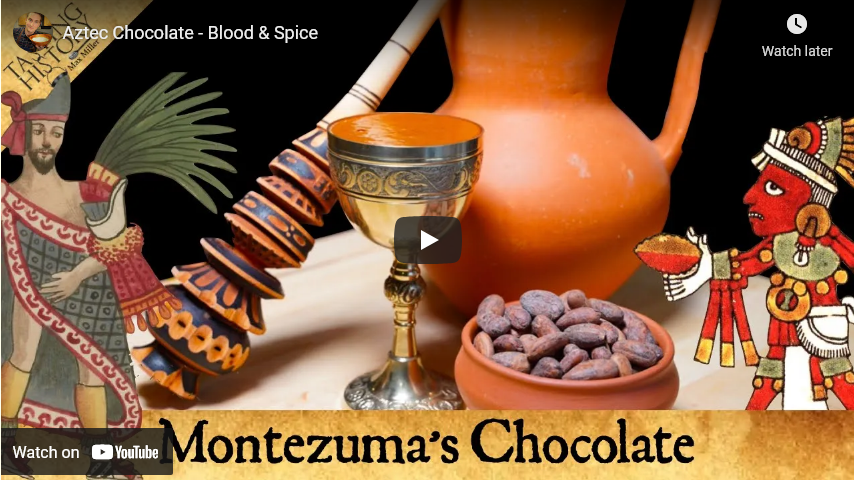
Aztec Chocolate – Blood & Spice

Tasting History with Max Miller
Published 9 Mar 2021

Help Support the Channel with Patreon: https://www.patreon.com/tastinghistory
Tasting History Merchandise: crowdmade.com/collections/tastinghistory

Follow Tasting History here:
Instagram: https://www.instagram.com/tastinghist…
Twitter: https://twitter.com/TastingHistory1
Tiktok: TastingHistory
Reddit: r/TastingHistory
Discord: https://discord.gg/d7nbEpy

Tasting History’s Amazon Wish List: https://amzn.to/3i0mwGt

LINKS TO INGREDIENTS & EQUIPMENT**
Sony Alpha 7C Camera: https://amzn.to/2MQbNTK
Sigma 24-70mm f/2.8 Lens: https://amzn.to/35tjyoW
Molinillo: https://amzn.to/3rpoXGJ
Cacao Beans: https://amzn.to/3v4feIe
Cacao Nibs: https://amzn.to/3sX7JAU
Achiote/Annatto Powder: https://amzn.to/3rpWe4C

LINKS TO SOURCES**
The Secret Life of Chocolate by Marcos Patchett: https://amzn.to/3qoLOB1
For more information visit thesecretlifeofchocolate.com
The True History of Chocolate by Sophie & Michael Coe: https://amzn.to/3sWBl1f
Florentine Codex by Bernardino de Sahagún: https://amzn.to/2OrKiAE
Thomas Gage’s Travels in the New World: https://amzn.to/3sO3YxA

**Some of the links and other products that appear on this video are from companies which Tasting History will earn an affiliate commission or referral bonus. Each purchase made from these links will help to support this channel with no additional cost to you. The content in this video is accurate as of the posting date. Some of the offers mentioned may no longer be available.

Subtitles: Jose Mendoza

PHOTO CREDITS
Metate et Mano: Yelkrokoyade, CC BY-SA 3.0 https://creativecommons.org/licenses/…, via Wikimedia Commons
Olmec Head No 3: By Maribel Ponce Ixba (frida27ponce) – Flickr, CC BY 2.0, https://commons.wikimedia.org/w/index…

#tastinghistory #aztec #chocolate

August 20, 2021

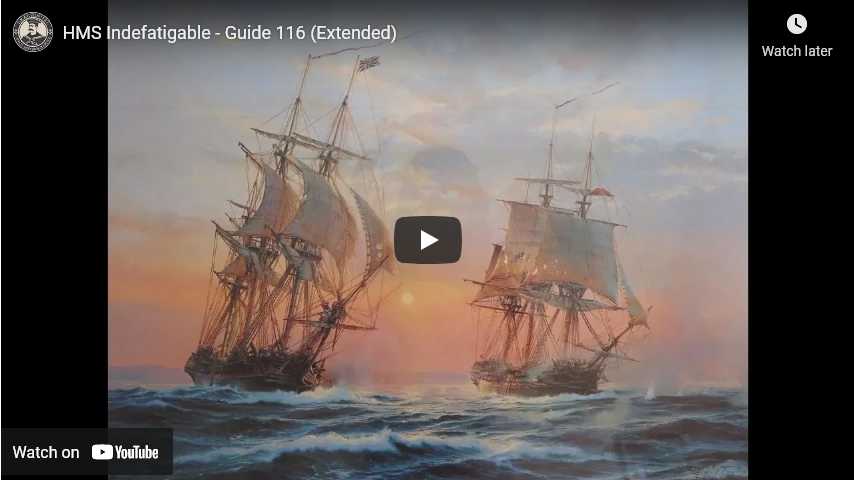
HMS Indefatigable – Guide 116 (Extended)

Filed under: Britain, France, History, Military, Weapons — Tags: , , , , , — Nicholas @ 02:00

Drachinifel
Published 6 Apr 2019

HMS Indefatigable, a razee frigate of the British Royal Navy, is today’s subject.

Want to support the channel? – https://www.patreon.com/Drachinifel

Want to talk about ships? https://discord.gg/TYu88mt

Want to get some books? www.amazon.co.uk/shop/drachinifel

Music – https://www.youtube.com/c/NCMEpicMusic

August 11, 2021

QotD: Wellington and Napoleon

Filed under: Britain, Europe, France, History, Humour, Military, Quotations — Tags: , , , , , — Nicholas @ 01:00

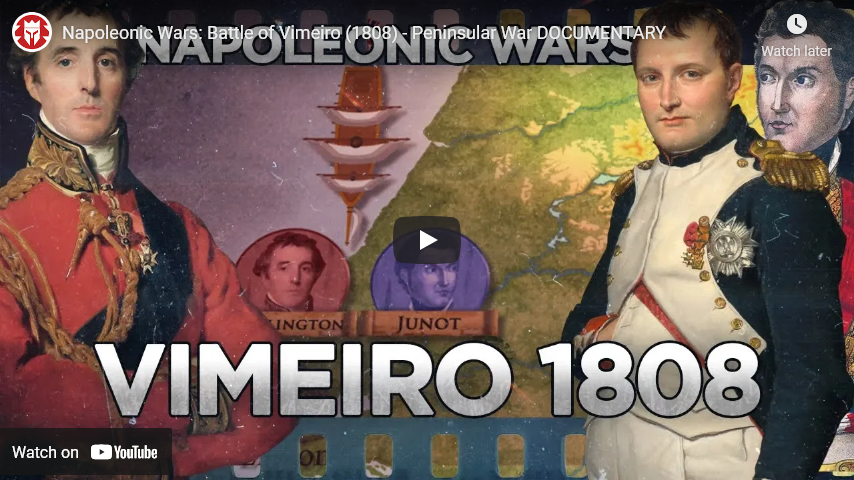
But the most important of the great men who at this time kept Britain top nation was an Irishman called John Wesley, who afterwards became the Duke of Wellington (and thus English). When he was still Wolseley, Wellington made a great name for himself at Plassaye, in India, where he

    “Fought with his fiery few and one,”

remarking afterwards, “It was the bloodiest battle for numbers I ever knew.” It was, however, against Napoleon and his famous Marshals (such as Marshals Ney, Soult, Davos, Mürren, Soult, Blériot, Snelgrove, Ney, etc.) that Wellington became most memorable. Napoleon’s armies always used to march on their stomachs, shouting: “Vive l’Intérieur!” and so moved about very slowly (ventre-à-terre, as the French say), thus enabling Wellington to catch them up and defeat them. When Napoleon made his troops march all the way to Moscow on their stomachs they got frozen to death one by one, and even Napoleon himself admitted afterwards that it was rather a Bad Thing.

Gorilla War in Spain

The second part of the Napoleonic War was fought in Spain and Portugal and was called the Gorilla War on account of the primitive Spanish method of fighting.

Wellington became so impatient with the slow movements of the French troops that he occupied himself drawing imaginary lines all over Portugal and thus marking off the fighting zone; he made a rule that defeats beyond these lines did not count, while any French army that came his side of them was out of bounds. Having thus insured himself against disaster, Wellington won startling victories at Devalera, Albumina, Salamanda, etc.

Waterloo

After losing this war Napoleon was sent away by the French, since he had not succeeded in making them top nation; but he soon escaped and returned just in time to fight on the French side at the battle of Waterloo. This utterly memorable battle was fought at the end of a dance, on the Playing Fields of Eton, and resulted in the English definitely becoming top nation. It was thus a very Good Thing. During the engagement the French came on in their usual creeping and crawling method and were defeated by Wellington’s memorable order, “Up Jenkins and Smashems”.

This time Napoleon was sent right away for ever by everybody, and stood on the deck of a ship in white breeches with his arms like that.

W.C. Sellar & R.J. Yeatman, 1066 And All That, 1930.

August 5, 2021

The Ems Dispatch – The Outbreak of the Franco-Prussian War I GLORY & Defeat Week 1

Filed under: Europe, France, Germany, History, Military — Tags: , , , , , , — Nicholas @ 04:00

realtimehistory
Published 13 Jul 2021

Support Glory & Defeat: https://realtimehistory.net/gloryandd…

French and Prussian animosity have been swelling in the background since the German Wars of Unification started in the 1860s. The French Duc de Gramont hopes that a victory over Prussia could restore French prestige while Prussian Chancellor Bismarck needs a reason to fulfill his dream of German unification from above. When the crisis about the Spanish throne escalates with the Ems Dispatch, the die is cast and the Franco-Prussian War begins.

» OUR PODCAST
https://realtimehistory.net/podcast – interviews with historians and background info for the show.

» LITERATURE
Arand, Tobias: 1870/71 – Die Geschichte des Deutsch-Französischen Krieges erzählt in Einzelschicksalen. Hamburg 2018

Böhme, Helmut: (Hrsg.): Die Reichs-gründung. dtv-Dokumente. München 1967

Gall, Lothar (Hrsg: Deutschland Archiv). Kaiserreich Bd. I. o.O. 2007

Girard Louis: Napoléon III. Paris 1986

Mährle, Wolfgang (Hrsg.): Nation im Siegesrausch. Württemberg und die Gründung des Deutschen Reiches 1870/71. Stuttgart 2020

Milza, Pierre: L’année terrible. La guerre franco-prussienne septembre 1870 – mars 1871. Paris 2009

» SOURCES
Fontane, Theodor: Der Krieg gegen Frankreich Bd. I. Berlin 1873

Louis L. Snyder, ed., Documents of German History. New Brunswick, N.J.: Rutgers University Press, 1958

» OUR STORE
Website: https://realtimehistory.net

»CREDITS
Presented by: Jesse Alexander
Written by: Cathérine Pfauth, Dr. Tobias Arand, Jesse Alexander
Director: Toni Steller & Florian Wittig
Director of Photography: Toni Steller
Sound: Above Zero
Editing: Toni Steller
Motion Design: Philipp Appelt
Mixing, Mastering & Sound Design: http://above-zero.com
Maps: Battlefield Design
Research by: Cathérine Pfauth, Prof. Dr. Tobias Arand
Fact checking: Cathérine Pfauth, Prof. Dr. Tobias Arand

Channel Design: Battlefield Design

Contains licensed material by getty images
All rights reserved – Real Time History GmbH 2021

August 1, 2021

Christopher Hitchens on George Orwell

DailyHitchens
Published 22 Jan 2010

Aug 7, 2009. Christopher Hitchens talks with EconTalk host Russ Roberts about George Orwell. Drawing on his book Why Orwell Matters, Hitchens talks about Orwell’s opposition to imperialism, fascism, and Stalinism, his moral courage, and his devotion to language. Along the way, Hitchens makes the case for why Orwell matters. For more videos, updates and info on Christopher Hitchens, please visit http://www.dailyhitchens.com

July 31, 2021

English sea-borne trade in the early 17th century

Filed under: Africa, Americas, Asia, Books, Britain, Europe, History — Tags: , , , , , , — Nicholas @ 03:00

In the latest Age of Invention newsletter, Anton Howes reviews a book on English trade … a very old book:

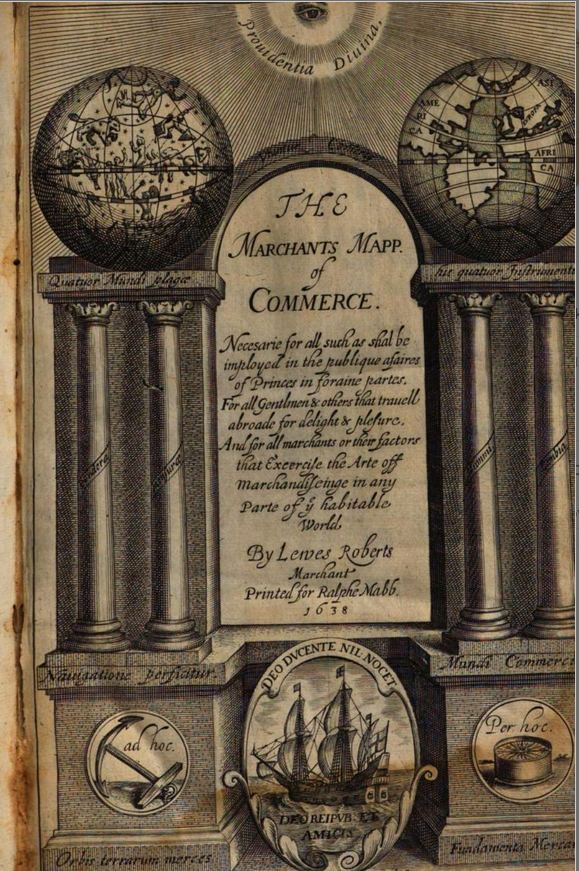
I’ve become engrossed this week by a book written in 1638 by the merchant Lewes Roberts — The Marchant’s Mappe of Commerce. It is, in effect, a guide to how to be a merchant, and an extremely comprehensive one too. For every trading centre he could gather information about, Roberts noted the coins that were current, their exchange rates, and the precise weights and measures in use. He set down the various customs duties, down even to the precise bribes you’d be expected to pay to various officials. In Smyrna, for example, Roberts recommended you offer the local qadi some cloth and coney-skins for a vest, the qadi‘s servant some English-made cloth, and their janissary guard a few gold coins.

Unusually for so many books of the period, Roberts was also careful to be accurate. He often noted whether his information came from personal experience, giving the dates of his time in a place, or whether it came second-hand. When he was unsure of details, he recommended consulting with better experts. And myths — like the rumour he heard that the Prophet Muhammad’s remains at Mecca were in an iron casket suspended from the ceiling by a gigantic diamond-like magnet called an adamant — were thoroughly busted. Given his accuracy and care, it’s no wonder that the book, in various revised editions, was in print for almost sixty years after his death. (He died just three years after publication.)

What’s most interesting about it to me, however, is Roberts’s single-minded view of English commerce. The entire world is viewed through the lens of opportunities for trade, taking note of the commodities and manufactures of every region, as well as their principal ports and emporia. A place’s antiquarian or religious tourist sites, which generally make up the bulk of so many other geographical works, are given (mercifully) short shrift. Indeed, because the book was not written with an international audience in mind, it also passes over many trades with which the English were not involved, or from which they were even excluded. It thus provides a remarkably detailed snapshot of what exactly English merchants were interested in and up to on the eve of civil war; and right at the tail end of a century of unprecedented growth in London’s population, itself seemingly led by its expansion of English commerce.

So, what did English merchants consider important? It’s especially illuminating about England’s trade in the Atlantic — or rather, the lack thereof.

Roberts spends remarkably little time on the Americas, which he refers to as the continents of Mexicana (North America) and Peruana (South America). Most of his mentions of English involvement are about which privateers had once raided which Spanish-owned colonies, and he gives especial attention to the seasonal fishing for cod off the coast of Newfoundland — a major export trade to the Mediterranean, and a source of employment to many English West Country farmers, who he refers to as being like otters for spending half their lives on land and the other half on sea.

But as for the recently-established English colonies on the mainland, which Roberts refers to collectively as Virginia, he writes barely a few sentences. Although he reproduces some of the propaganda about what is to be found there — no mention yet of tobacco by the way, with the list consisting largely of foodstuffs, forest products, tar, pitch, and a few ores — the entirety of New England is summarised only as a place “said to be” resorted to by religious dissenters. The island colonies on Barbados and Bermuda were also either too small or too recently established to merit much attention. To the worldly London merchant then, the New World was still peripheral — barely an afterthought, with the two continents meriting a mere 11 pages, versus Africa’s 45, Asia’s 108, and Europe’s 262.

The reason for this was that the English were excluded from trading directly with the New World by the Spanish. It was, as Roberts jealously put it, “shut up from the eyes of all strangers”. The Spanish were not only profiting from the continent’s mines of gold and silver, but he also complained of their monopoly over the export of European manufactures to its colonies there. It’s a striking foreshadowing of what was, in the eighteenth century, to become one of the most important features of the Atlantic economy — the market that the growing colonies would one day provide for British goods. Indeed, Roberts’s most common condemnation of the Spanish was for having killed so many natives, thereby extinguishing the major market that had already been there: “had not the sword of these bloodsuckers ended so many millions of lives in so short a time, trade might have seen a larger harvest”. The genocide had, in Roberts’s view, not only been horrific, but impoverished Europe too (he was similarly upset that the Spanish had slaughtered so many of the natives of the Bahamas, known for the “matchless beauty of their women”).

July 19, 2021

George Orwell: The Uncompromising Visionary

Filed under: Asia, Books, Britain, History, India, Liberty — Tags: , , , , , , — Nicholas @ 04:00

Biographics
Published 29 Nov 2019

This video is #sponsored by NordVPN.

Credits:
Host – Simon Whistler
Author – Morris M
Producer – Jennifer Da Silva
Executive Producer – Shell Harris

Business inquiries to biographics.email@gmail.com

Source/Further reading:

Britannica’s Orwell Bio: https://www.britannica.com/biography/…
Excellent, very informative ONDB biography (paywall for non-UK users. UK users need only enter library card number to access): https://www.oxforddnb.com/view/10.109…
Spanish civil war: https://encyclopedia.ushmm.org/conten…
https://www.history.com/this-day-in-h…
Orwell’s mistakes on the Spanish Civil War: https://www.theguardian.com/books/201…
Orwell at the BBC: https://www.bbc.com/news/entertainmen…

July 15, 2021

History Summarized: The Golden Age of Piracy

Filed under: Britain, History, Humour — Tags: , , , , — Nicholas @ 02:00

Overly Sarcastic Productions
Published 4 May 2015

Blue’s back, and this time he’s hoisting the black flag and preparing to board. It’s okay: he’s got a letter of marque.

June 15, 2021

History Summarized: Persistence of Judaism

Overly Sarcastic Productions
Published 7 Apr 2017

Gooooood morning everybody! Today, Blue finishes the trilogy of Abrahamic religions with a video summarizing the history of the Hebrew people and the Jewish faith. There’s a lot of ground to cover, so fasten your seatbelts for a twenty-minute rundown of the facts, the theories, and the ever-so-popular misconceptions!

Look forward to next time, when Blue brings it all together to talk about Religious Wars and Religious Philosophy!

PATREON: www.patreon.com/user?u=4664797

MERCH LINKS:
Shirts – https://overlysarcasticproducts.threa…​
All the other stuff – http://www.cafepress.com/OverlySarcas…​

Find us on Twitter @OSPYouTube!

June 14, 2021

How To Defend A Star Fortress Forever

SandRhoman History
Published 13 Jun 2021

Thanks to Audible for sponsoring this video! Start listening with a 30-day Audible trial. Choose one audiobook and two Audible Originals absolutely free: http://audible.com/sandrhoman or text sandrhoman to 500-500.

In this video we will provide you with the most necessary knowledge to defend a star fortress forever.

Patreon (thank you): https://www.patreon.com/sandrhomanhis…
Paypal (thank you: paypal.me/SandRhomanhistory
We also have Twitter: https://twitter.com/Sandrhoman

#history #siege #sandrhoman

Sources:
Hoppe, S., s.v. “Festungsbau”, in: Enzyklopädie der Neuzeit.
Lynn, J. A., “States in Conflict 1661-1763”, in: Parker, G. (Ed.), The Cambridge History of Warfare, Cambridge 2005.
Lynn, J. A., “The trace itallienne and the Growth of Armies”, in: Rogers, C. J. (Ed.), The Military Revolution Debate. Readings on the Military Transformation of Early Modern Europe, Boulder / San Francisco / Oxford 1995.
Ortenburg, G., Waffe und Waffengebrauch im Zeitalter der Landsknechte (Heerwesen der Neuzeit, Abt. 1, Bd. 1) Koblenz 1984.
Parker, G., “The Limits to Revolutions in Military Affairs: Maurice of Nassau, the Battle of Nieuwpoort (1600), and the Legacy”, in The Journal of Military History, 71;2, 2007; S. 331 – 372.
Rogers, C.J. / Tallet F. (editors), European Warfare, 1350–1750, 2010.
Van Nimwegen, O., The Dutch Army and the Military Revolutions, 1588-1688.

May 7, 2021

Tank Chats #106 | Panzer IV | The Tank Museum

Filed under: Germany, History, Military, Weapons, WW2 — Tags: , , , , , , — Nicholas @ 02:00

The Tank Museum
Published 11 Sep 2020

Join The Tank Museum’s Curator David Willey as he discusses the Sd.Kfz 161, better known as Panzer IV: the most numerously produced tank by Germany during the Second World War.

Support the work of The Tank Museum on Patreon: ► https://www.patreon.com/tankmuseum
Visit The Tank Museum SHOP & become a Friend: ► tankmuseumshop.org

Twitter: ► https://twitter.com/TankMuseum
Instagram: ► https://www.instagram.com/tankmuseum/
#tankmuseum #tanks

April 23, 2021

Taiwan Under Occupation, Axis Solidarity, and U-Boats in the Med – WW2 – OOTF 022

Filed under: China, Europe, Germany, History, Japan, Military, WW2 — Tags: , , , , , — Nicholas @ 04:00

World War Two
Published 22 Apr 2021

Ever wonder what life was like in Taiwan during the Second World War? Or if German U-Boats were active in the Mediterranean? You can find out the answers in this episode of Out of the Foxholes!

Join us on Patreon: https://www.patreon.com/TimeGhostHistory
Or join The TimeGhost Army directly at: https://timeghost.tv

Follow WW2 day by day on Instagram @ww2_day_by_day – https://www.instagram.com/ww2_day_by_day
Between 2 Wars: https://www.youtube.com/playlist?list…
Source list: http://bit.ly/WW2sources

Hosted by: Indy Neidell
Written by: Ian Sowden, Lewis Braithwaite, Timothy Smith
Director: Astrid Deinhard
Producers: Astrid Deinhard and Spartacus Olsson
Executive Producers: Astrid Deinhard, Indy Neidell, Spartacus Olsson, Bodo Rittenauer
Creative Producer: Maria Kyhle
Post-Production Director: Wieke Kapteijns
Research by: Ian Sowden, Lewis Braithwaite, Timothy Smith
Edited by: Miki Cackowski
Sound design: Marek Kamiński
Map animations: Miki Cackowski and Eastory (https://www.youtube.com/c/eastory​)

Sources:
David Rumsey Map Collection, David Rumsey Map Center, Stanford Libraries
Chapman University Digital Commons

Soundtracks from the Epidemic Sound:
Yi Nantiro – “Watchman”
Max Anson – “Ancient Saga”
Skrya – “First Responders”

Archive by Screenocean/Reuters https://www.screenocean.com​.

A TimeGhost chronological documentary produced by OnLion Entertainment GmbH.

« Newer PostsOlder Posts »

Powered by WordPress