The Northern Historian
Published 5 Feb 202117th September 1939, just two weeks after Britain had declared war on Germany, aircraft carrier HMS Courageous was on patrol off the west coast of Ireland. Unbeknown to her, she was being stalked by a hidden predator. Within 20 minutes of being attacked she had slipped beneath the Atlantic surface, taking with her the lives of over 500 men. She became the first British naval casualty of World War Two.
She began her life as a light cruiser during World War One as part of the Courageous class of cruisers. They were a trio of ships comprising HMS Courageous, HMS Glorious, and HMS Furious. These ships were designed and built to support Admiral Lord Fisher’s Baltic project.
Following heavy losses at The Battle of Jutland, HMS Courageous became the flagship of the 1st Cruiser Squadron and took part in the 2nd Battle of Heligoland.
Following World War 1 and due to the Washington Naval Treaty of 1922, limiting new ship constructions, HMS Courageous along with her sisters HMS Glorious and HMS Furious were converted into aircraft carriers and became the Courageous class of aircraft carriers for the Royal Navy.
(more…)
December 5, 2022
The sinking of HMS Courageous, 17 September, 1939
October 19, 2022
South Atlantic D-Day: Battle of San Carlos – Falklands War
Historigraph
Published 15 Oct 2022On May 21st 1982, the United Kingdom landed thousands of troops at San Carlos Water in the Falkland Islands, to begin their recapture from Argentina. But only hours after arriving, British forces were under intense attack, as the Argentine air force attempted to push the troops clambering ashore back into the sea. This was the Battle of San Carlos.
0:00 – Intro
0:37 – Britain’s Invasion Plans
2:59 – Bespoke Post
4:16 – The Argentine Onslaught
8:46 – Attack on Coventry and Conveyer
(more…)
October 10, 2022
Chinese Warlords and the Royal Canadian Navy – WW2 – OOTF 028
World War Two
Published 9 Oct 2022In today’s episode of Out of the Foxholes, we discuss the role of Chinese warlords played in the war against Japan, while also shining a bit more light on the Canadian Navy and its impact on WW2.
(more…)
September 25, 2022
200 Medals Won in an Hour – The Raid on Zeebrugge, 1918
Historigraph
Published 11 May 2022
(more…)
September 23, 2022
A Short History of Ships Cats – Floating Felines, Maritime Moggies and Kleptomaniac Kittens
Drachinifel
Published 26 Feb 2020A quick look at the origins of a vital part of the ship’s maintenance crew, and some notable examples.
(more…)
September 3, 2022
The impact of the first wave of globalization
In the latest Age of Invention newsletter, Anton Howes considers the world in terms of trade before and after the transportation revolution which changed long-distance trade from primarily luxury goods to commodities for the mass market:
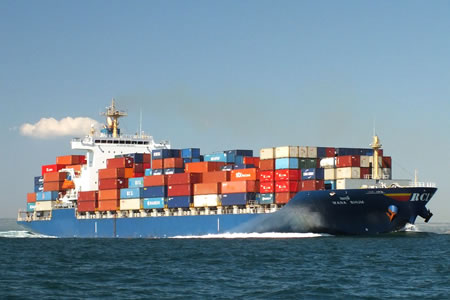
Long-distance trade has of course been common since ancient times. Archaeologists often find Byzantine-made glassware from the sixth century all the way out in India, China, and even Japan. Or beads from seventh-century Southeast Asia all the way out in Libya, Spain, and even Britain. Yet such long-distance trades often involved goods that were entirely unique to particular areas — gems, spices, indigo, coffee, tea — or were sufficiently valuable to make the high costs of transportation worthwhile, such as expert-made glassware, silks, and muslin cloths with impossibly high thread counts. Long-distance trade may have been ancient but was restricted to luxuries. It did not involve the everyday goods of life.
That all changed, however, when the innovations of the sixteenth to the nineteenth centuries caused transportation costs to dramatically fall. With better sailing ships, canals, and navigational techniques, followed by better roads, railways, refrigeration, steam power, and dynamite (which meant railways could cross mountain ranges, canals could link oceans, and new deep-water ports could be dug), it was soon profitable to transport even the cheapest and bulkiest of goods over vast distances — goods like meat, coal, and grain.
The entire world was brought into a single market, in which even the bulkiest commodities of each continent were suddenly in direct competition with one another. The decisions of farmers in Ukraine, for example, in the nineteenth century came to affect the farmers in America, China, India, or even Australia, and all of them vice versa. The prices of commodities all over the world thus converged to similar levels, falling in some places, but rising in the economies that had previously been too distant from the ready markets of the industrialised nations.
The result was what economic historians call a terms-of-trade boom, with the more agrarian economies’ commodity exports becoming more valuable relative to manufactured imports. Thus, their grain, raw fibres, minerals, and ores suddenly bought many more foreign manufactures like textiles. Countries that specialised in commodities thus specialised even further, devoting even more of their workers, resources and capital to extracting them. They were incentivised to extend their frontiers — to put more of the wilderness under pasture or plough, and to dig deeper for the mineral wealth beneath their feet.
Meanwhile, for the industrial economies, the opposite happened. By gaining access to many more and cheaper sources of raw resources and food, they were able to make their own manufactured exports cheaper too. And this, in turn, further exacerbated the terms-of-trade boom among their newly globalised commodity suppliers. As the great Saint-Lucian economist Sir W. Arthur Lewis put it, the world in the late nineteenth century separated into an increasingly industrialised “core”, fed by an increasingly farming- and mining-focused “periphery”.
Much has changed in the century that followed, and some of the old core/periphery distinctions have moved or entirely broken down. But the world has remained globalised. Even in periods of higher tariffs, like between the world wars, no amount of protectionism was able to counteract or undo the effects of the dramatic drop in global transportation costs. With the advent of telegraphs, telephones, fax machines, and now the Internet, even many services are becoming globalised as well — a process likely sped up by the pandemic. Those who can easily work from home will increasingly, like nineteenth-century workers the world over, find themselves either the victims or beneficiaries of global price convergence. (Incidentally, I’m not convinced that the very services-heavy economies of Europe or North America are even remotely prepared for this, to the extent that they can prepare at all for what is the economic equivalent of a planetary-scale force of nature.)
August 25, 2022
The Polish Navy – Founding to the Fall of Poland
Drachinifel
Published 14 Apr 2021Today we take a look at the how the Polish Navy came to be, how the core of their ships got away to form the start of the Free Polish Navy, and the last stand the remaining ships and men undertook.
(more…)
August 20, 2022
The historical tourist attractions of Pisa
In the latest Age of Invention newsletter, Anton Howes talks about a recent trip to Italy, specifically the historically interesting places in Pisa and Lucca:

Galileo Galilei circa 1640.
Detail of an oil portrait by Justus Sustermans (1597-1681) from the National Maritime Museum via Wikimedia Commons.
Some are famous. Galileo Galilei, for example, is said to have used the leaning tower of Pisa to drop two spheres of different masses, to show that they would fall at the same speed — at least, that’s what his disciple Vincenzo Viviani claimed, ten years after Galileo’s death, and many decades after the alleged demonstration. Even if Viviani was being accurate, however, Galileo certainly wasn’t the first to demonstrate the concept. And Viviani mistakenly claimed priority for all sort of other scientific breakthroughs for his master, so like most other historians I’m inclined to doubt the story.
Nonetheless, Pisa was certainly Galileo’s birthplace — though it turns out that there are three different locations in the city to have claimed the honour over the years.
Galileo was initially thought to have been born in or near the fortress (its walls are impressive to look at and contain a pleasant garden). But this location was then refuted on the basis that for Galileo’s father Vincenzo Galilei to have lived in the fortress he would have had to have been a master at arms, which he was not. He was in fact a merchant and lute-maker. So in the nineteenth century a new location emerged: the casa Bocca, on the Stretto Borgo, which Vincenzo rented a few months before Galileo’s birth, and where the Galilei family lived for the next decade. It seemed a secure candidate for a while, except for a weird discrepancy: Galileo’s baptismal certificate assigned his birth to the wrong parish.
It then emerged that Galileo’s mother’s family — the Ammannati — lived in the correct parish, and that the custom of the time was for women to return to their parents’ home for the birth of their first child. Thus, the evidence points to Galileo having been born at the Casa Ammanati on the via Giusti. It’s a neat story of how a tourist destination can jump around based on new research, though there’s unfortunately not much to visit there other than a plaque.
In terms of things to actually see, one of the most impressive things in Pisa is the Museo delle Navi Antiche (Museum of Ancient Ships), which we found to be undeservedly deserted. Housed in the old stables for the city’s cavalry, and once the site of the Medici-era naval arsenal, the museum gives a fantastically thorough overview of the city from its Etruscan beginnings through to Roman subjugation, Ostrogothic invasion, Byzantine reconquest, and Longbeard settlement in the sixth century (although they’re usually called the Lombards, this comes from langobardi — literally, longbeards — so I think calling them that is both more accurate and more fun).
The museum’s highlight, however, is the ancient ships for which it is named, and which are incredibly well-preserved. I was stunned to see a massive actual wooden anchor, not just a reconstruction, of a cargo ship from the second century BC. It’s so well-preserved that you can even make out a decoration, carved into the wood, of a ray fish. The same goes for the rest of the various ships’ timbers. You can see almost all of their original hulls and planking, as well as finer details like rudder-oars, benches for the rowers, and in one case even the ship’s name carved into the wood — the Alkedo, which appears to have been a pleasure boat from the first century. Apparently, during excavation, the archaeologists could even make out the Alkedo‘s original red and white paint, as well as the impression left by an iron sheet that had covered its prow. The ships’ contents are often just as astonishing, with well-preserved baskets, fragments of clothing, and even bits of the rigging like its wooden pulleys and ropes. Well worth a visit.
August 6, 2022
Canada’s New Warship
Frontline Pros
Published 12 Feb 2022The Type 26 Frigate will become the first dedicated warship Canada has built in decades. Soon the Royal Canadian Navy will take ownership of 15 of these vessels, making them the largest owner of the Type 26 in the world.
(more…)
July 30, 2022
Beartrap: The Best Way To Land A Big Helicopter On A Small Ship At Sea
Polyus Studios
Published 29 Jul 2022Don’t forget to like the video and subscribe to my channel!
Support me on Patreon – https://www.patreon.com/polyusstudiosToday, navies across the world use an ingenious system to land helicopters on the rolling deck of a ship at sea. It enabled the powerful helicopter-destroyer combination that has become the dominant form of at sea anti-submarine warfare. It’s the “helicopter haul down and rapid securing device”, more commonly known as Beartrap. This device may be little known to the public, but it stands as one of the greatest contributions Canada has ever made to naval aviation, and ushered in the age of helicopters at sea.
(more…)
July 28, 2022
Is the US Navy in crisis?
CDR Salamander outlines why he is very concerned about the current state of the United States Navy:
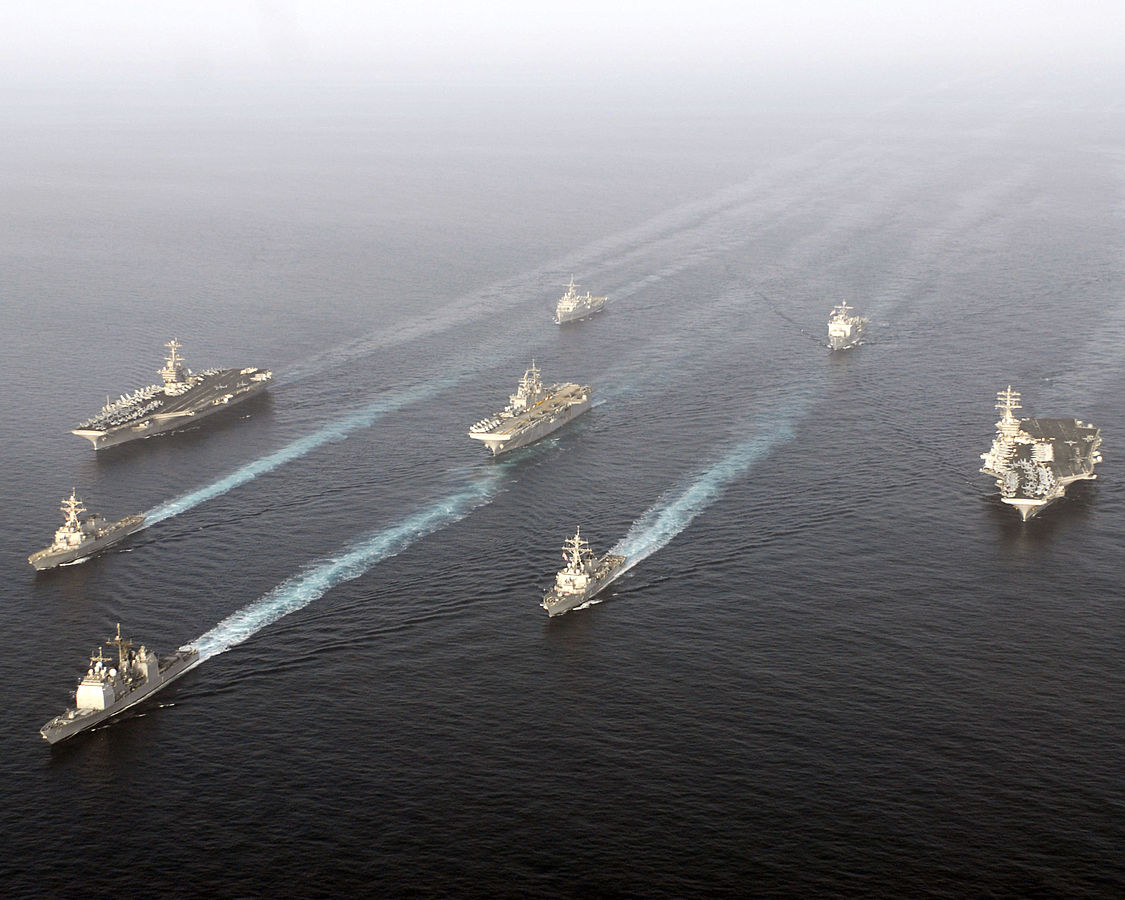
US Navy ships from the John C. Stennis and Nimitz Carrier Strike Groups with ships from the Bonhomme Richard Expeditionary Strike Group in the Gulf of Oman, 22 May 2007.
US Navy photo by Mass Communication Specialist 1st Class Denny Cantrell via Wikimedia Commons.
If you believe the threat from China is overblown, our Navy is well led, and that our fleet is big enough, then this is not the post for you. If you are concerned for all of it, grab a fresh drink and dive right in.
We are facing of something our nation has not had to seriously consider in well over three decades; we do not have free and unfettered access to the sea.
Even when Soviet submarines roamed the world’s oceans at will – though closely watched – and the Red Banner Fleet could send battle groups on cruises through the Gulf of Mexico, we had fair confidence in one thing – the Pacific was an American lake.
No more.
The leaders of the USN seem to have very different notions about what the Navy needs:
f you feel the Navy needs a larger share of the budget to meet the challenge of China, then you need to advocate for it. You need to fight for it … and when I say “you” I mean “we” and the most important and powerful parts of that “we” are our institutions; our maritime power institutions dedicated to seeing the USA remain the premier seapower.
Let’s start with the most obvious. Our uniformed Navy is itself an institution. It reports to its civilian leadership in the Executive Branch with oversight from the Legislative Branch. There are your big pixel maritime governmental institutions; the uniformed and civilian leaders in the Department of the Navy.
As reviewed yesterday, the CNO is engaged in a rather low-energy talking point about 500-ships, but in 2022 that is not even remotely achievable. He knows it, you know it, Congress knows it as well. A number is not an argument, and yet he is investing personal and institutional capital on this line that is almost immediately ignored if it is heard at all. Why?
In the last year one of his highest profile public appearances was when he shoveled heaping piles of personal and institutional capital in a fight defending a red in tooth and claw racial essentialist Ibram X. Kendi against who would normally be the US Navy’s natural allies in Congress. Ultimately he lost that battle and removed Kendi’s racist book and others from his reading list, but in the face of everything else going on in the maritime world, why?
What about the Vice CNO, Admiral William K. Lescher, USN? Maybe he could throw some sharp elbows for the maritime cause? Sadly, not. Just look at his exchange with Rep. Mike Gallagher (R-WI) back in March. He seems to be the “Vice Chief of Joint Force Operations” more than anything else. He is focused on something, but advocating for sea power is not it.
With the night orders from the CNO and VCNO as they are, if you expect any significant advocacy from the uniformed Navy leadership who report to them for — checks notes — the Navy, you are going to have to wait for a long time, time we don’t have. It isn’t going to happen.
[…]
Take a moment and ponder – when was the last time you heard the SECNAV or Under out front on The Hill or to the greater public about our maritime requirements? Yes, I fully understand what goes on behind closed doors, but that slow roll in an ever-slower bureaucracy infested with scoliotic nomenklatura is well past being of use. The American people must be provided the information and motivation to understand how their entire standard of living – and to a great extent their freedoms – is guaranteed by our mastery of the seas. Is even a rudimentary effort being made in this regard?
Just look at the USN’s YouTube feed – a primary communication device for the American people. What has the SECNAV talked about there this year? LGBTQ+ Pride Month, Juneteenth, Army birthday, Asian-Pacific Islander Month, Mental Health Awareness Month, Women’s History Month, carrier air birthday, and Black History Month.
There you go. There’s your communication. Dig harder if you want … but if you read CDRSalamander and you are not readily aware, then imagine the general population’s situational awareness of the dragon just over the horizon.
July 15, 2022
HMCS Sackville Walkaround
iChaseGaming
Published 25 Jul 2019Moved to Halifax, must visit HMCS Sackville 😀 and here she is!
(more…)
June 29, 2022
A very charitable view of Canada’s Indo-Pacific naval involvement
In a post on the IISS Military Balance Blog, James Hackett extends far more charity toward the Canadian government’s “incremental growth” of naval activities in the Pacific and Indian Oceans than it may deserve. Given the already stretched nature of the Royal Canadian Navy under ordinary conditions, a cynic might be tempted to speculate what other activities and training will have to be foregone to allow the noted two-ship deployment for several months overseas:
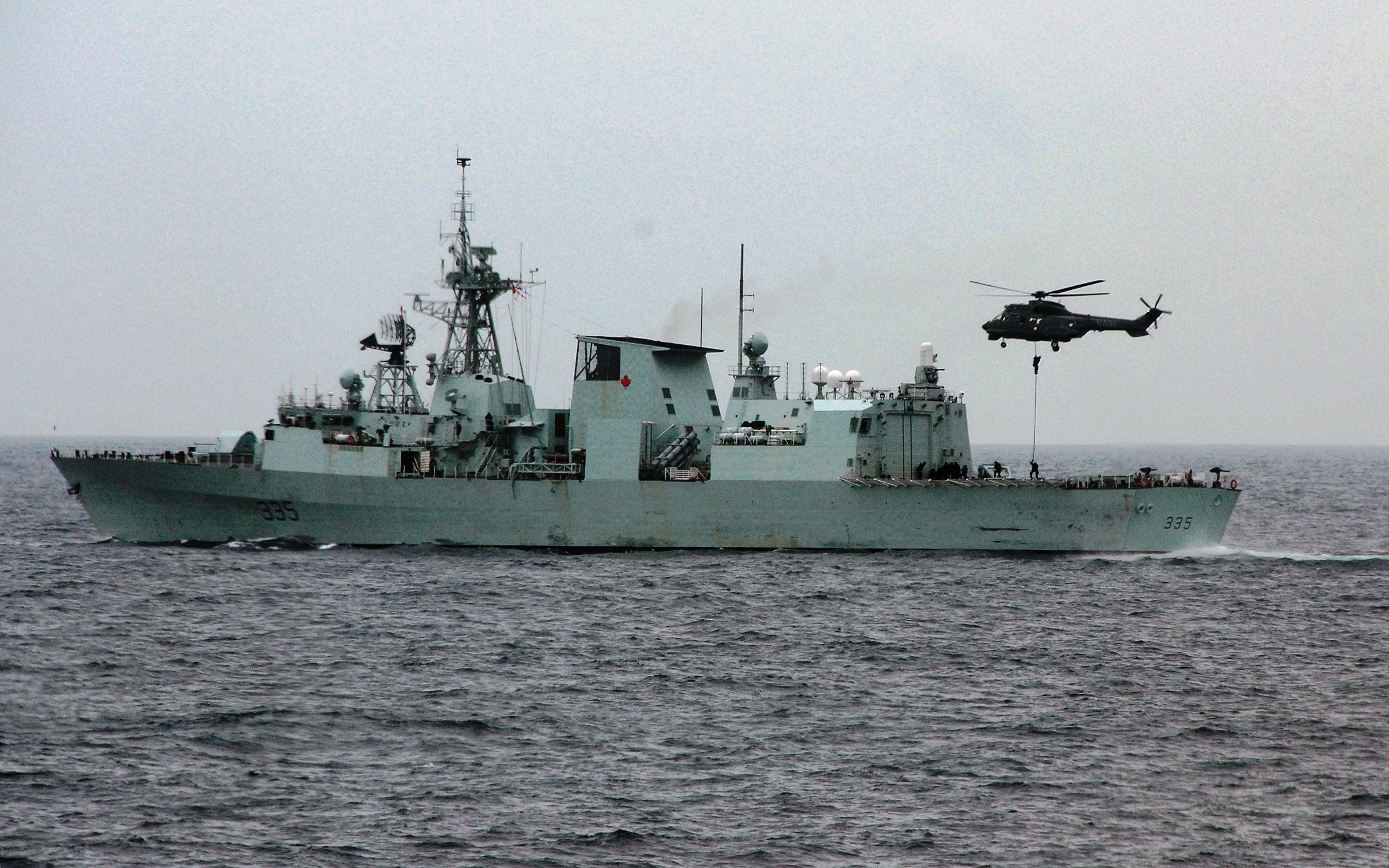
A Chilean navy boarding team fast-ropes onto the flight deck of RCN Halifax-class frigate HMCS Calgary (FFH 335) during multinational training exercise Fuerzas Aliadas PANAMAX 2009.
US Navy photo via Wikimedia.
On 14 June, Royal Canadian Navy (RCN) frigates HMCS Winnipeg and HMCS Vancouver left their berths at Esquimalt naval base in British Columbia, bound for the US-led Rim of the Pacific (RIMPAC) 2022 exercise, due to take place from 29 June to 4 August. The ships will then set a westerly course for a five-month deployment in the Indo-Pacific, principally to support Canada’s Operation Projection. This is the first twin deployment of its kind since 2017 and heralds a bolstering of Canada’s defence contribution in the region, with new naval investments on the way to help sustain it, but will they be enough?
[…]
However, a number of the building blocks to help sustain Canada’s regional defence ambitions are still being put in place. In 2016 the RCN retired the last of its Protecteur-class oiler and replenishment vessels and, for a time, resorted to hiring Chilean and Spanish ships to maintain replenishment capability amid delays in the project to replace the class. In 2018, as an interim measure it introduced the converted German container vessel MV Asterix into the role of an at-sea replenishment vessel and oiler.
The first of two new Joint Support Ships (JSSs) will be delivered in 2023. Also called the Protecteur-class, these ships are being built in Vancouver. They form a key part of Canada’s ambitious National Shipbuilding Strategy, alongside new class of surface combatants and Arctic patrol vessels. Based on the German Brandenburg-class design, the JSSs are intended to be compatible with Canada’s afloat combat platforms, boasting combat systems, tactical data links and defensive weapons systems. What role Canada’s submarine flotilla might play in an enhanced Indo-Pacific posture is uncertain, although one submarine, HMCS Chicoutimi, undertook an unusual deployment into the region in 2017/18.
Whether two JSSs will be enough in terms of naval logistic support at sea also remains an open question and there has even been talk of extending the lease on MV Asterix. The RCN will, nonetheless, have regenerated its sovereign at-sea replenishment capability once the new ships are in service. Alongside the other planned capability enhancements, the future RCN should be a more capable force than it is today. With the two new Protecteur-class vessels in service, the RCN should be more operationally sustainable and also better able to offer some of the broader non-combat defence assistance that may be required on the engagement and training tasks seen in missions like Operation Projection.
It’s always a foolish bet that any major equipment for the Canadian military will be delivered on time or under budget, and the Joint Support Ship project is unlikely to change that. The ships were originally announced in 2004, but between changes of government and re-imagining the entire RCN shipbuilding program, the contracts were not signed until 2020. Initially, $2.6 billion was allocated to purchase two vessels with an option for a third. It didn’t take long for budget realities to cancel the optional ship, and by 2020, it was reported that the anticipated final cost will be $4.1 billion. Unlike pretty much every other shipbuilding project, the Project Resolve ship MV Asterix was accepted into service in 2018, both on time and within budget … perhaps because this was a conversion of an existing hull rather than an all-new build.
The next major step after the JSS project is completed is to roll out the replacements for the Halifax-class frigates and the already-retired Iroquois-class destroyers. It will theoretically consist of 15 hulls, but as we usually see in naval expenditure, if the RCN ends up getting a dozen they may consider themselves lucky. The ships will be based on the British Type 26 frigate design.
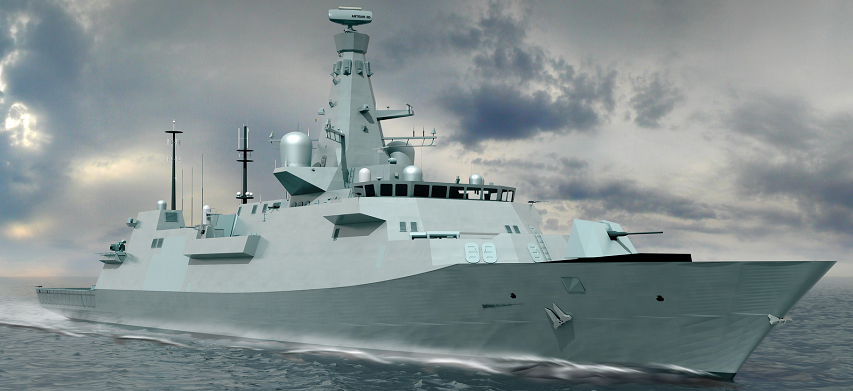
An artist’s rendition of BAE’s Type 26 Global Combat Ship, which was selected as the Canadian Surface Combatant design in 2019, the most recent “largest single expenditure in Canadian government history” (as all major weapon systems purchases tend to be).
(BAE Systems, via Flickr)
Construction of the Canadian Type 26 ships is “expected” to begin in 2024. Gamblers may want to place their bets on how close to that date actual fabrication begins and by just how much the budget will be overshot by the time a few of the ships enter service in the “early 2030s”.
June 26, 2022
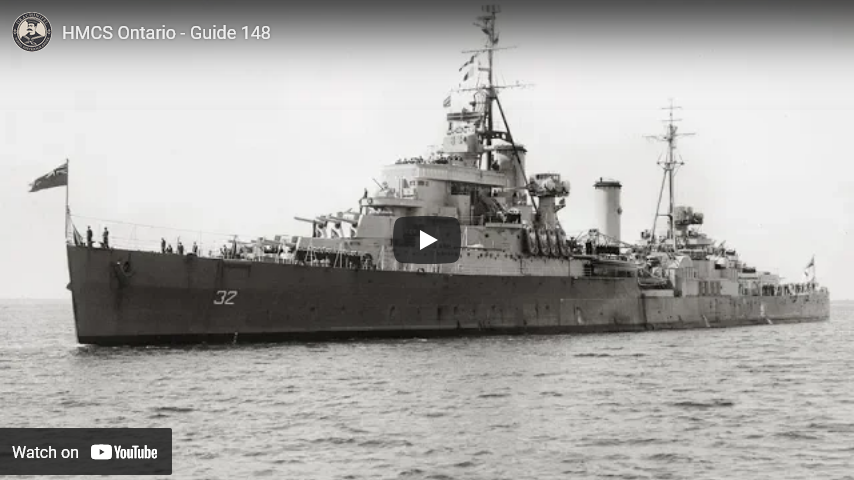
HMCS Ontario – Guide 148
Drachinifel
Published 12 Oct 2019HMCS Ontario, last of Canada’s cruisers and a Minotaur class vessel, is the second subject of the day.
Want to support the channel? – https://www.patreon.com/Drachinifel
Want a shirt/mug/hoodie – https://shop.spreadshirt.com/drachini…
Want a medal? – https://www.etsy.com/uk/shop/Drachinifel
Want to talk about ships? https://discord.gg/TYu88mt
Want to get some books? www.amazon.co.uk/shop/drachinifel
Drydock Episodes in podcast format – https://soundcloud.com/user-21912004
June 6, 2022
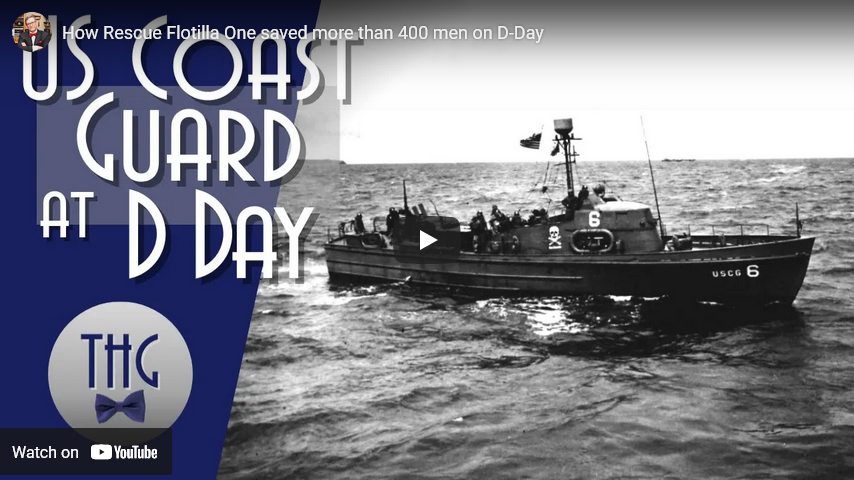
How Rescue Flotilla One saved more than 400 men on D-Day
The History Guy: History Deserves to Be Remembered
Published 2 Jun 2018The History Guy remembers the heroic service of Rescue Flotilla 1 of the United States Coast Guard during D-Day. It is history that deserves to be remembered.
The History Guy uses images that are in the Public Domain. As photos of actual events are sometimes not available, I will often use photographs of similar events and objects for illustration.
Patreon: https://www.patreon.com/TheHistoryGuy
The History Guy: Five Minutes of History is the place to find short snippets of forgotten history from five to fifteen minutes long. If you like history too, this is the channel for you.
Awesome The History Guy merchandise is available at:
teespring.com/stores/the-history-guyThe episode is intended for educational purposes. All events are presented in historical context.
#ushistory #militaryhistory #thehistoryguy