TimeGhost History
Published 28 Jul 2021There’s no business like show business and in the spring of 1924, you can see why. Buster Keaton and Hollywood as a whole are producing some iconic films, the British Empire is putting on a massive exhibition, and there is even talk of a death ray.
(more…)
July 29, 2021
Buster Keaton, British Imperialism, and the Era of Spectacle | B2W: ZEITGEIST! I E.23 Spring 1924
July 27, 2021
John McWhorter on “antiracism” in theory and practice at the University of California
John McWhorter doesn’t just comment on this issue from mere distant concern, because he was working at UC Berkeley and watched it happen before his eyes:
When I taught at UC Berkeley in the 1990s, it was an open secret that there was a two-tier undergraduate student body. Namely, black and Latino students tended to be considerably less prepared for the workload than white and Asian students.
No one talked about it openly, but plenty attested to it when they were sure the wall didn’t have ears, and to notice it was not racist – it was simple fact. Of course there were weak white and Asian students; of course there were excellent black and Latino students. But a tendency was unmistakable. It was painfully obvious that brown students were admitted according to very different standards than white and Asian ones.
Proposition 209 barred racial preferences of that kind in the UC system as of 1998, and of course, fewer brown students were admitted to the flagship schools Berkeley and UCLA after that. There were still plenty of brown students – the “resegregation” so many furiously predicted never happened. But not as many as before. And there has remained, for almost a quarter century now, a contingent who have never gotten over thinking UC would be better by going back to the way it was.
First there was the addition of a “hardship” bonus to the admissions procedure, with standards relaxed for applicants who could attest to having faced obstacles to achievement such as the death of a parent or serious illness. Formally this was supposed to apply to kids of all races. But immediately evaluators started weighting black and Latino hardship heavier than that suffered by white and Asian kids, as in rejecting an Asian applicant who had gone through the same kinds of hardship as a Latino one who was admitted.
I criticized this in the media, and will never forget when the suits assigned a kind, academically accomplished administrator to take me to lunch to “talk to me”. The poor man did his duty and … sat there lying to me. I genuinely felt sorry for him. But this showed how impenetrably committed to antiracism – or at least what they think is antiracism – these admissions officials are.
But even this kind of thing hasn’t been able to return Berkeley and UCLA to the good old days of having a “representative” number of brown students (apparently “representative” means in lockstep with their proportion of the state population). The problem is that pesky SAT, and at last, UC has gotten rid of it. The SAT will no longer be used to evaluate students for admission or even for scholarships.
A lot of people must have clinked their glasses of Pinot over this. But what they’ve done is not antiracist at all.
July 23, 2021
QotD: Cultural Marxism includes a form of reverse Nazism
While the neo-Marxism (or cultural Marxism, as some call it) is same shit, different assholes, it also represents a sort of a reverse Nazism. Where under the original Nazism, the Aryans were the master race of supermen, with all the other races inferior, and some (like Jews) not only inferior but positively dangerous and evil, now it’s the “whiteness” that is irredeemably tainted and the source of everything that is wrong with the world. If that sort of a Manichean world-view filled with hateful racialist (and increasingly eliminationist) rhetoric worries you, there is no need to – after all, the people who hold such opinions are “anti-fascists”.
There is nothing new under the sun, just the same old zombie ideas that refuse to die. Whether the old or new Marxism, the activists have the same simplistic, blinkered view of life and the same radical solutions. The irony in both cases is that their ideology reaches its peak popularity after the genuine grievances that gave rise to it in the first place have by and large been confronted and addressed. No matter. In the twentieth century, Marxists failed to replace liberal capitalist democracy with their utopia; in the twenty-first, they are trying their luck again. This time it will be “real” socialism, rainbows and unicorns and happily ever after. This time it will be different.
Arthur Chrenkoff, “Why everything is racist”, Daily Chrenk, 2021-04-13.
July 22, 2021
Conservative cancel culture?
Kurt Schlichter addresses the notion that “cancel culture” is alive and well among conservatives as much as it is among progressives:

“A little Black Rifle Coffee pour over this morning.” by jonmrogers is licensed under CC BY 2.0
Is there a conservative cancel culture? No. What there is now is a consensus among conservatives that we will refuse to subsidize institutions and entities that hate us. “Cancel culture,” properly understood – in this time of words meaning whatever they need to mean at any given moment, I’m going to have to insist on fixed definitions – is the attempt to use formal and informal sanctions to stop people from expressing dissenting views. But conservatives don’t care what the conservatives who cry about it when they are caught shafting us – hi Kristi! – think; conservatives care about what these people do or don’t do. Labeling our rejection of squishes and RINOs as “cancel culture” is a cheesy attempt to stop us from insisting that conservatives actually conserve. If the left, and the GOPuffballs, want to call this act of self-preservation “cancel culture” and shame us into unilateral disarmament in the name of some sort of pseudo-consistency, let them try. We’re not tying ourselves up with alleged “principles” anymore; ideological bondage is not our scene.
[…]
There was a certain coffee company created by vets that embraced a kind of vet-bro/gun vibe and it worked hard to cultivate a following in the conservative community. And then they stamped their combat boots hard on their own tender beans. Black Rifle Coffee Company’s problem provides an important lesson not just for companies seeking to operate on the conservative tip, but for GOP politicians as well.
What happened? BRCC gave an interview to The New York Times that many cons saw as taking sides against us conservatives. Did it or didn’t it take sides against us? The company denies it and is trying to repair the damage, but the facts of the case are not the point we are discussing here – the point is how conservatives, the cheated-on wives of American politics, reacted when they felt, rightly or wrongly, betrayed.
The conservatives went nuclear. Here’s the thing a lot of people seem to not understand. No faction has been screwed over by its own side more than conservatives. How many politicians, when they had the power to do the conservative things they ran on, opted for favorable WaPo coverage over keeping their promises? The incentives to cooperate are huge … like coverage in the DC paper of record explaining how one has “grown”. But we’re done with the bait-and-switch. We’re super-sensitive and super-suspicious, because we’ve been burned before.
So, conservatives have a hair trigger for perceived betrayal – if they even suspect it, they go off. Those seeking our support should act accordingly, as cons have been serially betrayed for decades. Take W, please, back to his ranch to paint his paintings. But before you do, remember what he did to all of us who defended him when he refused to defend himself – he talked smack about us as he partied with his new pals the Clintons and Obamas.
The Ahoy Crew used to at least pretend to be with us – Cap’n Bill Kristol, David Aptly-Named French, Jonah Heavy G Goldberg, and the rest turned on us the second they perceived their sinecures were in peril due to our swelling demand for actual victory.
Them or us. Pick one. But you can’t choose both, or neither.
Update: The CEO of the company is either in desperate damage control mode or genuinely upset at the misrepresentation of his views by the New York Times:
Let’s get the air cleared right away. Black Rifle Coffee’s founder and CEO has spoken out and is disputing how his comments were presented by the New York Times and represented by those reacting to the article, who were led to believe that Black Rifle Coffee bashed conservatives.
Evan Hafer decided to set the record straight regarding the “significant amount of misinformation being put out on the internet” about Black Rifle Coffee and about statements that he has made.
Hafer quickly debunked the notion that he made derogatory remarks about BRCC’s customers or conservatives and then proceeded to explain how the New York Times deliberately twisted his words and took them out of context. According to Hafer, his conversation with the NYT Magazine reporter was in the context of racism and anti-Semitism in America in light of Hafer being the target of an organized attack last year because of “my last name and my heritage.”
“We were purely discussing that,” Hafer says, and he was not conflating those groups with conservatives.
“The New York Times, as we know, the chances of them being objective were fairly slim, but we gave them the opportunity,” he added. He went on to mention veterans issues he hoped to bring attention to. But, unfortunately, the New York Times chose to go with “the salacious headline” about the company instead.
Hafer reiterated that racists and anti-Semites have no place in his company.
July 18, 2021
A different kind of “tone policing”
John McWhorter on a recent study on interactions between the police and the general population:

“Police stop” by San Diego Shooter is licensed under CC BY-NC-ND 2.0
A fascinating, and depressing, new study will be celebrated as revealing the subtle but powerful operations of racism. It also reveals, however, the pitfalls in the way we are taught to address that racism these days.
The study shows that police officers tend to talk in a less friendly way to black people they stop than white ones. People were played slivers of body-cam audio of the officers talking to citizens, with the content of the exchange disguised. People could tell with dismaying regularity what color person the officer was speaking to simply by the tone of voice. It wasn’t that officers outright sneer at black people. Rather, their tone with whites tends to be more pleasant, to have a hint of cheer, whereas with black people it is more impersonal, flat, unwarm.
The study also shows how these things fashion a vicious cycle. People tested who had negative experiences with cops and/or less trust in them processed even the exchanges the cops had with white citizens as less positive than other people tested did. That is, their life experience has implanted in them a distrust of the cops, that can anticipate actual interactions with them – and certainly, of course, unintentionally pollute them.
* * *
This study reminds me of something else that goes in the other direction. To whites, subtle things about black communication, including vocal tone, can come off as threatening when no threat is intended.
I once happened to hear two 30-something black men talking about a misunderstanding one of them had had at work. They were just unwinding, but there was what many might process as a tinge of impending battle in their voices, inflections and gestures. “Man, I wanted to ‘Mmmph!’ [jab of the arm, click of the tongue] Gimme a break! An’ I was like … [putting on a challenging glare] don’t even start.”
No black listener would assume these guys actually meant the hints at violence literally. However, outside listeners can hear this way of talking as edgy. Kelefa Sanneh’s term for this twenty years ago, writing about rap and its lyrics, was perfect: a certain “confrontational cadence”.
Yes, all people trash-talk. But this particular way of talking has a special place in black American culture. No, that’s not stereotyping: sympathetic black academics have documented it. CUNY’s Arthur Spears, today one of the deans of the academic study of black American speech, has written about what he calls “directness”. Speech “that may appear to outsiders to be abusive or insulting is not necessarily intended to be nor is it taken that way by audiences and addressees,” Spears noted. He then quoted a father-child exchange: Father: “Go to bed!” Little boy: “Aw, Daddy, we’re playing dominoes.” Father: “I’m gonna domino your ass if you don’t go to bed now.” Notice how awkwardly this, or Eddie Murphy’s routine about the mother throwing the shoe in Delirious, would translate into the world of Modern Family.
This “confrontational cadence” can inflect even casual exchanges between black and white people. Aspects of black intonation, steeped in a lifetime’s experience in a language culture that values performative aggression as a kind of communal élan, can sound cranky, disrepectful, and even aggressive to a white person. It is all but impossible that this does not color encounters between black people and white cops; I highly suspect a study like the first one I mentioned would reveal it.
July 11, 2021
July 5, 2021
Did the CONFEDERACY Have BETTER GENERALS?!?!?!
Atun-Shei Films
Published 4 Jul 2021Checkmate, Lincolnites! Debunking Lost Cause myths – as well as more benign common misconceptions – about the military leadership of the Civil War. Did the South really have all the best battlefield talent? Was the key to Union victory a simple strategy of overwhelming the Confederate army with numbers and resources? Who was better at their job, Ulysses S. Grant or Robert E. Lee?
I’d say watch and find out, but the answer is obviously Grant.
Support Atun-Shei Films on Patreon ► https://www.patreon.com/atunsheifilms
Leave a Tip via Paypal ► https://www.paypal.me/atunsheifilms
Buy Merch ► teespring.com/stores/atun-shei-films
#CheckmateLincolnites #CivilWar #MilitaryHistory
Original Music by Dillon DeRosa ► http://dillonderosa.com/
Reddit ► https://www.reddit.com/r/atunsheifilms
Twitter ► https://twitter.com/atun_shei~REFERENCES~
[1] Andy Hall. “With One Hand Tied Behind its Back” (2013). Dead Confederates Blog https://deadconfederates.com/2013/11/…
[2] G.S. Boritt. Why the Confederacy Lost (1992). Oxford University Press, Page 39-40
[3] Richard E. Beringer. Why the South Lost the Civil War (1986). University of Georgia Press, Page 8-24
[4] Borritt, Page 24-30
[5] Charles Royster. The Destructive War: William Tecumseh Sherman, Stonewall Jackson, and the Americans (1991). Vintage Civil War Library, Page 76
[6] “Lincoln’s Unsent Letter to General Meade”. American Battlefield Trust https://www.battlefields.org/learn/pr…
[7] Eric J. Wittenberg. “A Civil War Witch Hunt: George Gordon Meade, The Retreat from Gettysburg, and the Joint Committee on the Conduct of the War” (2015). Emerging Civil War Blog http://emergingcivilwar.com/2015/07/0…
[8] Report of the Joint Select Committee Appointed to Inquire into the Condition of Affairs in the Late Insurrectionary States, so Far as Regards the Execution of Laws, and the Safety of the Lives and Property of the Citizens of the United States and Testimony Taken (1872). https://quod.lib.umich.edu/m/moa/ACA4…
[9] Andy Hall. “Nathan Bedford Forrest Joins the Kl@n” (2011). Dead Confederates Blog https://deadconfederates.com/2011/12/…
[10] Andy Hall. “Confederate Veterans on Forrest: ‘Unworthy of a Southern Gentleman'” (2013). Dead Confederates Blog https://deadconfederates.com/2013/08/…
[11] Edward Bonekemper. Ulysses S. Grant: A Victor, Not a Butcher (2004). Regnery History, Page 89-92
[12] Mary Boykin Chestnut. A Diary of Dixie (1905). D. Appleton and Company, Page 350
[13] Ernest B. Ferguson. “Catching Up With ‘Old Slow Trot'” (2007). Smithsonian Magazine https://www.smithsonianmag.com/histor…
[14] Bonekemper, Page xii
[15] Bonekemper, Page 308-309
[16] Bonekemper, Page 192-193
[17] Bonekemper, Page 201-203
[18] Justin D. Murphy. American Civil War: Interpreting Conflict Through Primary Documents, Vol. II (2019). ABC-CLIO, Page 331
[19] Bonekemper, Page 121 & 243-245
[20] Elizabeth Brown Pryor. Reading the Man: A Portrait of Robert E. Lee Through his Private Letters (2008) Penguin Books, Page 335
[21] Sean Kane. “Myths and Misunderstandings: Grant as a Slaveholder” (2017). The American Civil War Museum https://acwm.org/blog/myths-misunders…
[22] “Letter from Robert E. Lee to Mary Randolph Custis Lee (December 27, 1856).” Encylopedia Virginia https://encyclopediavirginia.org/entr…
[23] Pryor, Page 144-150
[24] “Ulysses S. Grant and General Orders No. 11”, National Park Service https://www.nps.gov/articles/000/ulys…
July 2, 2021
June 21, 2021
“… the GOP needs an inflammatory issue to rile their racist base, and so this entire foofaraw is really just an astro-turfed, ginned-up partisan gambit about nothing”
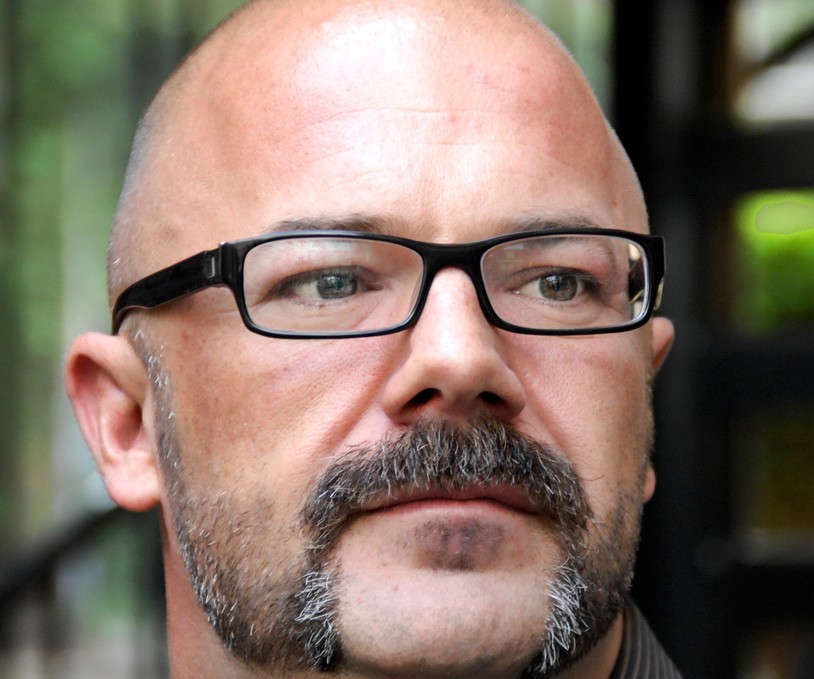
An excerpt from Andrew Sullivan’s most recent Weekly Dish looks at the burgeoning fight over the use of Critical Race Theory in public schools:
The stories in the mainstream media this past week about the broadening campaign to ban critical race theory in public schools have been fascinating — and particularly in how they describe what CRT is. Here’s the Atlantic‘s benign summary of CRT: “recent reexaminations of the role that slavery and segregation have played in American history and the attempts to redress those historical offenses.” NBC News calls it the “academic study of racism’s pervasive impact.” NPR calls CRT: “teaching about the effects of racism.” The New York Times calls it, with a straight face, “classroom discussion of race, racism” and goes on to describe it as a “framework used to look at how racism is woven into seemingly neutral laws and institutions.”
How on earth could merely teaching students about the history of racism and its pervasiveness in the United States provoke such a fuss? No wonder Charles Blow is mystified. But don’t worry. The MSM have a ready explanation: the GOP needs an inflammatory issue to rile their racist base, and so this entire foofaraw is really just an astro-turfed, ginned-up partisan gambit about nothing. The MSM get particular pleasure in ridiculing parents who use the term “critical race theory” as shorthand for things that just, well, make them uncomfortable — when the parents obviously have no idea what CRT really is.
When pushed to describe it themselves, elite journalists refer to the legal theories Derrick Bell came up with, in the 1970s — obscure, esoteric and nothing really to do with high-school teaching. “If your kid is learning CRT, your kid is in law/grad school,” snarked one. Marc Lamont Hill even tried to pull off some strained references to Gramsci to prove his Marxian intellectual cred, and to condescend to his opponents.
This rubric achieves several things at once. It denies that there is anything really radical or new about CRT; it flatters the half-educated; it blames the controversy entirely on Republican opportunism; and it urges all fair-minded people to defend intellectual freedom and racial sensitivity against these ugly white supremacists.
What could be more convenient? NBC News “reporter”, Brandy Zadrozny, even decried parents’ attempts to discover through FOIA requests just what their children are being taught — and argued this week that, “for longtime ultra conservative activists, CRT is the opportunity of a lifetime.” CRT, she explains, is not a threat at all, and there is no proof that it is even being taught. It’s “just a catch-all term repurposed as a conservative boogeyman.” She goes on: “it harnesses pushback against 2020’s racial justice movement, covid denialism, and depends on a base still energized by Trump and misinformation, looking for political power.”
I’m sure the MSM will continue to push this narrative indefinitely. They are still insisting, after all, that “white supremacy” is behind hateful attacks on Asian-Americans, and that soaring murder rates are purely a function of Covid19. And you can see why: this dismissive take is extremely helpful in avoiding what is actually happening. It diverts attention from the stories and leaks and documents that keep popping up all over the place about extraordinary indoctrination sessions that have become mandatory for children as early as kindergarten.
June 20, 2021
Is racism a bigger problem than terrorism?
With Americans being urged to report on “radicalized” friends and family by the government and white supremacy being called the greatest threat, have we reached the point that being seen as racist is worse than allowing a terrorist to kill many people? The inquiry into the Manchester Arena bombing shows that’s exactly the state most of the western world is in:

“Manchester Arena Bomb (22 May 2017) – Daily Mirror – 19 dead in pop concert ‘suicide bomb'” by Bradford Timeline is licensed under CC BY-NC 2.0
The independent inquiry into the Manchester Arena bombing of May 2017, in which 22 pop fans were killed by an Islamist extremist, has published the first volume of its report. It makes for chilling reading. The inquiry has found there were numerous “missed opportunities” to confront Salman Abedi, the bomber, and potentially stop him from detonating the device in his rucksack. Most chilling of all is the reason given by one of the key security guards on patrol that evening as to why he failed to question Abedi. He was worried, he said, that asking a brown-skinned man why he was hanging around the arena might be construed as racist.
Take that in. There was a very shifty-looking young man around the foyer and mezzanine of the Manchester Arena towards the end of an Ariana Grande concert, carrying a “bulging” rucksack so large he “struggled” under the weight of it, and a security guard was reluctant to confront him lest he be accused of racism. In the words of the report, this was a significant “missed opportunity”. The “inadequacy” of the security guard’s response to the presence of a highly suspicious individual was one of the many misjudgements made on that black, fateful night, the report says. Is it possible that the fear of being thought of as racist is screwing up everyday life, and even hindering sensible action in threatening situations?
To be clear, the security guard who was cagey about questioning Abedi is not responsible for the failure to stop Abedi from detonating his device. The first volume of the inquiry’s report – which covers security at and around the arena on the night of 22 May 2017 – criticises certain individuals, including the security guard, for not doing their jobs diligently enough. But it says that it was the organisations responsible for security at the arena – the arena’s own security firm and also the British Transport Police – that were “principally” to blame for the “missed opportunities”. It also makes the reasonable point that it is impossible to know what would have happened if Abedi had been confronted. It proposes that there may still have been loss of life – if, for example, he had detonated his device while being questioned – but that it would have been less severe than the horrors that shortly unfolded.
It is disturbing to read the list of “missed opportunities”. Abedi was in the arena for more than an hour and a half before he detonated his bomb. He arrived at 20.51 and blew himself up at 22.31, as the concert attendees started to leave. In that time, this young man with a massive rucksack was seen by numerous people. He was described by some of them as “nervous” and “fidgety”. He looked out of place – his age “meant that he did not fit the demographic of a parent waiting for a child”, as the inquiry says. And yet as a result of individual and organisational failure – including, the inquiry says, insufficient training of the security guards on duty that night – the message didn’t get through that there was a fidgeting, agitated man with a bulging rucksack hanging around for 90 minutes at the exit area of a venue that was largely packed with children and teenagers.
Remarkably, some people at the arena who saw Abedi thought to themselves that he was a suicide bomber. Christopher Wild and his partner, Julie Whitley, who were picking up Whitley’s daughter, discussed the possibility that Abedi had a bomb in his rucksack. Wild actually did confront Abedi and asked him what was in his bag. Abedi nervously brushed him off. Wild reported his concerns to security guards at 22.15 – 16 minutes before the explosion – but he was “fobbed off”. Another parent said the security guards were “really quite dismissive” of Wild’s concerns. It is deeply disturbing that parents at the arena rightly suspected Abedi was a bomber and yet nothing was done to challenge or remove him.
QotD: Cargo cult thinking in education
There are a lot of things that set the groundwork for this, and I am not an expert on post-modernism and critical race theory. But one factor that is not often credited is a cargo cult mentality. Folks look at successful white people and observe they all went to college, and then infer that if we just get all the black kids into college, they will be successful too. Their resulting plan is to reduce or eliminate standards that are perceived to be keeping black kids out of college.
The problem of course is that college is not the cause of prosperity, but a marker (with prosperity) of other traits — focus on long-term goals, discipline, hard work, and yes knowing 2+2=4. This sort of woke BS just makes it worse, because it attacks the real roots of prosperity. There are real barriers to poor blacks achieving prosperity — eg how do you focus on long-term goals when you don’t know where you are sleeping tonight or when you have no role models who do so — but the purity and objectivity of math is not among these.
This sort of cargo cult thinking can be seen all the time in Progressive economic proscriptions. The government push for home ownership is another — middle class people own homes so if low income people owned homes they would become middle class. Now, this has a bit of accuracy in that, like the stock market, the elite have goosed the housing market to always go up. But leaving that aside for a moment, owning a home vs renting is a terrible decision for many people — it piles on a lot of financial risk but perhaps more importantly it limits geographic mobility which used to be critical to lower-income people improving their lot.
Warren Meyer, “Are the Woke a False Flag Operation of White Supremacists?”, Coyote Blog, 2021-02-16.
June 11, 2021
Latin and Greek are the next sacrifices to the great god Antiracism
In the latest edition of It Bears Mentioning, John McWhorter considers the Princeton University classics department decision to get rid of the requirement for students to read classic texts in the original languages:

“USA – New Jersey – Princeton” by Harshil.Shah is licensed under CC BY-ND 2.0
I have written recently about the Princeton classics department’s decision to eliminate the requirement that students engaging closely with Latin and Greek texts be able to … read them in Latin and Greek. The new idea is that the department will attract more majors by opening up to ideas from students who may be full of beans but just not inclined to tackle complex, ancient languages. And sub rosa, the idea is clearly – as we can see from words in the official statement like underrepresented, perspectives, and experiences – that of especial interest will be black students, especially in light of today’s racial reckoning which the department openly acknowledges was the primary spur for this change.
My disappointment with this decision is because it is part of a tradition of arguments that we do black people a favor by exempting them from certain kinds of faceless, put-up-or-shut-up challenges to entry. Back in the aughts, the classic example was brilliant, fierce black lawyers confidently arguing that because black firefighter applicants don’t do as well on the entrance exams required for the job, the exams are racist and should be eliminated. More recently there has been the idea that if black kids are rare at top-ranked public schools in New York City like Stuyvesant because few excel on the standardized test one must ace to be admitted, then the solution is to eliminate the test as “racist”. The Princeton decision is a variation: to get black kids into classics, it’s supposedly immoral to expect them to master the intricacies of Latin and Greek, languages which I suppose we can see as foreign, “white” to them as well. Rather, they must be admitted in shining expectation that their class comments will be bracingly “diverse” in good old English.
My Atlantic colleague Graeme Wood is more sanguine about the Princeton decision. He argues sagely that a certain kind of student happens to enjoy working their way through languages like Latin as a kind of puzzle (I openly admit being that type), but that there are others who don’t go in for that particular task and yet are itching and well-equipped to engage and analyze classical texts regardless. Graeme notes that we do not consider it an educational tragedy that specialists in English history are not required to be able to read Old English. (Although I wonder if this analogy would hold if the idea were someone specializing in England of the first millennium, where all of the relevant linguistic matter was in Old English [and Latin].)
I can go with him here to an extent. On the one hand, as I have argued here, to engage work only in translation is, of course, to lose a lot. Yet, in making that argument here, I was referring to my own reading War and Peace in English, as I myself was not inclined to hack through it in Russian (although my being black was not the reason for this disinclination [couldn’t help it!]). The question is how important we consider that loss to be.
Having no facility in languages myself, I’m more sympathetic to the students’ viewpoint than I might otherwise be, but depending on someone else’s translation of the text being studied has unexpected risks, as Sarah Hoyt explained from her own translation studies:
The discussion […] reminded me of when I was sixteen and embarked on a class called “Techniques of Translation”.
Although I had studied French and English and German, the translations I’d done so far were of the “I took the pen of my neighbor” variety. I thought the class would teach me to smooth out the sentence to “I took my neighbor’s pen” and that would be that.
I was wrong. Oh, it taught that also, but that was a minor portion of it. The class mostly hinged on the moral, ethical and — most of all — professional dilemmas of being a translator. I know any number of you are translators, formal or informal, but any number of you are also not. So, for the ones who are not, let me break the news with my usual gentleness:
There is no such thing as translation.
The French have a proverb “to translate is to betray a little” — or at least that’s the closest meaning in English. It’s fairly close to the true meaning, but slightly askew, of course. Every language is slightly askew to other languages.
The idea that there exists in every language a word that is exactly the equivalent of other languages is sort of like assuming that aliens will — of course — live in houses, go to school, ride buses, understand Rebecca Black’s “Friday”. [This was originally written in 2011.]
Language is how we organize our thoughts, and each word, no matter how simple, carries with it the cultural freight and experience of the specific language. Oh, “mother” will generally mean “the one who gave birth to” — except for some tribal, insular cultures where it might mean “the one who calls me by her name” or “my father’s principal wife” — but the “feel” behind it will be different, depending on the images associated with “mother” in the culture.
So, when you translate, you’re actually performing a function as a bridge. Translation is not the straightforward affair it seems to be but a dialogue between the original language and the language you translate into. If you’re lucky, you meet halfway. Sometimes that’s not possible, and you feel really guilty about “lying” to the people receiving the translation. When on top of language you need to integrate different cultures and living systems (which you do when translating anything even an ad) you feel even more guilty, because you’re going to betray, no matter how much you try. At one point, a while back, I had my dad on one phone, my husband on the other, and I was doing rapid-fire translation about a relatively straight forward matter. And even that caused me pangs in conscience, because my dad simply doesn’t understand how things are done here. I had to approach his experience and explain our experience in a way he wouldn’t think I was insane or explaining badly. That meant a thousand minor lies.
June 10, 2021
“That’s a nice Pride flag you’ve got there. Be a shame if something were to happen to it …”
In The Line, Allan Stratton argues against replacing the common “rainbow” Pride flag with a new “Progress” variant:

Two people at EuroPride 2019 in Vienna holding an LGBTQ+ pride rainbow flag featuring a design by Daniel Quasar; this variation of the rainbow flag was initially promoted as “Progress” a PRIDE Flag Reboot.
Photo by Bojan Cvetanović via Wikimedia Commons.
Question: What do the following have in common: A hammer and sickle, a Union Jack, five interlocked rings, a Black fist, a cross, a Star of David, and the Rainbow flag?
Answer: They are internationally recognized symbols. Not spring fashions. Not cool memes. No. Symbols that communicate across all languages and countries in the world.
That’s what’s so infuriating about the push by hashtag activists to replace the Rainbow flag with the so-called “Progress flag”. The Progress flag takes the pink, blue, and white stripes of the trans flag, adds black and brown stripes for race, turns those five stripes into a chevron tipped on its side, and ploughs it into the rainbow in an eleven-colour pile-up. It’s a regressive, ill-considered mess that looks like a child’s Crayola box.
Naturally, it’s the creation of a Portland designer who whipped it off one night while suffering insomnia. The story of Daniel Quasar (ze/them) and their flag is a real-life satire, featuring moxie, hustle, viral posts and a Kickstarter campaign. Ze and their (not surprisingly) all-white team have leveraged ze’s design into Quasar Digital, a company that sells Progress flags, pins, patches, T-shirts, tank tops, notebooks, clutch bags, coffee mugs, stickers, slappers, socks and more, individually and in bundles.
Marketed with the trendy buzzwords progress, diversity and inclusion, the Progress flag has been a viral hit with woke straights and nouveau queers as well as corporate PR departments at places like Goldman Sachs and TD Bank, who signal virtue while screwing customers of every gender. But by separating specific races and a single identity from the rainbow, the Progress flag creates divisions, hierarchies and exclusions. And it trashes the power and weight that a 43-year-old symbol of hope and strength gives to people worldwide who continue to be imprisoned, beaten and murdered for being LGBT+.
[…]
Slapping the “Progress” chevron on the Rainbow is like slapping the fleur de lys on the Maple Leaf. It creates resentment and division to the sole benefit of performative social climbers keen to wave their Alphabet status and cachet. Step outside the West to see what it really means to have people out to “deny your very existence”. To trade the Rainbow, the symbol of our suffering and resilience, for a viral craze is bourgeois privilege at its self-indulgent worst.
June 6, 2021
George Orwell’s “Politics And The English Language” remains the best guide to writing non-fiction
Despite pulling most of his writing behind a paywall, I still get the occasional “Weekly Dish” post excerpt from Andrew Sullivan, including his homage to the still-relevant Orwell essay “Politics and the English Language”:
From time to time, I make sure to re-read George Orwell’s classic essay, “Politics And The English Language“. It remains the best guide to writing non-fiction, and it usually prompts a wave of self-loathing even more piercing than my habitual kind. What it shows so brilliantly is how language itself is central to politics, that clarity is as hard as it is vital, and that blather is as lazy as it is dangerous. It’s dangerous because the relationship between our words and our politics goes both ways: “[The English language] becomes ugly and inaccurate because our thoughts are foolish, but the slovenliness of our language makes it easier for us to have foolish thoughts”. We create language and language creates us. If the language is corrupted, so are we.
Near the end of the essay, Orwell lists a few rules to keep writing clear, accessible and meaningful:
i. Never use a metaphor, simile or other figure of speech which you are used to seeing in print.
ii. Never use a long word where a short one will do.
iii. If it is possible to cut a word out, always cut it out.
iv. Never use the passive where you can use the active.
v. Never use a foreign phrase, a scientific word or a jargon word if you can think of an everyday English equivalent.
vi. Break any of these rules sooner than say anything outright barbarous.
Originality, simplicity, brevity, active verbs, everyday language, decency: as simple as it is very, very hard. It’s a relief in a way to recall that Orwell thought things were pretty damn shitty in his day as well, but the more you read broadly across most elite media platforms these days, the more similar it all sounds. To reverse Orwell’s virtues: so much of it is repetition, complexity, length, passive verbs, endless jargon, barbarism.
I was just reading about the panic that occurred in the American Medical Association, when their journal’s deputy editor argued on a podcast that socio-economic factors were more significant in poor outcomes for non-whites than “structural racism”. As you might imagine, any kind of questioning of this orthodoxy required the defenestration of the deputy editor and the resignation of the editor-in-chief. The episode was withdrawn from public viewing, and the top editor replaced it with a Maoist apology/confession before he accepted his own fate.
But I was most struck by the statement put out in response by a group called “The Institute for Antiracism in Medicine”. Here it is:
The podcast and associated promotional message are extremely problematic for minoritized members of our medical community. Racism was created with intention and must therefore be undone with intention. Structural racism has deeply permeated the field of medicine and must be actively dissolved through proper antiracist education and purposeful equitable policy creation. The delivery of messages suggesting that racism is non-existent and therefore non-problematic within the medical field is harmful to both our underrepresented minoritized physicians and the marginalized communities served in this country.
Consider the language for a moment. I don’t want to single out this group — they are merely representative of countless others, all engaged in the recitation of certain doctrines, and I just want an example. But I do want to say that this paragraph is effectively dead, drained of almost any meaning, nailed to the perch of pious pabulum. It is prose, in Orwell’s words, that “consists less and less of words chosen for the sake of their meaning, and more and more of phrases tacked together like the sections of a prefabricated hen-house.”
It is chock-full of long, compounded nouns and adjectives, riddled with the passive voice, lurching and leaning, like a passenger walking the aisle on a moving train, on pre-packaged phrases to keep itself going.
Notice the unnecessary longevity: a tweet becomes an “associated promotional message”. Notice the deadness of the neologisms: “minoritized”, “marginalized”, “non-problematic”. As Orwell noted: “the normal way of coining a new word is to use a Latin or Greek root with the appropriate affix and, where necessary, the -ize formation. It is often easier to make up words of this kind (deregionalize, impermissible, extramarital, non-fragmentatory and so forth) than to think up the English words that will cover one’s meaning.” Go back and see if you can put the words “minoritized” or “non-problematic” into everyday English.
Part of the goal of this is political, of course. The more you repeat words like “proper antiracist education” or “systemic racism” or “racial inequity” or “lived experience” or “heteronormativity”, the more they become part of the landscape of words, designed to dull one’s curiosity about what on earth any of them can possible mean. A mass of ideological abstractions, in Orwell’s words, “falls upon the facts like soft snow, blurring the outlines and covering up all the details.”
Then this: “Racism was created with intention.” Abstract noun, passive voice, vague meaning. Who “created” it? What was the intention exactly? Hasn’t racist tribalism been a feature of human society for tens of thousands of years? They never say. Or this phrase: “purposeful equitable policy creation”. Again: what are they talking about? It is as vague as “doing the work” — and as deliberate as the use of a highly contested term like “structural racism” to define objective reality. These are phrases not designed to say anything real. They are phrases designed to send a message of orthodoxy, and, as Orwell also noted, “orthodoxy, of whatever colour, seems to demand a lifeless, imitative style”. Try reading Slate or Vox or the Huffington Post: the tedium you feel is the tedium of a language rendered lifeless by ideology.
June 3, 2021
John McWhorter on Affirmative Action
In the latest post at It Bears Mentioning, John McWhorter outlines the history of Affirmative Action in American schooling and explains why it’s no longer doing anything useful and should be re-oriented to actually help disadvantaged students of all races:
I do not oppose Affirmative Action. I simply think it should be based on disadvantage, not melanin. It made sense – logical as well as moral – to adjust standards in the wake of the implacable oppression of black people until the mid-1960s.
When Affirmative Action began in the 1960s, largely with black people in mind, the overlap between blackness and disadvantage was so large that the racialized intent of the policy made sense. Most black people lived at or below the poverty line. Being black and middle class was, as one used to term it, “fortunate”. Plus, black people suffered open discrimination regardless of socioeconomic status, in ways for more concrete than microaggressions and things only identifiable via Implicit Association Testing and the like. In a sense, black people were all in the same boat.
Luckily, Affirmative Action worked. By the 1980s, it was no longer unusual or “fortunate” to be black and middle class. I would argue that by that time, it was time to reevaluate the idea that anyone black should be admitted to schools with lowered standards. I think Affirmative Action today should be robustly practiced — but on the basis of socioeconomics.
A common objection is that this would help too many poor whites (as if that’s a bad thing?). But actually, brilliant and non-partisan persons have argued that basing preferences on socioeconomics would actually bring numbers of black people into the net that almost anyone would be satisfied with.
I’m no odd duck on my sense that Affirmative Action being about race had passed its sell-by date after about a generation. At this very time, it had become clear, to anyone really looking, that the black people benefitting from Affirmative Action were no longer mostly poor – as well as that simply plopping truly poor black people into college who had gone to awful schools had tended not to work out anyway. It was no accident that in 1978 came the Bakke decision, where Justice Lewis Powell inaugurated the new idea that Affirmative Action would serve to foster “diversity”, the idea being that diversity in the classroom made for better learning.
I highly suspect that most people have always had to make a slight mental adjustment to get comfortable with this idea, as standard as it now is in enlightened discussion. Do students in classes with a certain mixture of races learn better? Really? Not that there might not be benefits to students of different races being together for other reasons. But does diversity make for better learning? Has that been proven?
As you might expect, it has not – and in fact the idea has been disproven, again and again. No one will tell you this when the next round of opining on racial preferences comes about. But this doesn’t mean it isn’t true.