
World War Two
Published 9 Feb 2023Does Adolf Hitler like Duke Ellington? No, and nor do many National Socialists. But the story of the music in the Third Reich is more complicated than you might think. What if we told you that Joseph Goebbels has tried to create a Nazi-approved swing band tasked with bringing the Jazz War to the Allies?
(more…)
February 10, 2023
Hitler’s Jazz Band – WW2 Documentary Special
Comments Off on Hitler’s Jazz Band – WW2 Documentary Special
February 8, 2023
“Smoking has been a net gain for the Treasury ever since King James I started taxing it heavily in the 1600s”
Christopher Snowden asks whether we should believe the consistent claims of public health advocates on how much things they disapprove of (smoking, drinking, etc.) “cost” the taxpayer:
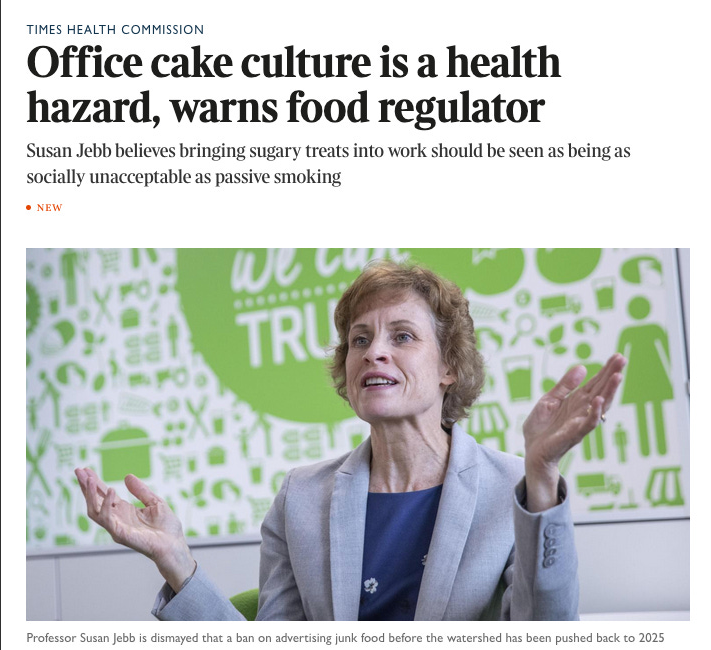
If smoking costs the taxpayers £173 billion, then how much does widespread forced feeding of office pastries cost?
If you say that a certain activity costs society £10 billion a year, most people would assume that if that activity disappears, society will save £10 billion a year.
They might have different ideas of what “society” means. Some will assume that the £10 billion is a cost to taxpayers while others will assume that some of the cost is borne by private individuals and businesses. But the majority will, quite reasonably, assume that the cost is to other people, i.e. those who do not participate in the activity.
And nearly everyone will assume that the £10 billion is money in the conventional sense of cash that can be exchanged for goods and services.
But when it comes to estimates from “public health” campaigners about the cost of drinking/smoking/obesity, all these assumptions would be wrong. Most of the “costs” are to the people engaged in the activity and they are not financial costs. Taxpayers would not pay less tax if they disappeared. In general, they would pay more.
Last month I mentioned an estimate of the “cost” of gambling in the UK and said:
These studies have no merit as economic research. They are purely driven by advocacy. The hope is that the average person will wrongly assume that the costs are to taxpayers and agitate for change.
The main aim of these Big Numbers is to convince the public that heavily-taxed activities place a burden on society that exceeds the tax revenue, thereby justifying yet more taxes and prohibitions.
In the case of smoking, this has become more and more difficult. Smoking has been a net gain for the Treasury ever since King James I started taxing it heavily in the 1600s. Today, as the smoking rate dwindles and tobacco duty rises ever higher, anti-smoking campaigners have got their work cut out duping non-smokers into thinking otherwise.
Tobacco duty brings in about £12 billion a year. For years, groups like Action on Smoking and Health (ASH) used a figure of £13.74 billion as the “cost of smoking”. This came from a flimsy Policy Exchange report which included £5.4 billion as the cost of smoking breaks and £4.8 billion as the cost of lost productivity due to premature mortality. Neither of these are costs to the taxpayer. They are not even external costs, i.e. costs to non-smokers.
Last year, in a review commissioned by the Department of Health, Javed Khan came up with a figure of “around £17 billion” as the “societal cost” of smoking. This included “reduced employment levels” (£5.69 billion) and “reduced wages for smokers” (£6.04 billion). Again, these costs fall on smokers themselves and are not external costs. They are, in other words, none of the government’s business.
Last week, a report commissioned by Action on Smoking and Health (ASH) pulled out all the stops and announced that the cost of smoking to Britain was now — wait for it! — £173 billion. Go big or go home, eh?
Comments Off on “Smoking has been a net gain for the Treasury ever since King James I started taxing it heavily in the 1600s”
January 31, 2023
The Allied Flying Aces of World War Two – Documentary Special
World War Two
Published 30 Jan 2023Young, daring, and handsome, the Allied fighter aces of World War Two have captivated the public with their thrilling exploits. Join us as we take a look at the top scorers! Thanks to Curiosity Stream for sponsoring today’s video.
(more…)
Comments Off on The Allied Flying Aces of World War Two – Documentary Special
January 30, 2023
“… say what you want about the good old Bulletin of the Atomic Scientists, but at least its crappy clock is behaving like a clock these days”
Colby Cosh congratulates the Bulletin of the Atomic Scientists for at least getting their clock moving in the normal direction once again:
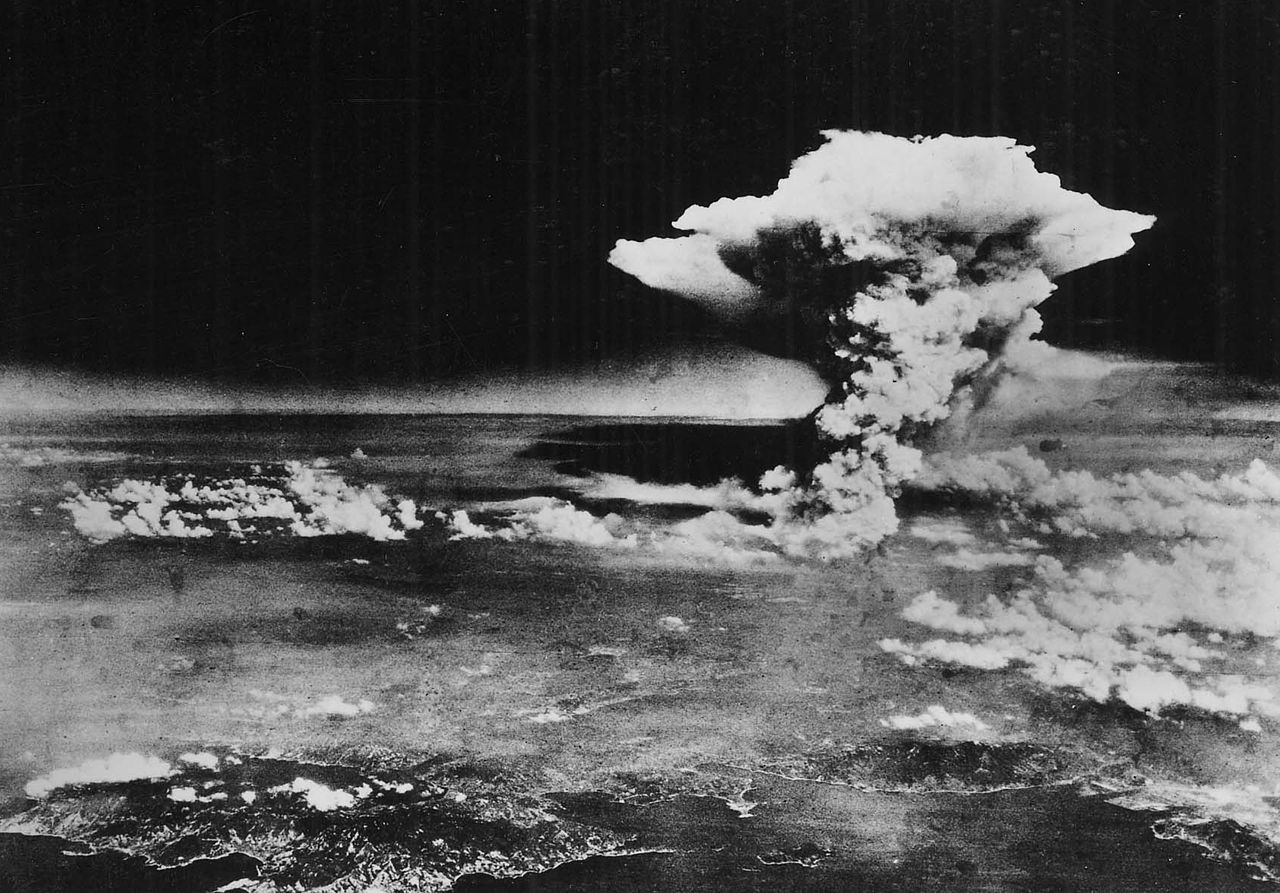
Atomic cloud over Hiroshima, taken from “Enola Gay” flying over Matsuyama, Shikoku, 6 August, 1945.
US Army Air Force photo via Wikimedia Commons.
On Tuesday, the Bulletin of the Atomic Scientists (really a foundation that publishes a famous magazine by that name) announced that it would be scooching the minute hand of its renowned “Doomsday Clock” forward. The clock will now read 11:58:30 p.m., midnight minus 90 seconds. The Bulletin does this once a year — at a time, by pure coincidence, when newspaper editors are notoriously starved for copy.
The Doomsday Clock was originally (in 1947) a one-off magazine cover design by Martyl Langsdorf (1917-2013), a landscape artist who was married to one of the Manhattan Project physicists. She happened to set the clock at about seven minutes to midnight, but the visual metaphor was irresistible. As the arms race and nuclear proliferation began, the editors of the Bulletin started rearranging Langsdorf’s clock face as an index of the danger from nuclear exchange.
Even by saying this much I am intruding somewhat on the turf of a colleague, Tristin Hopper, who is eternally preoccupied with the pure stupidity of the Doomsday Clock. As T-Hop never tires of pointing out, you have really lost track of the clock metaphor if you manually wiggle the minute hand backward or forward annually.
Moreover, the face of the clock can at best be considered a lagging indicator. The year 1947 was probably the moment at which the danger of a pre-emptive nuclear strike was greatest. Intellectuals and strategists needed a few years to think through the implications of nuclear weapons: the logic of a first strike was compelling, and might have won the argument in any country that developed nukes until the equilibrium of mutually assured destruction was both established and theorized.
The Bulletin of the Atomic Scientists moved the clock closer to midnight as the world was learning to live with nukes and nuclear proliferation. Eventually the hand was moved backward in 1960 — practically in time for the frightening Cuban Missile Crisis.
Comments Off on “… say what you want about the good old Bulletin of the Atomic Scientists, but at least its crappy clock is behaving like a clock these days”
The Royal Marines at War: Rough Weather Landing
Royal Marines
Published 31 Aug 2012Rough Weather Landing is a secret film recording of “an experiment by No4 Commando” demonstrating their ability to launch a surprise attack on a seemingly impregnable coastline.
From the comments:
ogdiver
8 years ago
“That’s right lad, you’re going to land from a boat with all the reserve buoyancy of a digestive biscuit onto a rocky shore, in a pounding surf, with a 3″ mortar base plate strapped to your back and tackety boots for swimming. But don’t worry, we’ll give you the the inflated inner tube off an Austin 7 to cling to and we’ll be doing it in daylight for the cameras.” Those blokes were nails.
Comments Off on The Royal Marines at War: Rough Weather Landing
January 28, 2023
QotD: Allied anti-semitism in WW2
The following leaflet (printed) was passed to an acquaintance of mine in a pub:
LONG LIVE THE IRISH!The first American soldier to kill a Jap was Mike Murphy.
The first American pilot to sink a Jap battleship was Colin Kelly.
The first American family to lose five sons in one action and have a naval vessel named after them were the Sullivans.
The first American to shoot a Jap plane was Dutch O’Hara.
The first coastguardsman to spot a German spy was John Conlan.
The first American soldier to be decorated by the President was Pat Powers.
The first American admiral to be killed leading his ship into battle was Dan Callahan.
The first American son-of-a-bitch to get four new tyres from the Ration Board was Abie Goldstein.The origin of this thing might just possibly be Irish, but it is much likelier to be American. There is nothing to indicate where it was printed, but it probably comes from the printing-shop of some American organization in this country. If any further manifestos of the same kind turn up, I shall be interested to hear of them.
George Orwell, “As I Please”, Tribune, 1944-12-08.
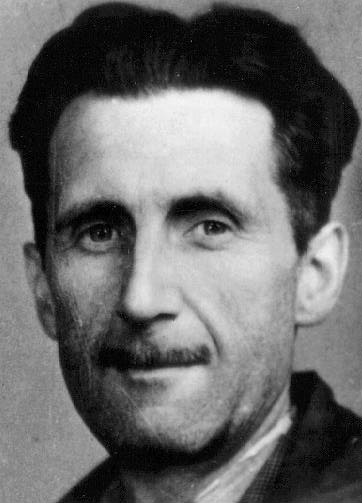
Orwell’s press card portrait, 1943
Comments Off on QotD: Allied anti-semitism in WW2
January 27, 2023
The return of the revenge of the bride of the Doomsday Clock
It’s amazing how much free publicity you can get by pulling out the hoary old Cold War propaganda tools, as Andrew Potter explains with the re-re-re-introduction of the Doomsday Clock bullshit:
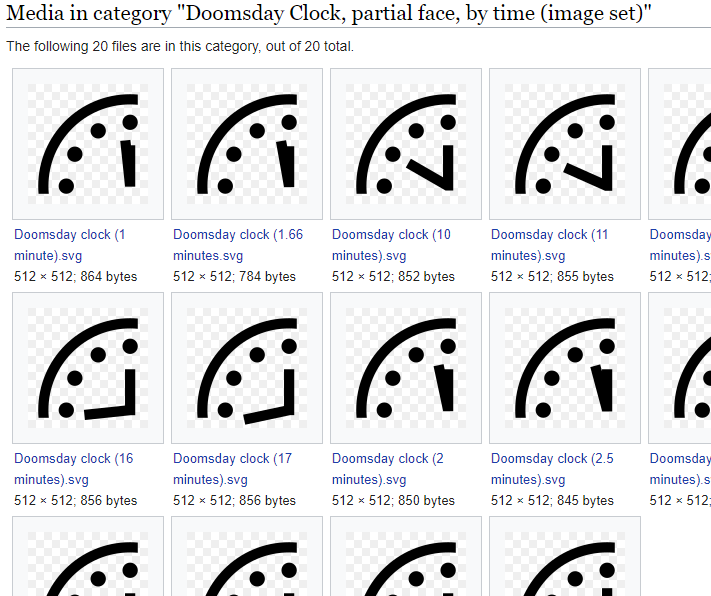
Earlier this week, the Bulletin of the Atomic Scientists moved the hands of its Doomsday Clock ahead by ten seconds, to 90 seconds to midnight. This is the closest the clock has ever been to midnight, and, according to the press release announcing the move: “Never in the Doomsday Clock’s 76-year history have we been so close to global catastrophe.”
If you’re under, say, 40 years of age or so, that paragraph is probably pure gobbledygook, the written equivalent of the squawk of a 2400 baud modem going through its handshaking protocols. But for those of us in the ever-dwindling cohorts of Gen-Xers and Baby Boomers, hearing about the movement of the Doomsday Clock is to be jerked back into a time marked by both profound moral clarity and deep existential anxiety.
A bit of background on the Doomsday Clock might help. It was a creature of the Cold War, founded in 1947 by some of the scientists who had worked on the Manhattan Project to raise public awareness of the threat of nuclear weapons. As the Bulletin puts it, the clock uses “the imagery of apocalypse (midnight) and the contemporary idiom of nuclear explosion (countdown to zero) to convey threats to humanity and the planet”. The decision to move or leave the minute hand of the Clock in place is made each year by the various trustees of the Bulletin, based on their evaluation of the world’s vulnerability to catastrophe.
The clock was initially set at a nice and relaxed seven minutes to midnight, and over the following few decades it was moved closer in response to clear nuclear threats, things like ramped-up testing of new bombs, nuclear proliferation, or rising Cold War tensions. During periods of detente or after the signing of arms reductions treaties, the minute hand would retreat. In 1991, it was moved back to 17 minutes to midnight after the dissolution of the Soviet Union.
For most of the second half of the 20th century, the Doomsday Clock was a healthy reminder of the most salient geopolitical fact of the era, which is that two superpowers were pointing thousands of nuclear weapons at one another.
But like many Cold War relics, the demise of the U.S.S.R. left it scrambling for a raison d’etre. In a bit of clever PR entrepreneurialism, the executive of the Bulletin of the Atomic Scientists turned the clock into a more generalized warning against war, climate change and other ecological or technological threats. The nadir of this shift in mission came on January 23rd 2020, when the Bulletin moved the clock’s hands to 100 seconds to midnight.
As the press release accompanying the ticking of the clock noted at the time, this put humanity “closer than ever” to catastrophe. Given that the clock had kept watch over our drive for self-destruction through the Suez Crisis, the Cuban Missile Crisis, the sabre-rattling Reagan administration, and the terrorist attacks of September 11, 2001, it makes one wonder just what happened in early 2020 to merit such a fearful move.
Comments Off on The return of the revenge of the bride of the Doomsday Clock
January 22, 2023
One year later
Last year, the Freedom Convoy 2022 from all parts of Canada began to assemble and move toward Mordor, er, I mean Ottawa. Patrick Carroll remembers:

Posted to Twitter by @KatherineZupan https://twitter.com/KatherineZupan/status/1486164240364814337/photo/1
It’s hard to believe, but the one-year anniversary of the Canadian Freedom Convoy is upon us. It was January 22, 2022 when the convoy began to form across the country. Over the following week, thousands of trucks made their way to Ottawa, and on January 29 they arrived in the nation’s capital, loud and determined as ever.
The following month was one of the most tumultuous times in modern Canadian history. Downtown Ottawa was completely gridlocked, bridges were blocked, and politicians along with the media took every opportunity to smear the protesters.
Four weeks later, it ended quite a bit faster than most people expected. Armed with special powers from the never-before-invoked Emergencies Act, the government successfully dismantled the protest in a matter of days.
In hindsight, the practical effect of the protest on legislation is difficult to detect. Some Covid policies were probably relaxed a few months earlier than they otherwise would have been, but for the Convoy organizers, this was far from a decisive victory.
A debate has been raging in Canada ever since: were the protestors within their rights to do what they did? Those who support the convoy argue that they were, since the Canadian Charter of Rights and Freedoms guarantees the right to freedom of expression and freedom of peaceful assembly. Those who oppose the convoy largely agree with these freedoms, but argue that such freedoms should be subject to certain reasonable restrictions. Major obstructions to traffic, and especially obstructions to critical infrastructure such as bridges, are simply going too far in their view. Is the government supposed to stand by and let a group of hooligans bring the country to its knees?
That’s certainly the line the governments (city, provincial, and federal) generally chose to take and the media were almost chanting the governments’ line in unison. Of course, the governments were not all that well synchronized, which led to some blatant examples of deliberate misinformation/disinformation/gaslighting from one or another level, as Donna Laframboise points out:
During the inquiry into the use of the Emergencies Act, witnesses talked about misinformation as if it were a problem confined to contrarians on social media. But the Closing Submission of former Ottawa police chief Peter Sloly shows that government officials are, themselves, a fertile source of misinformation.
If someone in our federal government had demonstrated genuine leadership by going out and talking to the truckers, the protesters would likely have dispersed after the first weekend. Instead, a government that meets with professional lobbyists on 24,000 occasions a year refused to have a single meeting with working people who’d driven thousands of miles to the nation’s capital. Rather than being a grownup, the Prime Minister called them names. Rather than negotiating with the protesters, he told police to get rid of them.
According to Chief Sloly, the Ottawa force was understaffed at the best of times. Even after cancelling vacations and days off, there still weren’t enough personnel to deal with a significant, extended protest on top of normal duties.
From the beginning, the media failed to behave responsibly. It whipped up hysteria. It smeared and sneered. It sowed suspicion and fear of small town Canada, of those who see the world differently, of people who’d reached their breaking point. Big surprise a portion of the public did, in fact, become hysterical. As the protest dragged on, the pressure became intense. In lieu of pursuing a political resolution to what were clearly political grievances, slimy politicians pointed fingers at the Ottawa police. While simultaneously hamstringing them behind the scenes.
Page 43 of Chief Sloly’s Closing Submission says federal Public Safety Minister Marco Mendicino falsely told the world — on February 3rd — that the Royal Canadian Mounted Police (RCMP) had provided all the resources the Ottawa police had asked for. Four days later — on February 7th — he insisted 250 RCMP officers had been dispatched to Ottawa.
But the reality was quite different. Until mid-February, say his lawyers, the maximum number of RCMP officers available to the Ottawa force on any given day was 60 — far less than the number required.
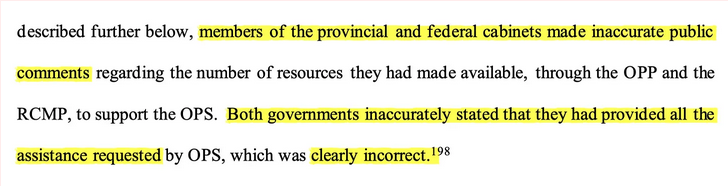
It was the same story with the Ontario Provincial Police (OPP). On February 6th, Ontario’s Solicitor General Sylvia Jones falsely stated in an official document that “more than 1,500” OPP personnel had already been sent to Ottawa. In the words of Chief Sloly’s lawyers, this was “grossly inaccurate” (pages 80, 107).
Government ministers at both the provincial and federal level, they insist, made misleading statements about the degree of assistance Ottawa police had received. Statements that were “clearly incorrect” (page 53).
Which means Cabinet ministers were spreading misinformation. Misinformation that just happened to deflect blame away from themselves. That just happened to make the Ottawa Police Service look incompetent while turning the chief into a scapegoat. Ottawa’s first black police chief, a Jamaican immigrant, got thrown under the bus.

Comments Off on One year later
January 12, 2023
QotD: Describing the CBC to Americans
an audience of any size has yet to be found
So far so CBC, then.
I’m not sure how to describe the CBC to American viewers. The BBC routinely produces content that’s quite entertaining (deliberately, I mean) so it’s not a good analogy. I suppose the best analog would be if NPR and PBS merged and were run by the CPUSA with $20 billion dollars of taxpayer money, and still managed to produce nothing anyone wanted to watch.
Daniel Ream, commenting on David Thompson, “The Giant Testicles Told Me”, DavidThompson, 2022-10-10.

Comments Off on QotD: Describing the CBC to Americans
January 7, 2023
Propaganda to support the narrative
Chris Bray is definitely possibly most likely not kidding around here:
We can’t award the gold medal yet, because the contestants are still showing up at the starting line.
Elsewhere at Substack, A Midwestern Doctor recently highlighted some of the most egregious vaccine propaganda that appeared during the current forever-pandemic, in a piece that has the potential to safely and effectively vaccinate your mind against bullshit:
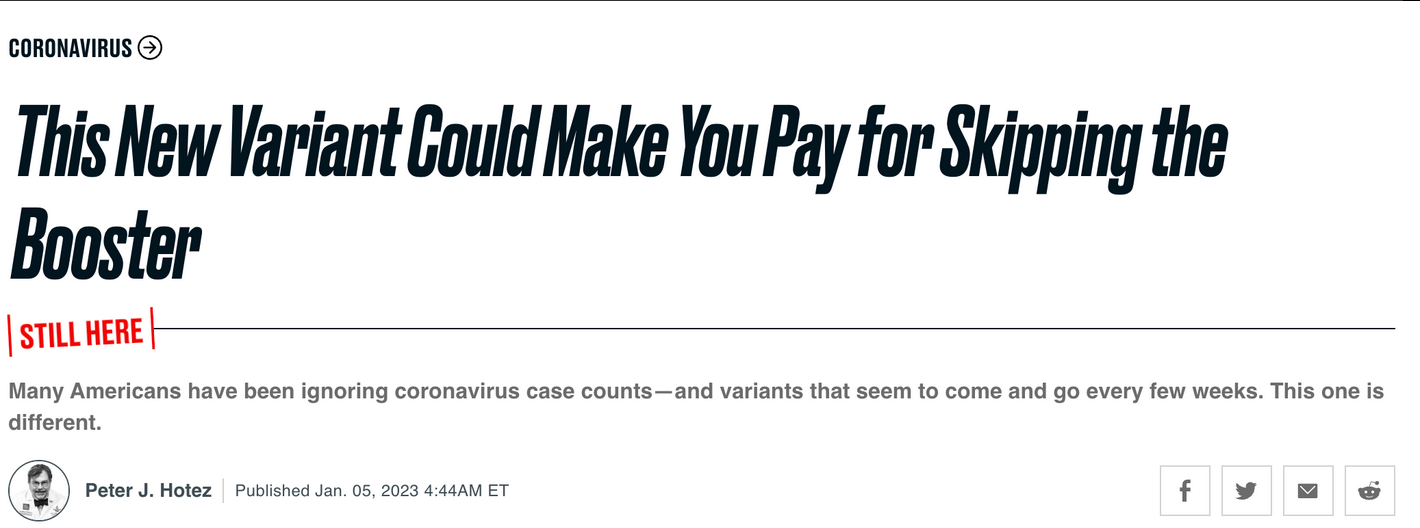
But now we need to add a new example from the current week, because Peter Hotez exists and keeps publishing. His latest piece of analysis calmly warns that the new variant is maybe possibly or not the Most Worstest Evuh, in a huge rhetorical first that tries to overcome Covid exhaustion with louder hysteria:
tHiS oNe iS diFFeReNtttttttttt&#*$*$%^#&@, Version 957,1095,397.02. Your next winter of severe illness and death will be everything you were promised in your first winter of severe illness and death, we swear. If you died last time, JUST WAIT UNTIL YOU DIE AGAIN THIS TIME, FOOL.
How can you spot propaganda? Like this, from a paragraph near the bottom of Hotez’s latest:
Unfortunately, XBB.1.5 is still too new to have clinical data in-hand to show exactly what vaccines mean in terms of warding it off. At the Texas Children’s Hospital Center for Vaccine Development, we, like other groups, are scrambling to look at our own vaccine’s effects on XBB.1.5. However, the writing is on the wall here — boosting is your best bet at protecting yourself and your loved ones.
First sentence: We have no data about this. Third sentence: The thing we have no data for is your best bet to do the thing that we have no data for.
Every claim Hotez makes is a version of this maybe-definitely-uncertainty-certainty soup, telling you he doesn’t know while telling you that he knows

Comments Off on Propaganda to support the narrative
December 30, 2022
The continued relevance of Orwell’s “Politics and the English Language”
In Quillette, George Case praises Orwell’s 1946 essay “Politics and the English Language” (which was one of the first essays that convinced me that Orwell was one of the greatest writers of the 20th century), and shows how it still has relevance today:
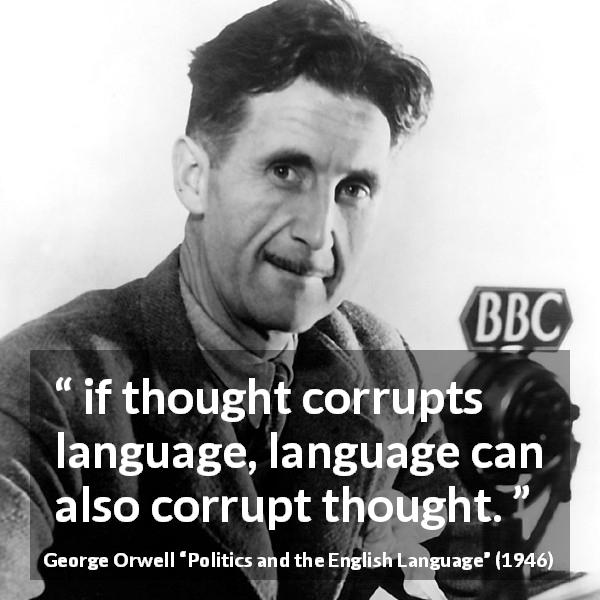
George Orwell’s “Politics and the English Language” is widely considered one of the greatest and most influential essays ever written. First published in Britain’s Horizon in 1946, it has since been widely anthologized and is always included in any collection of the writer’s essential nonfiction. In the decades since its appearance, the article has been quoted by many commentators who invoke Orwell’s literary and moral stature in support of its continued relevance. But perhaps the language of today’s politics warrants some fresh criticisms that even the author of Nineteen Eighty-Four and Animal Farm could not have conceived.
“Politics and the English Language” addressed the jargon, double-talk, and what we would now call “spin” that had already distorted the discourse of the mid-20th century. “In our time,” Orwell argued, “political speech and writing are largely the defence of the indefensible. … Thus political language has to consist largely of euphemism, question-begging and sheer cloudy vagueness. … Political language — and with variations this is true of all political parties, from Conservatives to Anarchists — is designed to make lies sound truthful and murder respectable, and to give an appearance of solidity to pure wind.” Those are the sentences most cited whenever a modern leader or talking head hides behind terms like “restructuring” (for layoffs), “visiting a site” (for bombing), or “alternative facts” (for falsehoods). In his essay, Orwell also cut through the careless, mechanical prose of academics and journalists who fall back on clichés — “all prefabricated phrases, needless repetitions, and humbug and vagueness generally”.
These objections still hold up almost 80 years later, but historic changes in taste and technology mean that they apply to a new set of unexamined truisms and slogans regularly invoked less in oratory or print than through televised soundbites, online memes, and social media: the errors of reason and rhetoric identified in “Politics and the English Language” can be seen in familiar examples of empty platitudes, stretched metaphors, and meaningless cant which few who post, share, like, and retweet have seriously parsed. Consider how the following lexicon from 2023 is distinguished by the same question-begging, humbug, and sheer cloudy vagueness exposed by George Orwell in 1946.
[…]
Climate, [mis- and dis-]information, popular knowledge, genocide, land claims, sexual assault, and racism are all serious topics, but politicizing them with hyperbole turns them into trite catchphrases. The language cited here is largely employed as a stylistic template by the outlets who relay it — in the same way that individual publications will adhere to uniform guidelines of punctuation and capitalization, so too must they now follow directives to always write rape culture, stolen land, misinformation, or climate emergency in place of anything more neutral or accurate. Sometimes, as with cultural genocide or systemic racism, the purpose appears to be in how the diction of a few extra syllables imparts gravity to the premise being conveyed, as if a gigantic whale is a bigger animal than a whale, or a horrific murder is a worse crime than a murder.
Elsewhere, the words strive to alter the parameters of an issue so that its actual or perceived significance is amplified a little longer. “Drunk driving” will always be a danger if the legal limits of motorists’ alcohol levels are periodically lowered; likewise, relations between the sexes and a chaotic range of public opinion will always be problematic if they can be recast as rape culture, hate, or disinformation. This lingo typifies the parroted lines and reflexive responses of political communication in the 21st century.
In “Politics and the English Language”, George Orwell’s concluding lesson was not just that parroted lines and reflexive responses were aesthetically bad, or that they revealed professional incompetence in whoever crafted them, but that they served to suppress thinking. “The invasion of one’s mind by ready-made phrases … can only be prevented if one is constantly on guard against them, and every such phrase anaesthetizes a portion of one’s brain”, he wrote. He is still right: glib, shallow expression reflects, and will only perpetuate, glib, shallow thought, achieving no more than to give an appearance of solidity to pure wind.
Comments Off on The continued relevance of Orwell’s “Politics and the English Language”
December 23, 2022
Never, ever be the first to stop clapping
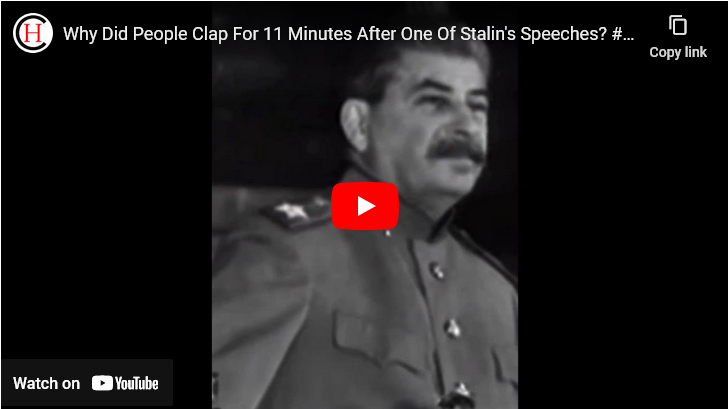
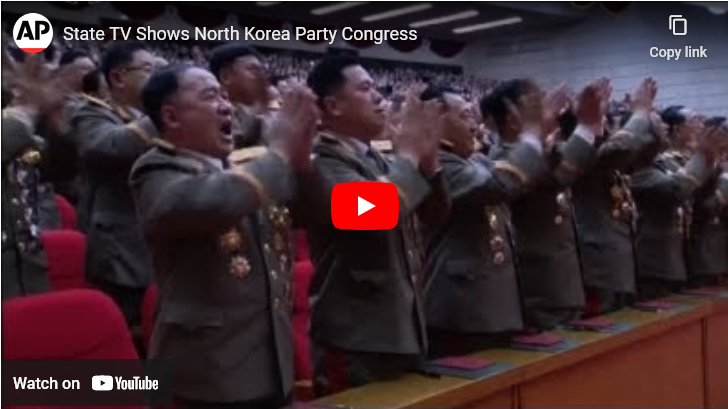
Chris Bray on the echoes of Soviet-era mandatory celebrations expected of US elected politicians during a speech by Comrade Stalin to the Politburo state visit by the President of Ukraine:
I hesitate to say any of this, because it’s December 22 and none of us should be thinking about the grotesqueries of the political and media classes, but it’s been a busy week for them. I started writing here a little more than a year ago, and have argued since the beginning that our notional leadership classes have developed a set of ritual behaviors that are entirely severed from any form of reality you’ll ever see in your own daily life. (Dana Loesch: “You can’t run a country you’ve never been to.”)
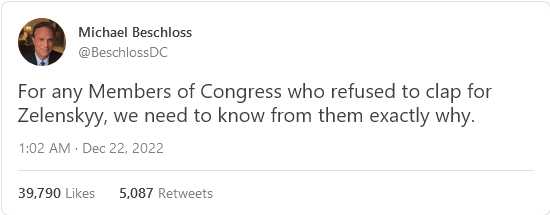
And so here’s one of the least subtle court eunuchs with a message about ritual obedience:
I wish I could replicate the awkward burst of nervous laughter that came out of me at the moment that I saw this message. The policing of performative applause in a formal political setting is so obviously a theme of totalitarian societies that … well, that Chief Eunuch Michael Beschloss can be counted on to not notice what he’s just done. I didn’t get a harumph outta that guy, he said, from deep inside a cloud of obtuse self-regard.
“They insist on inflicting on us such bloated theater & they seem not to know how false it all appears.” The Ukrainian president made it all the way to the Capitol in his combat fatigues, doncha know, and was greeted with a rapturous standing ovation by members of Congress, seen here in this actual footage:
Are there any normal human beings who don’t taste bile when they see this performance? And, Thomas Massie and Rand Paul aside, are there any normal human beings left inside the Beltway?
“Squee! Squee! Squee!” they explained, shaking their pom poms in a dignified ritual of state.
Comments Off on Never, ever be the first to stop clapping
December 10, 2022
United States Empire – The Spanish-American War
The Great War
Published 9 Dec 2022The Spanish-American War (fought in Cuba and the Philippines) kickstarted US global ambitions and expanded their influence far beyond the borders of the United States. At the same time the war marked the endpoint of the decline of Spain as a global power.
(more…)
Comments Off on United States Empire – The Spanish-American War
December 6, 2022
The outcome of the latest Munk Debates
Donna Laframboise summarizes what happened last week in the Munk Debates as Matt Taibbi and Douglas Murray spoke in favour of the proposition “Be it resolved, don’t trust mainstream media” while Malcolm Gladwell and Michelle Goldberg argued against:
Last week, an old fashioned public debate took place here in Canada. The topic:
Be it resolved, don’t trust mainstream media.
Journalists Douglas Murray (UK) and Matt Taibbi (US) argued the pro/agree side.
Journalists Malcolm Gladwell (Canada) and Michelle Goldberg (US) argued the con/disagree side.
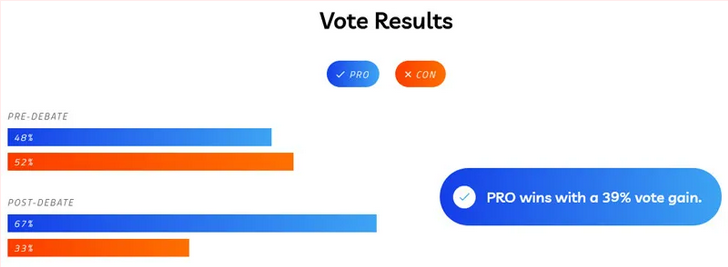
The event was sponsored by Munk Debates, which has been holding these events since 2008. Before the debate commences, audience members vote. Two hours later, they vote again.
On this occasion, the opinion swing was dramatic. The “don’t trust” side grew by 39% — apparently the largest swing ever in a Munk debate. At the beginning, slightly less than half of the in-house audience held this opinion (48%). Afterward, it was two-thirds (67%).
(When two-thirds of a population agrees on anything, you’re in supermajority territory — a number large enough to change constitutions.)
Here’s the key point: the winning side of the debate placed great emphasis on the scandalous manner in which Canada’s mainstream media covered the Freedom Convoy. Residing as he does in Britain, Douglas Murray had no trouble cutting through the nonsense. In the 3-minute video clip at the top of this post, he says our Prime Minister started by calling protesters names, and ended by invoking the Emergencies Act. Here’s what he says next:
At such a time, what would the mainstream media do? It would question it. It would question it. The Canadian mainstream media did not.
The Canadian mainstream media acted as an Amen chorus of the Canadian government. I will give you a couple of examples, but ladies and gentlemen I could go on for hours with examples of this. You had a CBC host describing the Freedom Convoy as a quote feral mob …
Why is this so rancid? Utterly, utterly rancid and corrupt. Because in this country, your media, your mainstream media is funded by the government. A totally corrupted system.

Comments Off on The outcome of the latest Munk Debates


