Quotulatiousness

August 9, 2021

1815 Eruption of Mount Tambora

The History Guy: History Deserves to Be Remembered
Published 6 May 2020

In 1815, the volcano Mount Tambora on the island of Sumbawa in the Dutch East Indies erupted in the most explosive volcanic eruption in human history. The explosion affected the world’s climate, changing history in surprising ways. The History Guy recalls the forgotten history of the year without a summer.

This is original content based on research by The History Guy. Images in the Public Domain are carefully selected and provide illustration. As very few images of the actual event are available in the Public Domain, images of similar objects and events are used for illustration.

You can purchase the “offshore” bow tie worn in this episode at The Tie Bar:
https://www.thetiebar.com/?utm_campai…​

All events are portrayed in historical context and for educational purposes. No images or content are primarily intended to shock and disgust. Those who do not learn from history are doomed to repeat it. Non censuram.

Find The History Guy at:

Patreon: https://www.patreon.com/TheHistoryGuy​

The History Guy: History Deserves to Be Remembered is the place to find short snippets of forgotten history from five to fifteen minutes long. If you like history too, this is the channel for you.

Awesome The History Guy merchandise is available at:
teespring.com/stores/the-history-guy​

Script by THG

#volcano​ #thehistoryguy​ #history

From the comments:

The History Guy: History Deserves to Be Remembered
11 months ago
A viewer complained that much of the footage of volcanoes were volcanoes dissimilar to Tambora. Notably, Tambora is a stratovolcano. Lava from stratovolcano eruptions tends to be very viscous and cools quickly, whereas much of the footage in the episode is from shield volcanos in Hawaii, which produce free-flowing lava. Please understand that I can only use media in the Public Domain. I did not mean to misinform the audience by using the available footage and photographs.

July 18, 2021

QotD: Rules of wars in the Eighteenth Century

Filed under: Britain, France, History, Humour, Quotations — Tags: , , , , , — Nicholas @ 01:00

Although the Succession of Wars went on nearly the whole time in the eighteenth century, the countries kept on making a treaty called the Treaty of Paris (or Utrecht).

This Treaty was a Good Thing and laid down the Rules for fighting the wars; these were:

(1) that there should be a mutual restitution of conquests except that England should keep Gibraltar, Malta, Minorca, Canada, India, etc.;

(2) that France should hand over to England the West Indian islands of San Flamingo, Tapioca, Sago, Dago, Bezique and Contango, while the Dutch were always to have Lumbago and the Laxative Islands;

(3) that everyone, however Infantile or even insane, should renounce all claim to the Spanish throne;

(4) that the King (or Queen) of France should admit that the King (or Queen) of England was King (or Queen) of England and should not harbour the Young Pretender, but that the fortifications of Dunkirk should be disgruntled and raised to the ground.

Thus, as soon as the fortifications of Dunkirk had been gruntled again, or the Young Pretender was found in a harbour in France, or it was discovered that the Dutch had not got Lumbago, etc., the countries knew that it was time for the treaty to be signed again, so that the War could continue in an orderly manner.

W.C. Sellar & R.J. Yeatman, 1066 And All That, 1930.

June 28, 2021

Colt R75A: The Last Commercial BAR (With Shooting)

Filed under: Europe, History, Military, USA, Weapons, WW2 — Tags: , , , , — Nicholas @ 02:00

Forgotten Weapons
Published 2 Mar 2018

The R75A was the last version of Colt’s commercial BAR, with 832 made between August and December of 1942 for the Netherlands Purchasing Commission. It was a derivative of the commercial R75 BAR, with a pistol grip, magazine well cover, and ejection port cover. The R75A added on a folding bipod and a detachable barrel functionality, albeit not of the most elegant sort. To remove the barrel, one first used the lever under the muzzle to detach the gas block from the barrel by sliding it rearwards. Then a tool or cartridge tip was used to pry open the barrel locking lever at the front of the receiver, which then allowed the barrel to be rotated about 60 degrees to unlock its interrupted threads and remove it.

http://www.patreon.com/ForgottenWeapons​

Cool Forgotten Weapons merch! http://shop.bbtv.com/collections/forg…​

If you enjoy Forgotten Weapons, check out its sister channel, InRangeTV! http://www.youtube.com/InRangeTVShow

June 18, 2021

Heydrich, Architect of the Holocaust, Dies – WAH 036 – June 1942, Pt. 1

Filed under: Europe, Germany, History, Military, WW2 — Tags: , , , , , — Nicholas @ 04:00

World War Two
Published 17 Jun 2021

Reinhard Heydrich is fighting for his life, as the hunt of his assassins continues. Meanwhile, news of the Nazi atrocities starts to reach the Allied countries.
(more…)

June 14, 2021

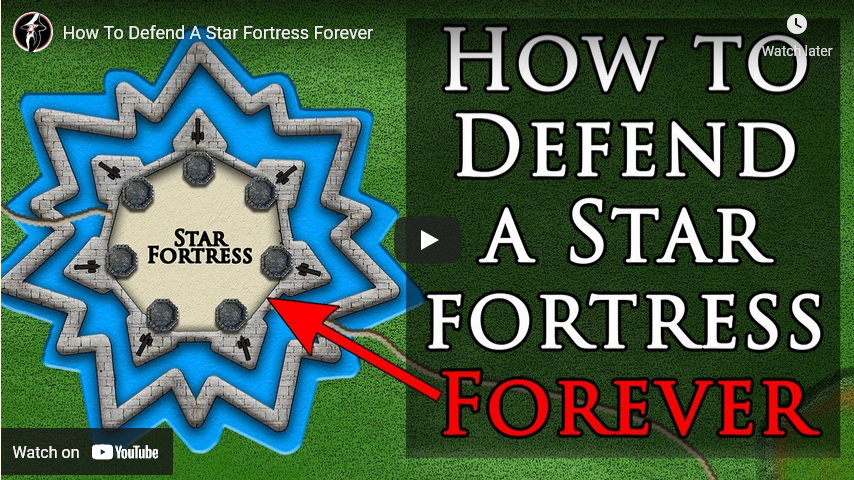
How To Defend A Star Fortress Forever

SandRhoman History
Published 13 Jun 2021

Thanks to Audible for sponsoring this video! Start listening with a 30-day Audible trial. Choose one audiobook and two Audible Originals absolutely free: http://audible.com/sandrhoman or text sandrhoman to 500-500.

In this video we will provide you with the most necessary knowledge to defend a star fortress forever.

Patreon (thank you): https://www.patreon.com/sandrhomanhis…
Paypal (thank you: paypal.me/SandRhomanhistory
We also have Twitter: https://twitter.com/Sandrhoman

#history #siege #sandrhoman

Sources:
Hoppe, S., s.v. “Festungsbau”, in: Enzyklopädie der Neuzeit.
Lynn, J. A., “States in Conflict 1661-1763”, in: Parker, G. (Ed.), The Cambridge History of Warfare, Cambridge 2005.
Lynn, J. A., “The trace itallienne and the Growth of Armies”, in: Rogers, C. J. (Ed.), The Military Revolution Debate. Readings on the Military Transformation of Early Modern Europe, Boulder / San Francisco / Oxford 1995.
Ortenburg, G., Waffe und Waffengebrauch im Zeitalter der Landsknechte (Heerwesen der Neuzeit, Abt. 1, Bd. 1) Koblenz 1984.
Parker, G., “The Limits to Revolutions in Military Affairs: Maurice of Nassau, the Battle of Nieuwpoort (1600), and the Legacy”, in The Journal of Military History, 71;2, 2007; S. 331 – 372.
Rogers, C.J. / Tallet F. (editors), European Warfare, 1350–1750, 2010.
Van Nimwegen, O., The Dutch Army and the Military Revolutions, 1588-1688.

May 14, 2021

100,000 Dead British Subjects in Burma – WAH 034 – May 1942, Pt. 1

Filed under: Asia, Britain, Europe, Germany, History, Japan, Military, WW2 — Tags: , , , , , , , — Nicholas @ 04:00

World War Two
Published 13 May 2021

A large number of European and asian inhabitants of South-East Asia are locked up in Japanese prison camps, while in Burma, a big refugee crisis claims the lives of thousands. In Auschwitz-Birkenau and Sobibor, gassing Jews on an immense scale begins.
(more…)

April 9, 2021

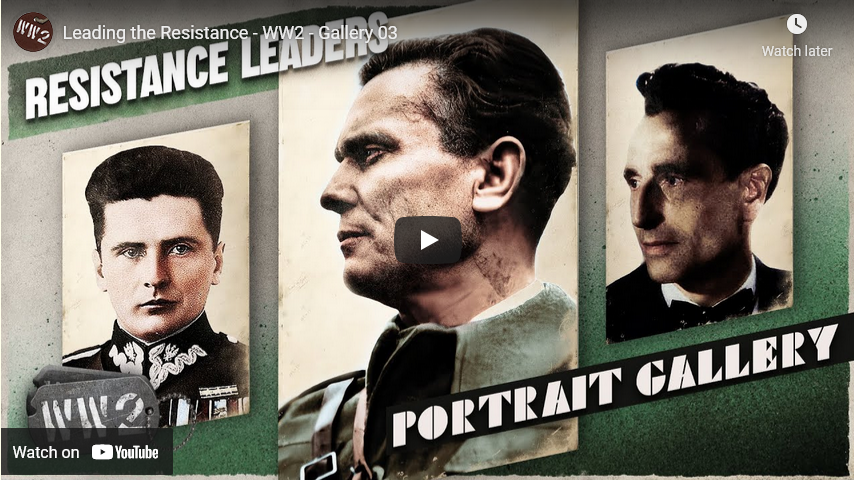
Leading the Resistance – WW2 – Gallery 03

World War Two
Published 8 Apr 2021

Under the violent occupation by Axis forces, dozens all over the globe resisted or took up arms to fight for the survival of their nation, ethnicity, ideology or ideals.

Join us on Patreon: https://www.patreon.com/TimeGhostHistory
Or join The TimeGhost Army directly at: https://timeghost.tv

Follow WW2 day by day on Instagram @ww2_day_by_day – https://www.instagram.com/ww2_day_by_day
Between 2 Wars: https://www.youtube.com/playlist?list…
Source list: http://bit.ly/WW2sources

Hosted by: Spartacus Olsson
Written by: Spartacus Olsson and Joram Appel
Director: Astrid Deinhard
Producers: Astrid Deinhard and Spartacus Olsson
Executive Producers: Astrid Deinhard, Indy Neidell, Spartacus Olsson, Bodo Rittenauer
Creative Producer: Maria Kyhle
Post-Production Director: Wieke Kapteijns
Research by: Joram Appel
Edited by: Miki Cackowski
Sound design: Marek Kamiński
Map animations: Eastory (https://www.youtube.com/c/eastory​)

Colorizations by:
Mikołaj Uchman
Dememorabilia – https://www.instagram.com/dememorabilia/​

Sources:
Marxist Internet Archive
Picture of Tito during a Partisan gathering, courtesy of Музеј Старе Херцеговине
Yad Vashem 75FO4, 4613/899, 4248/20, 1605/91
Bundesarchiv
USHMM
IWM NA 15129

Soundtracks from the Epidemic Sound:
Phoenix Tail – “At the Front”
Reynard Seidel – “Deflection”
Hakan Eriksson – “Epic Adventure Theme 4”
Johannes Bornlof – “The Inspector 4”
Fabien Tell – “Last Point of Safe Return”
Howard Harper-Barnes – “London”
Rannar Sillard – “March Of The Brave 10”

Archive by Screenocean/Reuters https://www.screenocean.com​.

A TimeGhost chronological documentary produced by OnLion Entertainment GmbH.

March 20, 2021

Iron cannon, improved celestial navigation techniques, and “race-built” galleons

In the latest Age of Invention newsletter, Anton Howes considers some of the technological innovations which helped English sailors to overcome powerful adversaries of the Spanish and Portuguese navies in the late 1500s and early 1600s:

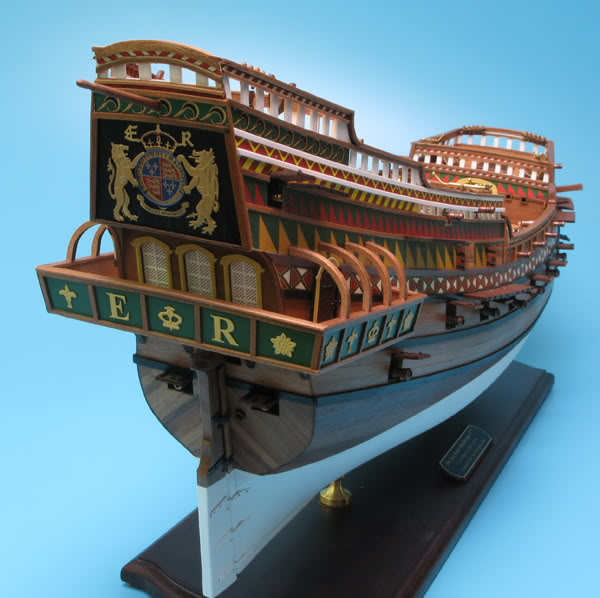
Stern view of a model of the Revenge as an example of a race-built galleon, 1577.
Image from modellmarine.de

Apart from the adoption and refinement of celestial navigation techniques, however, English seafaring capabilities also benefited from some more obvious, physical changes. In 1588, for example, on the eve of the Spanish Armada, a senior Spanish officer believed that the English had “many more long-range guns”. By the 1540s, medieval ironmaking techniques involving the blast furnace had gradually spread from Germany, to Normandy, and thence to the Weald of Sussex and Kent. Whereas in the first half of the sixteenth century England had typically imported three quarters of its iron from Spain, by 1590 it had not only quintupled its consumption of iron but was also almost entirely self-sufficient. And by allowing England to exploit its plentiful domestic deposits of iron, the blast furnace resulted in it producing many more cheap cannon.

Iron guns were in many ways worse for ships than those of bronze. They were heavier, prone to corrosion, and more likely to explode without warning. Bronze guns, by contrast, would first bulge and then split, but in any case tended to last. When the British captured Gorée off the coast of Senegal in 1758, they found a working English-made bronze cannon that dated from 1582. Yet iron was only 10-20% the price of bronze. Although the Royal Navy for decades continued to prefer bronze, cheap, medium-sized cannon of iron proliferated, becoming affordable to merchants, pirates, and privateers — a situation that was unique to England.

English ships were thus especially well-armed, allowing them to access new markets even when they sailed into hostile waters. They were soon some of the only merchants able to hold their own against the latest Mediterranean apex predator, whether it be the Spanish navy, Algeria-based corsairs, or Ottoman galleys. And they were able to insert themselves, sometimes violently, into the inter-oceanic trades — all despite the armed resistance of the Spanish and Portuguese, who had long monopolised those routes. In the 1560s, John Hawkins tried a few times to muscle in on the transatlantic Portuguese and Spanish trade in slaves. With backing from the monarch and her ministers, he captured Portuguese slave ships, raided and traded along the African coastline himself, and then sold slaves in the Spanish colonies of the Americas, sometimes having to attack those colonies before the local governor would allow them to trade. (The attempt was ultimately unsuccessful, as Hawkins’s privateering fleet was all but destroyed in 1568 and the English were not involved in the slave trade again for almost a century.)

The English hold over the hostile markets was only threatened during times of peace on the continent, when their ships’ defensiveness no longer gave them a special advantage. The Dutch usurped English dominance of the trade with Iberia and the Mediterranean, for example, during the Dutch Republic’s truce with Spain 1609-21. Their more efficient ships, especially for bulk commodities — the fluyt invented at Hoorn in the late 1580s — were cheaper to build, required fewer sailors, and were easier to handle. But these advantages only made them competitive when the risk of attack was low, as they were hardly armed. When wars resumed, the English had a chance to regain their position.

Finally, the English acquired a few further advantages when it came to ship design. Thanks to the shipwright Matthew Baker, who had been on the trial voyage Cabot dispatched to the Mediterranean, England experienced a revolution in using mathematics to design ships. Baker’s methods, seemingly developed in the 1560s, allowed him to more cheaply experiment with new forms, and by the 1570s these began to bear fruit. The old ocean-going carracks and galleons, with their high forecastles and aftercastles, became substantially sleeker. Taking inspiration from nature, Baker designed a streamlined, elongated hull modelled below the waterline upon a cod’s head with a mackerel tail. Above the waterline, too, he lowered the forecastle and set it further back, as well as flattening the aftercastle.

Starting in 1570 with his prototype the Foresight, and more fully developed in 1575-77 with the Revenge, these razed or “race-built” galleons gave the English some significant advantages. Drake even chose the Revenge as his flagship to battle the Spanish Armada in 1588, and to lead an ill-fated reprisal invasion of Portugal the following year. The higher castles of carracks and old-style galleons were suited to clearing an enemy’s decks with arrows and gunfire, as well as to defend against boarders. They were designed for combat at close quarters, in which height was an advantage. They were floating fortresses, their imposing height known to inspire terror. The race-built galleons, by contrast, by making the ship less top-heavy, could have longer and lower gundecks, with more of the ship’s displacement devoted to ordnance — especially useful when taking advantage of the cheaper but heavier cannon made of iron. Rather than killing an enemy ship’s sailors and soldiers, the race-built galleons were optimised for blasting through its hull. What they lost in “majesty and terror”, they made up for with overwhelming firepower. They aimed to sink.


March 1, 2021

Solothurn S18-1000: The Pinnacle of Anti-Tank Rifles

Filed under: Europe, History, Military, Weapons, WW2 — Tags: , , , , , — Nicholas @ 02:00

Forgotten Weapons
Published 13 Oct 2017

Among all the antitank rifles developed between the World Wars, the highest quality and most sophisticated was the Solothurn S18-1000. It fires the 20x138B cartridge which was also used in the Finnish Lahti L-39 and the German 20mm Flak guns, and it does so using a semiautomatic action and an 8-round box magazine. It is a short-recoil system, with a rotating bolt rather similar to that of the MG-34 machine gun.

The recoil-operated action of the Solothurn helps dampen its recoil more than the Lahti, and is definitely a more comfortable gun to shoot. The Solothurn is equipped with both iron sights and an optical sight (we used the irons in this shooting, because the rubber eye cup on the scope is fairly hard and brittle on this example). Remarkably for its 100+ pound weight, the gun definitely jumps back a few inches when fired unless one has firmly sunk the bipod feet into the earth. However, the recoil force is really more of a push than a sharp impact, and combined with the large surface area of the shoulder pad it is not at all a bad experience.

A number of different countries bought the S18-1000 (and many others bought the smaller S18-100), including the Italians and Hungarians. The only combat account I was able to find was from a Dutch antitank gun team that used one to successfully engage several German armored cars during the invasion of the Netherlands in 1940.

http://www.patreon.com/ForgottenWeapons

Cool Forgotten Weapons merch! http://shop.bbtv.com/collections/forg…

If you enjoy Forgotten Weapons, check out its sister channel, InRangeTV! http://www.youtube.com/InRangeTVShow

February 28, 2021

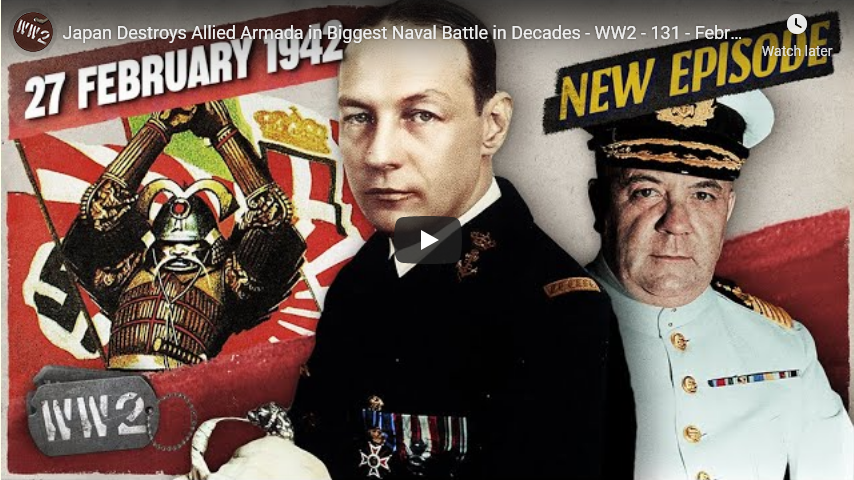
Japan Destroys Allied Armada in Biggest Naval Battle in Decades – WW2 – 131 – February 27, 1942

World War Two
Published 27 Feb 2021

The Japanese are advancing in the Dutch East Indies and Burma, brushing aside defenders, but their biggest victory this week is at sea, when they not only brush aside the ABDA Fleet, but literally wipe it out of existence. Meanwhile Italian and German submarines are patrolling the Caribbean, sinking any Allied merchant shipping they find. It is yet another week of Axis successes.

Join us on Patreon: https://www.patreon.com/TimeGhostHistory
Or join The TimeGhost Army directly at: https://timeghost.tv

Follow WW2 day by day on Instagram @ww2_day_by_day – https://www.instagram.com/ww2_day_by_day
Between 2 Wars: https://www.youtube.com/playlist?list…
Source list: http://bit.ly/WW2sources

Written and Hosted by: Indy Neidell
Director: Astrid Deinhard
Producers: Astrid Deinhard and Spartacus Olsson
Executive Producers: Astrid Deinhard, Indy Neidell, Spartacus Olsson, Bodo Rittenauer
Creative Producer: Maria Kyhle
Post-Production Director: Wieke Kapteijns
Research by: Indy Neidell
Edited by: Iryna Dulka
Sound design: Marek Kamiński
Map animations: Eastory (https://www.youtube.com/c/eastory​)

Colorizations by:
– Mikołaj Uchman
– Norman Stewart – https://oldtimesincolor.blogspot.com/​

Sources:
– National Portrait Gallery
– IWM: H 17365, A_238, CB(OPS) 5008

Soundtracks from the Epidemic Sound:
– Rannar Sillard – “Easy Target”
– Howard Harper-Barnes- “Underlying Truth”
– Jo Wandrini – “Dragon King”
– Fabien Tell – “Last Point of Safe Return”
– Wendel Scherer – “Out the Window”
– Reynard Seidel – “Rush of Blood”
– Brightarm Orchestra – “On the Edge of Change”
– Craft Case – “Secret Cargo”
– Phoenix Tail – “At the Front”
– Johan Hynynen – “Dark Beginning”
– Wendel Scherer – “Growing Doubt”

Archive by Screenocean/Reuters https://www.screenocean.com​.

A TimeGhost chronological documentary produced by OnLion Entertainment GmbH.

February 20, 2021

History Summarized: South Africa

Overly Sarcastic Productions
Published 19 Feb 2021

In the past few centuries, few corners of the African Continent were quite as busy as the south. It’s a winding river from the first migrations and waves of colonists in the Cape Colonies to the Rainbow Nation we know today, so let’s dive in and see how it all played out!

SOURCES & Further Reading for Black History Month:
— The African Experience From ‘Lucy’ to Mandela From the Great Courses Plus, lectures 15-18 “South Africa: The Dutch Cape Colony & The Zulu Kingdom & Frontier and Unification & Diamonds and Gold”, 26 “Segregation and Apartheid in South Africa”, and 32 “The South African Miracle”

— Born A Crime by Trevor Noah: https://bookshop.org/books/born-a-cri…​
— Home Team History is a YouTube channel covering all corners of the African continent. They have several videos about Southern Africa, such as “A History of Stone Architecture in Southern Africa” (https://youtu.be/0U4Wu3CmL0U​) and “Southern Africa: The Birthplace of Iron Mining” (https://www.youtube.com/watch?v=b9HO0…​), and “A history of the Xhosa People” (https://youtu.be/axajPiZnDqo​)
— Lastly, looking to modern times, it’s important to recognize how the COVID crisis has exacerbated massive preexisting disparities between healthcare for Black and minority communities and that of white Americans. It’s not enough to just acknowledge history, we all have a responsibility to understand modern problems and work on solutions. Read more: (https://www.scientificamerican.com/ar…​) and please consider Donating to support the NAACP’s COVID relief programs: (https://naacp.org/coronavirus/coronav…​)

With special thanks to the members of our discord community who helped polish my script: Holben, Klieg, Good Hunter, and Sticc (who has a History of Africa podcast: https://www.listennotes.com/podcasts/…​)

This topic was voted on by our community of Patrons! If you’d like to get extra rewards and play a role in the content we make, please consider supporting our channel at https://www.Patreon.com/OSP​

Our content is intended for teenage audiences and up.

PODCAST: https://overlysarcasticpodcast.transi…​

DISCORD: https://discord.gg/osp​

MERCH LINKS: http://rdbl.co/osp​

OUR WEBSITE: https://www.OverlySarcasticProductions.com
Find us on Twitter https://www.Twitter.com/OSPYouTube​
Find us on Reddit https://www.Reddit.com/r/OSP/

February 19, 2021

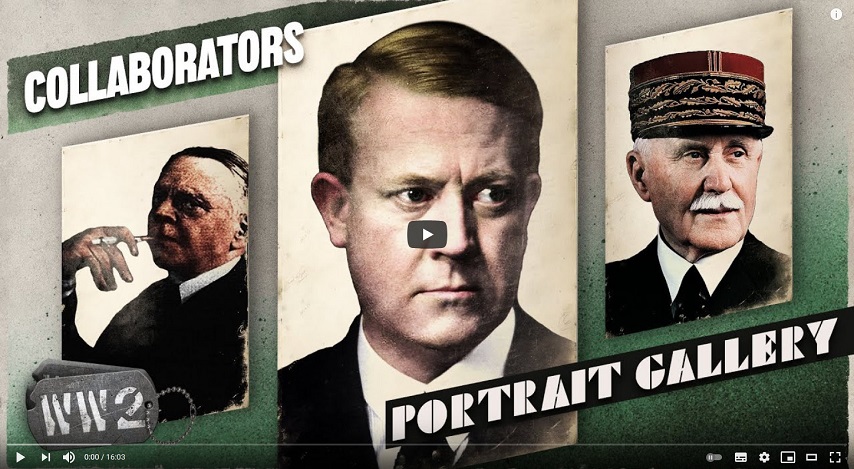
Quislings! – Traitors of World War Two – WW2 Gallery 02

World War Two
Published 18 Feb 2021

The name of Norwegian National Socialist Politician Vidkun Quisling became synonymous with “traitor” and “collaborator”. In this gallery episode, we’ll cover some of the most prominent Quislings in World War Two.

Join us on Patreon: https://www.patreon.com/TimeGhostHistory
Or join The TimeGhost Army directly at: https://timeghost.tv

Follow WW2 day by day on Instagram @ww2_day_by_day – https://www.instagram.com/ww2_day_by_day
Between 2 Wars: https://www.youtube.com/playlist?list…
Source list: http://bit.ly/WW2sources

Hosted by: Indy Neidell
Written by: Joram Appel
Director: Astrid Deinhard
Producers: Astrid Deinhard and Spartacus Olsson
Executive Producers: Astrid Deinhard, Indy Neidell, Spartacus Olsson, Bodo Rittenauer
Creative Producer: Maria Kyhle
Post-Production Director: Wieke Kapteijns
Research by: Joram Appel
Edited by: Miki Cackowski
Sound design: Marek Kamiński
Map animations: Eastory (https://www.youtube.com/c/eastory​)

Colorizations by:
Norman Stewart – https://oldtimesincolor.blogspot.com/​
Adrien Fillon – https://www.instagram.com/adrien.colo…​
Jaris Almazani (Artistic Man) – https://instagram.com/artistic.man
Julius Jääskeläinen – https://www.facebook.com/JJcolorization/​
Carlos Ortega Pereira, BlauColorizations – https://www.instagram.com/blaucolorizations
Dmitriy Vasilyev – https://commons.wikimedia.org/wiki/Fi…​

Sources:
USHMM
Narodowe Archiwum Cyfrowe
Bundesarchiv
efsyn.gr
Yad Vashem 85DO
Amsab Institute of Social History www.amsab.be
Picture of Mussert shaking hands with Hitler, courtesy of Beeldbankwo2 https://beeldbankwo2.nl/​

Soundtracks from the Epidemic Sound:
Johannes Bornlof – “The Inspector 4”
Philip Ayers – “Trapped in a Maze”
Cobby Costa – “Flight Path”
Rannar Sillard – “March Of The Brave 4”
Johan Hynynen – “Dark Beginning”
Farrell Wooten – “Blunt Object”
Reynard Seidel – “Deflection”
Yi Nantiro – “Watchman”
Hakan Eriksson – “Epic Adventure Theme 4”

Archive by Screenocean/Reuters https://www.screenocean.com​.

A TimeGhost chronological documentary produced by OnLion Entertainment GmbH.

January 17, 2021

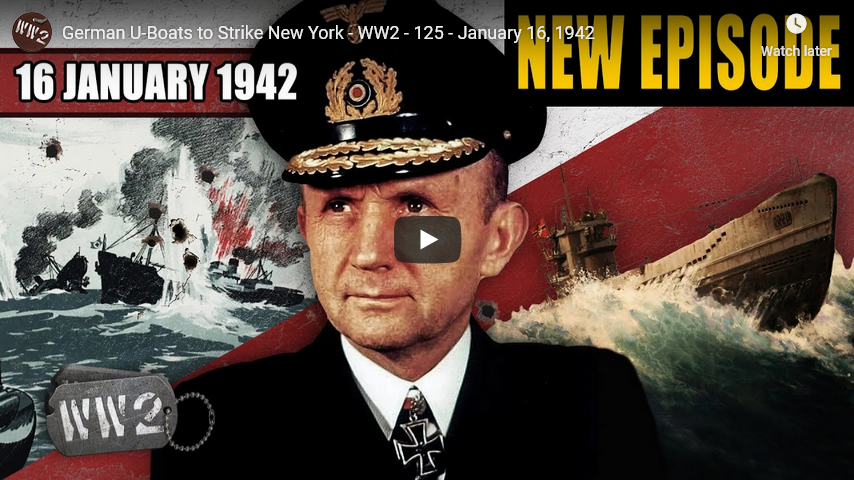
German U-Boats to Strike New York – WW2 – 125 – January 16, 1942

World War Two
Published 16 Jan 2021

Operation Pauchenslag, long-range German submarines operating just off the US Coast, kicks into action this week, as does the Japanese invasion of the Dutch East Indies. They also take Kuala Lumpur. Meanwhile, the Soviet Red Army offensive all along the Eastern Front has its first full week of action, with the Soviets making some real territorial gains in the center, though a German offensive in the Crimea catches them off guard.

Join us on Patreon: https://www.patreon.com/TimeGhostHistory
Or join The TimeGhost Army directly at: https://timeghost.tv

Follow WW2 day by day on Instagram @ww2_day_by_day – https://www.instagram.com/ww2_day_by_day
Between 2 Wars: https://www.youtube.com/playlist?list…
Source list: http://bit.ly/WW2sources

Written and Hosted by: Indy Neidell
Director: Astrid Deinhard
Producers: Astrid Deinhard and Spartacus Olsson
Executive Producers: Astrid Deinhard, Indy Neidell, Spartacus Olsson, Bodo Rittenauer
Creative Producer: Maria Kyhle
Post-Production Director: Wieke Kapteijns
Research by: Indy Neidell
Edited by: Karolina Dołęga
Sound design: Marek Kamiński
Map animations: Eastory (https://www.youtube.com/c/eastory)

Colorizations by:
– Daniel Weiss
– Spartacus Olsson
– Mikołaj Uchman

Sources:
– National Archives NARA
– Narodowe Archiwum Cyfrowe NAC
– Imperial War Museums: NYP 45042, A 6920, HU 90349, A 7371, C3881, E 9572, A 7376, E 9569,
– Library of Congress
– Bundesarchiv
– United States Signal Corps. source – Washington County Free Library Photo WCRH018
– FDR Presidential Library
– United States Holocaust Museum
– Yad Vashem: 4613-1055, 5138-98, 86FO2, 4220-3,

Soundtracks from Epidemic Sound:
– “Remembrance” – Fabien Tell
– “Dragon King” – Jo Wandrini
– “The Unexplored” – Philip Ayers
– “Maze Heist” – Max Anson
– “London” – Howard Harper-Barnes
– “Document This 1” – Peter Sandberg
– “First Responders” – Skrya
– “The End Of The World 2” – Håkan Eriksson
– “Dark Beginning” – Johan Hynynen

Archive by Screenocean/Reuters https://www.screenocean.com.

A TimeGhost chronological documentary produced by OnLion Entertainment GmbH.

January 8, 2021

QotD: Culinary appropriation

Filed under: Americas, Europe, Food, History, India, Quotations — Tags: , , , , — Nicholas @ 01:00

Cultural appropriation is good. When ideas from different cultures are imperfectly absorbed, new ideas ensue. Exchange promotes change. I detest empires, but, in deference to truth, praise them as culturally creative arenas in which new ways of life, thought, art, language, worship, work, government and food take shape, as people swap and circulate biota, behaviour and brilliance.

Some of the resulting dishes are deplorable. I could live happily in a world without chop suey, chilli con carne, or coronation chicken. I’m not going to try a recipe described in Eater magazine as “huevos Kathmandu that paired green chutney and spiced chickpeas with fried eggs”.

Tex-mex cuisine is Montezuma’s most effective revenge. Rijstafel conquered the Netherlands more thoroughly than the Dutch ever subjected the East, and now rivals the drearier Hutspot as Holland’s national dish. Yet Dutch food still lags behind grandes cuisines.

Vindaloo is the epitome of culinary appropriation: a Bengali dish with ingredients from the Americas — potatoes and chillies — and a corruption of a Portuguese name: vinho d’alho, or garlic wine. It has become so British that “Vindaloo nah-nah” was the chorus of a chant popular among English football fans at a World Cup tournament (perhaps they confused it with Waterloo). I still dislike it.

Usually, however, culturally exchanged foods produce admirable dishes. Chocolate, tomato and avocado are among the few English words derived from Nahuatl. The Aztecs never used the items they designate in pain au chocolat, or tricolore, or avocado toast. But the responsible cultural appropriators deserve praise, not blame.

Satay would be unthinkable if Malays hadn’t incorporated peanuts that Portuguese pinched from Brazil. The basics of cajun cuisine reached Louisiana with “Acadian” migrants from French Canada — but cultural appropriation made it what it is today. Black chefs in the same region would be at a loss without African-born yams.

Curries would be historical curiosities if Indians hadn’t appropriated chillies from Mexico. Is Sichuanese cuisine imaginable without American peppers or sweet potatoes. Tempura would be unavailable if Japanese chefs hadn’t annexed and improved Portuguese techniques of frying. Culinary historians bicker over whether Jewish or Italian immigrants developed fish and chips. But almost everyone agrees that the British could never have done it on their own.

Felipe Fernández-Armesto, “Bad taste of PC foodies”, The Critic, 2020-09-19.

January 1, 2021

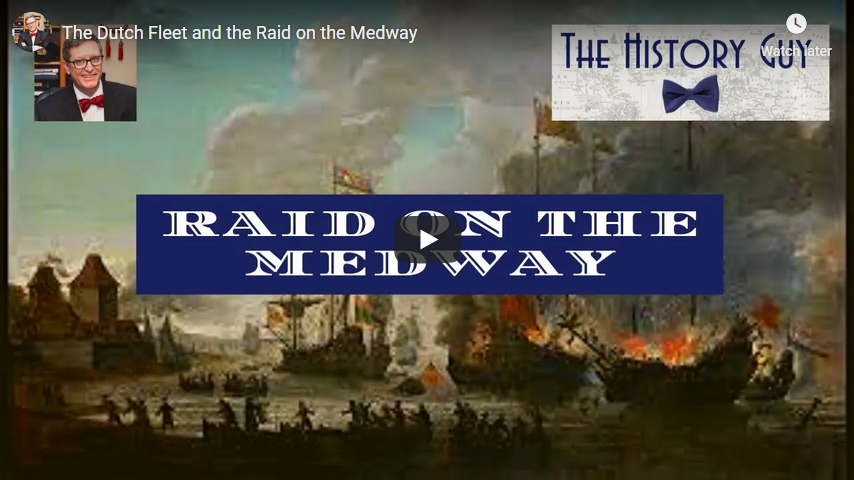
The Dutch Fleet and the Raid on the Medway

Filed under: Britain, Europe, History, Military — Tags: , , , — Nicholas @ 02:00

The History Guy: History Deserves to Be Remembered
Published 3 Nov 2018

Two of the world’s greatest sea powers compete for control of the world’s shipping lanes. At the height of the Age of Sail, the Dutch fleet makes one of the most daring naval raids in history. The History Guy remembers the raid on the Medway.

This is original content based on research by The History Guy. Images in the Public Domain are carefully selected and provide illustration. As photographs of actual events are sometimes not available, photographs of similar objects and events are used for illustration.

The episode relates events that occurred during a period of conflict. All information is provided within historical context and is intended for educational purposes. Those who do not learn from history are doomed to repeat it.

Patreon: https://www.patreon.com/TheHistoryGuy

The History Guy: History Deserves to Be Remembered is the place to find short snippets of forgotten history from five to fifteen minutes long. If you like history too, this is the channel for you.

Awesome The History Guy merchandise is available at:
teespring.com/stores/the-history-guy

#worldhistory #militaryhistory #thehistoryguy

« Newer Posts — Older Posts »

Powered by WordPress