Quotulatiousness

July 29, 2020

America’s First Assault Rifle: Burton 1917 LMR

Filed under: History, Military, USA, Weapons, WW1 — Tags: , , , , , — Nicholas @ 02:00

Forgotten Weapons
Published 4 Jul 2016

http://www.patreon.com/ForgottenWeapons
https://centerofthewest.org/explore/f…

America’s first assault rifle? Well, it does meet all the requirements — select-fire, intermediate cartridge, and shoulder-fired. It was never actually fielded, though.

The Burton Light Machine Rifle was developed during World War One, with the firing model completed in 1917. It was intended as an aircraft observer’s weapon for attacking balloons — a role which required incendiary ammunition. With this in mind, Winchester’s Frank Burton adapted the .351 WSL cartridge from his 1905 and 1907 self-loading rifles into the .345 WSL, with a spitzer bullet. He designed an open-bolt, select-fire shoulder rifle to fire it, which became known as the Light Machine Rifle.

Burton’s rifle was to be usable both in an aircraft where it could be fixed to a Scarff mount for a wide field of fire or used by an individual on the ground, fired from the shoulder. It weighed in at just about 10 pounds (4.5kg) and had a pistol grip and straight-line design to bring the recoil impulse directly into the shooter’s shoulder and minimize rise during automatic fire. The barrel was finned for better cooling, and infantry barrels were equipped with bayonet lugs.

The most distinctive elements of the design, of course, are the dual top-mounted magazines. Each one holds 20 rounds, and each has a pair of locking catches. One position locks the magazine into a feeding position, and the other holds it up above the cycling of the bolt. The idea here was to keep a second loaded magazine easily accessible for an aerial observer, so they could reload without having to find another magazine somewhere in the aircraft. Contrary to some speculation, there is no automatic transition between magazines. When one is empty, the shooter must pull it back to the second locking position (or out of the gun entirely) and then push the second magazine down into feeding position.

Despite Burton’s work — which was well ahead of its time — the LMR had been rendered obsolete for its primary role by the time it was ready. Synchronized, forward-mounted Vickers machine guns firing 11mm incendiary ammunition were being mounted on aircraft, and were more effective on balloons and airplanes than Burton’s weapon would have been. Only this single example was ever made, and it was not presented for infantry consideration as far as I can tell. It was lost for many years before being discovered in a Winchester building, and eventually ending up in the Cody Firearms Museum with the rest of the Winchester factory collection.

July 26, 2020

Gewehr 98: The German WWI Standard Rifle

Filed under: Germany, History, Military, Weapons, WW1 — Tags: , , — Nicholas @ 02:00

Forgotten Weapons
Published 11 Jun 2016

Sold at auction for $1,840 (w/ 5 other rifles).

The Gewehr 1898 was the product of a decade of bolt action repeating rifle improvements by the Mauser company, and would be the standard German infantry rifle through both World Wars. Today we are looking at a pre-WWI example (1905 production) that shows all the features of what a German soldier would have taken to war in 1914.

July 23, 2020

Pattern 1913 Enfield Trials Rifle

Filed under: Britain, History, Military, Weapons, WW1 — Tags: , , , — Nicholas @ 02:00

Forgotten Weapons
Published 28 Apr 2016

http://www.patreon.com/ForgottenWeapons

Sold at auction for $6,325.

One of the lessons learned by the British military in the aftermath of the Boer War was that modern Mauser rifles were superior to their Lee-action rifles and carbines. In response, British ordnance began experimenting with a Mauser-pattern rifle, ultimately finalized as the Pattern 1913. This rifle would also leave behind the obsolescent .303 rimmed cartridge, in favor of a new rimless .276 Enfield round.

The Pattern 13 rifle itself was excellent — it balanced and handled well, it had very good sights, and a smooth and fast bolt throw. However, the .276 Enfield cartridge was really more potent than it needed to be, and caused problems. The cartridge threw a 165 grain bullet at just under 2800fps, pretty close to the ballistics of today’s 7mm Remington Magnum. Loaded with Cordite propellent, this led to excessive barrel wear and unpleasant recoil, along with some parts breakage. However, as final testing was being done in the first half of 1914, the Great War broke out.

At this point, plans for using a new cartridge were abandoned. The rifle itself was redesigned in the .303 cartridge, to be manufactured in large numbers by American firms under contract. It would also be refitted for the .30-06 cartridge and used in large numbers by the American armed forces as the M1917 Enfield rifle. According to General Julian Hatcher (who ought to know), it was the best rifle of the First World War.

July 21, 2020

Enfield L85A1: Perhaps the Worst Modern Military Rifle

Filed under: Britain, History, Military, Weapons — Tags: , , , , , — Nicholas @ 02:00

Forgotten Weapons
Published 29 Dec 2016

http://www.patreon.com/ForgottenWeapons

Cool Forgotten Weapons merch! http://shop.bbtv.com/collections/forg…

If you enjoy Forgotten Weapons, check out its sister channel, InRangeTV! http://www.youtube.com/InRangeTVShow


The L85A1 (part of the SA80 small arms family) was adopted by the British military in 1985 as a new generation of small arms to replace the L1A1 FAL (one quick note, where “A1” indicates a revision in American designations, it is simply the first iteration in British ones — there was no “L85”). As a bullpup rifle, the L85A1 was intended to replace both the FAL and Sterling SMG, similar to the French replacing the MAS 49/56 and MAT 49 with the FAMAS.

Unfortunately, the L85A1 had massive problems of both reliability and durability. They were kept pretty much hidden until Desert Storm, when it became unavoidably clear that the weapon was seriously flawed. The UK government denied the problems for several years, until finally contracting with H&K (then owned by Royal Ordnance) to redesign and rebuild the rifles. The result, after changes to virtually every part of the rifle, was the L85A2 — a much better rifle that will be tainted with its predecessor’s reputation regardless.

Mechanically, the L85A1 and A2 are basically copies of the Armalite AR-180, with a multi-lug rotating bolt and a short stroke gas piston. It feeds from STANAG magazines, and it universally fitted with the heavy but rugged SUSAT optical sight.

Thanks to the Institute of Military Technology for allowing me to have access to this rifle (which is extremely rare in the US) and bring it to you! Check them out at:

http://www.instmiltech.com

July 17, 2020

L96A1: The Green Meanie – the First Modern Sniper Rifle

Filed under: Britain, Military, Weapons — Tags: , , , — Nicholas @ 02:00

Forgotten Weapons
Published 16 Feb 2019

http://www.patreon.com/ForgottenWeapons

Cool Forgotten Weapons merch! http://shop.bbtv.com/collections/forg…

The Accuracy International Precision Marksman rifle was the winner of the British MoD’s competition to replace the L42A1 as the standard British sniper rifle, and was accordingly adopted as the L96A1. It was the vanguard of the modern sniper rifle, with a highly modular chassis design, and it revolutionized British sniping performance. Thanks to Steve Houghton, was have access today to one of a tiny number of original L96A1 rifles in private hands. If you are interested in learning more, I highly recommend checking out Steve’s newly released book, The British Sniper: A Century of Evolution. It can be found at:

https://www.swiftandboldpublishing.co…

Contact:
Forgotten Weapons
PO Box 87647
Tucson, AZ 85754

July 14, 2020

British EM-2: The Best Cold War Battle Rifle that Never Was

Filed under: Britain, History, Military, Weapons — Tags: , , , , , — Nicholas @ 02:00

Forgotten Weapons
Published 12 Jul 2017

Armament Research Services (ARES) is a specialist technical intelligence consultancy, offering expertise and analysis to a range of government and non-government entities in the arms and munitions field. For detailed photos of the guns in this video, don’t miss the ARES companion blog post:

http://armamentresearch.com/british-j…

The EM-2 was the rifle that the British pushed for NATO trials in 1950. It was a rifle well ahead of its time in several areas — as a select-fire bullpup rifle, it was intended to replace both the infantry rifle and the submachine gun. Its .280 caliber cartridge was designed with combat ranges of 600 yards and less, acknowledging the reality that engagements beyond even 300 yards were extremely rare, and not important enough to base rifle design on. It was also designed to use primarily optical sights, long before this concept would be embraced elsewhere. Unfortunately, the potential of the EM-2 was lost to the political decision that compatibility with American ordnance choices was a more significant benefit than an improved infantry rifle.

Mechanically, the EM-2 is heavily based on the German G43 flapper-locking system. It uses a long stroke gas piston in place of the G43’s short stroke one, though. To help account for the slower handling of a bullpup configuration, the EM-2 would both lock open when its magazine was empty and also automatically close the bolt and chamber a round when a fresh magazine was inserted. The safety was much like that of the M1 Garand, and the selector lever was of the push-through type like on the German Sturmgewehr.

The optic on the EM-2 is quite tiny, and offers no magnification. Its purpose is to reduce the two-element sight picture of traditional iron sights to a single plane that can be more quickly and easily placed on the target.

In total, only 55 EM-2 rifles were manufactured, including the paratrooper model in this video and a number of 7.62mm NATO examples made as a last ditch effort to remain competitive in NATO trials. Where most failed prototype rifles were rejected for very legitimate technical shortcomings, the EM-2 is (I believe) a prime example of an outstanding weapon that fell victim to politics unrelated to its actually qualities.

http://www.patreon.com/ForgottenWeapons

Cool Forgotten Weapons merch! http://shop.bbtv.com/collections/forg…

If you enjoy Forgotten Weapons, check out its sister channel, InRangeTV! http://www.youtube.com/InRangeTVShow

July 11, 2020

H&K G3: The Very First Import (3/62)

Filed under: Germany, History, Military, Weapons — Tags: , , , , — Nicholas @ 02:00

Forgotten Weapons
Published 6 Mar 2016

http://www.patreon.com/ForgottenWeapons

Sold for $32,200.

We have all seen plenty of sporter CETME rifles and civilian HK-91s, but when the G3 was new to the Germany military, there was already an interest in bringing semiauto versions into the US. The Golden State Arms Corporation was the first to do so, with three batches of imports in 1962 (just 3 years after the G3 was adopted). The first of these came into the US in March, and was basically identical to the military G3 except with a two-position semiauto-only fire control pack.

Later imports had to be made more and more distinct from the military G3s, which leaves these 3/62 guns as the closest thing to the real G3 available to the non-NFA US shooter.

Video on the development of the roller-delayed blowback system:

https://www.youtube.com/watch?v=WEPwm…

July 7, 2020

L. Neil Smith on the Progressive agenda

Filed under: Economics, Media, Politics, USA — Tags: , , , , , , — Nicholas @ 05:00

His latest article in the Libertarian Enterprise:

For the full length of the last century, Western culture has been commanded by the blind, deaf, but never speechless entities who see things stubbornly as they prefer to see them, and “dream the impossible dream”, rather than see them as they really are. This mental habit has led to various messes that we find ourselves in today. To any extent that it might help us to get out of those messes, it might help to understand how we got into them.

Don’t look to the wrong assistance. Psychology, for example, is nothing at all like a science and those who practice it are nothing at all like scientists. Mostly they’re hyper-opinionated liberals. No two shrinks ever agree on a diagnosis, and official definitions of various mental illnesses are a grammatical and logical laugh riot. The great truth of life is that understanding character is an art, best left to master novelists and story-tellers.

Although they’ll seldom admit it, even to themselves, so-called Progressives know by now that they are wrong, that they have always been wrong. You might say that their wrongness has stood the test of time. So what is it that they really want? Their high-flown theories and values having failed them embarrassingly — a good example of that is the minimum wage, which destroys employment for entry-level and minority youth — rather than seeking new theories and values that might serve them and everybody better, they have turned to a kind of bitter nihilism. They hate and fear the society that has stubbornly refused to bend to their wills, and so it must die. Every single policy recommendation that they make — like the $15 minimum wage, for example, or defunding the police — is directed to that purpose.

Another good example would be “gun control”, which its opponents correctly label “victim disarmament”. As unconstitutional political pressures on private gun ownership increased, and self-defense culture was forced to organize itself (contrary to liberal belief, gun companies and the National Rifle Association were followers in this, not leaders) existing gun laws were gradually weakened. It became easier to obtain and carry a weapon — and necessary, in the view of those of us “delorables” who were constantly being threatened by left-wing political figures. During the Obama-Biden regime, at least 100 million guns were sold. And as they were, violent criminality began to decrease in double digits.

Today, except for many liberal-dominated hell-holes like Chicago, New York, San Francisco, Atlanta, Baltimore, Detroit, and a dozen others, Americans are headed to 19th century crime levels. Did Progressives ever notice or admit that crime had diminished? They did not. The process conflicted with their erroneous belief system, so they still call today for various measures punishing firearms manufacturers and retailers, and disarming individuals who have solved the problem that the politicians and the police have only made much worse for decades.

And so it goes, in all such matters as economics, education, the environment, nutrition, and everything else. Psychologists (who, like a broken clock, are right just this once) call the phenomenon projection: if Progressives can’t run their own lives (and very largely, judging from the kids they raise, they can’t), naturally that makes them and the rest of the bizarre menagerie that was typical of the Obama-Biden Administration qualified to run everybody else’s lives. And because Progressive policies are (at least one hopes) unconsciously suicidal, the rest of us are in for a rough ride.

July 6, 2020

QotD: The special moral insight of children

Filed under: Liberty, Politics, Quotations, USA — Tags: , , , , — Nicholas @ 01:00

The idea that children, in their innocence, have special moral insight goes back a long way in Western culture — perhaps to the biblical injunction that, “Except ye be converted, and become as little children, ye shall not enter into the kingdom of heaven.” It has, of course, always warred with some variant of the belief that “children should be seen and not heard” — that children are not yet ready to hold up their end in adult conversations.

So when does the special moral insight of children manifest itself? When they are telling us that algebra is a stupid waste of time and the drinking age should be 14? No, funnily enough, children are only gifted with these special powers when they agree with the adults around them. Our long-standing cultural dichotomy lets adults use them strategically in political arguments, to push them forward as precious angels speaking words of prophecy to make a point, and then say, “hush, they’re just kids” when the children mar that point by acting like, well, children.

Adult organizations helped organize the walkouts, while casting them as a pure expression of youthful insight. Liberal communities proudly enabled the walkouts; liberal parents posted gushing accounts of their children’s protests on Facebook; liberal elite universities rushed to assure kids that walking out wouldn’t hurt them on college applications. Conservative communities, meanwhile, threatened to enforce the rules against disrupting class time. So the protests often ended up a better reflection of adult priorities than childish wisdom.

[…]

That is not to say that gun-control advocacy is stupid. But if you wouldn’t be swayed by a 17-year-old’s passionate advocacy for a lower drinking age — or for that matter, their ideas about Federal Reserve policy — then you should probably apply those same cautions to their other views, especially when they’re under so much pressure to conform. There’s nothing particularly wrong with Wednesday’s mass walkouts. But there’s nothing especially right about them either.

Megan McArdle, “The student walkout said more about adults than kids”, Washington Post, 2018-03-15.

July 2, 2020

Early Automatic Pistol Cartridges – What, When & Why?

Filed under: Europe, History, Military, USA, Weapons — Tags: , , , , — Nicholas @ 02:00

Forgotten Weapons
Published 12 Oct 2016

http://www.patreon.com/ForgottenWeapons

Cool Forgotten Weapons Merch! http://shop.bbtv.com/collections/forg…

In discussion with a friend recently, the topic of early automatic pistol cartridges came up. Specifically, looking at the context of which cartridges were actually available at which times, and how this might provide helpful context for understanding why particular cartridges were adopted (or commercially successful) or were not.

I decided to see if I could put together a useful video on the subject, and this is the result. We will look at the cartridges available prior to 1900, the ones developed or introduced between 1900 and 1904, and then a few followups which appeared between 1905 and 1910.

Some cartridges became popular because of their ballistic characteristics — like the 7.63mm Mauser and the C96 “Broomhandle” — while others became popular because of the handgun much more than the cartridge itself — like the Browning 1900 and the .32ACP / 7.65mm Browning.

June 28, 2020

British 1942 Prototype Simplified…Enfield?

Filed under: Britain, History, Military, Weapons, WW2 — Tags: , , , — Nicholas @ 02:00

Forgotten Weapons
Published 18 Nov 2018

https://www.forgottenweapons.com/brit…

http://www.patreon.com/ForgottenWeapons

Cool Forgotten Weapons merch! http://shop.bbtv.com/collections/forg…

In 1942, the British government instituted a development program to design a new simplified rifle to replace the No4 MkI Lee Enfield. The CSAD (Central Small Arms Department) came up with a design using a quite simple receiver machined form a small steel billet. It was a rifle wholly distinct form the Enfield, although both were chambered for the .303 British cartridge. The simplified rifle used a front-locking bolt, a simplified cocking piece, and had a magazine holding just 6 rounds. The sights were a simple 300/600 yard rear aperture, and a crude spike bayonet could be fitted either forward for use or rearward for storage.

The project never got as far as serial production, or even field trials as far as I can tell, and only a handful of prototypes were made.

Contact:
Forgotten Weapons
PO Box 87647
Tucson, AZ 85754

June 25, 2020

20mm Lahti L39 Antitank Rifle (Shooting & History)

Filed under: Europe, History, Military, Weapons, WW2 — Tags: , , , , , — Nicholas @ 02:00

Forgotten Weapons
Published 12 Sep 2016

Sold for $10,350.

The Lahti L39 was the Finnish answer to the need for an anti-tank rifle, developed just before the Winter War. The rifle was created by noted Finnish designed Aimo Lahti, who had pressed for it to use a 13.2mm cartridge. However, arguments for using a 20x138B cartridge won out, based on hopes to use that cartridge in both antitank and antiaircraft roles, as well as testing that showed the 20mm projectile to have greater terminal effect.

The L39 was not available for use in the Winter War (having been adopted barely 2 months before the Russian attack), but was used extensively in the Continuation War. While improved tank armor quickly became thick enough to protect against the round, it was used for a variety of anti material roles, attacking machine gun positions, bunkers, light vehicles, and more. In 1944, an anti-aircraft version was also produced, firing in full auto and using 15-round magazines.

Today, ammunition is available from a few companies, typically using lathe-turned new cases and surplus 20mm Vulcan projectiles.

http://www.patreon.com/ForgottenWeapons

June 24, 2020

BESAL: Britain’s Emergency Simplified Light Machine Gun

Filed under: Britain, History, Military, Weapons, WW2 — Tags: , , , — Nicholas @ 02:00

Forgotten Weapons
Published 8 Aug 2017

Armament Research Services (ARES) is a specialist technical intelligence consultancy, offering expertise and analysis to a range of government and non-government entities in the arms and munitions field. For detailed photos of the guns in this video, don’t miss the ARES companion blog post:

http://armamentresearch.com/british-b…

The BESAL is a simplified redesign of the Bren light machine gun, developed by a BSA employee named Faulkner. The design of the gun was motivated by the disastrous retreat of the British Army from Dunkirk in 1940, where they abandoned a huge amount of weaponry and war material, including most of their Bren guns.

The Bren gun was in production only as the BSA factory, which was at great risk to German bombing — and the Bren included a number of complex parts that could not be effectively put into production elsewhere in the UK on short notice. It was with this in mind that Faulkner designed the BESAL, which used much simpler components which could be made in a great number of small shops. Decentralized production would have made it a much more resilient process in the case of invasion (similar to German small arms production late in the war).

By the time the BESAL prototypes were built, tested, and approved as being reliable and effective, however, the immediate threat of invasion had passed and the Bren was in production at the Inglis factory in Canada as well as at BSA. The BESAL design was shelved for use in case it became necessary again, but it never was.

http://www.patreon.com/ForgottenWeapons

Cool Forgotten Weapons merch! http://shop.bbtv.com/collections/forg…

If you enjoy Forgotten Weapons, check out its sister channel, InRangeTV! http://www.youtube.com/InRangeTVShow
June 18, 2020

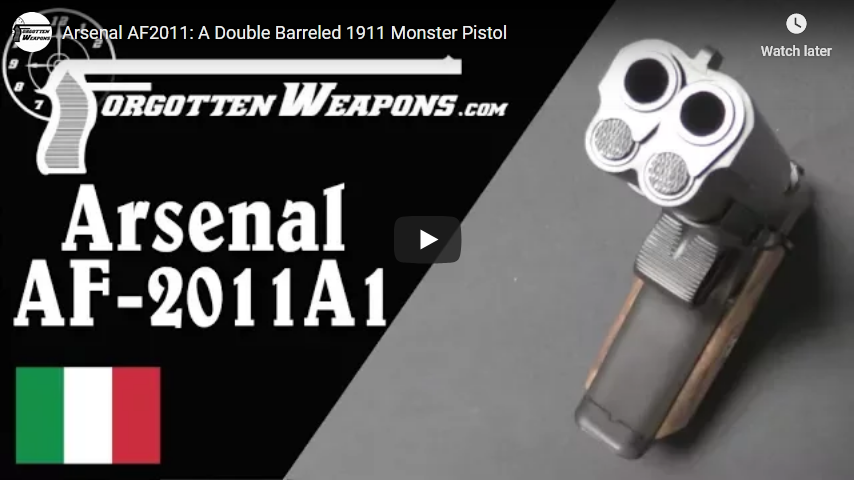
Shooting the Thompsons: Comparing the 1921, 21/28, and M1A1

Filed under: History, Military, USA, Weapons, WW2 — Tags: , , — Nicholas @ 02:00

Forgotten Weapons
Published 17 Oct 2018

http://www.forgottenweapons.com/shoot…

http://www.patreon.com/ForgottenWeapons

Cool Forgotten Weapons merch! http://shop.bbtv.com/collections/forg…

Having gone through the whole series of Thompson submachine guns, now it’s time to take them out to the range! I was quite curious to see how the different variations would handle side by side, since they have several significant differences. The Cutt’s Compensator and the changing rate of fire can both be expected to have a noticeable impact on the shootability of the guns.

I went in expecting to prefer the World War Two M1A1 pattern, and was rather surprised to find myself actually liking the 1921 model best. Its very high rate of fire actually worked very well, with less noticeable vibration and sight disruption than either of the other types. Its sights are close to useless, and it is both heavy and awkward to handle — but I can see why it developed the following it has!

Contact:
Forgotten Weapons
PO Box 87647
Tucson, AZ 85754

If you enjoy Forgotten Weapons, check out its sister channel, InRangeTV! http://www.youtube.com/InRangeTVShow
June 14, 2020

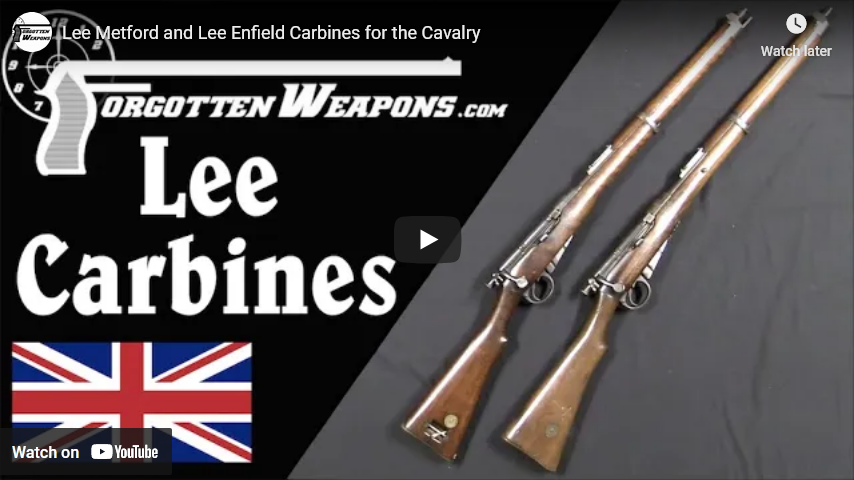
The Iconic American WW2 Thompson: the M1A1

Filed under: History, Military, USA, Weapons, WW2 — Tags: , , , — Nicholas @ 02:00

Forgotten Weapons
Published 15 Oct 2018

https://www.forgottenweapons.com/the-…

http://www.patreon.com/ForgottenWeapons

Cool Forgotten Weapons merch! http://shop.bbtv.com/collections/forg…

While the US Army was satisfied with the Thompson as a fighting weapon in World War Two, it was most certainly not happy with the gun’s exorbitant price tag. The Thompson was a very expensive gun, and the Army wanted to see that change. In March of 1942, engineers at the Savage factory submitted a simplified version for Army consideration, and it was accepted and adopted the very next month. Savage would transition from M1928A1 production to the new M1 pattern in June and July of 1942.

This new M1 Thompson had eliminated at last the unique and unnecessary Blish lock system in favor of a simple blowback action delayed only by bolt mass. In addition to greatly simplifying the production of bolt components, this also allowed the receiver internal shape to be much simplified. A further simplification would follow shortly, as the hammer and floating firing pin were replaced by a fixed firing pin milled into the bolt face in October of 1942 – this new type being designated the M1A1. Another 715,000 M1 and M1A1 Thompsons would be produced by Savage and Auto-Ordnance by February of 1944, when the Thompson was finally replaced by the yet cheaper M3 “Grease Gun”.

This is the fourth in a 5-part series on the development of the Thompson…

Note: I refer to the M1A1 in this video as a transferrable gun; it is actually a pre-May dealer sample. Sorry!

Contact:
Forgotten Weapons
PO Box 87647
Tucson, AZ 85754

If you enjoy Forgotten Weapons, check out its sister channel, InRangeTV! http://www.youtube.com/InRangeTVShow

« Newer PostsOlder Posts »

Powered by WordPress