
seangabb
Published Jun 10, 2024An occasional lecture for our Classics Week, this was given to provide historical background for a lecture from the Music Department on Handel’s opera “Serse” (1738).
Books by Sean Gabb: https://www.amazon.co.uk/kindle-dbs/e…
His historical novels (under the pen name “Richard Blake”): https://www.amazon.co.uk/Richard-Blak…
If you have enjoyed this lecture, its author might enjoy a bag of coffee, or some other small token of esteem: https://www.amazon.co.uk/hz/wishlist/…
September 25, 2024
The Life and Times of Xerxes
Comments Off on The Life and Times of Xerxes
September 23, 2024
Forgotten War Ep3 – Death in the Arakan
HardThrasher
Published 18 Sept 2024Please consider donations of any size to the Burma Star Memorial Fund who aim to ensure remembrance of those who fought with, in and against 14th Army 1941–1945 — https://burmastarmemorial.org/
(more…)
Comments Off on Forgotten War Ep3 – Death in the Arakan
September 22, 2024
History and story in HBO’s Rome – S1E1 “The Lost Eagle”
Adrian Goldsworthy. Historian and Novelist
Published Jun 12, 2024Starting a series looking at the HBO/BBC co production drama series ROME. We will look at how they chose to tell the story, at what they changed and where they stuck closer to the history.
Comments Off on History and story in HBO’s Rome – S1E1 “The Lost Eagle”
September 20, 2024
How Popular Was Hitler?
World War Two
Published 19 Sep 2024In the summer of 1940, Hitler was at the peak of his popularity as he conquered Germany’s enemies seemingly at will. But just how quickly did this approval decline as the war turned further and further against Germany? What did the Germans think of him by the end of the war? Is there any love left for Hitler in postwar Germany? Today Spartacus answers these questions.
(more…)
Comments Off on How Popular Was Hitler?
August 28, 2024
H.R. McMaster dishes on Trump’s first term in office
In Reason, Liz Wolfe covers some of the head-scratchers former National Security Advisor H.R. McMaster revealed about working for Donald Trump:
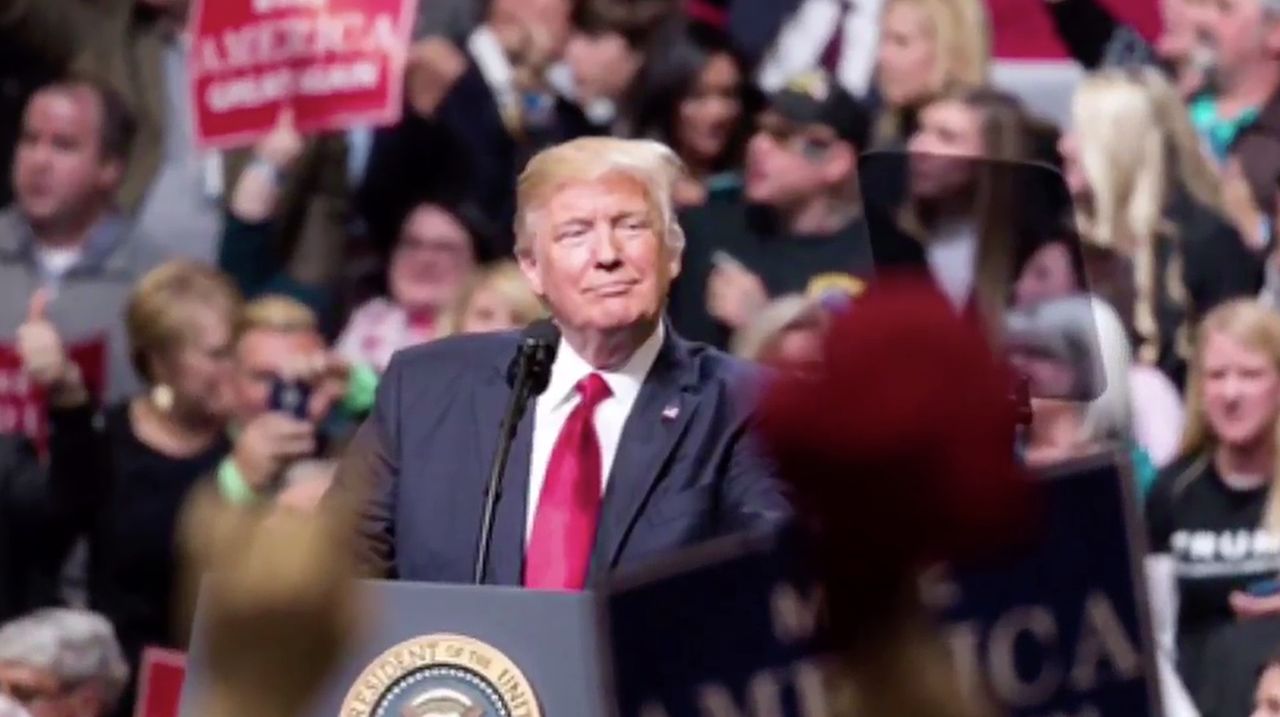
Donald Trump addresses a rally in Nashville, TN in March 2017.
Photo released by the Office of the President of the United States via Wikimedia Commons.
What might a second Trump White House be like? In his new book, At War with Ourselves: My Tour of Duty in the Trump White House, Lt. Gen. H.R. McMaster, who served as national security adviser to Donald Trump (for one year), characterizes Oval Office meetings as “exercises in competitive sycophancy” where advisers would greet him with lines like “your instincts are always right” or “no one has ever been treated so badly by the press”.
Trump, meanwhile, would come up with crazy concepts, and float them: “Why don’t we just bomb the drugs?” (Also: “Why don’t we take out the whole North Korean Army during one of their parades?”)
This is one man’s account, of course. McMaster’s word should not be taken as gospel, and some of his frustration might stem from his dismissal, or his foreign-policy prescriptions being at times ignored by his boss. But it’s a somewhat revealing look behind the curtain at policy-setting in a White House helmed by an especially mercurial commander in chief, who “enjoyed and contributed to interpersonal drama in the White House and across the administration”.
It also shows how quickly Trump fantasies have percolated through the Republican Party, namely the “let’s just bomb Mexico to get rid of the cartels” line, which Trump has been toying with since roughly 2019 (or possibly more like 2017, after he chatted with Rodrigo Duterte, former president of the Philippines, who had promised to kill 100,000 drug traffickers during his first six months as president). A few years prior, in 2015, he had suggested that Mexico was sending rapist and drug-traffickers across the southern border, and that we’d need to build a wall between the two countries, but it wasn’t until nine American citizens were killed in Mexico that Trump trotted out the idea of declaring cartels foreign terrorist organizations and using military might to eradicate them.
Trump’s line from 2019 has now become standard fare, notes The Economist: The Republican primary debates included lots of tough talk on Mexico, specifically on the bombing front, with Florida Gov. Ron DeSantis claiming he’d send special forces down there on Day One. Right-wing think tanks have embraced the messaging, with articles headlined “It’s Time to Wage War on Transnational Drug Cartels”. Taking cues from other members of her party, Georgia Rep. Marjorie Taylor Greene asked why “we’re fighting a war in Ukraine, and we’re not bombing the Mexican cartels”. Whether it’s economic protectionism (10 percent across-the-board tariffs, with 60 percent tariffs imposed on Chinese imports) or Mexico-bombing, Trump has near-magical abilities to get other members of his party to accept something previously regarded as absurd.
Comments Off on H.R. McMaster dishes on Trump’s first term in office
August 24, 2024
Hitler’s People by Richard J. Evans
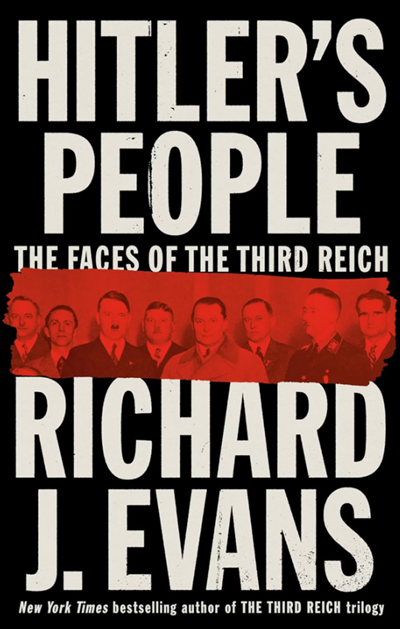
In The Critic, Daniel Johnson reviews Richard Evans’ latest book on the history of Hitler’s Germany, Hitler’s People: The Faces of the Third Reich:
History records nothing more vile than Hitler and his henchmen. At the height of his power in 1942, Heinrich Himmler boasted that “the Führer has laid this very serious command [extermination of the Jews in occupied eastern Europe] upon my shoulders. No one can take it away from me.” By the end of the Third Reich, Hermann Göring had become a “voluptuary”, wearing lipstick and dressing in a toga, accompanied by a suitcase containing most of the world’s supply of the drug paracodeine. Joseph Goebbels, meanwhile, devoted his brief reign as Hitler’s successor to poisoning his six children.
The word “Nazi” has become synonymous with evil. Inevitably, therefore, it has also lost much of its original meaning — a case of Hegel’s “night in which all cows are black”. There is a danger that new generations will no longer know what made the Nazis and their crimes uniquely heinous.
Professor Sir Richard Evans has gathered a representative sample of “Hitler’s people”, ranging from the monstrous to the grotesque, into a single volume. It’s not a work of original research but a collective portrait of “the faces of the Third Reich”. Their unifying factor is the Führerprinzip — their unquestioning obedience to and adulation for Adolf Hitler.
Hero-worship in this, its most sinister form, is still with us. From Narendra Modi to Donald Trump, from Marine Le Pen to Jean-Luc Mélenchon, democracies are still menaced by demagogues. If we are honest, we have all felt the gravitational attraction of “charisma” — a secularised theological concept coined by Max Weber to denote the political authority exerted by an extraordinary individual. Evil often elevates the ordinary to the extraordinary.
Charisma in this sense is contemporaneous with the emergence of Hitler. His cult of charismatic leadership is indistinguishable from the ideology of National Socialism. Cults of this kind had already been prefigured in his day by those of Mussolini, Lenin and Stalin. But the case of Hitler, who cultivated the phenomenon in its most extreme form, remains the paradigm. Vladimir Putin, Xi Jinping and other contemporary despots are still in his debt.
Nazi Germany was indeed run by legions of little Hitlers, each demanding obeisance whilst lording it over their frequently competing or overlapping jurisdictions. The Third Reich was, in this sense alone, a diabolical reincarnation of the First, the Holy Roman Empire, with its patchwork of feudal domains. No medieval monarch, though, had the technological means to inflict such mayhem and misery upon humanity.
Comments Off on Hitler’s People by Richard J. Evans
August 17, 2024
Caesar Marches on Rome – Historia Civilis Reaction
Vlogging Through History
Published Apr 23, 2024See the original here –
• Caesar Marches on Rome (49 B.C.E.)
See “Caesar Crosses the Rubicon” here –
• Caesar Crosses the Rubicon – Historia…#history #reaction
Comments Off on Caesar Marches on Rome – Historia Civilis Reaction
August 13, 2024
The Original Secret History
Tom Ayling
Published Apr 28, 2024This is the story of Procopius’s Secret History Of Justinian – originally written around 550, but not published until 1623.
In this video we look at how Procopius wrote the text, how it survived, almost unknown, for 1,000 years, how it came to be published in the 1620s, and the extraordinary ramifications when it was.
00:00 Introduction
00:44 The Original Composition Of The Secret History
02:40 The Survival Of The Text In Greek Manuscripts
05:56 The Rediscovery And Publication Of The Secret History
08:23 Secret Histories Go ViralTo learn more about Secret Histories, sign up to receive my catalogue of rare books devoted to the subject – https://www.tomwayling.co.uk/register
I couldn’t have made this video without the help of two works in particular. The first is Brian Croke’s magisterial Procopius: From Manuscripts To Books: 1400-1850. The second is The Secret History In Literature, 1660-1820 which is edited by Rebecca Bullard and Rachel Carnell.
My name’s Tom and I’m an antiquarian bookseller – you can browse the books I have for sale on my website: https://www.tomwayling.co.uk/
Comments Off on The Original Secret History
July 30, 2024
Sparta’s bane – Cicero labelled him “the foremost man of Greece”
The Theban general who finally broke the military power of Sparta:
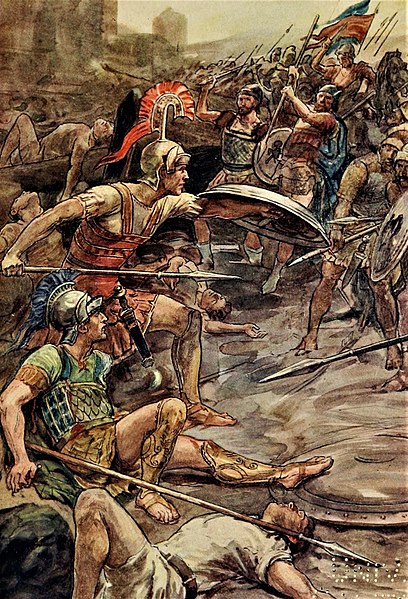
Epaminondas defending Pelopidas by William Rainey.
Illustration from Plutarch’s Lives for Boys and Girls: being selected lives freely retold (1900) via Wikimedia Commons.
The ancient Roman orator and statesman Cicero labeled him “the foremost man of Greece”. Cornelius Nepos, a biographer and contemporary of Cicero’s, regarded him as “incorruptible”. The 16th-century French Renaissance philosopher Michel de Montaigne judged him “one of the three worthiest and most excellent men” in all of history.
This man was a warrior-philosopher, a revolutionary, an ascetic, a statesman and diplomat, a liberator, and a military genius. Yet the deeds for which he is best remembered spanned less than two decades (379–362 BC), 2,400 years ago.
To whom am I referring?
His name was Epaminondas. If it doesn’t ring a bell, you’re not alone. Outside of Greece, few people anywhere today know of him. I never heard his name until this past April when an economist friend, Dr. Luke Jasinski of Maria Sklodowska University in Lublin, Poland, suggested I write about him. Luke says he:
…was a broad-minded man with a libertarian streak, a visionary who showed the Greek world a viable alternative to the endless wars of the time. For modern libertarians, his story is worth remembering. Impressed by it myself, I dedicated one of my economics books to him.
What we know about Epaminondas comes entirely from secondary sources. He left behind no writings that have survived, but from contemporaries and later historians, we do know at least this much about him:
- He was born in the Greek city-state of Thebes in the central Greek region of Boeotia, sometime between 419 and 411 BC, when Thebes was a tiny backwater. It would be largely due to Epaminondas and his loyal friend and fellow general Pelopidas that Thebes would become a powerhouse a few decades later.
- Sparta, the brutal city-state that governed the Greek region of the Peloponnesus, orchestrated a coup against the Theban government in 382 BC and installed an armed garrison there. Three years later, Epaminondas played a key role in a revolution that ended the Spartan dictatorship, restoring local, democratic government.
- In the wake of the Theban revolution, Sparta went to war with Thebes and its Boeotian allies for the next decade. When peace talks broke down in 371 BC, the stage was set for the climactic Battle of Leuctra. Through masterful and unprecedented tactics on the battlefield, Epaminondas led the outnumbered Theban armies to a decisive victory over the Spartans.
- To end the Spartan threat for good, Epaminondas invaded the Peloponnesus a year later. He liberated the region of Messenia that the Spartans had occupied and savaged two centuries earlier. Epaminondas did not subsume and subdue the Messenians; instead, he introduced democratic rule and then left. Grateful for their liberation, the Messenians became allies of Thebes and a buffer against the Spartans. Shortly thereafter, Epaminondas founded a new city in the northern Peloponnesus and named it Megalopolis. With Sparta shrunken and bottled up, its days as a menacing bully were numbered.
Comments Off on Sparta’s bane – Cicero labelled him “the foremost man of Greece”
July 26, 2024
Vance, the harbinger
In City Journal, Christopher Rufo explains why Trump selected a VP candidate that goes against the “usual” ticket balance criteria for a presidential team:
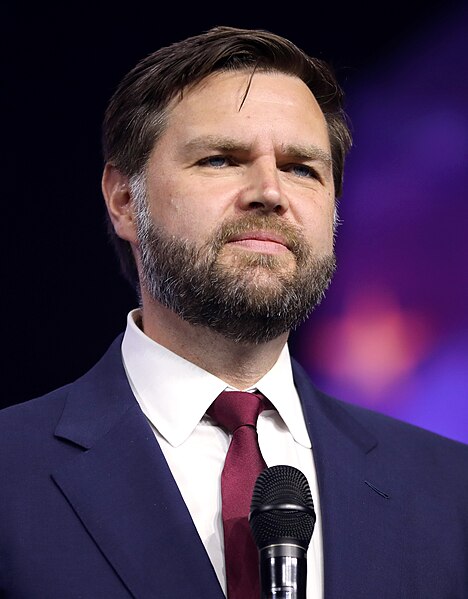
U.S. Senator J.D. Vance speaking with attendees at The People’s Convention at Huntington Place in Detroit, Michigan, 16 June, 2024.
Detail of a photo by Gage Skidmore via Wikimedia Commons.
The Vance selection is not a gambit to secure a particular demographic or region — white men are Trump’s base; Ohio is a safe red state — but an effort to cultivate an emerging counter-elite that could make the second Trump administration substantially more effective than the first.
This story is built into J. D. Vance’s biographical arc. He was the all-American kid who rose from humble beginnings to make his way in the world: the Marines; Yale Law; venture capital; a best-selling book. He learned the language of the prestige institutions, cultivated powerful patrons, and quickly climbed the ladder in academia, finance, and business. He had made it.
Then, his story takes a turn. Having entered the ranks of America’s elite, Vance became disillusioned and disenchanted with it, correctly identifying it as a force of hypocrisy and corruption. He defected — first, by parting ways with the respectable conservatism of the Beltway, and then by embracing Donald Trump.
Some have criticized this as a cynical move, but my sense is that it is the opposite. A cynic would have continued to build an elite résumé; Vance sacrificed his respectability within a certain stratum, assumed considerable risk by moving toward Trump, and, in my view, was genuinely convinced that the establishment, both Left and Right, had exhausted itself and had to be opposed.
Now, not only has Vance been selected as a vice-presidential nominee; more significantly, he has charted the path for an emerging new conservative counter-elite.
The political balance is beginning to shift. A significant cohort of power brokers in Silicon Valley and on Wall Street have publicly moved toward Trump in this election cycle. Some of the names are familiar: Elon Musk, Marc Andreessen, David Sacks, Bill Ackman. But hundreds of other influential figures are assembling behind the scenes to support Trump’s campaign. Even some of Trump’s former adversaries, such as Mark Zuckerberg, have expressed cautious admiration for the former president.
Vance can now position himself at the center of this counter-elite. He has been in the boardrooms, made the pitches, and built the relationships. He speaks their language. They can do business together.
This could represent a sea-change. During the first Trump administration, especially following the death of George Floyd, institutional elites could neither express admiration for nor devote public support to Trump without paying a significant political price. Now the market has shifted, with a dissident elite moving along a similar path as Vance.
Comments Off on Vance, the harbinger
July 24, 2024
Tiberius Caesar, the second emperor
In The Critic, Jaspreet Singh Boparai reviews Iron Imperator: Roman Grand Strategy Under Tiberius by Iskander Rehman:
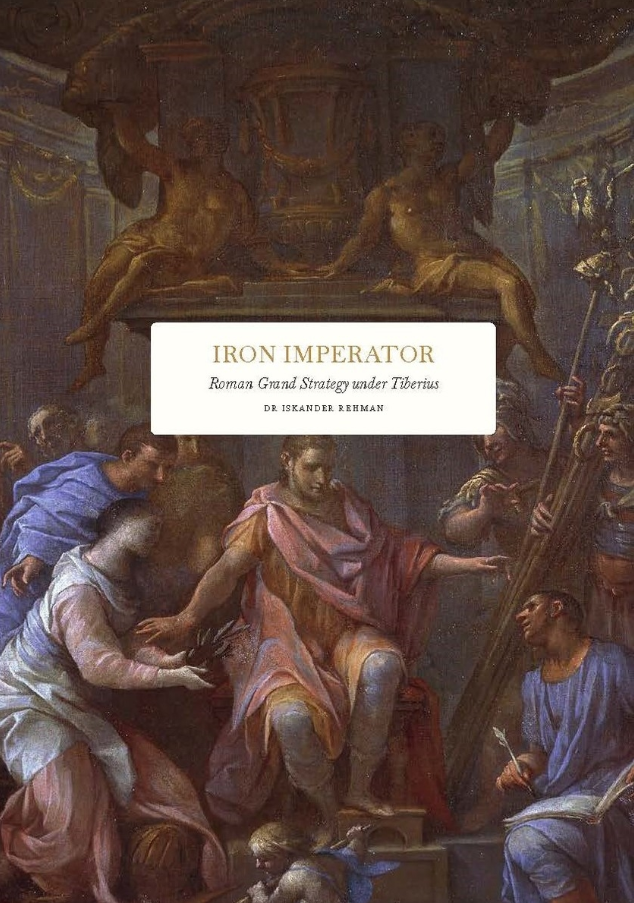
Tiberius was 55 years old when he became the second Roman emperor. He ruled from AD 14 to 37, spending most of the second half of his reign on the island of Capri, where he never lost his grip on power despite being over 130 miles from Rome.
Like most bureaucratic administrators, he was far from popular. Tacitus (AD 56–120), the greatest of all Roman historians, presents Tiberius as paranoid, ruthlessly cruel, and pathologically unable to say what he meant. The imperial biographer Suetonius (69–122) completes the Tacitean picture of a dour, charmless pervert, miserable even in his increasingly sordid pleasures.
Not all writers are quite so hostile to Tiberius: since the Enlightenment he has won qualified praise from thinkers including Montesquieu and Voltaire, who have often been willing to overlook at least some of his vices. The great Russian poet Alexander Pushkin wrote in 1825: “The more I read Tacitus, the more I come to like Tiberius. He was one of the greatest administrative minds of antiquity.”
Of course, Pushkin could take revisionism to contrarian extremes, as when he said of a notorious assassination: “If murder can be guiltless in an autocratic state when it is for reasons of political necessity, then Tiberius was justified”.
Iskander Rehman doesn’t go quite so far as Pushkin; yet he does want us to look past all the gossip and scandals, and see what we can learn in practical terms from this controversial emperor. Tiberius was not a conqueror; his main task was to consolidate his predecessor’s achievements and establish stability throughout the empire.
He was faced with the question of how you govern a massive, unwieldy state as an absolute monarch without the benefit of personal charisma, reliable subordinates or the momentum of conquest. Rehman focuses on foreign policy, military affairs and imperial management in general, and concludes that, whatever else might have been wrong with Tiberius, at least he understood grand strategy, international relations, and how to handle the Roman economy.
I must admit that my impression of Tiberius was largely informed by my childhood encounter with Robert Graves’ excellent novels I, Claudius and Claudius The God, which definitely drew the character details of Tiberius in the novels from Tacitus and Suetonius. But Graves also pointed out that whatever personal flaws were displayed in his private life, for the vast majority of the empire he was a competent successor to the great god Augustus.
Comments Off on Tiberius Caesar, the second emperor
July 17, 2024
Trump selects J.D. Vance as his 2024 running mate
Presumptive Republican presidential candidate and former President Donald Trump announced that he has chosen US Senator J.D. Vance of Ohio as his running mate in the 2024 election:
U.S. Senator J.D. Vance speaking with attendees at The People’s Convention at Huntington Place in Detroit, Michigan, 16 June, 2024.
Detail of a photo by Gage Skidmore via Wikimedia Commons.
Donald Trump’s selection of J.D. Vance as his running mate is remarkable in more ways than one. There is Vance’s journey from the broken home in a poor, rural Ohio he wrote about in Hillbilly Elegy, to the Marines, to Ohio State, then to Yale Law School and to the Senate, and now a presidential ticket. Also remarkable is his transformation from a prominent “Never Trumper” — who once called his now – running mate “America’s Hitler” and an “opioid for the masses” — to an enthusiastic Trumpist in the vanguard of the New Right.
For some, Vance’s journey is simple enough to explain: it’s the story of a smart and ambitious “sellout” and an “angry jerk”, as one of his (ex-) friends from law school put it on X yesterday. To this crowd, Vance is only the most extreme example of a familiar story of Republicans kowtowing to the man who took over their party.
But Vance is a much more complicated — and interesting — figure than that.
Agree with him or not, he has undergone a sincere ideological conversion since 2016. That much was obvious to me when I followed him on the campaign trail in 2022. And it’s obvious from any speech or interview he gives. He is not someone who just parrots his party’s talking points. (He has also undergone an actual conversion: I recommend Rod Dreher’s interview with him on the day he was baptized and received into the Catholic Church in 2019.)
In the Senate, he hasn’t just voted with the GOP herd but teamed up with Democrats on a range of bills that stake out new ideological territory for Republicans. He makes some of Trump’s donors uncomfortable.
By picking Vance, Trump has made clear his project is about more than personality. The Republican presidential ticket now has a distinct ideological flavor. It has teeth. National Review‘s Philip Klein called the pick “another nail in the coffin of Reagan Republicanism”. (This is not a compliment at that magazine.) Vance is a prominent critic of U.S. involvement in Ukraine (for more on his foreign policy views, I recommend this piece by my colleague Isaac Grafstein).
He’s also economically unorthodox — and more relaxed about government involvement in the economy than many of his colleagues. He has backed a higher minimum wage and praised Lina Khan, Joe Biden’s FTC chair and a proponent of more robust antitrust policies.
Did these ideological considerations clinch it for Vance? I suspect a bigger factor was that in Vance, Trump saw someone who was welcomed into the elite — as Trump never has been — but who turned his back on it.
Before the VP nomination, before entering the political arena, Vance was known for his memoir about growing up poor in rural Ohio, Hillbilly Elegy. Helen Dale reviewed the book when it came out and had this to say about it and the author:
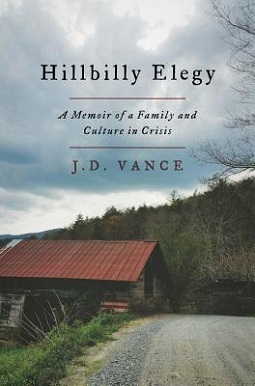
Hillbilly Elegy is an extended meditation on cultural and social capital. It asks seriously — and answers truthfully — this question: “what makes the upper-middle classes different?”
J.D. Vance (“Jaydot” to his friends) has written the best book about class by an American. It explains everything from the rise of Donald Trump to Leave’s win in the Brexit Referendum to One Nation claiming four Australian Senate seats. In answering the above question, Vance has also performed an inestimably valuable service to those of us engaged in public policy and political commentary: reading his book will teach you the folly of making rules — as my father often said when I was a child — “for people not like you”.
Vance is an Appalachian hillbilly, but also a graduate of Yale Law School. His “white trash” upbringing was as dysfunctional as that of many children in remote Australian Aboriginal communities or the slums of Glasgow: drug addiction, domestic violence, alcoholism, a revolving door of more or less useless father figures. His foul-mouthed, Tony Soprano-like grandmother (called Mamaw, pronounced ma’am-aw) saved him from the gutter and kept him looking at the stars, using any and every means possible.
Her husband, Vance’s Papaw, was a drunk. Mamaw warned Papaw that if he ever came home drunk again, she’d kill him. He did, so she doused him with kerosene and set him on fire. Fortunately, Papaw didn’t die. He did, however, give up the bottle, and in time became a model of decent, humane masculinity.
Like many of his Scots-Irish kin, Vance joined the Marines, grateful not only for the GI Bill (which funded his time at Ohio State), but also because more senior Marines and recruiters did things like show him how to balance a chequebook while steering him away from taking out a whopping 21 per cent loan for his first car. The Marines also taught him how to eat healthily (breaking an addiction to refined sugars) and helped him lose 45 pounds.
His description of a toffee-nosed law firm recruitment dinner at Yale — where he had to ask his upper-middle-class girlfriend (he called her secretly, while hiding in the loo) how place settings work (“What do I do with all these damned forks?”) — should be savoured as one of literature’s great comic scenes.
His personal story aside, Hillbilly Elegy also discloses the extent to which Vance’s people — the “poor whites” now forming the bulk of Donald Trump’s base — are not like the people who have spent fifty years making rules for them.
Vance is careful to avoid playing the Oppression Olympics common among spokespeople for disadvantaged minorities. He makes it clear his mother — who, by the end, collapses in a sleazy, spider-infested roadside motel with a needle in her arm — can only use entrenched adversity to get a moral get-out-of-jail-free card for so long. He views other hard-up hillbillies — in his own family and outside it — with the same unsentimental eye. At some point, the excuses have to stop.
Comments Off on Trump selects J.D. Vance as his 2024 running mate
July 13, 2024
“Canada has disclosure issues”
The recent revelations about Nobel Prize winner Alice Munro’s family have certainly roiled the turgid waters of Canada’s tiny literati community, but was the scandal actually all that well hidden beforehand?
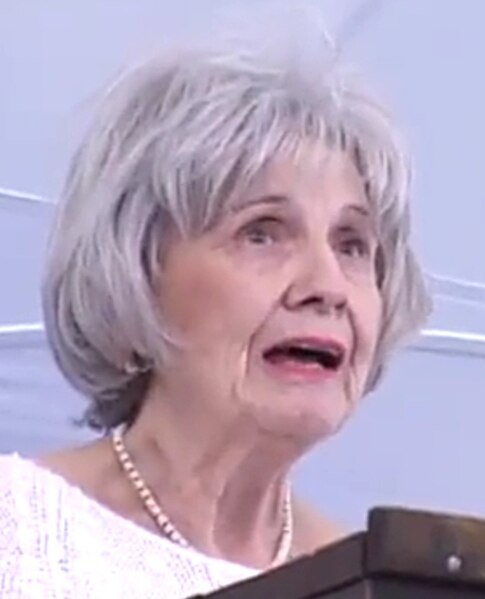
Alice Munro accepting the 2006 Edward MacDowell Medal, 13 August 2006.
Screenshot from a video of the event via Wikimedia Commons.
The Toronto Star ran two articles last weekend revealing that Andrea Skinner, third and youngest daughter of Nobel-prize-winning author Alice Munro, was sexually assaulted as a nine-year-old by her stepfather, Gerald Fremlin, Alice’s second husband.
The assaults occurred in the 1970s. Alice learned of them in 1992 when Andrea, then twenty-five, wrote her a letter detailing the abuse. After briefly leaving Fremlin, Alice returned to him. Andrea, feeling her mother had chosen her abuser over her, eventually cut ties with Alice and went to the police. Fremlin was convicted of indecent assault in 2005.
I’m not going to dwell on the abuse. It’s all here, and it’s distressing to read. One can only hope that recognition of what she suffered as a child and the pain she’s carried throughout her life brings some solace to Andrea.
I wish that had been my first reaction to the stories, but I was too long a journalist. My first thought was sordid. Good on the Star for getting the scoop.
My second thought was, how was this not reported earlier? It’s obviously a big story, and it all played out in open court. It’s surprising that it didn’t make headlines.
In yesterday’s Star, the always interesting Stephen Marche put the blame on “a specifically Canadian conspiracy of silence” amounting to “a national pathology”. He recalls that CBC radio star Peter Gzowski’s dirty laundry wasn’t aired until he’d passed; that CBC radio star Jian Ghomeshi’s outrageous behavior was not immediately called out; that author Joseph Boyden and singer Buffy Sainte-Marie both passed as Indigenous for a long time (Boyden does, in fact, have Indigenous blood). “Everybody knew but nobody knew,” Marche writes of each of these cases, adding that the Canadian arts and entertainment community “has been a breeding ground for monsters”.
I think Stephen has a low bar for monstrosity, but I am susceptible to his broader argument. Part of the reason I was happy that the Star got the scoop (and sincere congratulations to editor Deborah Dundas and reporter Betsy Powell on landing it) was that we sometimes first read of our biggest scandals in the international press. Toronto mayor Rob Ford’s crack scandal was revealed by Gawker, Justin Trudeau’s blackface habit by Time. Canada has disclosure issues.
The more I think about those issues, however, the less it seems we’re alone with them. How long did it take Harvey Weinstein’s crimes to make headlines? Bill Cosby’s? The US has had its share of long-running identity hoaxes: Elizabeth Warren, Hilaria Baldwin, Rachel Dolezal, and Jessica Krug. We didn’t learn that Kerouac was a thug and Salinger a creep until after they were gone. And it’s especially hard to sustain Marche’s argument that Canada is an outlier when the White House has been playing Weekend at Bernie’s for the last couple of years.
Certain stories are just slow to break. People keep secrets. Others abet them. Not many journalists frequent courtrooms way out there in Goderich, Ontario, and Fremlin’s name on the docket would not have sent off flares. Most people I’ve spoken to this week couldn’t have named Mr. Alice Munro last week.
There was no conspiracy, or at least not a broad one. I’m confident that any newsroom I was a part of would have run with the Munro story had we caught a whiff of Fremlin’s conviction. It’s not impossible to imagine other newsrooms making different editorial choices, perhaps arguing that Fremlin’s assaults didn’t merit coverage: he was a nobody apart from his association with Alice Munro; the offence was minor in a criminal sense (he served no time); Alice was not a party to the assaults; publishing the story would only serve to smear her by association. But I’ve not seen any evidence that any news outlet had a whiff of this story.
Only a small circle of people knew of Fremlin’s crime, most of them in the Munro family, and they weren’t talking. I contacted a few of the best Canadian literary gossips I know and they had heard nothing until last weekend. It’s not true that “everybody knew”.
Two who did know were Alice’s publisher, Douglas Gibson, and her biographer, Robert Thacker.
Comments Off on “Canada has disclosure issues”
The real story of Henry Hook, VC – Zulu
The History Chap
Published Nov 23, 2023Henry Hook, VC, 1850-1905. Zulu — the Battle of Rorke’s Drift.
Henry Hook was one of 11 defenders at the mission station at Rorke’s Drift (battle of Rorke’s Drift, Anglo-Zulu War 1879) who were awarded the Victoria Cross. Controversially, his character was misrepresented in the 1963 film Zulu. His character, played by James Booth (1927-2005), was depicted as an insubordinate barrack-room lawyer, a drunk and a malingerer. This was far from the truth.
Hook was actually a model soldier, who was teetotal, and who would serve as a regular and volunteer for over 40 years. His family were upset by the film, although contrary to popular stories, there is no evidence that Henry Hook’s daughters walked out of the [movie’s] premiere.
Nevertheless, in this video I aim to share his real story. Not just of his service in the army (and at Rorke’s Drift) but of a humble man from Gloucestershire, who returned home to find his wife had run off with another man, who found love for a second time and who worked in the British Museum.
Where is Henry Hook buried? Henry Hook’s grave can be found at St. Andrew’s church in the hamlet of Churcham, Gloucestershire. it is about five miles west of Gloucester.
0:00 Introduction
1:26 Early Life
3:10 Rorke’s Drift
3:56 Zulu
5:00 Defending The Hospital
7:45 Assegai wound
9:47 Making Tea
10:23 Victoria Cross
11:07 After Rorke’s Drift
13:11 Failing Health
15:10 The History Chap
(more…)
Comments Off on The real story of Henry Hook, VC – Zulu
June 27, 2024
California’s Trudeau
In the New English Review, Bruce Bawer reviews Newsom Unleashed: The Progressive Lust for Unbridled Power by Ellie Gardey Holmes, a biography of California’s own Justin Trudeau:
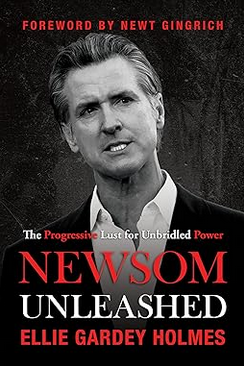
I’ve been appalled by Gavin Newsom for years, but to read Ellie Gardey Holmes’s powerful and unflinching new book Newsom Unleashed: The Progressive Lust for Unbridled Power is to find one’s contempt for this hideous creature skyrocketing. If he has any redeeming qualities, any special gifts, any attributes that might illuminate an admirable and recognizably human side, there’s no sign of them here. This is a man who, despite having no discernible talent for governance or anything else, was lucky enough to be born into one well-off family – his great-grandfather co-founded the Bank of Italy, which later became the Bank of America – and to be, from earliest childhood, a sort of honorary member of an even richer family, the Gettys, his father being best friends with oil magnate Gordon Getty, who was like a second father to young Gavin.
Both men, his biological father and his second father, used their considerable influence from the beginning to help Gavin rise to power. Indeed, as surely as any Kennedy or Bush, Gavin Newsom was born into a political machine and bred to be a politician. After he and Getty played a big role in helping Willie Brown to get elected mayor of San Francisco, Brown named Newsom to the city’s Parking and Traffic Commission. Soon he was promoted to the Board of Supervisors, a post he held from 1997 to 2004. “Because of his lack of qualifications,” writes Gardey Holmes, “Newsom entered office entirely indebted to Willie Brown”. Observers referred to him, in fact, as “an appendage of Willie Brown”. Quick sidebar in the midst of this tale of political advancement: when his mother was dying, Gavin was pretty much AWOL, although he was present when she underwent assisted suicide – which, at the time, was illegal in California. Others had been prosecuted for their participation in such actions; Gavin was not, a foreshadowing of many other occasions on which he would be treated as exempt from the rules governing the behavior of ordinary mortals.
In 2003 he was elected mayor. One of his first acts was to authorize the issuing of marriage licenses for same-sex couples, even though he had no power to do any such thing. He even performed some of the marriages himself. This cynical move (which even California’s two Democratic Senators, Dianne Feinstein and Barbara Boxer, opposed) was a cheap stunt, carried out at the expense of gullible gays, whose marriages were soon enough ruled invalid by the state Supreme Court – but it had the desired effect. It made him a national figure and it won him the esteem of the mainstream media. Bob Simon told him on 60 Minutes that he might well have “set a record for instant fame in this country”.
From the beginning of his life in “public service” – that laughable term – Newsom’s vanity and ambition were flagrantly palpable. Although the New York Times described him during his mayoralty as the subject of “local adoration”, some San Francisco insiders resented his brazen focus “on self-aggrandizement and personal publicity” and his relative indifference to the city’s growing problems on a variety of fronts. Routinely, he stole credit for other people’s initiatives and acted as if he were exempt from the rules. A police officer drove him to his wedding in Montana in his official SUV – a definite no-no.
After two terms as mayor he had his eye, naturally, on the Governor’s Mansion – but polls convinced him to run for Lieutenant Governor instead. He spent two terms in that job, too, but hated it: he had no real power, no real staff, no real budget, and he felt disrespected by his boss, Jerry Brown. The initiatives he did support were destructive “progressive” bilge of the first water: for example, he was the only statewide elected official to support Proposition 47, which converted many felonies to misdemeanors, helping to set off the still ongoing rash of shoplifting that has made San Francisco, particularly, an international joke. For the most part, however, instead of addressing the state’s problems he put his energies into enhancing his national profile. He became a fixture on shows like Real Time with Bill Maher. He also wrote – or at least signed his name to – a book calling for the transformation of government by means of “digital technology”; the book’s argument didn’t make much sense, and even Stephen Colbert, usually a reliable left-wing shill, dismissed it as “bullshit”.
And then, inevitably, in 2019, Newsom became governor, thanks in no small part to massive donations from the Gettys and Pritzkers and his role as “the darling of the upper class”. California was already on the skids, but Newsom accelerated the process. He pulled National Guard troops from the southern border, saying that “[t]he border ’emergency’ is a manufactured crisis and California will not be part of this political theater”. He even had the state sue President Trump over his border emergency declaration, which according to Newsom was nothing but an expression of “division, xenophobia, [and] racism”. Instead of canceling one of the state’s notorious boondoggles – the program to build a staggeringly expensive high-speed rail line from San Francisco to San Diego – he shortened the planned route, so that the trains would run only between Merced and Bakersfield. This made the rail line an even more ridiculous proposition, but Newsom’s priority was not to provide a useful means of public transportation but to keep the state from having to return the federal money appropriated for the project to a government run by Donald Trump, who from the beginning of his governorship Newsom singled out as his personal enemy – an action that profoundly enhanced his popularity among California Democrats. Indeed, instead of seriously dealing with California’s jobs and education crises, Newsom focused relentlessly on attacking Trump. A hundred days into his governorship, he bragged childishly that California was “the most un-Trump state”.
Comments Off on California’s Trudeau


