Quotulatiousness

February 28, 2012

More on those links between Pakistan’s ISI and army leaders and the Taliban

Filed under: Asia, India, Military, Politics — Tags: , , , , , , — Nicholas @ 10:09

Strategy Page has a useful summary of the state of play in Pakistan in their oft-denied support of terrorist activities in Afghanistan and in India:

Pakistan officially denies there is any direct connection between the Pakistani Army, ISI (Pakistani intelligence) and Islamic terrorists. The government has recently admitted that Islamic terrorists have had cooperation from unnamed prominent Pakistani civilians. But a growing number of former (mostly retired) military and intelligence admit that the terrorist connections did exist. Few of these men will openly admit these connections, lest they endure retaliation. The army and ISI are known to kidnap and murder critics. Pakistan is living a dream/nightmare of having created and sustained Islamic terror organizations for decades, yet never admitting the role of the government in this. The denials are wearing thin.

Pakistan remains a much more violent place than India. Each month, there are 5-10 times as many terrorism related deaths in Pakistan as in India (a country with six times as many people as Pakistan). Most of the violence is (and always has been) in the Pushtun and Baluchi tribal territories along the Afghan and Iranian borders. These lands have always been poor (except for the recently discovered natural gas in Baluchistan, and, centuries ago, some parts of the Chinese “silk road” that passed through Pushtun lands) and the local empires simply ignored the Pushtuns and Baluchis. For thousands of years, these were the “badlands” that civilized people avoided. The many Baluchi and Pushtun tribes were too isolated from each other, and in love with their own independence, to allow formation of Baluchi and Pushtun states. But the Baluchis are overcoming their differences, much to the discomfort of Pakistan. The Pushtuns are as divided as ever, united only in their hostility to outsiders (a category which sometimes includes other Pushtun tribes.) Worse for the Pushtuns, they form the majority of the Taliban, and are far more into Islamic terrorism than the Baluchis.

[. . .]

Pakistan’s army and intelligence services have been taking a lot of international heat for the years of state-approved terrorism against tribal separatists in Baluchistan (southwest Pakistan). The Baluchis want autonomy and a larger share of the revenues from natural gas operations in their lands. The ISI and army have ordered the media they control to come up with stories to explain all the kidnappings and murders of tribal activists. The general story line is that the violence (against the government, as well as the tribal activists) has been organized by Israel, the CIA and other foreign intelligence agencies. Few Pakistanis will openly criticize these stories, as that could get you killed. But the true story does get out via the Internet, although you sometimes have to wade through a lot of noise (flame wars and Pakistani government efforts to bury critical posts with a flood of pro-government replies.)

February 25, 2012

Offensensitivity now unites the west and Islam

Filed under: Asia, Media, Religion — Tags: , , , , — Nicholas @ 09:44

Brendan O’Neill on the current wave of outrage in Afghanistan over the “Koran burning” incident:

Yet the present bizarre Koran-burning controversy in Afghanistan has shot down in flames this comforting but misleading idea that “they” are dramatically different from “us”.

Because what the furore over some holy books accidentally burned by NATO confirms is that, in truth, these alleged “weird beards” are in thrall to the same PC culture of complaint that has Western society in its grip.

[. . .]

But the great uniter of the East and West today, the thing that binds Muslim extremist and Western liberal, is a profound belief that to be offended is the worst thing, and that whoever dares to cause offence must be made to pay.

[. . .]

Ironically, these pretty craven apologies from NATO and the Obama administration for an innocent mistake made by two NATO personnel are likely only to have inflamed the protests.

Because, as is the case over here, in our ever more touchy and sensitive societies, when you tiptoe around a certain group of people, when you buy into the idea that offending cultural sensibilities is the greatest sin of our age, you actually give people a licence to feel offended.

When you apologise for causing offence and promise never, ever to do it again, you give succour to the idea that offensiveness is a unique and terrible evil, and you flatter the ostentatious offence-taking of groups who wish to be protected by a moral force-field from public debate or ridicule.

In effectively reorienting its Afghan mission around improving the PC credentials and Islamic empathy of its troops, NATO is unwittingly giving a green light to easily offended agitators, boosting their belief that offensiveness is evil and must be quashed. NATO has made itself a hostage to fortune, giving Afghan radicals a licence to go mental at the next whiff of any slight, whether intentional or accidental, against Islam.

February 19, 2012

Pakistan: “as many as 80% … considered non-Muslims to be enemies of Islam”

Filed under: Asia, Religion — Tags: , , , , — Nicholas @ 00:05

According to this article in the National Post, Jonathan Kay says anti-Americanism and support for Taliban operations in Afghanistan is far more than just realpolitik “Great Game” positioning — it’s actually a vastly popular cause with ordinary Pakistanis:

A good indication of what ordinary Pakistanis think comes to us courtesy of a U.S. government-sponsored study called “Connecting the Dots: Education and Religious Discrimination in Pakistan,” recently produced by the U.S.-based International Center for Religion & Diplomacy, in conjunction with an independent Pakistani policy think tank called the Sustainable Development Policy Institute. Together, their researchers conducted an in-depth study of the attitudes toward non-Muslims reflected in 100 sampled Pakistani textbooks, and in interviews with teachers and students at 37 of the country’s public schools and 19 madrassas.

The interviews with teachers were especially telling: This is precisely the stratum of society — literate, educated, middle-class — that one would expect to embrace relatively moderate and enlightened attitudes. But generally speaking, the opposite is true. Almost half of the surveyed public-school teachers did not even know that non-Muslims could become citizens of the Pakistani state. A common theme was that non-Muslim religions are inherently sinister, and that friendly relations between the faiths are worth maintaining only insofar as they can generate opportunities for Muslims to attract converts.

[. . .]

In Pakistani textbooks, the line between mosque and state is virtually non-existent. Students learn that international boundaries — say, between Pakistan and Afghanistan — don’t count for much: “In all the textbooks analyzed, the student is presented a world where concepts such as nation, constitution, legality, standing armies, or multi-lateral organizations — except where they are prescribed by Islamic doctrine of sharia law — do not exist.”

There is some good news in the report: Many of the interviewed Pakistani teachers expressed the belief that, on an interpersonal level, non-Muslim students and their religious practices should be treated with respect. But overall, “as many as 80% of the respondents considered non-Muslims to be enemies of Islam.” This feeling of enmity was justified by reference to a grab bag of complaints against the West: acts of anti-Islamic “blasphemy,” “spreading the evil of alcohol in Muslim society,” “killings of innocent Muslim citizens through missiles,” and “the banning of veils [in France].”

These views help explain why Pakistani mobs often erupt in incendiary spasms of anger not only at drone strikes in Pakistani territory, but also at symbolic slights — such as perceived defilements of the Koran: Bitterness and anger at non-Muslims are deeply felt, widely shared attitudes in Pakistan; and it is doubtful they can be addressed by any sort of goodwill campaign or foreign-policy adjustment. Jihad, if only by proxy, will remain a popular cause for Pakistani governments seeking to promote their Islamic bona fides.

January 22, 2012

“We don’t do kings”

Filed under: Africa, Government, Middle East, Politics, USA — Tags: , , — Nicholas @ 12:03

Colby Cosh suggests that the long aversion to monarchy on the part of US policymakers may be hindering their long-term plans around the world:

Monarchies in the Middle East and North Africa have been stable relative to their republican neighbours; the replacement of a monarchy with a republic rarely if ever makes the people better off; and the monarchies in the region tend to be more liberal economically, even if they don’t have particularly liberal political structures.

In the ci-devant monarchies of the Arab and Persian world, nostalgia for overthrown Western-friendly regimes of the past seems fairly common. When the Libyans got rid of Gadhafi last year, for instance, they promptly restored the old flag of the Kingdom of Libya (1951-69), and some of the anti-Gadhafi protesters carried portraits of the deposed late king, Idris. From the vantage point of Canada, constitutional monarchy looks like a pretty good solution to the inherent problems of governing ethnically divided or clan-dominated places. And in most of the chaotic MENA countries, including Libya, there exist legitimist claimants who could be used to bring about constitutional restorations.

The most natural locale for such an experiment would have been Afghanistan, where republican governments have made repeated use of the old monarchical institution of the loya jirga or grand council.

January 21, 2012

A surprising admission in Conrad Black’s survey of the Muslim world

Filed under: Cancon, Middle East, Military, Politics, Religion — Tags: , , , , , — Nicholas @ 11:29

The surprise? The unexpectedly nice words for, of all people, former prime minister Jean Chrétien:

All this toing and froing begs the question of why the West has expended such time and resources in Afghanistan, where Pakistan is the chief backer of the main killer of NATO forces (the Haqqani faction), and the chief supplier of ammonium nitrate, the principal ingredient in anti-personnel bombs used against Western forces.

We all started into Afghanistan in 2001 in solidarity with the Americans after the terrorist attacks on New York and Washington. The Americans largely decamped to Iraq after a year, became mired in the quicksand of nation-building, and then in the even deeper and more hopeless morass of trying to make something out of the gigantic, murderous cesspool of Pakistan. It is time this country recognized its debt to Jean Chrétien for taking a pass on the Iraq debacle — and I was one who disagreed with him at the time (though I then had no idea the U.S. would try to take over the governance of the country and try to turn it into Oklahoma).

Although he may have been right in hindsight, he was right for the wrong reason. Prime minister Chrétien “volunteered” Canadian military support in Afghanistan to ensure that we could not be expected to help in Iraq (because in the parlous state of the Canadian Forces, it was impossible for us to support more than one overseas campaign). The Canadian troops did magnificent work in Afghanistan, and certainly raised Canada’s stock with our allies, but we were there — politically — to avoid being in Iraq.

January 17, 2012

The new face of battlefield surveillance

Filed under: Military, Technology — Tags: , , , — Nicholas @ 09:51

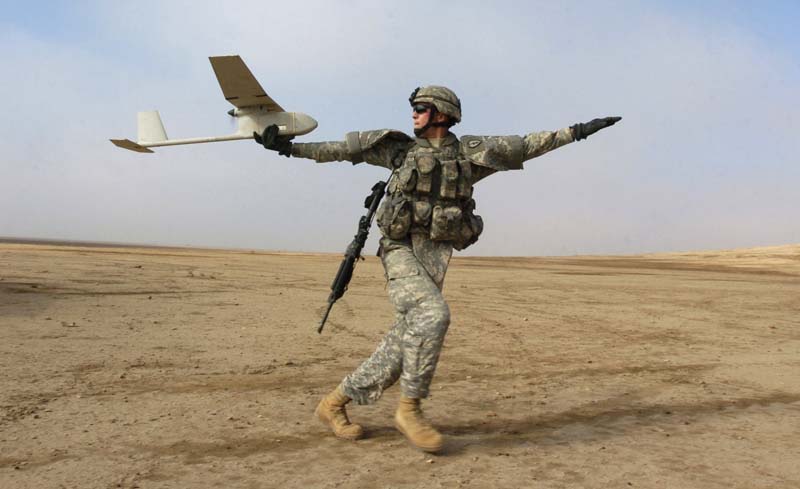
Strategy Page discusses the Raven UAV, which has become a very popular tool with US troops in Afghanistan:

Just as the first recon aircraft a century ago changed the way armies fought, the micro-UAVs have changed the way small units of soldiers fight. A century ago the aerial observers reported to generals and their staffs. UAV video goes to platoon or company commanders, or the leader of a small Special Forces team.

The lightweight, hand launched Raven UAV can only stay airborne about an hour per sortie, but troops have found that this is enough time to do all sorts of useful work, even when there’s no fighting going on. This is most of the time.

[. . .]

The current model, the Raven B (RQ-11B), was introduced five years ago, a year after the original Raven entered service in large numbers. This UAV is inexpensive ($35,000 each) and can stay in the air for 80 minutes at a time. The Raven is battery powered (and largely silent unless flown close to the ground). It carries a color day vidcam, or a two color infrared night camera. It can also carry a laser designator. Both cameras broadcast real time video back to the operator, who controls the Raven via a handheld controller, which uses a hood to shield the display from direct sunlight (thus allowing the operator to clearly see what is down there). The Raven can go as fast as 90 kilometers an hour, but usually cruises at between 40 and 50. It can go as far as 15 kilometers from its controller, and usually flies a preprogrammed route, using GPS for navigation.

The Raven is made of Kevlar, the same material used in helmets and protective vests. On average, Raven can survive about 200 landings before it breaks something. While some Ravens have been shot down, the most common cause of loss is losing the communications link (as the aircraft flies out of range) or a software/hardware failure on the aircraft. Combat losses have been high, as nearly 20,000 have been built and most of those have been lost in training or the battlefield.

From the very beginning, the Raven changed the way troops fight. With the bird’s eye view of the battlefield, commanders can move their troops more quickly, confident that they won’t be ambushed, and often with certain knowledge of where the unseen enemy is. The big advantage with Raven is that it’s simple, reliable, and it just works. A complete system (controller, spare parts and three UAVs) costs $250,000. The UAV can be quickly taken apart and put into a backpack. It takes off by having the operator start the motor, and then throwing it. This can be done from a moving vehicle, and the Raven is a popular recon tool for convoys. It lands by coming in low and then turning the motor off. Special Forces troops like to use it at night, because the enemy can’t see it, and often can’t hear it either.

A soldier with the 25th Infantry Division prepares to launch a Raven unmanned aerial vehicle in Paktika province, Iraq.

(Photo by Sgt. 1st Class Michael Guillory / Army)

January 11, 2012

Reason.tv: Three reasons conservatives should cut defence spending now

Filed under: Bureaucracy, Economics, Military, USA — Tags: , , , , — Nicholas @ 10:23

January 6, 2012

Ten years later: Ron Paul’s 2002 predictions

Filed under: Economics, Government, Liberty, USA — Tags: , , , , — Nicholas @ 10:31

December 9, 2011

US Marine Corps has to economize on V-22 Osprey . . . by buying more helicopters

Filed under: Military, Technology — Tags: , , — Nicholas @ 08:39

The USMC is very happy with their V-22 Osprey tilt-rotor for its speed and durability, but it is still far more expensive than ordinary helicopters. As a result of the high individual cost of V-22’s, the USMC is having to buy upgraded CH-53 helicopters to carry some of the burden:

The U.S. Marine Corps recently admitted that the lifetime cost of operating their new V-22 Osprey tilt-rotor aircraft had increased 64 percent over the last three years (to $121.5 billion). Although the marines MV-22s have flown over 100,000 hours in Afghanistan and have an excellent safety and reliability record, they are very expensive. With major cuts in the defense budget coming, there is pressure to cease production of the MV-22, and put more money into cheaper helicopters. That is already happening.

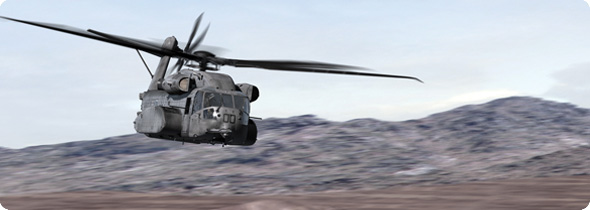
Four years ago the U.S. Marine Corps began working on an updated version of their heavy, CH-53E, transport helicopters. The new version was the CH-53K. First flight of a CH-53K was to take place this year, with first CH-53Ks entering service in 2015. But now this has all been delayed. First flight won’t take place until 2013, and the CH-53K won’t enter service until 2018. Technical problems are blamed, although helicopter advocates imply that the marines don’t want to take money away from their MV-22 program to keep the CH-53K program on schedule.

There is still a lot of enthusiasm for the CH-53K. Two years ago, the marines decided to replace their elderly CH-53Ds with CH-53Ks, rather than the more expensive MV-22s. The CH-53K was to cost about $27 million each, compared to about three times that for an MV-22. However, delaying the introduction of the CH-53K will cost over a billion dollars, and add about $5 million to the cost of each CH-53K. Replacing the CH-53Ds means more CH-53Ks, for a total of about 200. It’s expected that the final costs of the CH-53D will be higher, but still about half the cost of an MV-22.


Image from Sikorsky website.

October 23, 2011

The CIA’s new boss and the new rules

Filed under: Asia, Military, USA — Tags: , , — Nicholas @ 11:53

Strategy Page discusses the new rules for the CIA under the new boss, David Petraeus:

The CIA has a new boss, David Petraeus, who formerly commanded American military forces in Afghanistan. With the arrival of Petraeus, the CIA is changing how it goes about determining the situation in Afghanistan. From now on, CIA analysts will discuss the situation with military commanders before they submit their monthly reports, rather than argue with the military leaders after the fact when people note that the military and CIA analysis comes to different conclusions. The CIA may still disagree with the military, but now they have to answer military assertions that contradict what the CIA believes.

Although this new policy was announced after Petraeus took over at the CIA recently, it was actually in the works for months. It was held up when it became clear that Petraeus was going to be the new CIA chief. Petraeus approved the new policy, which he had long been asking for.

All this came about because CIA analysts eventually noted that the military commanders were using different criteria for “success” and that often had uncovered aspects of the situation that the CIA analysts were missing. So, even before Petraeus showed up at CIA headquarters, the intelligence analysts had decided to work more cooperatively with their military counterparts, if only to ensure that all the bases were covered.

The CIA analysts always were at a disadvantage in Afghanistan, and Iraq, because the military was getting their information first hand, while the CIA often was getting it second or third hand. Moreover, the military was more aware of the fact that “success” in Afghanistan depended a lot on what you believed was possible, and what you knew was actually going on. In some cases, the CIA analysts did not appreciate what impact American field operations were having. Afghanistan, to outsiders has always been a murky place, and difficult to read.

October 9, 2011

Keylogger infects computers at USAF base where Afghani UAV missions are controlled

Filed under: Military, Technology, USA — Tags: , , , — Nicholas @ 11:23

This sounds more like an irritation than a serious attack, but it would be instructive to find out how the keylogger was introduced into what one assumes is a secure location:

A computer virus that captures the strokes on a keyboard has infected networks used by pilots who control US air force drones flown on the front line, according to a report.

Wired magazine reported that the spyware has resisted efforts to remove it from computers in the cockpits at Creech air force base in Nevada, where pilots remotely fly Predator and Reaper drones in places such as Iraq and Afghanistan.

The story said there were no confirmed reports that classified data had been stolen and that the virus did not stop pilots from flying missions. Network security specialists were uncertain whether the virus was part of a directed attack or accidentally infected the networks, the story said.

The air force said in a statement that it did not discuss threats to its computer networks because it could help hackers refine their tactics.

October 6, 2011

Britain suffered higher proportional casualties than the US in Afghanistan

Filed under: Asia, Britain, Cancon, Military, USA — Tags: , , , — Nicholas @ 10:04

A brief item from Strategy Page on the relative casualties suffered by the major allied combatants over the course of the Afghanistan campaign:

In ten years of combat in Afghanistan, some 2,700 foreign troops have died. Most (67 percent) were American. The next two nations in terms of combat losses were Britain (14.1 percent) and Canada (5.8 percent). Adjusted for population size, Britain suffered five percent more combat deaths than the United States. On the same basis, Canada suffered about 80 percent as many deaths as the United States.

All three of these nations had their troops in the south (Kandahar and Helmand provinces, where most of the heroin came from) or along the southeast border (mainly Pakistan’s North Waziristan area, long a sanctuary for Islamic terror groups). There were a few other NATO nations, plus Australia, that had small contingents in the south, but most NATO nations put their troops in more peaceful north, with orders to stay out of trouble and avoid casualties.

October 5, 2011

The tight spot Pakistan finds itself in

Filed under: Asia, India, Military, USA — Tags: , , , — Nicholas @ 10:41

More on the Pakistani situation from Strategy Page:

In Pakistan, decades of anti-American and anti-Indian propaganda, and support for Islamic radicalism, has brought the country to the brink of disaster. The U.S. has stopped being discreet and secretive about Pakistani military and intelligence (ISI) attacks on Americans during the last decade. These attacks were played down in the hope that Pakistan could be persuaded to eliminate the pro-terrorist people in the army and ISI. This didn’t happen. The army and the ISI needed the Islamic radicals, to keep tensions with India high (via Pakistani-backed terror attacks in Kashmir and elsewhere in India.) The army/ISI leaders fear loss of their large share of the national economy if the Indian “threat” is viewed more realistically. The political parties, which are corrupt, and often allies of the military, have backed the generals in their opposition to American demands to crack down on Islamic terrorism. Most Pakistanis believe that the United States cannot possibly operate in Afghanistan without the support of Pakistan. This despite vigorous NATO efforts to shift their supply lines from Pakistan to Central Asia. Pakistan believes that possession of nuclear weapons will keep the United States from doing anything drastic, like more raids into Pakistan to destroy terrorists. The May raid to kill Osama bin Laden shows that the U.S. could, and would, do this. Now Pakistan has said it will not shut down Islamic terrorist sanctuaries in North Waziristan (in the northeast) and Quetta (in the southwest). The U.S. says that if the Pakistanis won’t the U.S. will. Pakistan says that if America tries that, it will mean war. It’s no secret that the U.S. has made plans to seize Pakistani nuclear weapons, and India has just signed a cooperation treaty with Afghanistan. Pakistanis like to believe that they have America in a corner, but it’s becoming more likely that it is Pakistan that has painted itself into a corner. Pakistan has long complained of being surrounded by conspiracies and enemies. Now, because of Pakistani support for Islamic terrorism, those fears are about to become true. Pakistan denies any responsibility for this, insisting that it is the victim. That will make no difference in the end, other than to provide some incredulous footnotes in the histories of the late, great, Pakistan.

October 3, 2011

The key to peace in Afghanistan? The Pakistani army and the ISI

Filed under: Asia, Military — Tags: , , , , , , — Nicholas @ 12:06

Strategy Page explains why Afghanistan will not be peaceful until the Pakistani army and their local equivalent of the CIA stop meddling:

The U.S. and Afghanistan still believe a negotiated peace is possible, but Pakistan, not the Taliban, must be the counterparty. And it’s not Pakistan the country that must negotiate, but the Pakistani Army and the ISI (the Pakistani ISI/military intelligence organization). These two organizations have been running their own foreign policy for decades. The army/ISI has gotten rich by gaining control over a large chunk of the national economy and government budget. It’s all done with coercion, corruption and constant anti-Indian/anti-American propaganda. The Pakistani Army cannot justify its privileged position unless they convince the Pakistani people that there is a major threat out there. So the army/ISI has created fearsome foes. This includes Afghanistan, which they portray as a puppet for India and America and a major threat to Pakistan. Most Afghans reject this, and see the Taliban as a Pakistani tool. While many Afghans appreciate scattered Taliban efforts to reduce corruption, they mainly want less violence. The Taliban has been the major source of violence for nearly two decades, and most Afghans want peace. The Taliban want control, above all else. But now, facing severe combat losses, lower morale and defections, increased terror attacks are believed more for internal purposes (to build Taliban morale) than to weaken the Afghan government.

Afghanistan is looking north, towards Central Asia, for economic growth, and as a safer way to move goods into and out of the country. Pakistan is seen as more of an enemy, and not a reliable economic partner. Central Asia, on the other hand, is more stable, and offers as many economic opportunities. Afghanistan calls this the “Silk Road Solution” in memory of the ancient trade route between China and the Middle East (and India), which ran through western Afghanistan. Ocean going European sailing ships put the Silk Road out of business five centuries ago, but the end of the Soviet Union in 1991 has opened Central Asia to more customers and suppliers, including Afghanistan. The Silk Road is returning, as a local economic thoroughfare.

As part of the new approach to Pakistan, the U.S. has revealed that many deaths of American troops along the Afghan border were actually caused by Pakistani troops, not Taliban fighters. These details had been kept quiet for years, to maintain good relations with Pakistan. But now the Pakistani army and ISI are seen as out-of-control, so the gloves are off.

September 14, 2011

The risk of terrorism doesn’t justify current US military spending

Filed under: Military, USA — Tags: , , , — Nicholas @ 09:15

« Newer PostsOlder Posts »

Powered by WordPress