Quotulatiousness

December 29, 2019

Winter is coming, peace is not – the frozen fronts – WW2 – 070 – December 28, 1940

Filed under: China, Germany, Greece, History, Italy, Military, WW2 — Tags: , , — Nicholas @ 09:45

World War Two
Published 28 Dec 2019

Italy finds itself in a dire position in Albania as Christmas is celebrated in a war-torn Europe and fighting continues in China.

Join us on Patreon: https://www.patreon.com/TimeGhostHistory
Or join The TimeGhost Army directly at: https://timeghost.tv

Follow WW2 day by day on Instagram @World_war_two_realtime https://www.instagram.com/world_war_t…
Join our Discord Server: https://discord.gg/D6D2aYN.
Between 2 Wars: https://www.youtube.com/playlist?list…
Source list: http://bit.ly/WW2sources

Written and Hosted by: Indy Neidell
Produced and Directed by: Spartacus Olsson and Astrid Deinhard
Executive Producers: Bodo Rittenauer, Astrid Deinhard, Indy Neidell, Spartacus Olsson
Creative Producer: Joram Appel
Post-Production Director: Wieke Kapteijns
Research by: Indy Neidell
Edited by: Iryna Dulka
Map animations: Eastory (https://www.youtube.com/c/eastory)

Colorizations by:
– Dememorabilia – https://www.instagram.com/dememorabilia/
– Julius Jääskeläinen – https://www.facebook.com/JJcolorization/
– Adrien Fillon – https://www.instagram.com/adrien.colo…

Sources:
– IWM: CH 251, A12882, FL 1905, A 1732, H 6285, D 717

Soundtracks from Epidemic Sound:
– “March Of The Brave 4” – Rannar Sillard
– “March Of The Brave 9” – Rannar Sillard
– “Walk With Legends” – Bonnie Grace
– “The End Of The World 2” – Håkan Eriksson
– “March Of The Brave 10” – Rannar Sillard
– “Easy Target” – Rannar Sillard
– “Guilty Shadows 4” – Andreas Jamsheree
– “Deviation In Time” – Johannes Bornlof

Archive by Screenocean/Reuters https://www.screenocean.com.

A TimeGhost chronological documentary produced by OnLion Entertainment GmbH.

Changing western views about China

Filed under: Business, China, Economics, Government, Politics — Tags: , , , , — Nicholas @ 05:00

John Gray charts the image of China that has held steady for years among western countries but which has been severely shaken with the unrest in Hong Kong and the Chinese government’s reactions:

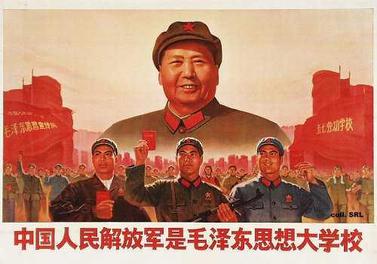
“The Chinese People’s Liberation Army is the great school of Mao Zedong Thought”, 1969.
A poster from the Cultural Revolution, featuring an image of Chairman Mao, published by the government of the People’s Republic of China.
Image via Wikimedia Commons.

The most important year of the decade is the one that is just ending. The struggle that will most deeply shape the global scene in years to come is not occurring in Britain, the US, Europe or any Western country. It is underway in Hong Kong, where a popular demand for democracy is confronting the immovable power of the world’s most highly developed authoritarian state.

It is a struggle no government wants to see escalate. More realistic than its Western counterparts, the Chinese leadership shows few signs of believing the conflict can be definitively resolved any time soon. Incremental concessions and large-scale repression both carry high levels of risk for Xi Jinping’s regime. The ideal end-state for Beijing is probably long-term containment. But the situation in the former colony is not stable, and it is difficult to exaggerate the impact that suppressing the protestors by force would have on China’s position in the world.

It is often pointed out that Hong Kong’s economic importance has dwindled with the rise of mainland cities such as Shanghai. But this leaves out how much two-system governance shapes global perceptions of China and its future. Xi’s progress towards a neo-totalitarian surveillance state has deflated the Western elites’ confidence that China is on a path of slow evolution towards liberal democracy. Yet the fantasy still lingers. The likelihood that China will be an authoritarian great power in any realistically imaginable future is too disturbing to contemplate.

It is worth recalling the comforting tale on which Western governments have modelled China’s development. The country was getting rapidly richer, and while average incomes remained low by international standards, the middle class was steadily growing. This process of embourgeoisement would lead to stronger demands for democratic freedoms, and China would become ever more like the West. Embedded in practically every Western government and regularly invoked by the Western businesses that operate in China, this is a story with almost no basis in reality.

It is true that the rise of the middle classes in early 19th-century Europe coincided with an expansion of liberal freedoms in some countries. This was the main thrust of Marx’s analysis of bourgeois democracy. (A little-noted aspect of recent liberal thinking is that it relies heavily on a crude version of Marxian class analysis.) But there is nothing in the historical record that says the middle classes are inherently a force promoting liberalism. In the late 19th century, they backed the restoration of monarchy and empire in France and militarism In Prussia. In the early 20th century, large sections of the European middle classes embraced ethnic nationalism and then fascism. There was not much sign of the freedom-loving bourgeoisie in interwar Europe.

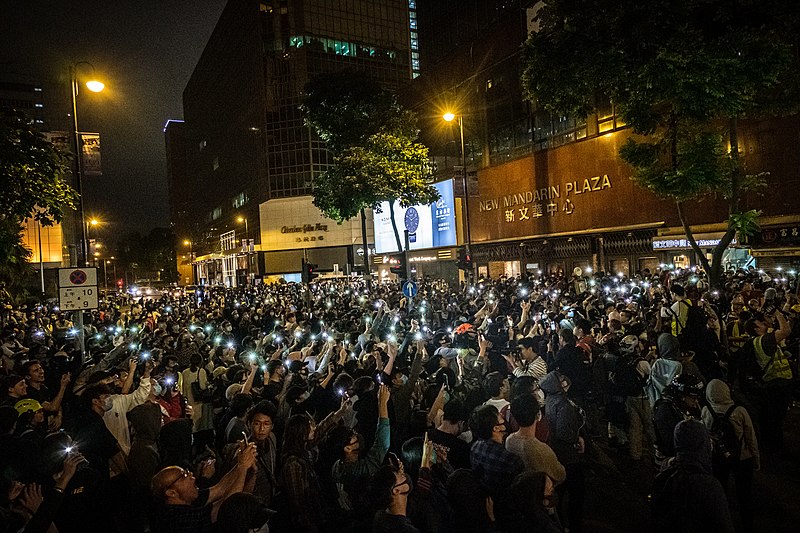
Protests continue in Hong Kong, 25 November 2019.
Photo by Studio Incendo via Wikimedia Commons

While it is so far less developed, a similar pattern of bourgeois support for illiberal politics has emerged in many European countries since the collapse of the Soviet Union. Across the continent, far-Right parties enjoy the support of significant sections of the middle classes. In America, Trump’s constituency includes many from precarious middle income groups.

So, the linkage between the middle classes and liberal values is tenuous throughout Western countries. In the UK and other English-speaking countries, it is middle class students, professors and administrators that have shut down freedom of inquiry and expression in higher education. Woke capitalism and much of the mainstream media are continuing this trend. Threatened by what they call populism, bourgeois liberals have ditched the values that once defined them. Far from being a universal law, middle class support for liberalism looks like a brief historical accident.

Hanukkah – December 28th – TimeGhost of Christmas Past – DAY 5

Filed under: History, Middle East, Religion — Tags: , , — Nicholas @ 04:00

TimeGhost History
Published 28 Dec 2019

Join us on Patreon: https://www.patreon.com/TimeGhostHistory

Hosted by: Indy Neidell
Directed by: Spartacus Olsson and Astrid Deinhard
Executive Producers: Bodo Rittenauer, Astrid Deinhard, Indy Neidell, Spartacus Olsson
Creative Producer: Joram Appel
Post-Production Director: Wieke Kapteijns
Edited by: Mikołaj Cackowski, Iryna Dulka
Sound design: Marek Kamiński

Soundtracks from Epidemic Sound:
– “Reunion” – Wendel Scherer
– “Fields Of Joy 16” – Jonatan Järpehag

A TimeGhost chronological documentary produced by OnLion Entertainment GmbH.

2010-2019 was “The People’s Decade” in Britain

Filed under: Britain, History, Politics — Tags: , , , , — Nicholas @ 03:00

In Spiked, Brendan O’Neill says the departing decade was really “The People’s Decade”:

Prime minister Gordon Brown talks with resident Gillian Duffy on 28 April 2010, in Rochdale, England.
Photo from Spiked.

So the 2010s have come to an end. And what a curious and enlivening decade it has been. Decades are rarely neat political categories. The Sixties, as a phenomenon, didn’t really start until 1963. The Eighties are misremembered as an era of free-market triumphalism, overlooking that PC, cultural relativism, post-colonial guilt and the end of the Cold War that had provided the West with a sliver of moral purpose all took place in that tumultuous decade, giving rise to years of Western self-doubt, even self-hatred, rather than the Thatcherite cockiness that historical illiterates see as the Eighties’ ongoing political ripple.

But the 2010s — this decade does feel neat. It feels like it has a story, an arc, in the British context at least. For this is the decade that begins with Gordon Brown insulting a northern working-class Labour voter as a “bigot” and ends with the northern working classes revolting against Labour in their hundreds of thousands. It begins with the Gillian Duffy crisis, when Brown unwittingly exposed his increasingly middle-class party’s contempt for the lower orders by being overheard referring to this 65-year-old lady from Rochdale as a “bigoted woman”, and it ends with the mass switching of traditional “red wall” Labour voters to Boris Johnson’s Conservative Party — and, by extension, to Labour’s worst drubbing at the polls since 1935.

From Gillian Duffy to the Brexit / Boris votes: if the 2010s tell a story, it is one of a peaceful, understated working-class revolt. Of ordinary people pushing back against elites that had come to view them as bigots. Of the long sneered-at and interfered-with and re-educated sections of the public rising up against their so-called betters and restating the case for national sovereignty and community values. Of the people reprimanding the powers-that-be and forcing them, via the ballot box, to respect the people’s will and the people themselves.

This has been a thoroughly democratic decade. The People’s Decade, in fact, in which democracy has done what democracy is meant to do: marshalled the wisdom of the crowd to correct the jaundiced, elitist, anti-democratic drift of the governing classes.

The People’s Decade really begins in April 2010. It was 28 April and Gordon Brown, gearing up for the General Election, was on a walkabout in Rochdale. This was Brown’s first General Election as prime minister, his having received the crown of PM from Tony Blair in 2007, in a stitched-up, court-like manner befitting of the New Labour machine. Gillian Duffy, a lifelong Labour voter and former council worker, was also out in Rochdale that day. She was buying a loaf of bread. Her path crossed with Brown’s, in front of TV-news cameras, and in that very moment Brown’s fate, his destiny as a shortlived and unpopular PM, was sealed.

Duffy asked Brown about various things. She asked him about the public debt and how he proposed to fix it. She asked about the decline of university grants and how her grandkids were expected to be able to go to Uni. She asked him about health and welfare. And she asked him about immigration. “You can’t say anything about the immigrants”, she said, wisely sensing that even raising this issue could see you branded a bigot. “These Eastern Europeans”, she said, “where are they flocking from?”. Brown smiled and said something jovial and even patted Mrs Duffy on the back, but really he was horrified by what she had said. As the nation would discover just moments later.

Unbeknownst to Brown, a Sky News mic attached to his lapel was still on. When he got back to his car he berated one of his aides. He demanded to know why they had put him on air with “that woman”, as he referred to Mrs Duffy. Asked by the aide what the woman had said, Brown replied: “Oh everything. She was just a sort of bigoted woman. She said she used to be Labour. I mean it’s just ridiculous.” That woman. That bigoted woman. Words heard by everyone. Words replayed endlessly in the run-up to the election. The fallout was enormous.


Rowan Atkinson Live – Dirty Names

Filed under: Britain, Education, Humour — Tags: — Nicholas @ 02:00

Rowan Atkinson Live
Published 24 Jan 2014

A classic bit by comedian Rowan Atkinson. A teacher does roll call with a class register full of hilarious dirty names.

Whether mesmerising us with the sheer visual mastery of Mr. Bean, beguiling us with the acerbic wit of Edmund Blackadder, or simply entertaining us as the suave, but rather hapless British Secret Agent Johnny English, you surely won’t have escaped the comic genius that is Rowan Atkinson.

In Rowan Atkinson Live, co-written with Richard Curtis (4 Weddings & a Funeral, Notting Hill, Love Actually) and Ben Elton, Atkinson runs the whole gamut of his remarkably versatile 30 year career, with sketches, mimes and monologues that are guaranteed to have you shedding tears of laughter. Performing live on stage alongside “straight man” Angus Deayton, the show features a number of original and familiar routines, including sketches that appeared in the original Mr. Bean series.

QotD: Senate confirmation hearings

Filed under: Humour, Media, Politics, Quotations, USA — Tags: , — Nicholas @ 01:00

Senate confirmation hearings tend to follow a certain traditional format. Senators from the president’s party ask incisive, hard-hitting questions like, “Tell me, Mr. Smith, how is it that you have managed to singlehandedly save the auto industry, devote hours every week to your work rescuing orphans from house fires, and yet still remain so well-dressed, charming, and devastatingly handsome?” Opposition senators, meanwhile, pull out the howitzers.

Senator: “I have here a report from www.gruesomeliesaboutpublicfigures.com that says you like to puree puppies in a blender and drink them as a breakfast smoothie. Why do you do that, Mr. Smith?”

Mr. Smith: “I don’t drink pureed puppies for breakfast.”

Senator: “So you’ve stopped pureeing puppies for breakfast. Was that because you were afraid that it would become public and derail your nefarious secret plan to devastate the U.S. economy from your perch at the Department of Agriculture? Or did you just get tired of puppy blood?”

It’s entertaining viewing, but not really all that informative. And it has little impact when the nomination comes to a vote, which tends to break down on party lines. Mostly, it’s just a way for senators to get themselves on the teevee.

Megan McArdle, “Prescription Drug Imports Are Banned for a Reason”, Bloomberg View, 2017-12-01.

December 28, 2019

Star Wars and the First Xmas Film – December 27th – TimeGhost of Christmas DAY 4

Filed under: History, Media — Tags: , , , — Nicholas @ 04:00

TimeGhost History
Published 27 Dec 2019

Did you go to the cinema this holiday? Or binge a bit of streaming? D’you feel modern about it? You’d be wrong… Holiday movies is a tradition that goes back almost 125 years!

Join us on Patreon: https://www.patreon.com/TimeGhostHistory

Hosted by: Indy Neidell
Written by: Spartacus Olsson
Directed by: Spartacus Olsson and Astrid Deinhard
Executive Producers: Bodo Rittenauer, Astrid Deinhard, Indy Neidell, Spartacus Olsson
Creative Producer: Joram Appel
Post-Production Director: Wieke Kapteijns
Research by: Spartacus Olsson
Edited by: Mikołaj Cackowski
Sound design: Marek Kamiński

Sources:
Mark Doliner https://flic.kr/p/oV46FY
Portrait of the Actress Carrie Fisher member of the jury in the 70 Edition of Venice International Film Festival 2013 by Riccardo Ghilardi

Soundtracks from Epidemic Sound:
Howard Harper-Barnes – “A Sleigh Ride Into Town”
Howard Harper-Barnes – “My Only Wish Is Love”
Mike Franklyn – “Christmas Bliss”
The Snowy Hill Singers – “It Was On A Christmas Night” (Instrumental Version)

A TimeGhost chronological documentary produced by OnLion Entertainment GmbH.

American railways are simultaneously world-beating and terrible

Filed under: Business, Economics, Government, Railways, USA — Tags: , , , , — Nicholas @ 03:00

That’s because, as Sean Smith and Peter Earle point out, there are two very different entities running on America’s rails:

Burlington Northern Santa Fe (BNSF) locomotive 5399, Kansas City Southern (KCS) 4807, and 1890 westbound on the BNSF Emporia Sub near Timberland Blvd West of Northgate Street in Olathe, Kansas.
Photo by Tyler Silvest via Wikimedia Commons.

American railways are the envy of the world.

Many might shake a collective head at that statement. In the case of passenger rail that is an appropriate reaction. Since it was pieced together – a government-constructed Franken-rail system built of numerous bankrupt railways which were essentially nationalized – Amtrak has been a reliable money sink, losing tens of billions of dollars since 1970.

Any traveler that has used Amtrak to any significant extent has firsthand experience with the crumbling infrastructure, frequent delays, and general unpleasantness that accompanies U.S. passenger rail service. Even the oft-cited bright spot of Amtrak, the “high speed” Acela system (which shuttles between Boston and Washington D.C) pales in comparison when compared to high-end passenger rail systems in Western Europe, Japan, and China.

Bullet trains routinely travel at least 200 mph, whereas Acela trundles along at a pedestrian 84 mph, and there is no indication (and probably no intention) of that gap closing anytime soon.

U.S. passenger rail services in general are money-losing and antiquated versus their global counterparts, an inarguable (and to public transport proponents, embarrassing) fact. Passenger rail is just one part of the story, and serves as an excellent example of how not to manage a rail system. In fairness, efforts to turn Amtrak around (mainly through aggressive cost cutting) do seem to be having an impact, as current year losses total a shade under $30 million. It’s an admirable effort to be sure, but decades of losses, poor service, and general mismanagement cannot be ignored.

The U.S. freight railway system, conversely, is the envy of the world, and this is not hyperbole or chest thumping; the facts back it up. Since the Staggers Act of 1980, which deregulated freight rail, improvements have been substantial. U.S. freight railways carry 81% more ton-miles of freight, and costs have fallen 46%. (It isn’t common for an industry to increase its capacity by 81% while reducing costs by nearly half.) That level of success has even been noted by the Community of European Railway and Infrastructure Companies, which might be surprising, given the common assumption that Europe has a monopoly on rail excellence.

Compared side by side, it seems a conundrum: Amtrak limps along, still relying upon billions of dollars worth of taxpayer-financed subsidies, while U.S. freight railways evince growing profitability and capacity amid rapidly falling costs. Why are U.S. freight rails so profitable when U.S. passenger rail – sometimes traveling the same routes, on some of the same rails – remains a perennial money pit?

New Amtrak Viewliner diner Atlanta deadheading on the eastbound Capitol Limited at Point of Rocks in November 2017.
Photo by Mark Levisay via Wikimedia Commons.

Shpagin’s Simplified Subgun: The PPSh-41

Filed under: History, Military, Russia, Weapons, WW2 — Tags: , , , , , — Nicholas @ 02:00

Forgotten Weapons
Published 15 Dec 2017

http://www.patreon.com/ForgottenWeapons

Cool Forgotten Weapons merch! http://shop.bbtv.com/collections/forg…

After making the decision to mass produce a submachine gun, the Soviet Union adopted the Degtyarev PPD-38 and PPD-40, but this design was too expensive for the huge scale of production that the USSR intended. A new design was needed, and was put into development almost as soon as the PPD was entering production.

Shpagin won the design competition with the PPSh-41, a weapon which required virtually no lathe work at all. It was assembled from a combination of heavy-gauge stampings and simple milled parts, and it fit the Soviet requirements quite well. Shpagin retained the high rate of fire and large drum magazines from the PPD, and even had a semiauto selector switch in his submachine gun, a bit unusual in a weapon intended for minimum expense.

The drum magazines proved to be the weak point of the design, being only somewhat interchangeable between weapons and being rather complex to manufacture as well as bulky to carry and fairly easy to damage. A 35-round box magazine was introduced later on which ameliorated some of these issues, although not all of them. The PPSh-41 would go on to be deemed itself too complex, and supplemented by the PPS-43 submachine gun, although it was never fully replaced during World War Two. In addition to Soviet service, it would be copied and manufactured by several other nations.

Thanks to Marstar for letting me examine and shoot their PPSh-41!

If you enjoy Forgotten Weapons, check out its sister channel, InRangeTV! http://www.youtube.com/InRangeTVShow

QotD: The “missing” mass of the universe

Filed under: Humour, Quotations, Space — Tags: — Nicholas @ 01:00

For something to exist, it has to be observed.

For something to exist, it has to have a position in time and space.

And this explains why nine-tenths of the mass of the universe is unaccounted for.

Nine-tenths of the universe is the knowledge of the position and direction of everything in the other tenth. Every atom has its biography, every star its file, every chemical exchange its equivalent of the inspector with a clipboard. It is unaccounted for because it is doing the accounting for the rest of it, and you cannot see the back of your own head.*

Nine-tenths of the universe, in fact, is the paperwork.

* Except in very small universes.

Terry Pratchett, Thief of Time, 2001.

December 27, 2019

“Panzer Battalion” – The Iraq War – Sabaton History 047 [Official]

Filed under: History, Media, Middle East, Military, USA — Tags: , , , — Nicholas @ 06:00

Sabaton History
Published 26 Dec 2019

An American-led coalition invaded Iraq in 2003. Sabaton’s song “Panzer Battalion” is about that attack and in this episode, Indy talks about the fight and its consequences.

Support Sabaton History on Patreon: https://www.patreon.com/sabatonhistory

Listen to Primo Victoria (where “Panzer Battalion” is featured):
CD: http://bit.ly/PrimoVictoriaStore
Spotify: http://bit.ly/PrimoVictoriaSpotify
Apple Music: http://bit.ly/PrimoVictoriaAppleMusic
iTunes: http://bit.ly/PrimoVictoriaiTunes
Amazon: http://bit.ly/PrimoVictoriaAmzn
Google Play: http://bit.ly/PrimoVictoriaGooglePlay

Listen to Sabaton on Spotify: http://smarturl.it/SabatonSpotify
Official Sabaton Merchandise Shop: http://bit.ly/SabatonOfficialShop

Hosted by: Indy Neidell
Written by: Markus Linke and Indy Neidell
Directed by: Astrid Deinhard and Wieke Kapteijns
Produced by: Pär Sundström, Astrid Deinhard and Spartacus Olsson
Creative Producer: Joram Appel
Executive Producers: Pär Sundström, Joakim Broden, Tomas Sunmo, Indy Neidell, Astrid Deinhard, and Spartacus Olsson
Post-Production Director: Wieke Kapteijns
Edited by: Iryna Dulka
Sound Editing by: Marek Kaminski
Maps by: Eastory – https://www.youtube.com/c/eastory

Archive by: Reuters/Screenocean https://www.screenocean.com
Music by Sabaton.

An OnLion Entertainment GmbH and Raging Beaver Publishing AB co-Production.

© Raging Beaver Publishing AB, 2019 – all rights reserved.

A Christmas 2.0? – Kwanzaa – December 26th – TimeGhost of Christmas Past – DAY 3

Filed under: Africa, History, Politics, USA — Tags: , , , , , — Nicholas @ 04:00

TimeGhost History
Published 26 Dec 2019

It is in the Civil Rights Movement of the 1960s, that a young doctor of African studies decides to create his own holiday in California. Half a century later and this holiday has now become the nation-wide Kwanzaa.

Join us on Patreon: https://www.patreon.com/TimeGhostHistory

Hosted by: Indy Neidell
Written by: Rune Væver Hartvig and Spartacus Olsson
Directed by: Spartacus Olsson and Astrid Deinhard
Executive Producers: Bodo Rittenauer, Astrid Deinhard, Indy Neidell, Spartacus Olsson
Creative Producer: Joram Appel
Post-Production Director: Wieke Kapteijns
Research by: Rune Væver Hartvig
Edited by: Mikołaj Cackowski
Sound design: Marek Kamiński

Colorization by:
Julius Jääskeläinen – https://www.facebook.com/JJcolorization/

Sources:
valphotography https://flic.kr/p/6yoUEF
Emilio Labrador https://flic.kr/p/65sBT1
Robert Couse-Baker https://flic.kr/p/b2oyrr
Boston City Archives
From the Noun Project:
umoja by Travis Avery
kinara by Travis Avery
Human by Angelina

Soundtracks from Epidemic Sound:
Howard Harper-Barnes – “A Sleigh Ride Into Town”
Zauana – “Encountering the Unknown”
Sahara Skylight – “Streams of Africa”
Sahara Skylight – “Arriving in Ghana”
Sight of Wonders – “Wildlife Sunrise”

A TimeGhost chronological documentary produced by OnLion Entertainment GmbH.

From the comments:

TimeGhost History
17 minutes ago
Today, December 26, our TimeGhost of Christmas Past looks back in the not-too-distant history – in fact into a time in history when some of us here were alive. See, in 1966, Dr. Maulana Karenga decides to create his own holiday in the midst of the holiday season, and, as you’ll see, the rest is history. Now, before some of you become all judgemental and begin shouting in the comment section, remember what Indy says in the video. Think twice before you write something, and please adhere to our community guidelines. And even if you have something controversial to say or not, we’d still like you to share some holiday cheer with us by supporting us on Patreon. It is because of our Patreons that we can fly back into the past and their contributions are vital. See you tomorrow!

Imagine John Lennon as a huge hypocrite

Filed under: Britain, History, Media, Politics, Religion — Tags: , , , , , , — Nicholas @ 03:00

As Mark Steyn pointed out, it isn’t hard to do:

In his Christmas sermon five years ago, the Bishop of Shrewsbury described John Lennon’s ghastly dirge “Imagine” as “heart-chilling”. Here’s what I had to say about it, and about secularism and a common culture, in the Christmas issue of The Spectator a decade earlier:

At my daughter’s school this year, the holiday concert concluded with John Lennon’s “Imagine”. The school had thoughtfully printed the lyric on the program, and the teacher, inviting the parents to sing along, declared the number summed up what we were all “praying” for. Indeed. The droning vamp began, and John’s anthem for cotton-candy nihilists rent the air:

    Imagine there’s no heaven
    It’s easy if you try
    No hell below us
    Above us only sky
    Imagine all the people
    Living for today …

Ah, that’s the message of the season, isn’t it? Back in the Sixties, John opined that the Beatles were bigger than Jesus Christ, which was a wee bit controversial in those unenlightened times but which appears to be no more than a prosaic statement of fact as far as the music department’s priorities are concerned. These days, “Imagine” has achieved the status of secular hymn, no doubt because of its inclusive message:

    Imagine there’s no countries
    It isn’t hard to do
    Nothing to kill or die for
    And no religion, too …

Hey, happy holidays!

You may say he’s a dreamer, but he’s not. A couple of years ago, it emerged that Lennon was a very generous contributor not just to organizations that support and fund the IRA, but to the IRA itself. He could certainly imagine there’s no countries, nothing to kill or die for and no religion, too, but until that blessed day he was quite happy to support a religiously discriminatory organization that blows up grannies at shopping centres in order to get out of one country and join another. How heartening to know that, though he grew rich peddling illusory pap to the masses, he didn’t fall for it himself.

“Imagine” didn’t go over wild with the parents, who mumbled along unenthusiastically. To be honest, I’d prefer John and Yoko’s peacenik dirge, “(Happy Xmas) War Is Over”, though that might be a little premature and anyway that song suffers from the disadvantage of mentioning Xmas. On the radio you can hear “Frosty” and “Rudolph” and James Taylor’s new post-9/11 version of “Have Yourself A Merry Little Christmas”, but anyone with young children finds themselves exposed to a strange alternative repertoire of unseasonal favourites. My friend Tammy emerged from her daughter’s kindergarten concert in a rage: not just no Christmas carols, but no “Jingle Bells”. The only song she recognized was Lionel Bart’s spectacular melisma pile-up from Oliver!, “Whe-e-e-e-ere Is Love?”, which is not designed to be sung en masse. “They sounded like they were dying,” she fumed, before going off to beard the school board, who explained that “Jingle Bells” had been given the heave-ho on the grounds that it might be insensitive to those of a non-jingly persuasion.

The Puckle Gun: Repeating Firepower in 1718

Filed under: Britain, History, Military, Weapons — Tags: , , , , — Nicholas @ 02:00

Forgotten Weapons
Published 25 Dec 2016

Want a sweet Puckle Gun shirt? Check out the new Forgotten Weapons merch store:

http://shop.bbtv.com/collections/forg…

http://www.patreon.com/ForgottenWeapons

If you enjoy Forgotten Weapons, check out its sister channel, InRangeTV! http://www.youtube.com/InRangeTVShow

The Puckle Gun is probably best known as that thing that had round bullets for Christians and square bullets for Turks, but there is much more to it than just that (and in addition, the square bullet version was never actually built). James Puckle designed it in 1718 as a naval defensive weapon to help British vessels fight back against Ottoman pirates using fast and nimble small boats that could not be effectively engaged with large cannon. Puckle’s gun was a 9-shot repeater of about 1.25″ bore on a flexible swiveling mount which could easily track the fastest marauder.

The Puckle is basically a manual revolver, but its firing mechanism incorporates some clever functionality to allow a fast and smooth rate of fire. The gun was demonstrated in public in 1721 (after being turned down by the Royal Navy) and fired 63 shots in 7 minutes — quite the feat at that time! The only sale appears to have been a private purchase of two guns for an expedition to the West Indies, however.

Thanks to the Institute of Military Technology for allowing me to have access to this magnificent piece and bring it to you! Check them out at:

http://www.instmiltech.com

QotD: The perils of tax reform

Filed under: Economics, Government, Politics, Quotations, USA — Tags: , , , — Nicholas @ 01:00

Deductions are the Cheez Doodles of tax policy: Everyone likes them; everyone who studies the matter knows they are not good for us; and nonetheless, most people will get very indignant if you attempt to replace them with something more wholesome.

This is why deductions rarely go away, no matter how stupid and detrimental to the fiscal and economic health of the republic. For example, virtually every wonk in Washington, from radical libertarian to fervent socialist, can agree upon at least one thing: the tax deductibility of employer-sponsored health insurance is a terrible idea. On the one hand, it costs the government a packet of money every year, money that has to be raised by higher taxes on someone else. On the other hand, it encourages employers to load as much compensation as possible into the health benefit package, which distorts our economy and contributes to ballooning costs. There is nothing nice to be said about this particular tax deduction, except that it undoubtedly seemed like a good idea during World War II.

And yet, when it comes time to, say, pass a major health-care reform, or reform the tax code, do our nation’s legislators start with the obvious, and get rid of this egregiously stupid deduction? I regret that there is no way to convey my hollow, despairing laugh in pixel form. Of course they don’t touch it. The very egregiousness of its immense costs, the massive distortions it has induced in American consumption patterns, mean that getting rid of it would be far too disruptive.

Megan McArdle, “Republicans Turned the Tax Code Into a Weapon”, Bloomberg View, 2017-11-03.

« Newer PostsOlder Posts »

Powered by WordPress